Emerging IoT, AI and Autonomous Applications on the Edge
CEO and Co-founder of Screenly Evaluation Focus: Real-World Applications of Interactive Signage
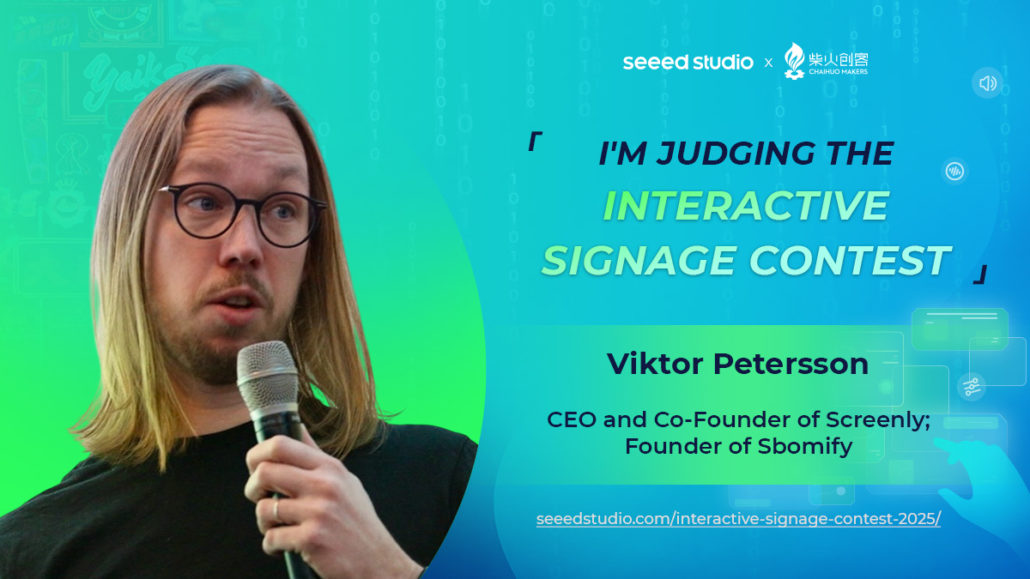
We’re excited to introduce one of our judges for the Interactive Signage Contest: Viktor Petersson, the CEO and co-founder of Screenly, a company that helps businesses deploy and manage secure digital signage at scale.
With years of experience turning displays into meaningful tools for communication, Viktor brings a sharp focus to evaluating projects that serve real needs, not just flashy prototypes.
“I’m particularly interested in solutions that go beyond being just cool and offer tangible benefits in everyday settings,” says Viktor.
In a sea of interactive signage concepts, what truly grabs Viktor’s attention?
“Projects that stand out are those that:
Address a real-world problem or need – not just tech for the sake of tech.
Are technically sound and well-executed.
Offer a user-friendly experience.
Demonstrate scalability and potential for broader application.”
Practicality, usability, and user-centered design are the keys. Viktor values signage that can function clearly, even from a distance of 5 meters or more—meaning readability, contrast, and visual hierarchy really matter.
What Left a Mark?
When asked if a particular project or experience stood out to him, Viktor points to examples that may not look exciting on the surface—but deliver real value.
“Boring signage with utility can be incredibly impactful. For instance, a queue management system that shows estimated wait times for restaurants, or airport signage that helps redirect passengers based on crowd density. These kinds of applications may not get all the hype, but they solve real problems.”
(He even referenced a recent episode of the Screenly Changelog Podcast where fellow signage expert Dave Haynes shared thoughts on this topic.)
Viktor’s Advice to Contestants
For those building projects for the contest, Viktor offers this simple but powerful guidance:
“Focus on solving real problems. It’s easy to get caught up in flashy designs, but the most impactful projects address genuine needs.
Keep your solutions technically robust, user-centric, and think about how they can scale or adapt to different contexts. Also, remember: your signage should be readable and understandable at a glance—even from 5 meters away. That means thoughtful use of layout, color, and contrast.”
Thanks to Viktor for sharing his insights! We’re thrilled to have him on the jury panel and can’t wait to see what creative, practical solutions our community builds.