XIAO ESP32-S3 vs ESP32-C3 vs ESP32-C6: Which One Is Best for Your Project?
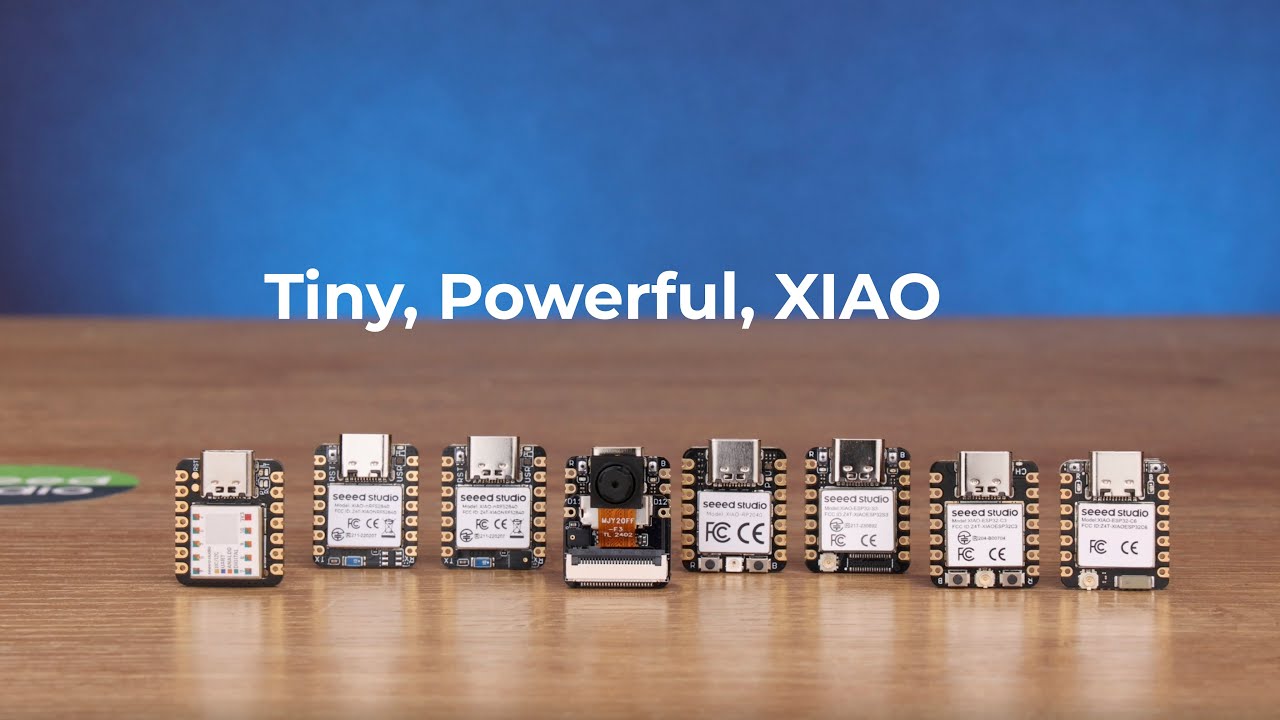
By Kezang Loday 1 day agoChoosing between the XIAO ESP32-S3, ESP32-C3, and ESP32-C6 isn’t as simple as picking the “newest” or “most powerful” board. On paper, they all look similar. They share the same tiny XIAO form factor, support Wi‑Fi and Bluetooth, and target IoT developers. In practice, they are built for very different jobs.
The confusion usually comes from overlapping features. The ESP32‑S3 focuses on performance and AI. The ESP32‑C3 is designed for low power and cost‑sensitive IoT. The ESP32‑C6 introduces next‑generation wireless standards like Wi‑Fi 6, Thread, Zigbee, and Matter. Understanding these differences is key to choosing the right board for your project.
In this guide, we break down each XIAO ESP32 variant, compare their specs side by side, and explain which one makes sense for common use cases such as AI vision, battery‑powered IoT, and smart home devices.
XIAO ESP32-S3 Overview
The XIAO ESP32‑S3 is the most powerful member of the XIAO ESP32 family. It is built around Espressif’s ESP32‑S3 chip and targets applications that need higher performance, richer I/O, or on‑device AI.
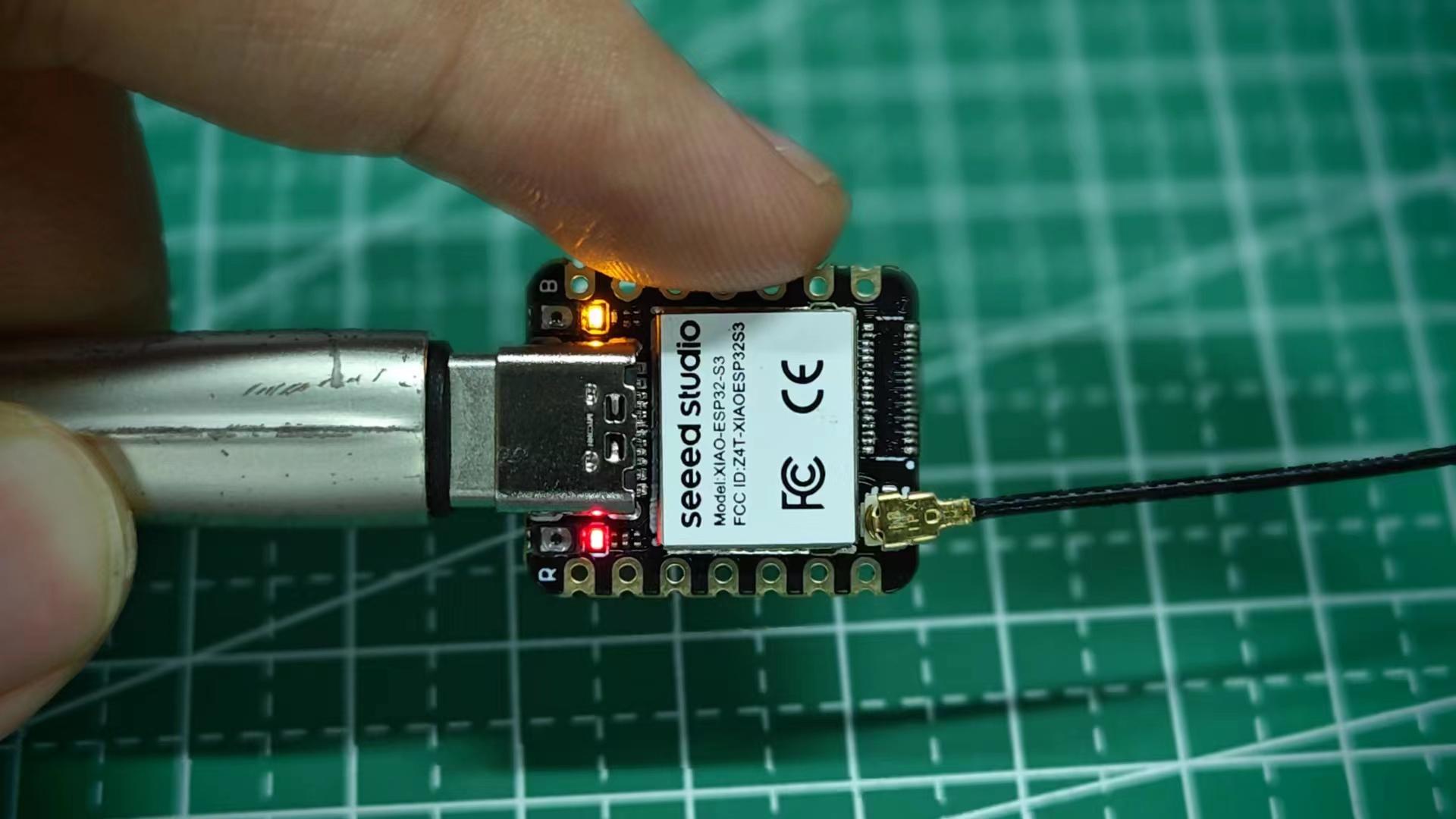
Core architecture: Xtensa dual‑core
The ESP32‑S3 uses a dual‑core Xtensa LX7 processor running up to 240 MHz. Compared to the C‑series chips, this gives it significantly more raw processing power. It also supports vector instructions that are useful for signal processing and AI workloads.
Memory and performance
XIAO ESP32‑S3 boards come with generous memory options. Depending on the variant, you get 8 MB PSRAM and 8–16 MB Flash. This extra memory makes a big difference when working with images, audio buffers, or complex libraries.
The XIAO ESP32‑S3 Sense version goes further by adding an onboard SD card slot, supporting FAT‑formatted cards up to 32 GB. This is especially useful for data logging, image storage, or audio recordings.
AI and camera support (XIAO ESP32‑S3 Sense)
The ESP32‑S3 is designed with edge AI in mind. The Sense variant includes an onboard OV3660 camera, making it easy to build vision‑based projects without external modules. Combined with PSRAM, it can handle tasks like image capture, motion detection, and basic object recognition directly on the device.
Digital microphone
XIAO ESP32‑S3 Sense also includes a digital microphone. This enables voice‑triggered applications, sound detection, or basic speech recognition without additional hardware.
Typical use cases
The XIAO ESP32‑S3 is a strong choice for:
- Edge AI and machine learning projects
- Computer vision and smart cameras
- Voice‑controlled devices
- IP cameras and multimedia applications
XIAO ESP32‑C3 Overview
The XIAO ESP32‑C3 is designed for simplicity, efficiency, and low power consumption. It is often the easiest entry point into the ESP32 ecosystem, especially for small IoT devices.
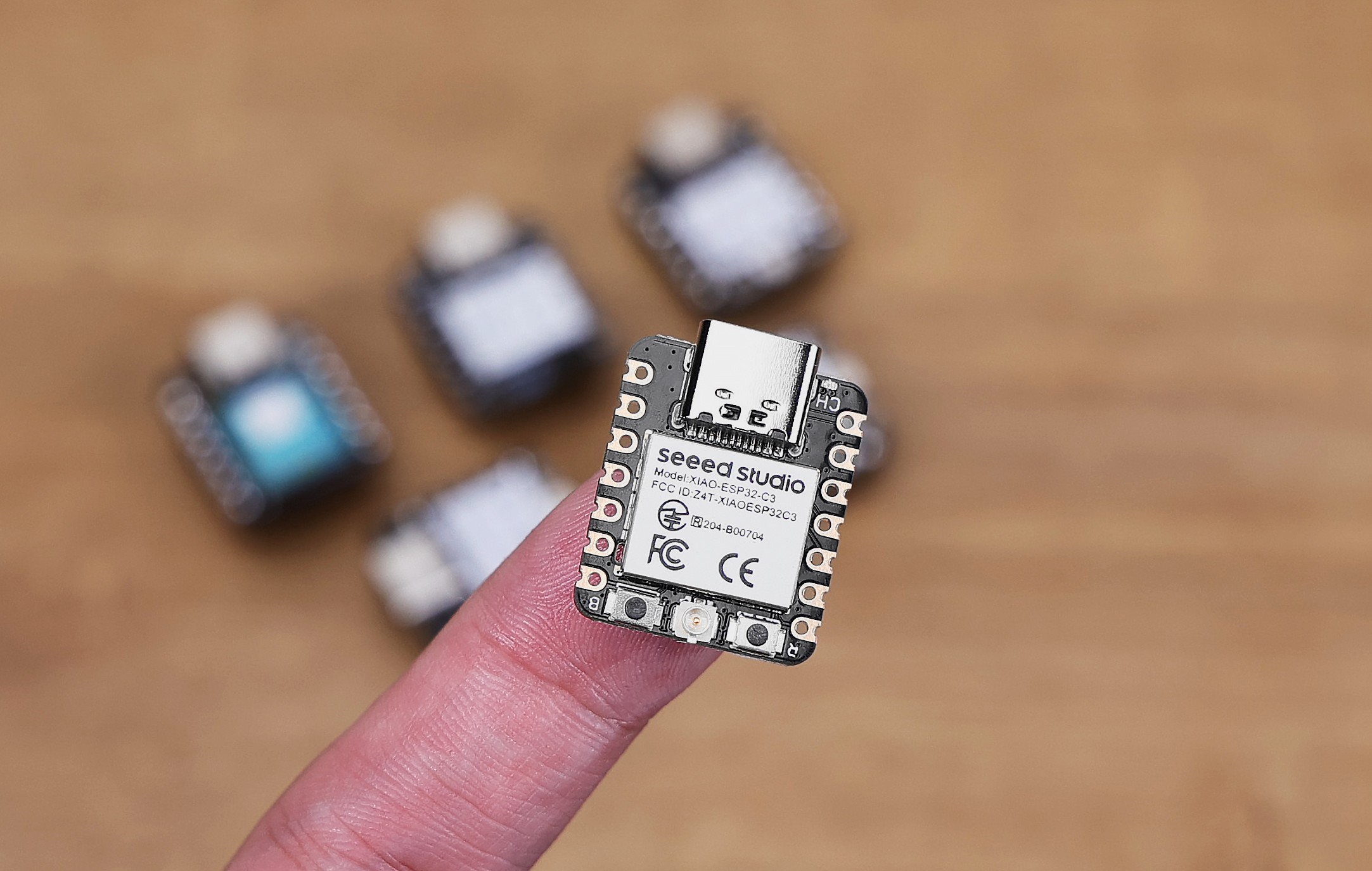
RISC‑V single‑core design
The ESP32‑C3 uses a single‑core 32‑bit RISC‑V processor running up to 160 MHz. While it is less powerful than the S3, it is more than capable of handling common IoT tasks such as sensor reading, cloud communication, and BLE provisioning.
Power efficiency focus
Low power is one of the ESP32‑C3’s biggest strengths. In deep sleep, XIAO ESP32‑C3 boards typically consume around 40 µA, making them suitable for battery‑powered designs that need long standby times.
Wi‑Fi and Bluetooth basics
The ESP32‑C3 supports 2.4 GHz Wi‑Fi (802.11 b/g/n) and Bluetooth LE 5.0. This covers most everyday IoT needs, from MQTT communication to BLE‑based setup flows.
Typical use cases
The XIAO ESP32‑C3 works best for:
- Simple IoT sensors and actuators
- Battery‑powered devices
- Wearables and compact electronics
- Cost‑sensitive products
XIAO ESP32‑C6 Overview
The XIAO ESP32‑C6 represents the next generation of ESP32 connectivity. It is built for modern smart home and IoT ecosystems that rely on multiple wireless protocols.

Dual‑core RISC‑V (HP + LP)
The ESP32‑C6 features two RISC‑V cores: a high‑performance core running up to 160 MHz and a low‑power core running up to 20 MHz. This split allows the chip to handle background tasks efficiently while keeping power consumption low.
Wi‑Fi 6, Bluetooth 5.3, Thread, and Zigbee
Unlike the S3 and C3, the ESP32‑C6 supports 2.4 GHz Wi‑Fi 6 (802.11ax). It also includes Bluetooth 5.3 and an 802.15.4 radio for Thread and Zigbee. This combination makes it ideal for devices that need to operate in dense networks or mesh‑based environments.
Matter‑ready
The XIAO ESP32‑C6 is Matter‑native. If you are building smart home devices that need to work seamlessly across ecosystems like Apple Home, Google Home, and Alexa, this board is designed for that future.
Typical use cases
The XIAO ESP32‑C6 is well suited for:
- Smart home devices
- Matter, Thread, and Zigbee projects
- Next‑generation IoT products
- Multi‑protocol gateways
ESP32S3 vs ESP32C3 vs ESP32C6 Specification Comparison
| Feature | XIAO ESP32-S3 | XIAO ESP32-C3 | XIAO ESP32-C6 |
|---|---|---|---|
| Processor | Dual Xtensa LX7 @ up to 240 MHz | RISC-V single-core @ up to 160 MHz | Dual RISC-V (HP 160 MHz + LP 20 MHz) |
| Memory | On-chip 8M PSRAM & 8MB Flash | 400KB SRAM, 4MB onboard Flash | On-chip 512KB SRAM & 4MB Flash |
| Wi-Fi | Complete 2.4GHz Wi-Fi subsystem | Complete 2.4GHz Wi-Fi subsystem | Complete 2.4GHz Wi-Fi 6 subsystem |
| BLE | Bluetooth 5, Bluetooth mesh | Bluetooth 5, Bluetooth mesh | Bluetooth 5, Bluetooth mesh |
| Power Consumption | Modem-sleep Model: ~ 25 mA Light-sleep Model: ~ 2 mA Deep Sleep Model: ~ 14 μA | Modem-sleep Model: ~ 24 mA Light-sleep Model: ~ 3 mA Deep Sleep Model: ~ 44 μA | Modem-sleep Model: ~ 30 mA Light-sleep Model: ~ 2.5 mA Deep Sleep Model: ~ 15 μA |
| USB Support | Yes | Yes | Yes |
| IEEE 802.15.4 / Thread / Zigbee | No | No | Yes (Thread/Zigbee) |
| Camera / AI | Strong — camera, audio, edge AI support | Limited | Limited (focused on connectivity) |
| Ideal for | Vision, edge AI, multimedia UIs | Low-power sensors, cost-sensitive IoT | Matter devices, multi-radio IoT, gateways |
| MSRP($) | $7.49 | $4.90 | $5.20 |
XIAO ESP32‑C3 vs ESP32‑S3: Key Differences
Power consumption vs performance
The ESP32‑S3 delivers far more performance, but the ESP32‑C3 is simpler and easier to optimize for low‑power designs. If your project spends most of its time sleeping, the C3 often makes more sense.
Onboard sensors and I/O
The ESP32‑S3 family includes Plus and Sense versions, with onboard camera, microphone, SD card support, and more flexible I/O. The C3 keeps things minimal.
Who is it for?
Choose ESP32‑S3 if you need performance, AI, or multimedia. Choose ESP32‑C3 if you want a small, efficient board for basic IoT.
XIAO ESP32‑C3 vs ESP32‑C6: Which One Is Better for IoT?
Wi‑Fi 4 vs Wi‑Fi 6
ESP32‑C3 uses Wi‑Fi 4, which is stable and widely supported. ESP32‑C6 introduces Wi‑Fi 6 features that improve efficiency in crowded networks.
Long‑term deployment and protocols
If your device will stay simple, C3 is enough. If you need Thread, Zigbee, or Matter, only the ESP32‑C6 supports them natively.
XIAO ESP32‑C6 vs ESP32‑S3: Connectivity and Performance
New wireless standards vs mature ecosystem
The ESP32‑C6 is future‑focused with modern wireless protocols. The ESP32‑S3 benefits from a mature ecosystem and higher compute performance.
Smart home vs complex projects
For smart home devices, C6 is the better fit. For complex logic, vision, or AI, S3 still wins.
Future compatibility vs development cost
C6 offers long‑term compatibility. S3 often reduces development time for advanced applications.
Which XIAO ESP32 Should You Choose?
Choose ESP32‑S3 if…
- You need AI, vision, or audio processing
- Your project uses a camera or display
- Performance matters more than power
Choose ESP32‑C3 if…
- You want low power and low cost
- Your project is a simple IoT device
- Battery life is critical
Choose ESP32‑C6 if…
- You are building Matter or Thread devices
- You need Wi‑Fi 6 and modern connectivity
- Your product targets future smart home standards
Projects Using XIAO ESP32 Boards
XIAO ESP32‑S3 Projects
They used the XIAO ESP32-S3 Sense module as the core of a DIY handheld point‑and‑shoot camera, combining its built-in camera, SD card support, and low‑power processing to capture and save photos onto an SD card.
In this submarine project, the XIAO ESP32-S3 Sense is used as the brain of the dive controller, handling Wi‑Fi control, live FPV video streaming, onboard recording, and battery management all in one compact board.
They use the XIAO ESP32-S3 as the core controller to drive the round display, animate falling snow with wind effects, and handle touch input for switching festive backgrounds
In this project, the XIAO ESP32-S3 Sense is used as a compact edge‑AI board to capture images with its onboard camera, process them using TinyML models trained in Edge Impulse, and classify fruits and vegetables directly on‑device.
XIAO ESP32‑C3 Projects
In this project, the XIAO ESP32-C3 is used as the microcontroller inside a custom relay board to add Wi‑Fi control, letting the smart plug remotely switch high‑power devices like a room heater or AC through a web interface.
In this project, the XIAO ESP32-C3 acts as the main controller, reading soil moisture sensor data and driving an OLED display to show emoji indicators of plant health.

In this tutorial project, the XIAO ESP32-C3 is used to blink LEDs, read DHT11 sensor data, host a simple Wi‑Fi web server, and scan nearby Bluetooth devices to demonstrate its IoT capabilities.
XIAO ESP32‑C6 Projects

In this project, the XIAO ESP32-C6 is used as the main controller to connect a BMP280 barometer sensor and OLED display, then transmit real‑time atmospheric pressure data via Zigbee to Home Assistant for monitoring.
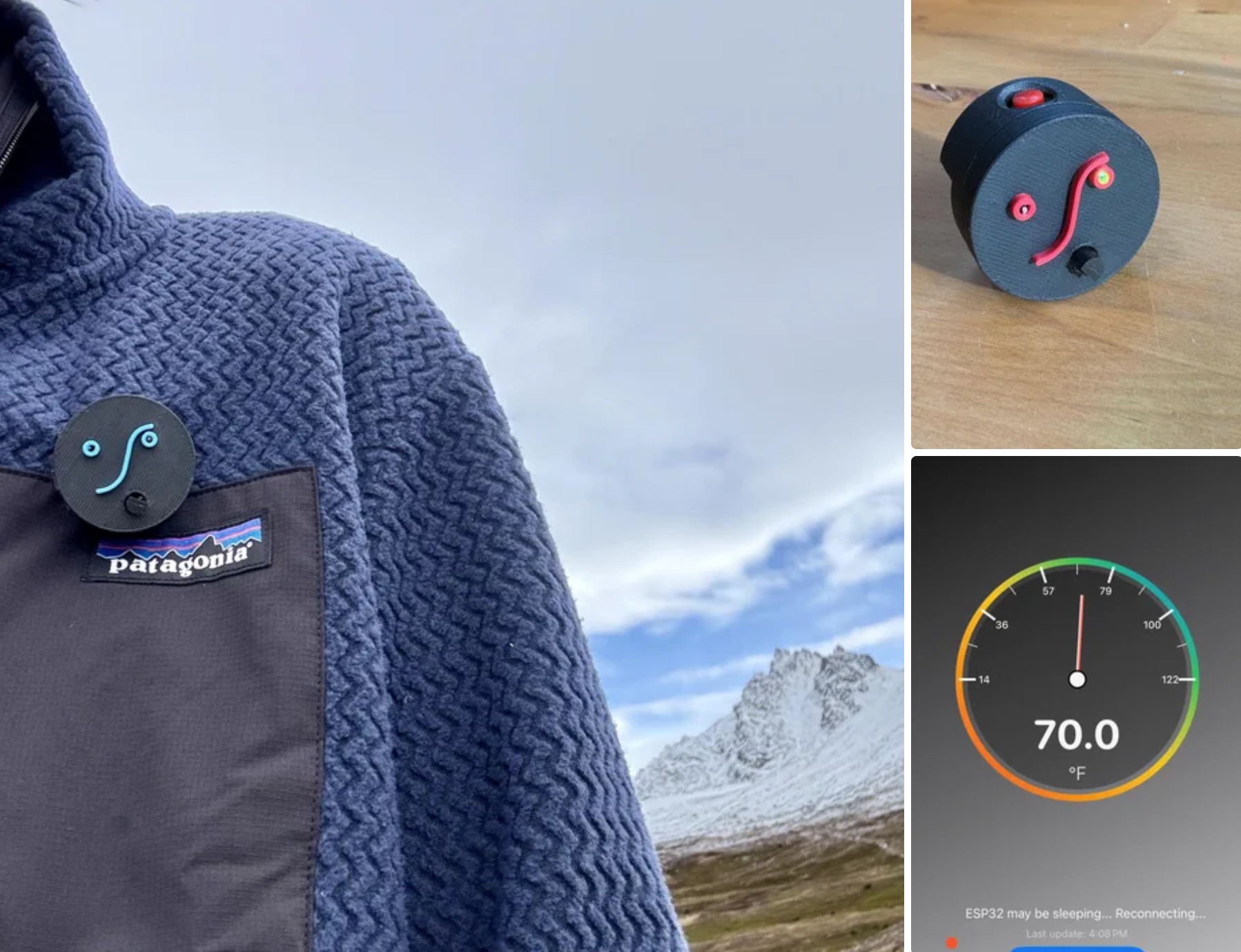
In this project, the XIAO ESP32-C6 is used as the core microcontroller to read temperature and humidity from sensors, broadcast the data via Bluetooth, and pair with a custom iPhone app or Strava by spoofing a heart‑rate monitor for tracking.
In this project, the XIAO ESP32-C6 is used as the main controller to directly interface a temperature sensor with the iPhone, transmitting readings over Bluetooth for real‑time display in a custom app.
FAQ
Yes — it’s ideal for cost-sensitive, battery-driven IoT nodes and projects that don’t require heavy computation.
For beginners focused on general IoT, the XIAO ESP32-C3 is approachable and inexpensive. If you want to work with cameras or audio, start with the XIAO ESP32-S3 Sense.
If you plan to build Matter-native devices (Thread + Matter), the XIAO ESP32-C6 is the most direct path since it supports 802.15.4 and Matter stacks natively.
PSRAM matters when your app needs large buffers (images, audio, complex ML models). The XIAO ESP32-S3 offers the most PSRAM-friendly options.
Conclusion
The XIAO ESP32‑S3 excels at performance and AI, the ESP32‑C3 focuses on efficient and affordable IoT, and the ESP32‑C6 is built for future‑ready smart home connectivity. There is no single “best” board, only the one that best fits your project.
End Note
Hey community, we’re curating a monthly newsletter centering around the beloved Seeed Studio XIAO. If you want to stay up-to-date with:
🤖️ Cool Projects from the Community to get inspiration and tutorials
📰 Product Updates: firmware update, new product spoiler
📖 Wiki Updates: new wikis + wiki contribution
📣 News: events, contests, and other community stuff
Please click the image below👇 to subscribe now!

