Custom Hospital Wearable Panic Button: Real Scenarios and BLE + LoRaWAN Benefits
Hospitals are high-risk environments where staff often work alone and respond to unpredictable situations, making a reliable hospital staff safety system essential. When someone becomes aggressive or collapses, phones or fixed Code Blue buttons aren’t always within reach.
Solution providers need a safety system that works anywhere and triggers instantly. A wearable panic button built on BLE Beacons + LoRaWAN delivers a practical, room-level real-time locating system (RTLS) with strong indoor coverage and flexible workflows for both emergency and day-to-day situations. So where does this matter most? Here are the real hospital scenarios where a Smart Safety Badge makes a clear, immediate difference.
How the Smart Safety Badge Works
The Smart Safety Badge detects BLE Beacons placed around the hospital to determine room-level location. It sends periodic location data through LoRaWAN gateways to the backend system, and when the badge is activated with a few presses, it pushes an immediate alert and location update to the dashboards so teams know exactly who needs help and where.
Real Hospital Scenarios Where Smart Safety Badges Make a Difference
1. High-risk Hospital Departments (Emergency, Mental Health, Trauma)
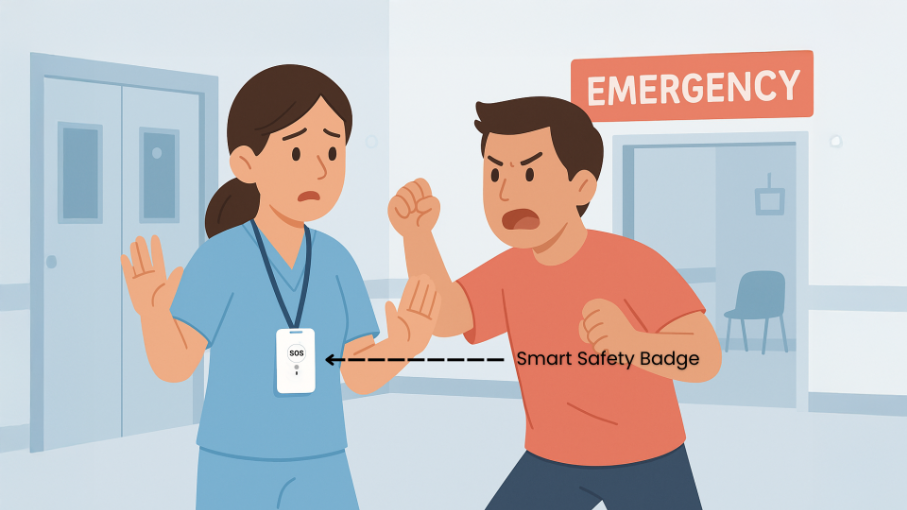
These units deal with unpredictable behavior every day, distressed patients, sudden aggression, and situations that escalate quickly. A wearable panic button lets staff trigger backup instantly with a few button presses, allowing responders to move fast before the situation turns dangerous.
2. Wandering Patients Requiring Quick Assistance in Hospitals
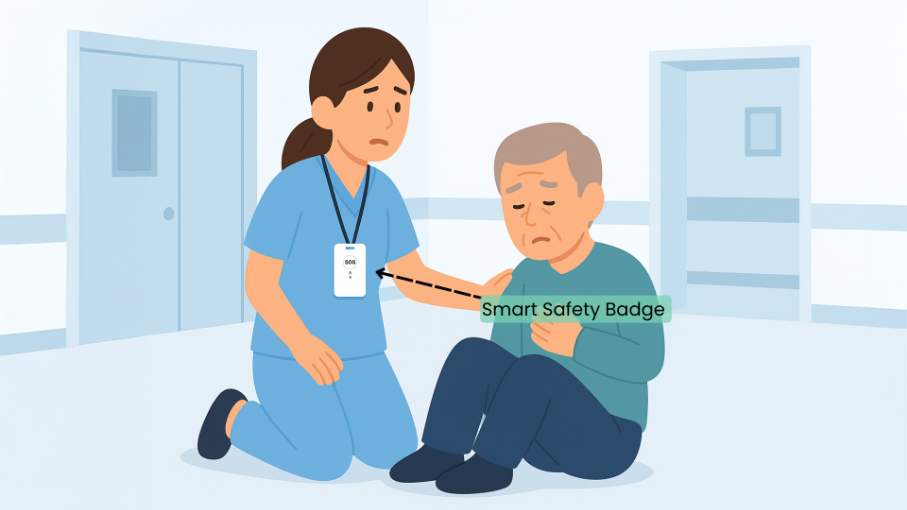
Patients in dementia, rehab or elderly care wards may become disoriented or leave their rooms unexpectedly. A wearable panic button lets staff request help immediately when a patient needs support, allowing responders to move fast before the situation becomes unsafe.
3. Code Blue and Medical Emergency Response
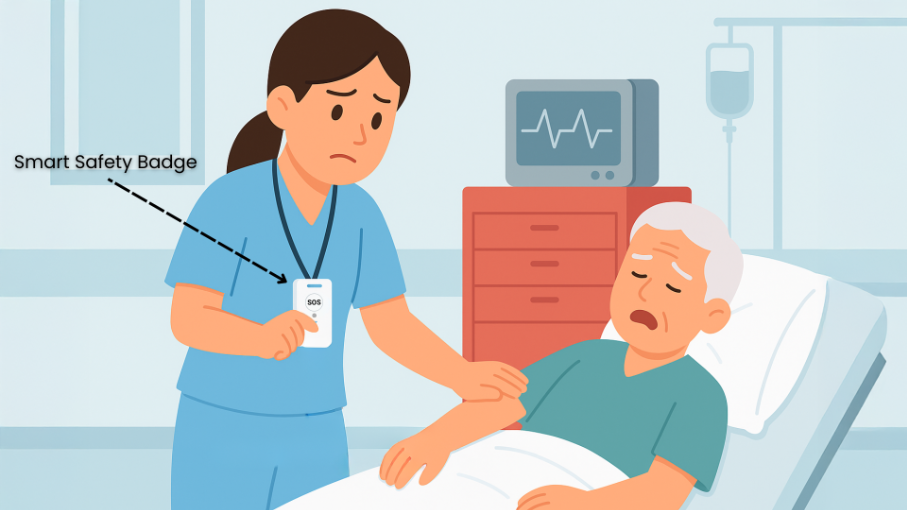
During sudden medical emergencies, every second counts. Unlike fixed Code Blue buttons that require staff to reach a specific wall panel, a wearable panic button can be triggered through a dedicated press pattern wherever the staff member is working, allowing medical teams to react instantly.
4. Armed or Violent Threats
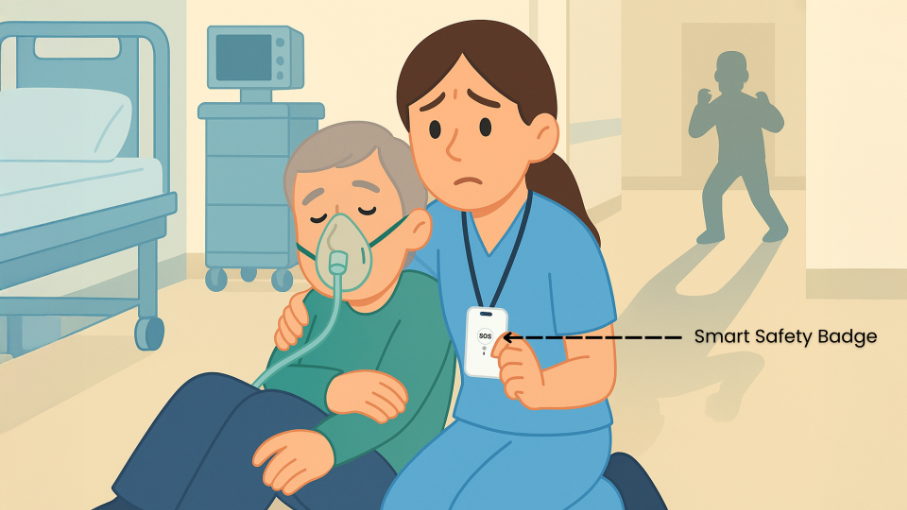
With the rise of violence in U.S. hospitals, staff can occasionally face high-risk security incidents, from armed intruders to gang-related spillovers or individuals becoming dangerously aggressive. A wearable panic button lets staff send a silent duress alert without drawing attention, using a discreet presses to trigger hands-free activation in critical moments.
5. Violent or Unsafe Visitor / Family Situations
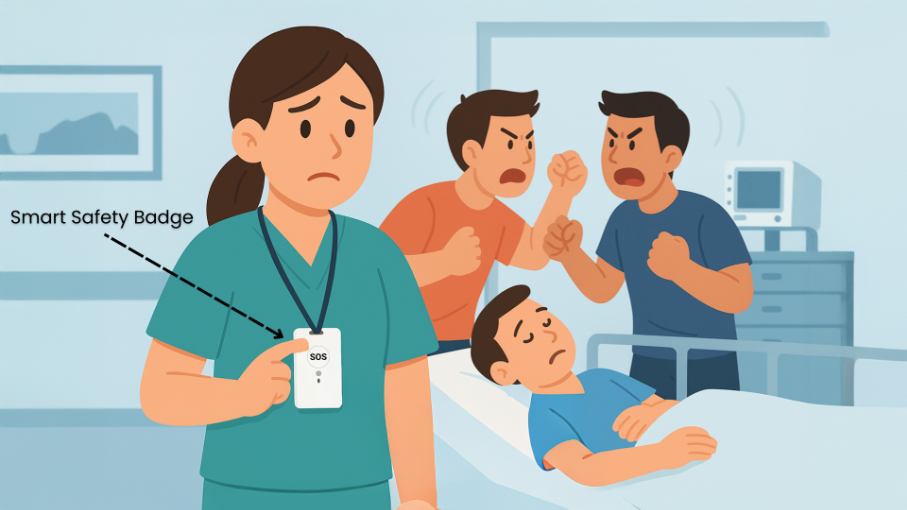
Hospitals often have to deal with tense interactions from frustrated visitors or family members, especially in emergency and critical care areas. A wearable panic button lets staff call for security with a few discreet presses, giving teams the coverage they need to respond quickly even in crowded or chaotic waiting spaces.
Why BLE Beacon + LoRaWAN Works Well in Hospitals
Hospitals are tough environments for any indoor positioning system to perform well. Signals get blocked by equipment, layouts span multiple floors, and staff move constantly. That’s why BLE + LoRaWAN are such a practical fit: BLE provides room-level accuracy, while LoRaWAN delivers long-range, building-wide coverage with strong penetration through walls and metal-heavy areas. This combination stays stable even when WiFi or phone-based systems fail. The entire setup remains low-maintenance with long battery life.
This approach supports Occupational Safety and Health Administration (OSHA) standards, which emphasize reducing workplace violence, improving emergency response and ensuring staff can call for help reliably. Meeting these expectations creates a safer working environment for frontline workers. When staff know they can call for help anywhere in the hospital, they feel safer on shift, naturally lifting morale even during high-pressure situations.
Customizing Smart Safety Badges for Different Hospital Workflows
Seeed also gives solution providers the flexibility to tailor the Smart Safety Badge to different hospital workflows. Button-press patterns can be customized, firmware can be adapted to existing safety dashboards, and hardware options like durability or battery capacity can be adjusted for different environments. This ensures hospitals can deploy one badge across different departments while keeping the system aligned with their own protocols.
Deploy hospital-ready, custom Smart Safety Badges, built end-to-end for solution providers. Contact Seeed’s IoT Solution Team today.
About Author
