How Efficient Is the Solar Charging on the SenseCAP T2000‑C?
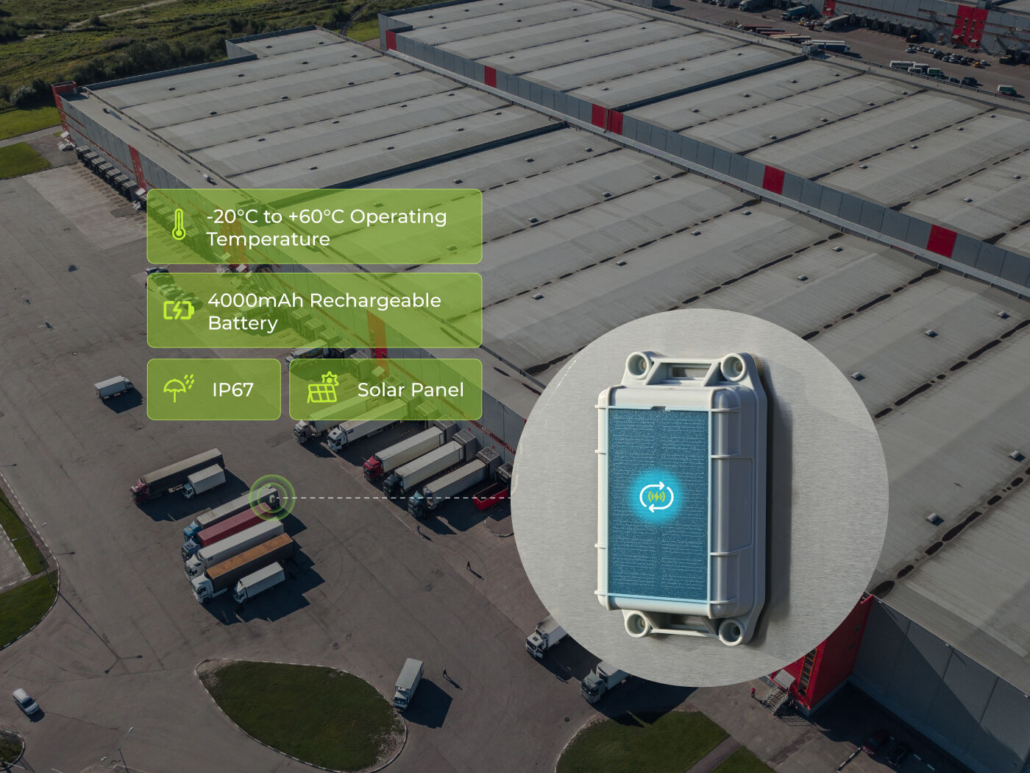
SenseCAP T2000-C is a LoRaWAN asset tracker equipped with a solar panel and a rechargeable battery, specifically designed for long-term outdoor deployment. With its solar charging capability, it can operate continuously without battery replacement. In outdoor deployment scenarios, efficient utilization of the solar panel can significantly extend the tracker’s operational lifespan. Therefore, understanding what affects charging efficiency is key to deploying the device effectively.
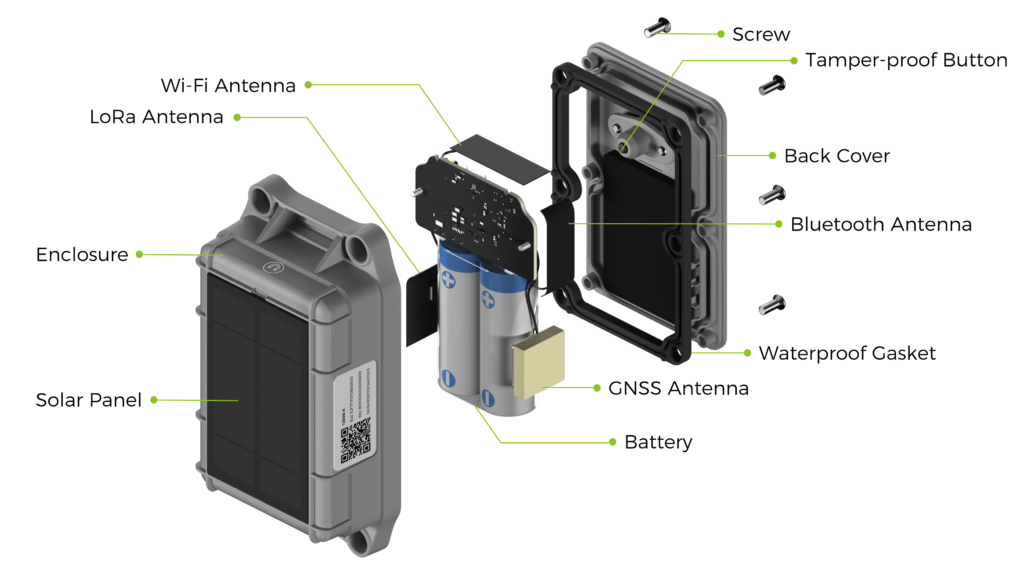
SenseCAP T2000‑C is equipped with a 0.5 W solar panel and a 4000 mAh ternary lithium battery, forming a sustainable power solution. The battery’s charging temperature range is 0~45 °C, with the solar panel charging the battery under normal sunlight, while the battery supplies power continuously. This design is ideal for long-term outdoor deployment, eliminating the need for battery replacements, while supporting typical use cases such as GNSS, Bluetooth and WiFi positioning, and LoRaWAN data reporting.
Key Factors Affecting T2000-C Solar Charging Efficiency
In real-world applications, the solar charging efficiency of the T2000-C is affected by environment and installation. Light conditions are an important factor and depend on more than sunlight intensity alone. The angle of incidence, duration of exposure, and shading may affect how much usable solar energy the panel receives. Favorable angles and unobstructed exposure generally provide better charging performance, while low-angle sunlight, shading, or less optimal installation may reduce charging efficiency.
Ambient temperature also influences charging behavior. For safety and reliability, the T2000-C battery is designed to charge only within a temperature range of 0–45 °C.
In addition, panel cleanliness and installation orientation may influence energy harvesting. Dust, dirt, fallen leaves, or other obstructions can partially block incoming light, and installation orientation can further affect charging efficiency. For outdoor deployment, selecting locations with good sun exposure, minimizing shading where possible, orienting the solar panel toward the sky or the primary light direction, and performing periodic inspection and cleaning can help maintain stable charging performance and support long-term operation.
What Is the Charging Efficiency of the T2000-C?
1. Ultra-Low Static Power Consumption
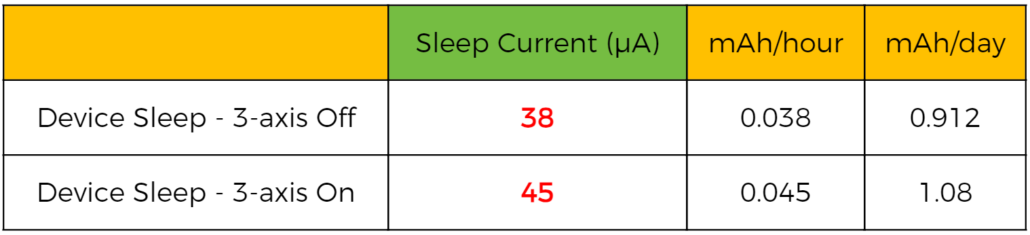
- Deep Sleep (3-axis Accelerometer Off): The current is a mere 38µA, with a daily consumption of about 0.912mAh.
- Deep Sleep (3-axis Accelerometer On): The current is a mere 45µA, with a daily consumption of about 1.08mAh.
2. Power Consumption of Different Positioning Strategy
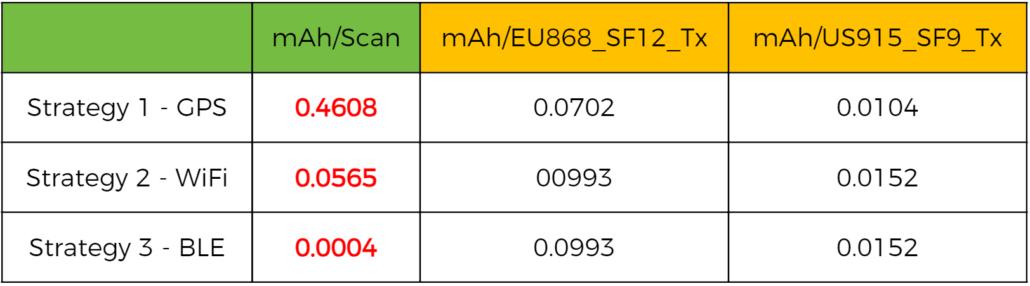
- GPS (Single Scan): Consumes approximately 0.4608mAh. While GNSS provides continuous positioning in outdoor environments, it is also the most power-intensive method.
- Wi-Fi (Single Scan): Consumes only about 0.0565mAh, making it ideal for indoor/outdoor areas with Wi-Fi coverage.
- BLE (Single Scan): The most efficient mode at about 0.004mAh, perfect for close-range asset inventory.
3. Solar Charging Efficiency
The T2000-C is equipped with a 0.5W solar panel, and actual measurements show that the charging current is up to 60mA. 60mAh of power can be generated per hour. From a low battery state to a full charge, it takes about 66.67 hours of effective light.

With 8 hours of effective light exposure per day, the device demonstrates a high level of environmental resilience based on simulated data from the SenseCAP T2000-C Battery Life Calculator:
● Frequency monitoring mode (1-Hour Uplink Interval):
- The total daily power consumption is approximately 16.17mAh to 17.6mAh.
- The expected device battery life is approximately 210 days.

● Long-term tracking mode (1-Day Uplink Interval):
- The total daily power consumption dropped significantly to approximately 5.33mAh to 5.39mAh.
- The expected device battery life is about 680 days.
- In this mode, the main limiting factor for endurance is no longer the immediate power consumption, but the natural aging and self-discharge of the battery over several years (36% annual battery self-discharge rate and 80% battery depreciation factor).

4. Actual Charging Efficiency in Different Environments
In order to verify the performance of the SenseCAP T2000-C in real scenarios, we conducted actual tests under several weather conditions. The test equipment was placed horizontally and the GNSS scanning time was set to 60 seconds. The following is a record of the measurement data:
- Simulated no-light conditions:
- In the complete absence of light, with the reporting interval set to 1min, the power consumption of the device decreased from 74% to 69% from 14:00 to 18:00 (4 hours), consuming about 5% of the power.

- Cloudy environment:
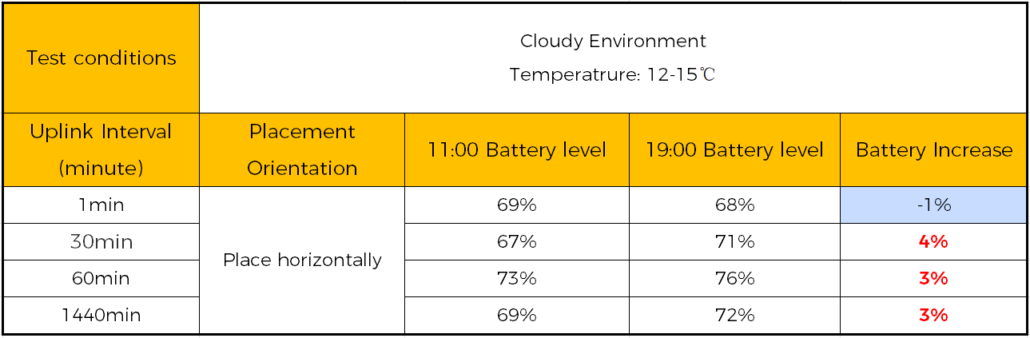
- On a cloudy day with a temperature of 12-15℃, after approximately 8 hours of operation, even with low light, the power consumption of the device with a reporting interval of 30/60/1440 minutes still achieves a positive increase of 3% – 4%.
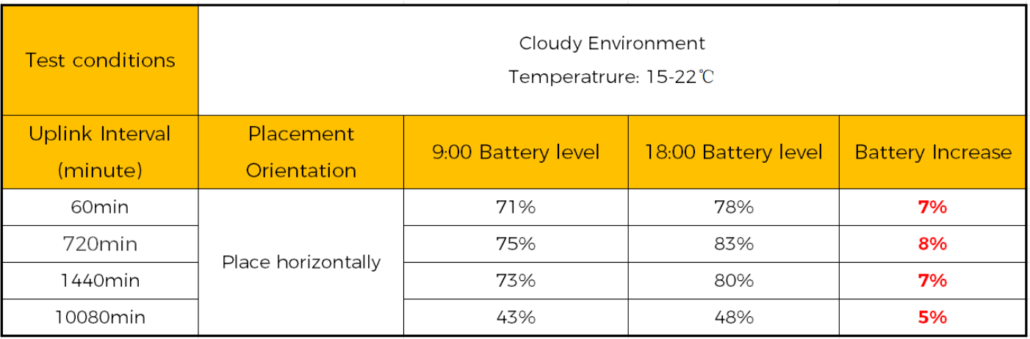
- Another set of measurements on cloudy days with temperatures of 15-22°C showed that devices with reporting intervals between 60/720/1440 minutes could achieve a 7% – 8% increase in power consumption after approximately 9 hours of operation.
- Sunny day environment:
- On a sunny day with a temperature of 13-22°C, devices with reporting intervals of 30 minutes or more showed stable charging efficiency, with a power increase of about 2% – 4%.
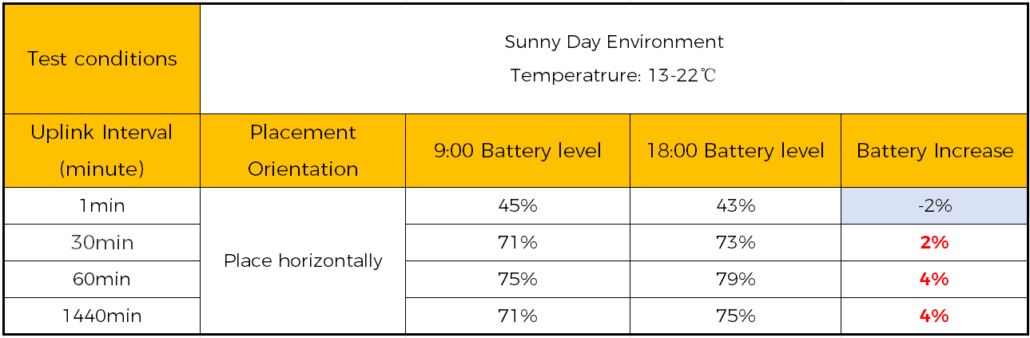
Additionally, the test results above indicate that when the uplink interval is set to 1 minute, the high power consumption of the device makes it difficult to achieve positive battery growth, even as the solar panel charges the internal battery.
In summary, the test results confirm that the T2000-C’s solar panel can sustain ongoing operation, making it well suited for extended outdoor use and low-maintenance deployments.
About Author
