What is Smart Home?
Smart homes answer a question: How can technology transform ordinary residences into intelligent spaces? It integrates sensors, microcontrollers, and wireless connectivity to automate daily tasks, monitor environmental conditions, and improve comfort and safety. By connecting devices such as lights, thermostats, cameras, and appliances through platforms like Arduino, ESP32, and Raspberry Pi, users can remotely control and coordinate their home systems.
A smart home not only makes life more convenient, but also helps reduce energy consumption, enhance safety, and create a personalized living experience.
Why DIY Smart Home Projects?
While commercial smart home systems are widely available, they often come with high costs, limited customization, or compatibility issues. That’s where DIY smart home projects come in — giving makers full creative control over design, functionality, and budget, and platforms like Arduino, ESP32, and Raspberry Pi are ideal for DIY smart home projects:
- Arduino: Beginner-friendly, with extensive module libraries and strong community support.
- ESP32: Offers built-in Wi-Fi and Bluetooth, low power consumption, and is suitable for larger, connected projects.
- Raspberry Pi: Full computing power makes it ideal for complex automation, camera integration, and server-side applications.
Now that we’ve explored what makes a smart home and why DIY automation is such a rewarding path, let’s explore 18 popular and practical smart home projects built with Arduino, ESP32, and Raspberry Pi, and dive into some real-world inspiration. These hands-on examples show how makers use open-source hardware to create affordable, customizable, and intelligent home solutions.
Arduino Smart Home Projects
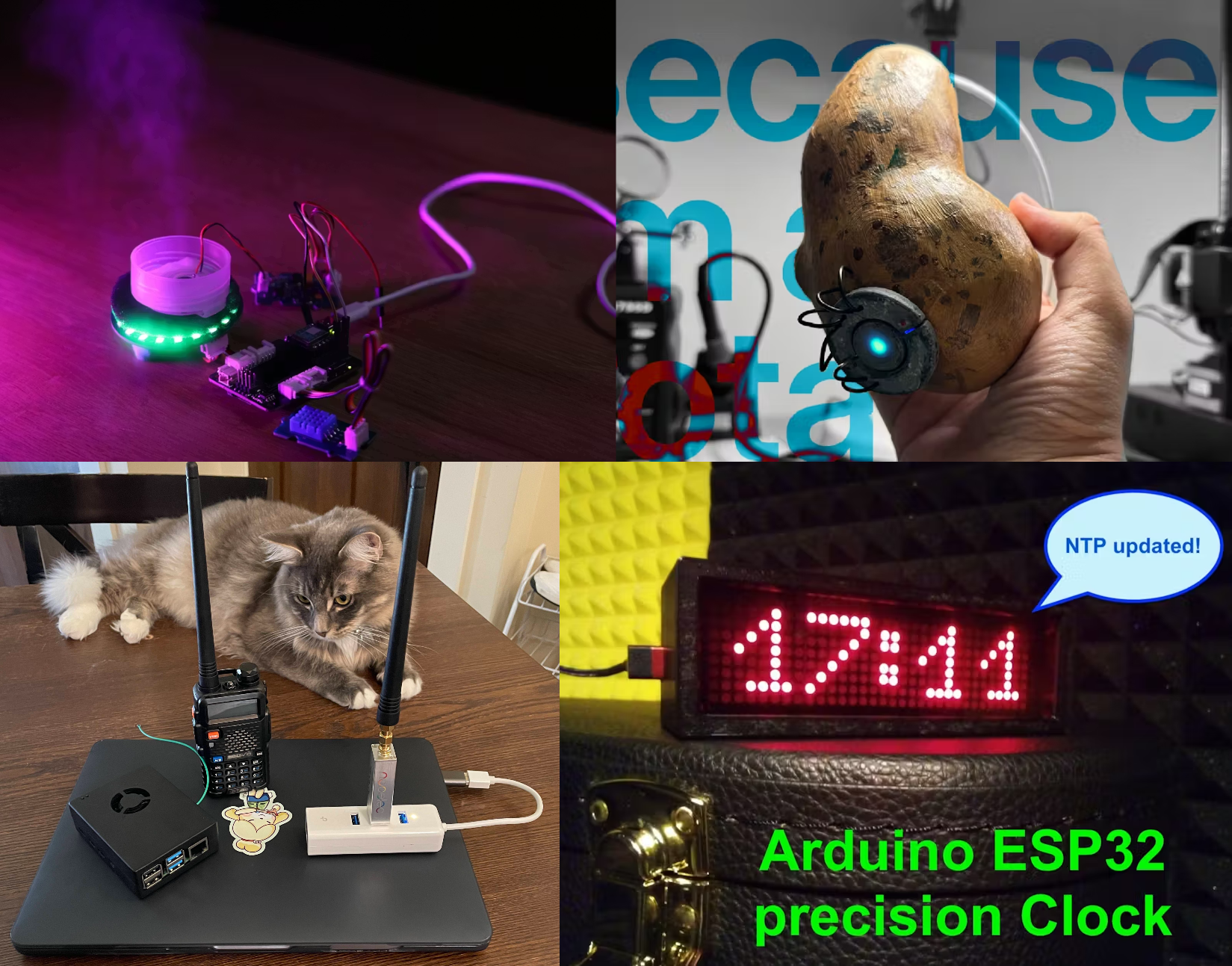
Introducing: Christina Chen created an Automatic Humidifier powered by a XIAO SAMD21 and DHT11 humidity/temperature sensor, designed to maintain ideal air moisture levels with no manual effort. When humidity drops below a preset threshold, the system automatically activates a water atomization module — while an RGB LED ring provides visual status feedback. This compact and elegant design shows how to enable smart home automation that’s simple, efficient, and responsive to real-time environmental data.
Component: XIAO SMAD21
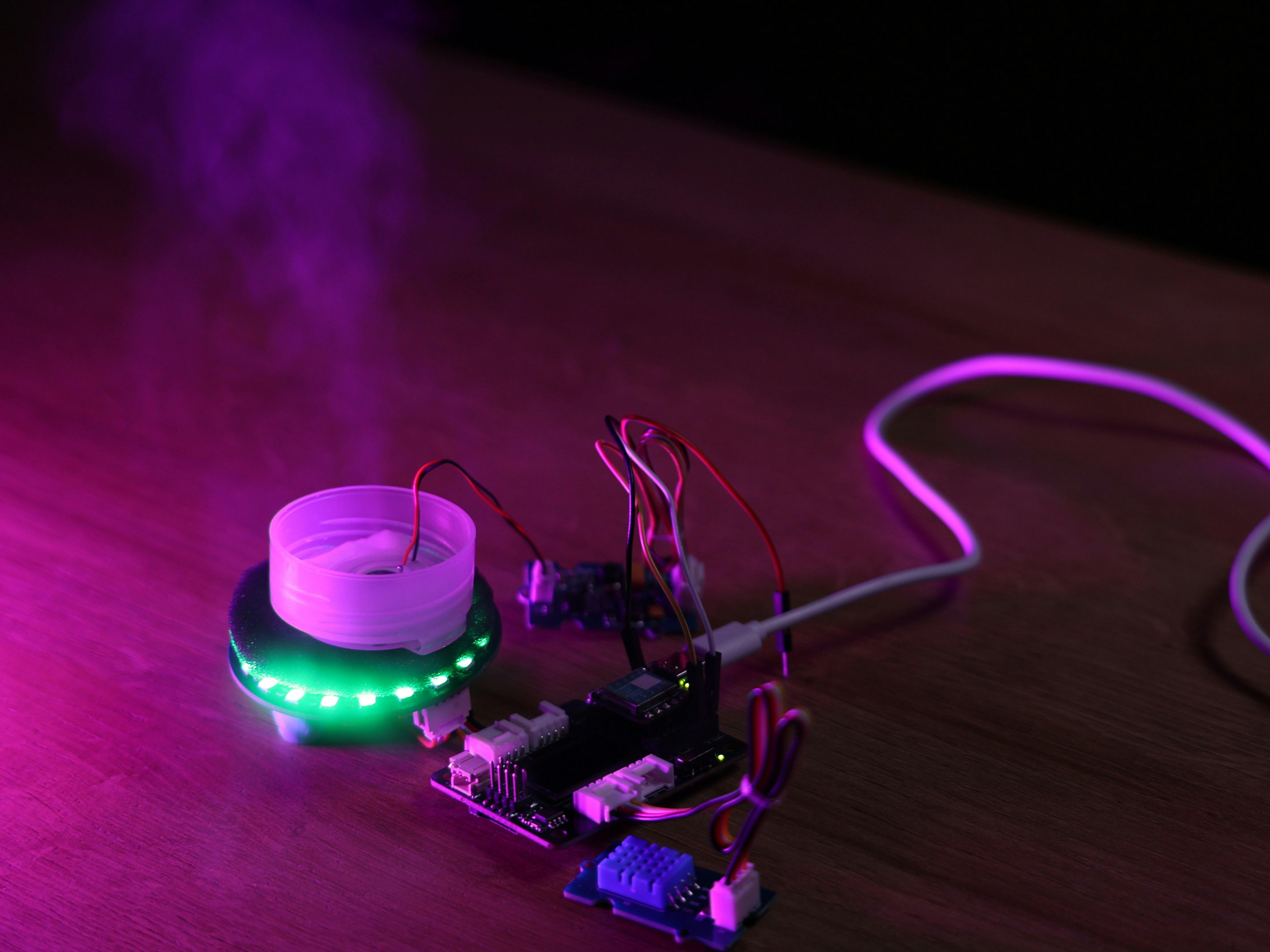
Introducing: What if your home clock could set and adjust itself with precision and style? Marco Zonca built a Precision LED Matrix Clock using the Arduino Nano ESP32 and MAX7219 display module, creating a compact, WiFi-synced, and brightness-adjusting time display for smart homes.The system automatically synchronizes with NTP servers for accurate timekeeping, allows BLE-based manual configuration, and adapts brightness via a photoresistor — all powered through a simple USB-C setup. It’s a clean, minimalist design that combines smart connectivity with everyday functionality
Component: Arduino Nano ESP32
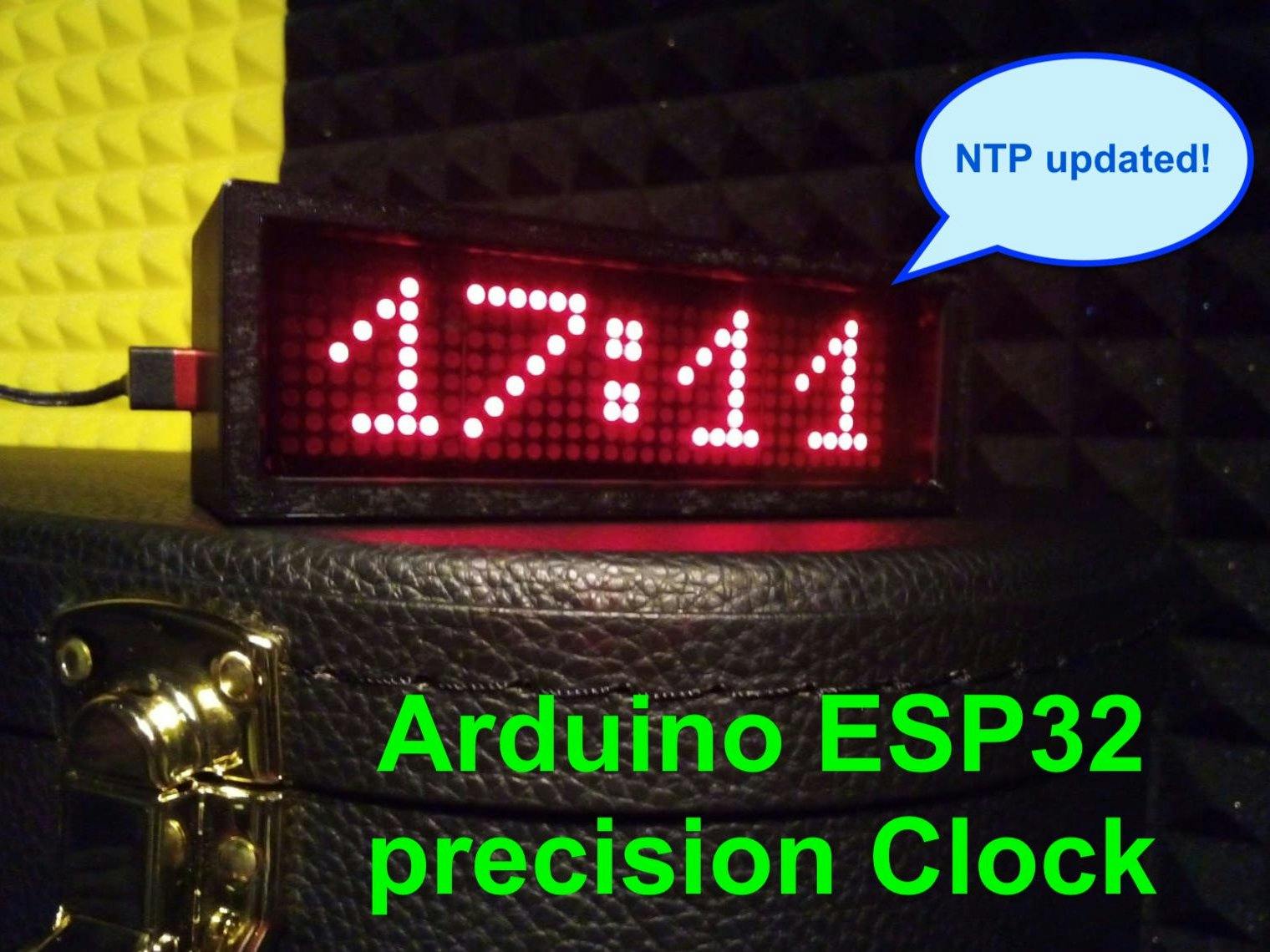
Introducing: Hacker Shack built an Autonomous “Follow Me” Cooler, a creative Smart home project that uses an Arduino Uno, HC-05 Bluetooth module, GPS, and compass sensors to make an ordinary cooler self-steering and fully mobile. By linking to a smartphone via Bluetooth, the system uses GPS coordinates and compass data to track your location and automatically follow your path — no remote control needed.
Component: Arduino Uno
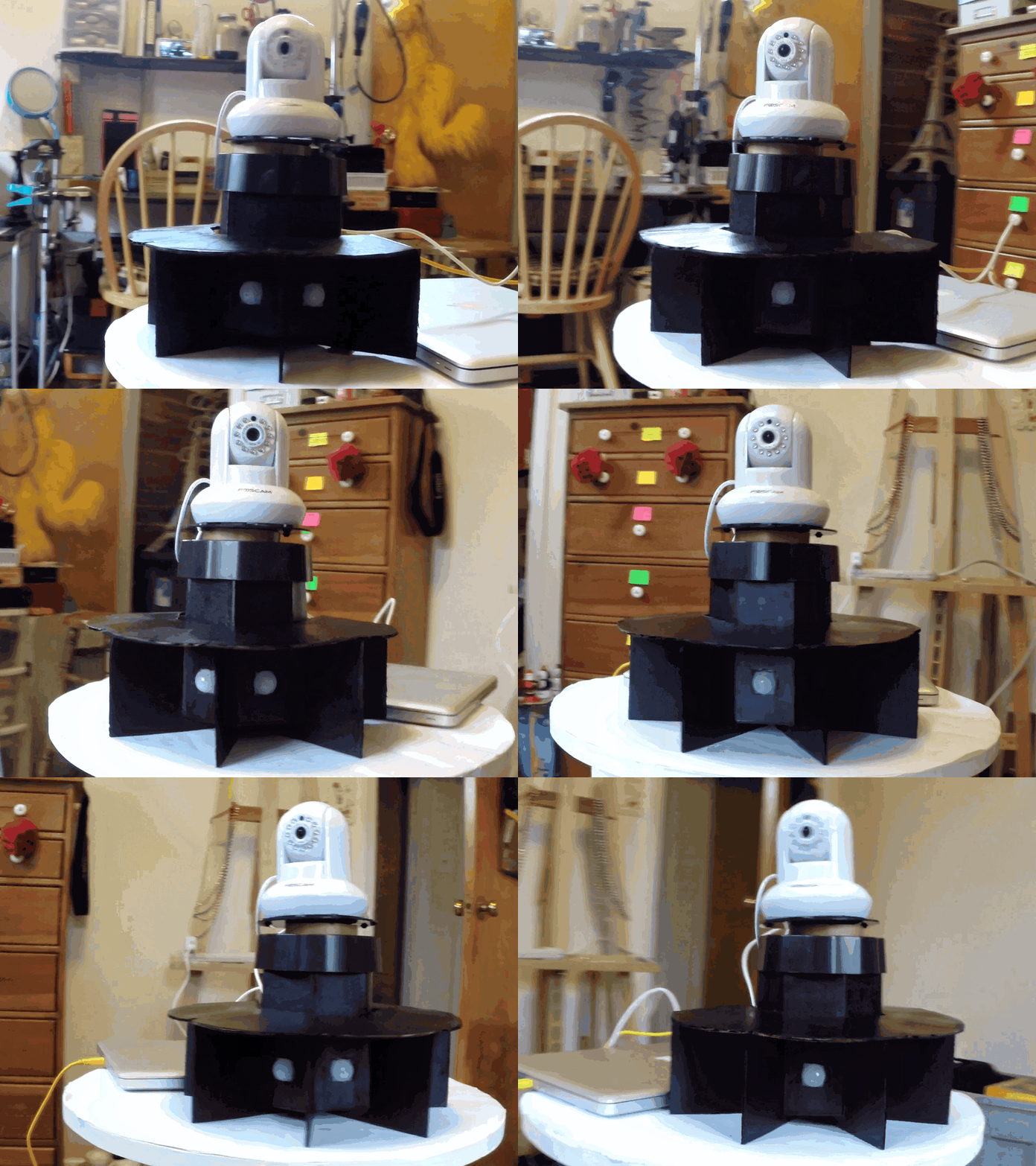
Introducing: If your camera can detect movement and auto-rotate toward it— how perfect for smart security or interactive setups! Lindsay Fox built a Motion-Following Motorized Camera Base using an Arduino Uno and five PIR motion sensors arranged in a 180° arc to detect movement and track it in real time. When motion is detected, the system drives a servo motor to rotate the camera toward the active sensor’s direction — turning a simple webcam into an intelligent motion-tracking device.
Component: Arduino Uno
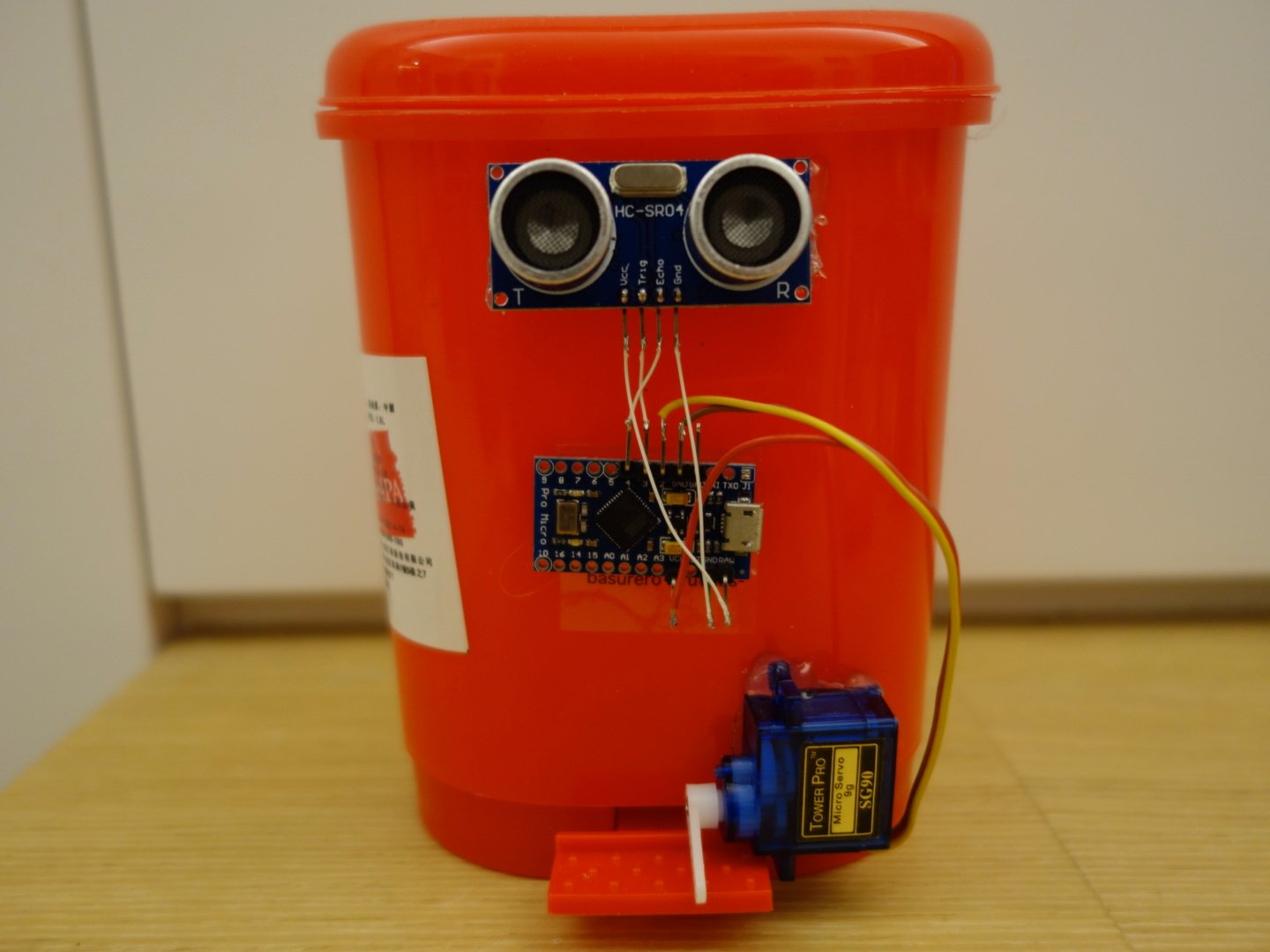
Introducing: Will Su created a Touchless Automatic Motion Sensor Trash Can powered by an Arduino Micro, HC-SR04 ultrasonic sensor, and servo motor to detect hand proximity and open the lid automatically. When someone approaches, the ultrasonic sensor triggers the servo to lift the lid — keeping the process contact-free, hygienic, and convenient.
Component: Arduino Micro
Introducing: Roboarmy built a Simple Smart Door Lock System using an Arduino Uno, RFID reader & cards, servo motor, and buzzer to provide secure, automated access control for the home. This DIY project integrates hardware and software logic: the Arduino controls the locking mechanism, the RFID reader authenticates cards, and the buzzer provides status alerts. The tutorial walks you through wiring, programming, and assembly — making it beginner-friendly and ideal for learning practical home automation.
Component: Arduino Uno
ESP32 Smart Home Projects
Introducing: Can we detect HVAC faults before they cause costly system failures? Maker Kutluhan Aktar combines XIAO ESP32C6 with Particle Photon 2, audio, and thermal sensors to monitor cooling systems in real time. By capturing anomalous fan noise and analyzing thermal images, the system automatically detects faults and sends early alerts through a web dashboard — preventing breakdowns and saving energy.
Component: XIAO ESP32C6
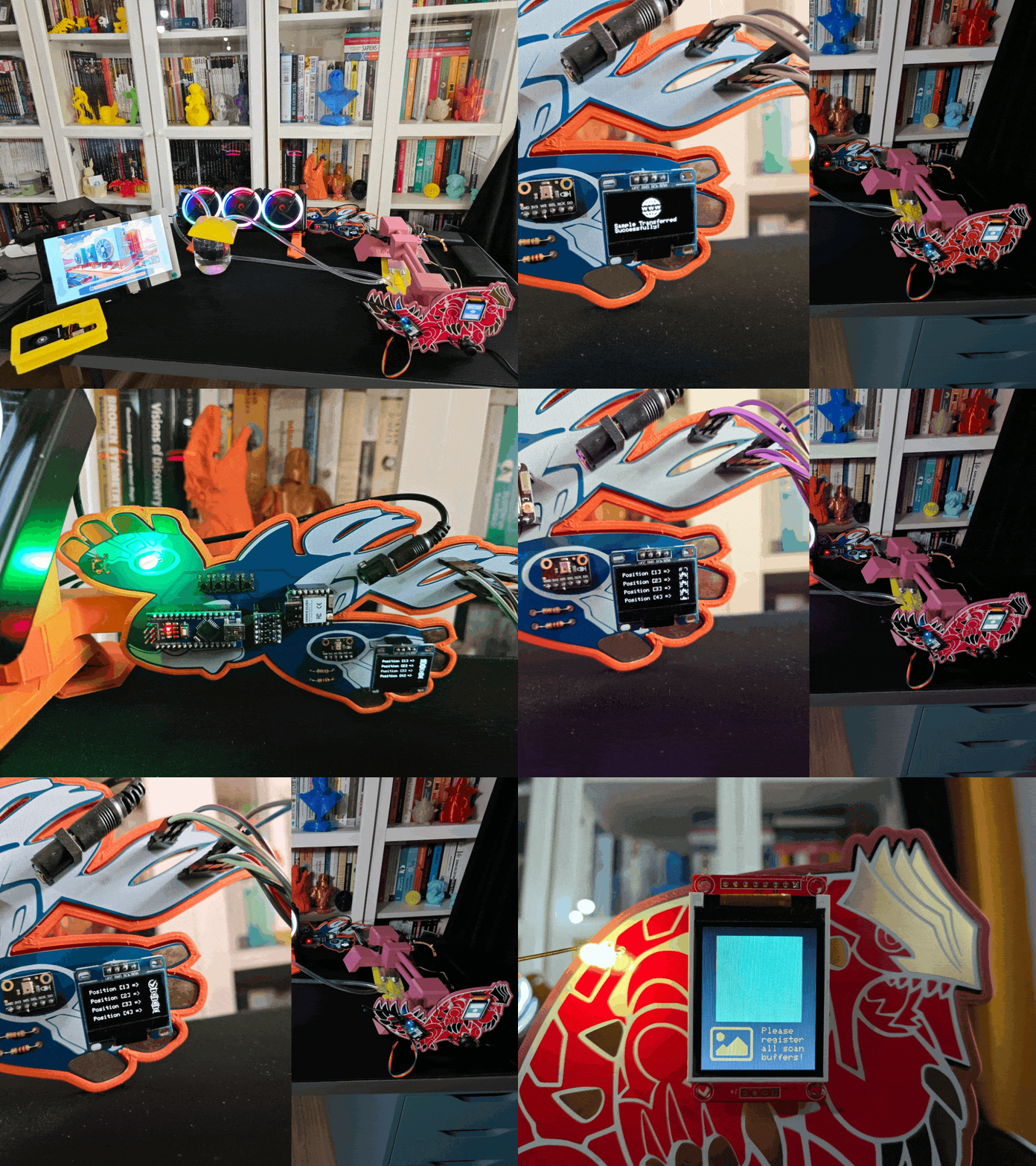
Introducing: Why buy a smart light bar when you can build one that’s even better than Hue — for a fraction of the cost? J-Rat created a sleek, 3D-printed Smart LED Light Bar powered by the XIAO ESP32C3 and WLED. The ESP32C3 brings wireless control, while WLED delivers stunning dynamic lighting effects that can easily sync with your smart home setup. Compact, affordable, and fully customizable — this project blends DIY creativity with smart home elegance.
Component: XIAO ESP32C3
Introducing: Tech StudyCell built a compact yet powerful IoT home automation system using the XIAO ESP32C3. Powered by Blynk IoT, this project enables real-time appliance control from your phone, while also supporting offline operation via IR remote and manual switches. With a DHT11 sensor for environment monitoring and relays for smart switching, it’s a scalable, and beginner-friendly IoT setup.
Component: XIAO ESP32C3
Introducing: When your glasses could control your smart home — techiesms created AI-powered Smart Glasses using the ESP32 S3 Mini, transforming everyday eyewear into a hands-free home automation controller! By scanning QR codes through an onboard camera, users can toggle Wi-Fi-connected appliances instantly. The setup also integrates an INMP441 microphone, MAX98357 I2S amplifier, and RGB LEDs for voice feedback and connection status — all neatly packed into a custom PCB forming the frame’s right leg.
Component: ESP32 S3 Mini
Introducing: Hobby with Adam built a Smart Mailbox Notifier using the Seeed Studio XIAO ESP32C6, combining Zigbee, Arduino, and Home Assistant to make mail checking smarter and more efficient. This compact device uses Zigbee2MQTT to report mailbox status and battery level, while Home Assistant automations send notifications based on mailbox activity or low battery. Designed with deep sleep and GPIO wake-up, it ensures ultra-low power consumption for long-term use— A practical and energy-efficient way to bring IoT intelligence to everyday life.
Component: XIAO ESP32C6
Introducing: In this playful yet powerful DIY smart home project, maker Pham Binh builds a 3D-printed “Potato GLaDOS” — an ESP32-based voice assistant that integrates with Home Assistant to control your smart devices. By flashing ESPHome firmware and using a custom-trained wake-word model, the device listens to commands, processes them over the network, and replies with GLaDOS’s iconic sarcastic tone. All you need is the Seeed Studio ReSpeaker Lite kit, a 3D-printed potato shell, and Home Assistant — and it costs under $50 to build.
Component: Seeed Studio ReSpeaker Lite kit

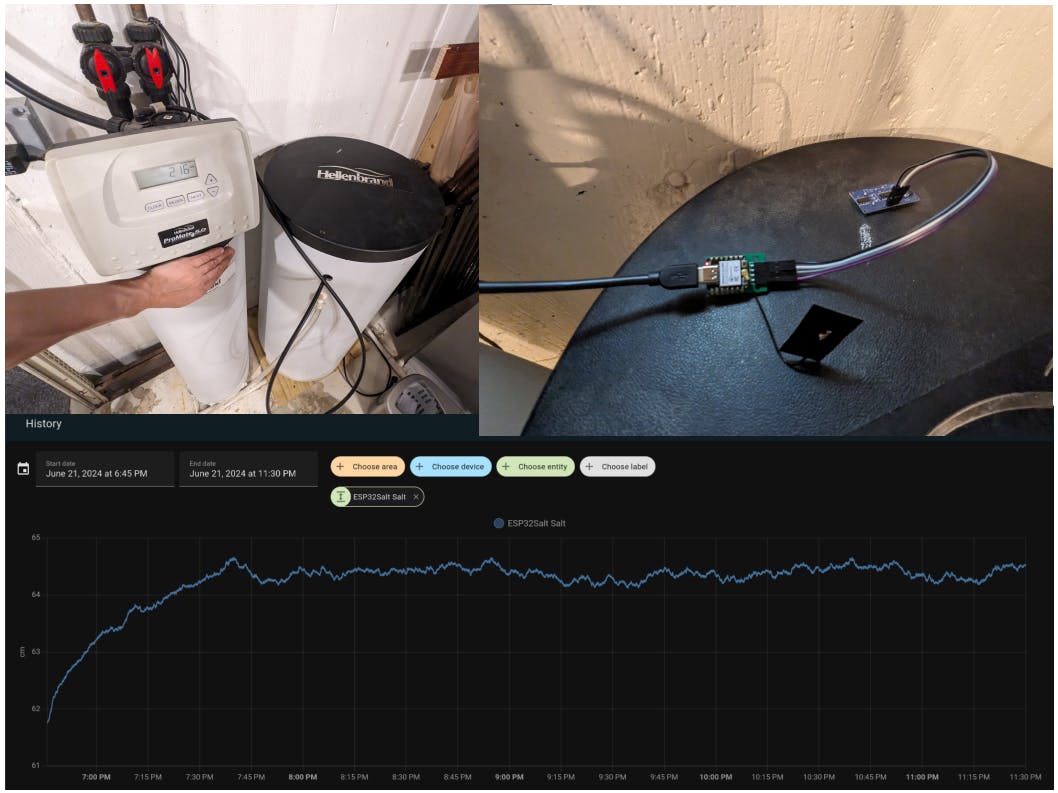
Introducing: Ever run out of salt in your water softener at the worst possible time? Tom DeCricle solved this with a Water-Softener Salt Tank Monitor, powered by the Seeed Studio XIAO ESP32C3 and an HC-SR04 ultrasonic sensor. This DIY IoT device tracks your tank’s salt level in real-time and integrates seamlessly with Home Assistant via ESPHome. When salt runs low, the system sends automated Gmail notifications, ensuring you never miss a refill.
Component: XIAO ESP32C3
Raspberry Pi Smart Home Projects
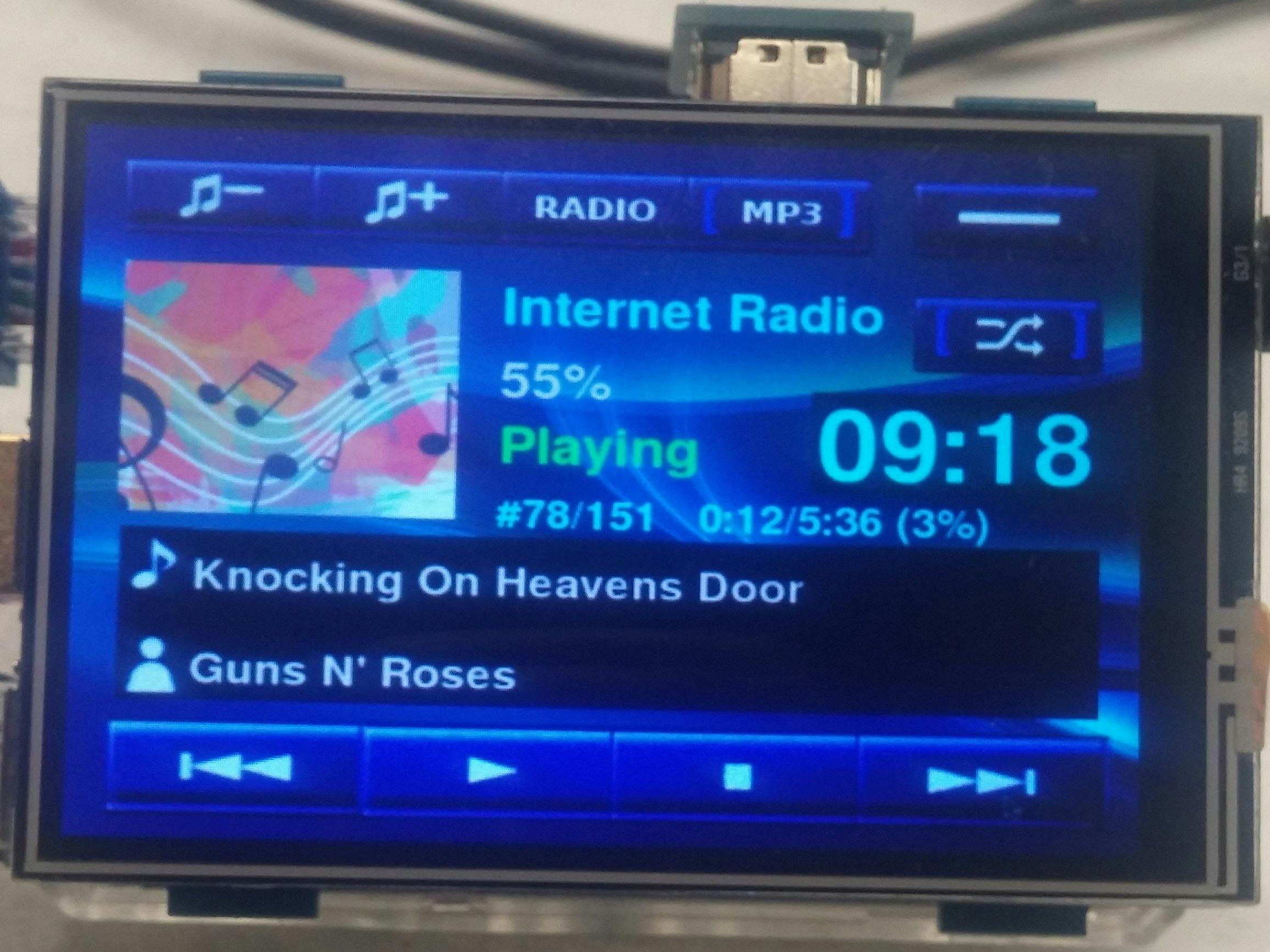
Introducing: Turn your Raspberry Pi into the ultimate smart home audio hub! Granpino transformed a Raspberry Pi 2 Model B into an Internet Radio & MP3 Player with Bluetooth. The setup features a 3.5″ HDMI touchscreen, USB Wi-Fi, and BLE modules, all controlled through software tools like MPC, MPD, and Pygame.
This DIY project streams music from multiple sources, supports MP3 playback, and enables Bluetooth audio, all with an intuitive touchscreen interface. A perfect blend of hardware and software to upgrade your home audio experience.
Component: Raspberry Pi 2 Model B
Introducing: Talk to your smart home over radio waves! That’s what Dominick Ta achieved with his Smart Pi Radio Assistant, built on the Raspberry Pi 4 and powered by SDR (Software Defined Radio) technology. This project turns a Raspberry Pi into a voice-activated smart home assistant that you can access via walkie-talkie. It processes commands and sends voice replies over radio, offering a customizable, offline alternative to conventional smart assistants. With Home Assistant integration, users can remotely control devices while keeping full privacy and independence from cloud systems.
Component: Raspberry Pi 4
Introducing: quicklywilliam turned a traditional sauna into a smart sauna using a Raspberry Pi pico, heavy duty Z-Wave switch, and temperature sensor, all integrated with Home Assistant. Now you can start your sauna remotely, monitor temperature, and control settings via the Home app or Siri, while still retaining manual control options. This smart home project combines automation, convenience, and safety, making every sauna session seamless and modern.
Component: Raspberry Pi Zero W

Introducing: thisoldgeek created a Modern Jukebox using a Raspberry Pi 3 Model B running Volumio, streaming from Pandora, Spotify, and AirPlay. Audio plays through an IQAudio Pi Digi Amp Plus, while sound-reactive NeoPixel LEDs, controlled by an Arduino Nano, dance along with the music. A 5-inch HDMI touchscreen provides intuitive navigation, blending interactive, immersive visuals with high-quality audio.
Component: Raspberry Pi 3 Model B

Introducing: Toby Coleman converted a popcorn maker into a smart coffee roaster using a Raspberry Pi, a type-K thermocouple with MAX31855, and a solid-state relay. The system runs a Node-RED flow to control the heater, logs roast data to Redis, and offers a web interface via Dash for real-time monitoring. This smart home project ensures precise, repeatable roast profiles from the comfort of your home, combining automation, data logging, and smart controls for coffee enthusiasts.
Component: Raspberry Pi 3 Model B

Resources
If these examples have sparked your curiosity, there’s an abundance of excellent resources and communities to help you start building your own smart home projects:
Arduino Project Hub
A comprehensive collection of Arduino-based Home & Automation projects, complete with schematics, code, and tutorials for all skill levels.
Hackster.io
One of the largest online hardware communities, where makers share detailed ESP32, Arduino, and Raspberry Pi Smart Home projects.
Raspberry Pi Forum
A great place to discuss ideas, troubleshoot hardware setups, and find creative automation projects built with Raspberry Pi.
Seeed Studio Wiki – Smart Home & Automation Section
A curated technical resource for Seeed’s XIAO series boards, offering in-depth guides and real-world applications for smart home automation.
Reddit – r/HomeAssistant
A vibrant community for Home Assistant enthusiasts who share integrations, automations, and open-source tips.
Instructables
A rich collection of step-by-step DIY Smart Home projects covering Arduino, ESP32, and Raspberry Pi platforms.
GitHub – Home Automation Topic
– Explore open-source projects and code repositories to accelerate your smart home development.
For hands-on learning and inspiration, check out these YouTube creators known for their high-quality DIY home automation tutorials:
Tech StudyCell
Practical, easy-to-follow smart home projects using ESP32 and Arduino.
American TechNova
Innovative DIY IoT and automation tutorials for makers of all levels.
ToP Projects Compilation
A great channel to discover Smart Home and DIY electronics project ideas.
These platforms and creators make it easy to dive into DIY Smart Home projects, helping you learn, experiment, and bring your creative ideas to life.
Summary
From smart mailboxes and Water-Softener to AI-powered doorbells and automated coffee roasters, DIY smart home projects using Arduino, ESP32, and Raspberry Pi show how creativity and technology can enhance everyday life. These projects not only bring convenience and cost savings but also offer valuable hands-on learning opportunities for makers at all levels.
For those ready to begin experimenting with their own smart home ideas, compact and versatile boards like the Seeed Studio XIAO series may offer a helpful starting point. The XIAO family integrates popular chips found in Arduino, Raspberry Pi Pico, and ESP32 platforms, giving makers a familiar foundation to build on. With extensive tutorials, examples, and real-world applications, we hope the XIAO boards can bring you a more effortless experience in prototyping, experimenting, and expanding your smart home ecosystem.
About Author
