Open Manufacture: How We Tested the Long-Range Communication for LoRaWAN GPS Tracker T1000
Join us into the fascinating world of innovation and rigorous testing with the SenseCAP T1000 where the device has achieved the capabilities in signal transmission beyond the recommended range of transmission.
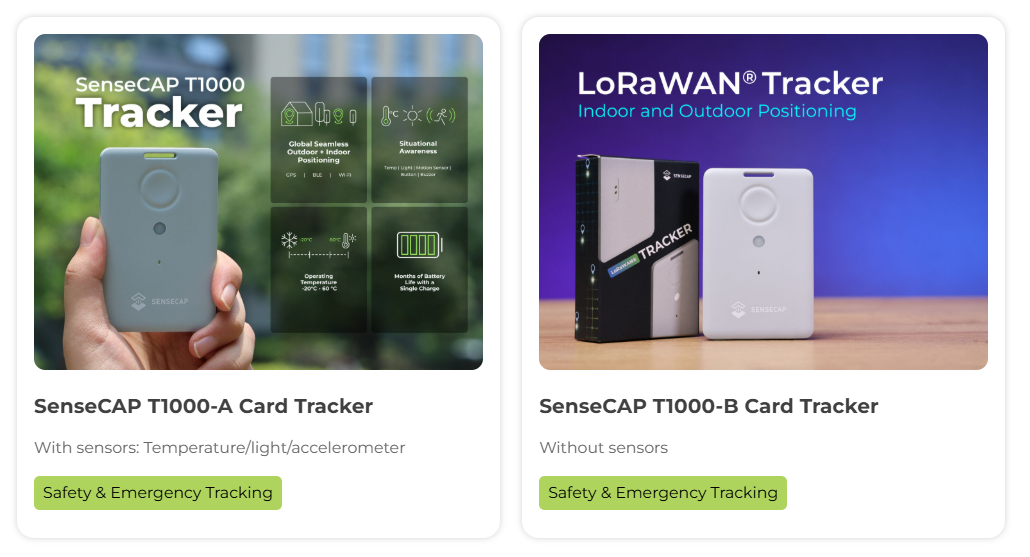
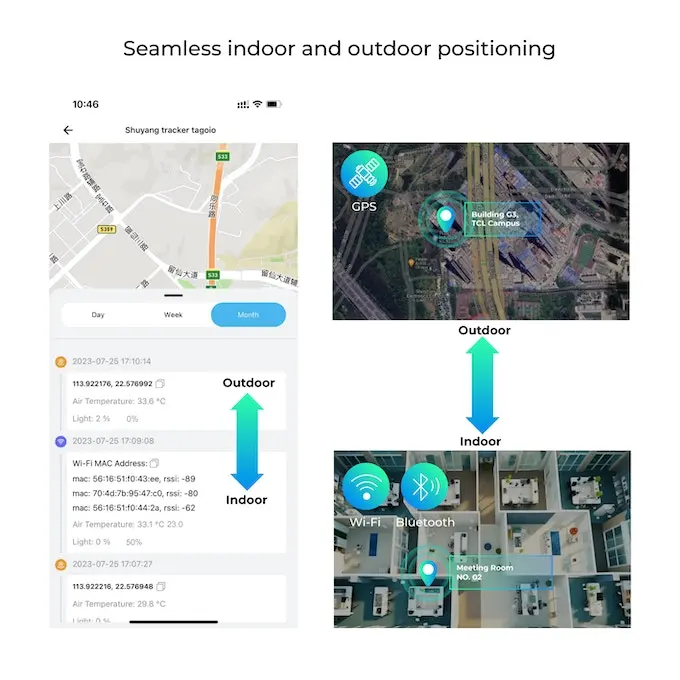
SenseCAP T1000 is a compact LoRaWAN® GPS tracker that utilizes GNSS/Wi-Fi/Bluetooth for precise indoor & outdoor location tracking.
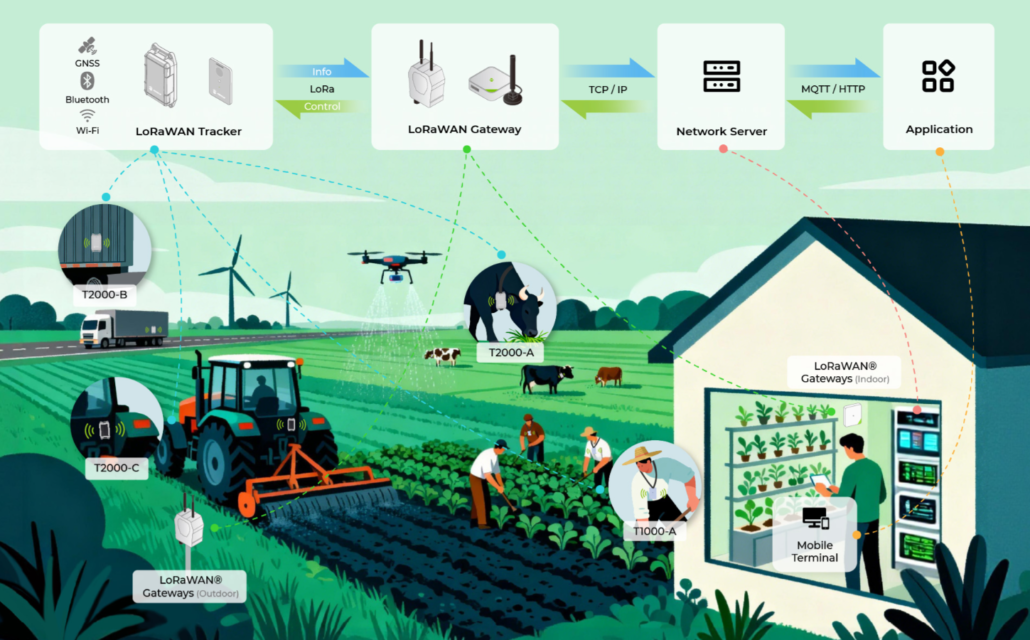
Since LoRaWAN is a Low Power Wide Area Networking (LPWAN) communication protocol designed to wirelessly connect the sensor node to the Internet, you might be wondering what the wide-area or long-range is when it comes to the SenseCAP T1000 LoRaWAN wireless Tracker.
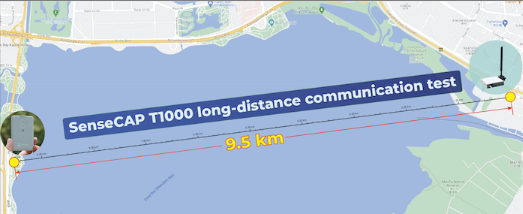
Wonder no more, because we’re about to reveal it in this open manufacturing blog, where we’ll show you how we tested its long-range communication capabilities at nearly twice the recommended range. Evidence can be, that we sent 100 data packets from the tracker to the gateway to see how many packets are successfully received by the gateway. Our test began from Point A at our R&D office in Shenzhen where we installed our M2 gateway to Point B in Shenzhen Bay Park, which is approximately 9.5 km away.
To simulate real-world usage scenarios, we put the SenseCAP T1000 to the test in different positions, mimicking how it would be used in everyday situations. We carefully observed the device’s performance, collecting data for each scenario. Here’s what we discovered:
| Scenario | Distance | Data Reception | |
| 1 | Raised by hand. | 9.5Km | 100% |
| 2 | Hanging in front, facing the gateway | 9.5Km | 99% |
| 3 | Hanging in front, back facing the gateway | 9.5Km | 83% |
| 4 | Placed directly on the grass. | 9.5Km | 1% |
1. Raised by hand: In this scenario, where the device was held in hand, we achieved a remarkable 100% data reception where the data were successfully received without any issues.
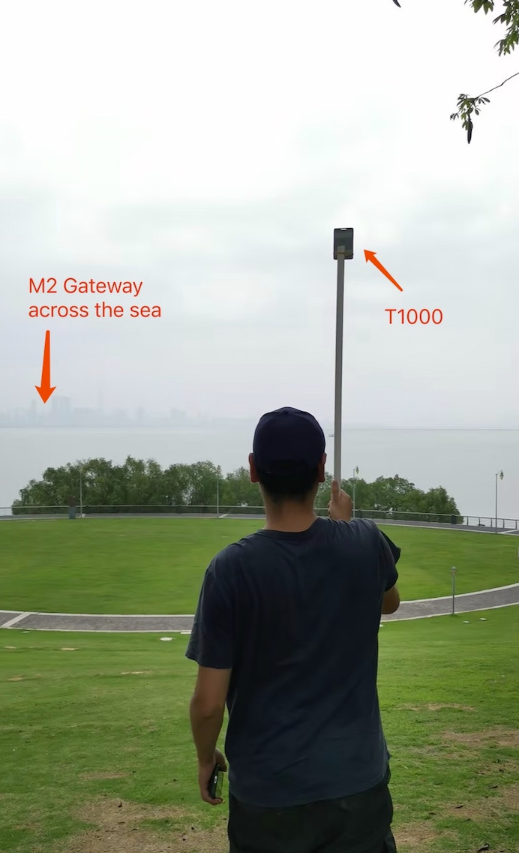
2. Hanging in front, facing the gateway: When the T1000 was suspended in front of the gateway with its front side directed towards it, we achieved an impressive 99% data reception rate. It performed exceptionally well in this configuration.
3. Hanging in front, back facing the gateway: Here, with the T1000 hanging in front but with its back turned to the gateway, we observed an 83% data reception rate. This slight drop in performance can be attributed to the human body obstructing the signal, which is a common challenge in such scenarios.
4. Placed directly on the grass: Placing the device directly on the ground had a significant impact on performance, with only 1% of the data successfully received. This result indicates that the ground interference severely limits the device’s signal transmission.
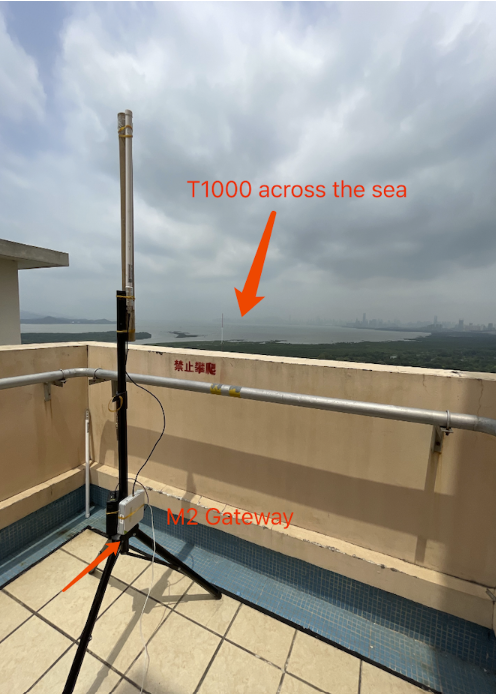
The testing conditions we used were actually quite challenging for the T1000:
– We tested the device at a distance of 9.5km, nearly double the recommended communication range of 5km. This longer distance presented a more demanding scenario for the device.
– Additionally, we only had one gateway installed, which meant that the T1000’s signal coverage was limited to one direction. In practice, the tracker will communicate with multiple LoRaWAN gateways positioned in various locations and orientations.
Our testing has shown that the SenseCAP T1000 excels in most real-world scenarios, providing reliable data reception. The minor drop in performance when the device’s back is facing the gateway is expected to improve in actual usage, where multiple gateways will ensure comprehensive coverage. We are confident that the SenseCAP T1000 is well-equipped to meet your long-range communication needs in a variety of real-world scenarios.
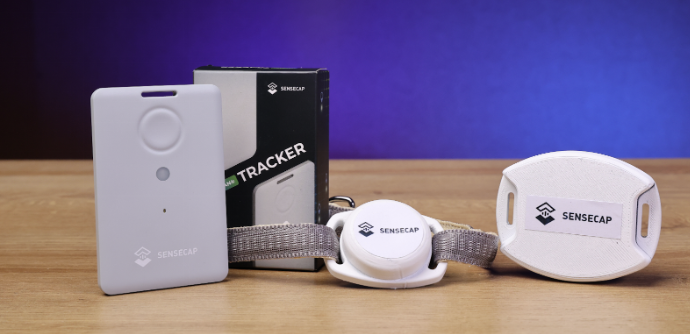
White-label ready for rapid integration
Delivered with a clean, unbranded appearance to support fast OEM deployment—perfect for businesses looking to add their own branding, customize protocols, or scale product lines without starting from scratch.
About Author
