What PCB Base Materials Does Seeed Fusion Offer — and Which One Should You Choose?
🧭Start Your Material Choice Here
Base Material is the first field you set on the Seeed Fusion order page. It shapes how your board handles heat, mechanical structure, bending, and high-frequency signals — and it determines the layer counts, thicknesses, surface finishes, and processes available later.
The most reliable way to choose is to start from your product. Confirm four things first: its operating temperature and power, how tight the internal space is, whether the board needs to bend, and how high its signal frequency runs.
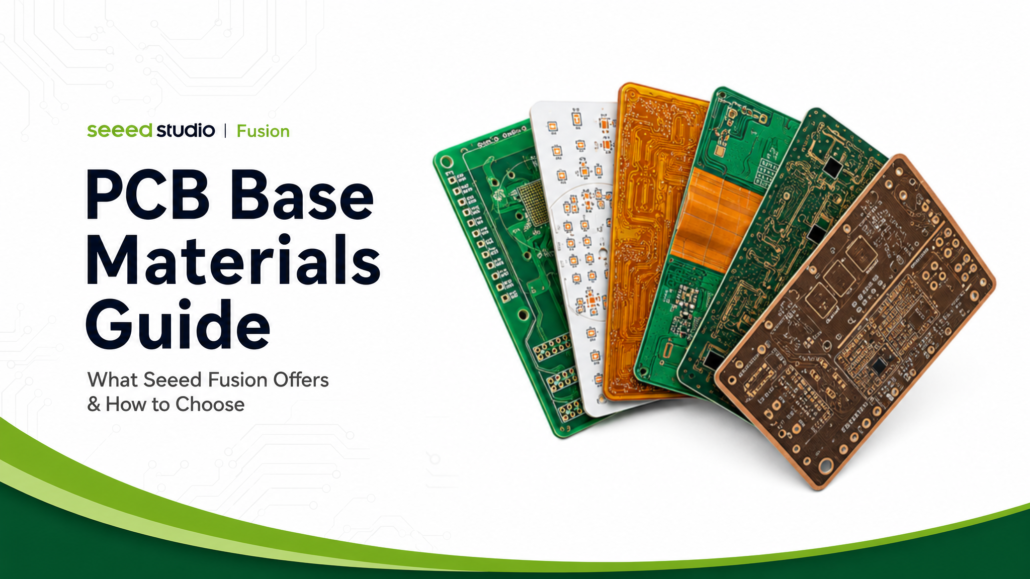
Seeed Fusion offers six base materials. Use the table below for a first pass — locate the type that matches your core need, then read that section for how to choose.
| Base Material | Key Characteristic | Common Applications | Options on Seeed Fusion |
| FR-4 | Mechanically stable; suits most general-purpose rigid PCBs | Prototypes, control boards, dev boards, general electronics | TG130 / TG150 / TG170 |
| Aluminum | Aluminum base helps carry heat away from the circuit | LED lighting, power supplies, heat-generating devices | Aluminum |
| Flexible | Thin, light, and bendable; fits tight space and flexible interconnects | Wearables, camera modules, display connections, compact devices | Flexible PCB |
| Rigid-Flex | Combines rigid and flexible sections in one board | Space-constrained, structurally complex, highly integrated products | Rigid-Flex PCB |
| High Frequency | Low dielectric loss; stable electrical performance at high frequencies | RF, microwave, wireless communication, high-frequency circuits | Rogers RO4003C / RO4350B |
| Copper | Copper base for high-power, high-heat designs | High-power LEDs, power electronics, concentrated-heat components | Copper PCB |
✅ How to Choose the Right Base Material
- Most general-purpose rigid PCBs → FR-4, then pick TG130 / TG150 / TG170 by temperature and reliability
- The board needs to bend or fit a compact space → Flexible
- Rigid sections and flexible connections must be integrated → Rigid-Flex
- RF, microwave, wireless, or signal-sensitive circuits → High Frequency, then compare RO4003C and RO4350B
- Heat dissipation is the main concern → Aluminum
- High power with concentrated heat → Copper
The sections below explain each material in more detail.
1️⃣FR-4: The General-Purpose Choice for Most Rigid PCBs
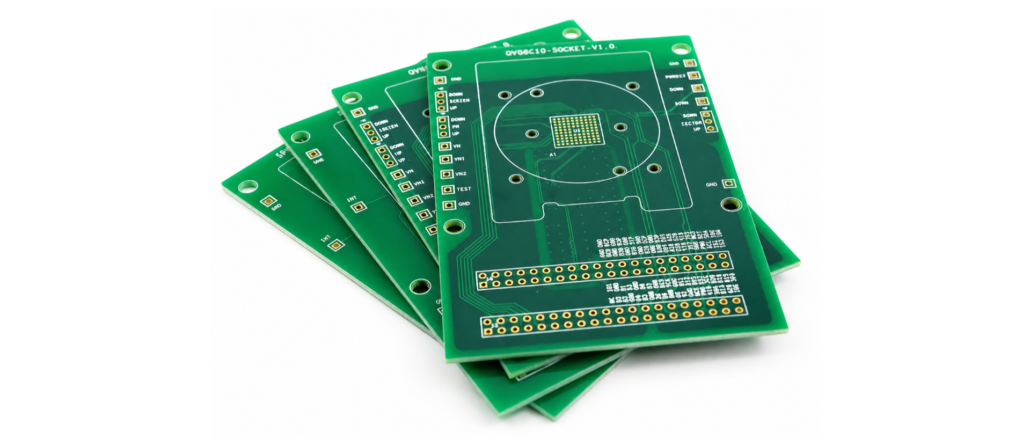
FR-4 is the most common rigid PCB base material — woven glass fabric bonded with epoxy resin. It’s a solid starting point for control boards, sensor boards, dev boards, consumer electronics, and general industrial electronics.
Fusion’s FR-4 comes in three Material Types that differ by Tg — the Glass Transition Temperature, the range where the material’s mechanical and dimensional properties begin to change noticeably. A higher Tg generally means better stability under heat and repeated thermal cycling.
- TG130 — general operating conditions and typical prototypes.
- TG150 — projects with higher temperature or better thermal stability requirements.
- TG170 — designs with high thermal stress, complex structure, or stricter reliability needs.
💡 Tg is not the maximum operating temperature of the finished PCB. Most projects can start from standard Tg; move to a higher Tg when the product involves elevated operating temperatures, complex multilayer builds, higher soldering thermal stress, or stricter reliability requirements.
2️⃣Aluminum: When You Need Better Thermal Management
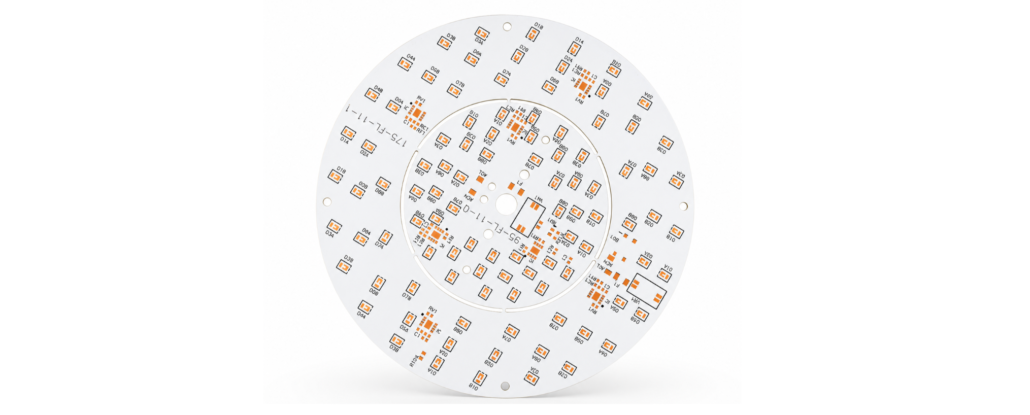
Aluminum PCB uses an aluminum base to carry heat away from the circuit area. Consider it first when heat concentration is the main challenge, or when components need the PCB to move heat toward an enclosure or heat-dissipating structure.
💡 Actual thermal performance also depends on the insulating layer, copper weight, board thickness, layout, and overall enclosure cooling, so evaluate it as part of the full thermal design.
3️⃣Flexible: For Bending and Compact Designs
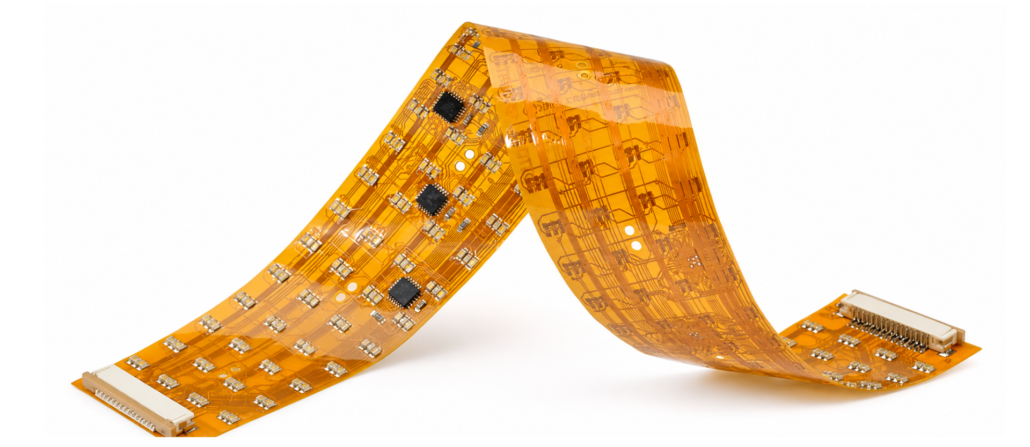
Flexible PCB (FPC) uses a thin, bendable base material that can fold along the internal structure of a product — connecting modules in tight spaces and reducing cable use. It’s common in wearables, camera modules, display assemblies, and other weight- or space-sensitive products.
💡 Before choosing Flexible, settle one question: does the board bend once during assembly and then stay fixed, or does it flex repeatedly in use? The two place different demands on routing, bend areas, copper design, and reliability, so confirming this early smooths later configuration and communication.
4️⃣Rigid-Flex: Integrating Rigid Circuits with Flexible Connections
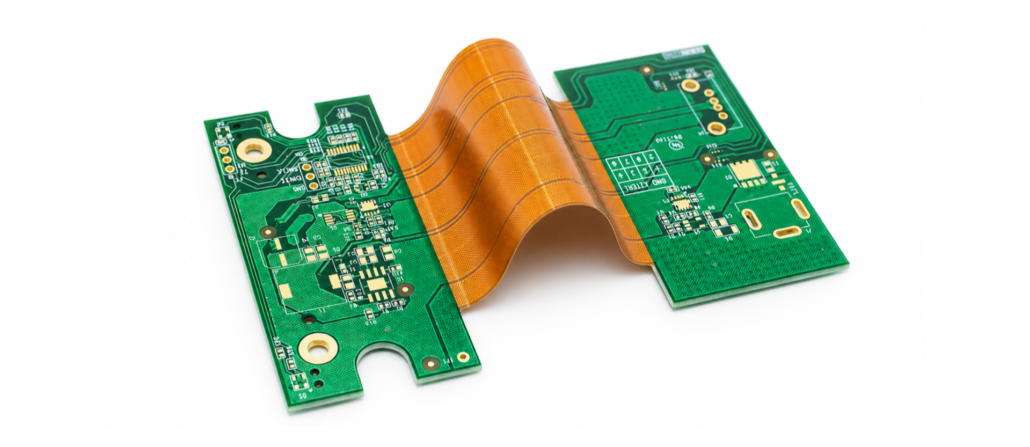
Rigid-Flex PCB combines rigid and flexible sections in one board: the rigid part carries components, the flexible part connects circuit areas — cutting out separate connectors, cables, and the assembly steps between multiple boards. It suits products that are space-constrained, structurally complex, or need higher interconnect integration.
⚙️ Because one board contains both rigid circuitry and FPC, ordering requires two separate parameter sets — Rigid Parameters and FPC Parameters (each with its own layer count, thickness, copper weight, and so on) — configured through Advanced PCB/PCBA.
5️⃣High Frequency: For RF, Microwave, and Signal-Sensitive Designs
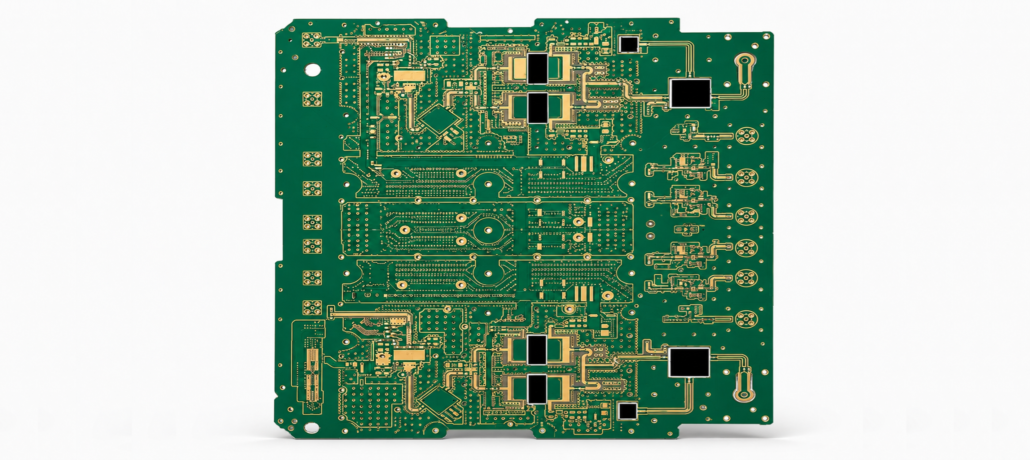
As signal frequency rises, the dielectric loss of ordinary base materials affects signal integrity, impedance control, and transmission more noticeably. High FrequencyPCB uses materials with more stable dielectric properties and lower loss, suited to RF, microwave, antenna, and wireless communication circuits.
Fusion offers two Material Types, Rogers RO4003C and RO4350B, both from the Rogers RO4000 series. They are glass-reinforced hydrocarbon and ceramic laminates (not PTFE), can be fabricated with processes close to those for standard epoxy/glass materials, and are lead-free process compatible.
| Material Type | Process Dk @ 10 GHz | Df @ 10 GHz | Main Point |
| Rogers RO4003C | 3.38 ± 0.05 | 0.0027 | Lower dielectric loss; suits circuits sensitive to high-frequency performance |
| Rogers RO4350B | 3.48 ± 0.05 | 0.0037 | UL 94 V-0 flame rating and good dimensional stability |
💡 In plain terms: Dk (dielectric constant) affects impedance, signal propagation speed, and circuit size; a lower Df (dissipation factor) generally means less high-frequency loss. The right type depends on your operating frequency, impedance, stack-up, board thickness, and certification needs together. For full parameters, see the Data Sheet link under the High Frequency option on the order page.
6️⃣Copper: For High-Power, High-Heat Designs
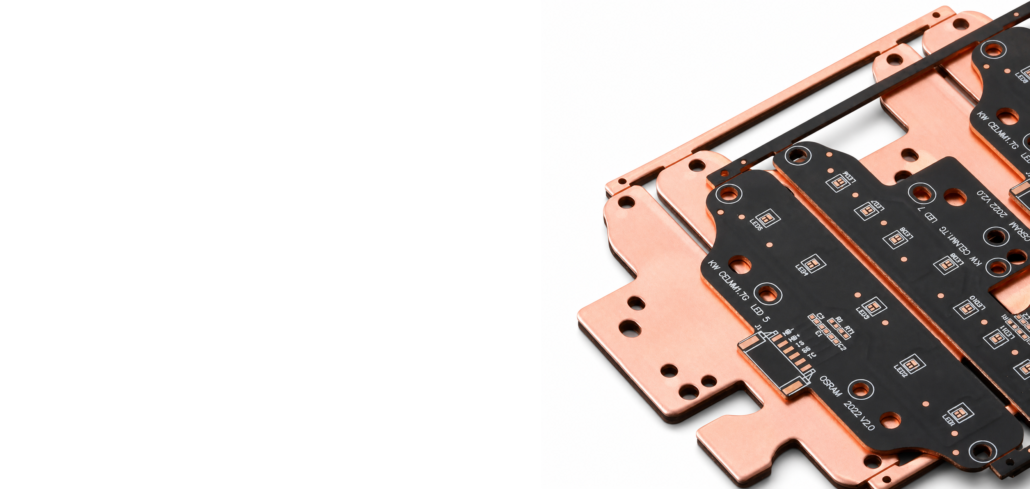
Copper PCB uses a copper base and is positioned as High Power on the order page — for designs that need to move large amounts of heat, such as high-power LEDs, power conversion equipment, and power modules.
Aluminum and Copper are both metal-core boards used to improve thermal management: evaluate Aluminum (positioned as Thermal) for common heat-dissipation needs, and Copper (positioned as High Power) for designs with higher power and heat. The final choice comes down to component power, heat distribution, insulation structure, and how the PCB connects to a heatsink or enclosure.
🚀 Ready to Order
Material choice also works together with layer count, thickness, copper weight, surface finish, impedance, and special processes. Start standard projects from Standard PCB/PCBA; use Advanced PCB/PCBA for HDI, high layer counts, Rigid-Flex, High Frequency, and other special manufacturing needs.
If the material you need isn’t covered on the page yet, send your Gerber files and manufacturing requirements to [email protected] and the Fusion team will reply with a quote within two working days.
🚀 Ready to go? Upload your Gerber, choose your Base Material, and start your PCB project →https://www.seeedstudio.com/fusion_pcb.html?from=blog
About Author
