Purpose-Built for Greenhouses: SenseCAP Combo 5-in-1 Sensor Supports Smart Strawberry Growing with 4G Environmental Monitoring
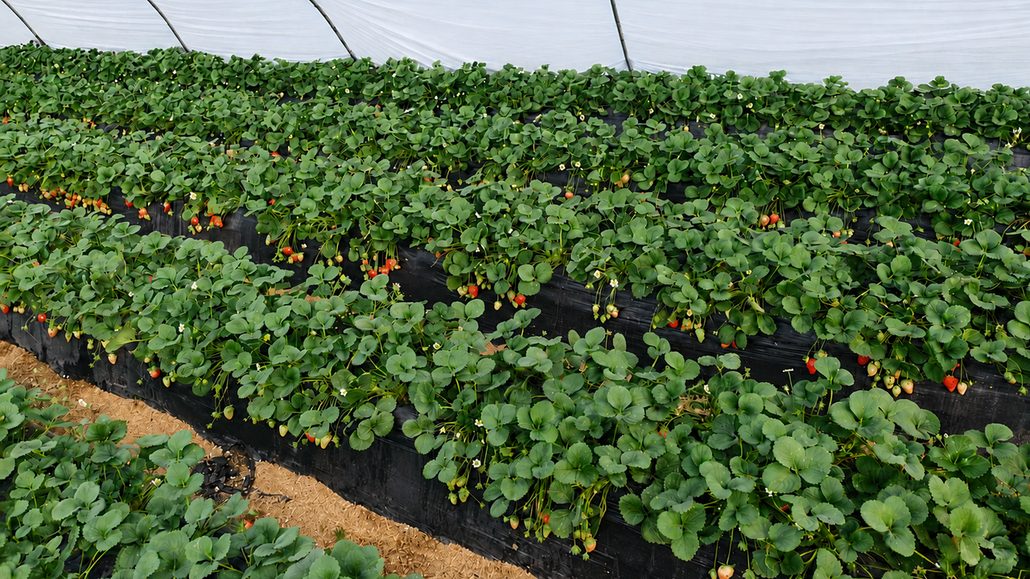
Step inside a strawberry greenhouse, where rows of plants stretch along the growing beds. Flowers and fruit nestle among the green leaves. For growers, watching crop development is only part of daily management. Equally important are the environmental changes that cannot be seen directly.
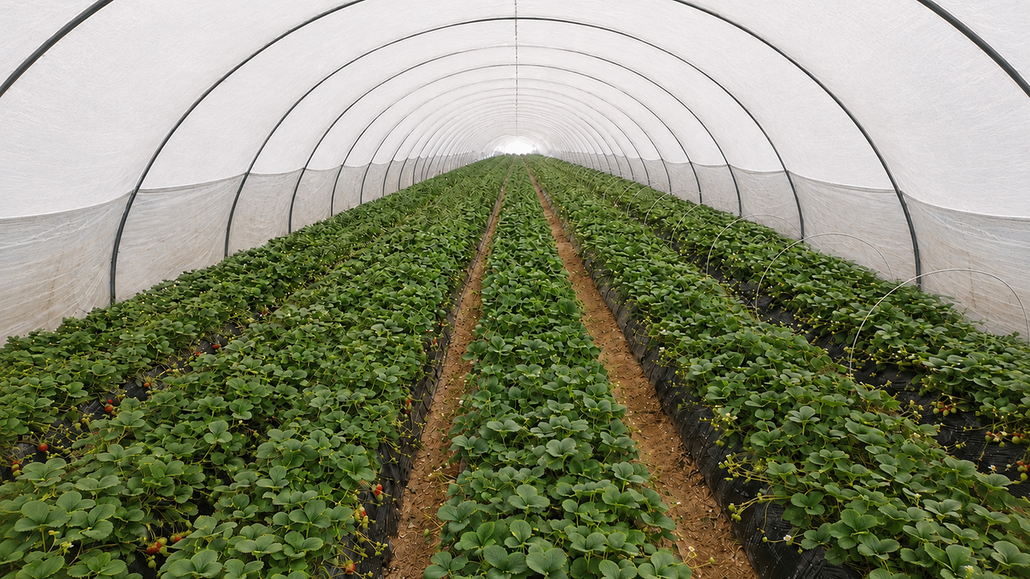
How long did high humidity persist overnight? What temperature changes occurred in the greenhouse during the day? Did CO₂ levels rise or fall after ventilation? To what extent did shading change light levels around the crop?
Smart agriculture starts with observing and recording these changes. The resulting data can then inform growing decisions. This strawberry greenhouse deployment uses an integrated 4G environmental monitoring device. It combines microclimate sensing, remote data transmission, and external sensor expansion. Together, these capabilities provide a data foundation for digital greenhouse management.
Project Overview
Strawberry growing is an important part of specialty agriculture in northern China. Greenhouse cultivation helps extend the supply season and regulate growing conditions. Years of growing experience support this approach. E-commerce and cold-chain logistics help deliver fresh strawberries to consumers across the country.
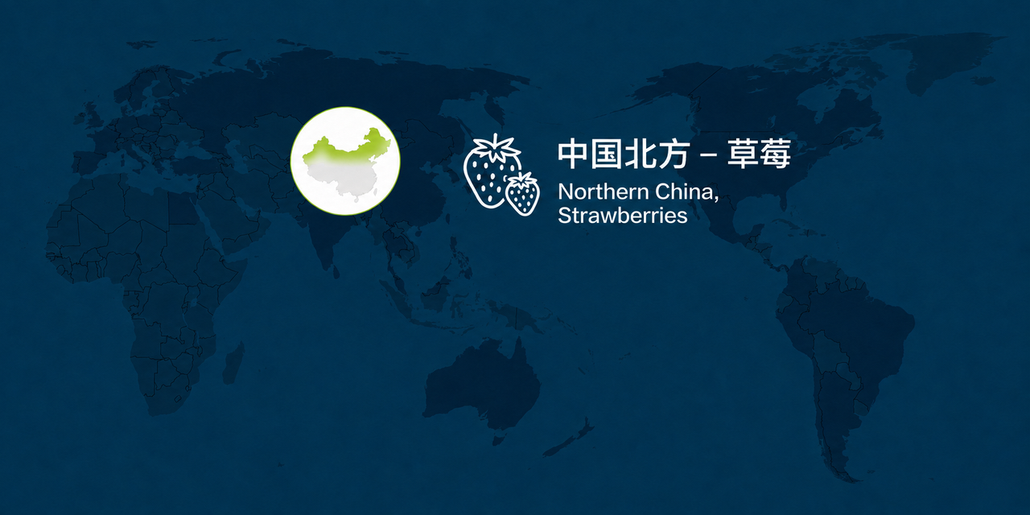
Strawberry production also supports nursery propagation, protected cultivation, and food processing. Together, these activities form a value chain spanning production, processing, and sales. As the sector develops, consistent quality, standardized production practices, and comprehensive growing records become increasingly important. In northern China’s strawberry greenhouses, continuous temperature, humidity, and light data inform daily decisions. These records help growers track seasonal changes and day–night fluctuations. Combining growers’ experience with digital monitoring supports more precise greenhouse management.
Why Microclimate Monitoring Matters for Strawberry Greenhouse Management
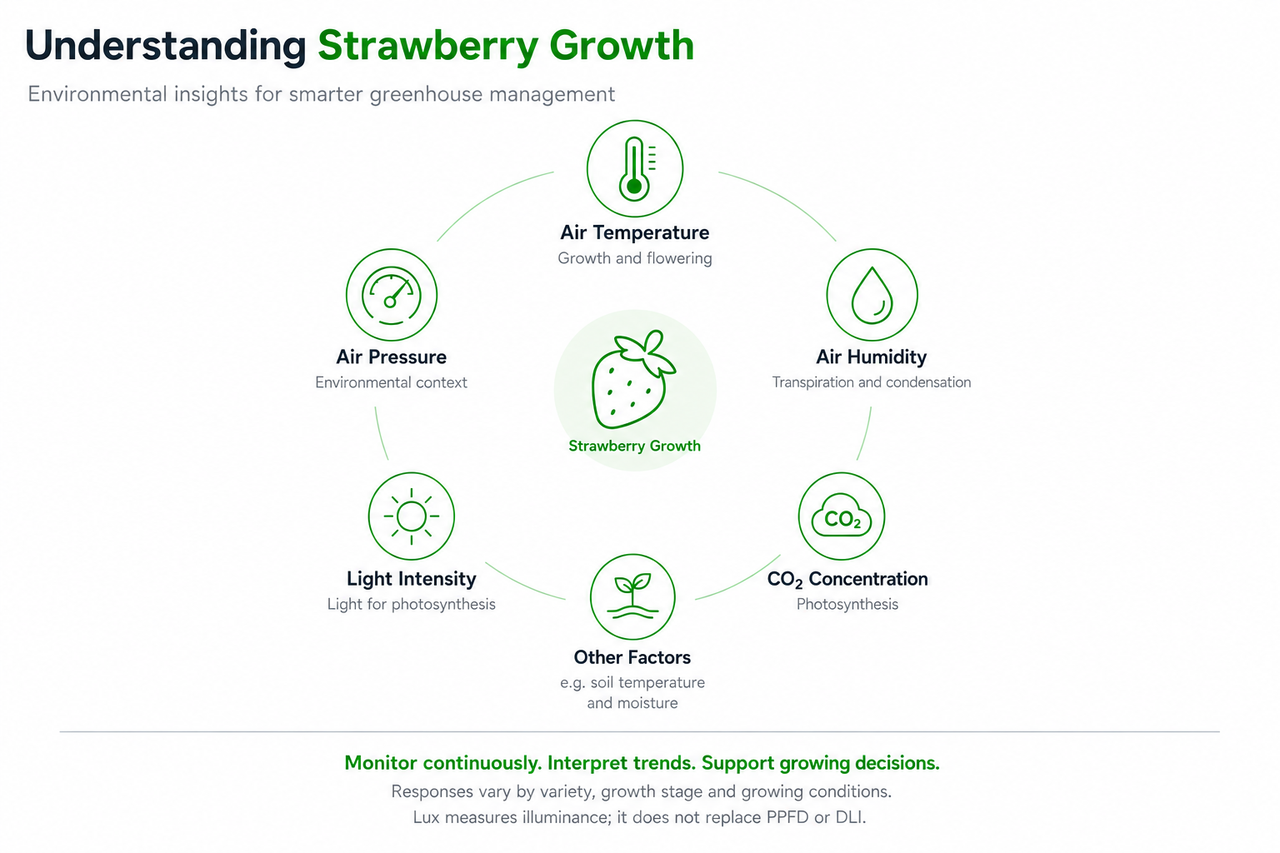
- Multiple environmental factors influence strawberry growth.
Temperatures that are too high or too low can affect flowering, fruit set, and fruit development. Prolonged high humidity and condensation increase disease risk and may affect pollination. Insufficient light or inadequate daytime CO₂ availability can limit photosynthesis. - Heat retention, ventilation, and humidity control need coordination.
These priorities interact and can conflict, making it harder to maintain suitable growing conditions. Decisions need to take actual greenhouse conditions into account. - Environmental management should reflect local growing conditions.
Varieties, growth stages and cultivation methods differ in their environmental requirements and responses. A single set of fixed thresholds therefore cannot be applied to every greenhouse. - Continuous monitoring reveals how conditions change.
Continuous records reveal more than isolated temperature and humidity readings. They show day–night patterns and how long abnormal conditions last. These records also help growers relate environmental changes to weather, ventilation, and management actions. - Recorded data support agronomic judgment.
Combining monitoring records with growing experience helps growers compare conditions across dates, growing zones, and management practices. These comparisons inform daily decisions.
Limitations of Traditional Monitoring in Strawberry Greenhouses
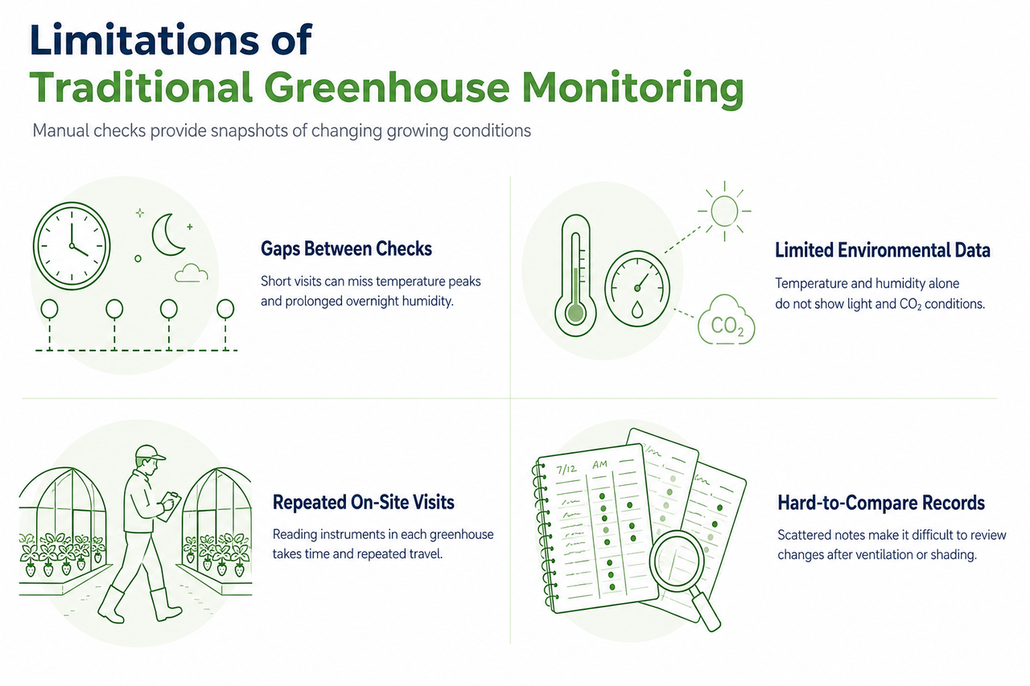
Walking through greenhouses, checking thermometers and hygrometers, and recording readings by hand help growers understand on-site conditions. However, these methods have limitations when it comes to continuous monitoring and using the data:
- Gaps in environmental records.
Scheduled measurements can miss overnight high humidity or rapid daytime temperature rises. They also make it difficult to determine how long abnormal conditions lasted. - Limited monitoring parameters.
Temperature and humidity readings alone do not reveal changes in light and CO₂, limiting a comprehensive understanding of greenhouse conditions. - Time-consuming on-site checks.
Reading instruments in each greenhouse adds travel and inspection time. This makes it harder to monitor multiple greenhouses at once. - Management effects are difficult to trace.
Scattered handwritten notes rarely reveal continuous trends. This makes it harder to compare conditions before and after ventilation, shading, or other actions.
4G Remote Environmental Monitoring for Greenhouses
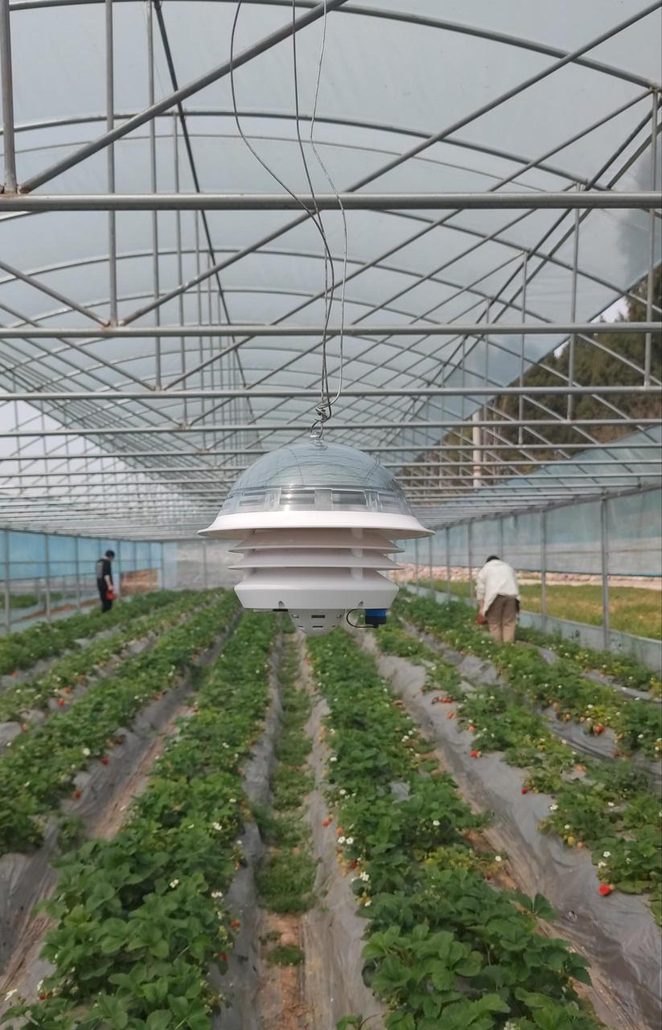
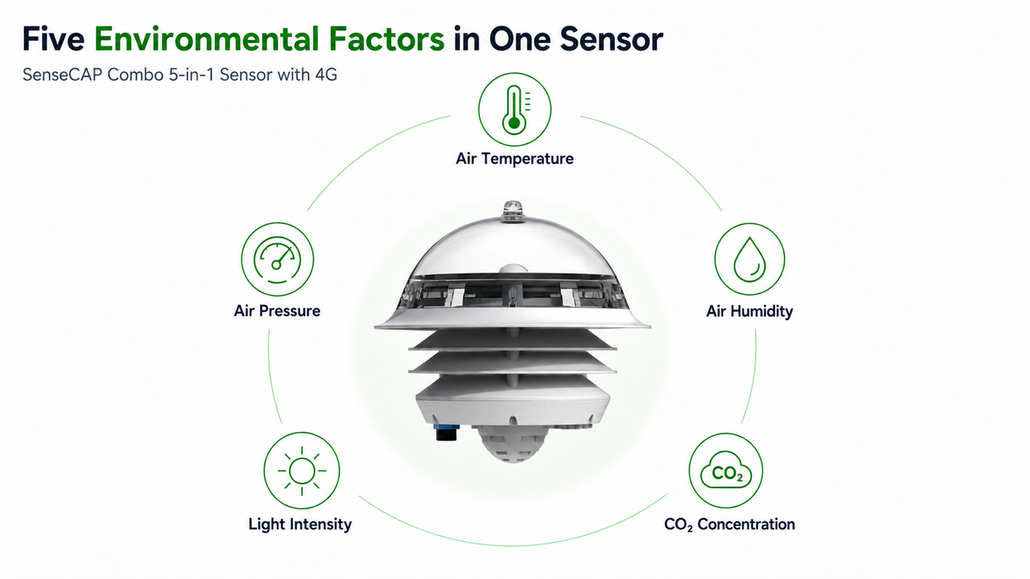
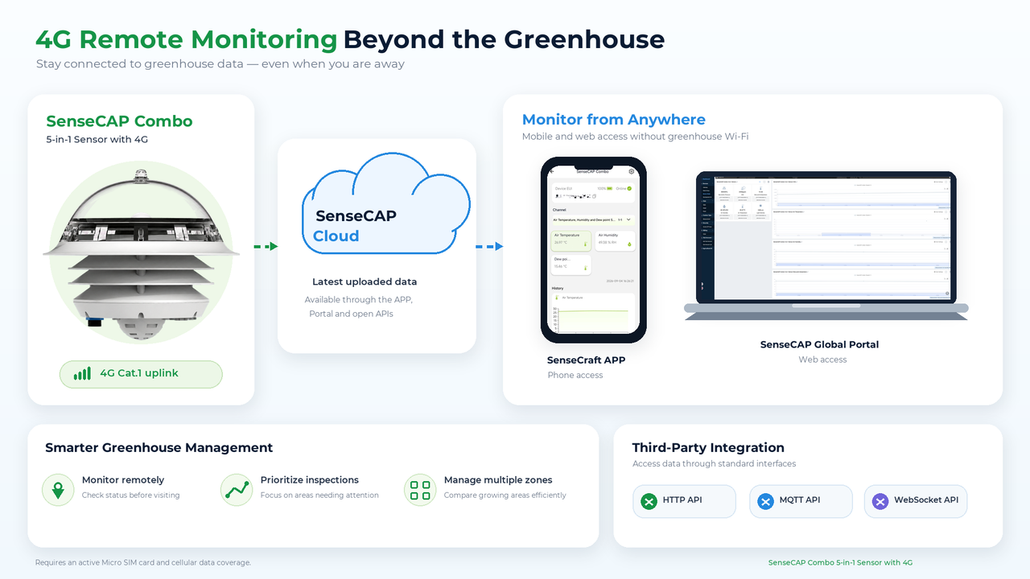
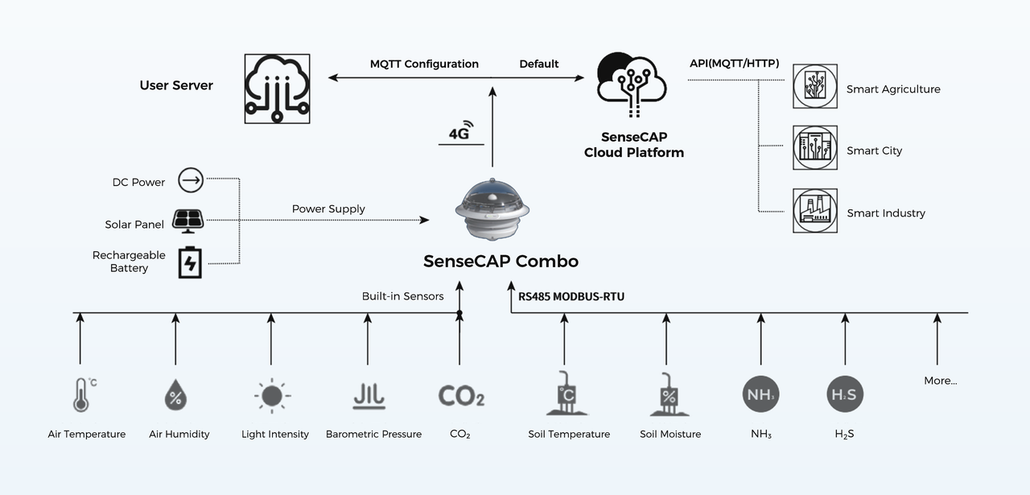
In this strawberry-growing region, the SenseCAP Combo 5-in-1 Sensor with 4G hangs above the growing area. It collects greenhouse environmental data and transmits it to the cloud over a 4G cellular network. Growers can check environmental changes remotely without entering the greenhouse to read instruments. With an active SIM card and cellular coverage, the device transmits data without relying on greenhouse Wi-Fi. Designed for greenhouses and indoor agriculture, it measures five environmental parameters. These include air temperature, relative humidity, CO₂ concentration, light intensity, and atmospheric pressure. It also supports external RS485 sensors. Growers can begin with core environmental monitoring and add further measurements as their needs develop.
Why Choose This Device
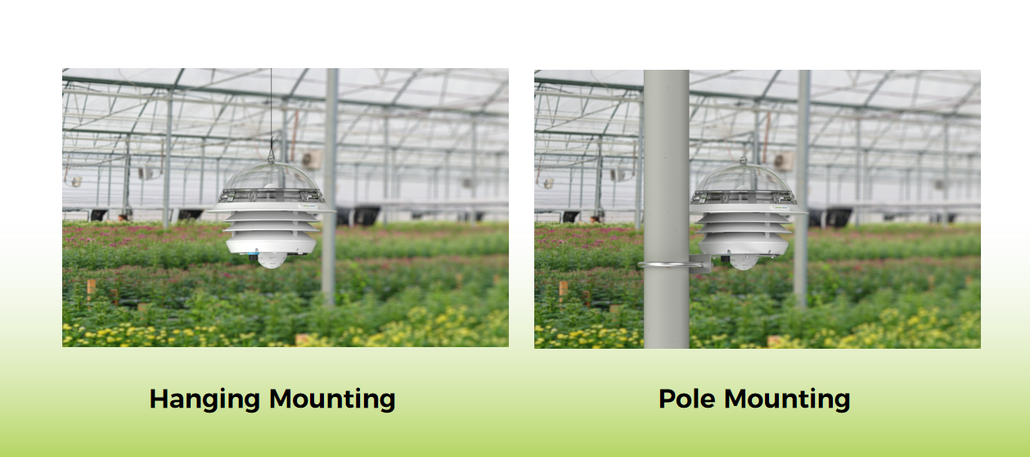
- Designed for greenhouses with flexible installation.
The device can hang from existing greenhouse structures. This keeps growing beds clear and reduces interference with harvesting and daily work. IPX5 protection and a UV-resistant housing suit greenhouse applications. Flexible placement makes it easier to position monitoring points by growing zone.
- Five environmental parameters in one device.
Integrated temperature, humidity, CO₂, light, and pressure monitoring reduces the installation and maintenance work associated with multiple separate devices. Observing day–night patterns and changes before and after management actions provides data to inform ventilation, shading, and other decisions.
- Remote data management over 4G with current readings and historical records.
With an active SIM card and cellular coverage, the device transmits data without greenhouse Wi-Fi. Growers can view the latest readings and historical trends in the SenseCraft App or SenseCAP Global Portal. They can compare environmental data with ventilation, shading, and irrigation records. These comparisons help growers review seasonal practices, prioritize inspections, and oversee multiple growing zones. The platform also supports HTTP, MQTT, and WebSocket APIs for integration with third-party management systems.
- Flexible power and sensor expansion for long-term root-zone monitoring.
The device supports solar, battery, and external power. Growers can select a power setup based on greenhouse light conditions and the power demands of external probes. Its RS485 interface and a splitter allow connections to up to 10 external sensors. These sensors extend monitoring to soil or substrate moisture, temperature, and electrical conductivity (EC).
During network interruptions, the device can store data locally and upload it once connectivity returns. This reduces gaps in long-term records. The data helps growers review irrigation effects and assess water and nutrient management.
Continuous Monitoring Helps Strawberry Growers Respond to Environmental Changes and Review Management Results
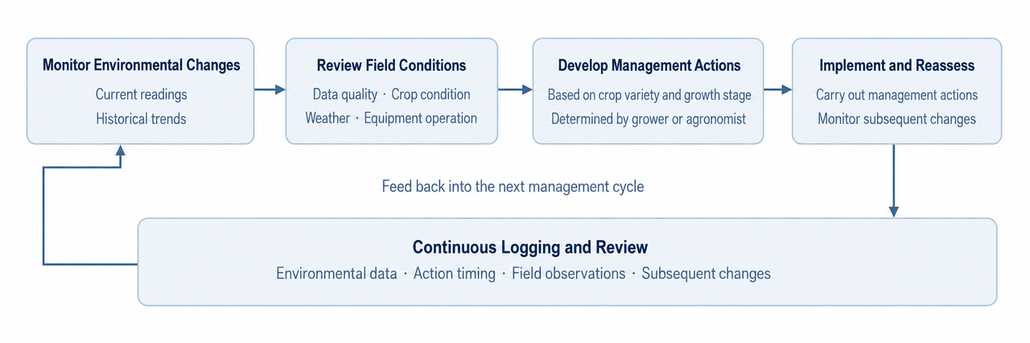
This deployment combines multiple environmental measurements and 4G communication in one device. It provides continuous greenhouse records and fills gaps between manual inspections. These records support an “observe–assess–act–review” management process.
For example, when temperatures keep rising, growers can check light levels and ventilation conditions. They can then decide whether to adjust ventilation or shading. Subsequent data helps them assess the results. The diagram below illustrates a suggested management workflow, not an automated control sequence validated in this deployment.
Continuous data also gives growers, agronomists and system integrators a shared basis for discussion. Automatic alerts or equipment integration require platform rules to be configured and validated. Suitable control equipment and manual override arrangements are also needed where applicable. The direct value of this deployment is to provide data for management decisions. Potential outcomes include water or energy savings, higher yields, and improved fruit quality. These require further evaluation using management records, full growing cycles, and comparative data.
Building an Expandable Smart Agriculture System
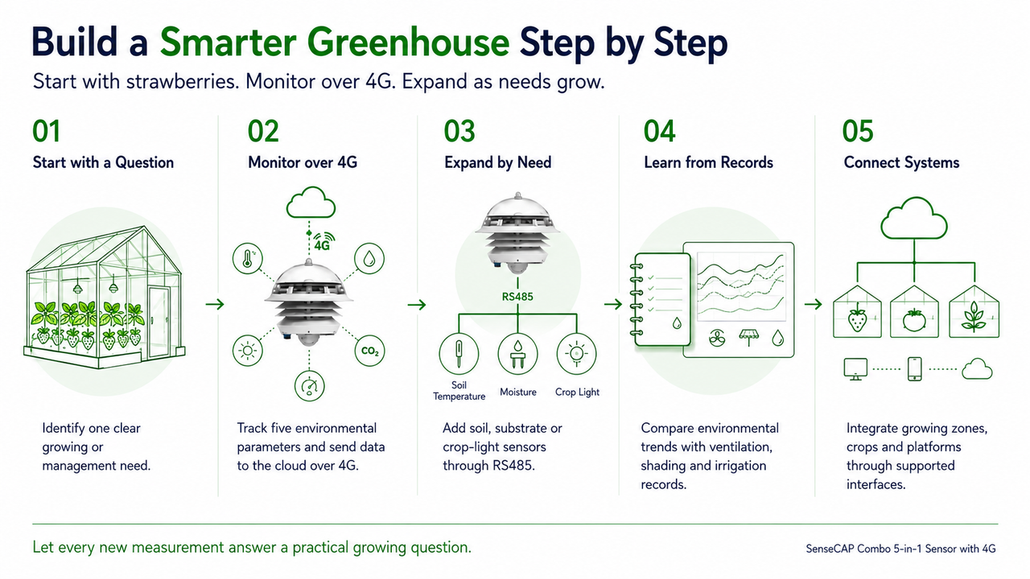
- Digital greenhouse management can start with one clear question, with monitoring expanded step by step.
- Initially, the five built-in parameters can help growers understand the greenhouse microclimate and establish continuous records. As management needs extend to irrigation or root-zone conditions, suitable soil, substrate,e or agricultural light sensors can be added.
- Once enough data has accumulated, growers can analyze it alongside growing records. This helps develop decision rules suited to local varieties, seasons, and management practices. Where integration with an existing agricultural platform is needed, MQTT or platform interfaces can be used according to project requirements.
- Expansion should ensure that every new measurement addresses a clear management question. Connecting more devices is not the goal in itself.
About Author
