Best 7-in-1 Weather Stations for IoT & Outdoor Monitoring: 4 Models Compared
A 7-in-1 weather station consolidates seven essential meteorological measurements in one compact outdoor instrument, reducing separate sensors, mounting hardware, cable routes, and integration work.
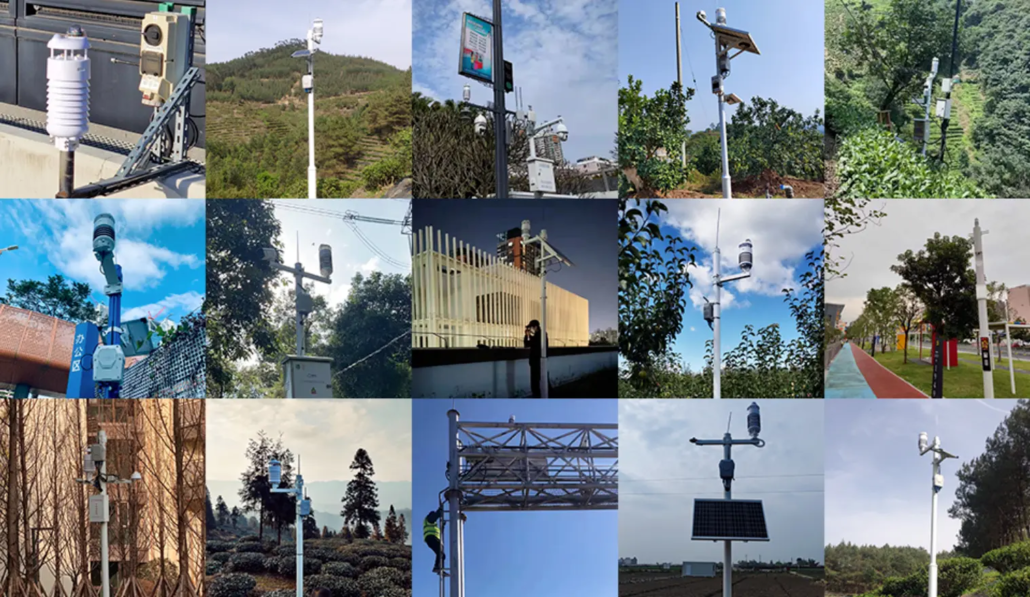
For agriculture, environmental monitoring, renewable energy, smart-city, and industrial IoT projects, the main value is synchronized data from one installation point and one field interface.
In this blog, we compare four Seeed Studio SenseCAP S700 7-in-1 Weather Stations by measurement mix, rain-sensing method, light or solar channel, connectivity, outdoor specifications, listed price, and best-fit deployment.
What Is a 7-in-1 Weather Station?
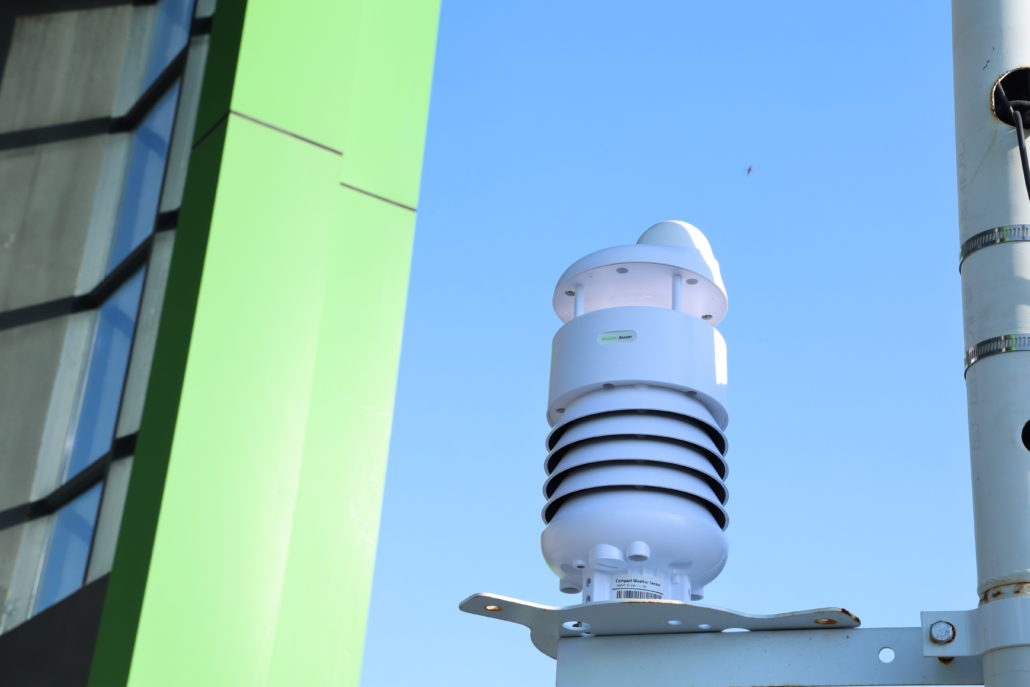
A 7-in-1 weather station integrates air temperature, relative humidity, barometric pressure, wind speed, wind direction, rainfall, and a light-related measurement in one enclosure. One mounting point, cable route, and communication interface simplify installation compared with seven separate instruments.
The first five parameters form a common meteorological core. The remaining channels may use optical or radar rainfall sensing and may report illuminance or global solar radiation, depending on the decision the station must support.
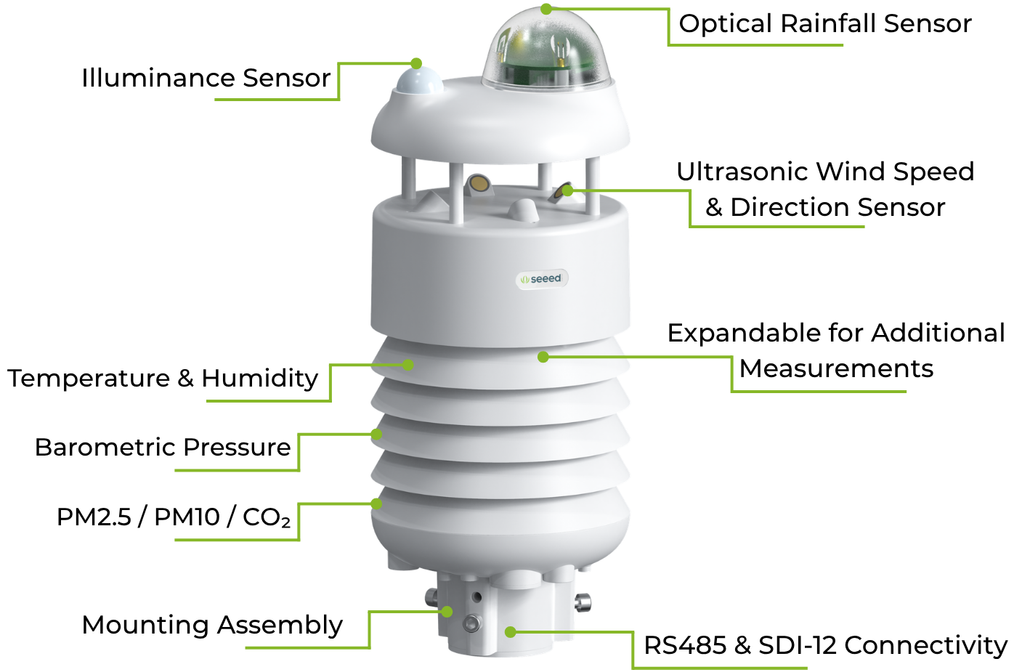
For meteorological researchers, growers, facilities managers, and system integrators, integration reduces brackets and exposed cables, produces synchronized readings, and makes multi-site deployment easier to repeat. Mounting, addressing, polling, and data mapping can be standardized across a monitoring network.
What Does a 7-in-1 Weather Station Measure? And Why Choose It?
Each channel describes a different part of the local environment. Buyers should assess not only whether a parameter is present, but also which operational decision depends on it and what happens if the data is inaccurate, delayed, or unavailable.
Table 1. Seven Core Measurements in a 7-in-1 Weather Station and Their Operational Value
| Parameter | What it describes | Why it changes real-world decisions |
| Air temperature | Thermal conditions around crops, equipment, buildings, and outdoor assets. | Supports frost and heat alerts, ventilation control, equipment protection, and microclimate analysis. |
| Relative humidity | The amount of moisture in the air relative to saturation. | Informs condensation, crop-disease risk, drying conditions, corrosion exposure, and comfort control. |
| Barometric pressure | Local atmospheric pressure and its change over time. | Adds context to short-term weather changes and strengthens interpretation of local time-series data. |
| Wind speed | How fast air moves across the site. | Affects spray drift, ventilation, fire behavior, structural loading, and safe field operations. |
| Wind direction | Where the wind is coming from. | Helps trace weather movement, pollutants, smoke, spray drift, and ventilation paths. |
| Rain intensity | How quickly precipitation is arriving. | Supports irrigation pauses, drainage control, flood alerts, storm-event analysis, and maintenance planning. |
| Light or solar channel | Visible illuminance in lux or incoming solar energy in W/m². | Illuminance supports daylight-oriented monitoring; solar radiation supports crop-energy, shading, evapotranspiration, and photovoltaic analysis. |
Collected on one sampling timeline, these channels explain events in context. Greenhouse operators can compare solar load, temperature, humidity, and ventilation; plantation managers can relate rain intensity to wind and soil conditions; solar-site operators can compare irradiance with panel output. Synchronized measurements are therefore more useful than seven isolated readings.
What to Look for in a 7-in-1 Weather Station
Start with the decision the data must support. A plantation manager setting irrigation thresholds, a municipal meteorologist monitoring heat and rainfall, a solar-site operator comparing irradiance with output, and a system integrator building a regional network will prioritize different channels. Translate each decision into a measurement, range, accuracy, reporting interval, interface, power, and maintenance requirement before comparing products.
Evaluate the full operating system, not only the sensor list. Local climate extremes, exposure, mounting, cable runs, data-logger compatibility, backhaul, API access, energy budget, calibration evidence, and maintenance access all influence long-term data quality and total deployment cost.
Sensor Accuracy and Measurement Range
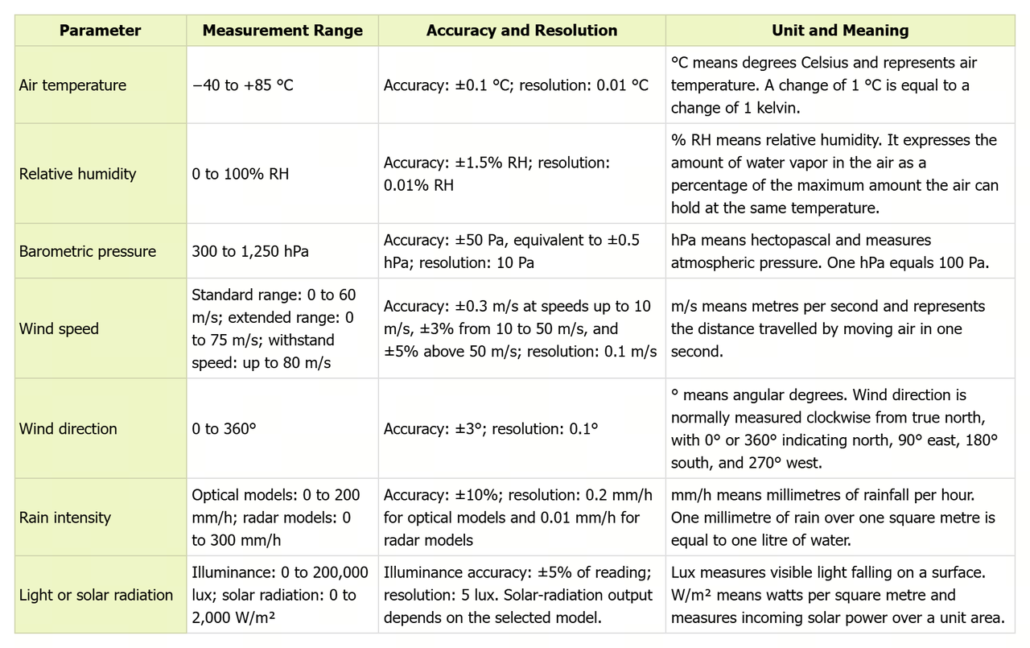
Measurement range, accuracy, and resolution describe different aspects of sensor performance. Range defines the minimum and maximum values a sensor can report. Accuracy indicates how closely a reading matches the reference value, while resolution is the smallest change the sensor can display. The measurement unit is equally important because it identifies the physical quantity represented by the value.
Table 2. Measurement Range, Accuracy, Resolution, and Unit Reference
Connectivity and Data Access
Check the native field interface before considering cloud software. RS485 with Modbus RTU is common in industrial automation and supports addressed polling; SDI-12 is common in low-power environmental logging. Confirm the register map, address configuration, baud rate, cable length, grounding, surge protection, and whether the selected logger or PLC can read every required channel.
Then map the complete data path: station to local host, local host to LoRaWAN, cellular, Ethernet, or another backhaul, and onward to the target platform. Verify offline buffering, timestamps, API or export access, data ownership, alarm handling, cybersecurity requirements, and whether the system can operate with a private server instead of a mandatory vendor cloud.
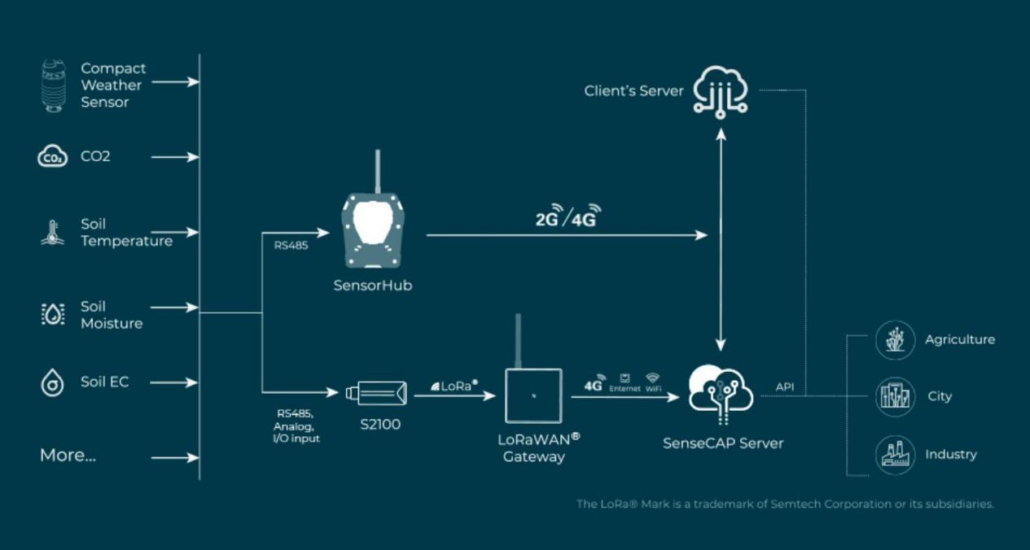
For phased deployments, commission local data acquisition first, validate units and timestamps, then add remote communications and application integration. This sequence lets system integrators isolate sensor, network, and software issues while keeping the measurement layer stable as the wider architecture evolves.
Size, Installation, and Outdoor Durability
Compare footprint, mass, mast diameter, mounting hardware, connector type, cable length, and service clearance against the actual site. A compact all-in-one unit can reduce brackets and cable routes, but it still needs clear wind exposure, representative airflow, correct height, and separation from walls, trees, roofs, exhausts, and reflective surfaces.
For wind direction, verify true-north alignment, level installation, compass options, and the effect of nearby structures. Installers should also plan cable strain relief, a service loop, grounding, surge protection, and safe access for inspection or cleaning.
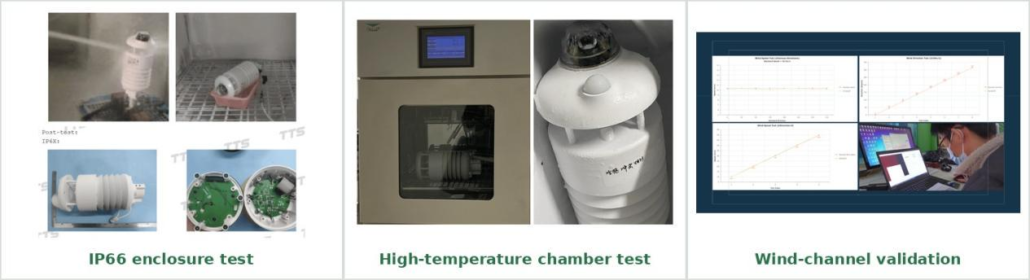
Check that the IP rating covers the complete assembled system, including connectors and cable entries. Review the operating temperature range, UV and corrosion exposure, condensation behavior, survival wind speed, and whether a heater is available for cold, humid, or icing-prone sites.
For a city meteorologist maintaining roadside nodes or a plantation manager overseeing distant blocks, durability should translate into fewer site visits, predictable cleaning intervals, replaceable cables or modules, and documented maintenance procedures, not only a higher enclosure rating.
Power and Deployment Requirements
Power planning should cover the complete monitoring node, not only the weather sensor. Verify the supply voltage, nominal and peak consumption, heater demand, logger and backhaul load, cable voltage drop, and startup current before selecting the power source.
For off-grid deployments, size the battery and solar system around the actual sampling interval, transmission schedule, expected heater duty cycle, converter efficiency, winter solar input, and required reserve. The system should maintain its required reporting schedule through cold-weather operation and consecutive low-sun days.
Four 7-in-1 Weather Stations Compared
SenseCAP offers four best 7-in-1 weather stations, each designed to meet the needs of different application scenarios and high-accuracy weather monitoring projects. From smart agriculture and environmental monitoring to IoT weather networks and remote outdoor deployments, there is an S700 model for every project.
Best 7-in-1 Weather Station for Optical Rain and Light Intensity: SenseCAP S700
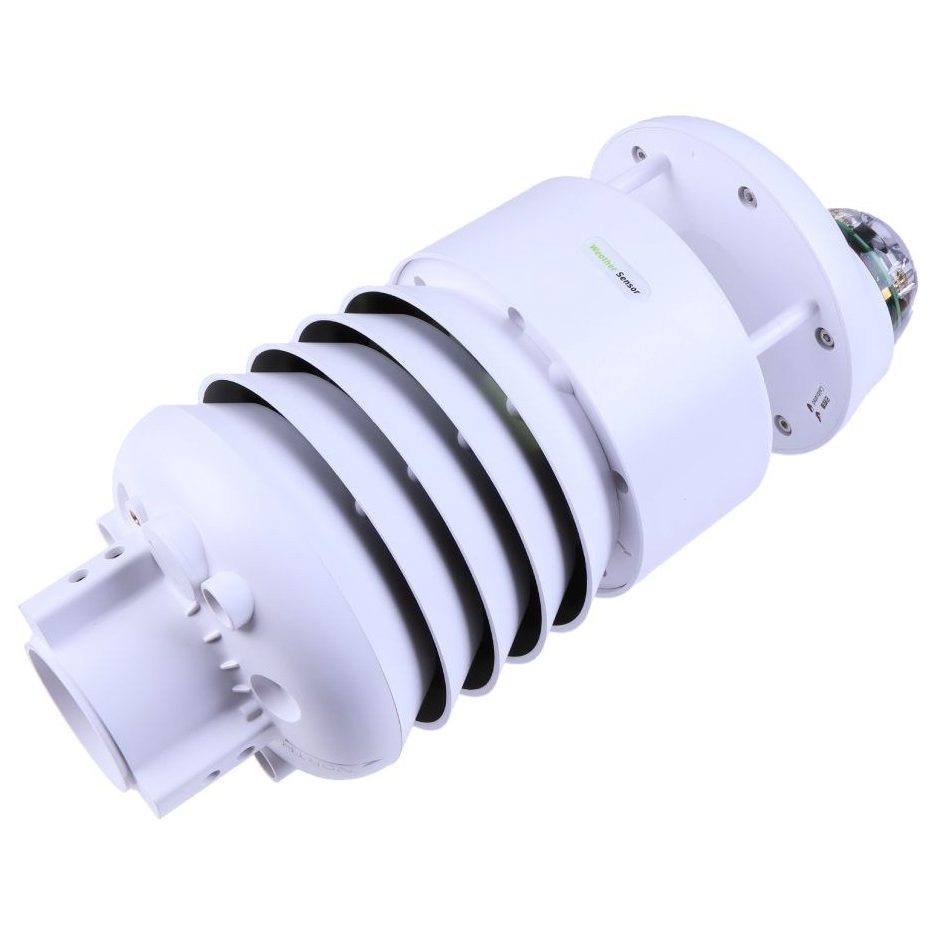
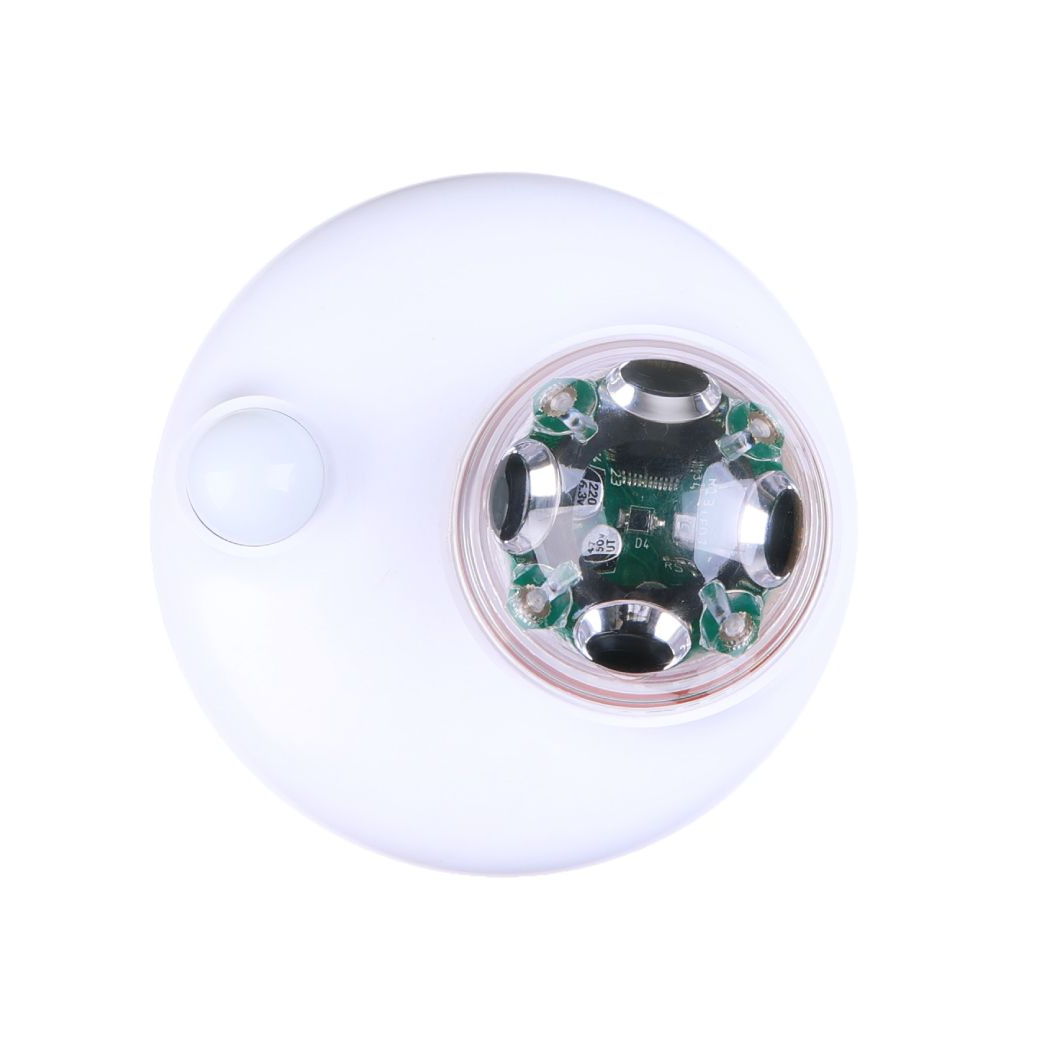
- Listed price: $699.
- Weather parameters: Air temperature, relative humidity, barometric pressure, ultrasonic wind speed, ultrasonic wind direction, optical rain intensity, and illuminance.
- Key features: Optical rain range of 0 to 200 mm/h with 0.2 mm/h resolution; illuminance range of 0 to 200,000 lux; stationary ultrasonic wind head; 3 m cable.
- IP rating: IP66.
- Interfaces: RS485 with Modbus RTU and SDI-12.
- Operating temperature: −40 to +85 °C; optional heater uses 24 V DC.
- Best-fit deployments: Farm microclimate stations, campus weather displays, smart-city nodes, construction sites, industrial parks, and general environmental observation.
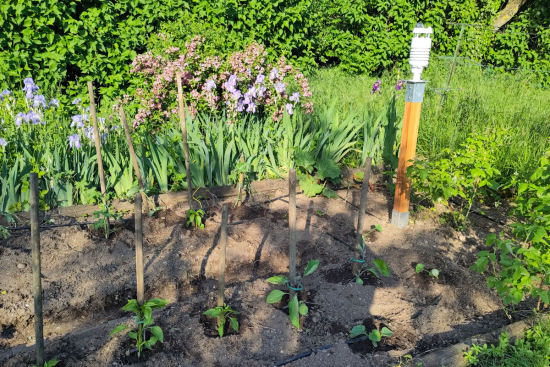
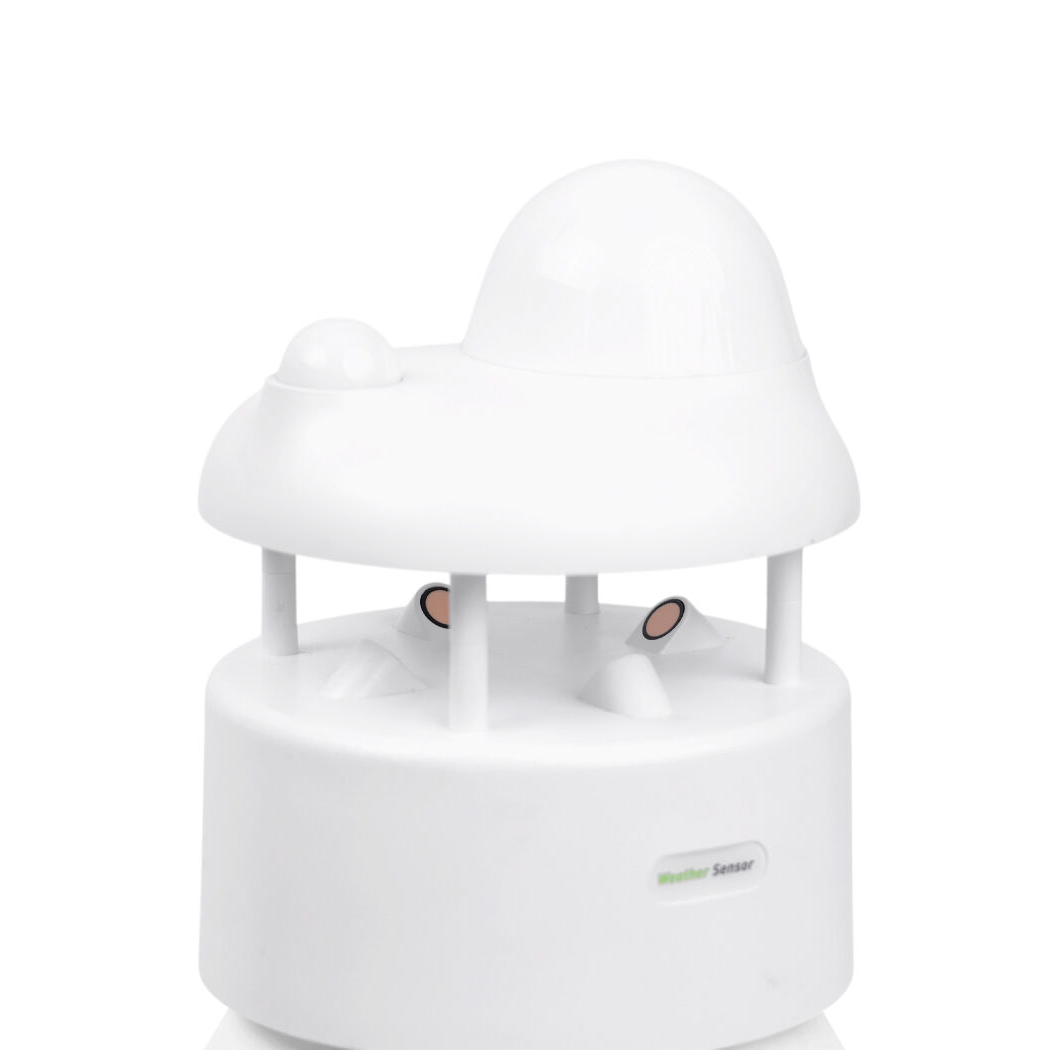
Best 7-in-1 Weather Station for Radar Rain and Light Intensity: SenseCAP S700-A
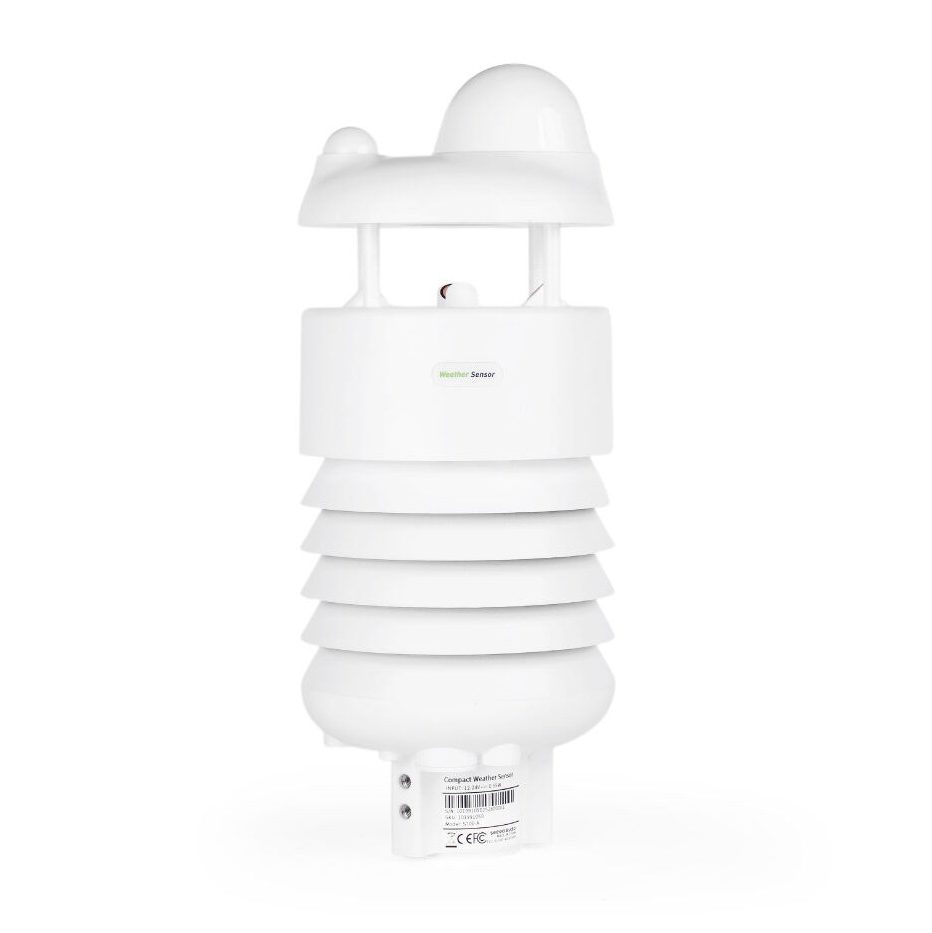
- Listed price: $759.
- Weather parameters: Air temperature, relative humidity, barometric pressure, ultrasonic wind speed, ultrasonic wind direction, radar rain intensity, and illuminance.
- Key features: Radar rain range of 0 to 300 mm/h with 0.01 mm/h resolution; illuminance range of 0 to 200,000 lux; stationary ultrasonic wind head; 3 m cable.
- IP rating: IP66.
- Interfaces: RS485 with Modbus RTU and SDI-12.
- Operating temperature: −40 to +85 °C; optional heater uses 24 V DC.
- Best-fit deployments: Drainage monitoring, storm-event analysis, high-rainfall sites, remote weather observation, and alerting systems that require fine rain-intensity changes.
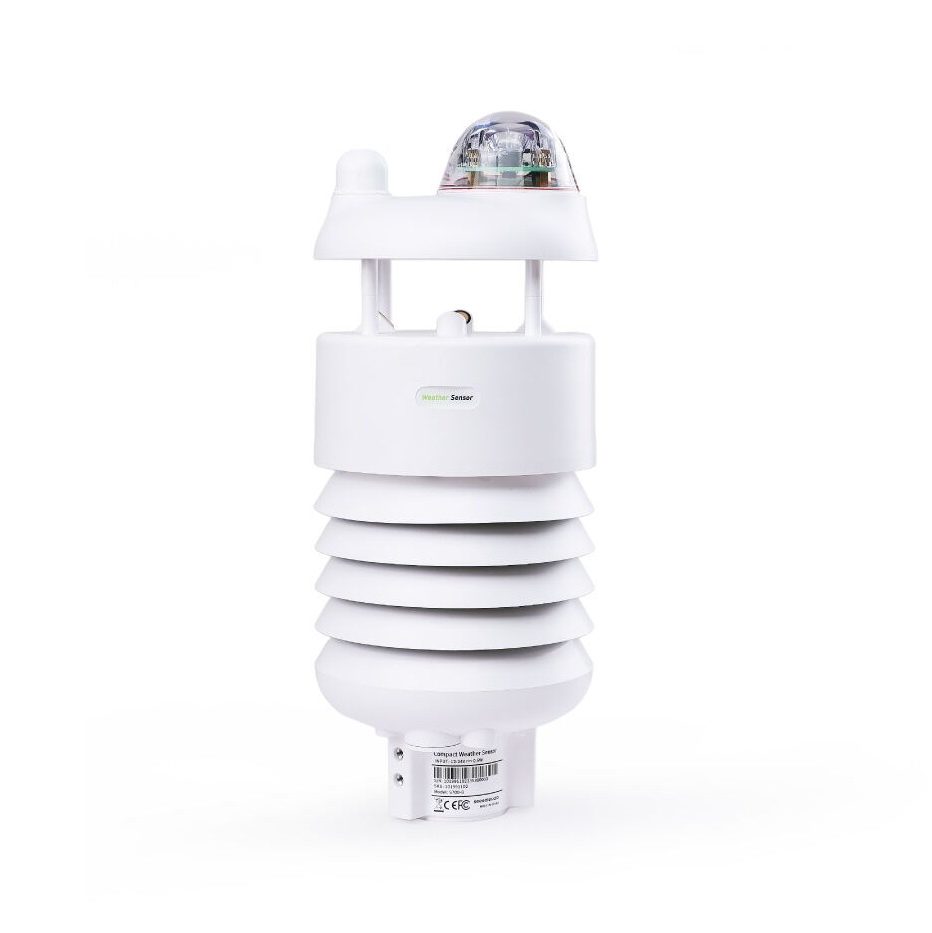
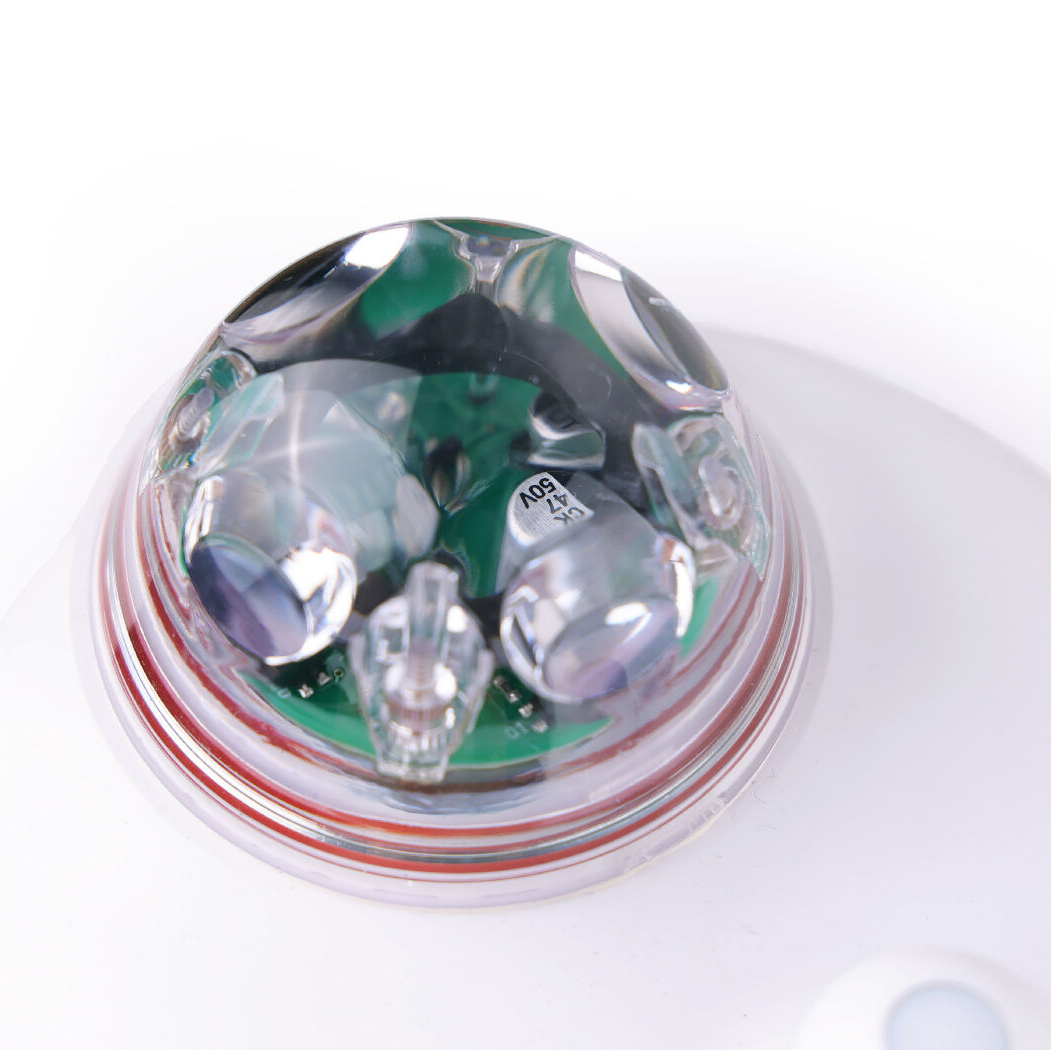
Best 7-in-1 Weather Station for Optical Rain with Solar Radiation: SenseCAP S700-B
- Listed price: $799.
- Weather parameters: Air temperature, relative humidity, barometric pressure, ultrasonic wind speed, ultrasonic wind direction, optical rain intensity, global solar radiation, and sunshine duration.
- Key features: Optical rain range of 0 to 200 mm/h with 0.2 mm/h resolution; global solar radiation range of 0 to 2,000 W/m²; sunshine-duration output; 3 m cable.
- IP rating: IP66.
- Interfaces: RS485 with Modbus RTU, SDI-12, and ASCII in selected configurations.
- Operating temperature: −40 to +85 °C; optional heater uses 24 V DC.
- Best-fit deployments: Greenhouse shading, irrigation planning, crop-energy and evapotranspiration workflows, photovoltaic monitoring, and agrivoltaics.
Best 7-in-1 Weather Station for Radar Rain with Solar Radiation: SenseCAP S700-C
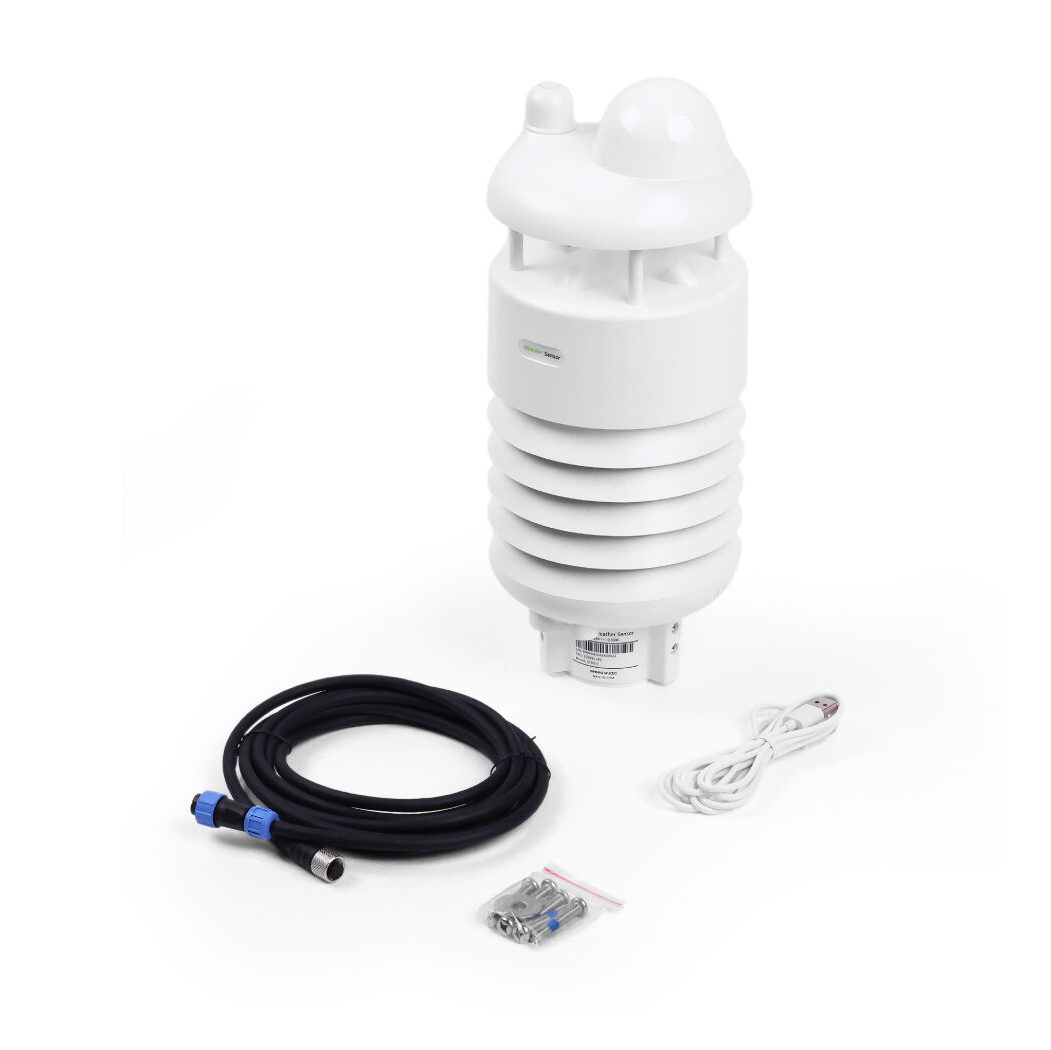
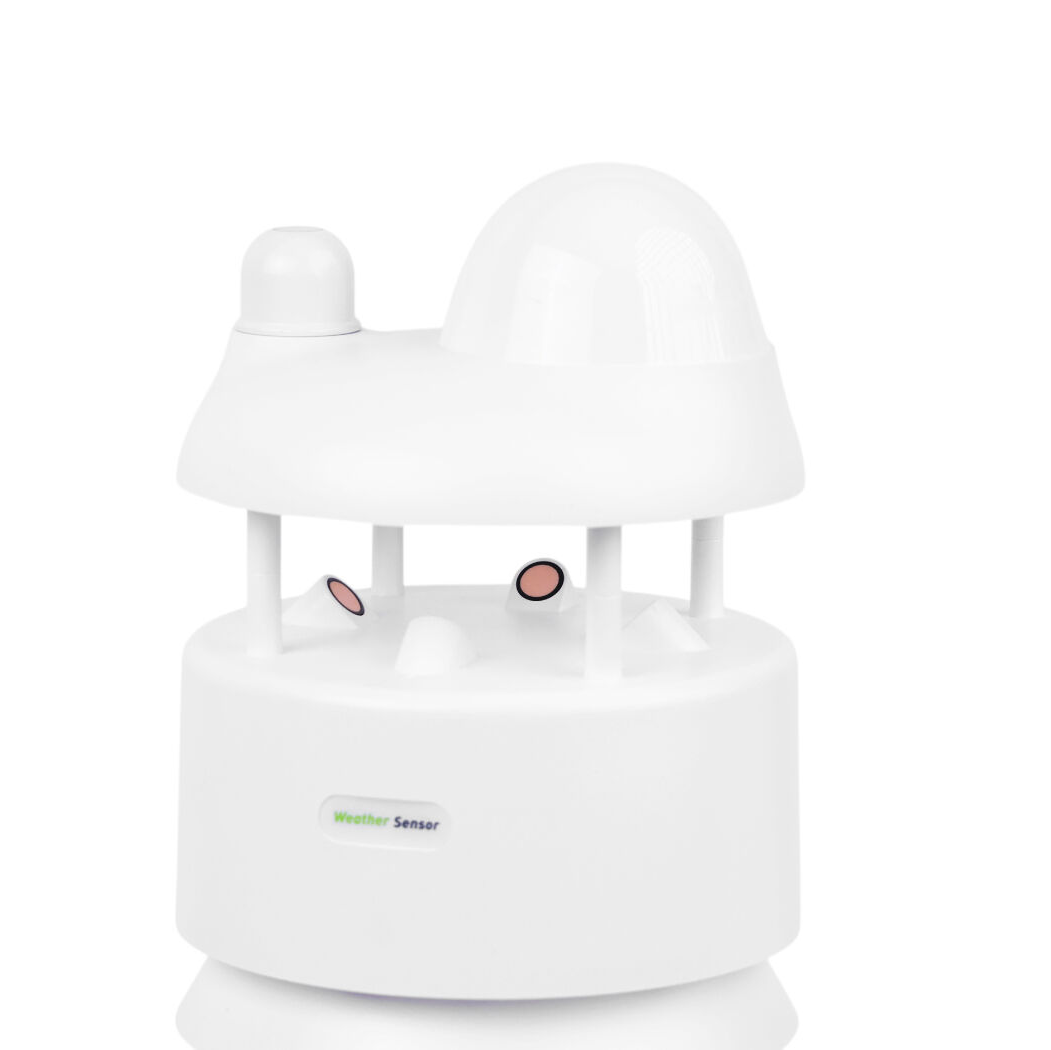
- Listed price: $799.
- Weather parameters: Air temperature, relative humidity, barometric pressure, ultrasonic wind speed, ultrasonic wind direction, radar rain intensity, global solar radiation, and sunshine duration.
- Key features: Radar rain range of 0 to 300 mm/h with 0.01 mm/h resolution; global solar radiation range of 0 to 2,000 W/m²; sunshine-duration output; 3 m cable.
- IP rating: IP66.
- Interfaces: RS485 with Modbus RTU, SDI-12, and ASCII in selected configurations.
- Operating temperature: −40 to +85 °C; optional heater uses 24 V DC.
- Best-fit deployments: Advanced agriculture, renewable-energy and agrivoltaic sites, remote research stations, and projects that analyze rainfall and solar input together.
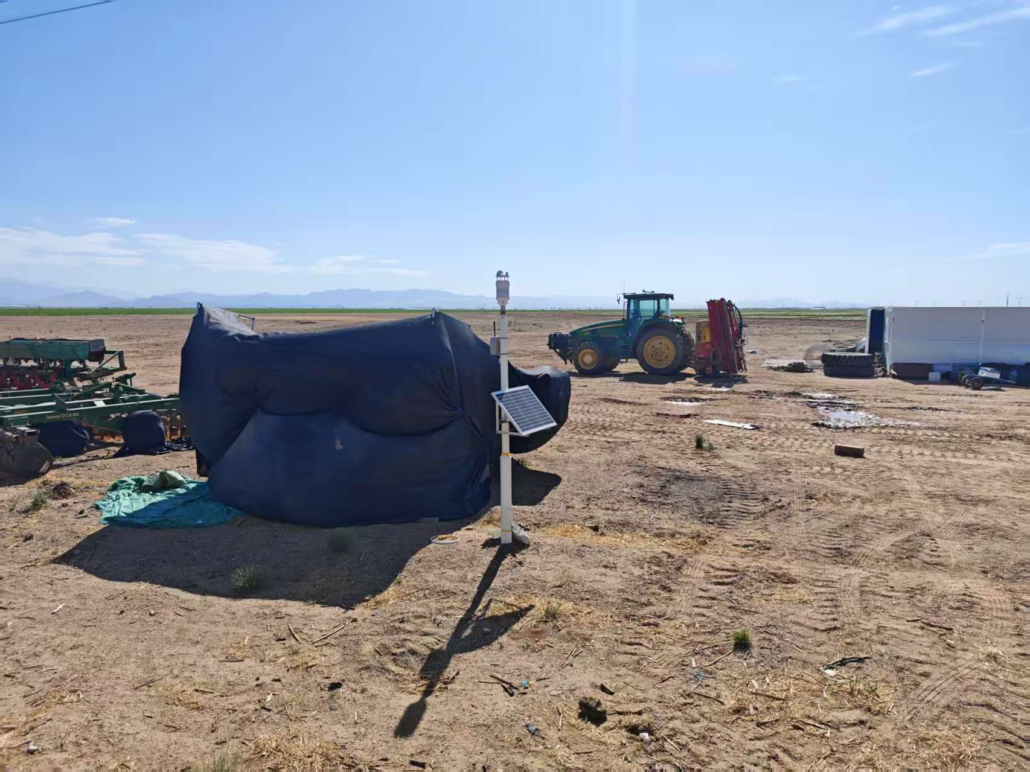
Table 3. SenseCAP S700 Series Comparison: Rain Sensing, Light or Solar Channel, and Best-Fit Deployment
| Model and listed price* | Rain channel | Light or solar channel | How the difference affects deployment | Best-fit environment |
| SenseCAP 7-in-1 Weather Station S700 $699 | Optical 0 to 200 mm/h 0.2 mm/h resolution | Illuminance 0 to 200,000 lux | Balances common rainfall monitoring with visible-light data at the lowest listed price. | General outdoor weather, farm microclimate, campus, smart-city, construction, and industrial sites. |
| SenseCAP 7-in-1 Weather Station S700-A $759 | Radar 0 to 300 mm/h 0.01 mm/h resolution | Illuminance 0 to 200,000 lux | Extends rain range and captures finer intensity changes while retaining illuminance. | High-rainfall monitoring, drainage, storm events, remote weather observation, and rain alerts. |
| SenseCAP 7-in-1 Weather Station S700-B $799 | Optical 0 to 200 mm/h 0.2 mm/h resolution | Global solar radiation 0 to 2,000 W/m² Sunshine duration | Adds incoming solar-energy data for crop and photovoltaic decisions with optical rainfall. | Greenhouses, irrigation planning, crop-energy analysis, PV monitoring, and agrivoltaics. |
| SenseCAP 7-in-1 Weather Station S700-C $799 | Radar 0 to 300 mm/h 0.01 mm/h resolution | Global solar radiation 0 to 2,000 W/m² Sunshine duration | Combines the broader, finer radar-rain channel with solar-energy measurement. | Advanced agriculture, renewable energy, agrivoltaics, and remote environmental research. |
Which 7-in-1 Weather Station Is Right for Your Project?
Match the station to the operational bottleneck first. Each scenario below keeps the decision to three points: the traditional challenge, the operational benefit of an integrated station, and the recommended model.
Smart Agriculture
- Traditional challenge: Irrigation and greenhouse decisions rely on separate weather, light, and rainfall readings that are difficult to align.
- Operational benefit: One synchronized dataset makes field conditions easier to compare with soil, crop, and control-system data.
- Recommended models: S700-B or S700-C for solar-driven decisions; S700 or S700-A for general microclimate and illuminance monitoring.
Environmental Monitoring
- Traditional challenge: Regional programs often combine inconsistent instruments, mounting methods, and data formats across sites.
- Operational benefit: A shared compact platform standardizes installation and synchronized weather data across a mixed monitoring network.
- Recommended models: S700 for a general baseline, S700-A for detailed rainfall, S700-B for solar studies, or S700-C when both are required.
IoT Weather Monitoring
- Traditional challenge: Weather data remains isolated when sensors, backhaul, cloud platforms, and existing applications cannot exchange data cleanly.
- Operational benefit: Open field protocols and selectable backhaul paths move synchronized readings into PLCs, dashboards, private servers, and APIs.
- Recommended models: Choose S700, S700-A, S700-B, or S700-C according to the required rain and light or solar channels.
Outdoor & Remote Deployments
- Traditional challenge: Distant sites make power failures, weak communications, icing, maintenance visits, and inconsistent installation expensive.
- Operational benefit: Compact hardware, stationary ultrasonic wind sensing, IP66 protection, and planned power and backhaul reduce field complexity.
- Recommended models: S700-A for detailed remote rainfall, S700-B for solar-energy data, or S700-C when both channels are required.

Plan a Best 7-in-1 Weather Station For Your Sites
For system integrators, agricultural operators, municipal monitoring programs, research institutions, and industrial buyers, model selection is only one part of procurement. Before requesting a quotation or sample evaluation, define the site conditions, required measurement variables, deployment quantity, host interface, power architecture, backhaul method, target platform, delivery schedule, and technical support requirements.
Professional weather monitoring is moving from isolated instruments toward connected, multi-site infrastructure. Buyers increasingly expect compact multi-parameter sensing, standardized field interfaces, flexible LoRaWAN or cellular backhaul, open APIs, and data that can flow directly into existing control and analytics systems. A weather station is becoming more than a standalone measuring device. It is becoming a dependable data layer for agriculture, smart cities, renewable energy, environmental research, and industrial operations.
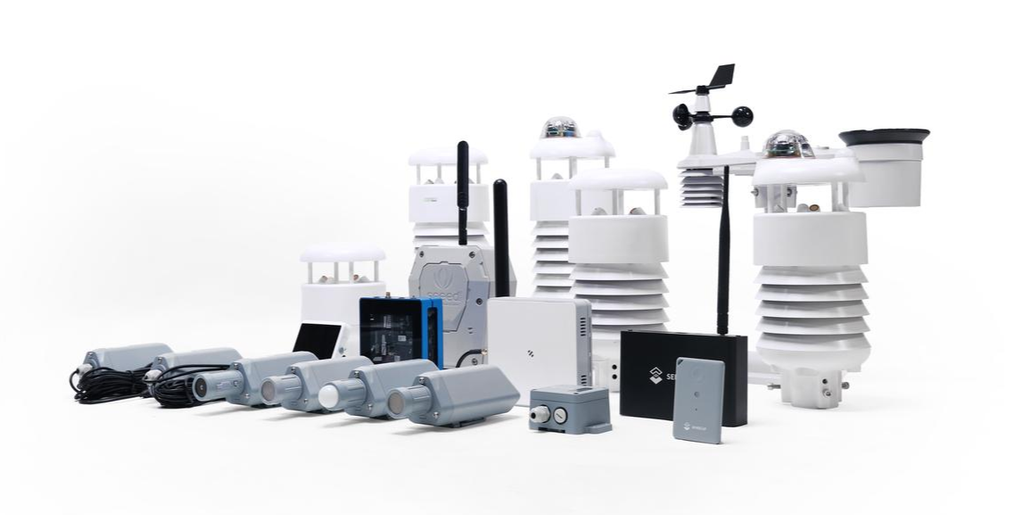
Seeed Studio is helping lead this transition through the SenseCAP weather station portfolio. SenseCAP combines industrial-grade sensing, compact all-in-one hardware, open communication protocols, flexible data paths, and a repeatable deployment architecture. Seeed Studio works with more than 200 partners and over 1,000 customers across 120+ countries, with SenseCAP deployments spanning greenhouse and vineyard monitoring, smart-city observation, renewable-energy sites, environmental research, and industrial facilities. This is the direction professional weather monitoring is taking, and SenseCAP is building the products and integration ecosystem needed to move it forward.
Contact our team to discuss your application, deployment needs, and potential customization options.
>> Read more
About Author
