Hey community,
Welcome to our August 2026 Monthly Wrap-up! This month, Physical AI moved beyond demos and into hands-on building, with developers, makers, and communities experimenting with robotics, Voice AI, edge intelligence, and open hardware across the globe.
From reBot workshops and hackathons in Boston, Munich, San Mateo, Hannover, Berlin, and Beijing, to new developer resources around JetPack 7.2, Microduck reinforcement learning on Jetson, reCamera Pro, reSpeaker Clip, and LoRa connectivity, August brought plenty of new ways to build, test, and deploy intelligence in the physical world. Meanwhile, our maker community continued to push open hardware into new forms—from phone-free Meshtastic devices to modular XIAO systems and connected restaurant prototypes.
Let’s dive in!
I. News & Event Highlights
August took Seeed’s open hardware ecosystem from local makerspaces to robotics conferences, hackathons, and community workshops around the world.
01. Physical AI Hackathon Brings reBot to Boston
More than 50 participants joined Seeed Studio and Agora at Robotics Fair 2026 in San Mateo for a hands-on exploration of Voice AI and Physical AI. Using reSpeaker Flex and Agora Mybot, developers created conversational AI agents while live reBot Arm and Reachy Mini demos showed how natural voice interfaces can move from software into physical machines. Read more.
02. HONOR Robot Phone Meets the XIAO Robot Kit
At the HONOR Robot Phone launch on August 12, Seeed and HONOR unveiled a co-branded mecha-style rover based on the XIAO Robot Kit. The Robot Phone handled AI computing and decision-making while the XIAO platform managed motion and hardware expansion—and the rover design was opened up for makers to reproduce, remix, and extend. Read more.
03. No-Code AI and ePaper Dashboards at BerryBase MakerSpace, Berlin
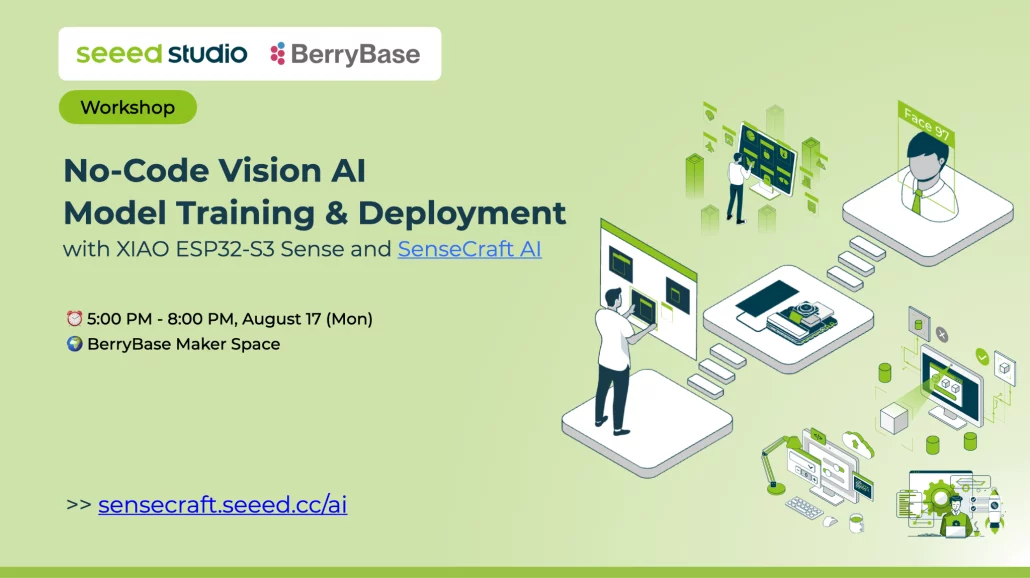
The maker journey continued in Berlin on August 17 with two hands-on workshops at BerryBase MakerSpace. Participants explored no-code Vision AI with XIAO ESP32S3 Sense and SenseCraft AI, then built low-power information dashboards with reTerminal ePaper and Seeedash. Read more.
04. Seeed’s Open Hardware Ecosystem at IOTE 2026 Shenzhen
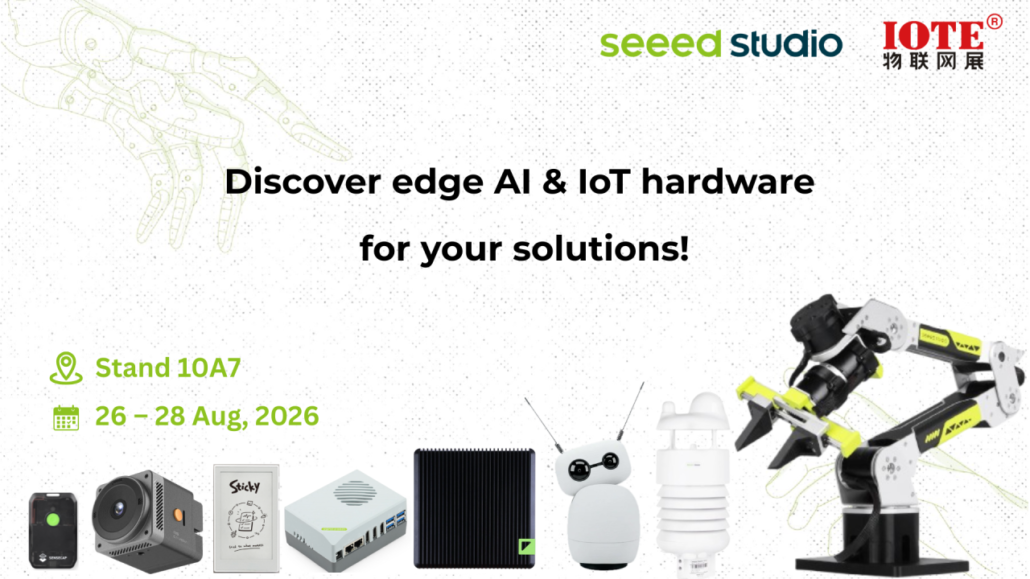
Across three days at IOTE 2026 in Shenzhen, Seeed showcased reBot, reCamera, reComputer, SenseCAP and more to visitors exploring practical IoT and Edge AI deployment. The demos connected technologies with applications ranging from AI robotics and environmental monitoring to smart agriculture and smart retail. Read more.
05. Seeed Studio at Maker Faire Hannover 2026
Seeed joined Maker Faire Hannover for the first time as an official partner on August 15–16. From XIAO, Meshtastic, ePaper, reCamera and reSpeaker to reBot, the booth mixed live demos with hands-on CodeCraft and Seeedash workshops—putting open hardware directly into the hands of the local maker community. Read more.
06. Fri3d Camp Takes LoRa Learning into the Woods
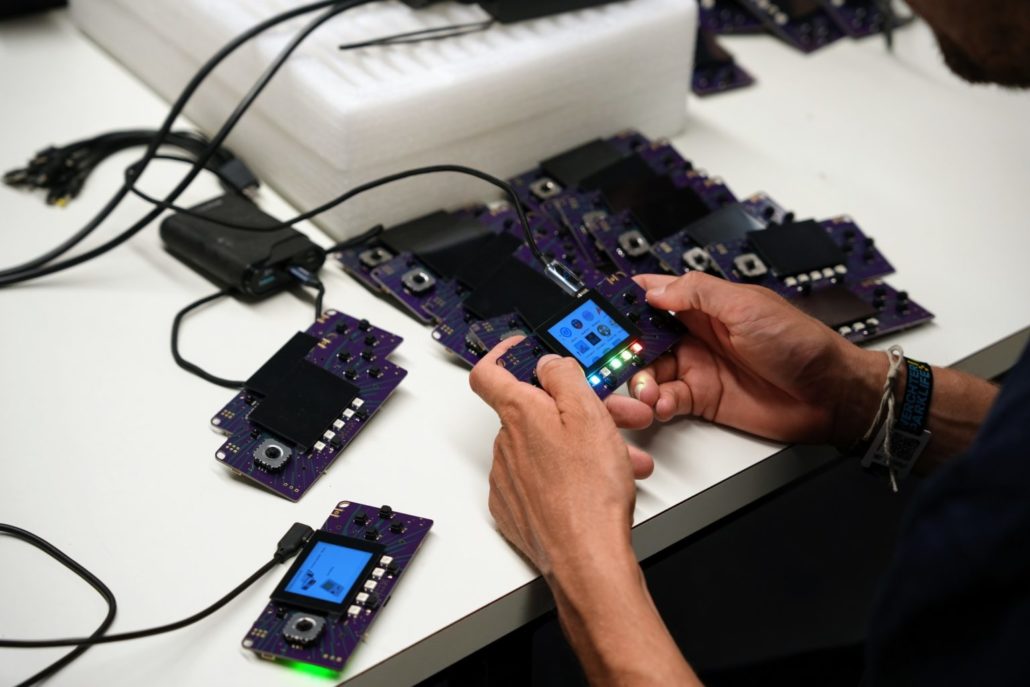
At Fri3d Camp 2026 in Belgium, LoRa became something participants could build, solder, tune, and test in the field. Nearly 200 Wio-SX1262 modules were soldered by campers, who also built 868 MHz Moxon antennas and put their radio skills into practice through a LoRa fox hunt in the woods. Read more.
II. In-depth Feature & Tech Exploration
01. Microduck RL on Jetson
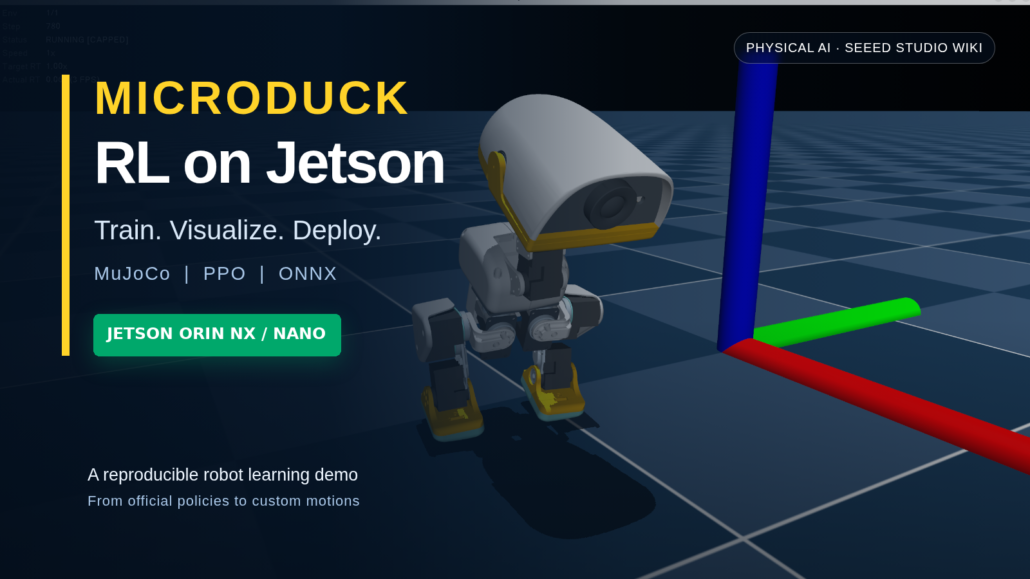
This demo builds a complete robot-learning workflow for Microduck on a Seeed reComputer powered by NVIDIA Jetson Orin NX 16GB. It covers GPU environment deployment, PPO training with MuJoCo, checkpoint visualization, keyboard-controlled inference with official ONNX policies, and the development of new custom motions—offering a reproducible path from simulation and training to Physical AI deployment. Read more.
02. JetPack 7.2 Resource Hub
The JetPack 7.2 Resource Hub brings together the latest resources for Seeed Studio NVIDIA Jetson products, covering supported images, migration from JetPack 6.x, peripheral drivers, AI deployment, and optimization. It serves as a practical starting point for developers moving projects onto the newest Jetson software stack. Read more.
03. Reachy Mini Home Assistant Integration
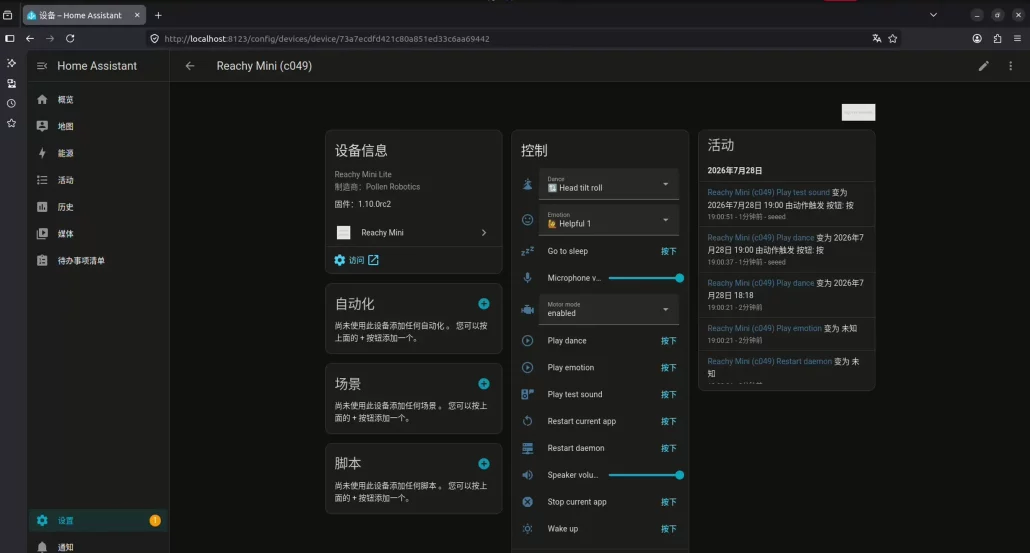
Want Reachy Mini to control smart home devices such as Xiaomi, Aqara, Midea, or Haier? This guide shows how to connect Reachy Mini with Home Assistant using automatic LAN discovery and a dedicated integration, making it possible to bring robot interaction into smart-home workflows without manual entity wiring. Read more.
04. Streaming Vision Agent on Jetson
This project goes beyond single-frame vision by giving a live Jetson camera stream a short rolling multimodal memory. Verified on reComputer Mini with JetPack 7.2, the system stores visual, episodic, and semantic information on the edge so users can ask what happened moments earlier and receive answers with supporting evidence. Read more.
05.Getting Started with MIT Position Control on reBot Arm B601-RS
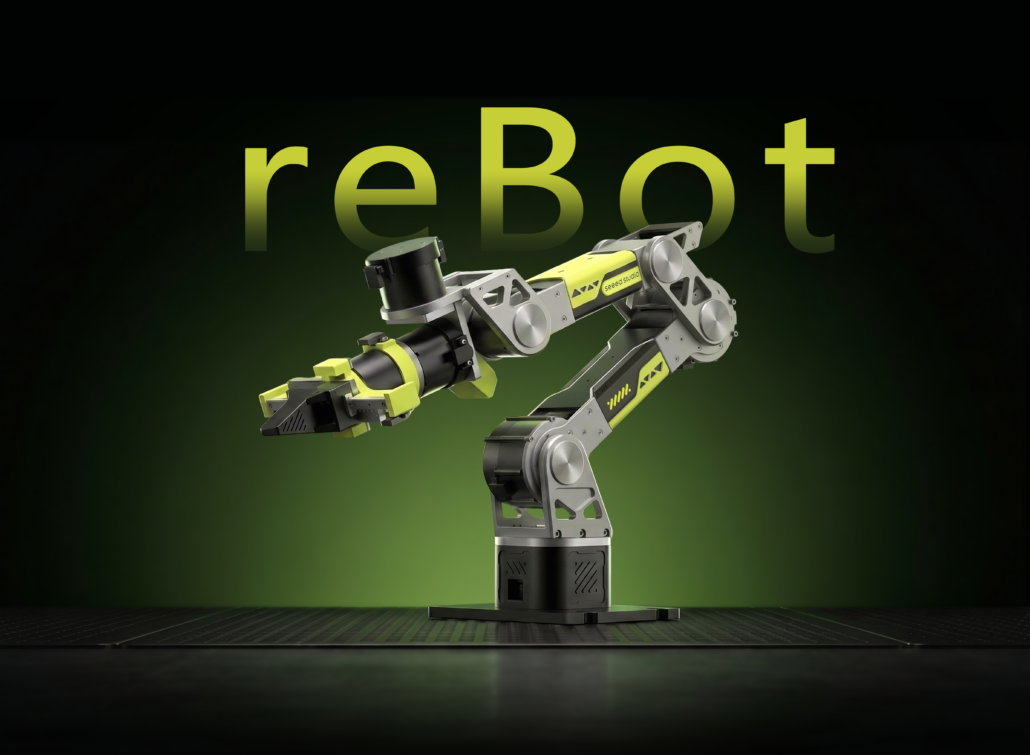
For developers going deeper into robot control, this guide introduces MIT position control on reBot Arm B601-RS using MotorBridge and rebot_control. It covers environment setup, CAN configuration, speed limiting, temperature protection, smooth return-to-zero, and the APIs needed for secondary development. Read more.
06. Getting Started with the reSpeaker Clip Firmware SDK
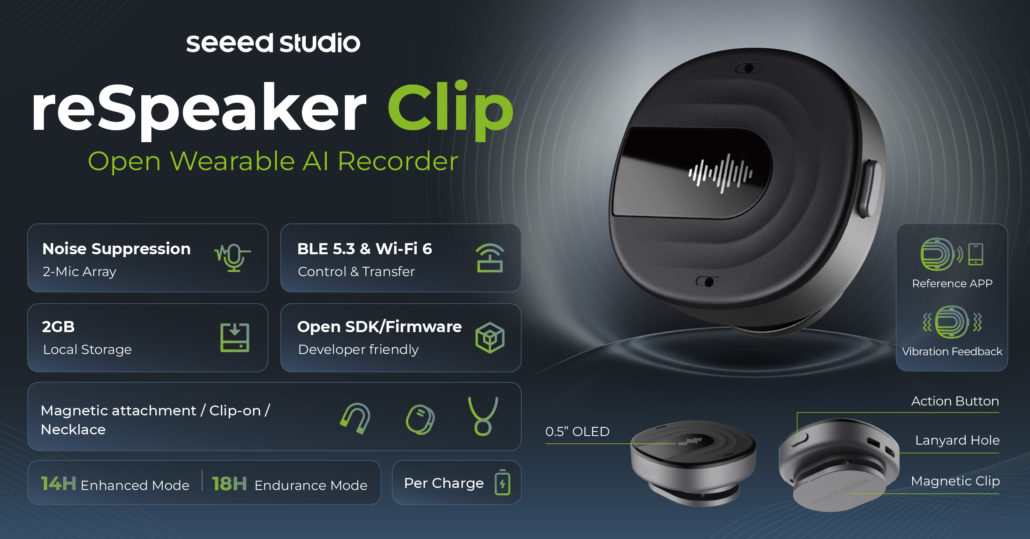
The reSpeaker Clip is not only a wearable recorder but also an open platform for custom voice applications. This guide introduces its Zephyr-based firmware SDK and the device-side building blocks developers can use to modify audio pipelines, BLE services, buttons, OLED interaction, haptics, power behavior, and custom hardware bring-up. Read more.
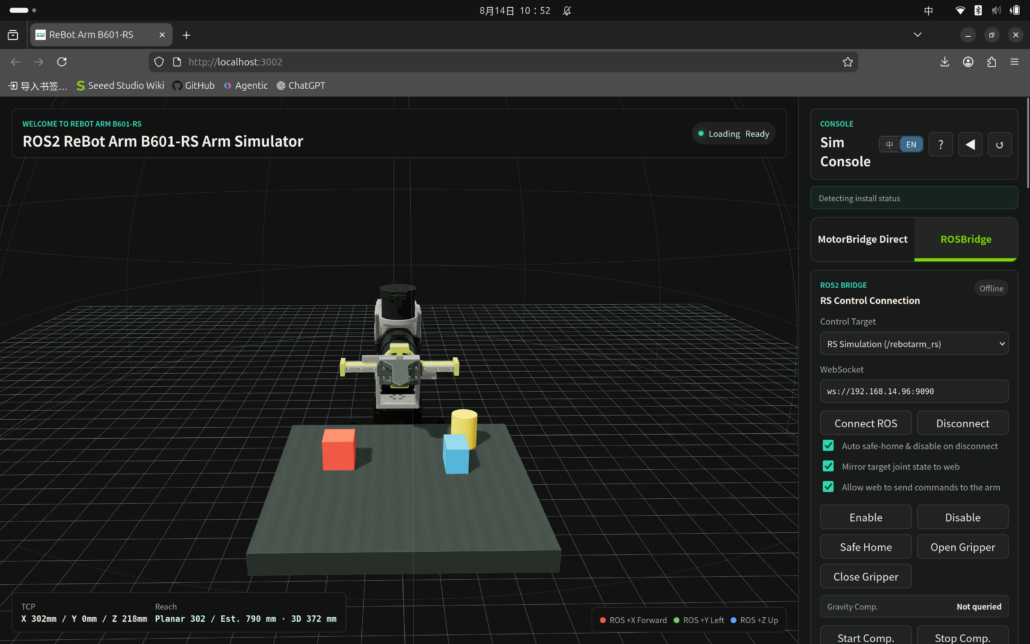
07. reBot Arm B601-RS Web Simulator and ROS 2/MuJoCo Developer Guide
This developer guide brings together a Three.js web console, ROS 2 real-robot driver, MuJoCo dynamics scene, vision detection, trajectory planning, inverse kinematics, and optional LLM/MCP grasping control for reBot Arm B601-RS. It provides a full environment for moving between simulation, visualization, and real robot development. Read more.
08. Develop reCamera Pro Applications with AI Coding Agents
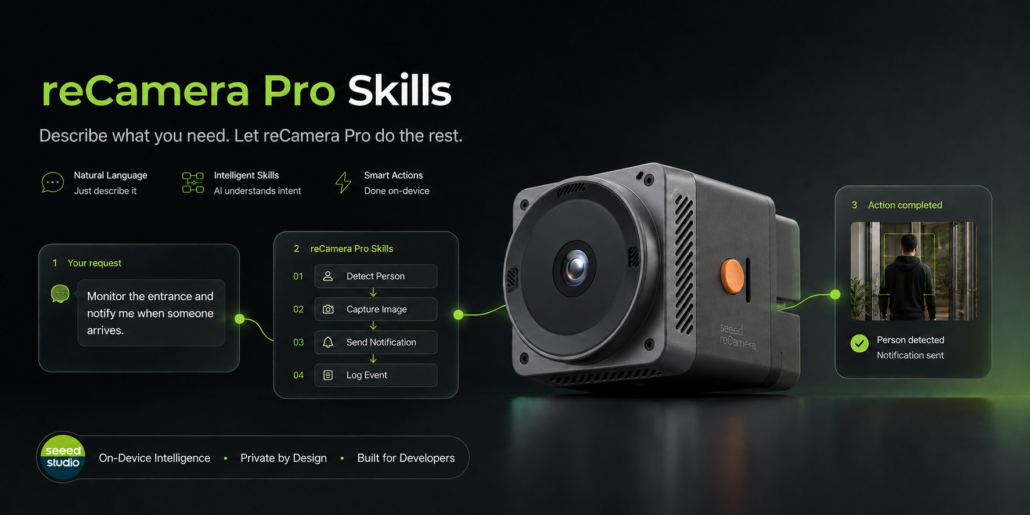
This workflow packages reCamera Pro-specific instructions, scripts, technical references, and a native C++ application template into a development skill for AI coding agents. Developers can describe an application in natural language and use tools such as Codex, Claude Code, Copilot, Cursor, or Gemini CLI to accelerate model conversion and native application development. Read more.
09. Build a Visual Wake and Offline Speech Recognition System with reCamera Pro
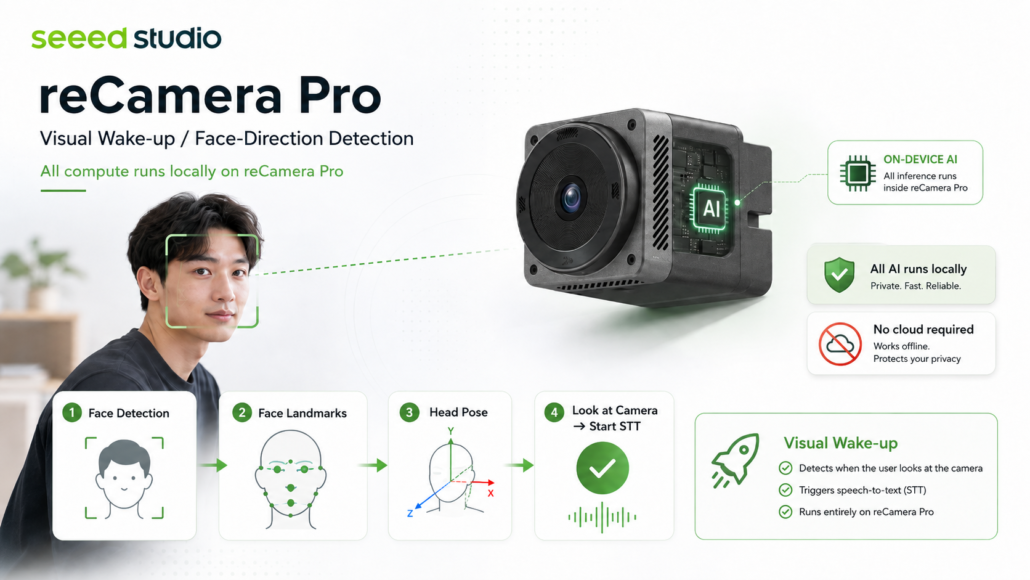
This fully on-device demo combines vision and voice: reCamera Pro detects a face, estimates head pose, and starts speech recognition only after the user looks toward the camera. With visual wake-up, pose evaluation, and speech inference all running locally, it provides a privacy-conscious interaction flow for assistants, kiosks, and edge AI interfaces. Read more.
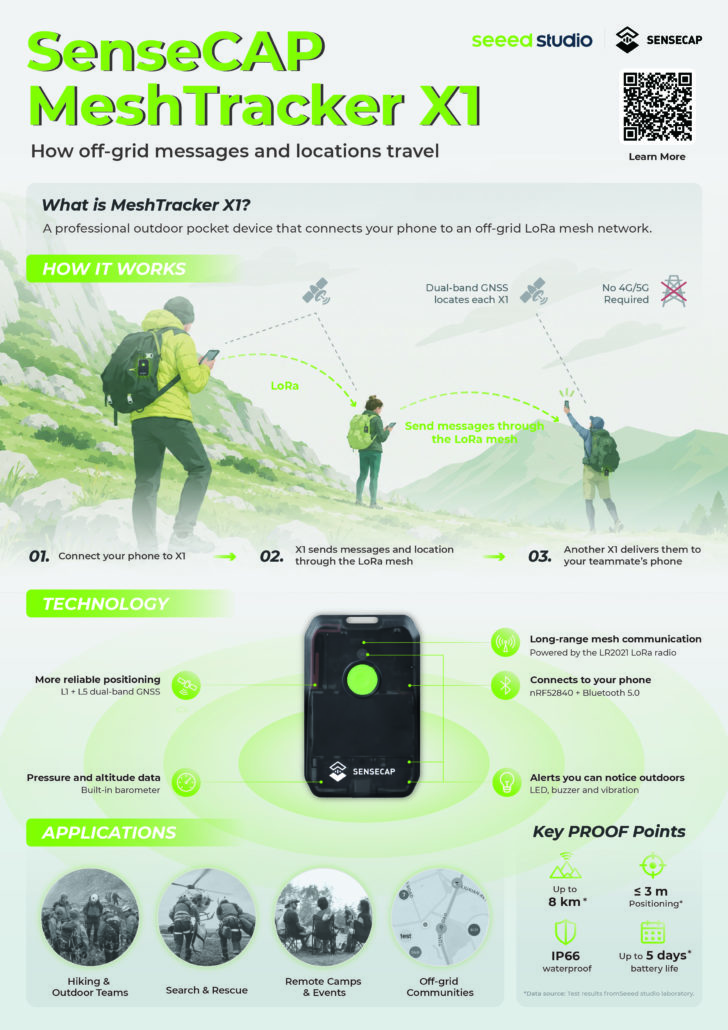
10. Get Started with MeshCore on SenseCAP MeshTracker X1
SenseCAP MeshTracker X1 gained another open-network option with a new MeshCore guide. From firmware flashing and device connection to LoRa region settings, GPS, messaging, and troubleshooting, the tutorial provides a complete starting point for experimenting with decentralized, off-grid communications. Read more.
III. Product & Service Showcases
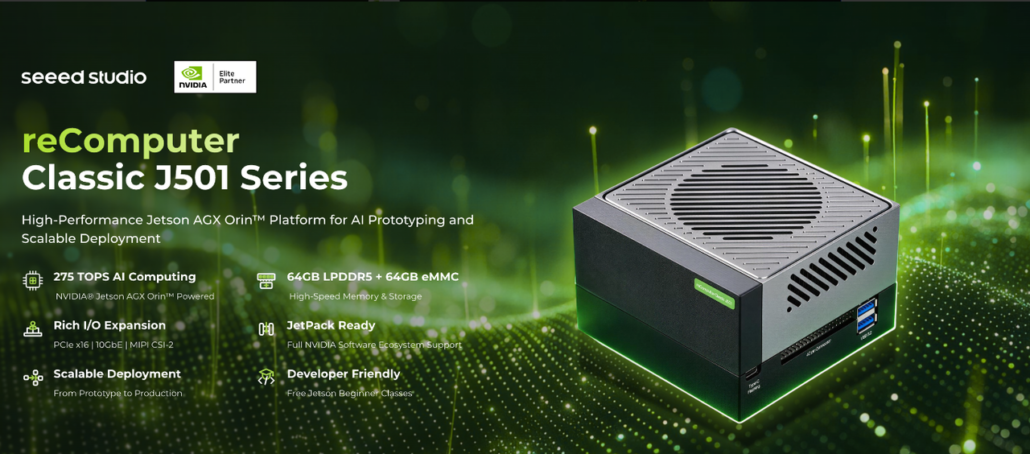
01. Introducing reComputer Classic J501 for NVIDIA Jetson AGX Orin
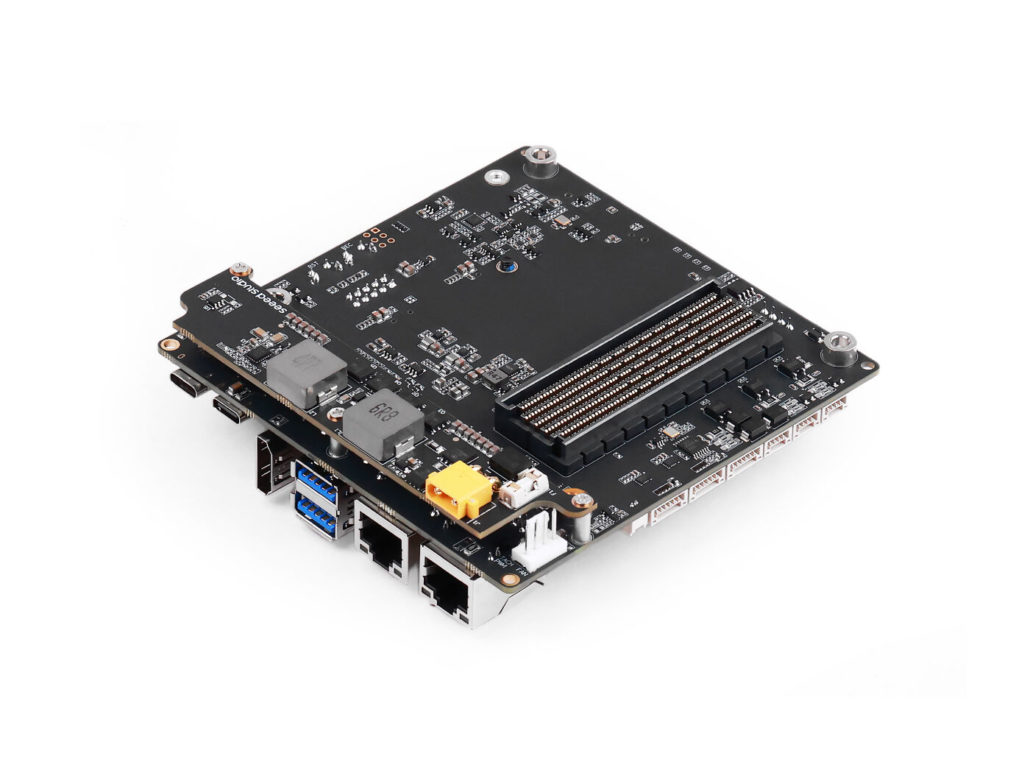
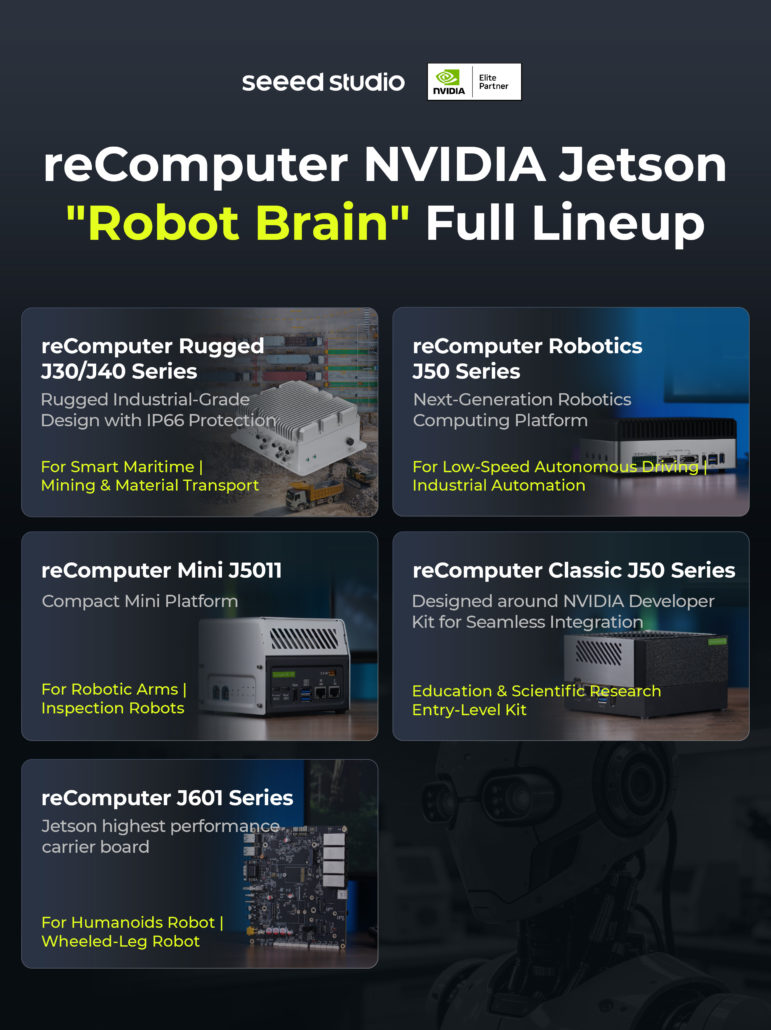
The reComputer family expanded in August with the new reComputer Classic J501, bringing NVIDIA Jetson AGX Orin into a deployment-ready edge computing platform built for Physical AI and advanced robotics applications. It joins Seeed’s growing Jetson ecosystem for developers moving AI workloads from development benches into real-world systems. Read more.
02. Seeed Studio Announces Support for NVIDIA Jetson Orin Nano 2
Seeed Studio announced ecosystem support for NVIDIA Jetson Orin Nano 2, continuing to expand accessible and scalable computing options for robotics and Physical AI developers. The support builds on Seeed’s range of Jetson carrier boards, systems, and development resources for moving from prototypes toward deployment. Read more.
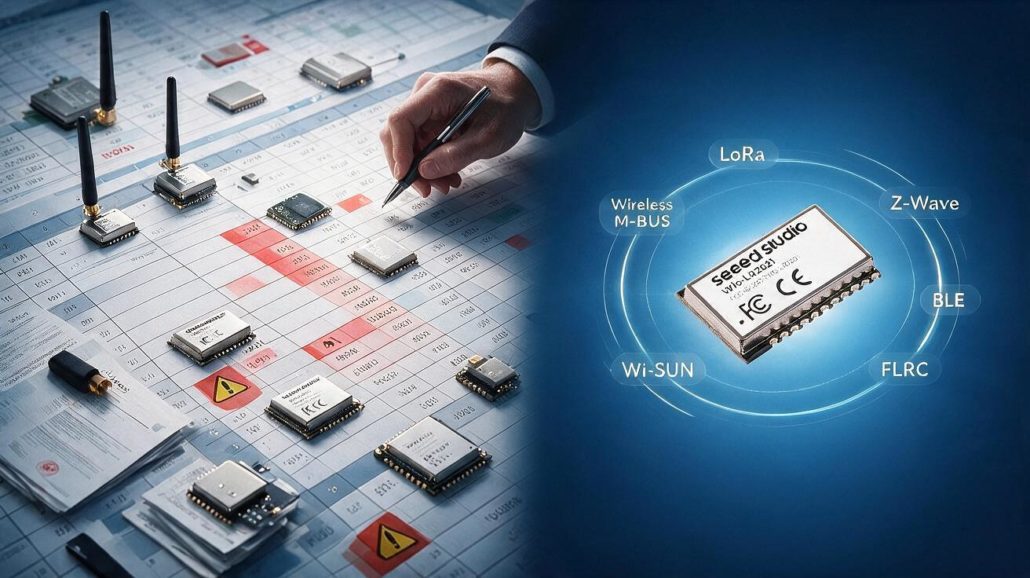
03. Multi-Protocol Fusion with Wio-LR2021
Built around Semtech’s LR2021, Wio-LR2021 brings multiple wireless protocols into one compact RF module, giving developers more flexibility when designing connected devices across Sub-GHz and 2.4 GHz applications. The result is a versatile building block for developers who do not want every new connectivity requirement to mean redesigning the radio layer. Read more.
04. Grove OLED Display 1.12″ V3.0
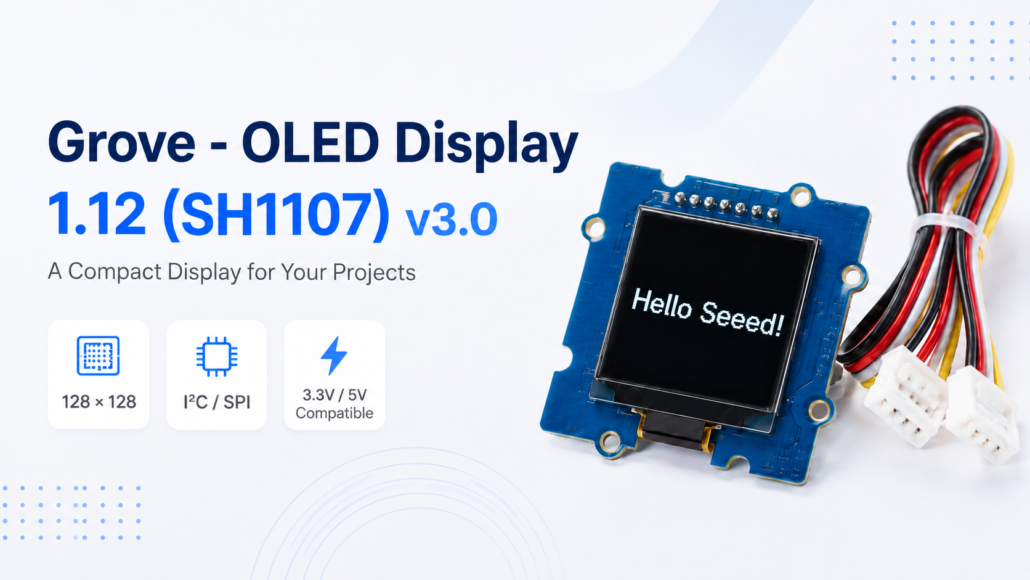
A small display can make a big difference in an embedded project. The new Grove OLED Display 1.12″ V3.0 brings a compact 128 × 128 monochrome screen into the Grove ecosystem, making it easy to add status information, simple interfaces, and visual feedback to IoT and maker builds. Read more.
05. Customize Your XIAO for Production with Seeed Fusion
A working XIAO prototype is often only the beginning. Seeed Fusion introduced more ways to take XIAO-based designs toward small-batch production, including firmware programming, header and assembly options, and flexible XIAO model selection—helping teams reduce the gap between proof-of-concept and a finished device. Read more.
06. Turn a Proven SenseCAP Tracker into Your Own Product
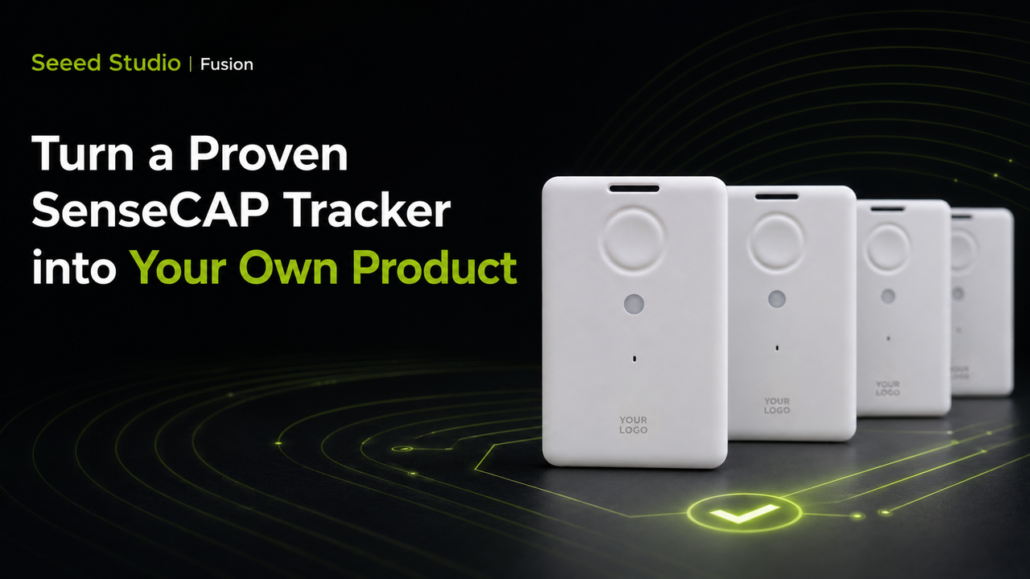
Building a tracker from scratch is not always necessary. This Seeed Fusion service introduces another path: starting from proven SenseCAP tracker hardware and adapting firmware, branding, labels, packaging, and assembly around a specific application, reducing the engineering work needed to bring a customized product to market. Read more.
IV. Community Spotlight
From global community programs to independent open-hardware builds, here are some of the projects and community milestones that stood out this month.
01. Interactive Signage Contest Reaches 100+ Projects from 29 Countries
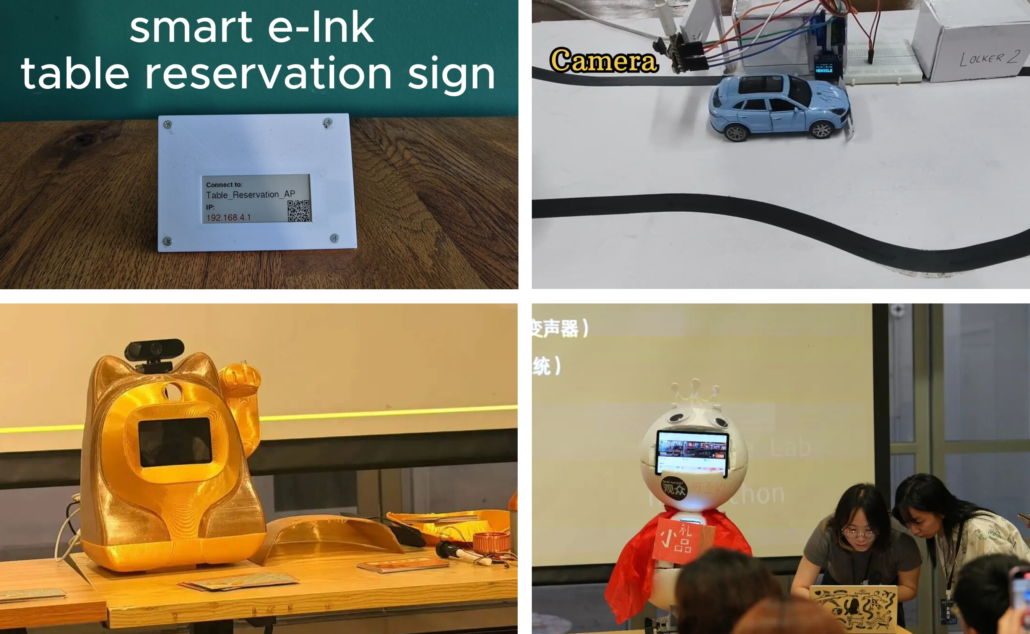
The Interactive Signage Contest continued to grow in August, reaching more than 100 submissions from makers across 29 countries and regions. From robotic restaurant signs and intelligent queue displays to vision-powered checkout systems, the submissions show how makers are rethinking signage as something interactive, responsive, and connected to real-world needs. Read more.
02. RetroMeshDevice: A Phone-Free Meshtastic Handheld
RetroMeshDevice turns Meshtastic into a self-contained communicator with its own OLED display, rotary control, and twelve-key T9-style keypad—no phone required. Built around XIAO ESP32-S3 Plus and Wio-SX1262, the project stands out not only for the hardware itself, but for the unusually detailed trail of PCB design, assembly, testing, firmware development, and open production files shared with the community. Read more.
03. LIA: An Open Meshtastic GPS Tracker Built for Off-Grid Use
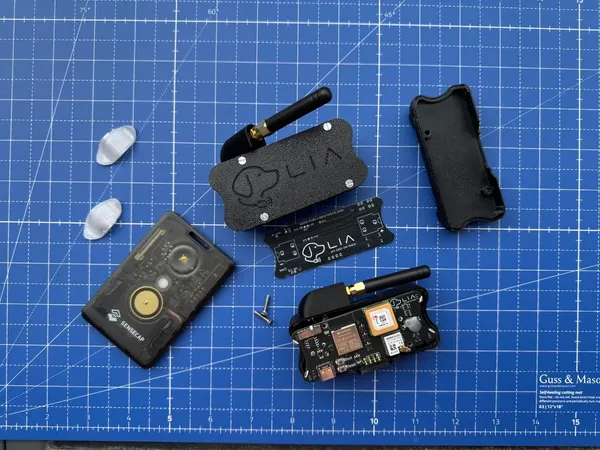
Born from the practical problem of keeping track of a dog beyond cellular coverage, LIA is an open-source Meshtastic GPS tracker designed for pets and assets in off-grid environments. The project combines GNSS, motion sensing, power management, and Wio-SX1262 LoRa connectivity in a purpose-built, printable enclosure while documenting the path from first boot to field-ready prototype. Read more.
04. SmartServe: From a Button Press to Better Restaurant Service
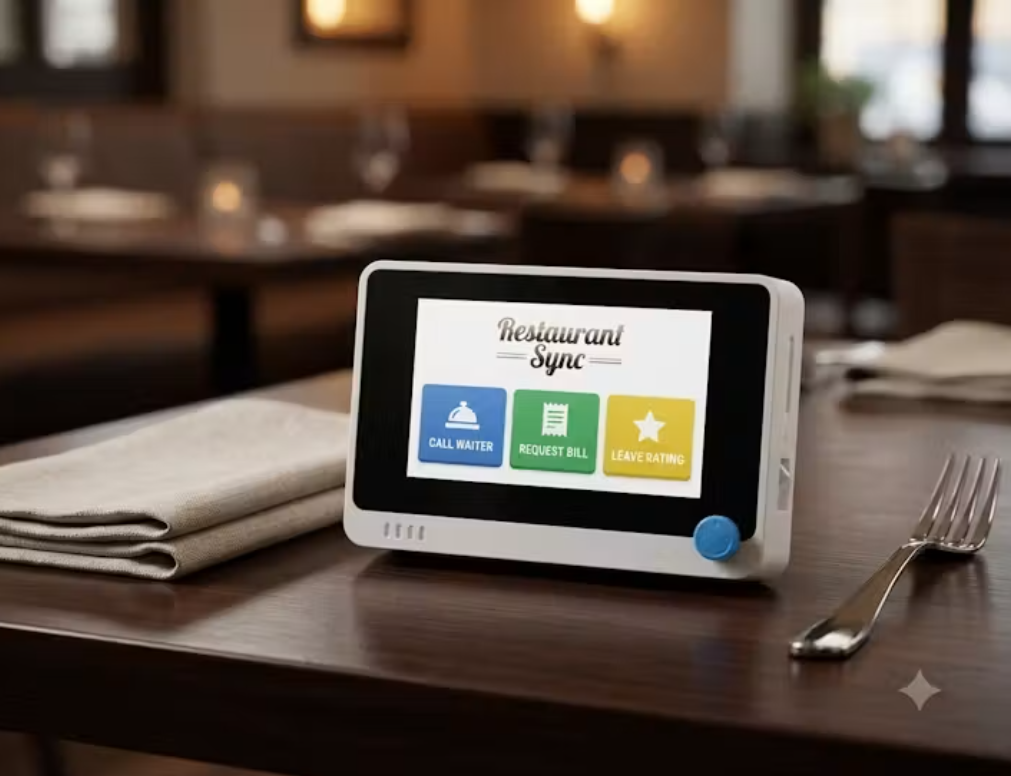
Created by Team Sync, SmartServe uses Wio Terminal and Firebase to turn everyday restaurant requests into a connected service workflow. Customers can request water, assistance, or the bill from a table-side device, while restaurant staff receive the requests through dedicated dashboards—showing how accessible hardware can turn a familiar real-world pain point into a working prototype. Read more.
That’s all for today—thank you for reading through our August Monthly Wrap-up. It was another packed month of building, learning, and collaborating across the global open-hardware community. If you’re working on something with Seeed hardware, we’d love to hear about it and keep the conversation going!