NDIR CO2 Sensor Explained: How Infrared Gas Sensing Works
Learn how NDIR CO2 sensors measure carbon dioxide using infrared absorption. A clear, practical guide for environmental monitoring, smart agriculture, and IoT.
This article is part of the Weather Sensor Know-How series: practical guides to the technologies behind industrial weather sensors, environmental monitoring, and microclimate applications. See all guides.
How can a sensor accurately measure carbon dioxide (CO2) in the air accurately without touching or chemically reacting with the gas?
One of the most widely used technologies is NDIR, short for Nondispersive Infrared Sensing. Although the name may sound technical, the basic idea is simple: the sensor determines gas concentration by measuring how strongly a gas absorbs infrared light at a specific wavelength.
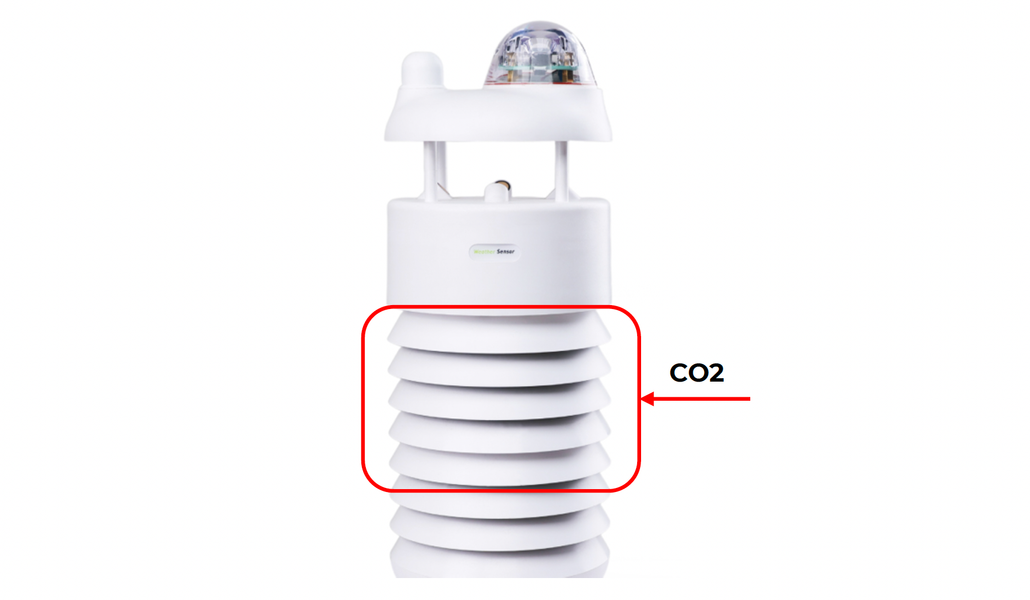
(SenseCAP S1000 10-in-1 Weather Sensor Incorporated a NDIR CO2 sensor in its compact design)
This guide explains how NDIR CO2 sensors work, why they are so widely used in environmental monitoring and smart agriculture, and what to consider when deploying them in real-world projects.
The Basic Principle: A Molecular Light Fingerprint
Every gas molecule interacts with light in its own characteristic way. At certain wavelengths, a molecule absorbs infrared radiation more strongly than at others. This unique pattern can be thought of as the molecule’s optical “fingerprint.”
CO2, for example, strongly absorbs infrared radiation around the 4.26μm (micrometer) wavelength. When the CO2 concentration inside the measurement chamber increases, more infrared energy is absorbed and less light reaches the detector.
By measuring how much the infrared signal has weakened, the sensor can calculate the concentration of CO2 in the sample gas. This relationship is described by the Beer–Lambert law: the greater the concentration of an absorbing gas, the greater the attenuation of light over a given optical path length.
How Does an NDIR CO2 Sensor Work?
A typical NDIR sensor uses four key components:
- Infrared light source: Generates infrared radiation across a suitable range. Depending on the design, the source may be a miniature incandescent emitter, an infrared LED, or another optical emitter.
- Gas chamber: Provides a controlled path through which the sample gas passes. The length of this optical path affects the sensor’s measurement range and sensitivity.
- Optical filter: Selects the wavelength associated with the target gas. This is the “non-dispersive” part of NDIR technology: instead of using a prism or diffraction grating to separate the spectrum, the sensor uses an optical filter to isolate the required wavelength.
- Infrared detector: Measures the intensity of the infrared light that passes through the gas chamber and converts the optical signal into an electrical signal.
The sensor electronics then process the detector output and convert it into a gas-concentration reading, such as parts per million (ppm) or percent by volume.
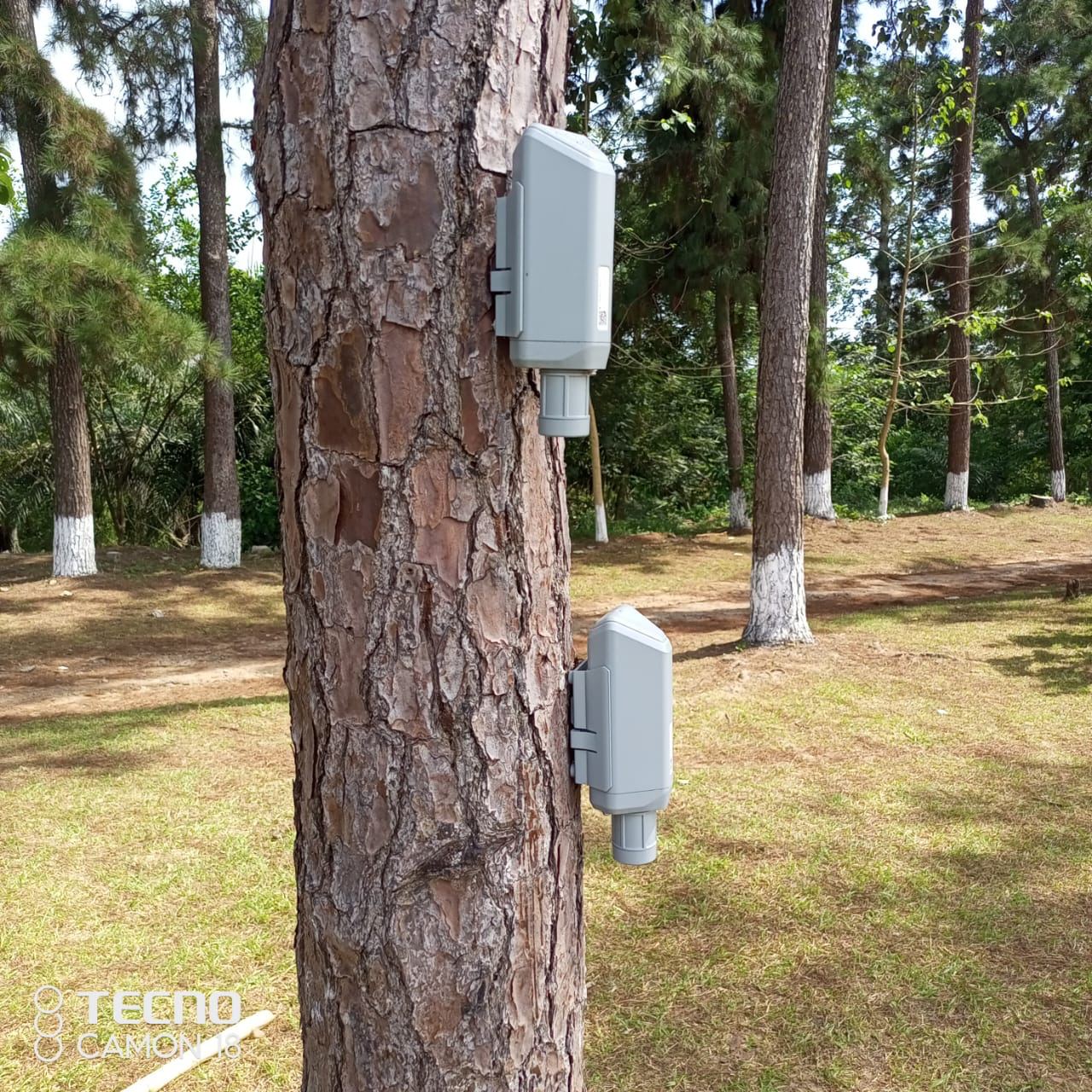
(SenseCAP S2103 3-in-1 LoRaWAN Sensor measuring CO2 with NDIR along air temperature and relative humidity, deployed in a rainforest in Liberia for carbon sequestration. Photo Credit: One Planet Education Network.)
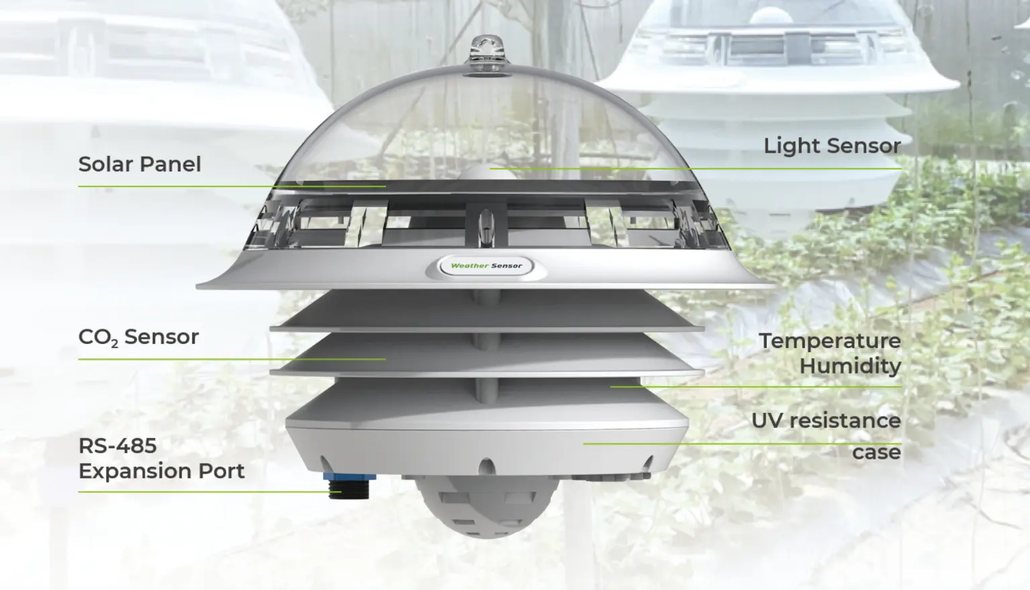
SenseCAP Combo, the 5-in-1 compact weather sensor (with 4G connectivity) designed for environmental monitroing in greenhouses also integrates an NDIR CO2 sensor.
Why Is NDIR Technology So Widely Used?
NDIR sensing offers several important advantages for CO2 and other infrared-active gases.
- Good selectivity: By targeting a characteristic absorption wavelength, the sensor can distinguish the target gas from much of the surrounding air. Multi-wavelength designs and compensation algorithms can further improve measurement reliability.
- Long-term stability: NDIR sensing is an optical measurement method. Unlike electrochemical sensors, it does not rely on a consumable chemical reaction at the sensing element. Hence, NDIR sensors can support a longer operating life and more stable performance.
- Wide measurement range: With an appropriate optical path, detector, and calibration strategy, NDIR sensors can be designed for applications ranging from ambient-level CO2 monitoring at several hundred ppm to industrial measurements at percentage-level concentrations.
- Fast, continuous measurement: Because the sensor directly analyzes the optical absorption of the gas, it can support continuous monitoring and real-time changes in gas concentration.
Where Is NDIR Gas Sensing Used?
NDIR technology is widely used in environmental monitoring, building management, industrial safety, indoor-air-quality monitoring, and smart agriculture.
In a greenhouse, for example, CO2 data can help growers understand ventilation conditions and plant-growth environments. In an outdoor environmental-monitoring system, continuous CO2 measurements can support the analysis of greenhouse gas trends and local atmospheric conditions.
In integrated weather and environmental-monitoring equipment, such as in the Seeed Studio SenseCAP S1000 10-in-1 Weather Sensor, an NDIR module is incorporated into a compact device that enables multi-parameter sensing. Alongside weather and environmental measurements, CO2 data can provide useful input for applications such as carbon-sink assessment, greenhouse-gas monitoring, and atmospheric analysis.
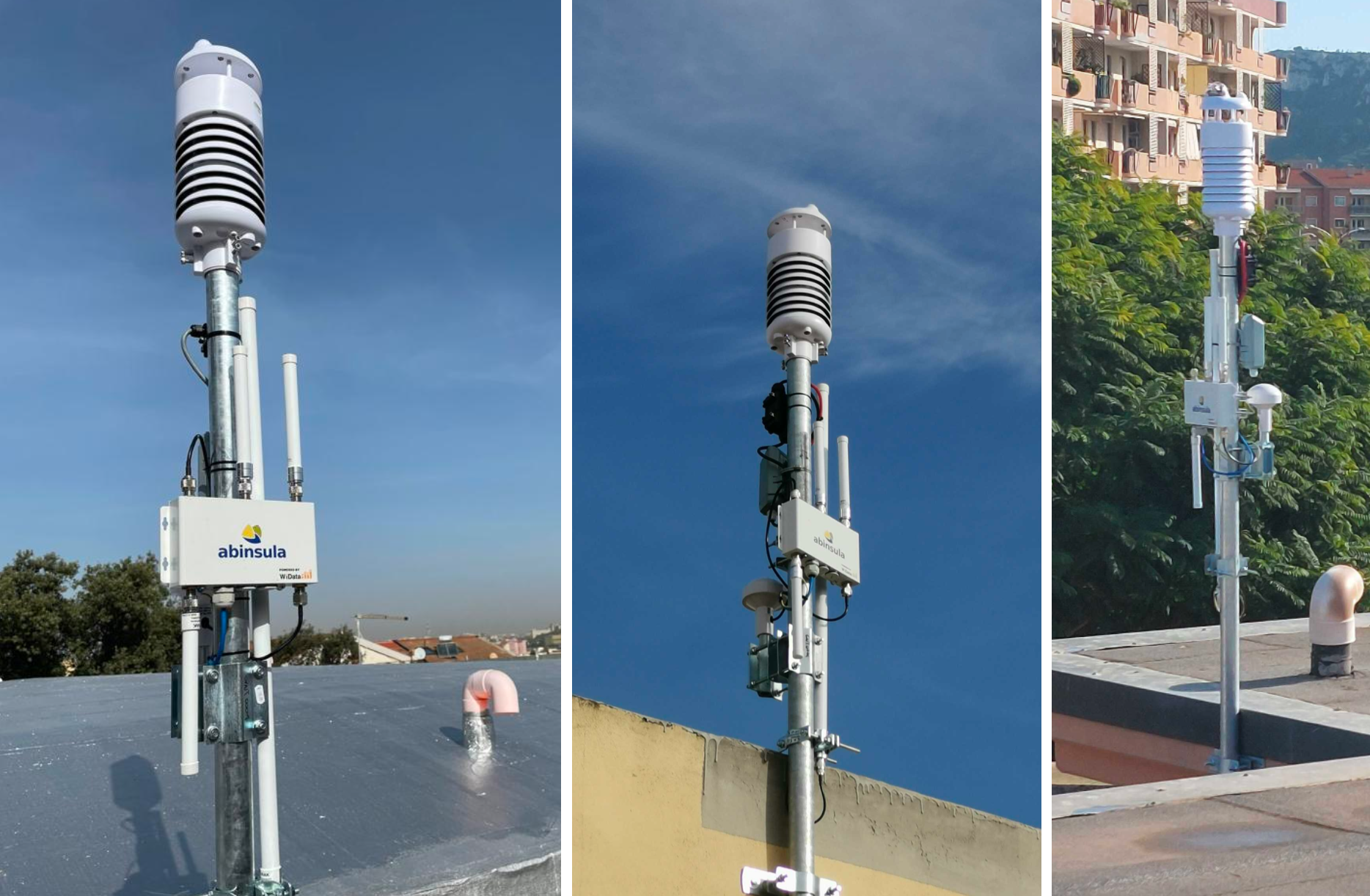
(SenseCAP S1000 10-in-1 Weather Sensor with NDIR CO₂ monitoring deployed on rooftops in Cagliari for Urban Heat Island Mitigation, Smart City Project. Photo Credit: Abinsula, WiData)
What Can Affect NDIR Measurement Accuracy?
Although NDIR is a robust sensing technology, accurate results still depend on the sensor design and deployment conditions.
- Water vapor and temperature: Changes in humidity and temperature can influence infrared absorption and detector response. Good sensors use compensation algorithms, reference channels, or calibration methods to reduce these effects.
- Optical contamination: Dust, condensation, and other contaminants on the optical path can reduce transmitted light and introduce measurement errors.
- Gas flow and sampling: In a sample-based system, the flow rate and the way gas enters the chamber can affect response time and measurement consistency.
- Calibration: Regular calibration or appropriate factory calibration is important, especially in applications that require long-term data comparability or regulatory compliance.
FAQ on NDIR CO₂ Sensors
What does NDIR stand for?
NDIR stands for Non-Dispersive Infrared. “Non-dispersive” means the sensor does not split the infrared spectrum using a prism or grating. Instead, it uses an optical filter to select the wavelength of interest.
What is the working principle of an NDIR CO2 sensor?
An NDIR CO2 sensor measures how much infrared light at around 4.26μm is absorbed by CO2 in a gas chamber. The reduction in light intensity is converted into a CO2 concentration value, typically in ppm, which stands for parts per million.
Where are NDIR sensors commonly used?
Common applications include indoor air quality monitoring in offices and schools, greenhouse and vertical-farming, outdoor environmental and urban monitoring, and industrial safety and emissions monitoring, among others.
Key Takeaways
NDIR gas sensing may sound technical. However, its core principle is easy to understand:
- Every gas absorbs certain wavelengths of infrared light.
- CO2 absorbs infrared radiation strongly around 4.26μm.
- A higher gas concentration absorbs more light.
- The reduction in light intensity is converted into a concentration reading.
In short, an NDIR sensor does not need to “touch” or chemically react with the gas to measure it. It simply observes how the gas changes the light passing through the measurement chamber.
NDIR technology turns a microscopic molecular property into a practical measurement tool. By using the unique infrared absorption characteristics of gases, it can provide stable, continuous, and useful concentration data across a wide range of applications.
From smart agriculture and greenhouse monitoring to outdoor environmental sensing and industrial applications, NDIR gas sensors provide an effective way to understand changes in the air around us – one infrared signal at a time. Contact us if you need any support in selecting the right hardware for your environmental monitoring projects.
That’s for today’s sharing on Sensor Know-How series. If you want to learn any specific topic in technical know-how, comparison, field test etc., let us know! Look for reliable weather sensors for your projects, contact us at [email protected].
Reading More on Sensor Know-How Series
- Solar Radiation Sensors Explained: Thermopile vs Photodiode
- Reasons Why Temperature Sensor Needs a Solar Radiation Shield to Ensure Accuracy
- Two Technologies in Wind Monitoring: Cup & Vane vs. Ultrasonic
About Author
