How Strong Is the Sunshine? Two Core Technologies Behind Solar Radiation Monitoring
Learn how solar radiation sensors work. Discover the differences between thermopile pyranometers and photodiode sensors, and how to choose the right one for your project.
Two ways to read the sunshine: thermopile vs photodiode solar-radiation sensors compared across spectral range, response time, and cost—with ISO 9060 classes and the SenseCAP S700-C specs (0–2000 W/m², ±5%, ≤1 s) you can quote.
by Seeed Studio SenseCAP Team
Published on August 26, 2026 · Last updated: November 3, 2026
This article is part of the Sensor Know-How series where we share different technologies in environmental and weather monitoring. From this, you can get practical information and guidance on wind, solar radiation, and other industrial weather sensors. In this way, you will be able to select the most suitable products for your IoT solutions.
We will focus on solar radiation monitoring in this episode!
Whether you are checking a weather forecast, managing a solar farm, growing high-value fruits in a greenhouse, or managing agrivoltaics that combine agriculture and solar energy, global solar radiation is something worth watching.
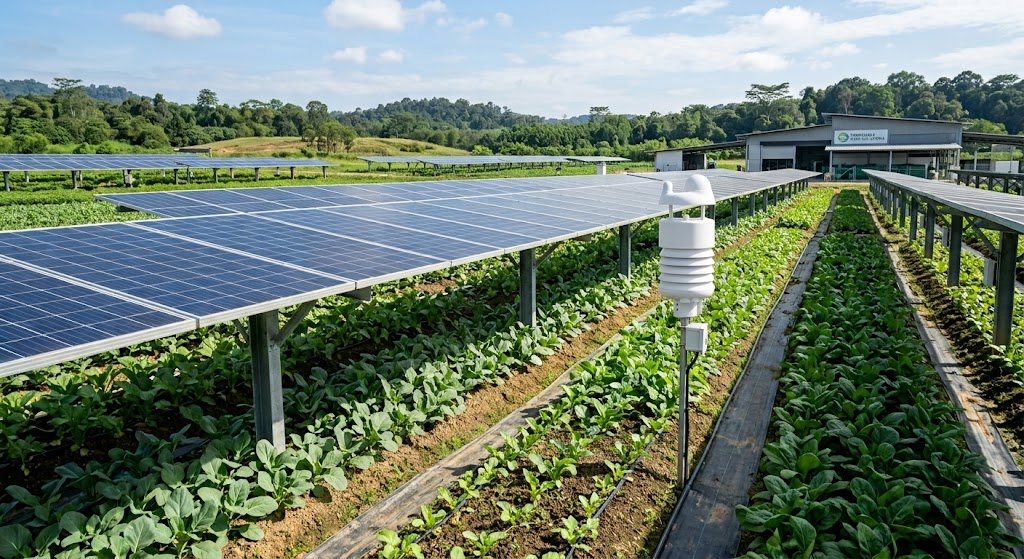
(SenseCAP S700-C deployed on agrivoltaics projects)
What Is Total Solar Radiation?
Put simply, it tells us how much solar energy reaches a given surface over a given period of time. It is commonly expressed as irradiance in watts per square meter (W/m²).
For scale: the solar constant at the top of Earth’s atmosphere is about 1361 W/m² [1]. At the surface under clear skies, global irradiance typically ranges from about 700 to 1300 W/m², with peaks near 1400 W/m² in high-altitude or low-humidity regions [2][6].
But how does an outdoor sensor turn something as intangible as sunshine into a reliable number on a screen?
Behind the scenes, two major sensing approaches do most of the work: thermopile-based measurement and photodiode-based measurement. One measures sunlight by sensing heat; the other responds directly to photons. Both are useful, yet they are built for different priorities.
Thermopile Sensors: Measuring Sunlight Through Heat
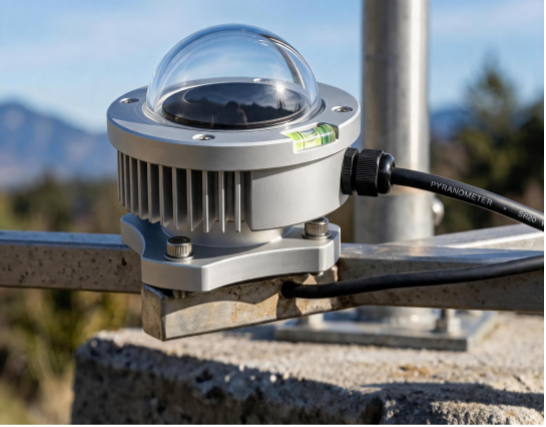
Figure 1. A thermopile pyranometer: a dark, spectrally flat absorber converts broadband solar radiation (about 285–3000 nm) into a temperature-dependent voltage via the Seebeck effect [3][5][9].
A thermopile pyranometer is the traditional reference instrument for measuring broadband solar irradiance. It is specified and classified under ISO 9060:2018 [5] and used in WMO reference networks [6].
Think of it as a highly sensitive heat detector: it absorbs incoming radiation, detects the resulting temperature difference, and converts that difference into a small electrical signal.
Its measurement path is straightforward:
Solar radiation → Heat → Thermoelectric signal
How do thermopile sensors work?
- A dark sensing surface absorbs radiation. The receiving surface is coated with a highly absorptive material, designed to capture incoming solar energy across a broad spectral range— typically about 285–3000 nm, from UV through visible to near-IR [9].
- The absorbed energy raises its temperature. As the sensing surface warms, it becomes hotter than a reference area inside the instrument.
- The temperature difference generates voltage. Through the Seebeck effect, a temperature gradient produces a small voltage. The larger the temperature difference, the stronger the electrical output—and the higher the measured irradiance.
Why are thermopile sensors highly regarded?
Thermopile sensors can measure solar radiation across a broad spectral range, typically extending from ultraviolet through visible light and into the near-infrared region. Their broadband, spectrally flat response is specified by ISO 9060:2018 [5] and recommended for reference measurements by WMO-No. 8 [6].
This broad and relatively flat spectral response makes them especially valuable where traceable, high-quality radiation data are required. Routine calibration is traceable to the World Radiometric Reference (WRR) maintained by WMO [12].
That is why thermopile pyranometers are widely used in the following scenarios.
- Reference meteorological stations
- Climate and atmospheric research
- Solar-resource assessment
- Calibration and validation work
- High-accuracy photovoltaic-performance studies
The trade-off is speed and cost. Because the sensor relies on heat transfer, it needs time to reach thermal equilibrium. Its response is therefore slower than that of photodiode-based sensors—under ISO 9060:2018, a Class A pyranometer reaches 95% of its final signal within 10 s, Class B within 20 s, and Class C within 30 s; fast-response models respond in under 1 s [5] [6]. Thermopile instruments also tend to be larger, more expensive, and more demanding in terms of calibration and maintenance.
Photodiode Sensors: Turning Photons into Electrical Signals
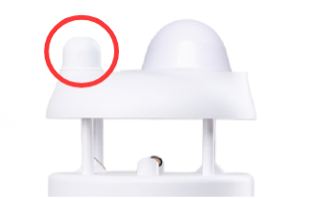
(Figure 2. The photoelectric solar-radiation unit integrated in the SenseCAP S700-C industrial compact weather sensor (0–2000 W/m², 300–1100 nm) [10].)
If a thermopile sensor is a careful heat observer, a photodiode sensor is the fast responder.
Instead of waiting for absorbed energy to create a measurable temperature difference, a photodiode converts incoming light into an electrical signal almost immediately. Its measurement path is shorter:
Solar radiation → Electrical signal
How do photodiode sensors work?
- Sunlight reaches a semiconductor. The sensing element is usually made from a semiconductor material such as silicon (typically responsive from about 300 nm to 1100 nm [10]).
- Photons excite charge carriers. When photons strike the semiconductor, they transfer energy to electrons and create mobile charge carriers.
- The generated current is measured. More incident light produces a stronger electrical response. The sensor electronics then convert that signal into an irradiance value.
Why are photodiode sensors popular?
Photodiode-based radiation sensors are compact, low-power, and capable of very fast response—often on the millisecond scale. For example, the S700-C radiation channel reaches 95% of its final value within 1 s [10]. They are also well-suited to integrated environmental-monitoring devices, where space, power consumption, installation time, and total system cost all matter.
Their key limitation is spectral response. Silicon photodiodes are primarily sensitive to visible and near-infrared wavelengths (roughly 300–1100 nm, so most UV and long-wave IR are not captured), rather than the full solar spectrum. As a result, the raw electrical signal does not always match the spectral response of a thermopile pyranometer.
Manufacturers address this through calibration and spectral-correction algorithms. For many practical outdoor applications, a well-designed photodiode sensor can provide highly useful and stable solar-radiation data—especially when the goal is operational monitoring rather than laboratory-grade radiometry.
Common applications for photodiode sensors include:
- Agricultural and greenhouse microclimate monitoring
- Distributed photovoltaic systems
- Smart-weather stations
- Environmental-monitoring networks
- Energy-management applications
- Outdoor IoT deployments
Thermopile Sensor vs. Photodiode Sensor: What are the Differences?
| Feature | Thermopile-based sensor | Photodiode-based sensor |
|---|---|---|
| Core principle | Converts absorbed radiation into heat, then voltage | Converts incident photons directly into an electrical signal |
| Spectral response | Broadband; suitable for high-quality solar-radiation measurement (≈285–3000 nm [9]) | Mainly visible and near-infrared; relies on calibration and correction (≈300–1100 nm [10]) |
| Response speed | Typically slower due to thermal response (ISO 9060 Class A: ≤10 s to 95% [5]) | Extremely fast, often milliseconds (SenseCAP S700-C: ≤1 s [10]) |
| Accuracy priority | Strong choice for reference-grade and research applications [5] [6] [12] | Strong practical performance for operational monitoring |
| Size and integration | Often larger and more specialized | Compact and easy to integrate into multi-parameter devices |
| Power consumption | May be higher, especially with heating or ventilation accessories | Generally low |
| Cost | Usually higher | Typically more cost-effective |
| Typical use cases | Meteorological research, solar-resource studies, calibration | Agriculture, IoT weather stations, distributed PV, environmental monitoring |
Data sources for this table: ISO 9060:2018 [5] ; WMO Guide to Instruments and Methods of Observation (WMO-No. 8), Chapter 7 [6]; IEC 61724-1 [7]; Seeed SenseCAP Weather Sensor Catalogue [10].
Which Pyranometer Should You Choose?
The question is not which technology is “better” in every situation. The question to ask is: what kind of data do you need, and what will the sensor face in the field?
Choose a thermopile sensor in the following scenarios:
- You need broad spectral coverage and high-quality reference data.
- The project involves scientific research, calibration, or standards-based measurement.
- Long-term data comparability and traceability are critical.
- You have the budget and maintenance resources for a professional pyranometer.
Choose a photodiode sensor in these situations:
- You need a fast response, compact size, and low power consumption.
- The sensor will be deployed at many distributed sites.
- The application focuses on operational decisions rather than reference-grade research.
- You want to combine solar-radiation data with other environmental parameters in one device.
For example, a national meteorological observatory or solar-resource research project may prioritize a thermopile pyranometer. For distributed-PV performance monitoring, IEC 61724-1 provides the relevant measurement framework [7]. A smart-agriculture project monitoring microclimates across dozens of greenhouses may benefit more from compact, integrated photodiode-based weather stations.
Why Integration Matters in Outdoor Microclimate Monitoring
Outdoor monitoring is increasingly moving toward systems that are compact, connected, and easy to maintain.
Rather than installing separate instruments for wind, rainfall, temperature, humidity, pressure, and solar radiation, many projects now use integrated multi-parameter weather sensors. This approach can reduce installation time, simplify cabling, lower maintenance requirements, and make large-scale deployments more practical.
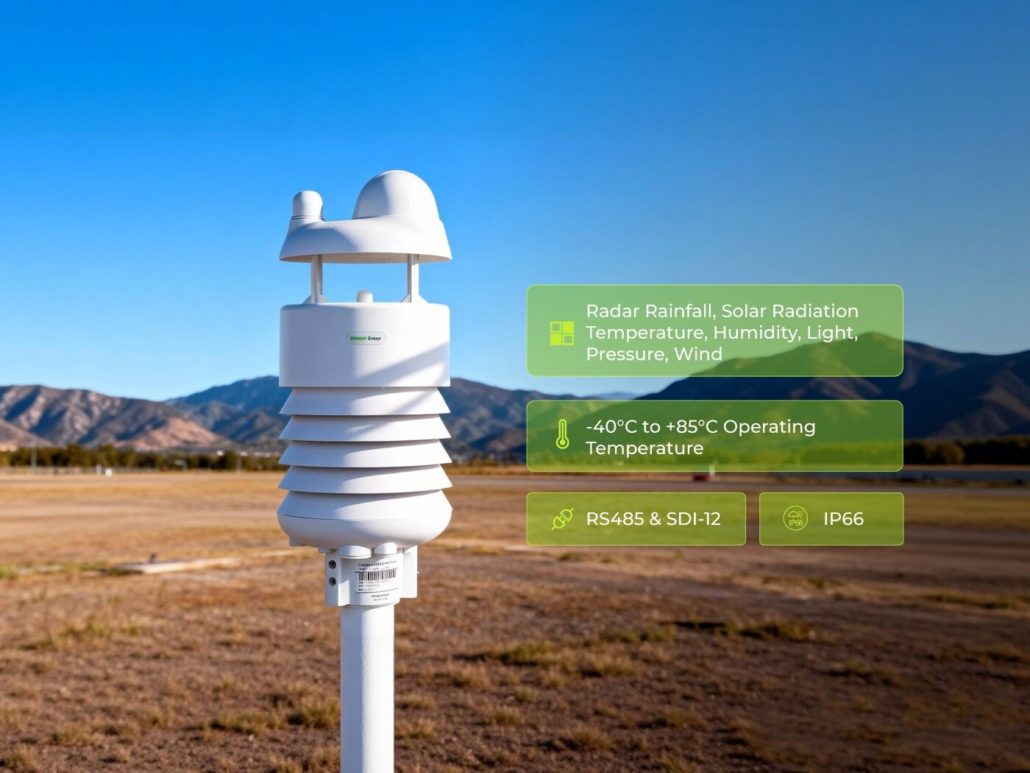
For instance, an all-in-one weather sensor such as the Seeed Studio SenseCAP S700-C Industrial-grade Compact Weather Sensor integrates a miniaturized photoelectric radiation-sensing unit (0–2000 W/m², ±5% accuracy, 300–1100 nm spectral range, ≤1 s response) with radar rainfall measurement, wind speed, wind direction, temperature, humidity, and other environmental parameters. This makes it easier to collect multiple weather indicators from a single field device while reducing deployment complexity for outdoor monitoring projects.
Key Takeaways on Pyranometers
Sunlight may look simple, but measuring it accurately is not. Thermopile sensors and photodiode sensors take two very different paths to answer the same question: how much solar energy is reaching this location right now?
- Thermopile sensor remains the preferred route for broad-spectrum, research-grade measurement. (≈285–3000 nm; ISO 9060 Class A reaches 95% response within 10 s [5][9])
- Photodiode sensor offers speed, compactness, low power consumption, and easier integration for real-world monitoring networks. (e.g., SenseCAP S700-C: 0–2000 W/m², 95% response within 1 s [10])
We hope this article helps you better understand the difference between solar radiation monitoring via measuring heat and measuring photons, thus you will have more comprehensive knowledge and information to select the right solar-radiation sensor for your projects.
Frequently Asked Questions
Q1: Which sensor type is more accurate?
A1: For reference-grade or research data, a thermopile pyranometer (ISO 9060 Class A) is the benchmark [5] [6]. For operational monitoring, a well-calibrated photodiode sensor delivers stable, practical accuracy—for example, the S700-C solar-radiation channel is rated ±5% [10].
Q2: What irradiance values should I expect in the field?
A2: The solar constant at the top of the atmosphere is about 1361 W/m² [1]. At the surface under clear skies, global irradiance typically ranges from about 700 to 1300 W/m², peaking near 1400 W/m² [2][6].
Q3: Does photovoltaic (PV) monitoring require a Class A pyranometer?
A3: Not necessarily. IEC 61724-1 defines the measurement framework for PV performance monitoring [7]. For operational monitoring of distributed PV, a well-calibrated photodiode sensor is usually sufficient; Class A thermopile instruments are preferred for research or performance-guarantee applications.
Q4: Why do all-in-one weather stations use photodiode sensors?
A4: Because they are compact, low-power, fast (95% response within 1 s), and easy to integrate—for example, the SenseCAP S700-C measures 0–2000 W/m² in a single multi-parameter device [10].
Welcome to comment or contact us should you have any questions, need our suggestions, or make wishes about the content you want to read or the products you want to see and use! Contact us at [email protected]!
Sources & References
[1] NASA GISS – Solar Irradiance (Kopp & Lean 2011 calibration, ~1361 W/m²): https://data.giss.nasa.gov/modelforce/solar.irradiance/
[2] NASA Goddard Earth – Solar Irradiance Science: https://earth.gsfc.nasa.gov/climate/projects/solar-irradiance/science
[3] US DOE ARM – Pyranometer Handbook: https://www.arm.gov/publications/tech_reports/handbooks/pyra_handbook.pdf
[4] EcoSentec – Pyranometer Sensors Explained: https://ecosentec.com/pyranometer-sensors-explained-which-type-is-right/
[5] ISO 9060:2018 – Specification and classification of instruments for measuring hemispherical and direct solar radiation: https://www.iso.org/obp/ui/en/#!iso:std:67464:en
[6] WMO – Guide to Instruments and Methods of Observation (WMO-No. 8), Chapter 7: https://old.wmo.int/extranet/pages/prog/www/IMOP/publications/CIMO-Guide/Prelim_2018_ed/8_I_7_en_MR_clean.pdf
[7] Hukseflux SR30-M2-D1 User Manual (ISO 9060 Class A; IEC 61724-1 compliant, hosted by NOAA PSL): https://psl.noaa.gov/data/obs/instruments/HuksefluxSR30-M2-D1_manual_v2202.pdf
[8] 中国标准化研究院 – 太阳辐射测量仪器规格与分类(对应 ISO 9060 分类表): https://www.cnis.ac.cn/ynbm/zhfy/bzyjzq/gbyjzq/202602/P020260209576293491072.pdf
[9] Sensorbee – Pyranometer (285–3000 nm spectral range): https://www.sensorbee.com/products/pyranometer
[10] Seeed Studio – SenseCAP All-in-One Weather Sensor Catalogue: https://files.seeedstudio.com/products/SenseCAP/SenseCAP_ONE/SenseCAP_Weather_Sensor_Catalogue.pdf
[11] Seeed Studio – SenseCAP ONE V3 Compact Weather Station User Guide V1.5: https://files.seeedstudio.com/products/SenseCAP/SenseCAP_ONE/SenseCAP_ONE_V3_Compact_Weather_Station_User_Guide_V1.5.pdf
[12] WMO – Radiation Centres and the World Radiometric Reference: https://community.wmo.int/site/knowledge-hub/programmes-and-initiatives/instruments-and-methods-of-observation-programme-imop/radiation-centres
Read More from the Sensor Know-How Series
- Why Temperature Sensors Need a Solar Radiation Shield for Accurate Measurements
- Two Technologies for Wind Monitoring: Cup-and-Vane vs. Ultrasonic Sensors
- NDIR CO2 Sensor Explained: How Infrared Gas Sensing Works
- Doppler Radar Precipitation Sensor: How Can It Measure Rain Without a Funnel?
- 2026 Climate Reality Check: When Extremes Become the Norm, How Do We Adapt?
- Giving Soil a “CT Scan”: Soil Moisture Sensors Explained
- From Experience to Evidence: How Growers in Ningxia Use SenseCAP Sensors to Help Prevent Cherry Tomato Cracking
About Author
