2026 Climate Reality Check: When Extremes Become the Norm, How Do We Adapt?
How can warmer Pacific waters reshape weather far beyond the ocean? Explore the science behind El Niño, and discover how local weather monitoring can help farms, cities, and businesses prepare for what comes next.
This article is part of the Weather Sensor Know-How series: practical guides to the technologies behind industrial weather sensors, environmental monitoring, and microclimate applications. See all guides.
A regional forecast warns of heavy rain. But will the next downpour overwhelm a particular drainage channel? A heat alert covers an entire province. But how quickly is the soil drying out in a specific field?
These are local questions—and answering them requires local data. As extreme weather puts growing pressure on agriculture, energy infrastructure, and urban management, microclimate monitoring is becoming an essential complement to broad weather forecasting.
The challenge is not simply to predict the weather. It is to turn that knowledge into timely, practical decisions.
The Dual Threat: Heatwaves and Torrential Rain
Since the beginning of 2026, many people have felt that the weather has become increasingly unpredictable.
Unusually high sea-surface temperatures in the central and eastern equatorial Pacific signal that a strengthening El Niño event is once again shaping global climate patterns. From prolonged drought and wildfire risks in parts of Southeast Asia to sudden, localized episodes of intense rainfall, microclimates around the world are experiencing sharp and sometimes disruptive swings.
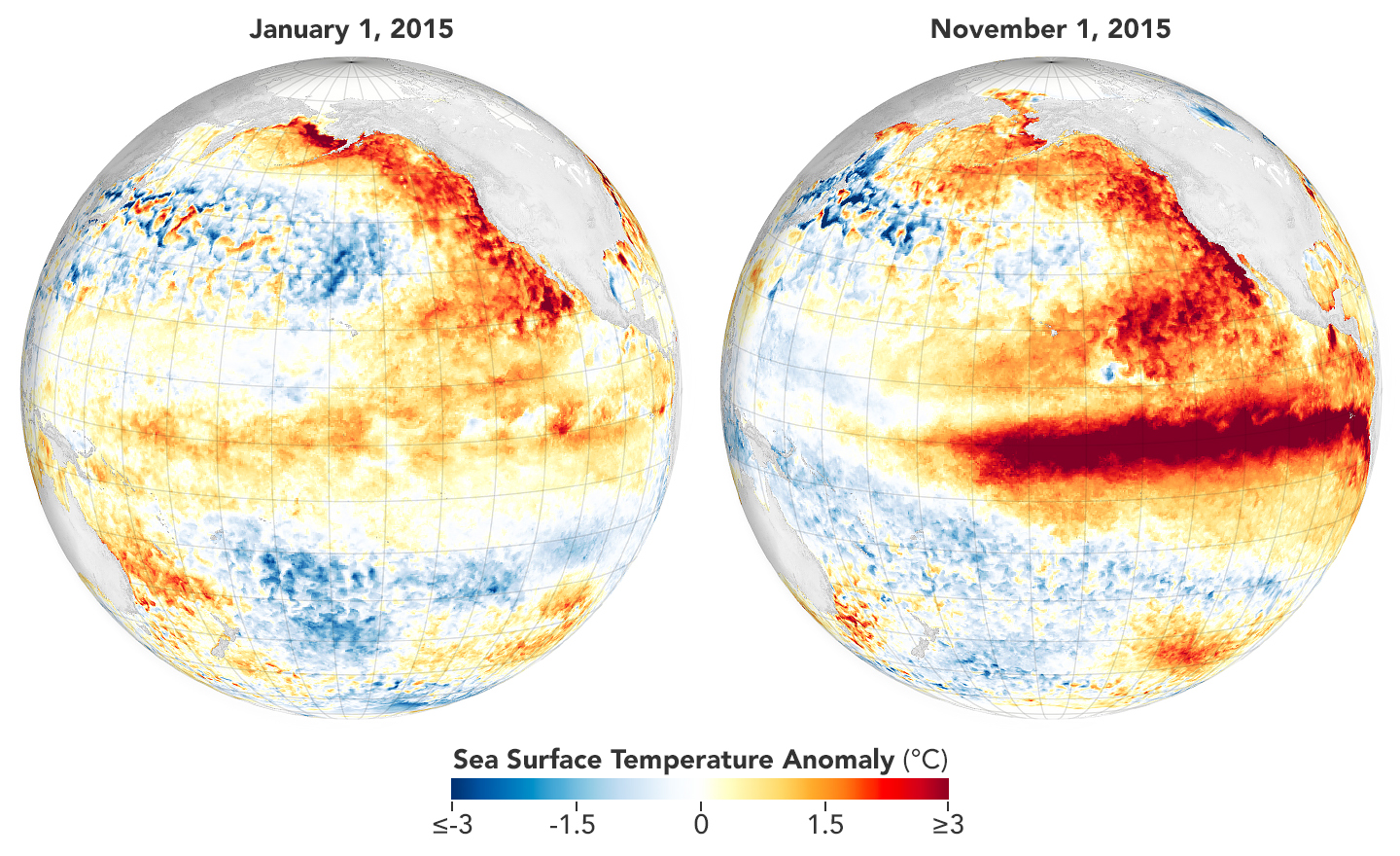
(Image Credit: NASA. “El Niño is associated with above-average equatorial sea surface temperatures. El Niño’s signature warmth is apparent in the November 2015 map.”)
According to the World Meteorological Organization (WMO), El Niño is expected to intensify into a very strong event, increasing the risks of floods, drought, and extreme heat into 2027. WMO notes that a very strong El Niño can significantly shift rainfall and temperature patterns worldwide and fuel extreme weather.
Extreme weather is no longer an occasional breaking-news headline. It is becoming a persistent reality that agriculture, industry, and urban management must confront.
As large-scale climate patterns become more volatile, communities and organizations are shifting their approach to resilience: we cannot change global atmospheric trends, but we can strengthen our ability to sense what is happening in the places where we live, grow, and operate.

(El Niño: Concept & Impacts, credit: Forum IAS)
Why Microclimate Monitoring Matters
Traditional meteorological observation relies heavily on national weather stations. These systems provide broad coverage and high-quality data, but they cannot always capture conditions at a specific production site.
A sudden localized storm, a rapid change in valley winds, or an imbalance in a farm’s microclimate may occur at a scale of only a few hundred meters. A regional forecast may indicate risk, but it may not reveal exactly where conditions are changing or how quickly.
Microclimate monitoring addresses this gap by placing compact weather sensors closer to the people, assets, and environments affected by changing conditions. Instead of relying on one observation point to represent an entire area, a distributed network collects data from multiple locations.
Each node contributes a small piece of the local picture. Together, those observations can help users understand how temperature, rainfall, wind, humidity, and other conditions vary across a farm, industrial site, watershed, or community.
From Living at the Mercy of the Weather to Hyper-Local Sensing
Denser, faster-responding micro-scale weather-monitoring networks are becoming increasingly important across smart agriculture, renewable energy, smart city management, emergency response, and hydrological or geological hazard monitoring.
At many field sites, whether at the base of a wind turbine, along the edge of a tea plantation, or around a smart farm, compact, highly integrated devices are quietly collecting environmental data. As a company exploring professional weather sensing, Seeed has been putting years of effort into developing the SenseCAP compact all-in-one weather and environmental sensors to serve as microclimate data sentinels.
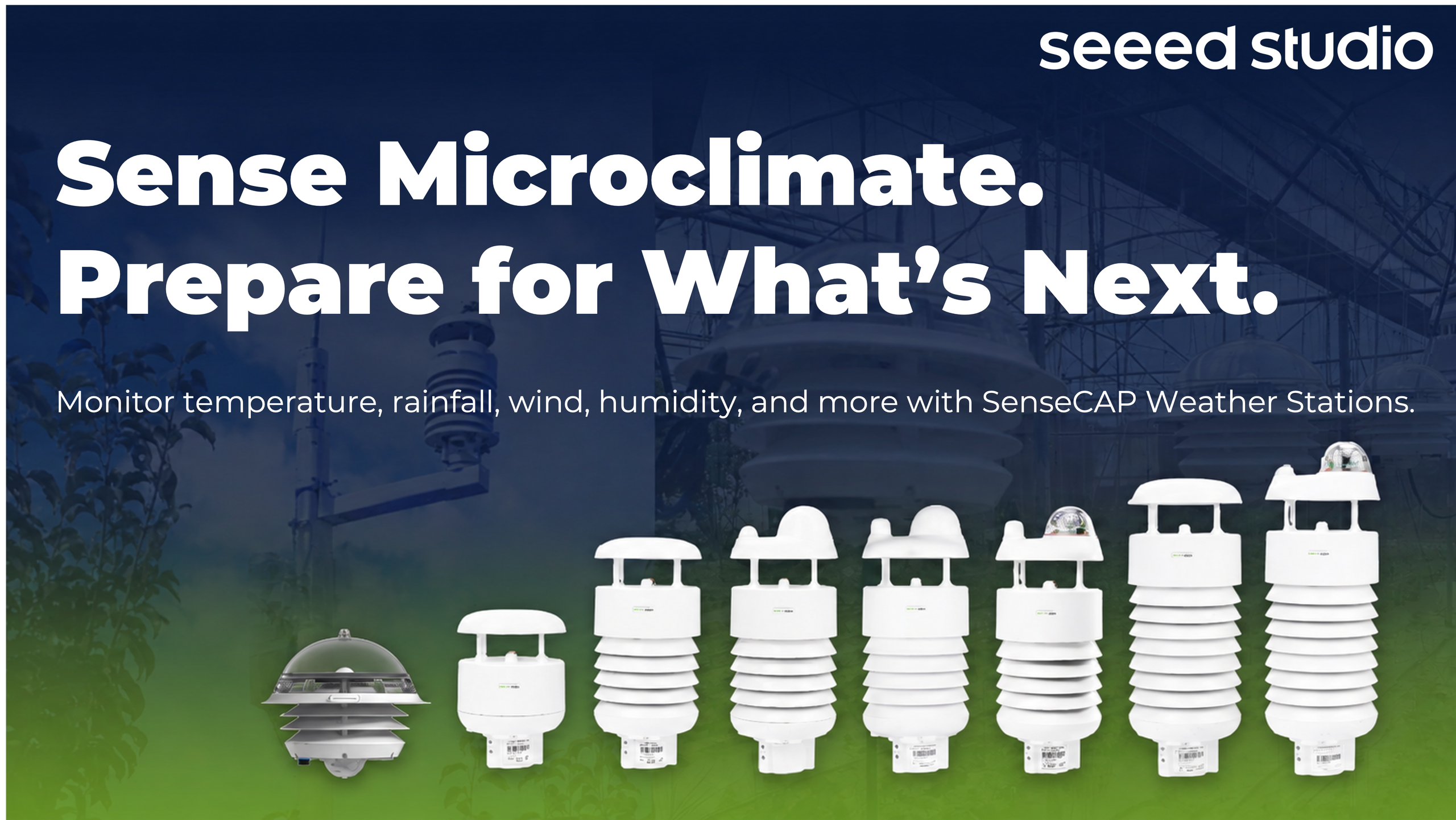
By using ultrasonic wind measurement, these sensors avoid the rotating cups and vanes found in traditional wind instruments, reducing mechanical wear. Models with radar or optical rainfall sensing also avoid the moving tipping mechanism used in conventional tipping-bucket rain gauges.
Depending on the model, the SenseCAP series measures up to ten weather and environmental parameters. Available measurements include wind speed and direction, rainfall, air temperature, relative humidity, barometric pressure, light intensity, particulate matter, CO₂, and noise. The combination varies by model.
Supported interfaces include RS-485 Modbus RTU and SDI-12, depending on the model and configuration. Compatible data loggers and communication equipment can connect these observations to a monitoring platform, with options for remote connectivity such as cellular 4G or LoRaWAN.
Scattered across farmland, industrial parks, and nature reserves, these sensing nodes turn abstract atmospheric changes into real-time data streams:
- For growers: Earlier awareness of frost, drought, and changing field conditions.
- For renewable-energy operators: Local wind observations to support operational planning.
- For city teams: Timely rainfall data to support flood preparedness and drainage decisions.
From Weather Data to Practical Decisions
Microclimate monitoring creates value only when data lead to action. A sensor can measure rainfall, but a complete monitoring system also needs reliable connectivity, data interpretation, alerts, and clear response procedures.
Smart agriculture
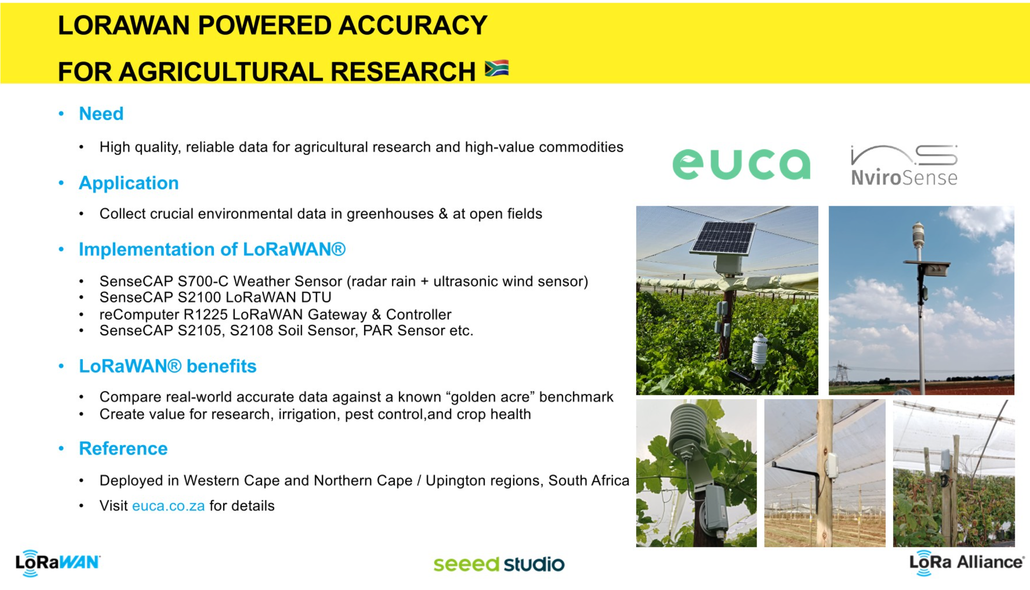
(Microclimate data support smart farming and agricultural research in a South African deployment by EUCA.)
Temperature, humidity, wind, and rainfall observations can help growers understand changes in the crop environment. Local data can provide context for frost risk, drying conditions, rainfall events, and irrigation decisions.
Its greatest value comes when weather data are considered alongside crop requirements, soil conditions, and forecasts—not in isolation.
Renewable energy
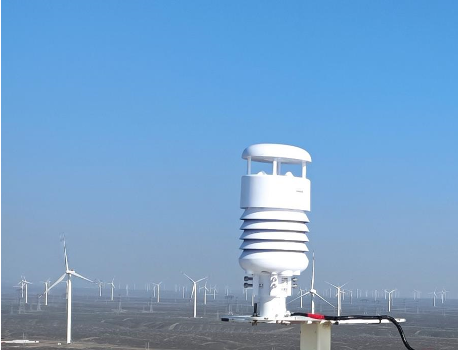
(SenseCAP S500 5-in-1 weather sensor deployed at a wind farm in China.)
At renewable-energy sites, local weather observations can provide a clearer picture of the conditions around an installation. For wind-energy applications, local wind-speed and wind-direction measurements offer useful operational context.
The suitability of any particular sensor for control, safety, or performance assessment depends on the technical requirements of the application.
Urban management
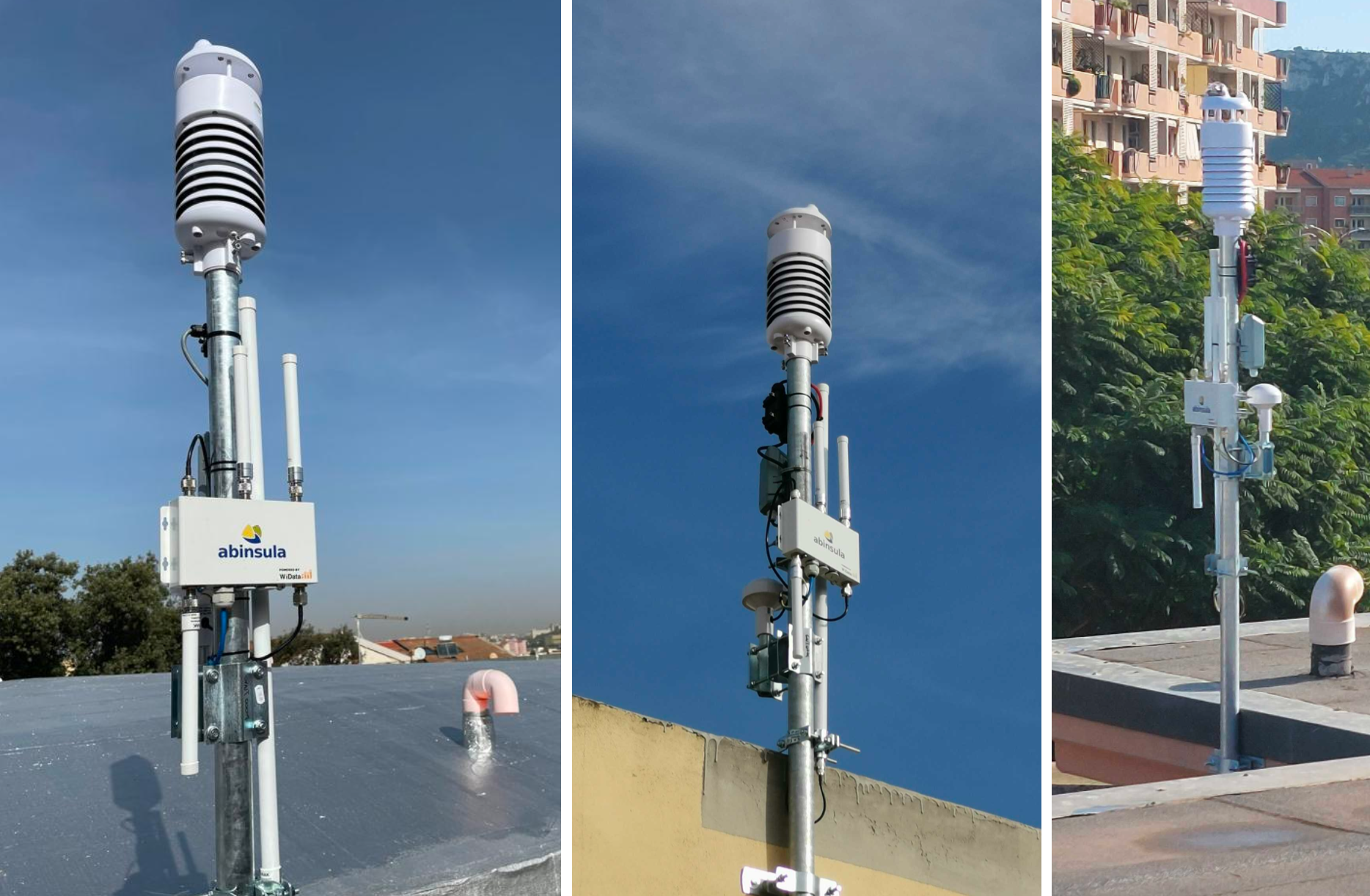
(Urban Heat Island Mitigation – Smart City Project deployed in Sardinia Island, Italy, by Abinsula and WiData.)
Rainfall does not fall evenly across a city. Local observations can help authorities track conditions near exposed roads, drainage infrastructure, and other vulnerable locations.
Weather sensors can contribute to situational awareness, but flood warnings require more than rainfall data alone. Water levels, drainage capacity, terrain, forecast information, and response procedures all influence the outcome.
Timely local observations can support earlier recognition of changing conditions, but the actual warning time depends on the complete monitoring and response system.
Building Climate Resilience in the Digital Era
Climate change is a sweeping global challenge, but its impacts are felt closest to home—in daily life, food production, and economic activity.
The climate stress test of 2026 encourages us to rethink how technology can support our relationship with the natural world.
Beyond large-scale climate models, one of grided weather stations’ most practical contributions is hyper-local perception: making environmental data more accessible so that prevention can begin before extreme weather arrives.
Seeed Studio’s recent decision to join the HydroMeteorological and Environmental Industry Association (HMEI) reflects this commitment. By working alongside organizations and industry partners in the global weather and environmental-monitoring community, we aim to help make reliable environmental sensing more accessible, supporting more informed decisions for agriculture, cities, energy, and climate resilience.

From shifting cloud formations high above to the quiet stream of measurements collected by compact micro-weather stations on the ground, the value of connected sensing becomes clear:
In an era of growing uncertainty, technology can help give growers, engineers, and city planners a little more certainty.
The Takeaway
We cannot stop extreme weather from happening. But we can reduce its blind spots.
By combining broad forecasts with dense, local microclimate monitoring, communities and organizations can move from reacting after the event to preparing before it arrives.
That is the quiet promise of modern weather monitoring: not certainty about the future, but clearer visibility of the present.
Frequently Asked Questions
What is microclimate monitoring?
Microclimate monitoring is the practice of measuring weather and environmental conditions in a specific, localized area, such as a farm, greenhouse, city block, industrial site, or natural habitat, rather than relying only on regional forecasts.
Why is microclimate monitoring important during extreme weather?
Extreme weather often affects locations differently. Local monitoring can help identify changing temperature, rainfall, wind, and humidity conditions at specific sites, supporting faster and more informed decisions.
Which industries use microclimate monitoring?
Common applications include smart agriculture, greenhouse management, renewable energy, smart cities, environmental monitoring, hydrology, emergency management, and industrial site operations.
Can microclimate monitoring replace weather forecasts?
No. Forecasts and local monitoring serve different purposes. Forecasts help anticipate what may happen, while local sensors show what is happening at a specific location. The most effective resilience strategies use both.
Explore Further
Planning a microclimate-monitoring project? Browse the SenseCAP sensor catalog (PDF), or contact us at [email protected] to discuss how our hardware can support your solution.
That’s all for today’s Sensor Know-How series. If you would like us to cover a specific topic in technical know-how, product comparisons, field testing, or related applications, let us know!
Read More from the Sensor Know-How Series
- Solar Radiation Sensors Explained: Thermopile vs. Photodiode
- Why Temperature Sensors Need a Solar Radiation Shield for Accurate Measurements
- Two Technologies for Wind Monitoring: Cup-and-Vane vs. Ultrasonic Sensors
- NDIR CO2 Sensor Explained: How Infrared Gas Sensing Works
- Doppler Radar Precipitation Sensor: How Can It Measure Rain Without a Funnel?
About Author
