Reasons Why Temperature Sensor Needs a Solar Radiation Shield to Ensure Accuracy
Discover why outdoor temperature sensors need a solar radiation shield to prevent direct sun heating, lower measurement error, and ensure high-accuracy microclimate data.
This article is part of the Sensor Know-How series, where we share different technologies in environmental and weather monitoring. From this, you can get practical information and guidance on wind, solar radiation, and other industrial weather sensors. In this way, you will be able to select the most suitable products for your IoT solutions.
In this episode, we will focus on temperature sensors and louver boxes / solar radiation shields?
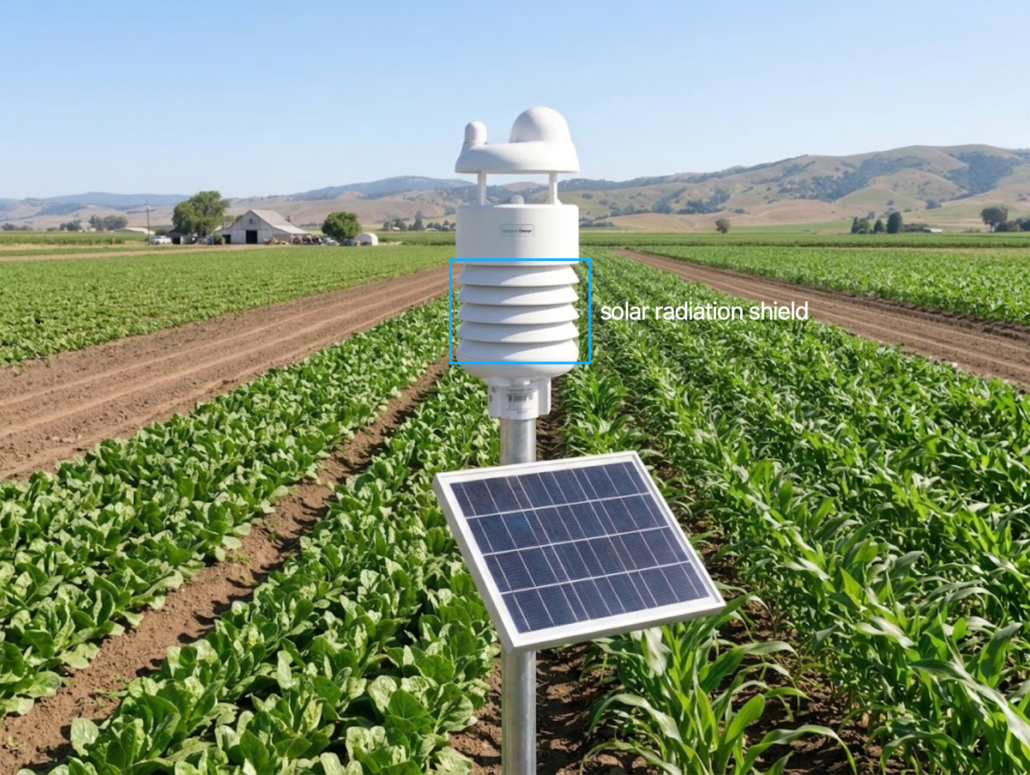
Are your temperature sensors afraid of the sun, being exposed to direct sunlight, to be more specific? Why do we not stick a bare temperature sensor out in the open when designing a professional weather station?
In meteorology, the definition of air temperature is “The temperature indicated by a thermometer exposed to the air in a place sheltered from direct solar radiation”, as described by the WMO.
Why is it a must that a temperature sensor or a thermometer needs to be sheltered from direct solar radiation? Because when a temperature sensor is exposed to direct sunlight, in reality it does not measure the temperature of the air. Instead, it measures how hot the sensor itself gets in exposure to direct sunlight.
To obtain a reliable air-temperature reading, the sensor must be protected from direct solar radiation while still being exposed to naturally moving air. To achieve this, professional weather stations use a device known as a solar radiation shield to get accurate data of air temperature without the influence of the sun. The part of the modern weather sensors that achieve such functions is called a solar radiation shield, which can help ensure the temperature sensors’ accuracy.
What Can Affect Readings of an Air Temperature Sensor?
When an temperature sensor is placed in direct sunlight, its surface absorbs solar energy and heats up. The sensor may then report a temperature that is higher than the actual surrounding air temperature.
The same problem can occur when the sensor is affected by reflected or emitted heat from the surfaces nearby, such as:
- Concrete or asphalt
- Building walls and rooftops
- Vehicle surfaces
- Dry soil or rocks
- Other heated objects in the surrounding environment
In meteorological monitoring, the goal is to measure the temperature of the surrounding air, not that of the sensor or its housing. Standard air temperature measurements, therefore, require shielding from direct sunlight and radiant heat while maintaining adequate airflow around the sensing element.
To meet these requirements, the WMO recommends using radiation shields to minimize radiative errors. Adherence to these standardized siting and exposure practices ensures that observations are accurate, representative, and internationally comparable.
What Does a Solar Radiation Shield Do Exactly?
A radiation shield is like a protective sun hat for a temperature sensor. It does not block the air; instead, it blocks unwanted radiation and helps the sensor measure the surrounding air more accurately.
Its main functions include:
- Blocking direct solar radiation. The shield prevents sunlight from directly heating the temperature and humidity sensor.
- Reducing radiant-heat interference. Its structure helps limit the impact of heat radiated or reflected by the ground, buildings, and nearby objects.
- Maintaining natural airflow. Openings between the shield’s plates allow air to circulate and continuously exchange with the surrounding environment.
- Protecting the sensor from the weather. The shield helps reduce direct exposure to rain, snow, hail, and strong wind, protecting sensitive electronic components and supporting long-term operation.
The design challenge is to block radiation without trapping heat. If the enclosure were completely sealed, the air inside could become warmer than the surrounding atmosphere—creating a small greenhouse effect and introducing another source of measurement error.
Why Are Radiation Shields Usually White?
The color of a radiation shield is not simply a matter of appearance. White surfaces reflect a large proportion of incoming sunlight and absorb less solar energy than darker surfaces.
As a result, a white shield is less likely to heat up and transfer unwanted heat to the temperature sensor inside. This helps reduce secondary errors caused by the shield itself.
In other words, the white color works together with the louvered or layered structure to provide two essential functions:
- Reflect as much solar radiation as possible.
- Allow sufficient airflow around the sensor.
From Large Wooden Boxes to Compact Radiation Shields
Traditional meteorological stations often used large wooden Stevenson screens. These louvered enclosures were designed to shade the instruments from direct sunlight while allowing air to circulate naturally.
They were effective, but their relatively large size could make installation, transportation, inspection, and maintenance more demanding.
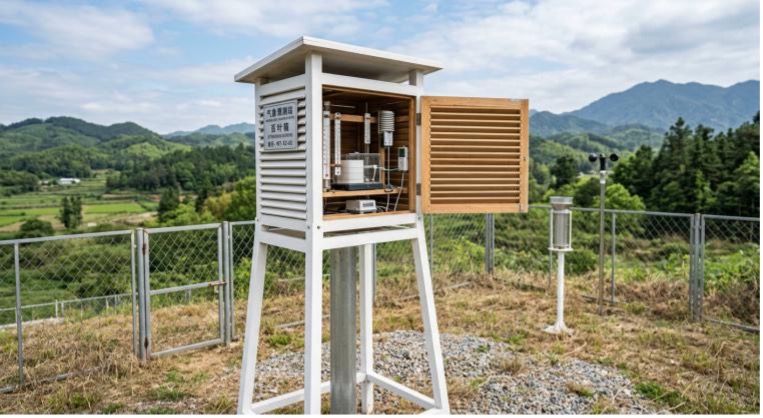
(1) Smaller form factor
Modern compact weather sensors often replace the traditional enclosure with a series of stacked, louvered plates or a multi-layer radiation shield. This creates a smaller protective structure while preserving the essential functions of shade and ventilation. However, the dimension of the solar radiation shield requires very serious calculation and repeated testing. Too small a size leads to not enough ventilation, which will lead to less accurate data reading. Too large a size makes it difficult to ship, leading to higher costs.
Our engineering team at Seeed Studio has put a lot of effort into the design of our SenseCAP series compact all-in-one weather sensors. From the materials to coating colors to the specific dimension of the solar radiation shield, every aspect has been taken into serious consideration and gone through continuous testing in-house, at 3rd-party labs, and in the field.
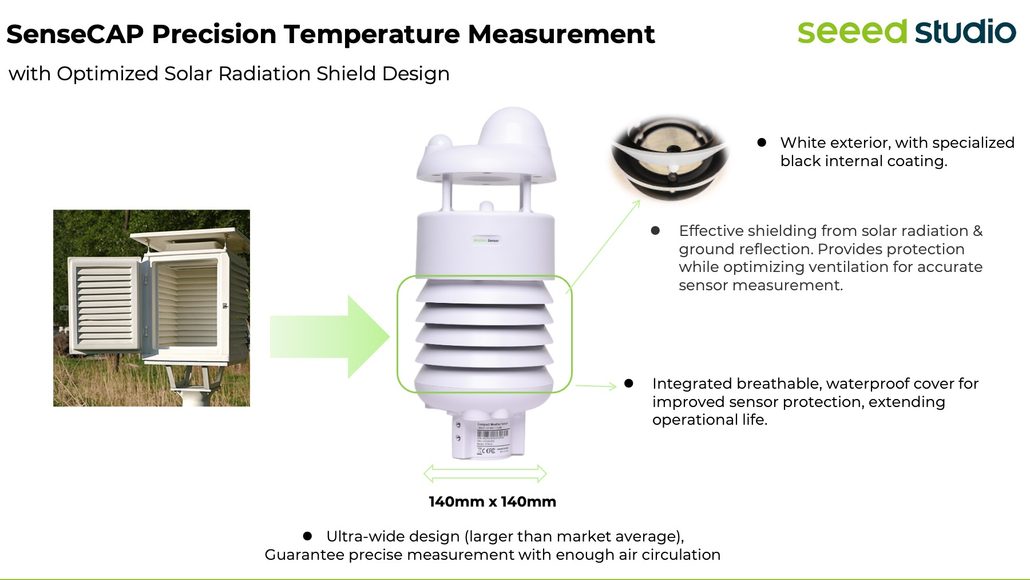
(Some of the many elements that were taken into consideration when designing SenseCAP Compact All-in-One Weather Sensor’s solar radiation shield)
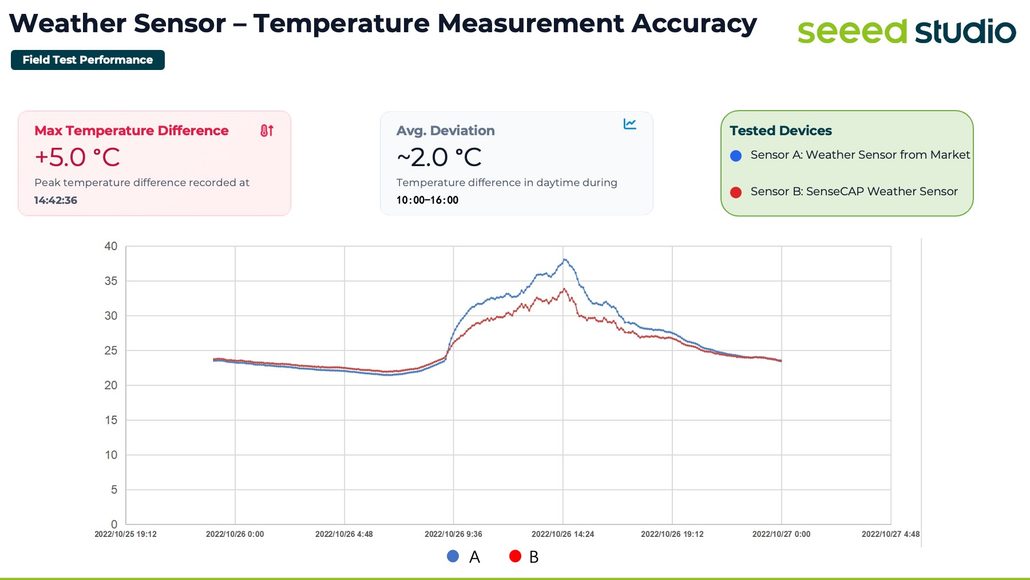
(SenseCAP Weather Sensor was deployed alongside another brand of weather sensor in a field test for a long time. This screenshot shows SenseCAP’s measured temperature is lower, with less interference from solar radiation.)
Core Insight: Direct solar radiation severely inflates the data read by the temperature sensors. With a better engineered solar radiation shield, sensors’ performance is less influenced by solar radiation. SenseCAP’s engineered multi-plate solar radiation shield minimised solar heat bias to ensure accurate, true ambient air temperature measurement under high solar irradiance.
2) More functions in one device
Modern compact all-in-one weather sensors can place the temperature and humidity sensor inside the radiation shield while integrating other sensing functions in the same device.
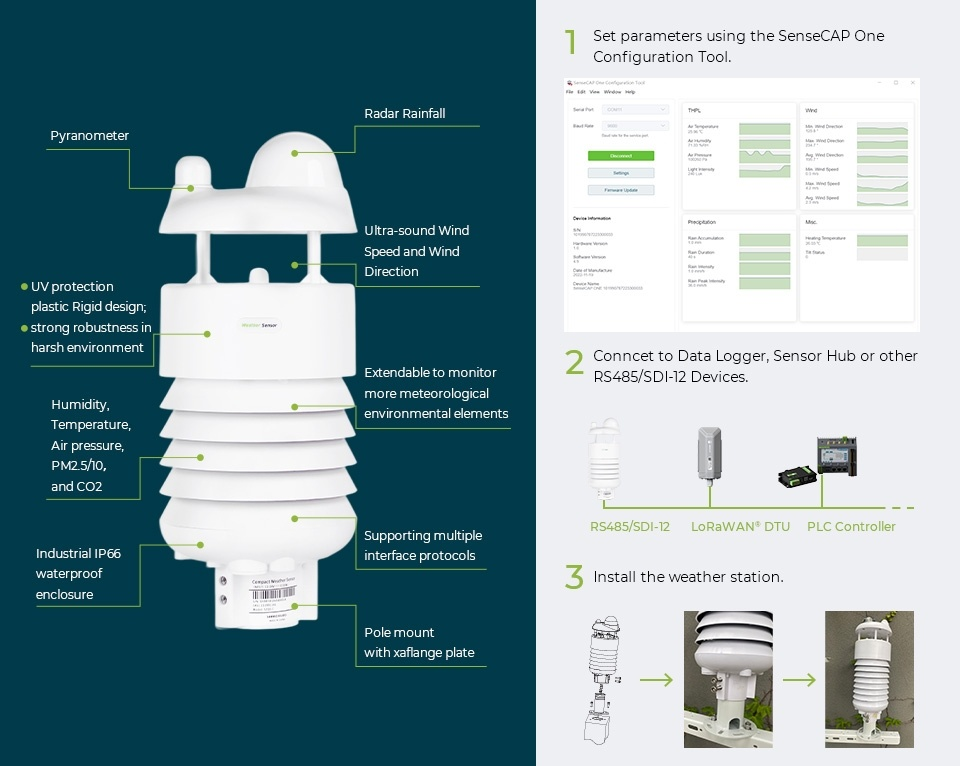
For example, the Seeed Studio SenseCAP series combines protected temperature and humidity measurement with other weather parameters. Taking SenseCAP S700 7-in-1 weather sensor as an example (see illustration in the photo below)
(1) pyranometer sensor + radar rain gauge at the top
(2) Ultrasonic wind speed and wind direction sensors on the second layer
(3) The remaining sensors are housed in the solar radiation shield: air temperature & humidity and atmospheric pressure (Note: PM2.5, PM10, and CO2 are available in the model SenseCAP S1000).
This type of all-in-one compact design can measure and transmit accurate data from remote sites. The solid-state design, without moving parts, makes it easy to install and maintenance-free. This can help cut down the overall costs and ensure long-term data collection, making it more and more popular for collecting microclimate data for different application scenarios.
Why Radiation-Shield Design Matters in Microclimate Monitoring
Microclimate monitoring focuses on small-scale variations in environmental conditions. A greenhouse, orchard, vineyard, solar farm, urban rooftop, or construction site may experience temperature differences over relatively short distances.
In these applications, even a small measurement bias can affect how the data are interpreted. For example, an artificially high temperature reading could make huge influences on the following scenarios:
- Greenhouse ventilation and irrigation decisions
- Crop-stress assessment
- Frost and heat alerts
- Solar-panel performance analysis
- Urban heat-island studies
- Environmental monitoring in industrial sites
A properly designed radiation shield helps ensure that the temperature sensor measures primarily the temperature of the surrounding air rather than the heated-up accumulated temperature under direct sunlight or nearby heated surfaces.
How to Install a Temperature Sensor Correctly?
A good radiation shield cannot compensate for every installation mistake. The surrounding environment and mounting position also have a major influence on the measurement quality.
When installing an outdoor temperature sensor, consider the following aspects:
- Place the sensor where air can circulate freely.
- Avoid direct contact with roofs, walls, concrete, and other heat-absorbing surfaces.
- Keep the sensor away from exhaust outlets, air-conditioning units, and other artificial heat sources.
- Avoid locations where vegetation, structures, or equipment can block airflow.
- Keep the radiation shield clean and free from dust, bird droppings, insects, and other contamination.
- Follow the manufacturer’s recommended mounting height and orientation.
These details are especially important when sensors are deployed across multiple sites. Consistent installation helps make measurements more comparable and improves the value of the resulting microclimate data.
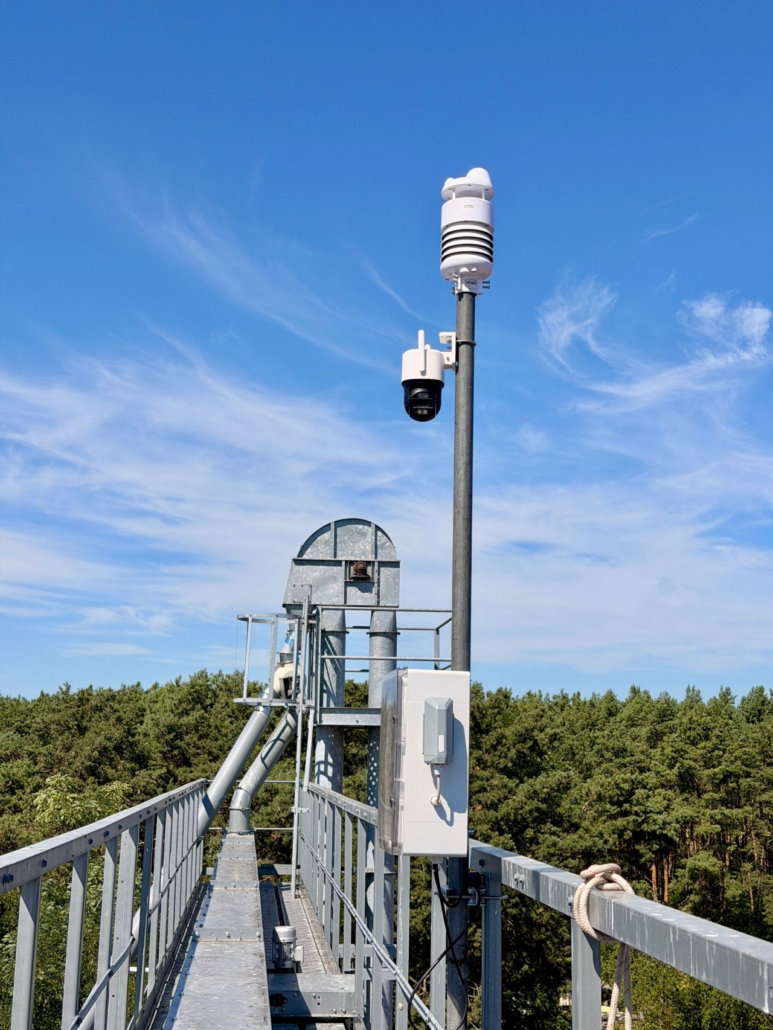
Photo Credit: https://tjk-solutions.de)
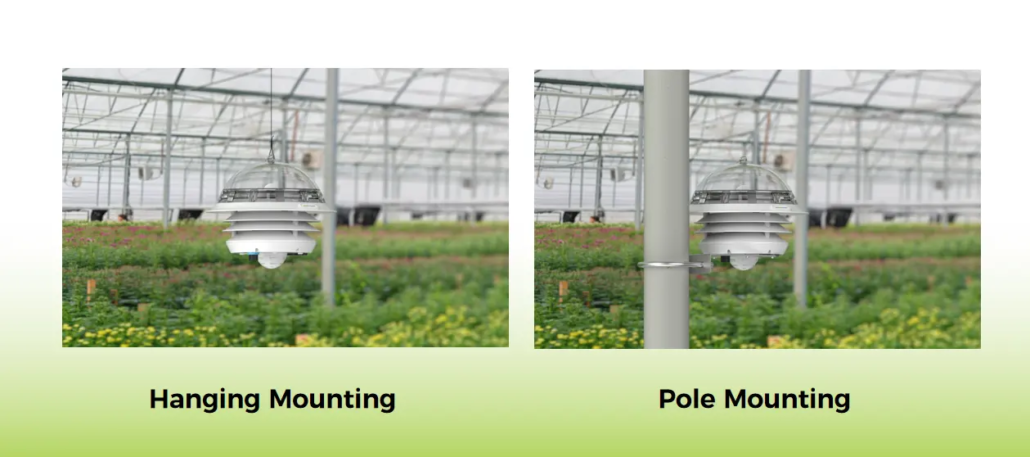
Not just sensors in the open outdoor deployment needs to be shielded from solar radiation. Sensors deployed in greenhouses also get affected by accumulated heat from solar radiation. Hence, we also adopt the louver design/solar radiation shield in our recently released SenseCAP Combo – the 5-in-1 4G weather sensor specifically designed for greenhouse monitoring. You can hang the device with a string or mount it on a pole easily to measure the temperature accurately.
Key Takeaways on Temperature Measurement
Temperature sensors do not literally “fear” sunlight—but direct solar radiation can cause them to report the temperature of the sensor rather than the temperature of the air.
- A radiation shield blocks direct sunlight and reduces the influence of surrounding radiant heat.
- Its openings allow natural airflow so the sensor can track the surrounding air temperature.
- Its protective structure helps resist weather exposure and supports reliable outdoor operation.
- Modern compact designs bring the principles of traditional weather screens into integrated industrial IoT sensors.
From traditional wooden weather screens to compact stacked radiation shields, the appearance of weather-monitoring equipment has changed significantly. The underlying principle, however, remains the same:
Block the radiation, keep the air moving, and protect the sensor.
These simple physical principles are essential for measuring accurate air temperature. Modern professional weather sensors turn decades of meteorological experience into compact devices that can support microclimate monitoring. Taking this into consideration with rigorous engineering and much testing in-house, in the labs, and in the field, we are confident to bring the SenseCAP series compact weather sensors to the market, serving smart agriculture, smart cities, hydrology, traffic weather monitoring, among other scenarios. Choose the right sensors for you from this industrial sensor catalog, and you are welcome to comment or reach out to us via [email protected] to discuss your sensor deployment needs.
Read More from the Sensor Know-How Series
- Solar Radiation Sensors Explained: Thermopile vs. Photodiode
- Two Technologies for Wind Monitoring: Cup-and-Vane vs. Ultrasonic Sensors
- NDIR CO2 Sensor Explained: How Infrared Gas Sensing Works
- Doppler Radar Precipitation Sensor: How Can It Measure Rain Without a Funnel?
About Author
