How LoRa Brings Electrical Equipment Data to Maintenance Teams
For a maintenance team, finding a problem can begin with a long round of inspections. Staff travel between electrical rooms or outdoor sites, locate each asset, check its meter or status indicator, and record what they see. A reading taken during that visit may look normal, even if the equipment showed intermittent fault hours earlier. When a failure is finally reported, the team may have to revisit several locations to identify the affected asset, reconstruct what happened, and decide which parts or specialists to bring.
Seeing which asset changed, what changed, and when gives the team a clearer starting point. That is the value of bringing local measurements into a remote monitoring view: the next site visit can focus on an identified problem instead of another round of checks.
Seeed customers in electrical equipment and monitoring have adopted the Wio-E5 LoRa module and the Wio-SX1262 LoRa module. These modules offer two ways to address the same communication task: move locally collected measurements and event reports to a remote monitoring system. The choice depends on how processing and radio control are organized within the product.
One monitoring task across different electrical assets
In a commercial building, an operator may want consumption readings from separate electrical rooms. In a factory, a maintenance team may need operating-state reports from machine panels. Across outdoor electrical assets, event records and condition measurements can help prioritize inspections. Each application starts with a different measurement, but shares the need to make that information accessible between site visits.
Installing a new data cable can be a substantial part of adding that visibility. NIST’s industrial wireless research identifies wiring cost as a barrier to expanding monitoring coverage. LoRa offers a communication option for products that send compact readings and event reports from dispersed locations.
From local measurements to remote visibility
A reference monitoring design starts with sensors, meters, or event-detection circuitry. A processor converts the inputs into useful records and prepares a payload. The radio carries that payload to a receiver, and the monitoring application associates it with an asset. The diagram shows two alternative module paths within a LoRaWAN design.
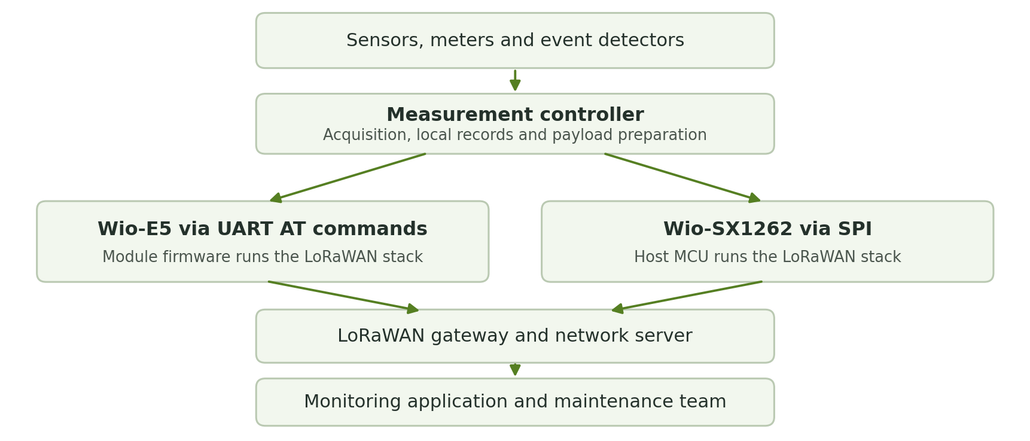
An electrical event may be over in an instant. So the device captures it at the equipment and keeps the detailed record locally; the wireless update can be much shorter, perhaps an event count or a key measurement. In the conventional sense, meter readings can follow a slower rhythm and be sent at regular intervals. In both cases, maintenance staff receive a useful account of what changed and where, while the radio carries a concise report rather than every raw measurement.
LoRa provides the radio modulation, using chirp spread spectrum to carry data over the wireless link. LoRaWAN supplies the network protocol and the gateway-to-server architecture. The application turns received payloads into histories, trends, and notifications. Local protection and time-critical machine control retain their own operating paths.
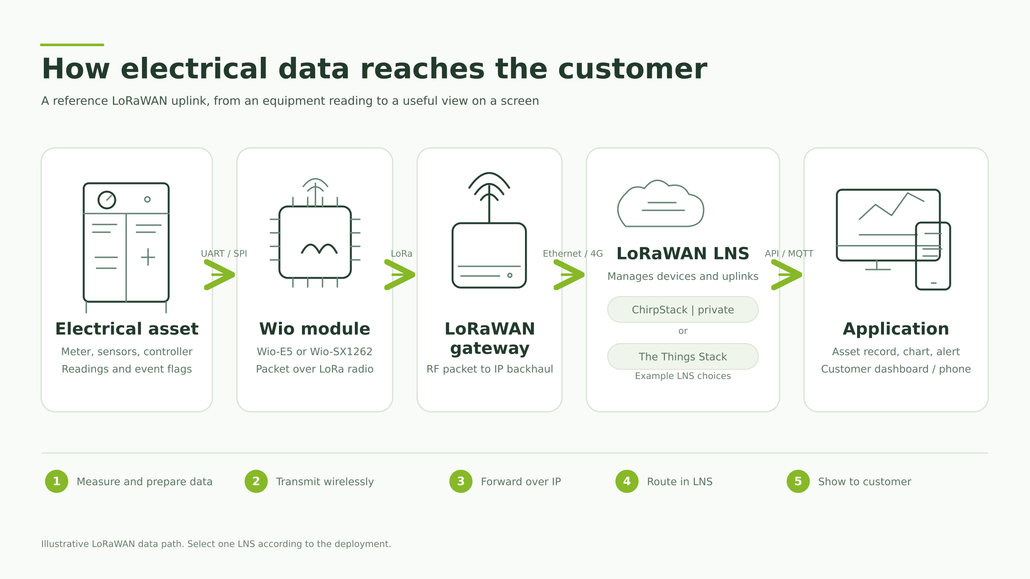
Two module paths for the same product requirement
Wio E5 combines processing and LoRa communication
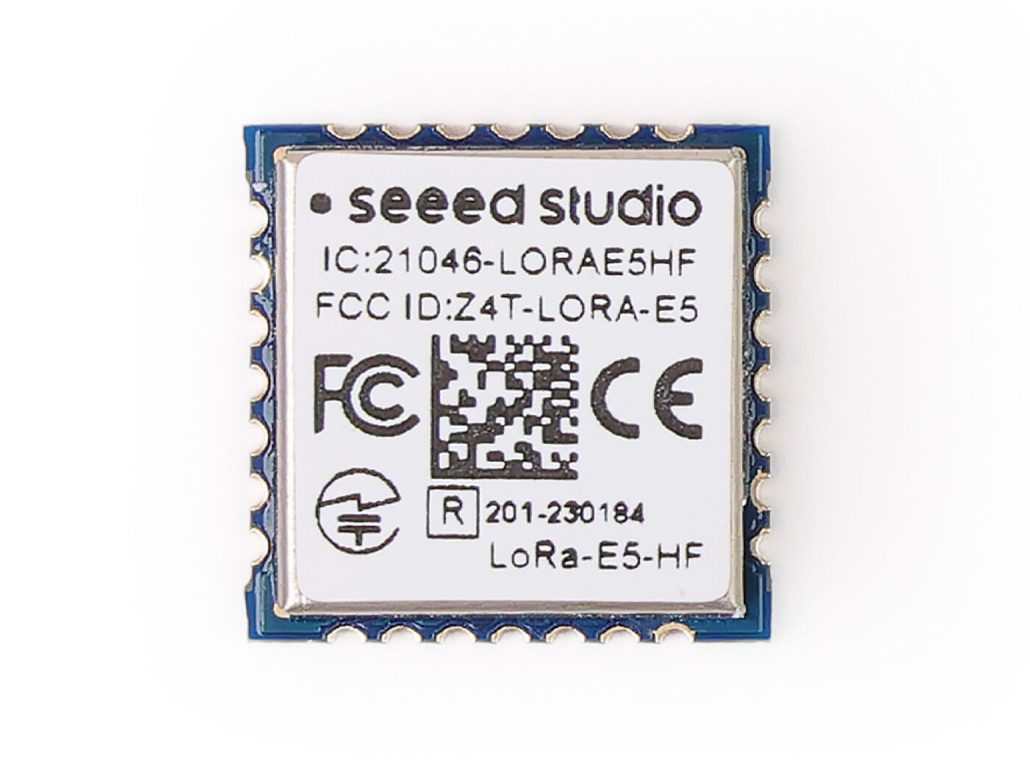
The Wio-E5 LoRa module integrates an STM32WLE5JC with an Arm Cortex-M4, 256 KB of flash, and 64 KB of SRAM. Its factory AT firmware lets an existing host controller request network joining and payload transmission through UART. This gives a product that already collects measurements a serial interface to LoRaWAN communication.
For a dedicated monitoring node, custom firmware can instead run on the module itself. The MCU can read supported peripherals, count events, check thresholds, and format reports. Its UART, I2C, ADC, and other interfaces provide options for external sensing and interface circuitry. An RS485 meter still connects through an appropriate RS485 transceiver.
The 12 × 12 × 2.5 mm package combines application-processing capability and radio connectivity in a compact footprint. Seeed specifies up to +22 dBm transmit power at 868/915 MHz and a minimum sleep current of 2.1 µA. Low sleep current supports designs that spend long intervals between reports, while integration and board space can matter more in continuously powered equipment.
Wio SX1262 adds LoRa to an existing processor
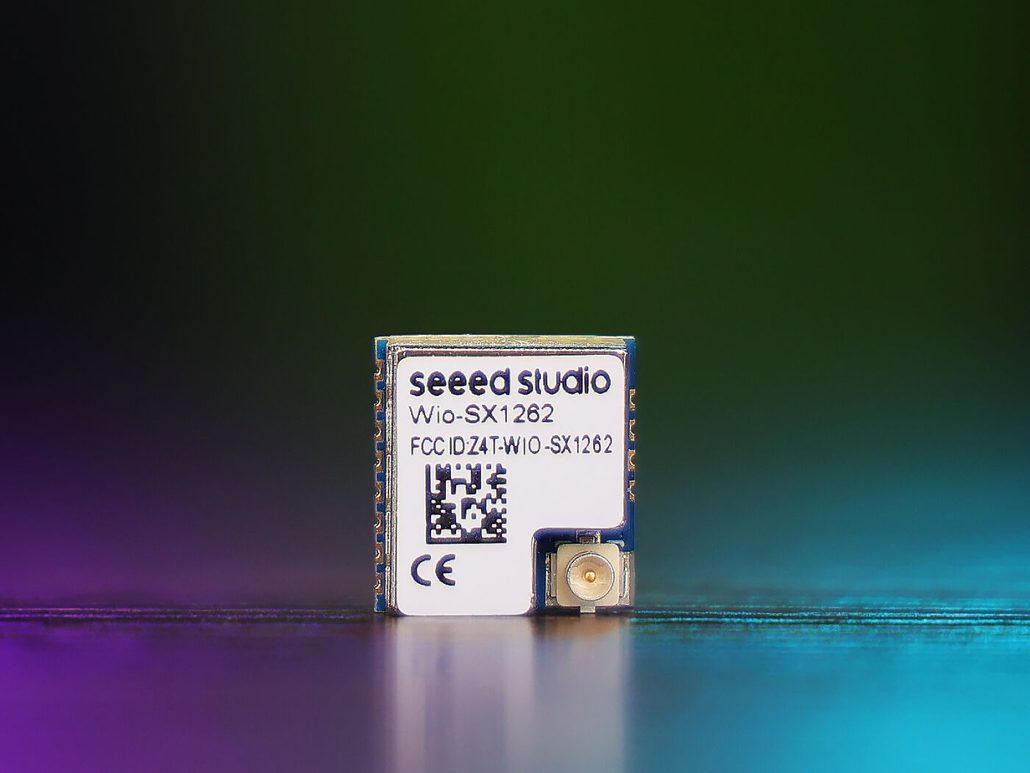
The Wio-SX1262 LoRa module provides a radio transceiver controlled over SPI. It fits a monitoring product whose MCU already handles measurement, storage, and diagnostics. The same MCU formats reports and controls the radio; for LoRaWAN operation, it also runs the required protocol stack.
Seeed specifies up to +22 dBm output power across 862-930 MHz and typical sensitivity of -136.73 dBm at SF12 with 125 kHz bandwidth. The onboard TCXO supplies a temperature-compensated radio frequency reference. These capabilities support the link design for equipment exposed to distance and changing environmental conditions.
The module measures 11.6 × 11 × 2.95 mm, uses a DC-DC regulator configuration, and has a specified sleep current of 1.62 µA. Host firmware can schedule radio sleep between transmissions while measurement circuitry follows its own acquisition schedule. The IPEX-equipped version also provides a connection for an external antenna.
How a local reading reaches the maintenance team
For example, a panel controller reads a meter value and prepares a short payload with the panel identifier. With Wio-E5 factory firmware, it passes the payload over UART and uses an AT command to send it through LoRaWAN. With Wio-SX1262, the controller runs the LoRaWAN software and directs the radio over SPI. A gateway forwards either wireless report to a network server; the application displays the reading under the correct panel. That is the module’s practical role: carrying a specific observation from the equipment to the maintenance team.
Both modules have a specified operating range of -40°C to +85°C. Enclosure and antenna design remain part of integration, especially around metal cabinets. The practical value of a module includes a documented RF design, development resources, and a defined interface that can be incorporated into a manufactured product.
Seeed supports that process with module supply, reference materials, PCB design resources, and manufacturing services covering component sourcing, assembly, and testing. Consistent supply and repeatable assembly help teams carry a validated design into subsequent production batches.
The same need extends across electrical infrastructure
The LoRa Alliance’s smart-grid monitoring presentation identifies applications including transformer temperature and pressure, substation humidity and flooding, underground-vault conditions, and pole monitoring. These applications share a need for useful observations from equipment spread across a site or service area.
A transformer monitor might send temperature summaries. A cabinet sensor might report water ingress or an opening event. A machine-panel monitor might report operating hours or state changes. These are possible product directions for compact wireless reporting, with the sensing hardware and application logic tailored to each task.
Customers are using the Wio-E5 LoRa module and Wio-SX1262 LoRa module in products built for the everyday work of monitoring electrical infrastructure. LoRa can carry small readings and event reports from dispersed equipment without a dedicated data cable at every location, while its low-power operation suits devices that report at intervals. Wio-E5 offers an integrated MCU and AT commands for building a connected node; Wio-SX1262 adds a radio link to a product that already has a controller. Together, these options help turn routine checks into a more focused task: maintenance teams can review reported changes first, then visit the equipment that calls for attention.
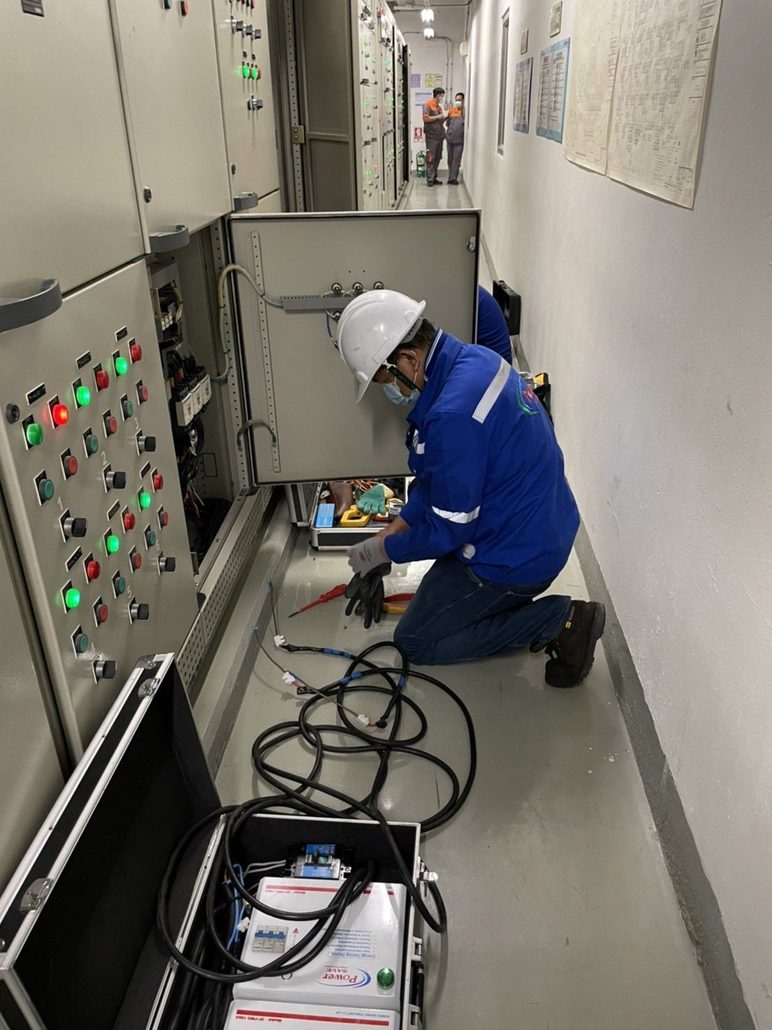
Images are sourced from the internet and do not represent actual customer information.
Build your next connected product
Seeed is committed to helping IoT teams turn specific communication needs into working products, with accessible hardware, practical documentation, and manufacturing support.
Discover how the Seeed LoRa Modules supports your journey from early evaluation to real-world deployment, with setup guides, reference designs, SDKs, KiCad libraries, hands-on testing, and projects built by developers. Explore connectivity options across LoRa, Wi-Fi, BLE, GNSS, and more, then find the module and purchasing path that match your technical requirements, location, and development stage.
Explore the Wio-E5 LoRa module or Wio-SX1262 moudle, visit the Wio module portfolio, or contact [email protected] to discuss your project.
About Author
