AI Voice Notaker for ADHD: Build Your Everyday Second Brain

For people with ADHD, keeping track of everyday thoughts, conversations, and spontaneous ideas can be challenging. A useful idea might appear while walking, working, talking to someone, or doing something completely unrelated. Yet by the time there is an opportunity to write it down, that thought may already be gone.
The challenge is not necessarily a lack of ideas or motivation. Instead, it can be difficult to capture information at the exact moment it appears, organize it later, and remember to act on it.
Traditional note-taking often requires several steps: opening a phone, finding an app, typing a sentence, and deciding where to save it. Meanwhile, switching attention between listening, thinking, and writing can interrupt the activity itself.
This is where voice notes for ADHD can offer a practical alternative. Rather than relying entirely on working memory or stopping to type, you can speak an idea aloud and keep moving.
The goal is simple: capture more of what matters without adding another complicated task to your day.
Less Friction, More Focus: Stop Choosing Between Listening and Recording
One common difficulty with traditional note-taking is that listening and writing compete for attention.
During a meeting, conversation, or brainstorming session, you may find yourself trying to remember what someone said while simultaneously writing down important details. As a result, you might miss part of the conversation or lose track of your own thoughts.
Voice notes for ADHD provide a more natural way to capture information. Instead of interrupting what you are doing to type, you can record a thought, reminder, or important detail with your voice. This reduces the number of steps between having an idea and preserving it.
Capture Ideas Before They Disappear
Not every useful thought arrives at a convenient time. You might suddenly think of a new project idea while commuting, remember something you need to buy while cooking, or come up with a solution while taking a walk.
These moments are easy to lose when there is no convenient way to record them. With a wearable voice recorder, capturing an idea becomes a simple action. You do not need to unlock your phone, open an application, or find the right note-taking page.
Stay Present in Conversations
Recording can also help reduce the pressure of remembering every detail during conversations. For example, during a discussion with a colleague, you can focus on understanding the conversation instead of constantly switching between listening and typing.
Later, you can revisit the recording and identify the information that matters.
Of course, always follow applicable recording laws and obtain consent when required, especially when recording other people.
Reliable Input, Better Output: Why Accurate Information Matters
Capturing information is only the first step. What happens afterward matters just as much.
Many people use AI tools to summarize recordings, organize ideas, extract action items, or turn conversations into structured notes. However, the quality of these results depends heavily on the information available in the original recording.
If an important sentence is missing, unclear, or interrupted by background noise, an AI tool cannot reliably reconstruct what was never captured. This is why reliable audio input matters.
A useful voice recording should preserve enough context for you to understand what happened later. In professional conversations, interviews, meetings, or personal brainstorming sessions, missing details can make the final notes less useful.
Better Audio Creates a Better Starting Point
Recording quality can be affected by several factors, including background noise, speaking distance, volume, language, and the surrounding environment.
A recording device designed for everyday voice capture can help make the process more convenient. However, no microphone can guarantee perfect results in every situation.
For voice notes for ADHD, the objective is not simply to record more audio. It is to create a more dependable source of information that can be reviewed, organized, and used later.
Let AI Handle the Organization, Not the Original Capture
AI can help transform unstructured recordings into more manageable information. Depending on the software and workflow you use, recorded audio can be processed into:
- Transcribed conversations and voice notes
- Summaries of important discussions
- Key ideas and useful insights
- To-do lists and follow-up reminders
- Searchable records of past conversations
However, these capabilities depend on the transcription and AI tools connected to your recording workflow. A voice recorder alone does not automatically provide all these functions. The more complete and understandable the original recording is, the more useful the information can become downstream.
Building a Second Brain with Voice Notes for ADHD
A second brain is an external system for capturing and organizing information that you do not want to rely on memory to retain. Instead of expecting yourself to remember every idea, task, or conversation, you create a place where information can be stored and revisited.
Voice notes for ADHD can become a practical part of this system because speaking is often faster and more convenient than typing.
A Simple Three-Step Workflow
The key is to keep the capture process simple while making the review process intentional. You do not need to turn every recording into a perfectly organized note. Even capturing a few important thoughts that would otherwise have been forgotten can make the system worthwhile.
Meet reSpeaker Clip: An Open Wearable Voice Recorder for Everyday Ideas
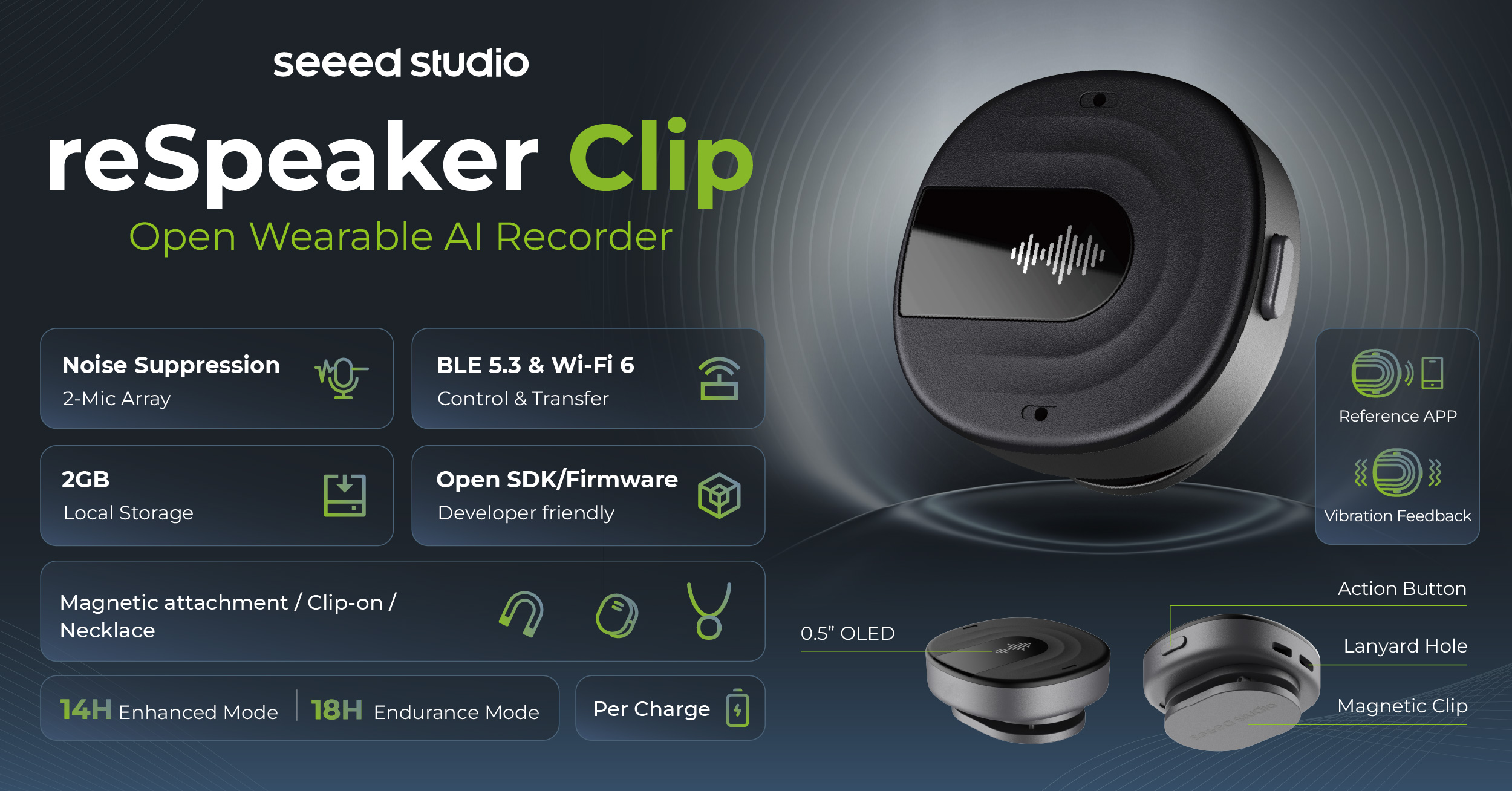
reSpeaker Clip is a compact wearable AI voice recorder designed to make everyday audio capture more accessible.
Weighing approximately 15 grams and measuring around 3.5 × 3.5 cm, it is designed for convenient daily wear. Its dual-microphone setup supports voice recording, while its onboard storage allows you to capture audio without needing to keep your phone in your hand.
Designed for Convenient Everyday Recording
Several features make reSpeaker Clip suitable for everyday voice capture:
- Lightweight Design: At approximately 15 grams, it is compact enough to wear throughout the day.
- Wearable Design: Choose freely from clip-on, magnetic attachment, or necklace.
- Dual Microphones: Designed to capture voice in everyday recording scenarios.
- Built-in Storage: 2GB of storage can hold approximately 256 hours of raw audio.
- OLED Display: A 0.5-inch customizable display provides a simple interface for device information.
- Wireless Connectivity: Supports Bluetooth 5.3 and Wi-Fi 6.
- Open-Source Firmware and SDK: Developers can explore and customize the device through its open-source firmware and Flutter SDK.
An Open Platform for Your Own AI Workflow
Unlike products that lock users into a predefined software experience, reSpeaker Clip provides an open foundation for building customized voice workflows.
Developers can explore ways to connect recordings with transcription services, AI assistants, knowledge management systems, and other applications.
For example, you could build a workflow that transcribes recorded audio, summarizes useful information, and sends selected notes to your preferred knowledge base.
The exact capabilities depend on the software integrations and workflow you configure. This flexibility makes reSpeaker Clip more than a simple recording device: it can serve as an input component in a personalized AI system.
Check reSpeaker Clip’s wiki guide: https://wiki.seeedstudio.com/respeaker_clip/
A Day with reSpeaker Clip: Turning Everyday Moments into Useful Notes
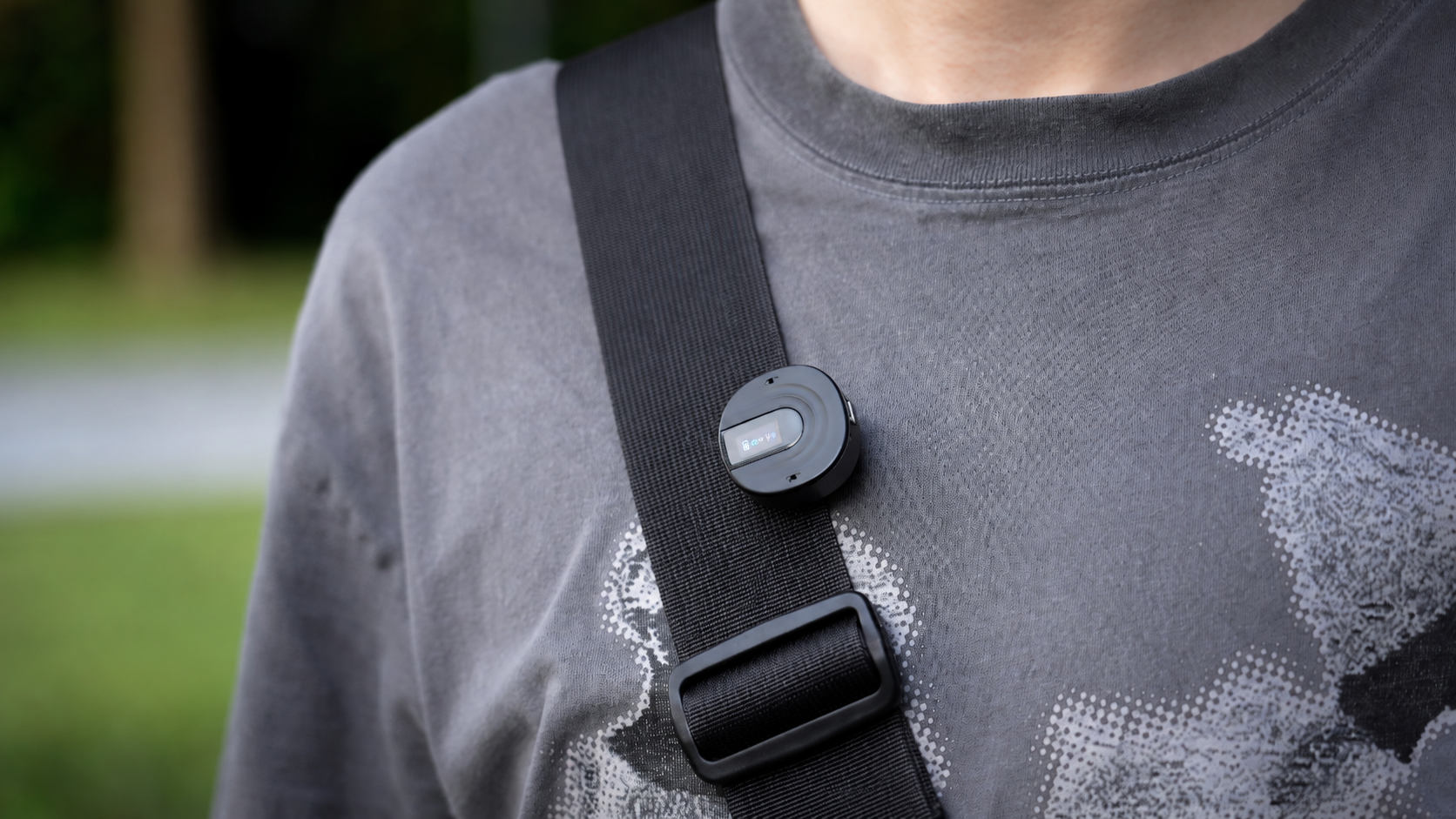
How might a wearable voice recorder fit into an ordinary day? Here are a few examples of how voice notes for ADHD could support everyday information capture.
In the Morning: Capture Tasks and Reminders
You remember that you need to pick up a package, reply to an email, and prepare something for an upcoming meeting. Instead of trying to remember everything, record these reminders as short voice notes. Later, you can review them and turn them into a simple task list.
During Work: Preserve Ideas and Conversations
A colleague mentions an interesting idea during a discussion. You also think of a potential solution while working on another task. Rather than switching between applications to type everything down, record the important information and return to your work. You can revisit the audio afterward and extract the details worth keeping.
On the Way Home: Save Spontaneous Thoughts
Sometimes, useful ideas appear when you are not actively working. You might think of a new project, remember something you forgot to do, or suddenly connect two unrelated ideas. Record the thought before it disappears. You can decide what to do with it later.
At the End of the Day: Review and Organize
Spend a few minutes reviewing the recordings you made throughout the day. Select the useful ones, process them with your preferred transcription or AI tools, and move the resulting notes into your personal knowledge system. Over time, these small recordings can become a searchable collection of ideas, reminders, and personal insights.
Are Voice Notes for ADHD Worth Trying?
Voice notes are not a replacement for every productivity tool, and they will not automatically solve memory or attention-related challenges. However, they can reduce the effort required to capture information, especially when typing is inconvenient or interrupts what you are doing.
For people with ADHD, the most useful system is often one that is easy to maintain. A complicated productivity setup may look impressive, but if it requires too many steps, it can quickly become another source of friction.
A simple voice-first workflow offers another option:
- Speak instead of typing when an idea appears.
- Capture information before relying on memory to retain it.
- Review recordings at a convenient time.
- Use AI tools to help organize information when needed.
- Keep only the information that is genuinely useful.
The best approach is to experiment with a lightweight workflow and see whether it fits your daily habits.
Build Your Everyday Second Brain with reSpeaker Clip
You do not need to remember every thought, conversation, or idea to stay productive. What matters is having a reliable way to capture the information you want to keep.
Voice notes for ADHD offer a practical way to reduce the friction between thinking and recording. By making information easier to capture, review, and organize, you can build a personal second brain that supports your everyday life.
With its lightweight design, onboard storage, and open-source development approach, reSpeaker Clip provides a flexible starting point for building that workflow.
Less friction. Fewer lost ideas. More room to focus on what matters.
Explore reSpeaker Clip →Learn more about the reSpeaker product family: https://www.seeedstudio.com/respeaker-series
About Author
