From First Volt to First Sign: The SwitchIt Workshop at EMEA College
Twenty CS students at EMEA College got their first hands-on experience with hardware. By the end of one day with Seeed Studio, every one of them had built a working interactive sign, and picked up a real plan for the Make a Sign 2026 contest.
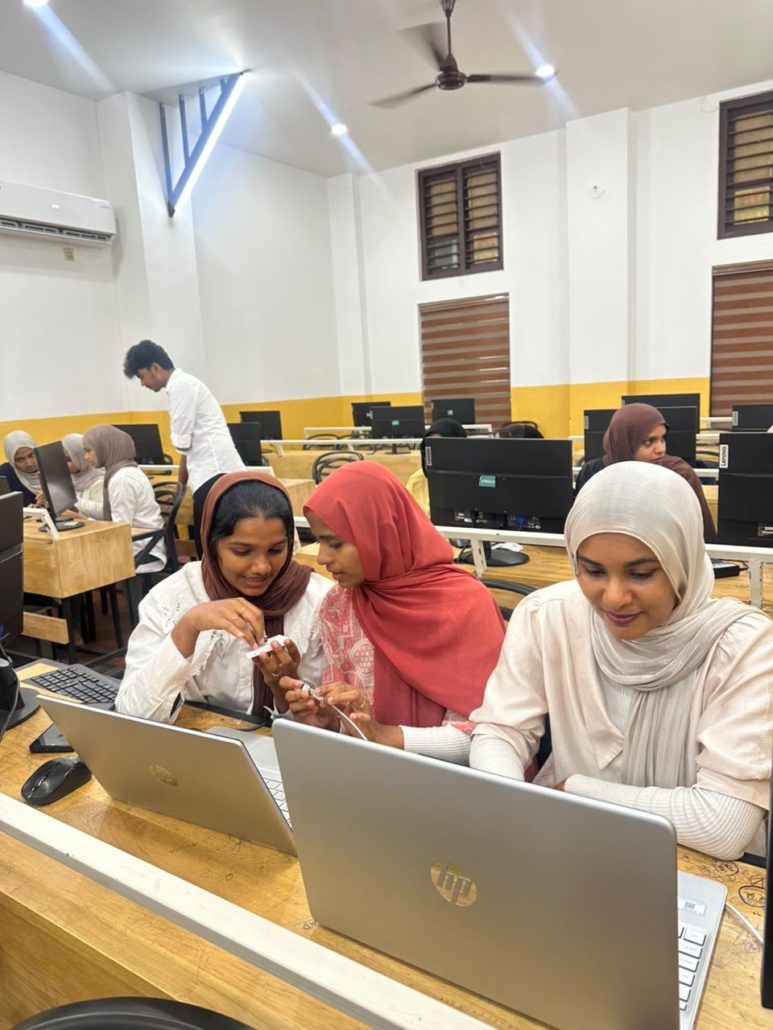
Twenty computer science students walked into the Connect Room at EMEA College for the SwitchIt workshop on Tuesday, July 21, 2026, most of them getting their first hands-on encounter with hardware: a resistor, a breadboard, a single line of embedded code, all of it new territory. By the end of that one day, every one of them had wired, coded, and debugged a working interactive sign of their own.
That was the SwitchIt workshop, a one-day hands-on hardware session hosted by TinkerHub EMEA College x Connect at EMEA College, Kondotty, Malappuram, with Seeed Studio brought in to lead the day and connect it to a real contest students could actually enter.
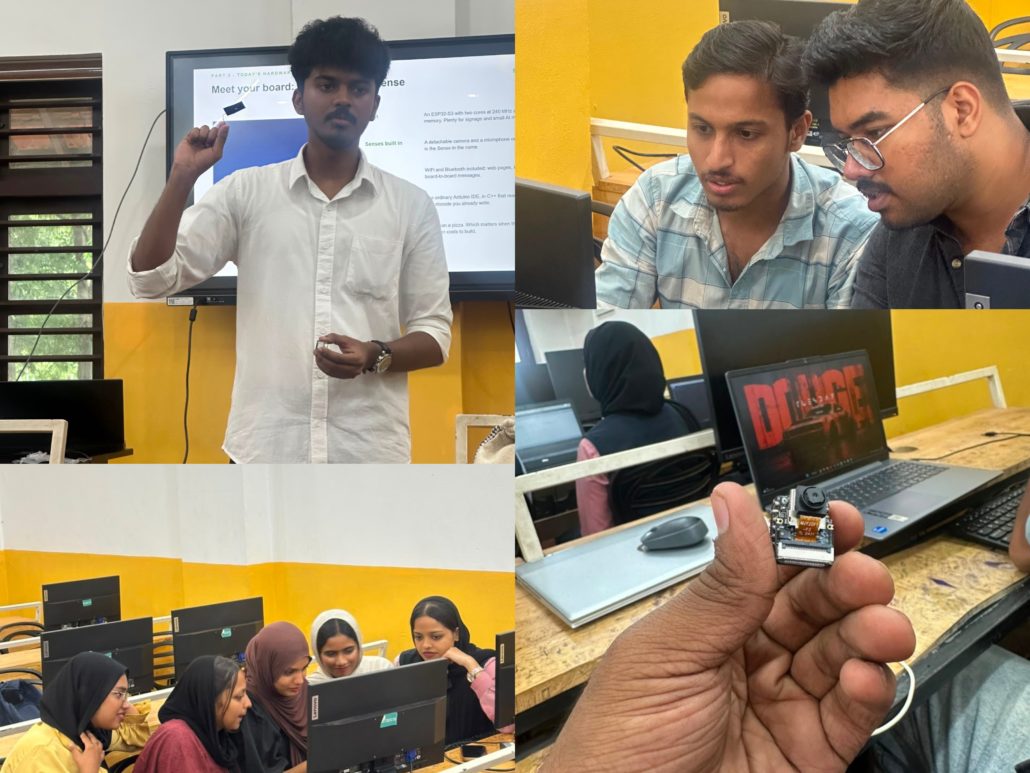
There wasn’t much of a starting point to build from here. The students came from different years of the CS program, comfortable writing code, but this was their first time working with real hardware. So the day started from scratch, covering the basics of electricity before anyone was asked to touch a component.
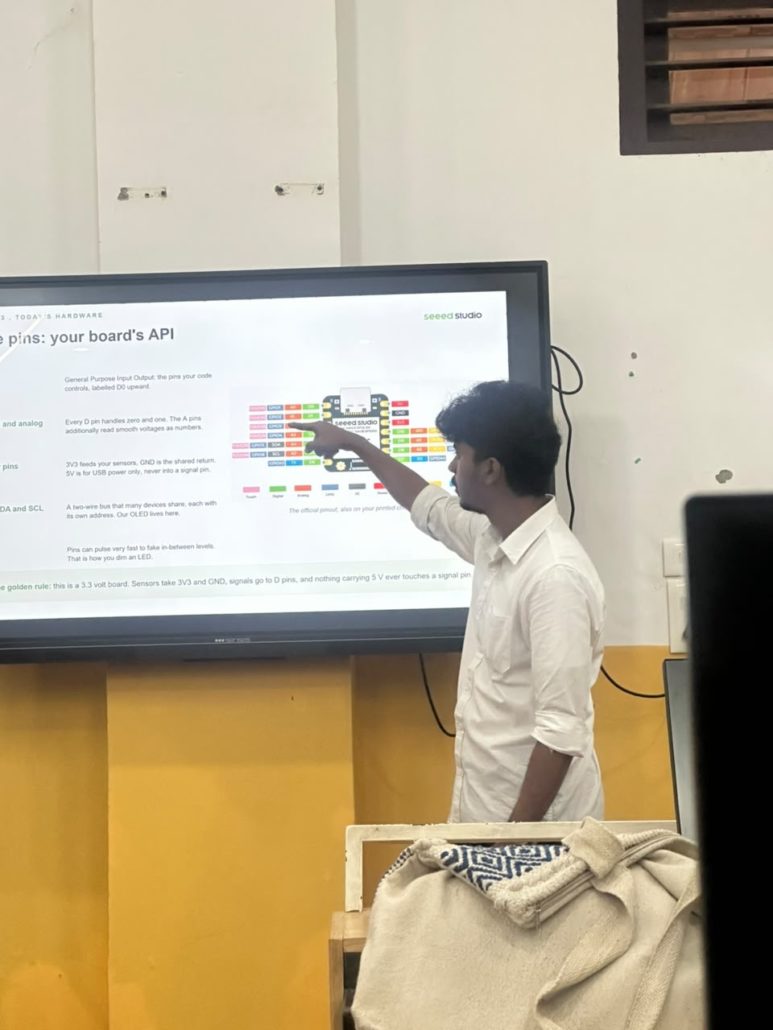
From there it moved fast but never skipped a step: sizing a resistor for an LED, circuits and polarity, powering a board safely, reading resistor color codes, and a first look at breadboards, multimeters, and Tinkercad. The two boards that anchored the day were the XIAO ESP32S3 Sense and the Grove Vision AI V2, the same pair students would come back to later for some hands-on TinyML. From there the session moved into digital pins and the Arduino IDE workflow, the basics everyone needed for the rest of the day.
Six builds, each one bigger than the last
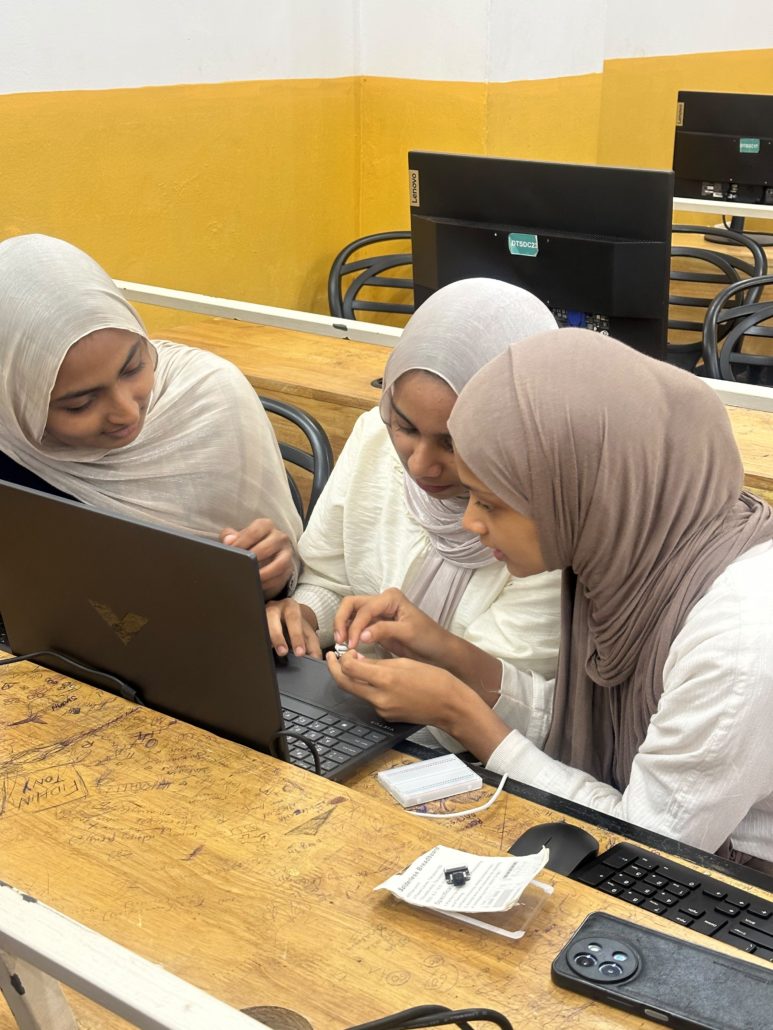
The core of SwitchIt was a sequence of six hands-on builds, each one stacking on top of the last. It started small, just blinking the board’s onboard LED, and even that carried a lesson, since the logic was inverted and LOW meant on. From there, students wired their first real circuit from loose parts, a XIAO board, a resistor, an LED, and a breadboard, before moving on to an IR sensor and watching it come alive in the Serial Monitor, again with the logic flipped to keep everyone on their toes.
Then came the build that tied it together: just six lines of code that made the board react to someone walking past by lighting up an LED, arguably the most important six lines of the whole day. An OLED display followed, wired over I2C, printing text on screen for the first time. And the sixth build was the capstone, an IR sensor, an OLED display, and an LED combined into a genuine three-state interactive sign, one that shows a menu, greets a visitor the moment it detects them, and resets itself once they walk away.
By the end of build six, every student in the room had built something real: working, interactive signage, made from loose parts, on a desk, in one afternoon.
Superpowers: TinyML and the ePaper unplug moment
With the basics solid, the day opened up into what the session called superpowers. Students got their first look at Seeed’s ePaper displays, low-power, sunlight-readable screens that hold their image even after the power is pulled, a genuine “unplug moment” that connects directly to the contest’s Sustainable Signage special award.
The day wrapped up with a hands-on look at TinyML using SenseCraft AI, where a person-detection model was deployed live with zero code written, alongside a quick look at training a custom model.
From mini project to contest entry
SwitchIt was never just a hardware crash course. It was built around the Make a Sign Interactive Signage Contest 2026, and the day closed by treating what students had just built as a skeleton they could expand into a full contest entry. An IR sensor becomes a radar, laser, or AI camera. An OLED becomes an ePaper display, LED matrix, or full screen. One LED becomes a light strip. An if-statement becomes a TinyML model. A desk becomes a real restaurant.
Students got a walkthrough of how entries are actually judged, documentation and a one-minute video included, along with practical staging advice for turning a breadboard prototype into something that looks and feels like a finished product. Each participant also worked through their own signage idea one-on-one with a mentor before the day ended, leaving with more than a mini project. They left with a real plan for a contest entry.
The spark that stayed
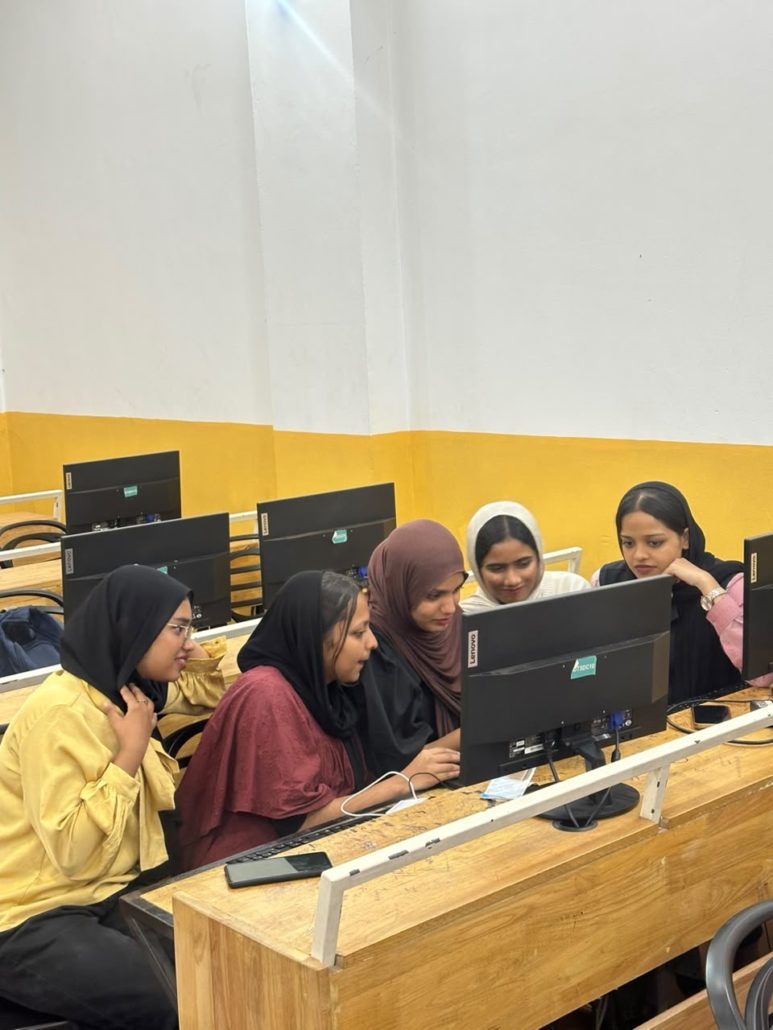
For a room of students experiencing hardware for the very first time, the shift over one day was hard to miss. What started as a room with zero hardware experience ended with every single one of them having built, coded, and debugged a working interactive sign of their own. Feedback from the room was strongly positive, and what stood out most was the enthusiasm. This was everyone’s first time getting hands-on with hardware, and they loved it.
That is exactly what the SwitchIt workshop set out to do. Give students a solid base in hardware fundamentals, yes, but more than that, hand them a spark, some real guidance on how to approach the contest, and the confidence to go build something.
Your turn: enter Make a Sign 2026
If this would be your first time with hardware, now is the time to begin. That’s exactly the starting point SwitchIt was built for. Seeed Studio’s Make a Sign Interactive Signage Contest 2026 is live now, with prizes including a $1,000 cash award plus a travel grant to Maker Faire Shenzhen for first place, and the submission deadline is August 31, 2026.
So do not just read about it. Pick up a board, wire your first circuit, and build a sign that thinks.
Enter here: Make a Sign Interactive Signage Contest 2026
Organized by TinkerHub EMEA College x Connect at EMEA College, Kondotty, with support from Seeed Studio.
About Author
