Most race data lives on a timing screen. Dutch FashionTech designer and engineerAnouk Wipprecht wanted to put it somewhere else entirely: on the body, moving in real time.
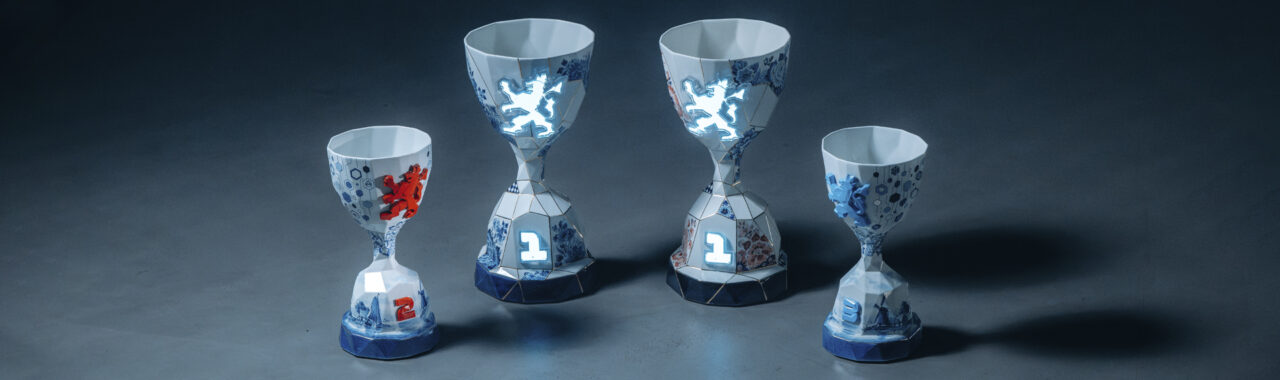
The F1 Circuit Dress and the two illuminated trophies Anouk designed for the final Dutch Grand Prix at Zandvoort. Image courtesy ofART OF Magazine.
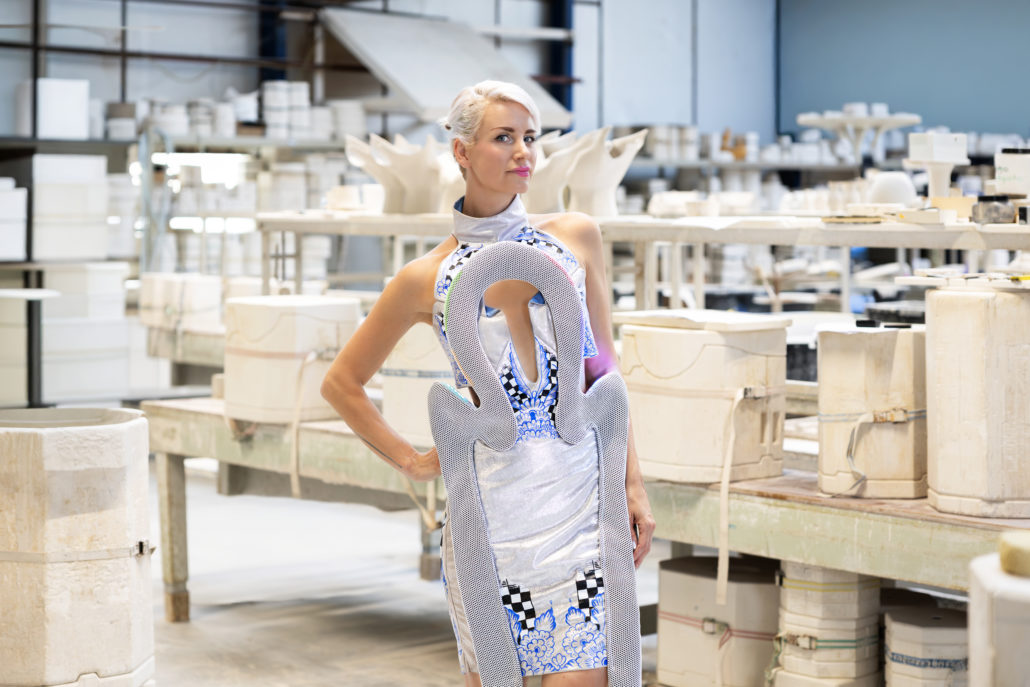
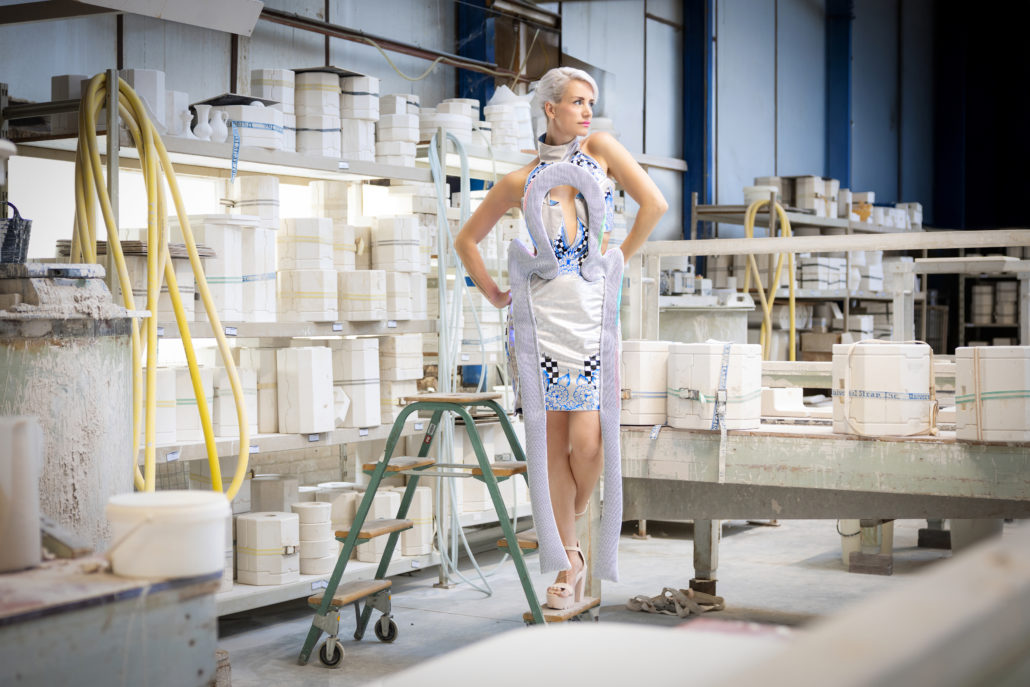
The F1 Circuit Dress is a garment that races along with the cars. Built forRoyal Delft and presented at the Formula 1 Lounge at Circuit Zandvoort on August 20, 2026, it uses 288 individually addressable LEDs driven by ourXIAO ESP32-S3 to translate live Formula 1 telemetry into light. As cars move around the circuit, points of light move around the wearer.
The project came out of a larger commission. For the final Formula 1 Dutch Grand Prix at Zandvoort, the Dutch Grand Prix and Royal Delft — the Netherlands’ historic Delft Blue pottery house, founded in 1653 — invited Wipprecht and fellow Dutch creativeDon Diablo to design the last trophy collection. Anouk took the #1 Winner’s Trophy and Constructors’ #1 Trophy, both with light technology she soldered and coded herself. The trophies integrated XIAO ESP32-S3-controlled lighting systems inside traditional Royal Delft ceramic bodies, featuring custom light animations including ignition-style flickering and slow breathing light cycles, symbolizing the acceleration, rhythm, and ongoing energy of Formula 1 racing.
Meanwhile, the dress was the designer’s answer to a question the trophy couldn’t address: what would it look like to wear the race, rather than just win it?
The final Royal Delft trophy collection. Image courtesy ofRoyal Delft.
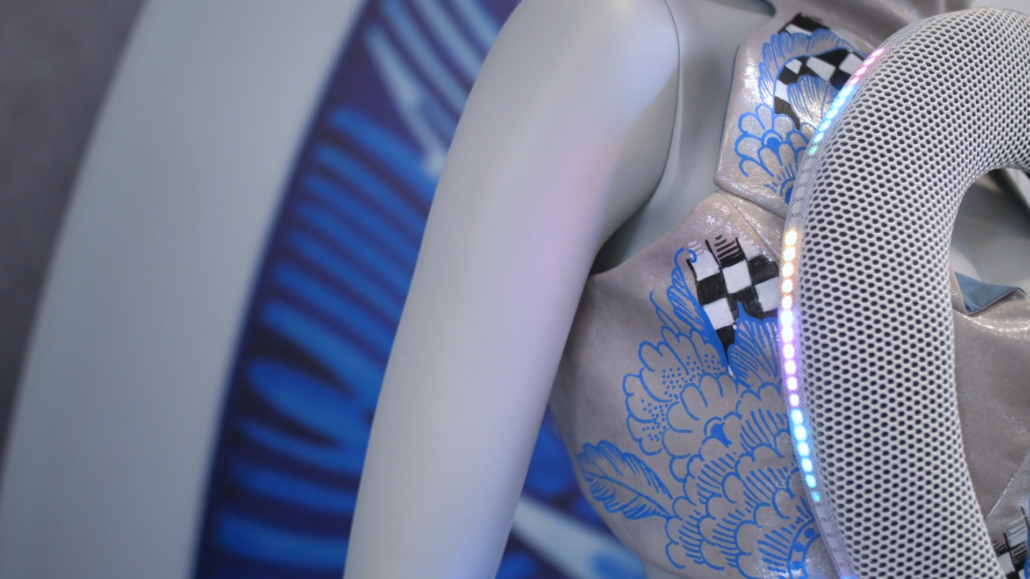
The garment’s structure comes from the circuit itself. Zandvoort’s directional lines became the paneling, wrapping around the body in a continuous path that guides both fit and visual movement. Royal Delft’s master painters then hand-painted the garment with characteristic floral and ornamental Delft Blue motifs, set against chequered patterns and circuit linework — heritage and racetrack on the same surface.
Formula 1 Zandvoort Circuit Dress — photo by Marianne Q
Hardware Overview
The electronics stay minimal, hidden entirely within the garment’s structure.
Light is used selectively rather than as an overall glow. LEDs sit behind specific panels, backlighting chosen lines — most notably the dominant swirl derived from the Zandvoort track layout — so the circuit emerges through shifts in intensity and depth without overwhelming the design.
How It Works
The XIAO ESP32-S3 pulls live Formula 1 data through the Open F1 API, processes the changing position of every car on track, and maps those positions onto the 288 LEDs running through the garment. When the cars are racing around Zandvoort, the cars on the dress are racing at the same time.
The mapping is per-car, not an ambient effect. The software reads the data stream — essentially asking which car is where on the circuit at this moment — and places each one at its matching point in the LED chain. Each car carries its own visual identity, too:
Max Verstappen — magenta, highly visible
McLaren — orange
Mercedes — blinking turquoise
Ferrari — red
Audi — blinking red, etc. etc.
All 22 cars on the grid carry their own colour, so teams and drivers stay distinguishable as they move through the race. The dress becomes, in effect, a miniature racetrack.
Development posed an obvious problem: there was no live race to test against. So Anouk, with the help of Chuck Pitzer and openF1.org, built and validated the system using a recorded 2024 Dutch Grand Prix dataset from Zandvoort, replaying a real race through the same pipeline the live feed would later use.
Watch the making-of film, "From Circuit to Couture"
Why XIAO ESP32-S3?
For a device that has to disappear into a precisely cut garment, every millimeter matters — and it still has to do real work.
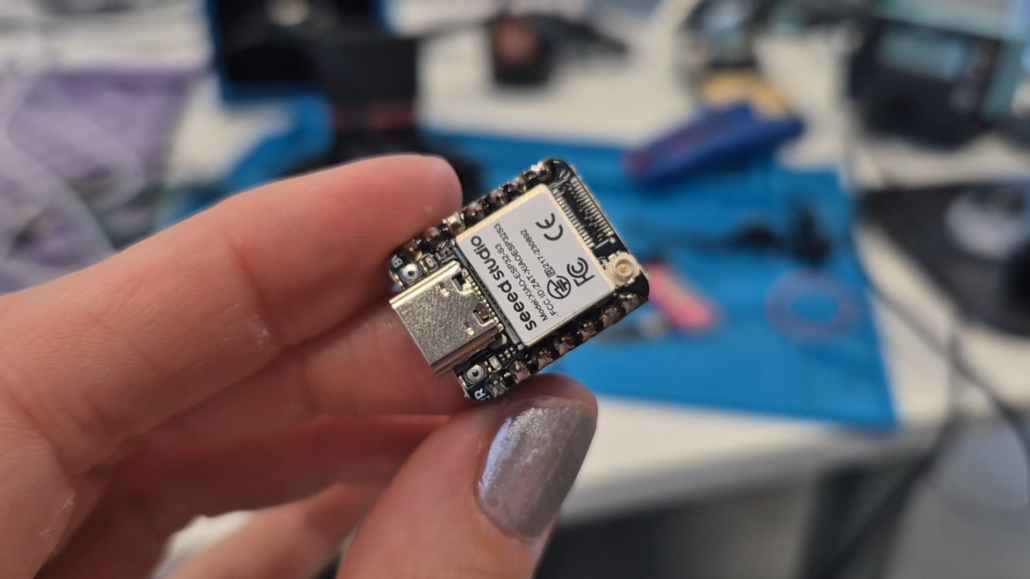
The XIAO ESP32-S3 offered the balance the project needed: enough processing headroom to parse a live telemetry stream and compute per-car LED animations simultaneously, built-in Wi-Fi to hold a live connection to the Open F1 API rather than replaying a fixed sequence, enough I/O to drive 288 addressable LEDs, and onboard LiPo battery management for a wearable with no wall socket to rely on — all in a footprint small enough to hide beneath fabric without distorting the silhouette.
For a designer who solders and codes her own electronics, that consolidation matters: fewer parts to integrate, less bulk to conceal, more attention left for the design itself.
“I wanted to translate the energy of Formula 1 into something that could live on the body. The circuit becomes the structure of the dress, while light and data give it another layer of movement.” — Anouk Wipprecht
Or as she put it more simply: “It’s almost like wearing the race.”
Where Heritage Meets Telemetry
A 373-year-old Delft Blue pottery house and a live Formula 1 data feed have no obvious reason to meet. A microcontroller is what lets them — one surface hand-painted by master painters, the same surface running at the pace of the race.
It’s also a reminder of how far a small board can travel. The XIAO ESP32-S3 shows up in weather stations, edge-AI cameras, and hobby robots — and, as it turns out, in couture presented at the final Dutch Grand Prix at Zandvoort.