Fab City Launch the PlanetAI Index – Seeed enables the Sensor Network Layer for Planetary Intelligence
At the fab lab movement’s 25th anniversary, its network starts to grow senses.
Fab City, Seeed Studio, Sensical and Meshtastic deploy an open, off-grid sensor mesh at FAB26: the first working sensing layer for PLANETAI, and the start of its Boston pilot
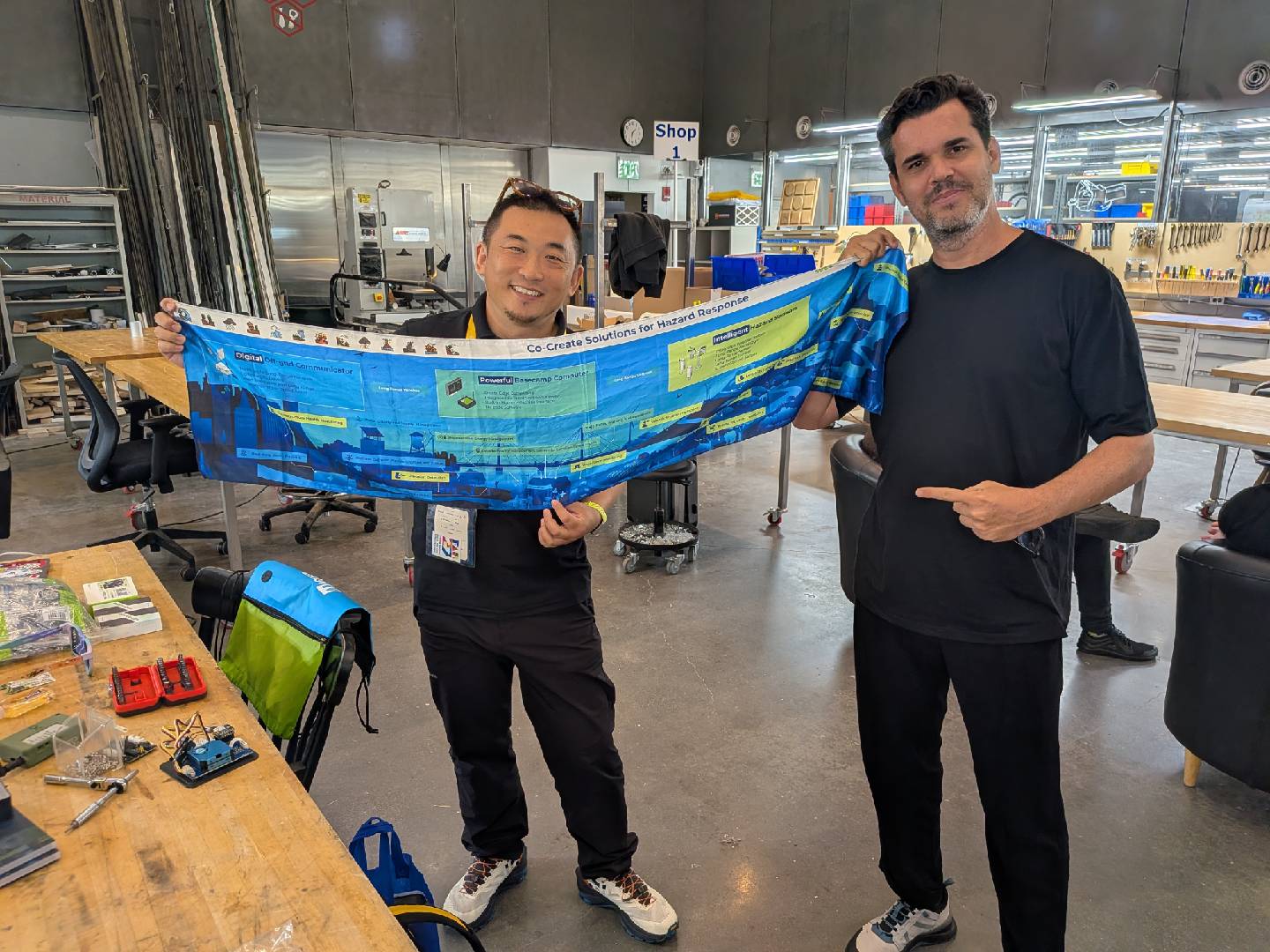
CAMBRIDGE, MASS. [30/7/2026]. Earth has never been more watched. Copernicus, Google Earth Engine, Aurora, GraphCast: the planet is covered in eyes. What it has never had is the wire between those eyes and a network that can actually respond where people live. This week at FAB26, in the city where fab labs began, four partners started to build that wire from the bottom up.
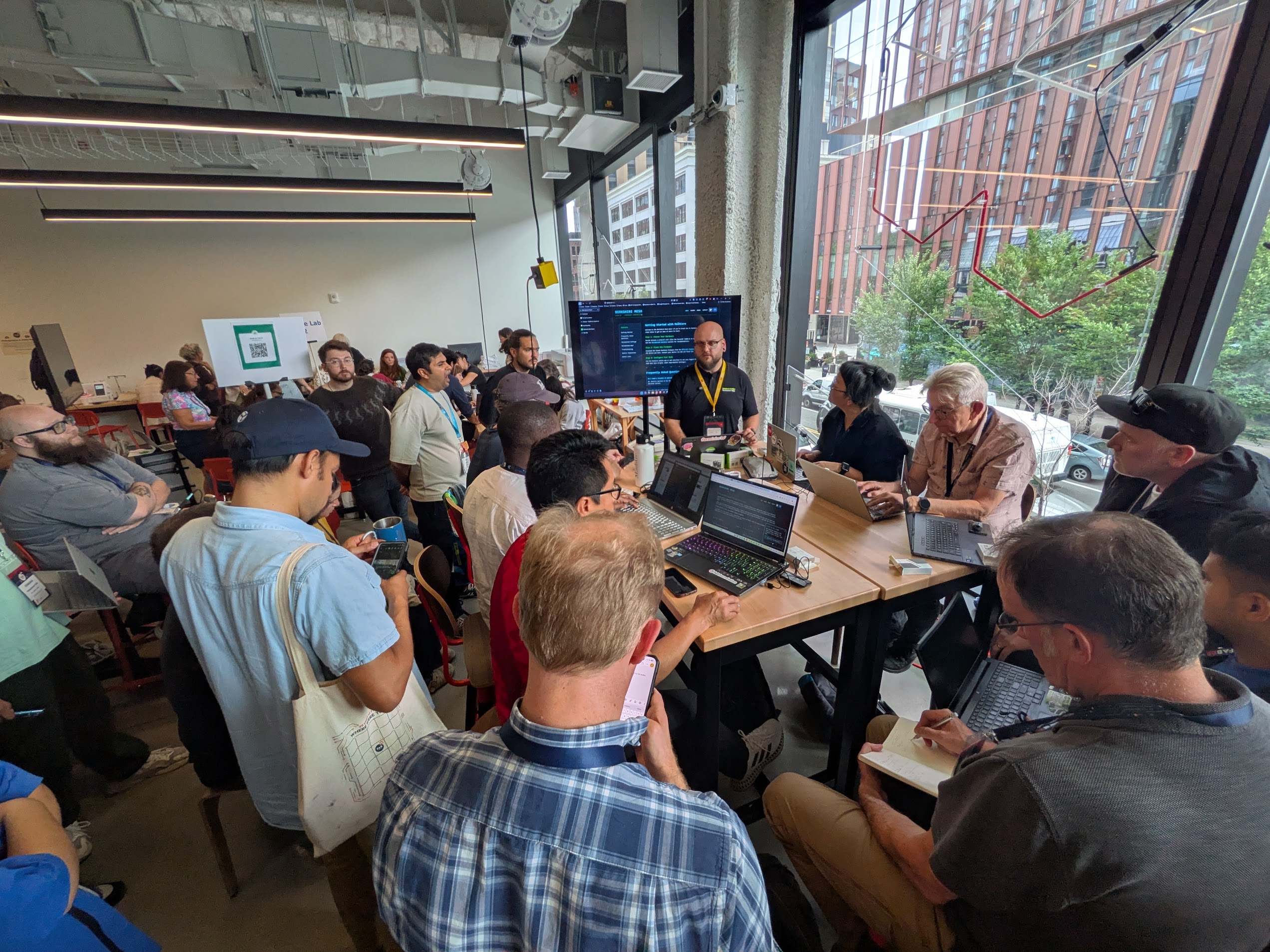
Fab City, hardware maker Seeed Studio, design & engineering cooperative Sensical, and the open-source Meshtastic project switched on a mesh of open, off-grid, environmental sensors across [Cambridge / the MIT campus and Fab Hub Kendall Square]. The devices carry sensors that read the city’s air quality and environmental parameters, such as temperature, humidity and pressure. They talk to each other over secure, private, links and long-range radio that don’t require cell networks or clouds, feeding their data into a node running at the fab lab. It is also node zero: the first computing of PLANETAI, the base of a stack Fab City spent the last year designing and the last fifteen years earning the right to build.
PLANETAI is a Fab City Foundation research initiative. It is a five-tier open stack that binds planetary Earth-observation models to a standing network of roughly 2,700 fab labs and 56 signatory cities, so an observation can reach a decision and a fabricated response in days or months, not years or decades. The stack descends from planetary models at the top to a small open-hardware node at the fab lab at the bottom. That bottom tier, the community tier, is where sensing happens. A node with nothing feeding it is blind.
Boston’s own PLANETAI pilot says this plainly. Its brief names the gap out loud: “a community sensor fleet needs building.” Node zero is that fleet beginning to exist. Not a slide, not a diagram of a future pilot, but hardware on real rooftops, meshing off-grid, reporting into the Boston node alongside MIT’s Center for Bits and Atoms, the Fab Foundation, and Fab Hub Kendall Square. The leaf the stack was waiting for.
Fifteen Years of Learning to See
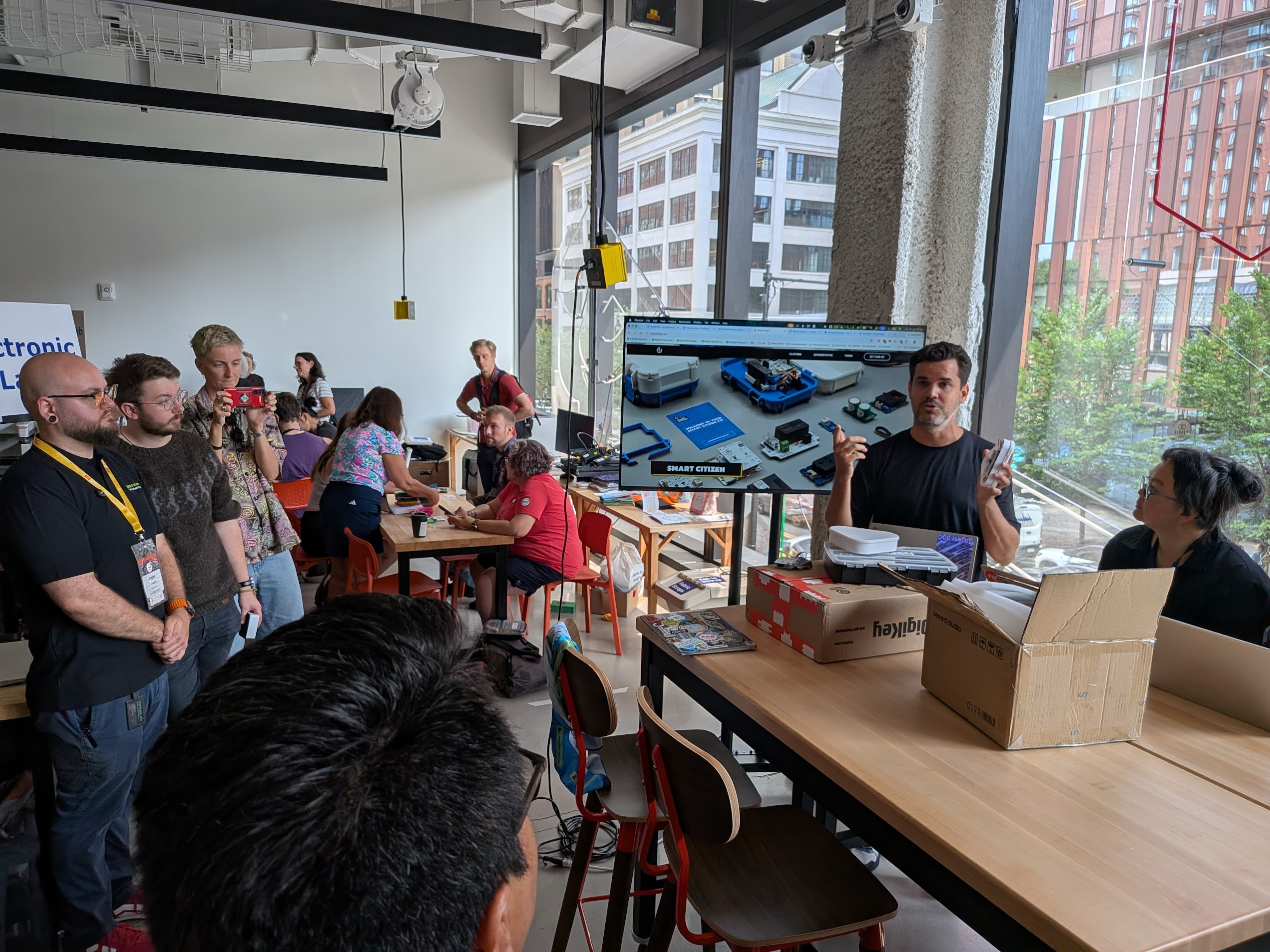
The sensing runs in a straight line back to Smart Citizen, the open-source environmental sensor platform born at Fab Lab Barcelona: kits that let a neighbourhood measure its own air, with a campaign in Barcelona still reporting today, fifteen years on. Smart Citizen grew thanks to Making Sense (2015 to 2018), and many more action research projects that put citizen-built instruments into communities across the world. These projects travelled to the tropics as Making Sense Bali, where the conditions are harder and the stakes are plainer: monsoon, the smoke from burning trash in the streets, and in a place where centralised infrastructure is not a given.
Every step carried the same idea. People make the instruments they need to understand the place they live. What changes at node zero is what infrastructure enables real-world deployments. Most modern IoT devices need WiFi, a SIM-card, or someone’s network to exist on. Meshtastic cuts that dependency with low-power LoRa radios, providing a decentralised, off-grid mesh network that the sensors use to build their own infrastructure and answer to no carrier. Building upon a year of contributions that started in FAB25 at the Smart Citizen Meets Meshtastic Hackathon, bringing air quality sensors to the Meshtastic firmware, this open-source ecosystem allows for easier, community owned deployments. For a movement whose whole argument is that a place should be able to sustain itself, the transport finally matches the politics. As the PLANETAI paper puts it, these nodes are a way to protect distributed public capacity for observation and science “when the centralized version is fragile.”
Who Builds What
Seeed Studio makes the physical layer. Its SenseCAP Solar Node (solar-powered, built for long outdoor deployment, with an open Grove interface for swapping sensors) and the SenseCAP Indicator gateway ship pre-flashed with Meshtastic firmware. A sensor you can buy, build on, and deploy anywhere is what a distributed manufacturing network needs. Open hardware at manufacturable scale is what turns one prototype on a Cambridge rooftop into a fleet across four cities.
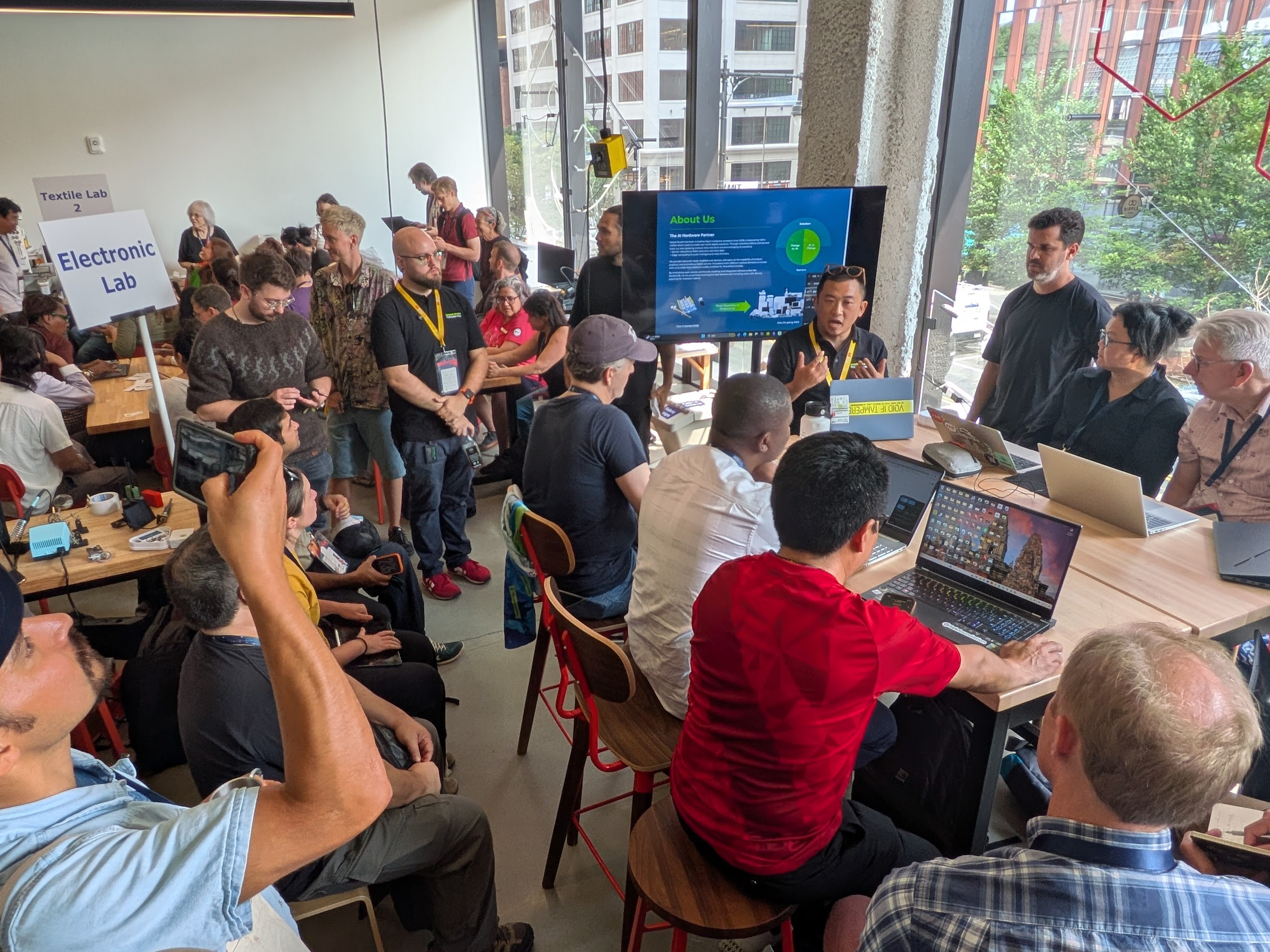
Sensical design and build the infrastructure that gets the sensors talking to the meshtastic network, and ensures the accuracy and quality of the data they generate. The Barcelona design & engineering cooperative has been among the first to put real air quality sensors on Meshtastic, an effort that started on FAB25 in the Smart Citizen meets Meshtastic Hackathon together with Fab Lab Barcelona, Hackster, University of Glasgow and Seed Studio. Sensical take care of everything in the path from a reading on a rooftop to a record in the database: : firmware, sensor integration, data storage and analysis. Sensical comes out of the same Barcelona open-hardware world that produced Smart Citizen in the first place, which is a fitting way for the lineage to close a loop.
Meshtastic provides an open-source, long-range, off-grid, distributed mesh protocol that allows anyone to create networks that don’t need cell towers, or data subscriptions. The community owns the network it runs on, and the connections the nodes establish among themselves, mimic real-life human connections among community members. This truly open-source network stack makes the difference between sensors that people rent access to and ones they actually own.
Fab City stewards PLANETAI and supplies the thing none of the others can on their own: the standing network of labs and cities the leaf plugs into, and the framework that lets Boston’s readings be compared honestly against Barcelona, Santiago and Bali.
Known Limits
Community sensors are not reference instruments. Low-cost air-quality sensors can carry uncertainties when compared to calibrated stations, however the provide insightful data that, can be trusted by citizens, researchers and decision makers alike with careful data processing, and validation, This is why node zero is co-located with MIT CBA’s reference monitors and calibrated before any reading is trusted. The Boston pilot’s stated job is sensor quality-assurance and drift-flagging, and that work starts now. Node zero is a seed, not a finished system. Four pilot nodes are designed to follow, with Barcelona, Santiago and Bali joining Boston, each in a different climate, so the instrument gets falsified across real conditions rather than proven once at home. PLANETAI has committed to publishing its results whether they confirm the thesis or kill it. This announcement holds itself to the same standard. What exists today is one working leaf, and we are saying exactly that.
The more a place can see and make for itself, the freer it is. This is where the seeing starts.
Quotes
Tomas Diez, Executive Chair, Fab City Foundation; founder of Smart Citizen “We have spent fifteen years teaching neighbourhoods to measure their own air, and for most of that time the sensors needed someone else’s network to exist. Node zero cuts that cord. It is a small box on a roof in Cambridge, but it is the first time PLANETAI’s bottom tier has something real feeding it: the leaf, at the base, in the city where fab labs started. The network is finally growing its own senses.”
[Eric Pan, Founder and CEO], Seeed Studio “Open hardware only matters if people can actually get it and build on it. The SenseCAP Solar Node runs Meshtastic out of the box and takes whatever sensor a community needs through Grove. Our job here is to make the leaf something you can manufacture and deploy anywhere, so this is the beginning of a fleet, not a one-off.”
Sensical SCCL “A mesh of sensors is only worth building if the data is worth trusting. We create the infrastructure that decides what each node measures, how it survives on a rooftop, and how it talks to the others over Meshtastic. Real environmental sensing on this network is still new ground, and that is exactly the kind of problem our cooperative exists to solve.”
About partners
Fab City is a distributed movement redesigning the relationship between production and place: a network of roughly 2,700 fab labs and 56 signatory cities working toward locally productive, globally connected urban production. PLANETAI is a Fab City Foundation research initiative closing the loop between Earth observation and community-scale response. More at fab.city and planetai.fab.city.
FAB26 Boston (July 27 to 31, 2026) is the 22nd International Fab Lab Conference & Symposium, hosted across the MIT campus and Fab Hub Kendall Square. It marks 25 years of the global Fab Lab Network, returning to the region where the movement began at MIT’s Center for Bits and Atoms.
Seeed Studio is an open-hardware and IoT company whose SenseCAP line includes Meshtastic-ready LoRa devices: the SenseCAP Solar Node, Indicator, and T1000-E tracker, built for open, expandable sensing. seeedstudio.com
Sensical (Sensical SCCL) is a Barcelona-based design and engineering cooperative working in open hardware, environmental monitoring, and open science. It leads firmware development for environmental sensing in Meshtastic. sensical.es
Meshtastic is an open-source project for long-range, off-grid mesh communication over low-power LoRa radios, requiring no internet or cellular network. meshtastic.org
About Author
