From Zero to Edge Intelligence: A TinyML Workshop at CET
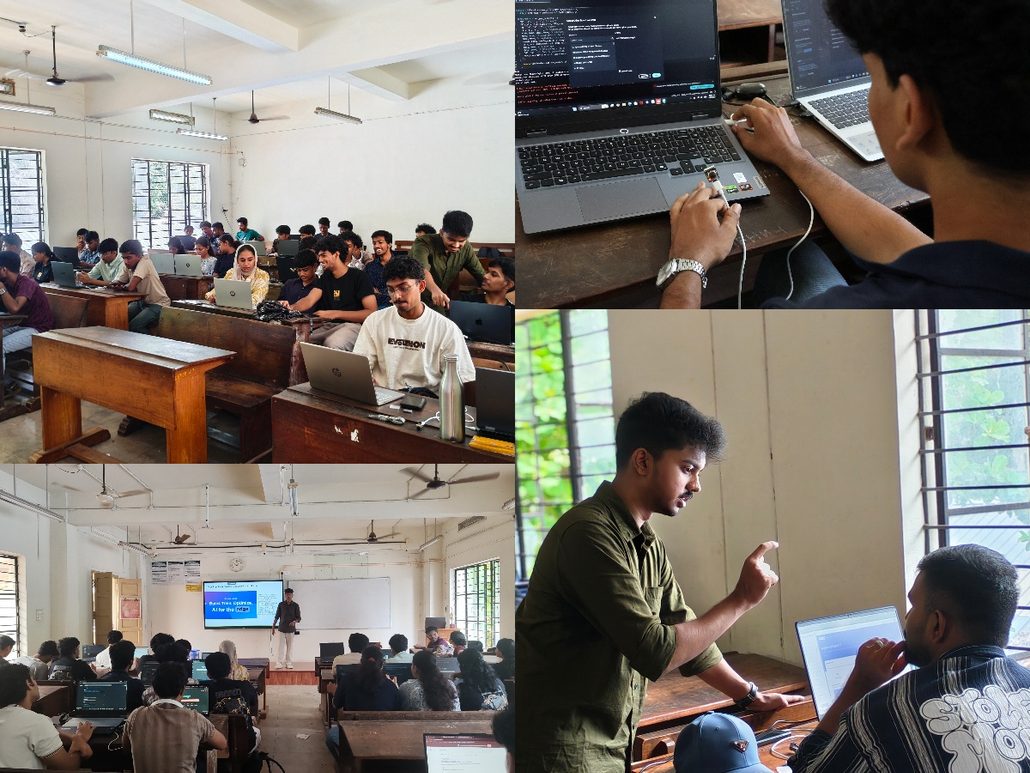
By the second afternoon, students at CET had built AI that could listen for a thunderclap, flag the sound of illegal poaching, and pick a keyword out of a noisy room. Two days earlier, most of them had never trained a model at all.
That leap, from zero to working edge intelligence, was exactly the point of the workshop.
The setup
“TinyML: From Zero to Edge Intelligence” was a two-day hands-on workshop held as part of Drishti ’26, the tech fest of the College of Engineering Trivandrum (CET). It was organized by IEEE SB CET, together with the IEEE Computational Intelligence Society and the IEEE Robotics and Automation Society. I had the chance to lead it as a Seeed Ranger.
The room brought together 56 participants from several colleges, all there for the same reason: to stop reading about edge AI and start building it. Over two days, they did exactly that, moving from their very first no-code model to custom models they trained and deployed themselves.
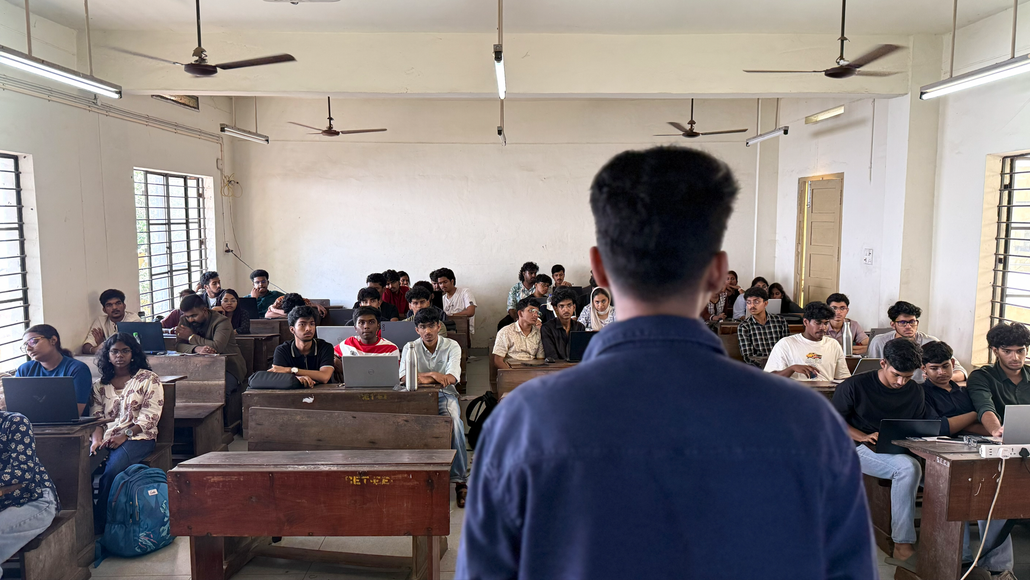
Day 1: Teaching tiny devices to see
The first day was all about vision, and it started as gently as possible. Using Google’s Teachable Machine, students trained their first image recognition model straight from a webcam, with no code at all. Within minutes, the room was full of laughter as models learned to tell a thumbs-up from a thumbs-down.
From there, we moved to Seeed Studio’s SenseCraft AI platform and its library of ready-made models. Students deployed pre-built public models onto real hardware and watched them run, getting a feel for what edge AI looks like in action.
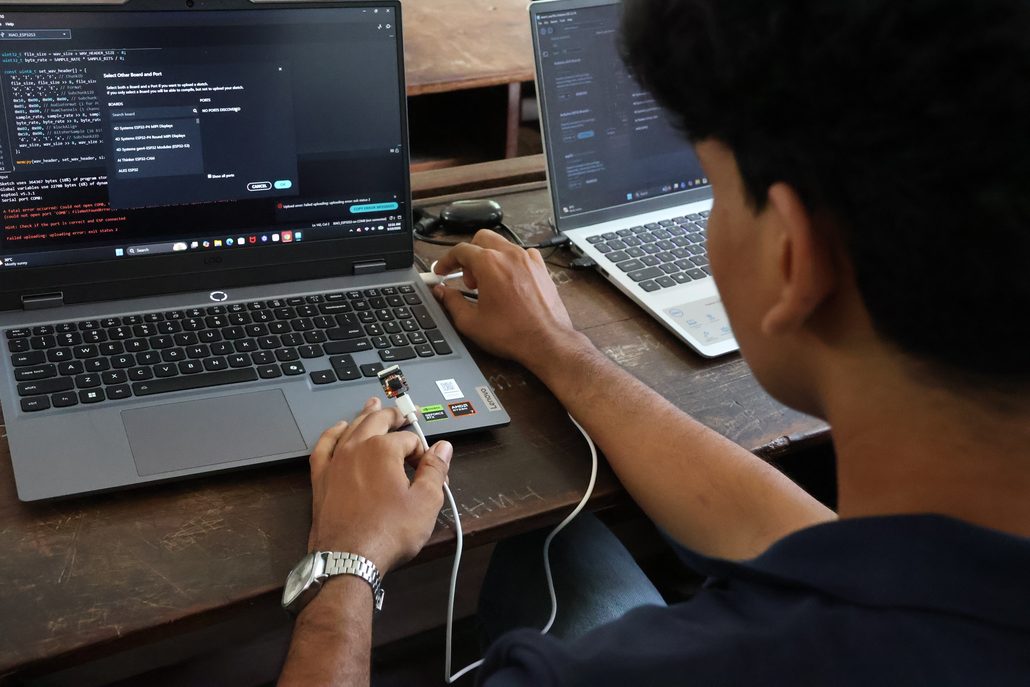
Then came the real step up: building their own. Each participant trained a custom image classification model and deployed it onto the Seeed Studio XIAO ESP32S3 Sense. After that, they pushed into object detection with the Grove Vision AI V2, watching a tiny camera find and box objects in a live feed. By the end of Day 1, everyone had gone from a webcam demo to a custom vision model running on a board in their hand.
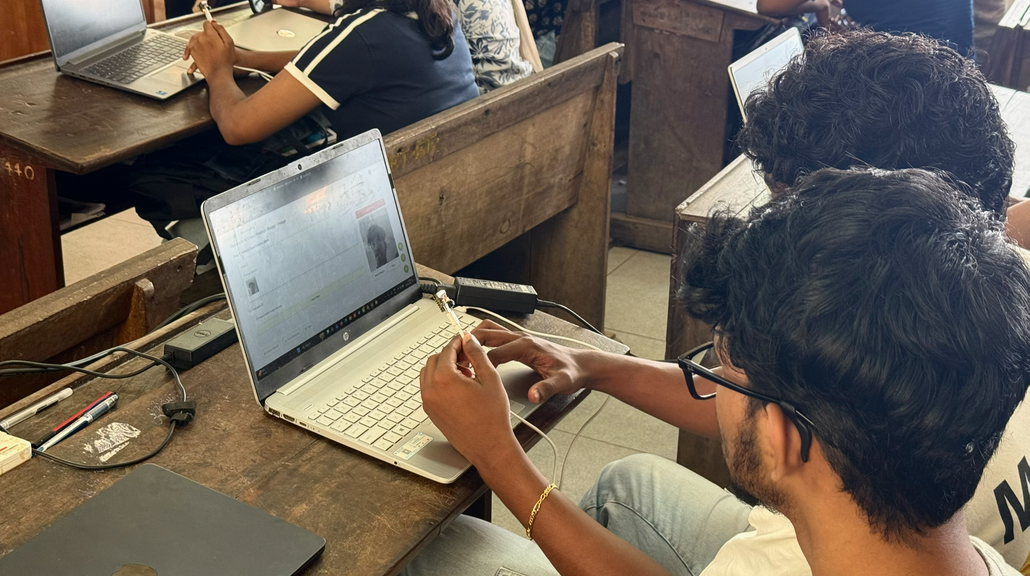
Day 2: Teaching tiny devices to listen
If Day 1 was about sight, Day 2 was about sound. We moved into audio TinyML with Edge Impulse, and this is where things got genuinely exciting.
Students collected their own audio data, labeled it, and trained models on Edge Impulse, then deployed those models back onto the XIAO ESP32S3 Sense. With that pipeline in their hands, the ideas started flowing. Teams built keyword spotting that reacts to a spoken command, thunder detection that flags an approaching storm, and animal detection aimed at real conservation problems, including a model to catch the sound of illegal poaching.
Watching a coin-sized board recognize a sound it had been taught just minutes earlier is the kind of moment that makes TinyML click. By the end of the day, these were not demos. They were working prototypes, each one solving a problem the students had chosen themselves.
Wrapping up
What made this workshop special was the range. In two days, 56 students from different colleges went from never having trained a model to deploying custom vision and audio AI on real hardware, and using it to tackle problems they actually cared about.
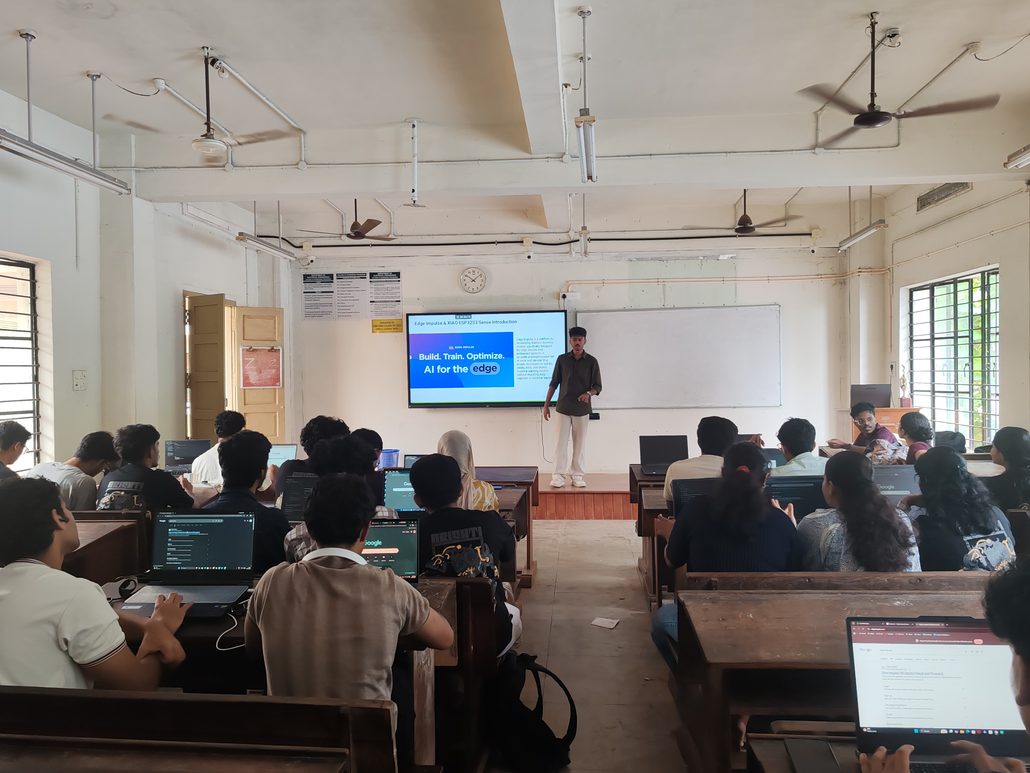
“TinyML: From Zero to Edge Intelligence” was a two-day workshop held on September 18 and 19, 2026, as part of Drishti at the College of Engineering Trivandrum (CET), organized by IEEE SB CET with the IEEE Computational Intelligence Society and the IEEE Robotics and Automation Society, and supported by Seeed Studio.
About Author
