🇨🇦 ROSCon Global 2026 Toronto Wrap-Up|IROS 2026 Pittsburgh Underway
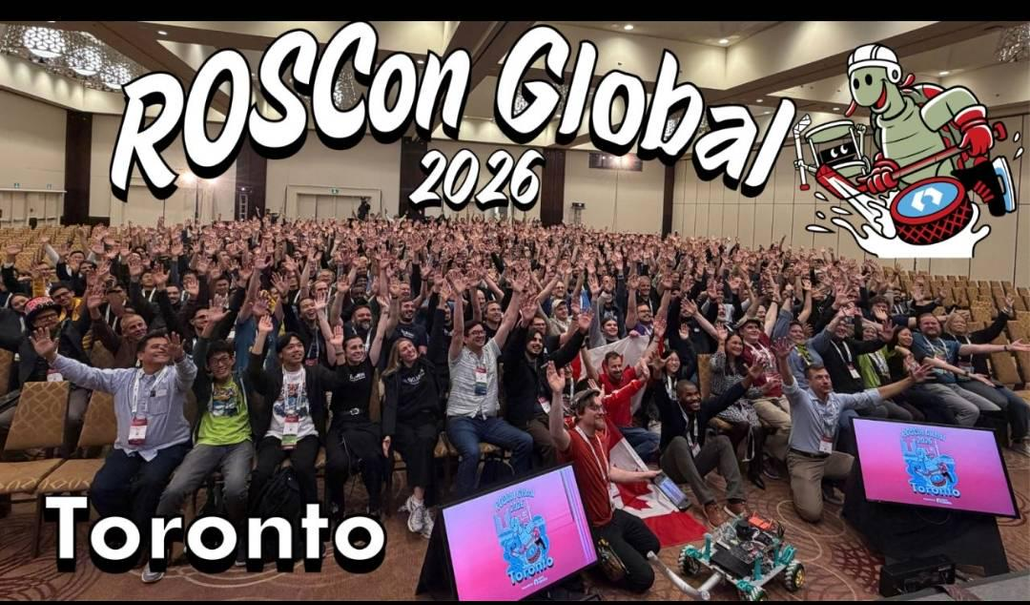
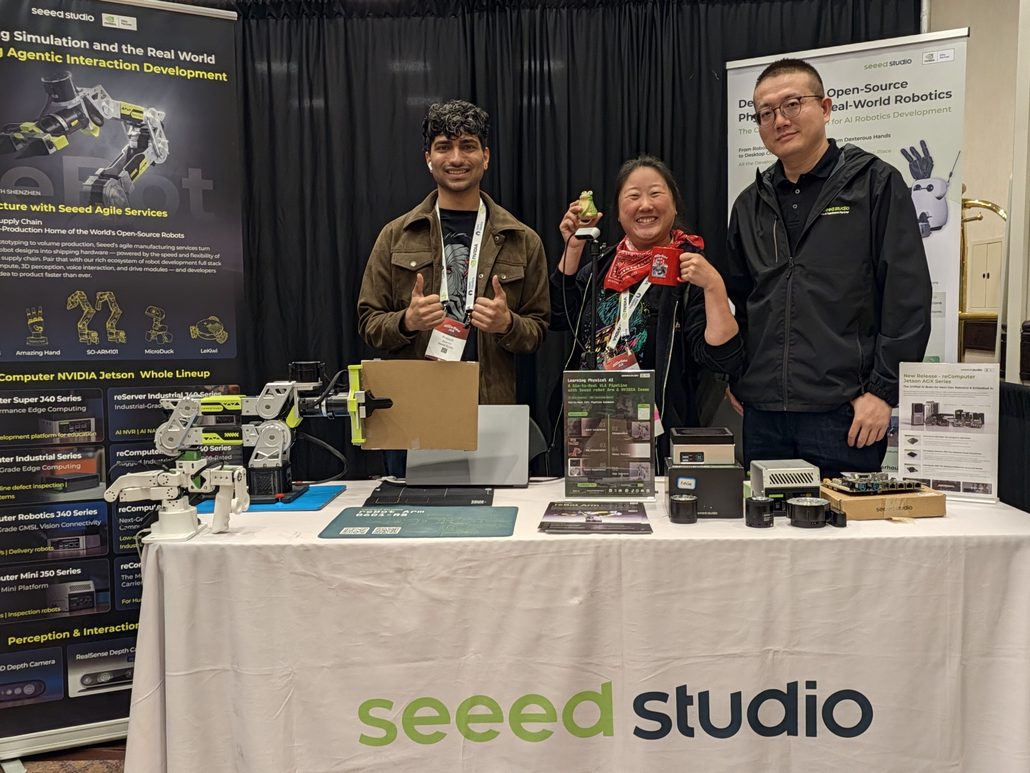
Sept 22–24, Toronto hosted ROSCon Global 2026, the ROS community’s annual flagship conference. This year’s mascot: a helmet-wearing ROS turtle swinging a hockey stick — but what happened inside the venue was far more hardcore. AI giants moved their crown jewels into open source, and the ROS ecosystem is shifting gears toward one direction: Physical AI. As a Silver Sponsor, Seeed Studio made its ROSCon debut at Booth #13 and witnessed it all firsthand.
🔥 One-sentence summary of this year’s conference: it turned “Physical AI” from a buzzword into a pile of code you can actually download, run, and verify.
🔓 The giants open-sourced their crown jewels. Alphabet’s Intrinsic announced Intrinsic Core under Apache 2.0 — the real-time control framework ICON, motion & grasp planning, Gazebo simulation services, camera calibration, and ROS drivers, plus OMTS, a reference implementation for CNC machine tending. NVIDIA launched Isaac ROS 5.0 onsite: ROS Lyrical + Ubuntu 24.04 support, agentic workflows, and 5.5× faster FoundationPose inference — and the official blog gave us a shout-out: Seeed Studio is applying Isaac ROS on the reBot Arm, fusing accelerated perception, spatial understanding, and motion planning on NVIDIA Jetson Thor.
Read the NVIDIA blog: https://blogs.nvidia.com/blog/isaac-ros-5-0-agentic-open-source-robotics/
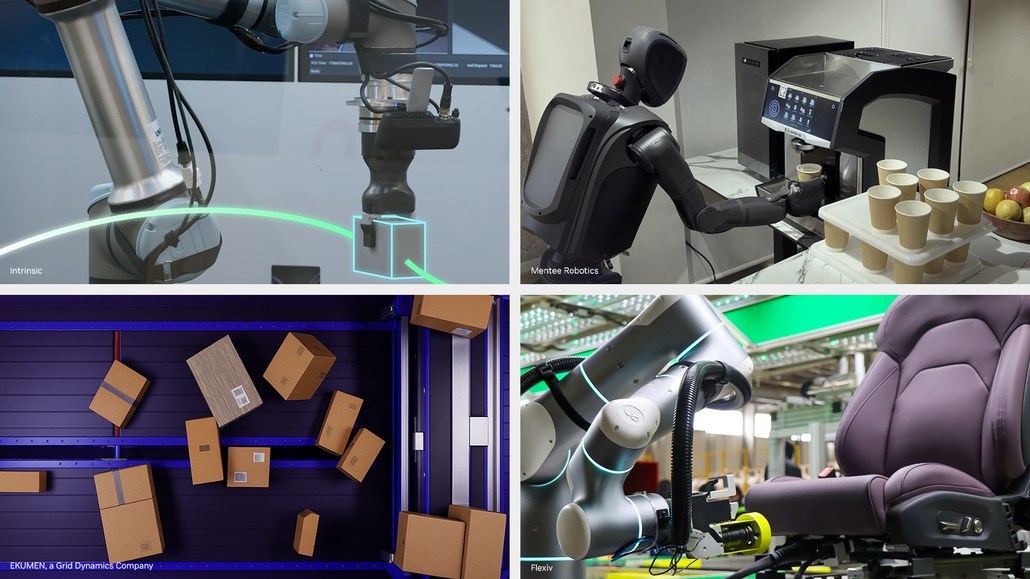
⚡ Zero-copy became the new “infrastructure topic.” LLM inference, point clouds, and tensors are now standard payloads in robot software stacks, and data movement is becoming the bottleneck: NVIDIA’s keynote covered near-zero-overhead tensor/point-cloud transport, Ekumen proposed REP-0157 for universal zero-copy across C/C++/Python, and the ros2_control workshop taught how to embed RL inference engines directly into controllers. The community-released ROS 2 Lyrical (LTS, supported through 2031) also ships built-in zero-copy and lower-CPU executors.
🏭 The agenda went full industrial. AMD took the exclusive Platinum sponsorship slot and delivered the opening keynote on the Physical AI “perceive–reason–decide–act” loop; talk titles slid from “libraries & frameworks tutorials” toward Mines, Motors, and Manipulation — mines, racetracks, kitchens; and the OSRA Physical AI SIG reported on its first year. Last year, Physical AI was a brand-new SIG; this year, it was the main storyline of the entire conference. And by the way — ROSCon China 2026 is on the way.
ROS standardized how we build robots. Now AI agents, foundation models, simulation, and increasingly capable edge compute are starting to grow on top of that open foundation. The distance between “I have an idea” and “I can make a machine perceive, reason, and act” keeps getting shorter.
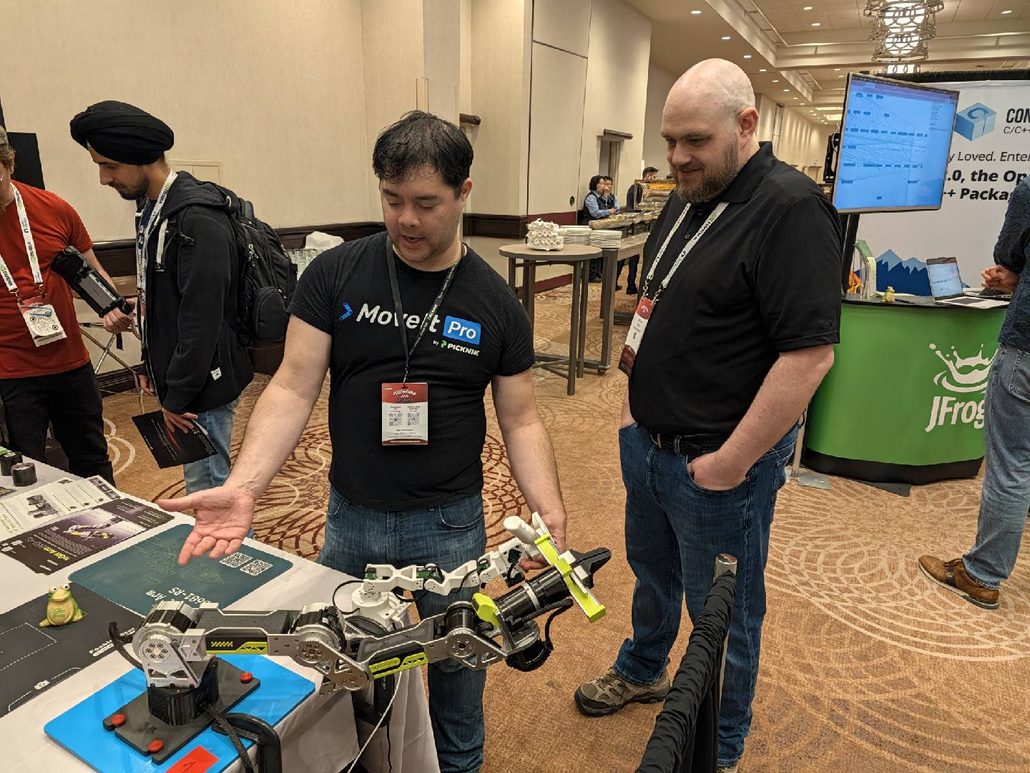
🦾 We’re shortening that distance too. At our booth, visitors got hands-on with buttery-smooth teleoperation of the reBot Arm — and watched it perform real-time teleoperation inside the NVIDIA Isaac simulation environment. The crowd never thinned, swapping dev stories and troubleshooting questions. That’s the magic of an open-source community.
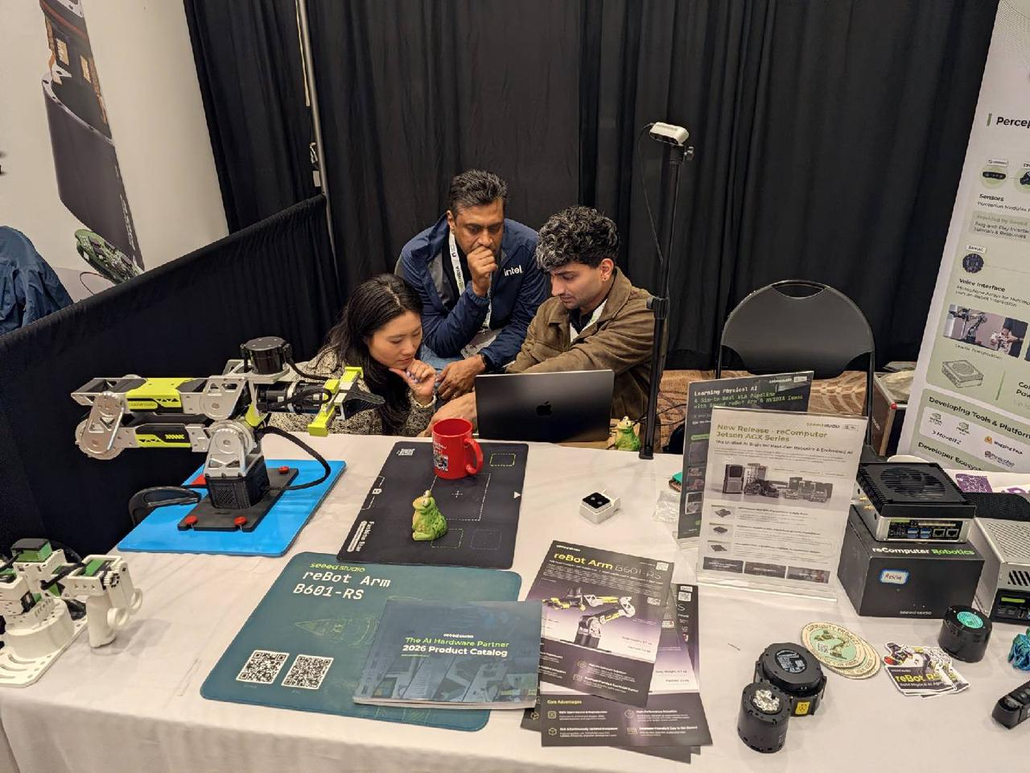
🤝 Onsite takeaways beyond expectations:
- A materials scientist stopped by specifically to discuss using reBot for volumetric 3D printing research — a form-all-at-once approach that could disrupt traditional layer-by-layer printing
- MassRobotics founder Daniel Theobald visited our booth
- Mesh networking discussions were on fire in the ROSCon channel — LoRa mesh × robotics evangelism has real potential
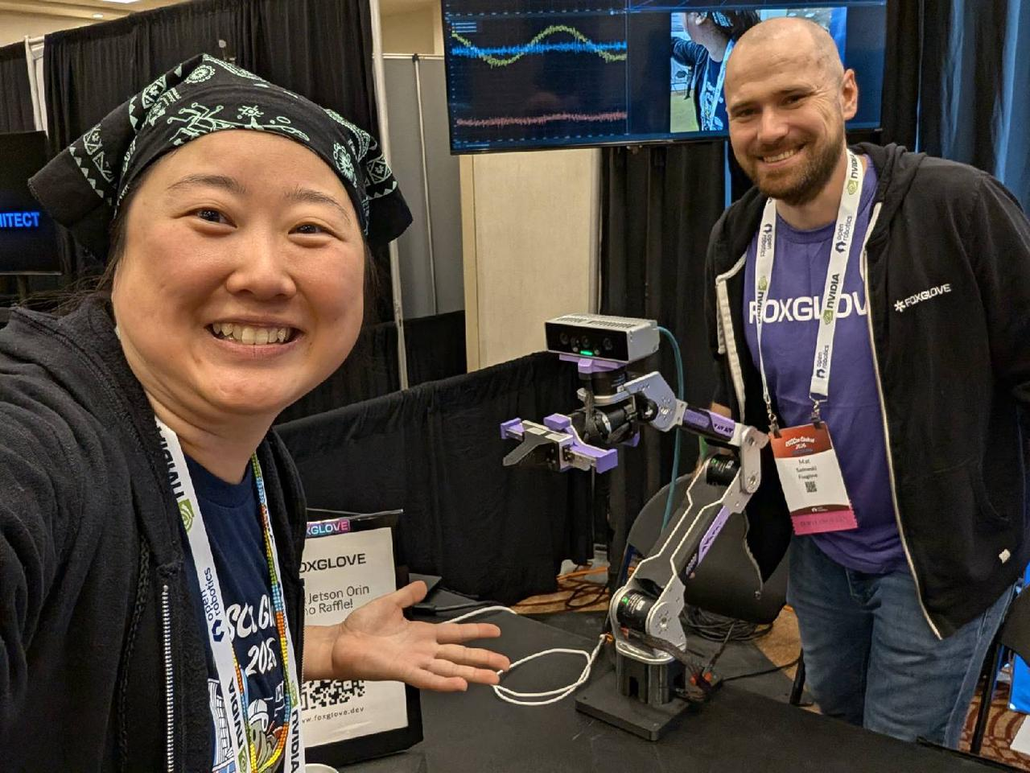
- Foxglove’s custom purple reBot showed up too — paired with Foxglove’s multimodal data visualization platform, the reBot is suiting up and growing fast around the world
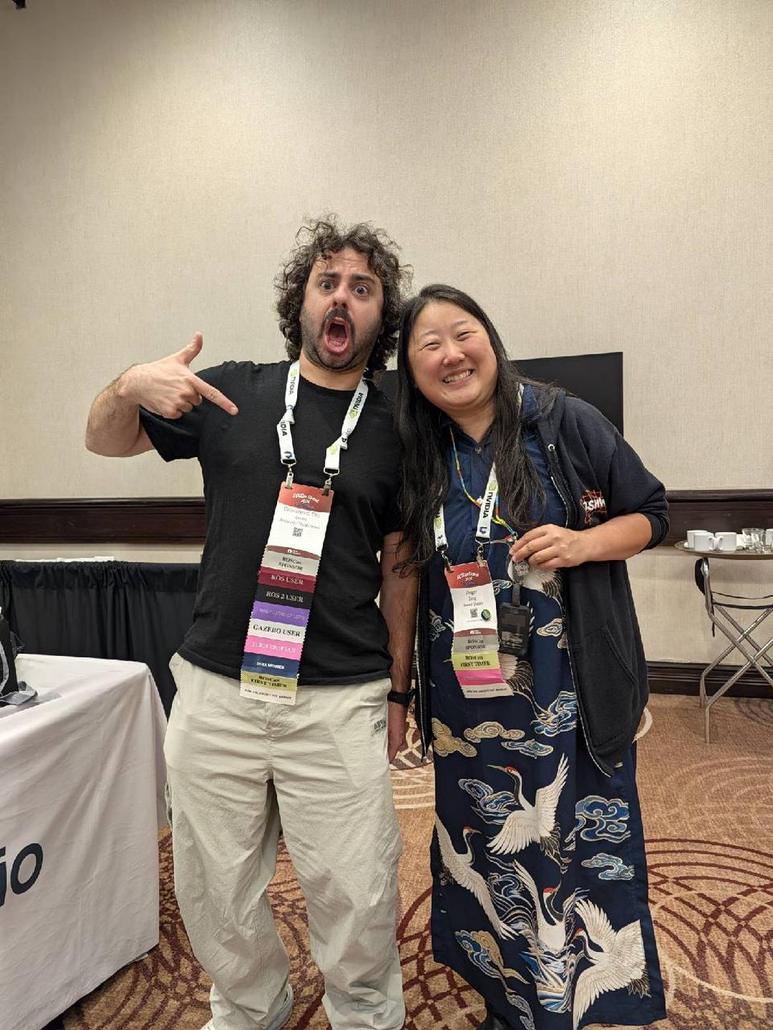
🎯 Booth fun: e-ink + DIY badge lucky draw, Jinger’s handmade reBot fabric badges and stickers — developers happily traded the open source community’s “sticker currency.” One lucky visitor even walked away with a $200 Seeed online store coupon!
📍 Meanwhile, IROS 2026 Pittsburgh is underway!
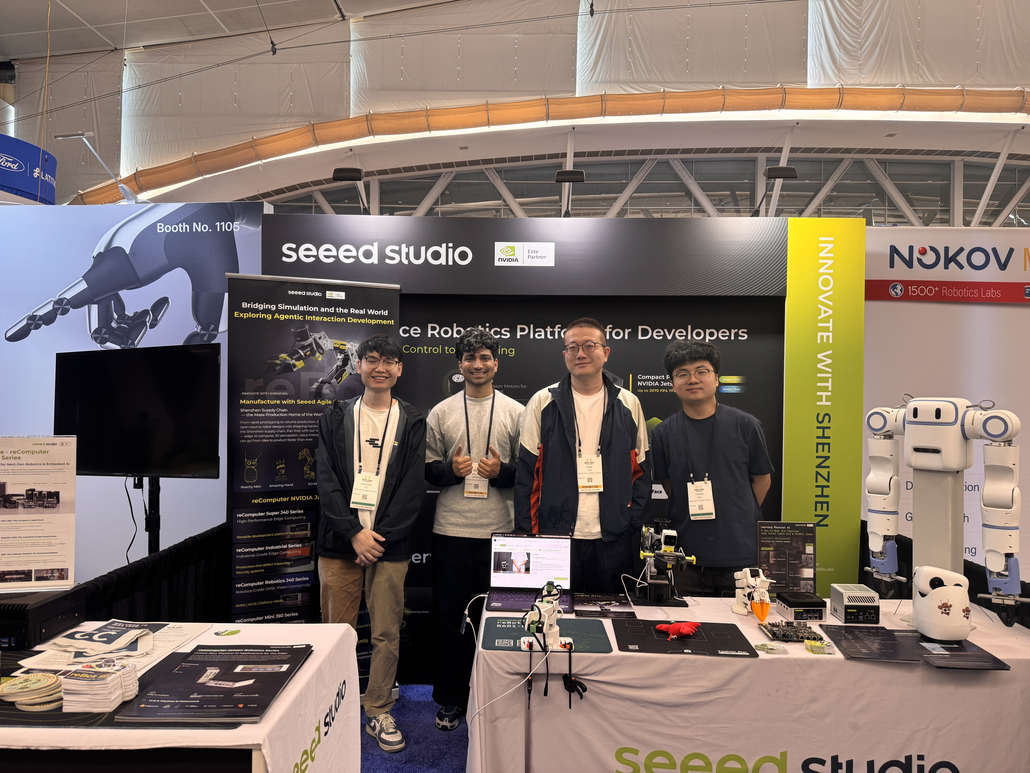
IEEE/RSJ IROS 2026 (Sept 27 – Oct 1, David L. Lawrence Convention Center) has opened its doors, with Seeed at Booth #1107. A 3-day highlight sprint for those who couldn’t make it:
- A mobile base vendor completed a “reBot Arm + mobile base” integration demo on-site
- Researchers published an IROS paper using SO-ARM101: Fast Enough to Act: Spatio-Temporal Visual Token Merging for Low-Latency Robotic VLMs and VLAs — open-source hardware is becoming the standard experimental rig in academia
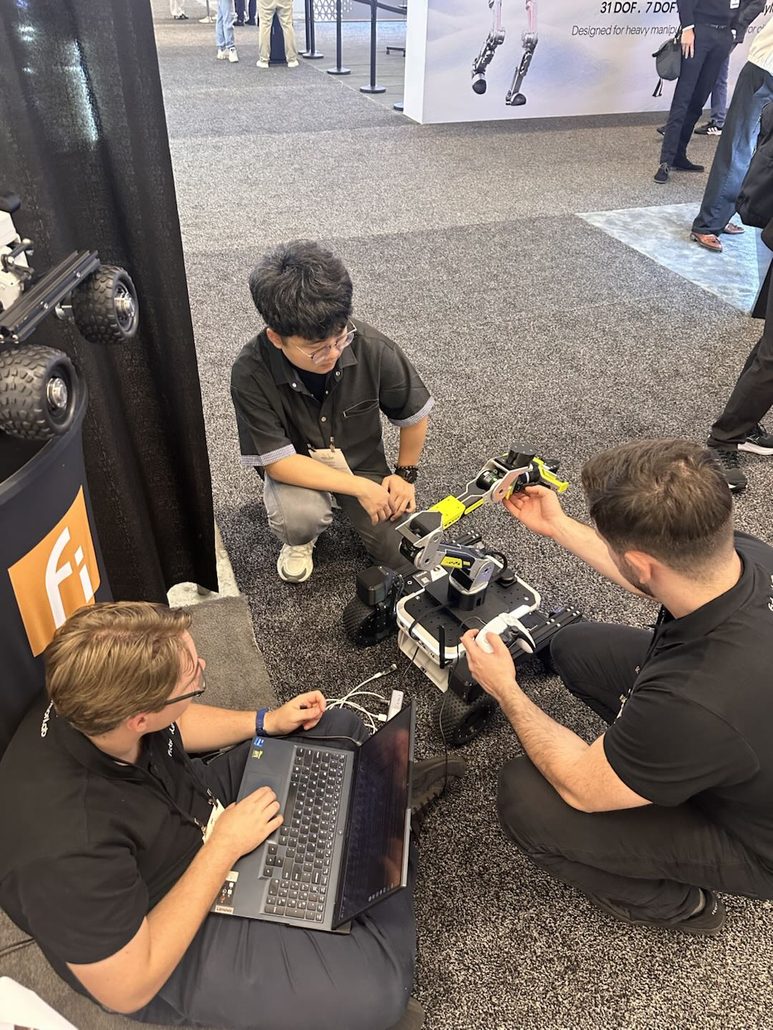
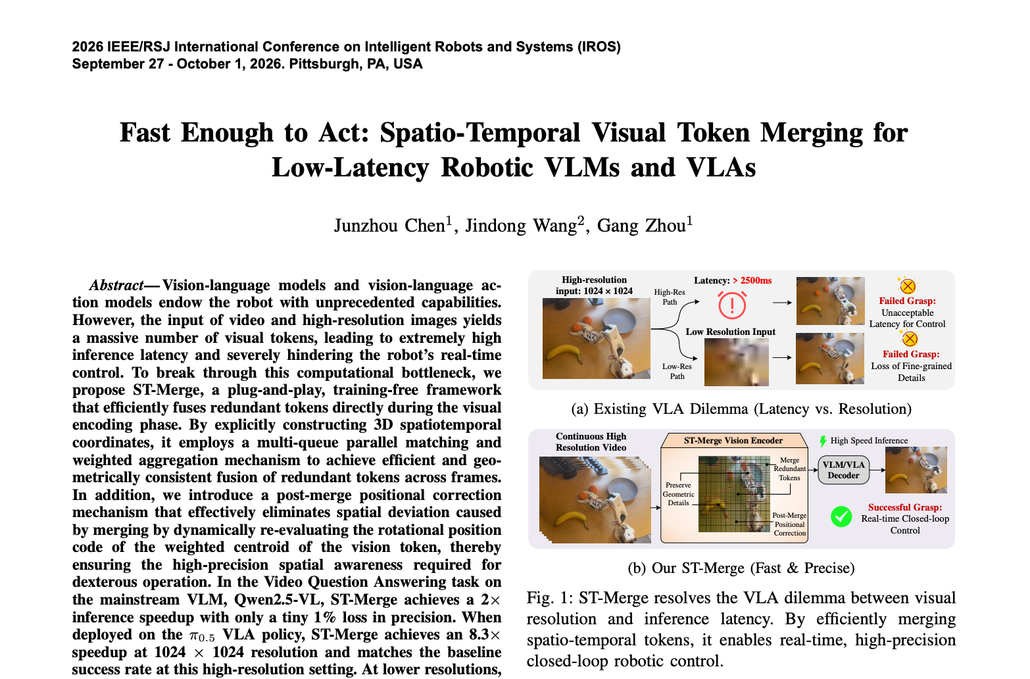
🔬 Fast Enough to Act — the biggest pain of running VLA models (π0.5) on real robots is inference latency: at high resolution, each “thinking” step takes 582 ms, causing pauses or even oscillation during grasping. This paper proposes ST-Merge, a training-free, plug-and-play spatio-temporal visual token merging framework that prunes redundant tokens right at the vision encoding stage — accelerating π0.5 inference by 8.3× at 1024×1024 (2.6 s → 312 ms) with success rates holding steady. Real-robot experiments collected 300 demos on SO-ARM101, cutting “thinking time” from 582 ms to 191 ms for noticeably smoother closed-loop control. Code is open source: github.com/Junzhou-Chen/ST_Merge
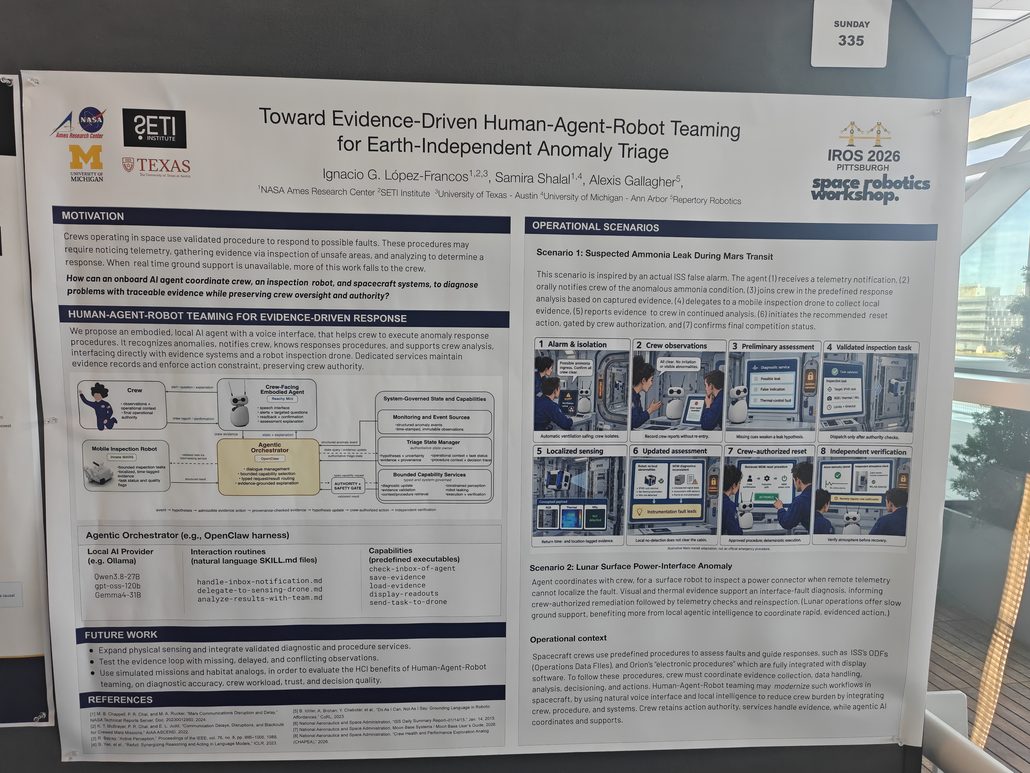
🛰️ AI crewmate for space — NASA Ames + SETI + Michigan + UT Austin (Space Robotics Workshop). With Earth–Mars communication delays, spacecraft anomalies must be handled by the crew alone. This work designs a local embodied AI agent with voice interaction that coordinates crew, inspection drones, and spacecraft systems for evidence-driven fault diagnosis — with fully traceable Mars ammonia-leak and lunar power-connector scenarios, and decision authority always in the crew’s hands. Highlights: the embodied agent is a Reachy Mini, LLMs run fully locally on Ollama (Qwen/Gemma), orchestrated via the OpenClaw framework. Open hardware + open agent frameworks have made it into NASA’s research stack.
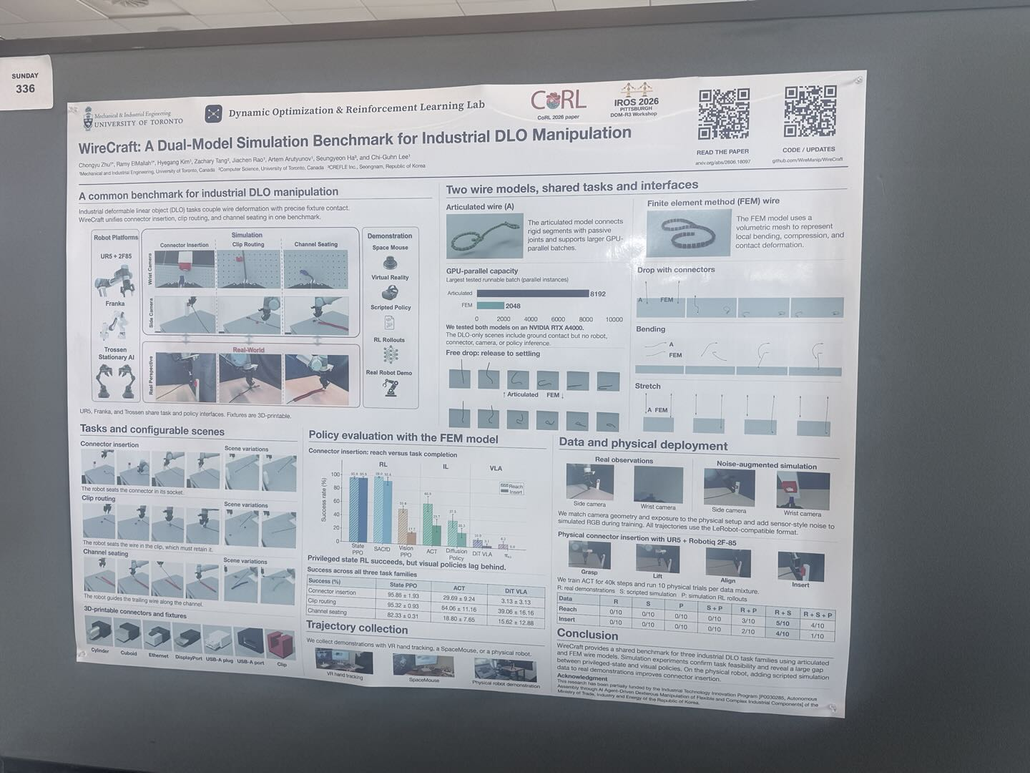
🔌 WireCraft: industrial cable manipulation benchmark — University of Toronto + CREPLE. Turns the trickiest deformable linear object (DLO) tasks — connector insertion, clip routing, slot wiring — into a unified benchmark: dual cable simulation models (an articulated model supporting 8,192 GPU-parallel instances + a high-precision FEM model), three robot platforms (UR5/Franka/Trossen) sharing interfaces, and fully 3D-printable fixtures. The honest conclusion: privileged-state PPO hits >95% success, but vision-only policies still lag far behind — the sim2real road is long.
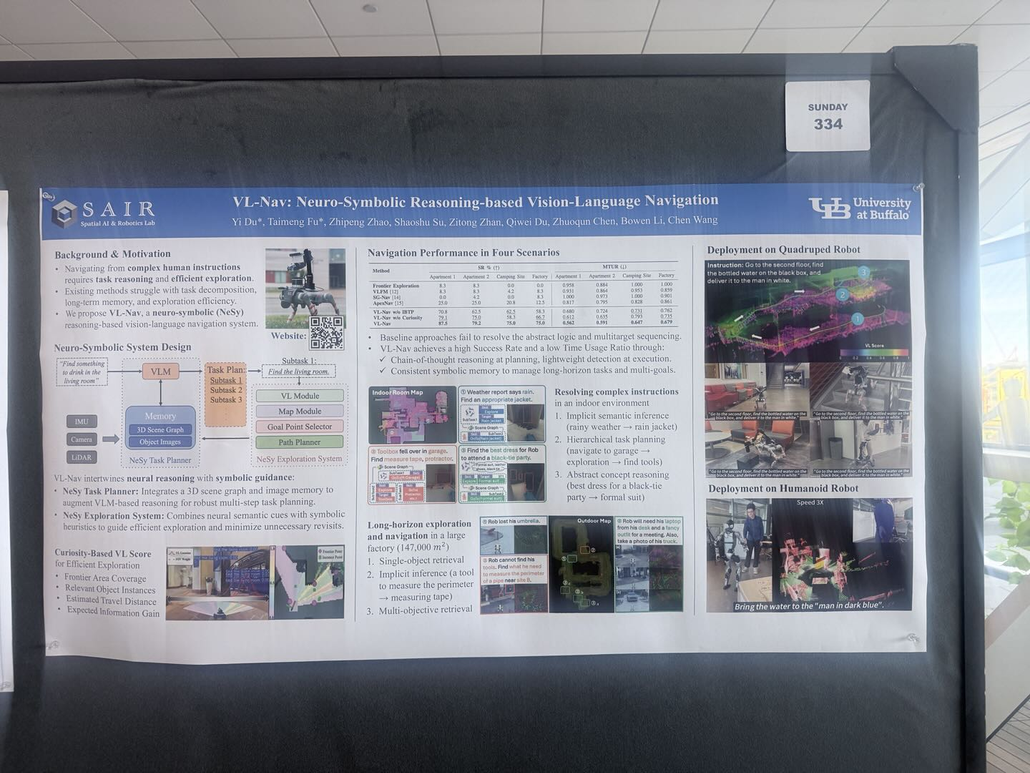
🚶 VL-Nav: neuro-symbolic vision-language navigation — University at Buffalo. “Go upstairs, grab a water bottle, put it in the black box, and hand it to the person in white” — instructions like these demand both reasoning and exploration. VL-Nav fuses 3D scene graphs with VLM reasoning in a neuro-symbolic architecture, deploys on both quadruped and humanoid robots, and validates long-horizon exploration in a 147,000 m² factory-scale scene.
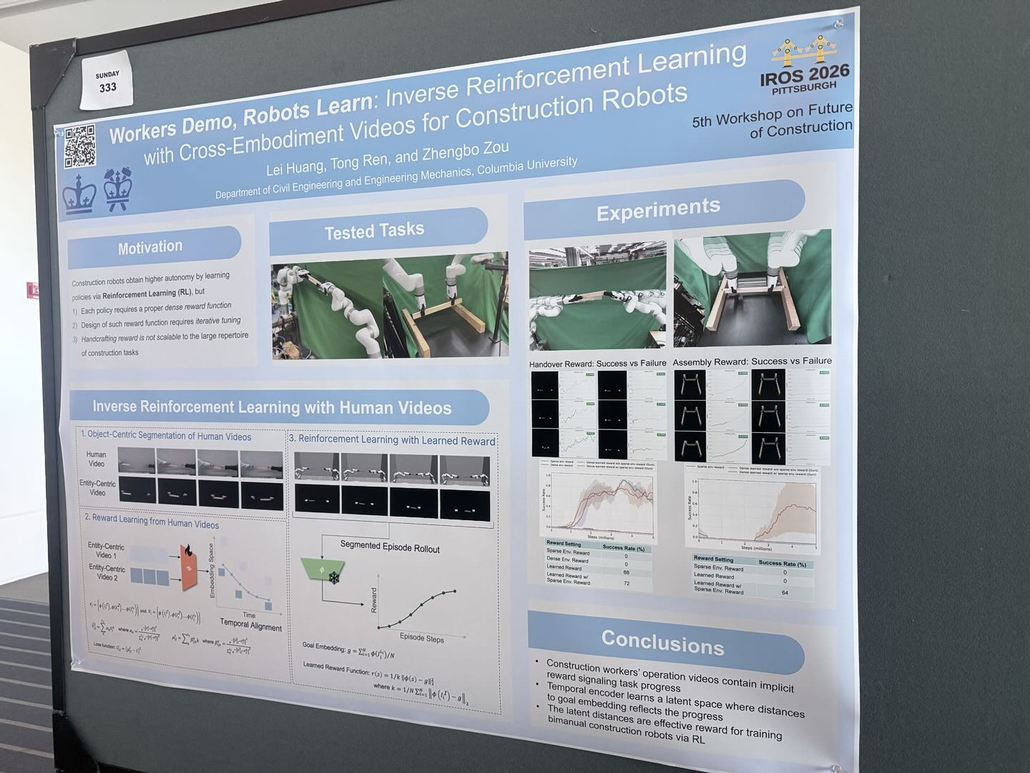
🏗️ Workers demo, robots learn — Columbia University. For construction tasks robots can’t crack, let workers show them: inverse reinforcement learning automatically extracts reward functions from human operation videos — no manual reward engineering — and transfers cross-embodiment to dual-arm robots. Material handover success 72%, wood assembly 64% — versus 0% with plain environment rewards.
🤖 Also spotted: UT Austin’s SKRAT on-orbit servicing robot — dual Kinova soft arms + Robotiq grippers + Jetson edge compute + swerve-drive base, built for multi-agent on-orbit repair.
📚 Ready to start playing with the hardware?
Full Physical AI course resources, all open-source and free:
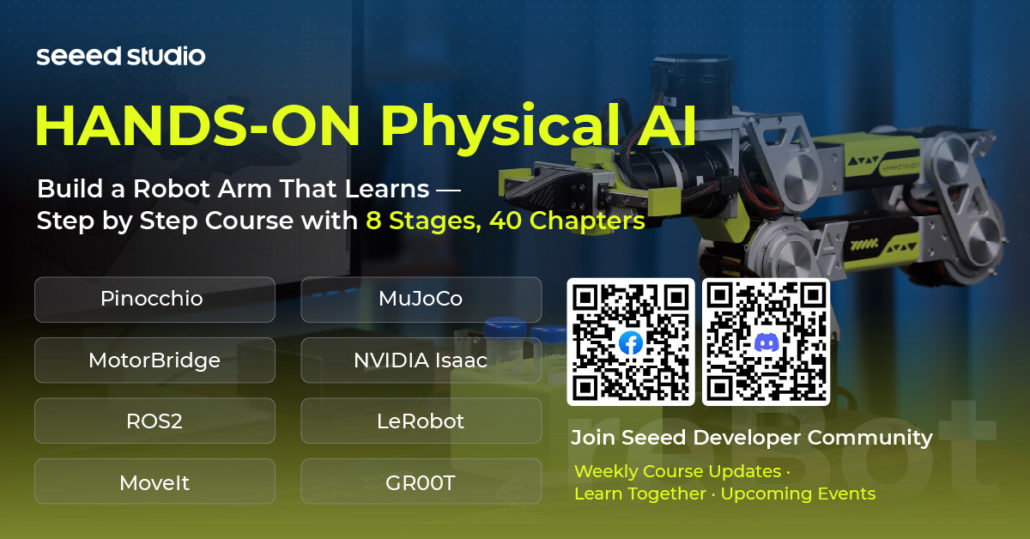
- A zero-to-hero learning path: Quick Start → LeRobot → Pinocchio → Visual Grasping → ROS 2 → Isaac Sim → GR00T → Embodied Agents, covering the full lineup — reBot B601-RS/DM, SO-ARM100/101, StarAI — with new course deep-dives published every week: https://wiki.seeedstudio.com/rebot_physical_ai_course_introduction/
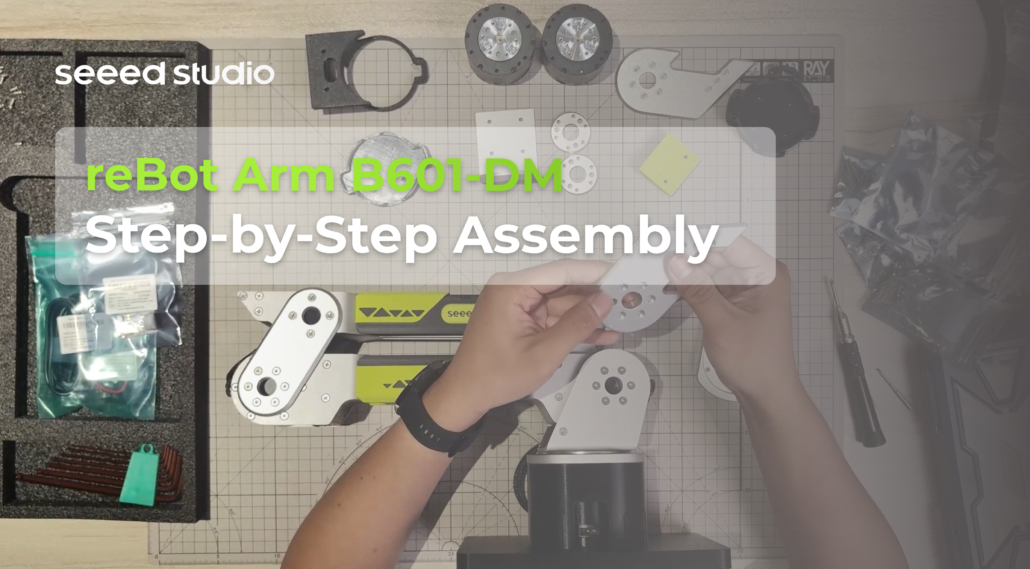
- Step-by-step assembly walkthrough: Build the reBot Arm B601-DM from scratch (on YouTube) — every single step from loose parts to a moving arm
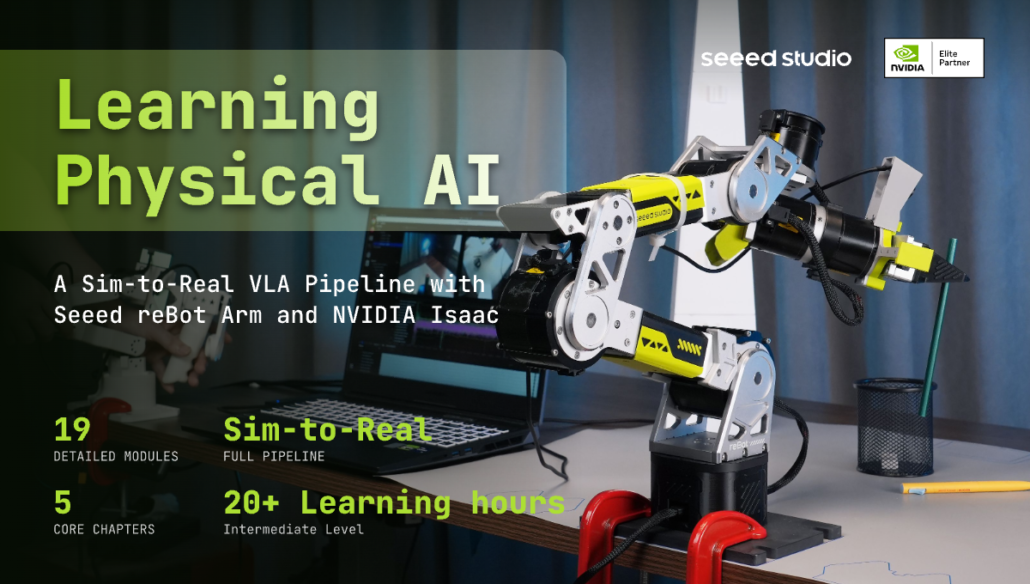
- Seeed × NVIDIA Physical AI VLA full-stack development course: https://www.seeedstudio.com/sim-to-real-with-seeed-rebot-and-nvidia-isaac
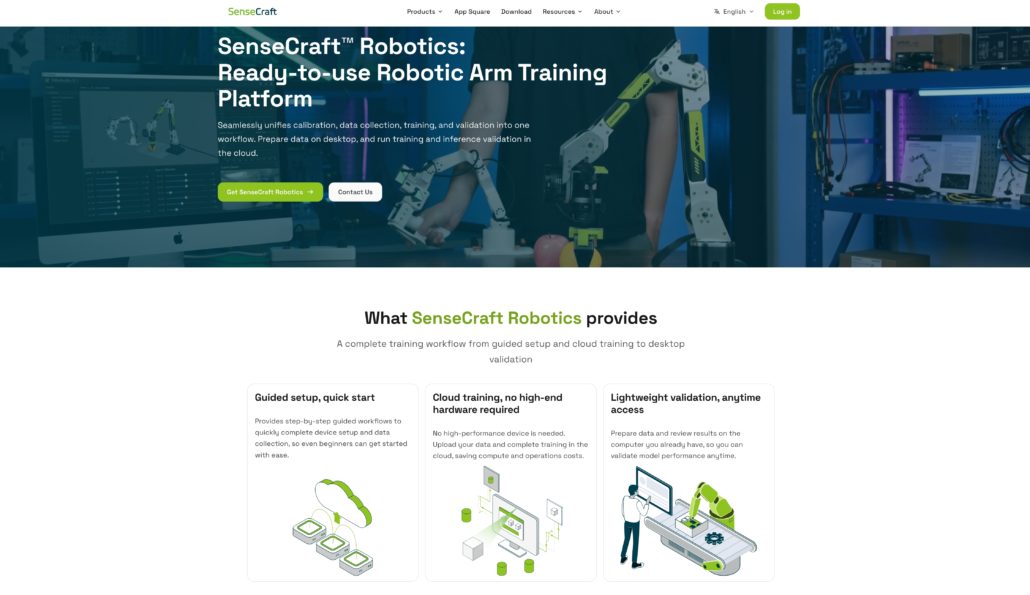
- No-code training + deployment, all-in-one: the SenseCraft Robotics platform — device connection → data collection → cloud training → real-robot deployment. Train your own robot arm without writing a single line of code. Download at: https://sensecraft.seeed.cc/en/robotics?utm_source=linkedin&utm_medium=social&utm_campaign=20260923#download
🎓 Education discount & research collaboration (always open):
- Contact [email protected] with your institutional email to apply for education purchase discounts + a free course resource pack
- The Seeed Physical AI Global Workshop Partnership Program is open for applications: university labs can apply for hardware loans or discounted purchases; graduate students, competition teams, and content creators can apply for hardware sponsorships to co-produce tutorials, case studies, algorithm ports, and technical articles with Seeed — we’d love to see more researchers write open hardware into their next paper, just like that SO-ARM101 one.
From Toronto to Pittsburgh, the open-source agentic robotics wave is accelerating. Seeed Studio will keep bringing great open robotics hardware and complete tutorials to every developer — making technology truly within reach. 🚀
About Author
