The Home Assistant community never stops surprising us with creative projects! From inventive automations that simplify daily routines to custom dashboards and DIY devices, the ecosystem is full of ideas worth trying.
In this blog, I’ll showcase a wide range of community-driven Home Assistant project ideas — from beginner-friendly builds to advanced integrations. Whether you’re looking for inspiration to automate everyday tasks, build your own sensors, or design a unique control panel, you’ll find plenty of Home Assistant Project ideas to explore here.
So what to explore?
Home Assistant DIY projects, where makers build their own devices.
Home automation projects, where existing devices are linked together in smart ways.
DIY Home Assistant Projects (Build from Scratch)
In the Home Assistant DIY projects section, we’ll showcase a diverse range of creative builds from the community, highlighting not just Home Assistant ESPHome projects but also those utilizing other technologies such as Zigbee, MQTT, Matter, and so on. From custom sensors and displays to unique controllers, we’ll explore the many ways that are categorized projects designed for Home Assistant Display enthusiasts of all skill levels. So you can create and customize your own devices to extend Home Assistant — offering inspiration and flexibility for every maker.
Beginner-Friendly Projects (Low Difficulty)
These projects are perfect for newcomers who want to try DIY with Home Assistant Displays. The code is already prepared, so you don’t need strong programming skills but copy, paste, and adjust. The setup is straightforward, requiring minimal time and effort while still giving you satisfying results.
Pet Monitoring and Alarms in Restricted Zones
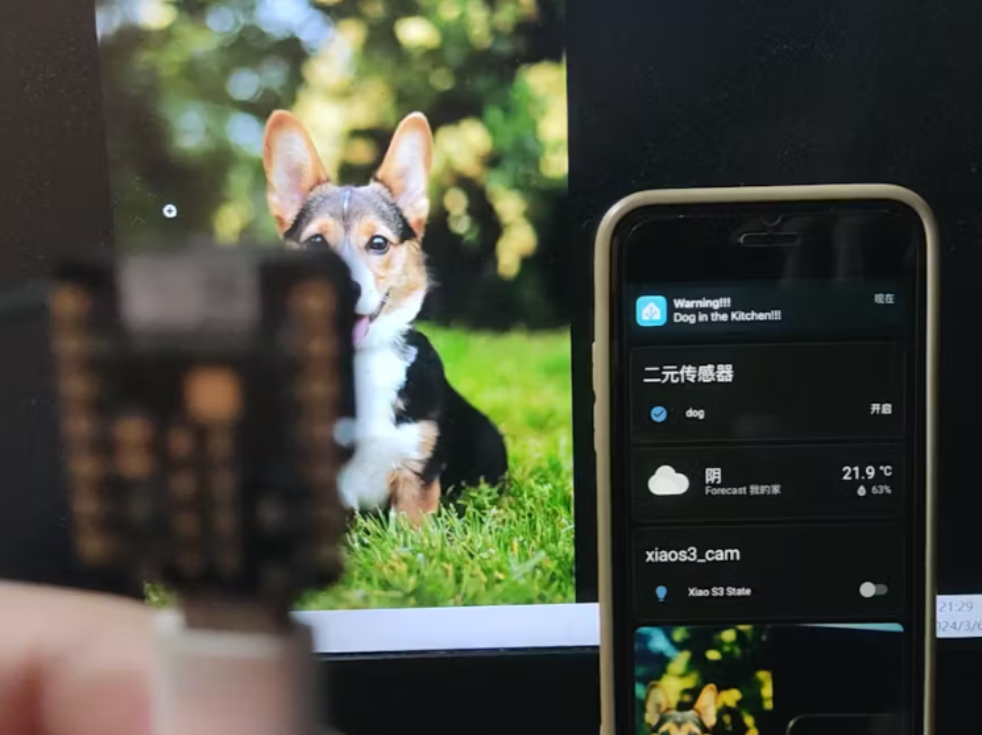
Introducing: Hao uses a XIAO ESP32-S3 running YOLOv8 to monitor pets entering restricted areas such as the sofa, baby room, or kitchen counter. Once detected, it connects via Wi-Fi to Home Assistant, triggering automations like phone alerts, speaker warnings, or smart devices. It will keep pets away from restricted zones while still being lightweight enough for DIY smart home enthusiasts.
Integration: MQTT
Component:
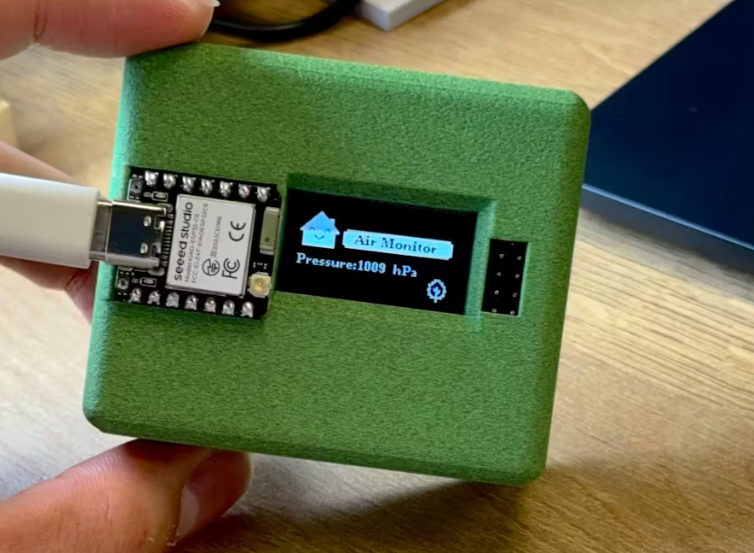
Introducing: Jason utilizes a Zigbee module and a pressure sensor to monitor atmospheric pressure in real-time. An onboard OLED display shows connection status and pressure readings at a glance. Ideal for weather monitoring, indoor/outdoor environmental tracking, or barometric alerts, it offers historical charts and dashboards in Home Assistant. As a compact, battery-friendly, Zigbee-based device, it delivers practical smart-home monitoring beyond typical sensors—making it a standout Home Assistant device.
Integration: Zigbee
Component:
Temperature and Humidity Meter
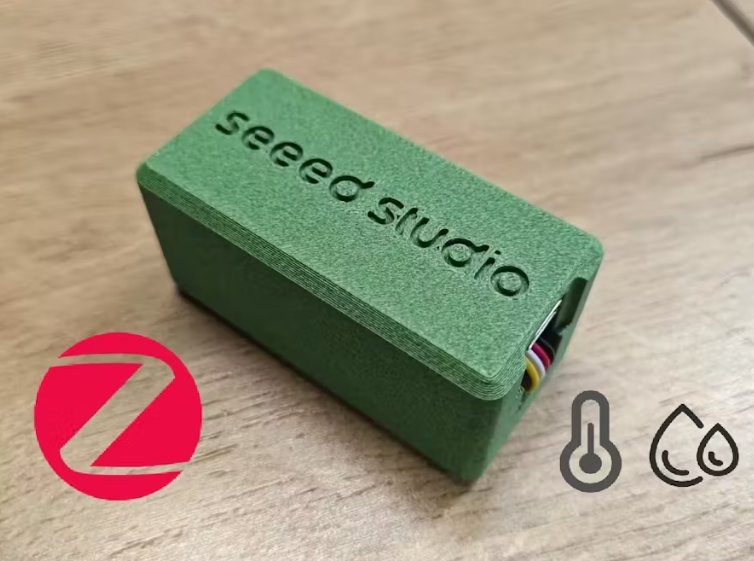
Introducing: Keliang Zhang builds a Zigbee temperature and humidity meter, providing real-time temp/humidity readings, historical dashboards, and automated alerts when conditions fall outside thresholds. Housed in a compact ~60×30×30 mm 3D-printed enclosure, it excels in battery-powered deployment and low-power operation. Ideal for coastal homes, offices, greenhouses, or small rooms where humidity control matters.
Integration: Zigbee
Component:
Grove – Temperature & Humidity Sensor
Seeed Studio Grove Shield for Seeeduino XIAO
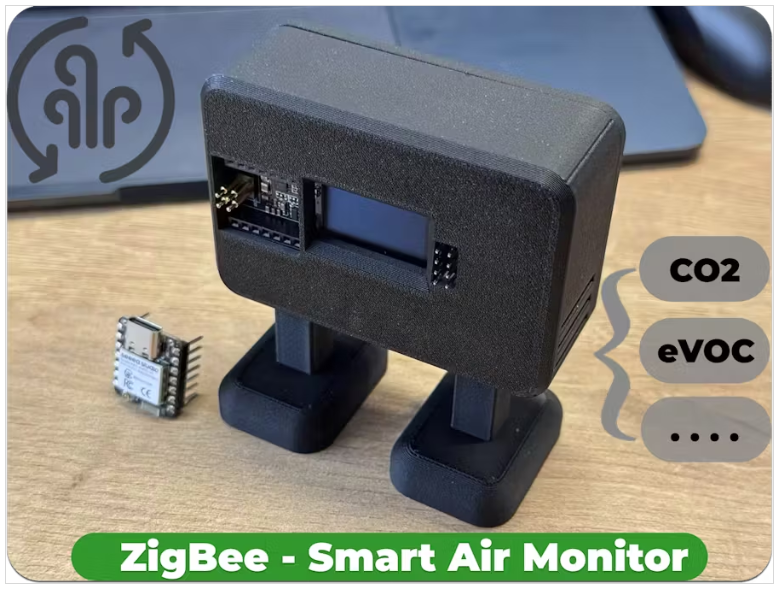
Introducing: Jason delivers a DIY Zigbee Smart Air Monitor built with a Seeed XIAO ESP32-C6, a Grove SGP30 CO₂/tVOC sensor, and Zigbee connectivity to Home Assistant. It features a custom desktop “robot” enclosure and onboard OLED display for real-time CO₂ and air-quality feedback. Ideal for home offices, workspaces, classrooms, or labs, it offers low-power, continuous monitoring with historical dashboards and alerts when air quality degrades. By blending utility with attractive form and Zigbee battery-friendly design, it rises above typical sensors—an engaging and practical smart-home project.
Integration: Zigbee
Component:
Introducing: Maker Keliang Zhang controls devices like an LED strip or relay-enabled appliance, allowing on/off toggles via Home Assistant with fast and reliable wireless response. Housed in a compact 3D-printed enclosure, it discreetly fits behind furniture or within rooms. Ideal for smart lighting in homes, offices, or workshops, this project offers an accessible entry into responsive lighting automation and stands out as a practical, battery-friendly relay control solution for Home Assistant.
Integration: Zigbee
Component:

Intermediate Projects (Medium Difficulty)
These projects suit users who are comfortable making small tweaks and customizing existing setups. While the core code is already prepared, you’ll need to adjust configurations, integrate add-ons, and experiment with layouts. It’s an ideal step for learning how to personalize your Home Assistant Display.
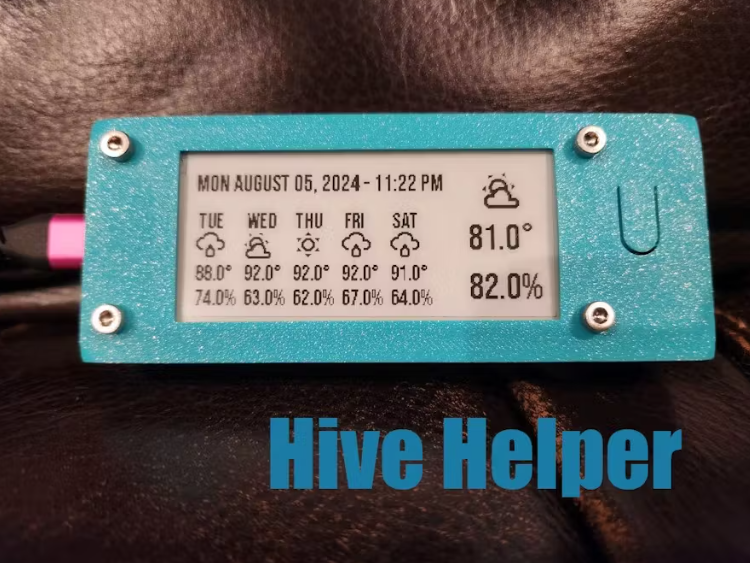
Hive Helper: ePaper display for Home Assistant
Introducing: Thimothy Lovett shows weather forecasts, indoor temperature, and humidity, and can connect to Grove gas or flame sensors for added safety. A single button lets users switch between weather updates and hive environment data, making it especially useful for beekeepers, gardeners, or small smart farms that need quick, low-power monitoring at a glance. With ESPHome over Wi-Fi, it fits seamlessly into smart homes, offering real-world monitoring scenarios beyond simple dashboards.
Integration: ESPHome
Component:
WeAct 2.9‘‘ ePaper Module
Hive Helper PCB
Multichannel Gas Sensor V2
Adafuit Heat–Set Insert
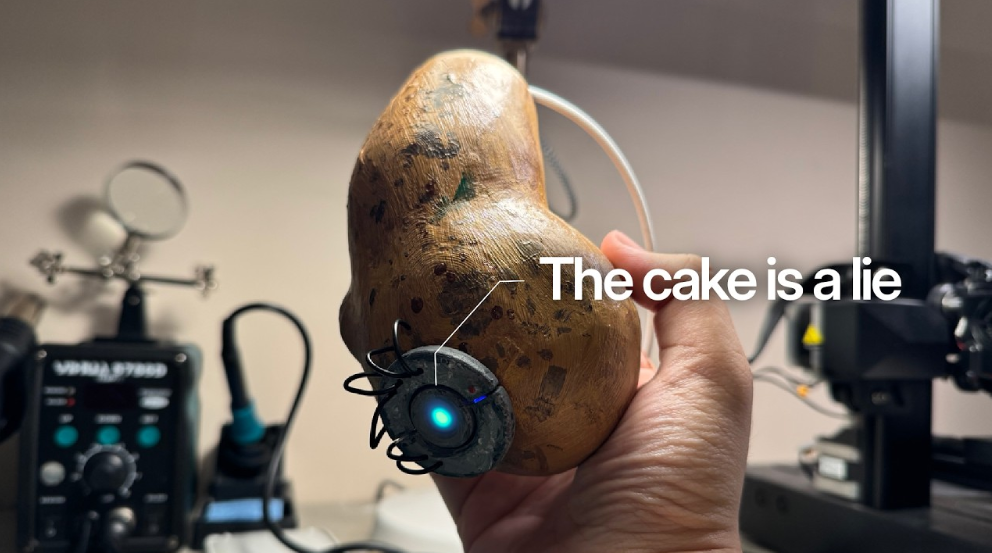
Patota GLaDOS: a smart home voice assistant
Introducing: Pham Binh built a playful smart-home controller using a Seeed XIAO ESP32-S3. Running on a simple AA battery, it turns an ordinary potato into a capacitive touch interface, with taps on the potato skin triggering Home Assistant automations via ESPHome over Wi-Fi. Users can control lights, adjust thermostat, or activate alarms with a fun gesture. Combining humor with practical function, it’s an engaging example of creative DIY Home Assistant devices that make everyday control more interactive and memorable.
Integration: ESPHome
Component:
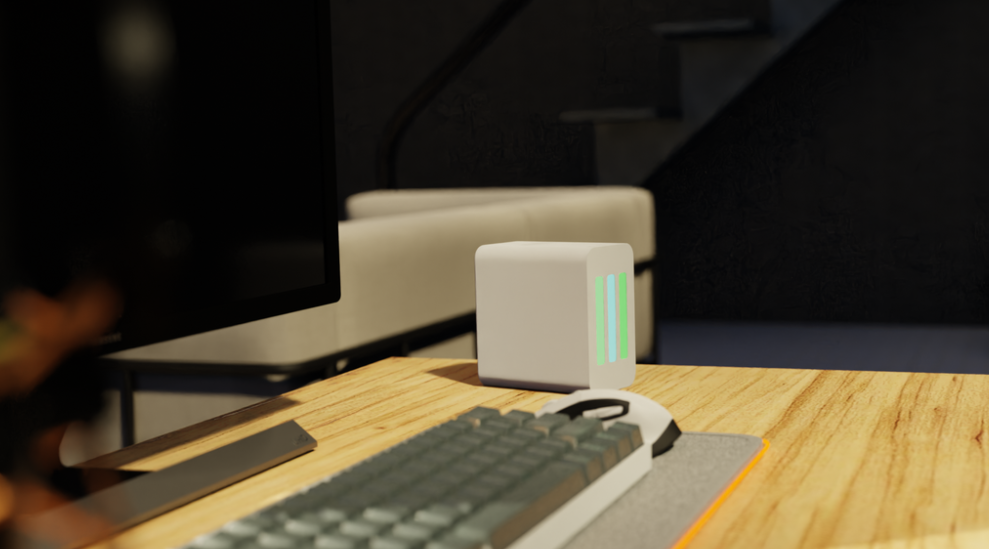
Introducing: Nayel Khouatra built an air quality sensor to monitor CO₂, temperature, humidity, and shows status using WS2812 LED strips, while sending data to Home Assistant via ESPHome. Ideal for homes, offices, greenhouses or classrooms, it provides visible alerts and historical dashboards to prompt ventilation or detect poor air quality for health and comfort. Its real-world application and Home Assistant integration make it a standout air-quality DIY smart-home project.
Integration: ESPHome
Component:
Adafruit breakout board USB-C female
LED strip WS2812
Grove Air Quality Sensor v 1.3
AHT10 temperature and humidity sensor
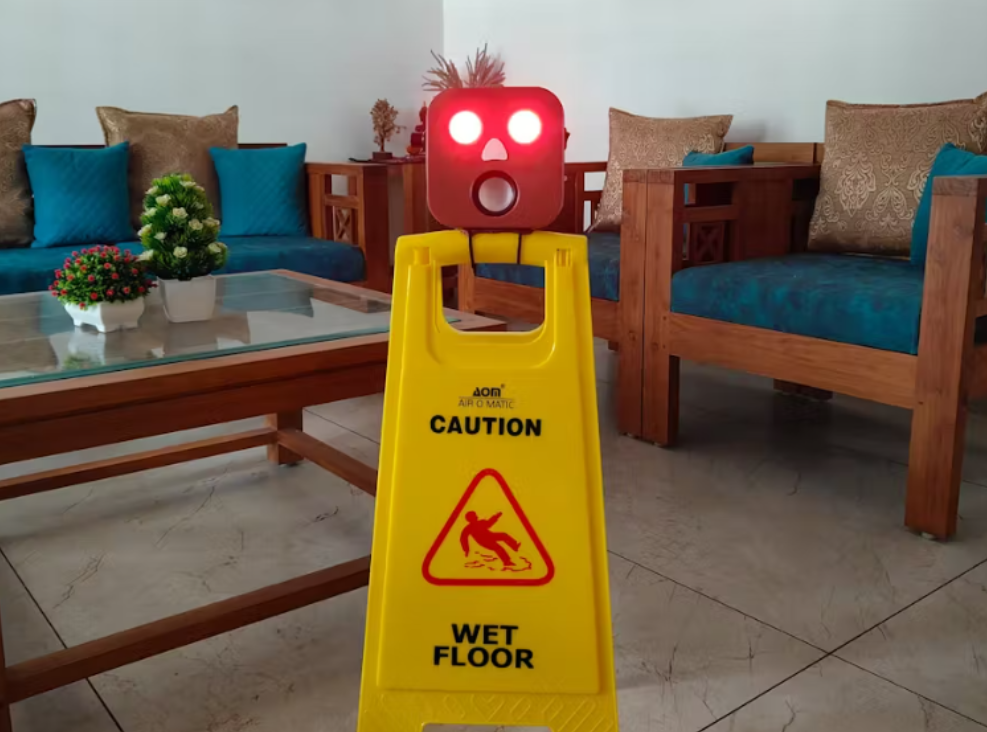
Introducing: Rahul Jeyaraj created a portable intelligent safety sign built on a Seeed XIAO ESP32-S3 Sense with 24 GHz mmWave radar, IMU, LEDs, and audio output via ESPHome/Home Assistant. It detects human approach or fall, then responds with dynamic light patterns and clear voice alerts to prevent accidents, like alerting shoppers to a “wet floor”. Designed for public spaces, malls, hospitals, warehouses, or smart buildings, it’s a versatile platform you customize via YAML profiles.
Integration: ESPHome
Main Component:
Seeed Studio 24GHz mmWave Sensor for XIAO
Inertial Measurement Unit(IMU)
Water-Softener Salt Tank Monitor
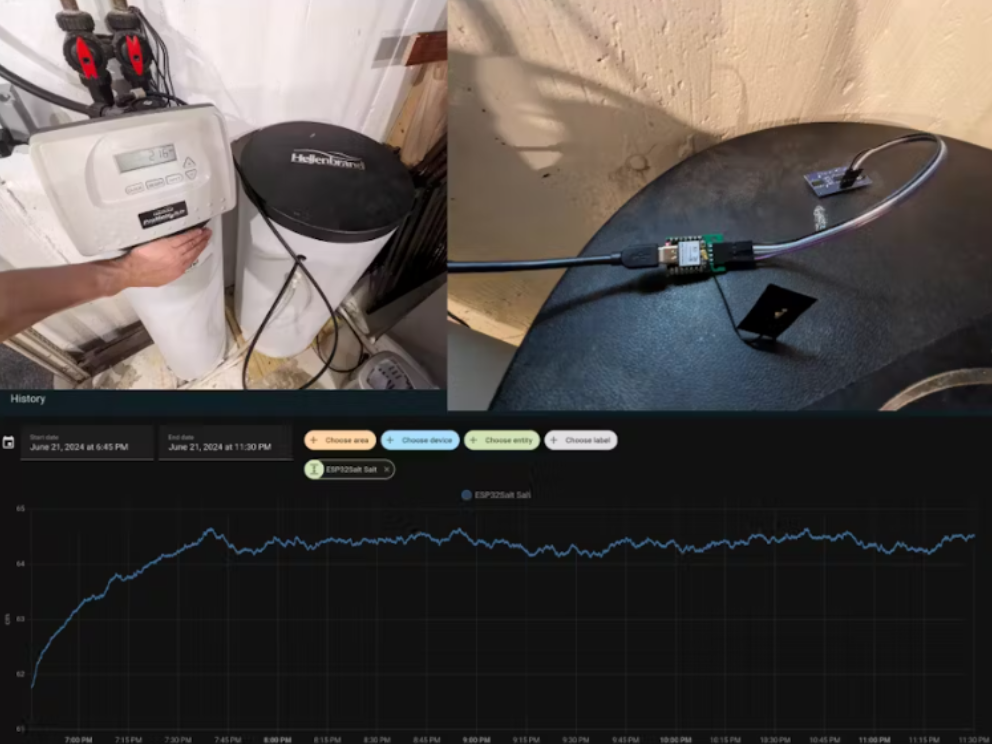
Introducing: Tom Decricle designed this project to monitor the salt level in a water softener tank using a Seeed XIAO ESP32-C3 paired with an HC-SR04 ultrasonic distance sensor, sending data to Home Assistant via ESPHome. It triggers email alerts when salt runs low, avoiding service disruption. Users can view level percentage on dashboards and receive real-time prompts for refilling. Ideal for homes or small businesses using softeners, it adds automated maintenance and peace of mind.
Integration: ESPHome
Component:
Ultrasonic Sensor – HC – SR04(Generic)
Ultrasonic Sump Pit Monitor with Home Assistant Alerts
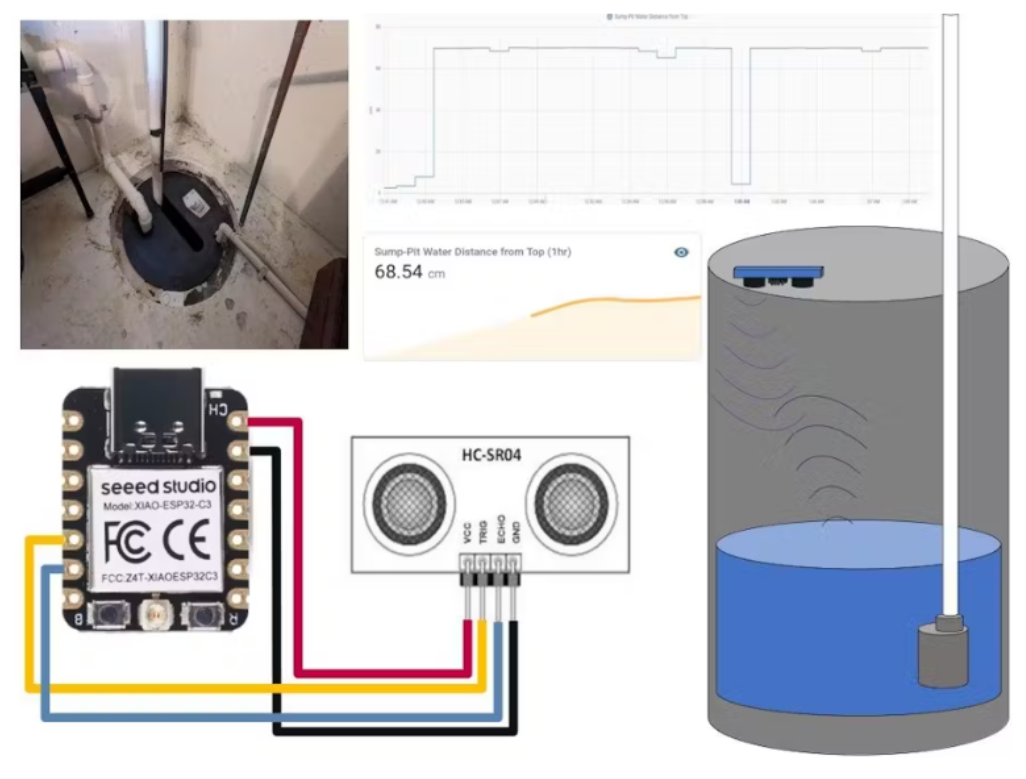
Introducing: Decricle employed an ESP32-C3 with an HC-SR04 ultrasonic sensor to measure sump pit water levels by timing sound wave reflections. Data is served through a built-in web server and pulled into Home Assistant dashboards. Users can monitor real-time levels, trigger alerts, and prevent flooding with automated smart home rules.
Integration: ESPHome
Component:
Ultrasonic Sensor – HC – SR04(Generic)
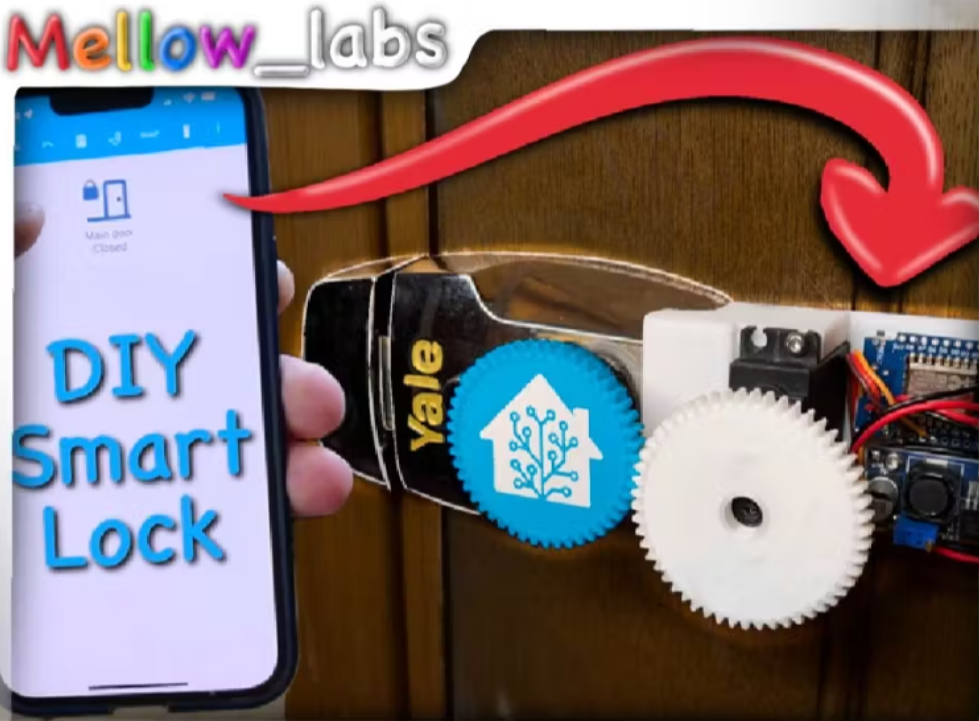
Introducing: Maker mellow_labs’ DIY project builds a Smart Lock using a Wemos D1 Mini (ESP8266 class) with a servo motor and custom 3D-printed gears that attach non-destructively to an existing door knob. Rather than replacing the lock, it scans the existing knob to design gears that work seamlessly. Controlled through Home Assistant via ESPHome and Node-RED, users can lock or unlock remotely with a dashboard button. Ideal for custom smart-lock enthusiasts or renters, it offers low-cost, reversible automation without permanent changes—making it an engaging, practical DIY Home Assistant security project.
Integration: ESPHome
Component:
Espressif Wemos D1 Mini
Seeed Studio EMax 12g ES08MD high-Sensitive servo
Buck Converter DC to DC Voltage Regulator
Introducing: For beginner, this tutorial from Tutoduino shows how to get started with the XIAO MG24 and Matter, the new smart home connectivity standard. It explains setup steps, pairing, and integration, making it easier for makers to explore Matter-compatible devices. A great resource for learning modern IoT development.
Integration: Matter
Component:

Advanced Projects (High Difficulty)
Advanced projects demand more time, patience, and technical understanding. They often involve multiple integrations, detailed configuration, and script customization. While the base code is available, completing these projects requires troubleshooting and optimization. Perfect for those ready to invest effort into creating powerful, highly tailored Home Assistant devices.
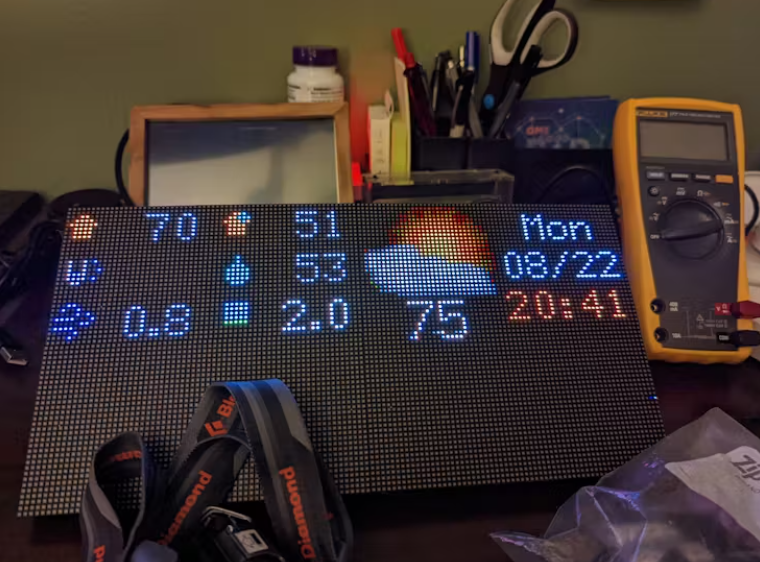
Introducing: Anthony Dechiaro creates a Home Assistant Dashboard using a Raspberry Pi Zero 2 W with a large RGB LED matrix (128×64). Mounted on a wall, it shows weather, calendar events, temperature, humidity, HVAC status, PM2.5, and alerts in real time. A C++ app updates data via MQTT every few minutes. Perfect for living rooms or hallways, it offers a bright, always-on smart-home summary without relying on phones—making it one of the best Home Assistant display projects for clear household monitoring.
Integration: MQTT
Component:
Adafruit 64×32 RGB LED matrix
Adafruit RGB matrix bonnet
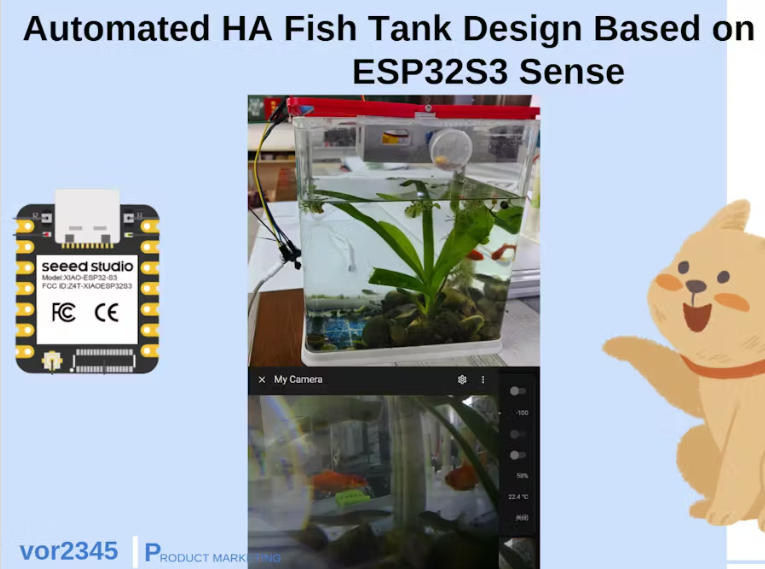
Introducing: Peng Liu uses a Seeed XIAO ESP32-S3 to create a smart aquarium system. It supports automatic feeding via servo, environmental monitoring (temperature, humidity, water quality), real-time video streaming, voice-assisted announcements, and remote control. Ideal for aquarium hobbyists, smart pet care, or remote fish tank management, it streamlines maintenance tasks and enhances interactivity. Its comprehensive multi-sensor design and automation depth make it one of the most practical and engaging Home Assistant DIY aquarium projects.
Integration: ESPHome
Component:
Seeed Studio XIAO ESP32S3 Sense
DHT11 Temperature & Humidity Sensor
SG90 Micro–servo motor
LED(generic)
Home Assistant Automation Project with Ready-to-Use Devices
Not everyone wants to build hardware from scratch. With ready-to-use devices like sensors, switches, and lights, you can easily create powerful automations in Home Assistant. The community has shown countless examples — from motion-triggered lighting to smart energy savings — proving that off-the-shelf devices can be just as creative as DIY builds.
From Simple to Advanced: Creating a Dashboard on a Monochrome E-Ink Display
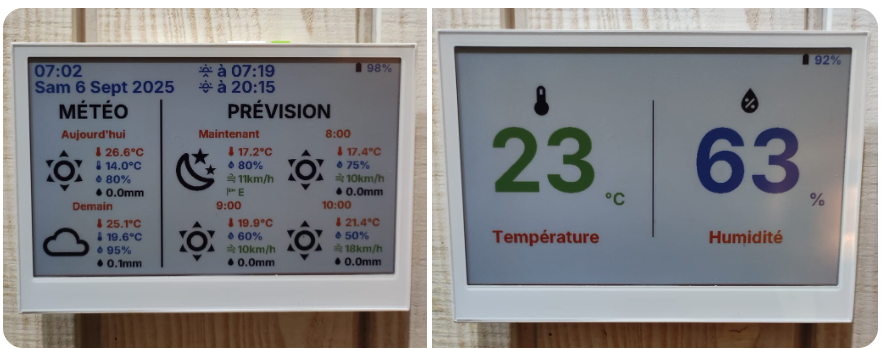
Introducing: From AguacaTEC’s guide, it showcases two ways to integrate the reTerminal E1001 with Home Assistant. The first, a quick Puppet setup, mirrors the HA dashboard instantly without coding. The second, through ESPHome, offers full customization—displaying temperature, humidity, weather, and battery data, while enabling page navigation and buzzer control. A perfect balance between simplicity and flexibility for smart home creators.
Component:

Smart Weather and Environment Dashboard Demo with a Full-Color E-Ink Display
Introducing: The author WarC0zes created weather sensors using the Météo-France integration and transformed daily and hourly forecasts into template sensors for temperature, wind, and other data. These values are then displayed on the ePaper screens, turning the devices into elegant real-time weather and information panels, perfectly illustrating their role in smart home automation.
Component:
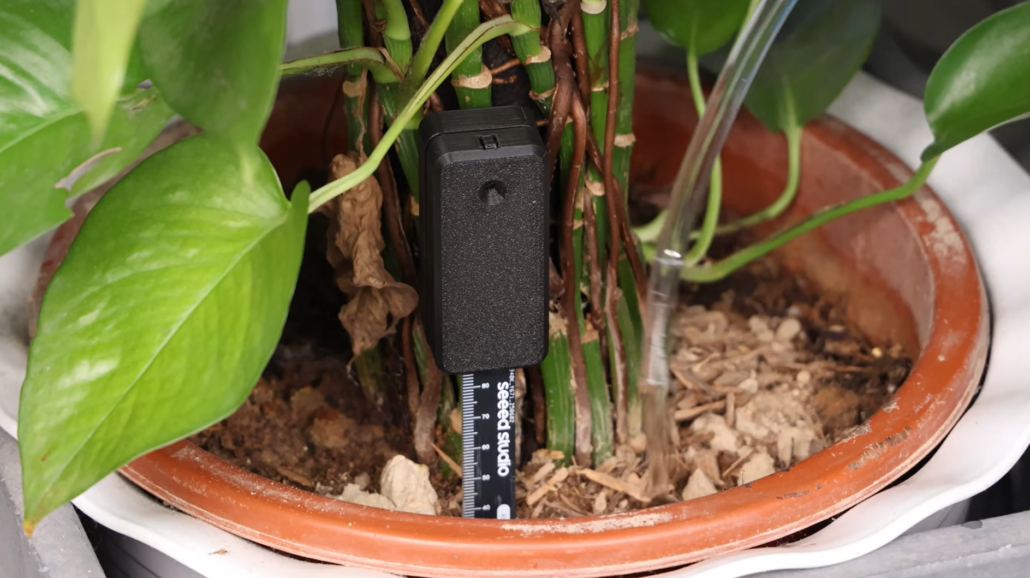
Introducing: This project from Mengdu features two plant care automations based on the XIAO Soil Sensor, with a logical sequence for optimal plant care. First, the automatic watering system detects soil moisture levels using the sensor and activates a water pump to hydrate the plant when needed. Once the plant has been watered, the e-paper dashboard displays real-time status such as soil moisture, temperature, and humidity. This provides valuable insights that help prevent overwatering and plant stress, ensuring plants stay healthy with minimal attention. Together, these systems create an efficient, hands-off solution for busy plant owners.
Component:
Seeed Studio Grove – Relay
Seeed Studio Grove Shield for Seeeduino XIAO with embedded battery management chip

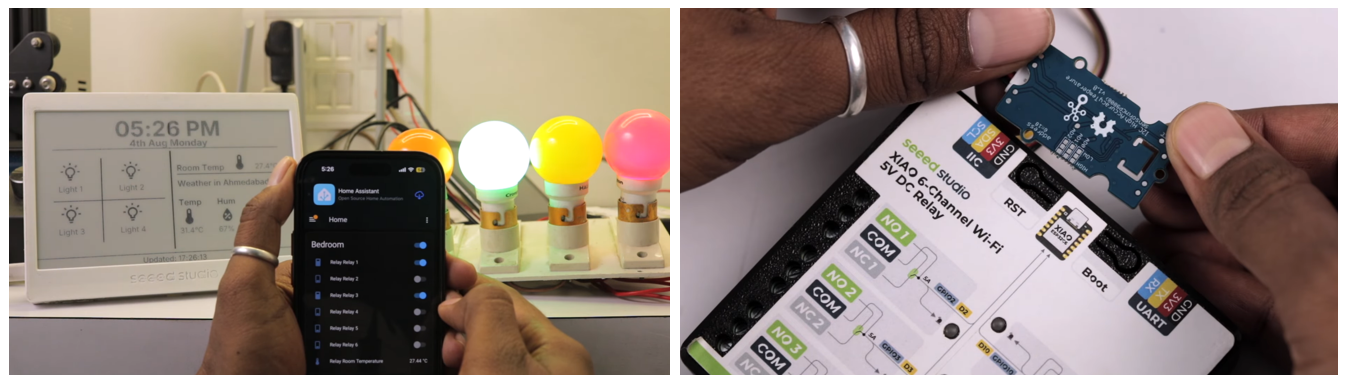
Introducing: In trchiesms’s project, he used the XIAO 6-Channel Wi-Fi 5V DC Relay to control various light bulbs. Additionally, he connected Grove sensors to monitor temperature and humidity, and displayed both the sensor data and the status of the light bulbs on an e-paper screen via a dashboard.
Component:
Introducing: In this video, you will see how ReSpeaker’s 4-mic hardware design and powerful algorithms capture high-quality voice commands and keywords.
Component:
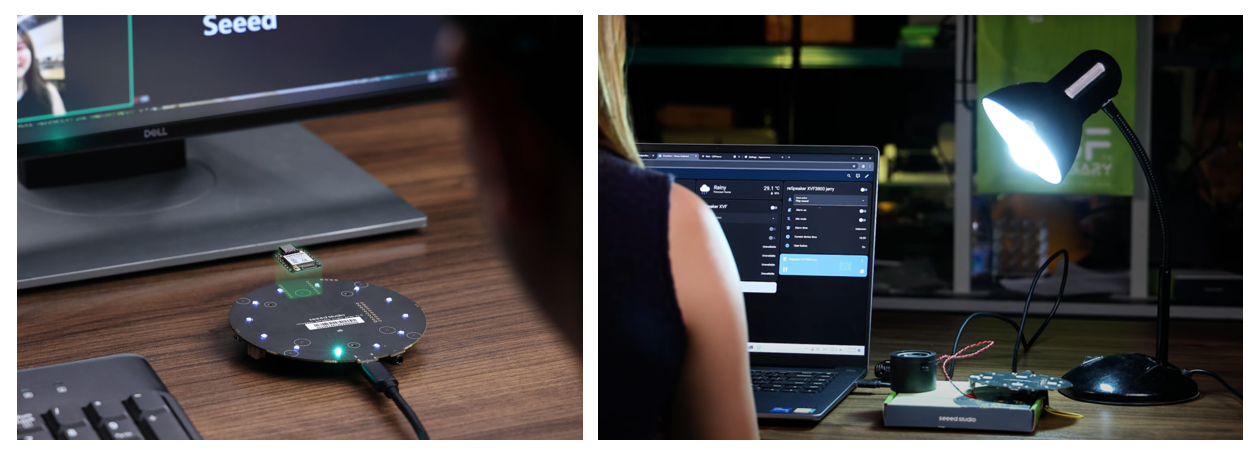
Seamless Ambient Control via mmWave
Introducing: From Peter Scargill, he configured an automated presence-based light trigger: when the mmWave presence sensor detects someone in his office, HA turns lights on; when they leave, lights turn off—though he noted it needs further testing.
Component:
XIAO 60GHz mmWave Human Breathing and Heartbeat Sensor -MR60BHA2
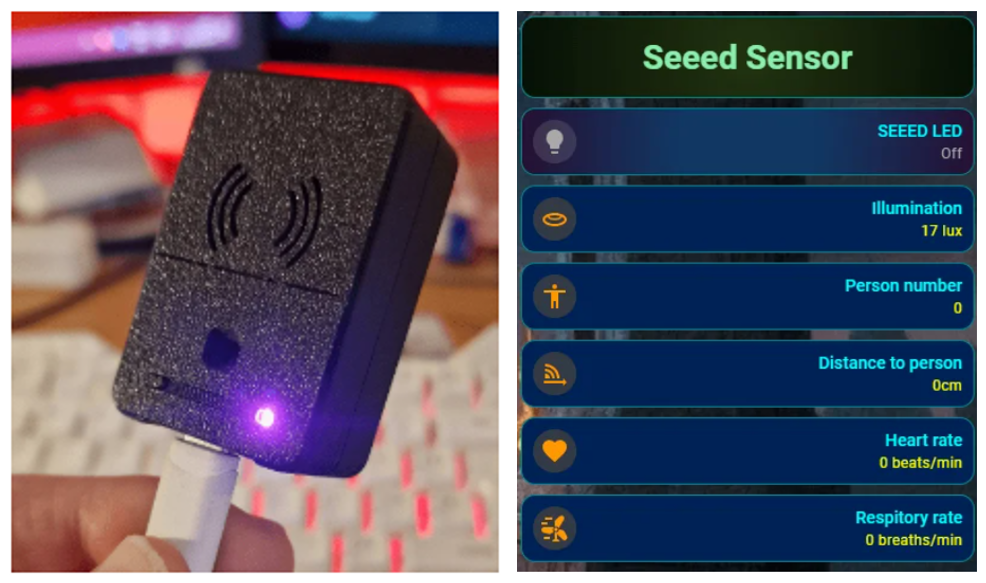
Small Controlling Panel
Introducing: When integrating SenseCAP Indicator into Home Assistant, it allows users to monitor environmental data such as temperature, humidity, and air quality within the HA ecosystem. The integration enhances home automation by providing real-time environmental insights, enabling better control and automation of home systems based on sensor data.
Component:
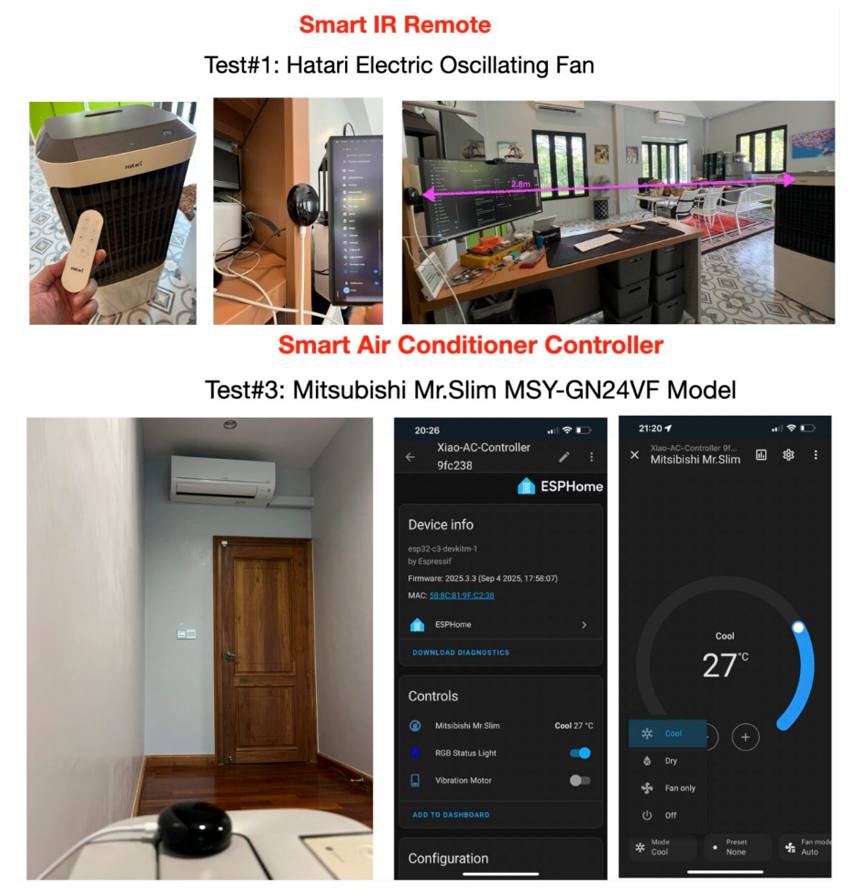
Compact Home Assistant Hub for Automating TVs, ACs, and Fans
Introducing: This project from Paisit Wongsongsarn highlights the XIAO Smart IR Mate, a compact XIAO ESP32-C3-based infrared hub running ESPHome, natively integrated into Home Assistant, enabling control of traditional IR appliances like TVs, air conditioners, and fans. It supports one-touch IR learning (up to 10 commands), touch-sensor trigger, and vibration feedback, offering responsive IR control without cloud reliance. Ideal for smart homes upgrading legacy devices, it allows automating AC or fan control (e.g., turn on before bedtime, link to motion sensor) while retaining your physical remotes lightly – making it a standout Home Assistant IR automation project.
Component:
Summary
To wrap things up, these Home Assistant projects are just a glimpse of the endless possibilities to enhance your smart home. Whether you’re just starting or looking to level up your existing setup, there’s always something new to try in the Home Assistant ecosystem.
If you’re craving more inspiration, check out platforms like the Home Assistant Community Forum, GitHub, or the Home Assistant Project Showcase, where creators share their automations, custom integrations, and unique builds.
At Seeed, we’re also here to support your Home Assistant journey!—— explore our full range of Home Assistant–compatible hardware to power your projects. We offer a wide range of compatible hardware, from sensors and actuators to other accessories and custom boards that seamlessly integrate with your Home Assistant project. Plus, our XIAO and Grove ecosystems offer cost-effective solutions for your smart home Assistant project. Want to experience home automation but don’t have Home Assistant yet? Get yourself a Home Assistant Green and start building your smart home platform today!
