When Robotic Arms Learned to Cook: A 48-Hour Hackathon Story
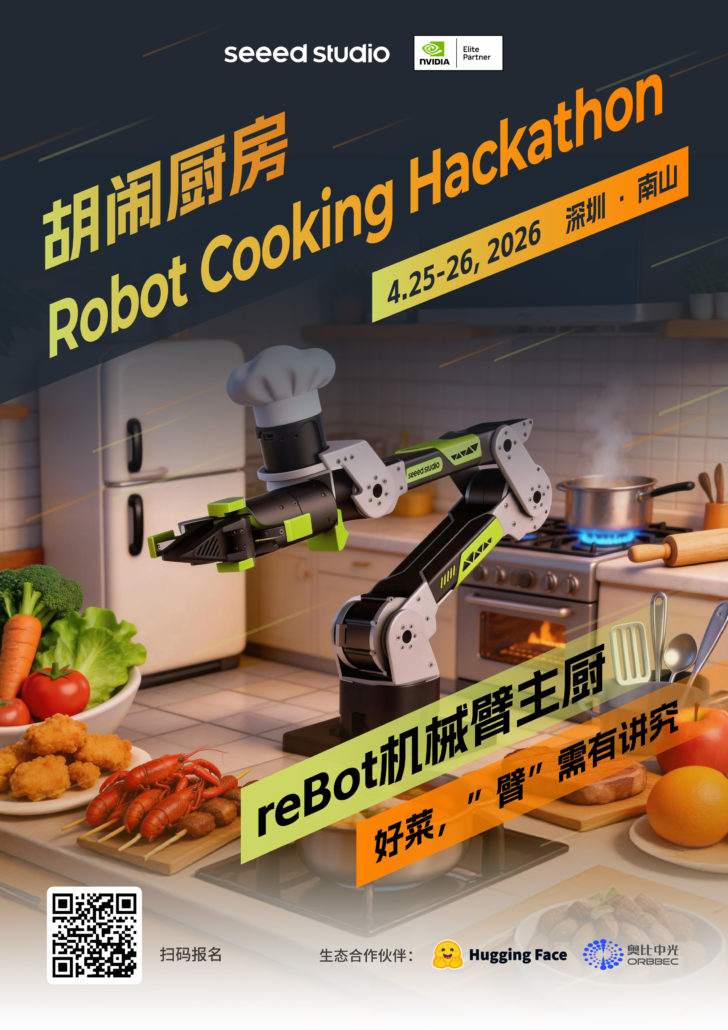
In a maker space in Shenzhen last April, something remarkable unfolded. For 48 hours, robotic arms took over a kitchen—grabbing tomatoes, cracking eggs, and wielding spatulas. This was the “Cook with Robot” Hackathon hosted by Seeed Studio, where 50 developers pushed the boundaries of what Physical AI can do in the real world.
Why Put a Robot in a Kitchen?
The big challenge in AI today is moving intelligence from the digital realm into the physical one. We need machines that can not only “think” but also skillfully “act.” To explore this, we needed a platform that was precise, affordable, and open for deep tinkering. That’s why we created the reBot Arm B601-DM.
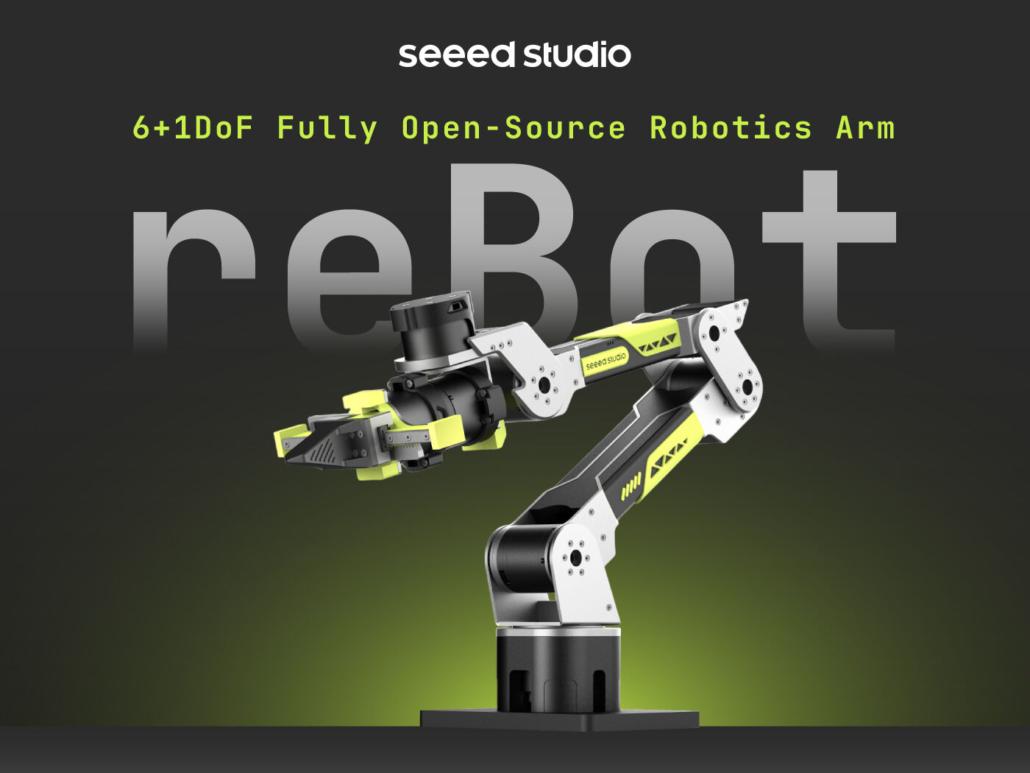
This 6+1 degree-of-freedom robotic arm was built from the ground up to be high-precision, low-cost, and 100% open-source. By carefully designing the joints and using a mix of CNC, sheet metal, and 3D printing, we achieved industrial-grade repeatability (±0.2mm) at a fraction of the traditional cost.
The kitchen, with its soft foods, fragile dishes, and unpredictable heat, became the perfect, brutal testing ground for its capabilities.
The 48-Hour Sprint
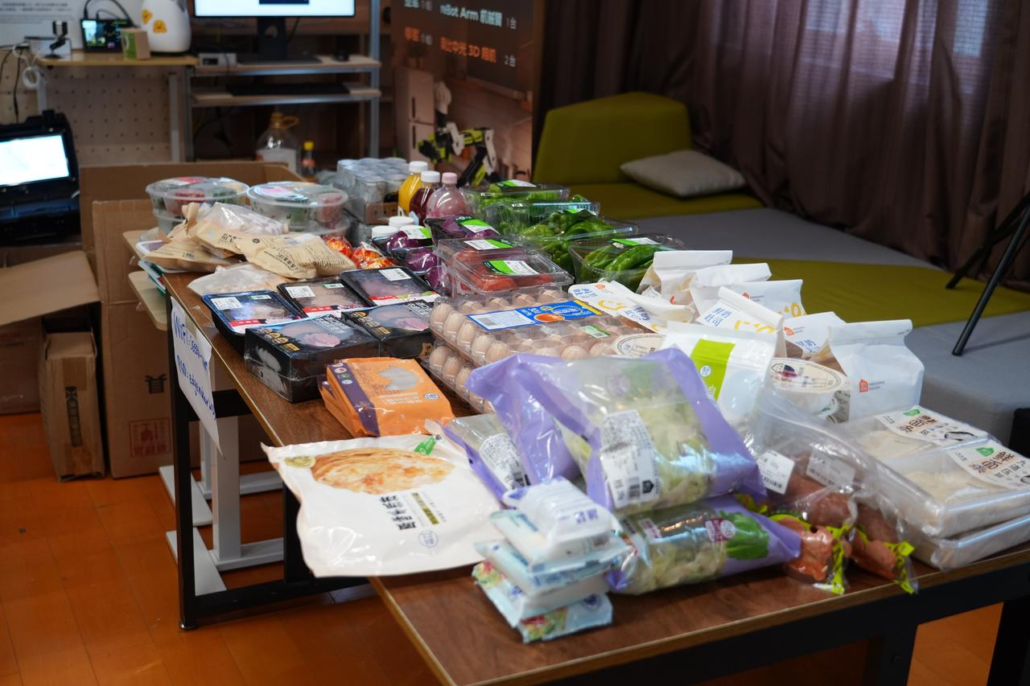
The challenge was simple on paper: enable a robotic arm to cook a complete dish autonomously. The reality was anything but.
Teams were given a reBot Arm, a powerful reComputer J4012 as its brain, a 3D camera for vision, and a kitchen station. After a quick strategy session, they had just over a day to build their entire system—from perception and planning to the precise execution of tasks like picking up a slippery egg or pouring oil without spilling.
The leap from simulation to reality was humbling. Ingredients behaved differently, tools shifted, and sauces changed consistency. Teams had to adapt on the fly, leveraging ROS, real-time trajectory planning, and depth vision to make their robotic chefs understand and interact with this messy world.
What Emerged from the Chaos
The results were inspiring. One team built a fully integrated system to fry an egg, using a soft gripper and fine force control to handle the delicate shell. Others developed clever strategies for tool switching and spill-free pouring.
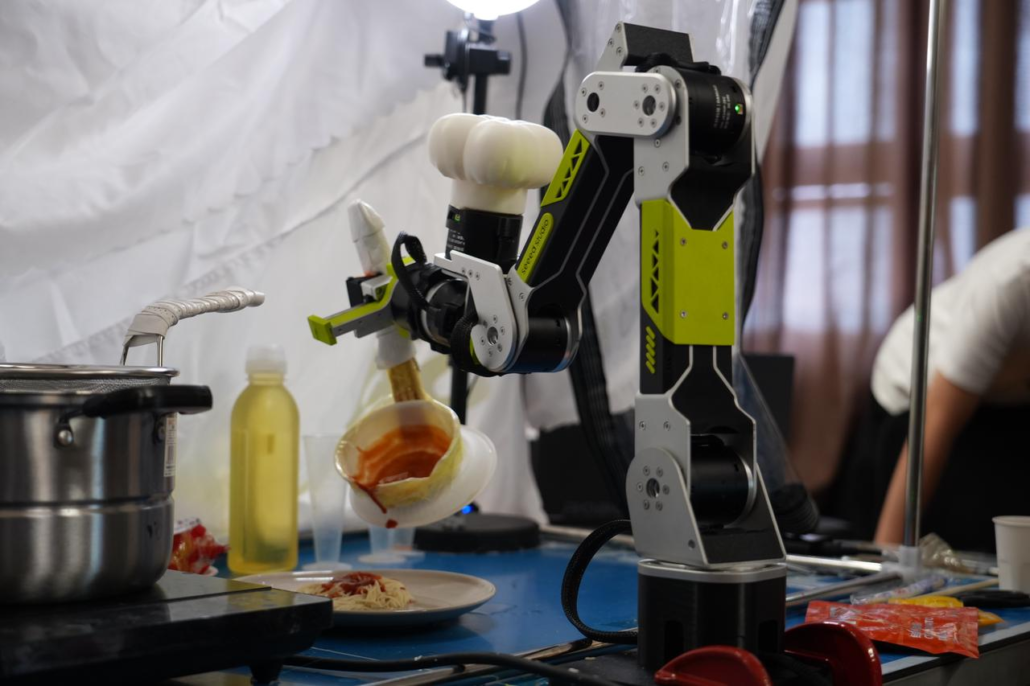
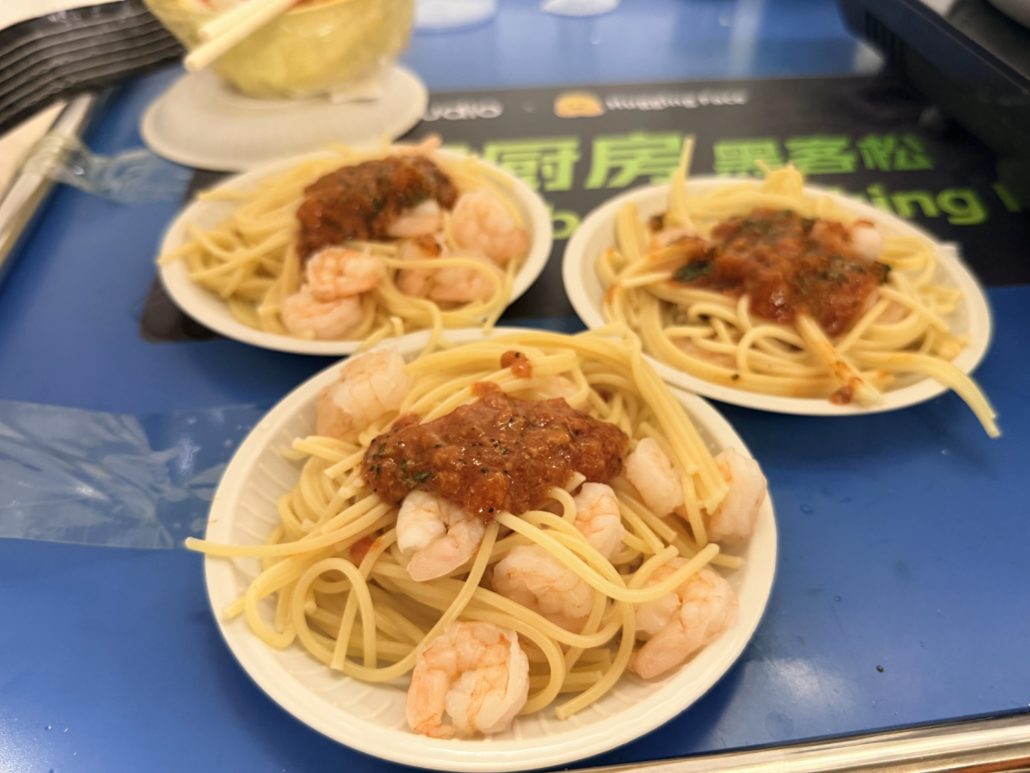
Beyond the completed dishes, the real value of the hackathon was clarity. It vividly exposed the current frontiers of Embodied AI, particularly in flexible manipulation and handling unexpected physical variations. It also generated a precious dataset of real-world challenges, providing a concrete problem set for the entire field to solve.
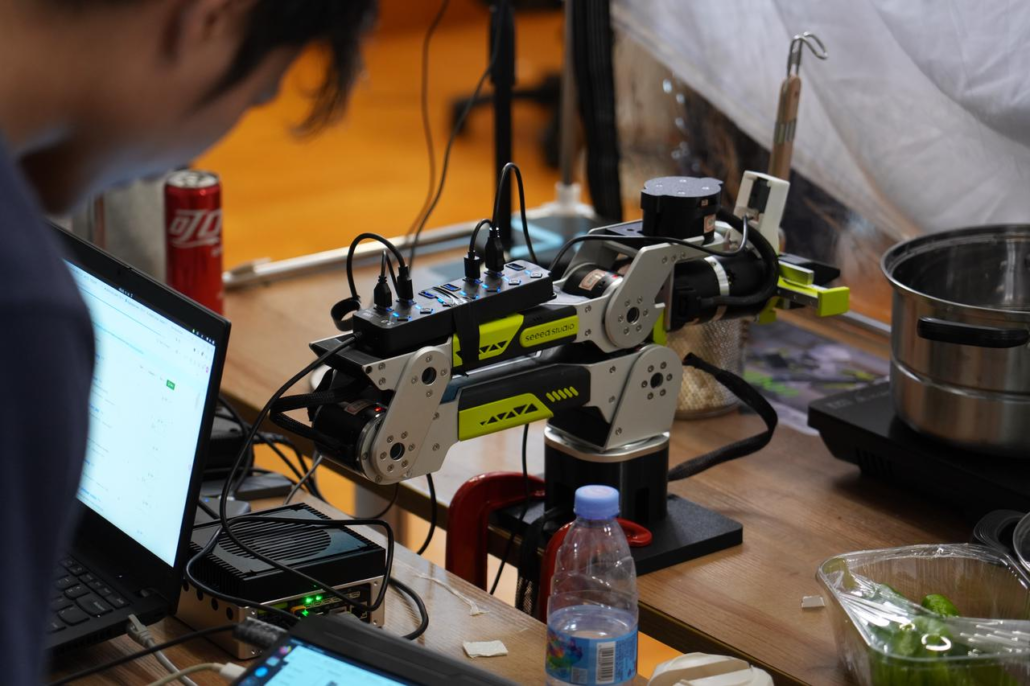
Most importantly, it showcased the power of open-source. Developers could dive deep into the arm’s drivers, create custom tool heads, and share modules. This collaborative, modular approach is what accelerates true innovation.
The Bigger Picture
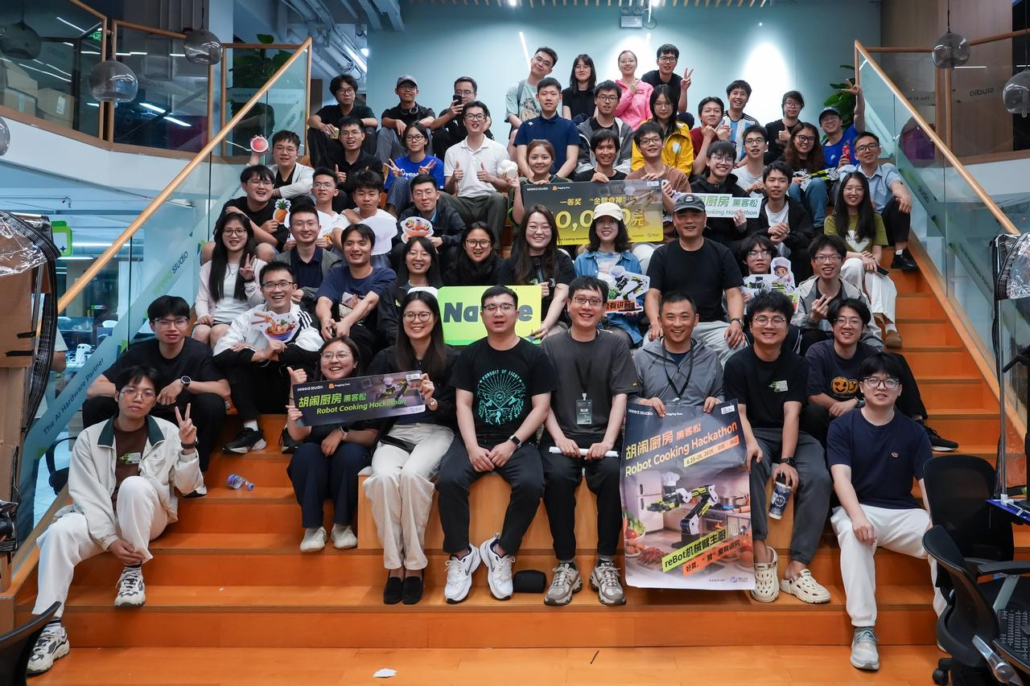
This event was more than a competition; it was a concentrated stress test. It proved that affordable, open-source platforms like the reBot Arm can move from controlled labs into complex, real-world environments. When a robot learns to flip a spatula, it’s not just learning a cooking skill—it’s learning the fundamental principles of safe and effective physical interaction.
The journey to build intelligent machines that can truly work alongside us is a long one. Hackathons like this are vital waypoints, bringing together a community to learn, break things, and build the future, one scrambled egg at a time.
We’re planning more events to explore the future of Embodied AI. If you’re a developer, researcher, or maker passionate about robots that can interact with the real world, we’d love to hear from you and see what you build.
About Author
