Top 4 Compact Weather Stations for Professional Outdoor Monitoring
A compact weather station combines several sensors in one outdoor unit, reducing the space and mounting work needed to monitor local conditions. Models differ in what they measure: some focus on temperature, humidity, wind and rainfall, while others add solar radiation or environmental readings such as particulate matter and CO₂. The useful choice depends on which conditions affect decisions at the site, how the station will be installed, and how its data will be collected.
This guide compares four weather stations from SenseCAP, Seeed Studio’s range of outdoor monitoring equipment. The S800 adds particulate matter and noise readings to core weather measurements; the S700-C combines radar rainfall with solar measurements; the S1000 adds particulate matter and CO₂ for urban monitoring; and the S700-B pairs solar measurements with weather data for agricultural sites. We compare their measurements, physical specifications and deployment features to help you find the right fit.
What to Look for in a Compact Weather Station
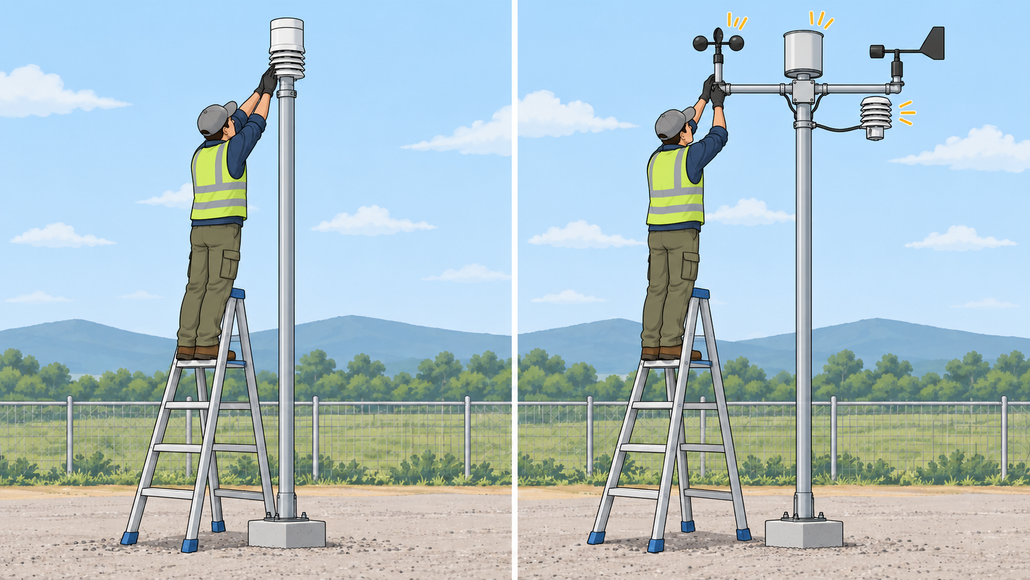
Size and installation. Compact cylindrical weather sensors bring multiple measurements into a single sensor head, creating a smaller footprint and a simpler mounting layout. Meanwhile multi-arm weather stations spread their sensing components across exposed wind cups, vanes, and collectors. This makes individual components easier to access, but leaves more external parts to inspect and maintain.
Sensors and weather measurements. Decide which variables answer the monitoring question before comparing the number printed after “in-1.” Check each parameter’s range, stated accuracy, resolution, measurement method and response interval. A 0.01 mm/h rainfall increment, for example, describes how finely a value is reported, not how closely it matches the true rainfall. Measurements that extend beyond weather, such as particles or CO₂, need their own performance and siting review.
Connectivity and data access. Follow the entire route from the sensor’s wired output to a logger, network and application. Confirm that the logger supports the sensor’s protocol, provides timestamps and the needed storage or upload interval, and can recover data after a network interruption.
Power and outdoor durability. Estimate power for the sensor, logger and any heater at the planned reporting interval, including periods without sun or network service. And remember review the enclosure ingress protection, connector sealing, operating temperature, wind exposure, material resistance to prolonged sunlight and the maintenance route.
In the same time, a sheltered connector can be as important as the housing’s IP rating. For sites exposed to intense sun, ask for evidence of UV aging resistance rather than treating “outdoor rated” as a UV test result.
4 Outdoor Compact Weather Stations Compared
1. SenseCAP S800 8-in-1 Compact Weather Sensor
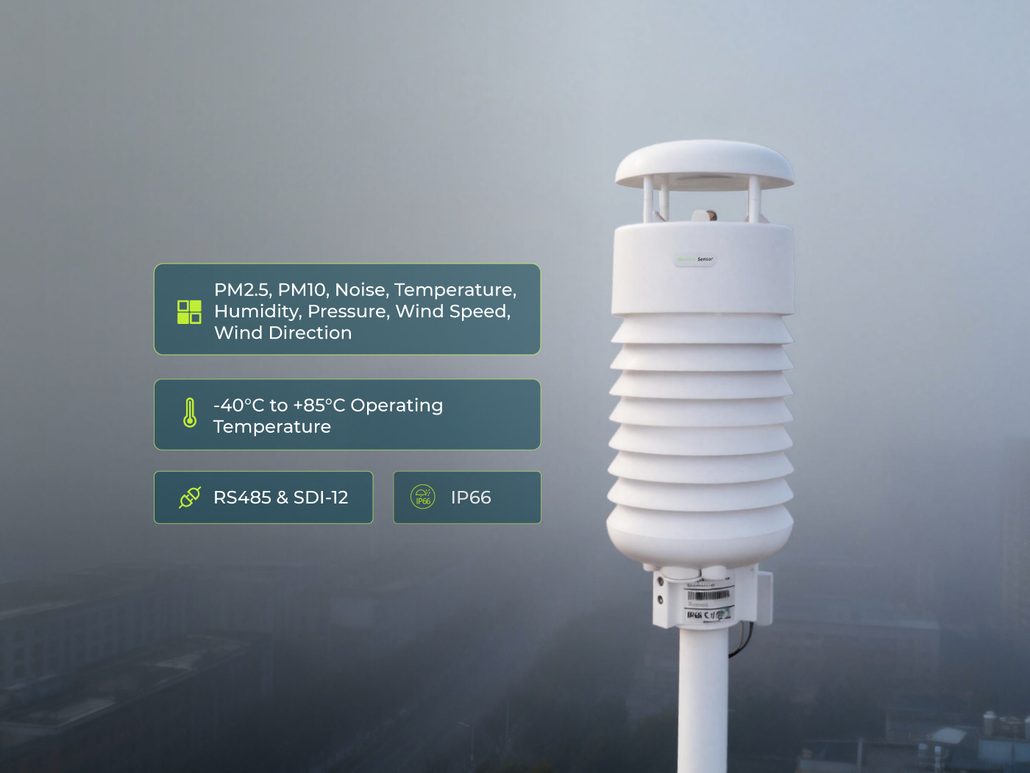
Best for: An outdoor site where local wind and weather need to be considered alongside airborne particles and noise, such as a garden adjoining a road, a school site, or a managed property.
- Size and form factor: Approximately 140 mm in diameter × 370 mm high and 2 kg. It covers temperature −40 to 85°C, humidity 0–100% RH, pressure 300–1200 hPa, wind 0–60 m/s and 0–360°, PM2.5/PM10 0–1,000 µg/m³, and noise 35–100 dB; but no rain or light channel.
- Sensors and measurements: Temperature, humidity, pressure, ultrasonic wind speed and direction, PM2.5, PM10, and noise.
- Connectivity: Wired RS485/Modbus RTU or SDI-12; use a compatible external logger for remote data. A bottom-mounted eight-contact M12 connector brings the wiring into one connection point for a tidier installation.
- Power and installation: External 12–24 V supply under the series guide; plan the mount, weatherproof cable routing, and a separate logger if needed.
- Key advantage: Combines environmental sound and particulate measurements with core weather conditions in one device.
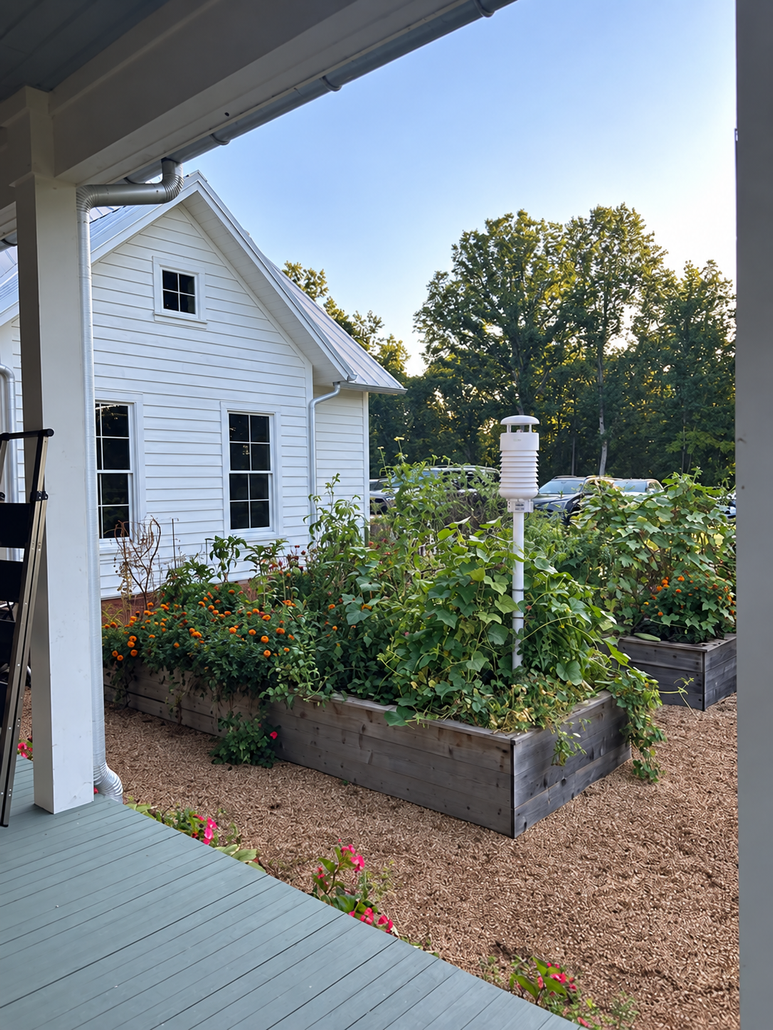
- Selection boundary: It does not measure rainfall, sunlight, or CO₂. It suits a home or garden only when the owner is prepared for a powered, professionally oriented installation, rather than an app-ready consumer gadget.
2. SenseCAP S700-C 7-in-1 Compact Weather Station
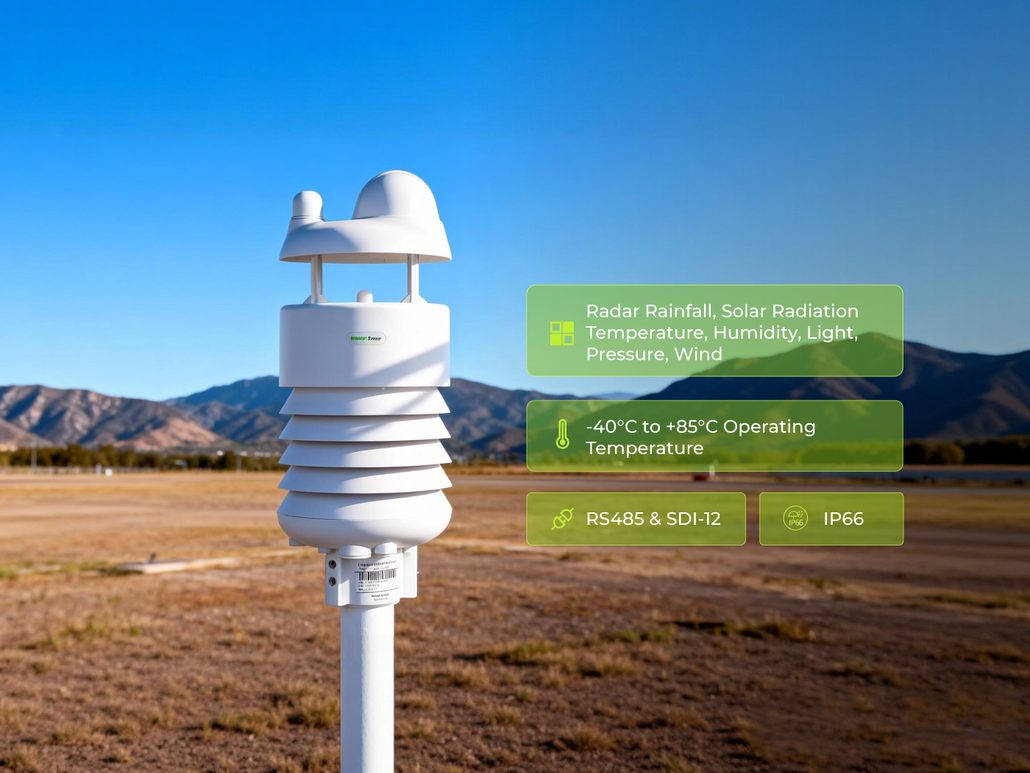
Best for: A field point where rainfall intensity, wind and incoming sunlight need to be recorded together, such as a drainage catchment, transport corridor, reservoir perimeter or distributed infrastructure site.
- Size and form factor: 140 × 140 × 350 mm; 1,607 g. It measures temperature −40 to 85°C, humidity 0–100% RH, pressure 300–1250 hPa, wind 0–60 m/s and 0–360°, radar rain intensity 0–300 mm/h, solar radiation 0–2,000 W/m², and sunshine duration 0–6,553.5 h. Its integrated design avoids the wide footprint of a multi-arm weather station.
- Sensors and measurements: Temperature, humidity, pressure, ultrasonic wind speed and direction, global solar radiation, sunshine duration, and radar rainfall intensity.
- Connectivity: Wired RS485/Modbus RTU or SDI-12, with a separate logger for a LoRaWAN or 4G project.
- Power and installation: External 12–24 V supply under the series guide; assess the logger, mounting position, communication coverage and site power as one deployment.
- Key advantage: Radar rainfall provides a rain measurement option without the moving mechanism of a tipping bucket; it can be useful at sites where routine service visits are costly. It measures 0–300 mm/h range, 0.01 mm resolution, and ±10% specified accuracy in field.
- Selection boundary: The S700-C does not add PM, CO₂ or noise measurements. Local rain data may inform an infrastructure team’s review, but a warning or operational decision still requires site thresholds, validation and an application workflow.
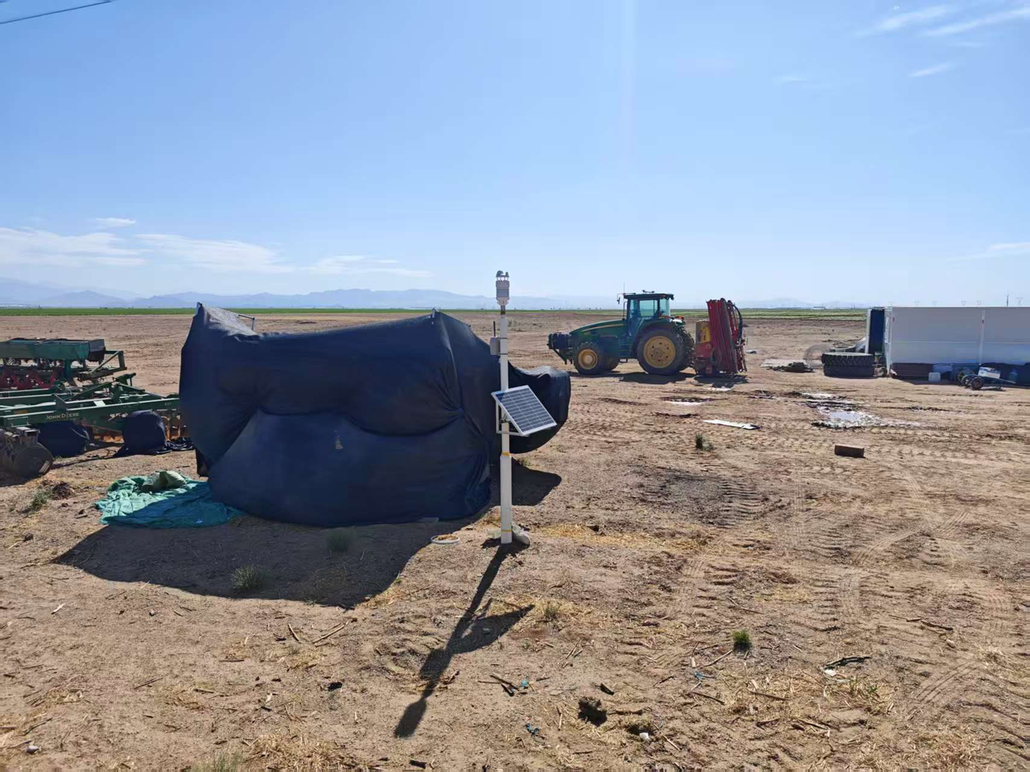
3. SenseCAP S700-B 7-in-1 Compact Weather Station
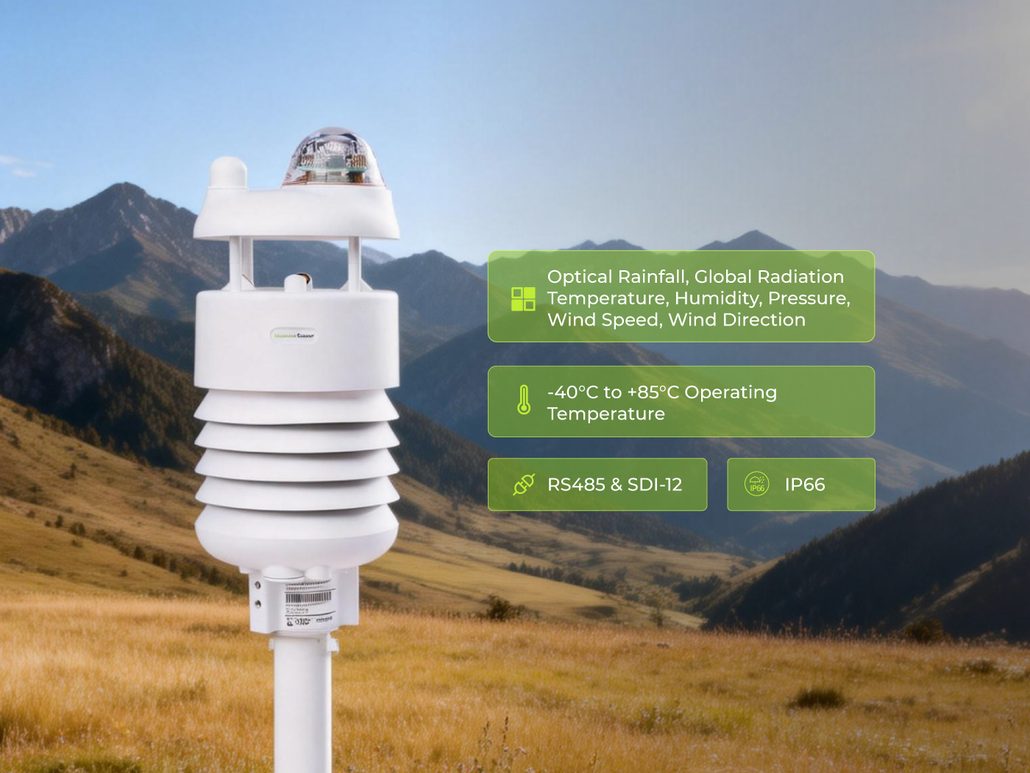
Best for: Farms, orchards or research plots that need a record of local weather together with the solar energy reaching the site.
- Size and form factor:140 × 140 × 350 mm; 1,580 g. It measures temperature −40 to 85°C, humidity 0–100% RH, pressure 300–1250 hPa, wind 0–60 m/s and 0–360°, optical rain intensity 0–200 mm/h, solar radiation 0–2,000 W/m², and sunshine duration 0–6,553.5 h. It’s the smallest and lightest of the four models compared in this article, making it well suited to mounting locations with limited space.
- Sensors and measurements: Temperature, humidity, pressure, ultrasonic wind speed and direction, global solar radiation, sunshine duration, and optical rainfall intensity.
- Connectivity: Wired RS485/Modbus RTU or SDI-12; pair it with a suitable logger for remote records.
- Power and installation: External 12–24 V supply under the series guide, with an unobstructed position for the solar and rain measurements.
- Key advantage: Solar radiation and sunshine duration add context when comparing crop conditions across dates or field locations. Together with temperature and rainfall, they can support agronomic review of growing conditions.
- Selection boundary: Solar radiation is one input to photosynthesis, not a direct measurement of photosynthetic rate or crop yield. The station also does not measure soil moisture or leaf wetness; add separate sensors if those decisions require them. Its rainfall measurement is optical, not radar.
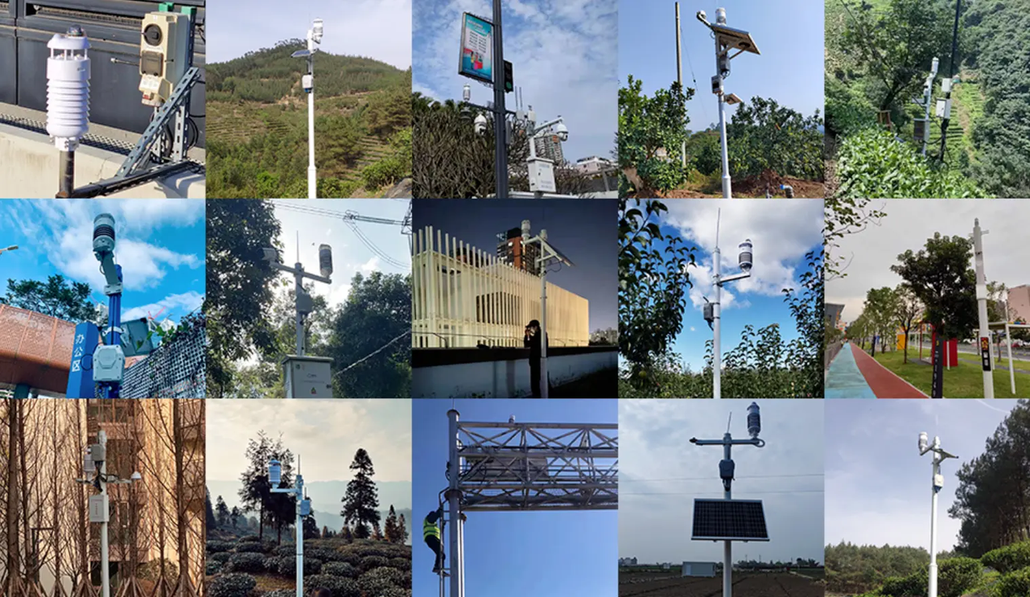
4. SenseCAP S1000 V2 10-in-1 Compact Weather Sensor
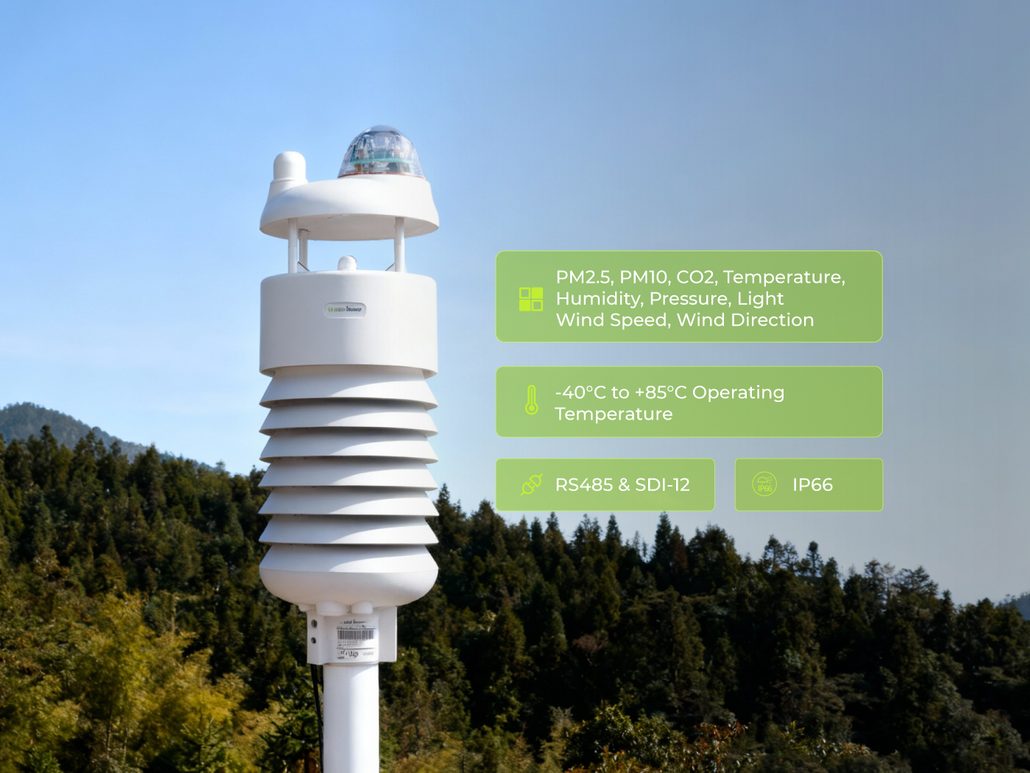
Best for: Neighborhood-scale or campus monitoring that needs weather data together with local particulate and CO₂ readings.
- Size and form factor: Approximately 140 mm in diameter × 410 mm high and 2 kg. It measures temperature −40 to 85°C, humidity 0–100% RH, pressure 300–1250 hPa, wind 0–60 m/s and 0–360°, optical rain 0–200 mm/h, light 0–188,000 lux, PM2.5/PM10 0–1,000 µg/m³, and CO₂ 400–5,000 ppm (extended range to 10,000 ppm).
- Sensors and measurements: Temperature, humidity, pressure, light intensity, optical rainfall intensity, ultrasonic wind speed and direction, PM2.5, PM10 and CO₂. With 10 measurements in one sensor head, bringing a broad set of weather and environmental data into a compact installation.
- Connectivity: Wired RS485/Modbus RTU or SDI-12; connect a suitable logger for LoRaWAN or 4G access.
- Power and installation: External 12–24 V supply under the series guide; check the selected hardware revision and complete station power design.
- Key advantage: Places weather, particle and CO₂ measurements at the same outdoor point, useful when a city team wants local context for changing conditions.
- Selection boundary: A local CO₂ reading is not a direct measure of citywide emissions, and this station does not replace a reference-grade regulatory air quality network without validation for that use. It measures light intensity in lux, rather than global solar radiation in W/m², and does not include noise measurement.
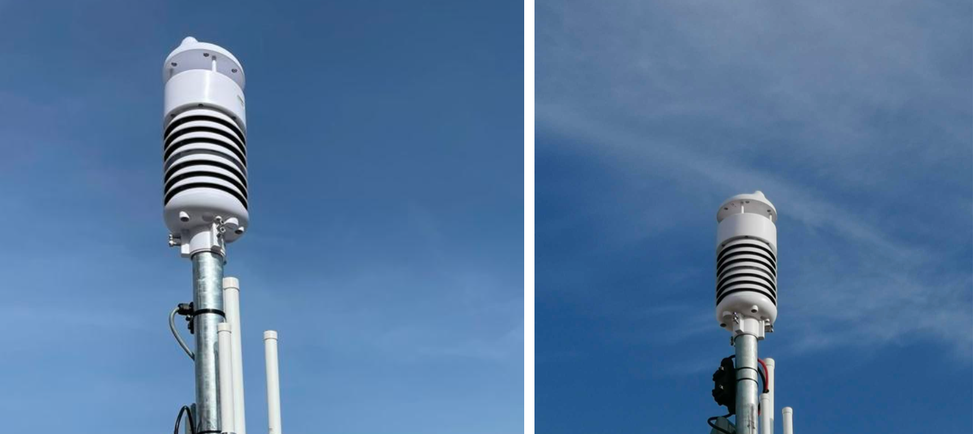
The Four Differences at a Glance
| Model | Additional measurements | Rainfall method | Local interface | Site fit |
| SenseCAP S800 | PM2.5, PM10, noise | No rainfall sensor | RS485/Modbus RTU or SDI-12 | Outdoor weather, particles and noise at a home garden, campus or property |
| SenseCAP S700-C | Global solar radiation, sunshine duration | Radar | Distributed rain and weather monitoring for infrastructure | |
| SenseCAP S700-B | Global solar radiation, sunshine duration | Optical | Farm sites that need sunlight, rainfall, wind and ambient conditions | |
| SenseCAP S1000 | Light intensity, PM2.5, PM10, CO₂ | Optical | Urban sites that monitor weather and local environmental indicators |
Which Compact Weather Station Should You Choose?
Best for Home and Garden: SenseCAP S800
SenseCAP S800 suits a garden, residential property or community outdoor space where people want to track both weather and the conditions they experience outside. Temperature, humidity, pressure and ultrasonic wind readings help identify comfortable periods for gardening and outdoor activities. PM2.5, PM10 and noise readings add a useful view of conditions near roads, construction or other local activity. Therefore its compact integrated design and IP66 protection support permanent outdoor installation, while an RS485 connection allows the readings to feed a nearby logger for ongoing records.
Best for IoT and Public Infrastructure Projects: SenseCAP S700-C
SenseCAP S700-C brings rainfall, wind and solar conditions together at exposed infrastructure sites such as drainage assets, roads and utility facilities. Its radar sensor measures rain intensity across a 0–300 mm/h range, giving operations teams a local rainfall record they can compare with drainage levels, maintenance events and weather changes. Ultrasonic wind sensing, temperature, humidity and pressure add context for decisions at the same site; solar radiation and sunshine duration extend the record for assets exposed to changing sunlight. The integrated IP66 unit can connect through RS485 to site controllers or a data logger, fitting it into wider IoT monitoring systems.
Best for Urban Meteorological Monitoring: SenseCAP S1000
SenseCAP S1000 is a strong fit for street-level, campus and neighborhood monitoring where weather and environmental conditions need to be viewed together. Alongside temperature, humidity, pressure, ultrasonic wind and optical rainfall, it measures PM2.5, PM10, CO₂ and light intensity. That combination helps teams examine how particulate levels change with local wind and weather, while building a more complete record of conditions around public spaces. Its compact IP66 design suits distributed outdoor installations, and a compatible LoRaWAN or 4G data logger can bring readings from multiple locations into one monitoring system.
Best for Agricultural and Farm Monitoring: SenseCAP S700-B
SenseCAP S700-B gives vineyard, orchard and open-field teams a local record of the weather conditions that affect daily field work. Global solar radiation and sunshine duration show how sunlight varies across days and growing periods; temperature and humidity help track conditions around crop development; and wind readings support spray-window decisions. Optical rainfall and pressure complete the weather record for reviewing irrigation plans and recent field conditions. And the integrated IP66 station combines these measurements in one outdoor mounting position, with ultrasonic wind sensing and a wired connection to a field logger for continuous monitoring.
Frequently Asked Questions
What is a compact weather station?
It is a field instrument that combines several weather sensors in one small outdoor assembly. “Compact” refers to the integrated sensor head; a functioning monitoring site can still require mounting hardware, cables, external power, a data logger and network connectivity.
What can a compact weather station measure?
It depends on the model. These four SenseCAP stations share temperature, humidity, pressure, wind speed and wind direction. The S700-B and S700-C add global solar radiation and sunshine duration; the S800 adds PM2.5, PM10 and noise; S1000 adds light intensity, optical rain, PM2.5, PM10 and CO₂. Consult the comparison table for each rainfall method and missing measurement.
Are compact weather stations accurate?
Accuracy depends on the parameter, instrument specification, exposure, installation and upkeep. For example, the SenseCAP ONE technical guide gives different specifications for temperature, wind and rainfall; it lists ±10% for the S700-C radar rainfall parameter. A small resolution increment does not imply equal real-world accuracy. Check the specification for the exact model and validate it against the requirements of the intended monitoring program.
How do compact weather stations send weather data?
These SenseCAP ONE models provide wired RS485/ModbusRTU or SDI-12 data to a compatible controller or logger. For remote reporting, pair the sensor with a LoRaWAN data logger and suitable network coverage, or a 4G Sensor Hub and cellular service. The logger, network and application determine where the measurements go and how often users receive them. The sensor head itself is not a built-in LoRaWAN or 4G modem.
Contact our team to discuss your application, deployment needs, and potential customization options.
Seeed Studio is helping lead this transition through the SenseCAP weather station portfolio. SenseCAP combines industrial-grade sensing, compact all-in-one hardware, open communication protocols, flexible data paths, and a repeatable deployment architecture.
Seeed Studio works with more than 200 partners and over 1,000 customers across 120+ countries, with SenseCAP deployments spanning greenhouse and vineyard monitoring, smart-city observation, renewable-energy sites, environmental research, and industrial facilities. This is the direction professional weather monitoring is taking, and SenseCAP is building the products and integration ecosystem needed to move it forward.
About Author
