Why Is Your Rain Gauge Underestimating Rainfall? A Radar Rain Gauge Comparison with Optical and Tipping Bucket Gauges
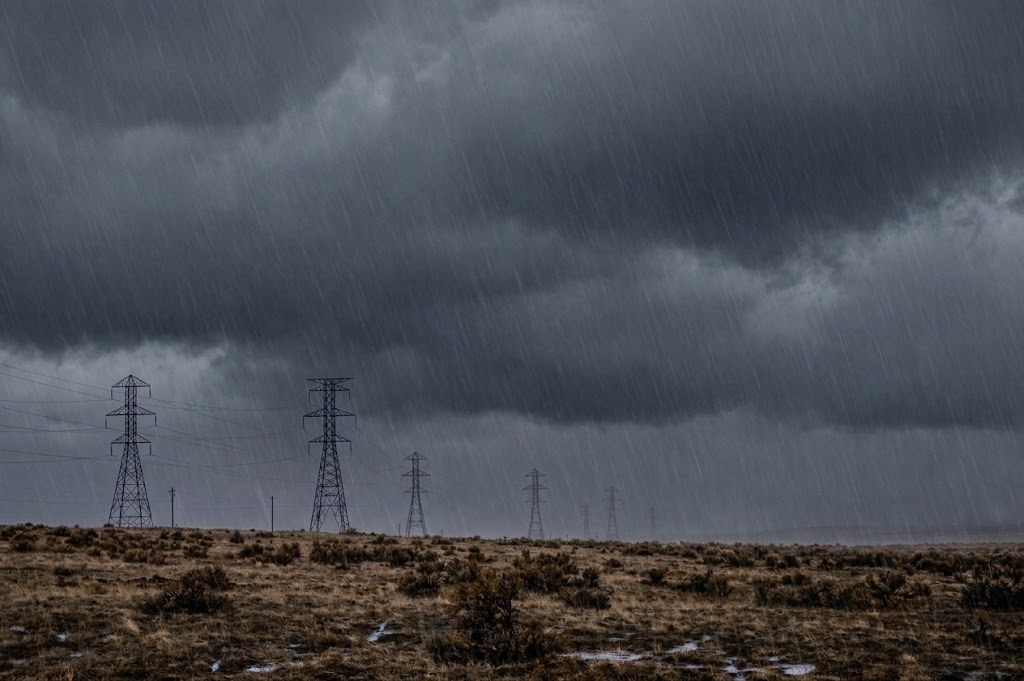
You installed a rain gauge, connected it to your monitoring system, and started collecting rainfall data.
But what if the data you see is consistently lower than the rain that actually fell?
This is a common question in rainfall monitoring. A rain gauge can be working normally while still producing measurements that differ from the actual precipitation at the site. The reason is that rainfall measurement is affected not only by the sensor itself, but also by the measurement principle, rainfall intensity, wind, precipitation type, and installation conditions.
For conventional tipping-bucket rain gauges, these limitations are well documented. A 2025 review published in Weather found that wind-induced undercatch is typically one of the most significant local sources of error in tipping-bucket rainfall measurements. The same review also notes that mechanical limitations can lead to systematic underestimation, particularly as rainfall intensity increases.
Wind Can Make Rainfall Look Lower Than It Is
Rain does not always fall vertically.
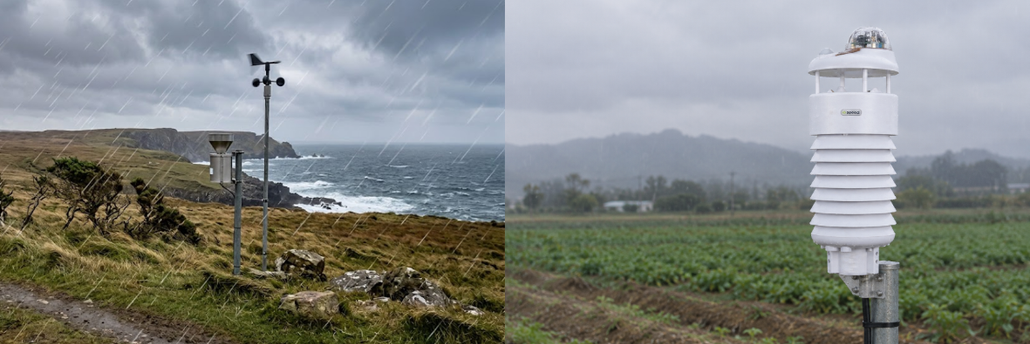
When wind moves around a rain gauge, it can change the trajectory of falling raindrops and cause some of them to miss the collector. This effect is known as rainfall undercatch.
This effect has been observed in multiple field studies.Pollock et al. (2018) found that rainfall measurements from conventional gauges could be significantly lower than reference measurements in exposed, windy environments, with the magnitude of undercatch varying with wind conditions and gauge installation.
In other words, a tipping-bucket rain gauge may be operating normally while still recording less rainfall than actually reaches the measurement site. This is particularly important for monitoring stations deployed in open or windy environments, where the measurement conditions can be as important as the gauge itself.
Light Rain Can Be Difficult to Capture
Rainfall measurement is not only about heavy storms.
Drizzle and other low-intensity precipitation can also challenge conventional tipping-bucket designs. Because the mechanism records rainfall by accumulating a defined volume of water and triggering a tipping event, very small amounts of precipitation may not immediately produce a measurable tip.
As a result, information about the timing and intensity of low rainfall rates can be limited.
For applications such as agricultural monitoring or microclimate observation, these small rainfall events can still matter. A few millimeters of accumulated rain may influence irrigation decisions, soil moisture, and the interpretation of local weather conditions.
Heavy Rain Can Introduce Another Source of Error
At the other end of the scale, intense rainfall can also affect tipping-bucket measurements.
The bucket needs time to fill and tip. As rainfall intensity increases, the mechanical tipping process can introduce measurement losses, causing the recorded rainfall to become increasingly lower than the actual amount. Some research notes that the reliability of tipping-bucket gauges can decrease rapidly at high rainfall intensities, with mechanical underestimation becoming more significant above roughly 30–50 mm/h.
This creates an interesting challenge: the rainfall events that matter most for flood monitoring and extreme-weather analysis can also be among the events that are hardest to measure accurately with a conventional tipping mechanism.
Snow, Debris, and Environmental Interference Add More Variables
Rainfall measurement becomes even more challenging when precipitation is not simply clean liquid water. For tipping-bucket gauges, snow, evaporation, wetting losses, and debris such as leaves or insects can affect measurements and increase maintenance requirements. Mechanical components may also wear or become stuck over time, which can be especially costly for remote monitoring sites.
Optical rain sensors avoid moving parts, but introduce different challenges. Their optical path can be affected by dust, dirt, fog, condensation, or strong ambient light, potentially reducing measurement reliability.
Different measurement technologies therefore come with different sources of error and maintenance requirements.
Three Rainfall Measurement Technologies Compared
Tipping-bucket, optical, and radar rain gauges measure precipitation in fundamentally different ways. These differences determine how each technology responds to wind, light rain, heavy rainfall, contamination, and long-term maintenance.
| Product | Measurement Principle | Advantages | Disadvantages |
| Tipping-Bucket Rain Gauge | Rainwater fills a tipping bucket, triggering it to tip. A counter records the number of tips to calculate rainfall. | 1. Simple design and relatively low cost 2. Proven accuracy and widely used | 1. Prone to clogging from leaves and debris 2. Requires regular cleaning and maintenance |
| Optical Rainfall Sensor | When raindrops pass through an infrared or laser beam, they cause light scattering or attenuation, which is analyzed to estimate rainfall and raindrop characteristics. | 1. No moving parts, reducing maintenance needs 2. Spherical sensing surface helps reduce dust and contamination buildup | 1. Optical signals can be affected by strong light, fog, and dust 2. Accuracy may decrease during heavy rainfall |
| Radar Rainfall Sensor | Uses 60 GHz Doppler radar technology to measure the falling velocity of raindrops and statistically characterize precipitation particles to estimate rainfall intensity. | 1. High sensitivity and 0.01 mm resolution for detecting small changes in rainfall 2. Non-contact measurement with no moving parts, reducing mechanical and contamination-related issues 3. Can support classification of different precipitation types, such as rain, snow, and hail | 1. Relatively higher cost than conventional tipping-bucket gauges 2. Requires a clear measurement path, as metal objects or other obstructions can block radar signals |
Seeed’s Radar Rainfall Measurement Solutions
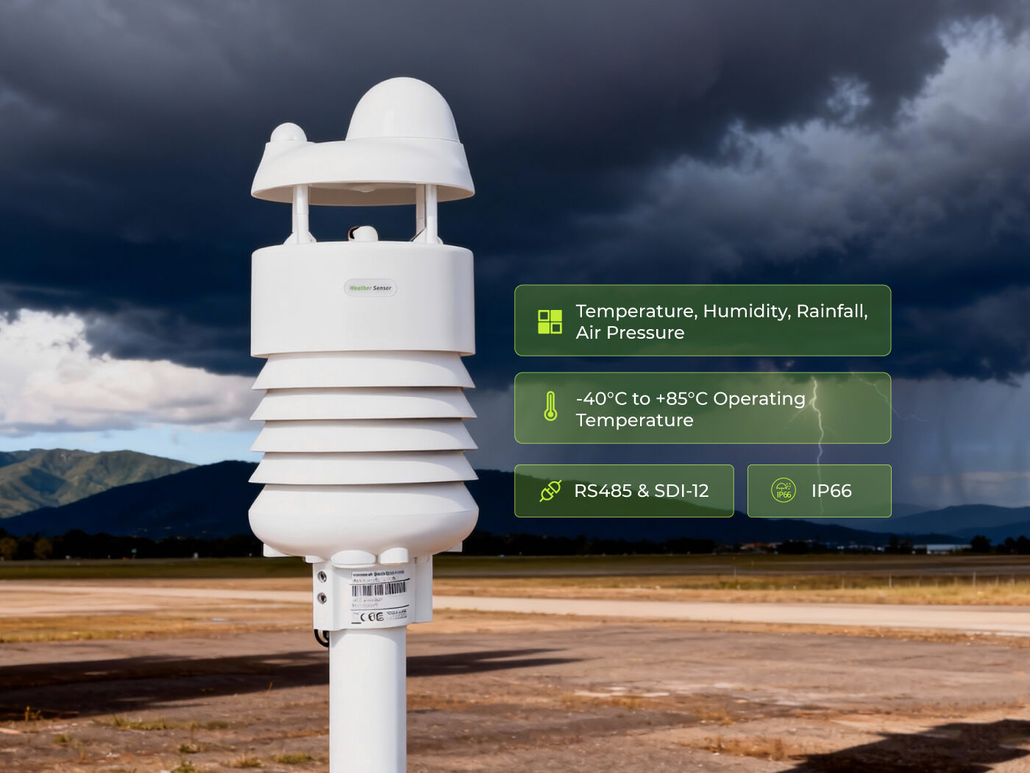
Radar rainfall measurement offers a non-contact approach to monitoring precipitation, helping reduce some of the maintenance challenges associated with traditional rain gauges. To make this technology suitable for real-world weather monitoring, Seeed integrates 60 GHz Doppler radar rainfall measurement into its SenseCAP S700 series of compact weather stations.
The S700-A and S700-C both combine radar rainfall measurement with multiple atmospheric sensors in a single outdoor weather station. This allows users to monitor rainfall together with other key weather parameters without deploying separate instruments for each measurement.
| Model | Additional Measurements | Best Suited For |
| SenseCAP S700-A | Air temperature, relative humidity, barometric pressure, wind speed, wind direction, illuminance | Weather monitoring, rainfall monitoring, smart cities, and environmental monitoring |
| SenseCAP S700-C | Air temperature, relative humidity, barometric pressure, wind speed, wind direction, global solar radiation, sunshine duration | Smart agriculture, solar energy monitoring, and applications requiring both rainfall and solar radiation data |
Key Specifications
| Parameter | S700-A / S700-C |
| Rainfall Measurement Range | 0–300 mm/h |
| Resolution | 0.01 mm |
| Accuracy | ±10% |
| Power Supply | 12–24 V DC |
| Power Consumption | Approx. 1 W |
| Operating Temperature | −40 to +85°C |
| Ingress Protection | IP66 |
What Problems Does It Solve?
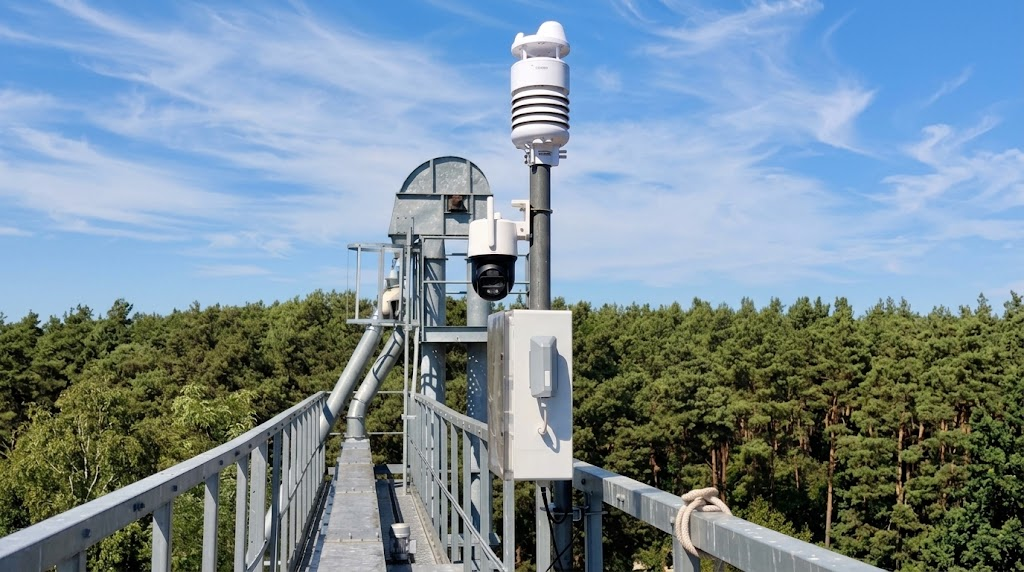
For users who need more reliable, lower-maintenance weather monitoring than conventional mechanical rain gauges can provide, the SenseCAP S700-C addresses several common challenges:
- High-resolution rainfall measurement: The radar rainfall sensor provides a 0.01 mm/h measurement resolution across a 0–300 mm/h rainfall intensity range, enabling more precise monitoring of changes in rainfall intensity, including light and short-duration precipitation events.
- No mechanical moving parts: Unlike tipping-bucket rain gauges, the radar sensor measures rainfall without a mechanical tipping mechanism. This eliminates mechanical wear and reduces the risk of sticking or measurement interruptions over long-term operation.
- Remote-site maintenance: With an IP66 enclosure and a −40 to +85°C operating range, the S700 is designed for long-term outdoor deployment where frequent manual inspection is impractical.
- Multiple weather parameters in one station: The S700-C integrates rainfall, air temperature, relative humidity, barometric pressure, wind speed, wind direction, global solar radiation, and sunshine duration in a single device, reducing the need for multiple standalone instruments and simplifying installation and data collection.
- Reduced Environmental Interference: The radar sensor detects precipitation without requiring direct contact with collected water, helping minimize the impact of debris, contamination, and other environmental factors.
- Better Sensitivity to Light Rainfall: Fine measurement resolution and continuous radar sensing help capture subtle changes in precipitation, including light and short-duration rainfall events.
- More Possibilities for Future Applications: The radar sensing technology leaves room for future firmware updates and new sensing capabilities, with potential support for precipitation types such as snow and hail and a wider range of weather monitoring applications.
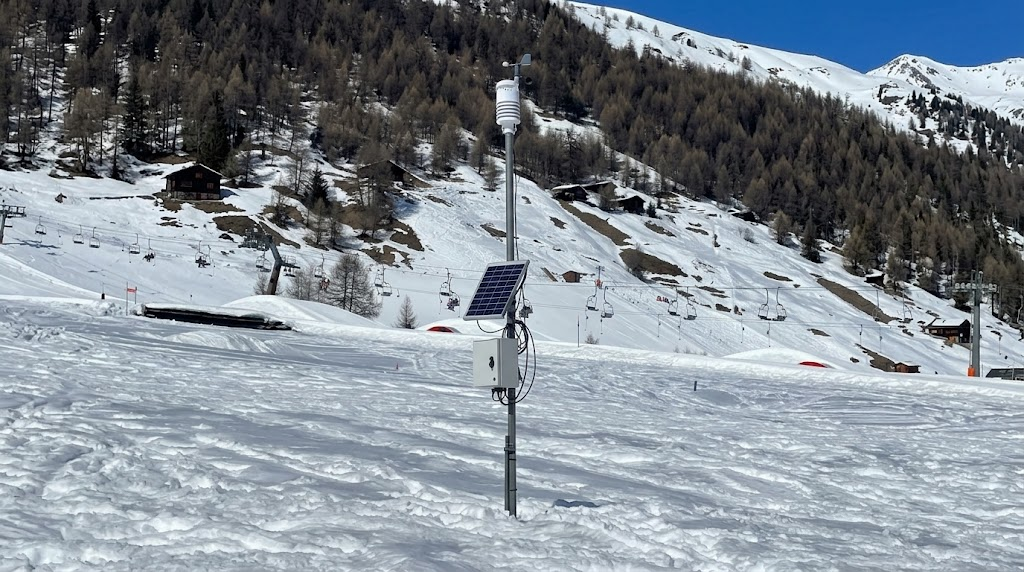
If you have similar weather monitoring needs, contact us at [email protected]. Tell us about your project, and the Seeed team will put together a detailed solution for you.
Seeed Studio is helping lead this transition through the SenseCAP weather station portfolio. SenseCAP combines industrial-grade sensing, compact all-in-one hardware, open communication protocols, flexible data paths, and a repeatable deployment architecture.
Seeed Studio works with more than 200 partners and over 1,000 customers across 120+ countries, with SenseCAP deployments spanning greenhouse and vineyard monitoring, smart-city observation, renewable-energy sites, environmental research, and industrial facilities. This is the direction professional weather monitoring is taking, and SenseCAP is building the products and integration ecosystem needed to move it forward.
Related Articles on Radar Rainfall Measurement
Want to learn more about radar rainfall measurement, weather stations, and their applications? Explore these related articles from Seeed:
- Doppler Radar Precipitation Sensor: How Can It Measure Rain Without a Funnel?
- Radar Compact Weather Station: SenseCAP S700-C for IoT Weather Monitoring
- Agricultural Weather Station Guide: What to Measure and How to Choose
- Seeed Studio at Meteorological Technology World Expo 2026
- Best 7-in-1 Weather Stations: Features, Applications, and Selection Guide
About Author
