For more than ten years, the MIT Research at Scale residency has helped researchers step into the real world of hardware manufacturing in Shenzhen. As one of its long-term partners, Seeed Studio acts as an “ndustrial bridge that helps academic projects move from a one-off prototype to reliable, real-world hardware that can actually be produced at scale.
In this series, we’re spotlighting the 2026 residents who spent a month working out of Chaihuo Makerspace and Seeed Studio, turning ideas into production-ready tools. Today, we’re sharing the story of Ben Weiss, whose work explores how robotics and precision sensors can help climate solutionaries turn forgotten farmland into healthy wetland ecosystems.
The Vision: Engineering for Healthier Soil
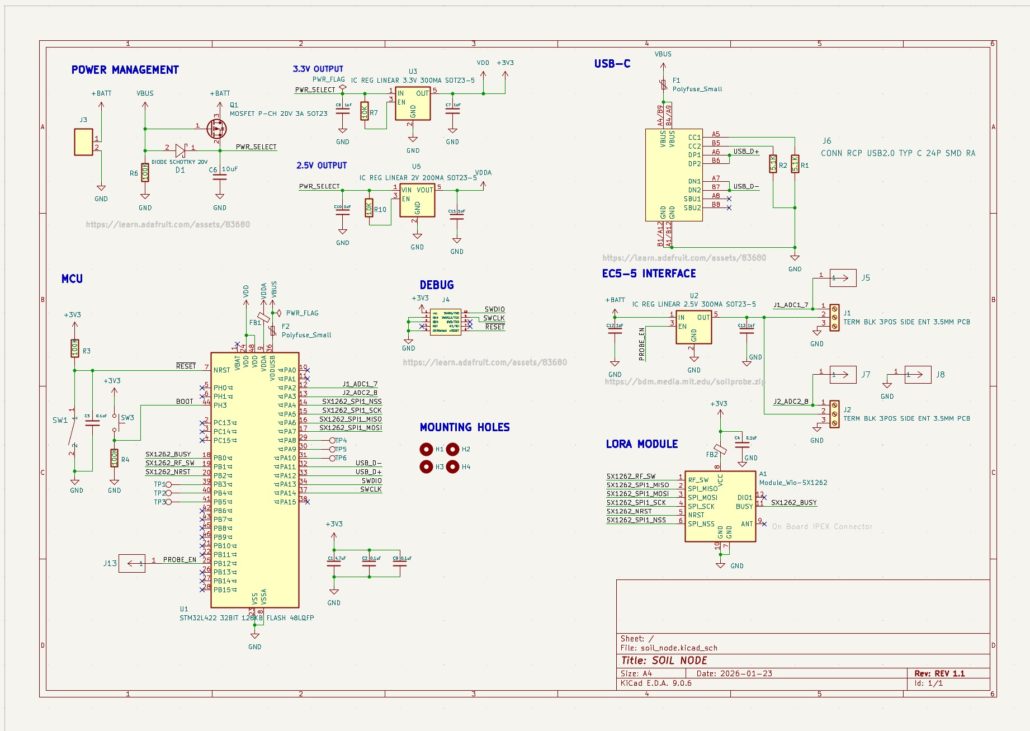
Ben’s research, developed in collaboration with MIT and WHOI(Woods Hole Oceanographic Institution), is grounded in a very real environmental challenge: understanding how water moves underground so damaged land can be restored. A key part of this work is a custom PCB that measures soil moisture at multiple depths, giving ecologists better data about what’s happening beneath the surface.
Before coming to Shenzhen, Ben had already built working prototypes—great for experiments in the lab, but tough to reproduce or deploy widely. His goal for the residency was clear: turn his concept into a professional-grade tool that could actually be manufactured and used in the field.
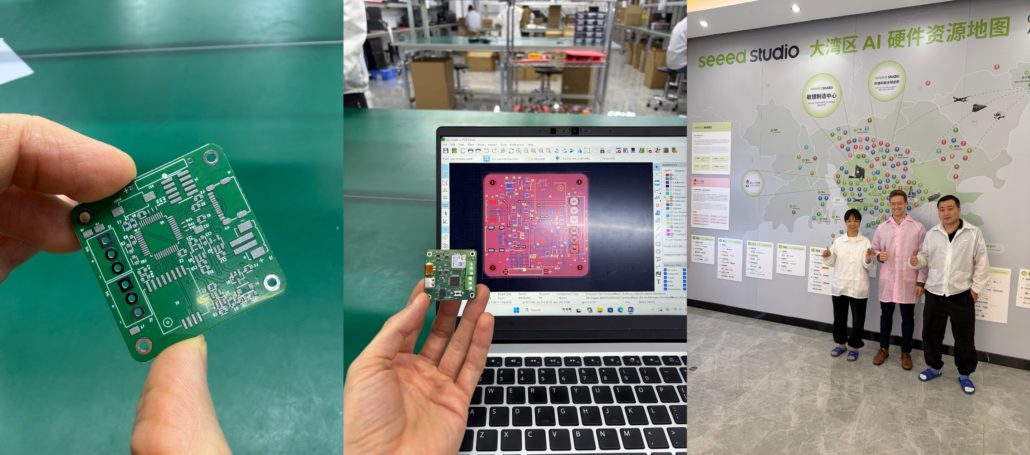
At Seeed, we were excited to support Ben as he took on the challenge of professional hardware design. Shifting from “making one” to “making many” is never easy, and Seeed Fusion—our end-to-end PCB manufacturing and assembly service—played a big role in making that transition possible.
Ben spent much of his time reviewing every single component in his schematics. Our team, including Phoebe Qian, Dana Liao, Linus Liao, Jiang Dan and Wang Bing, worked closely with him to make sure his most advanced PCB yet wasn’t just functional, but ready for production.
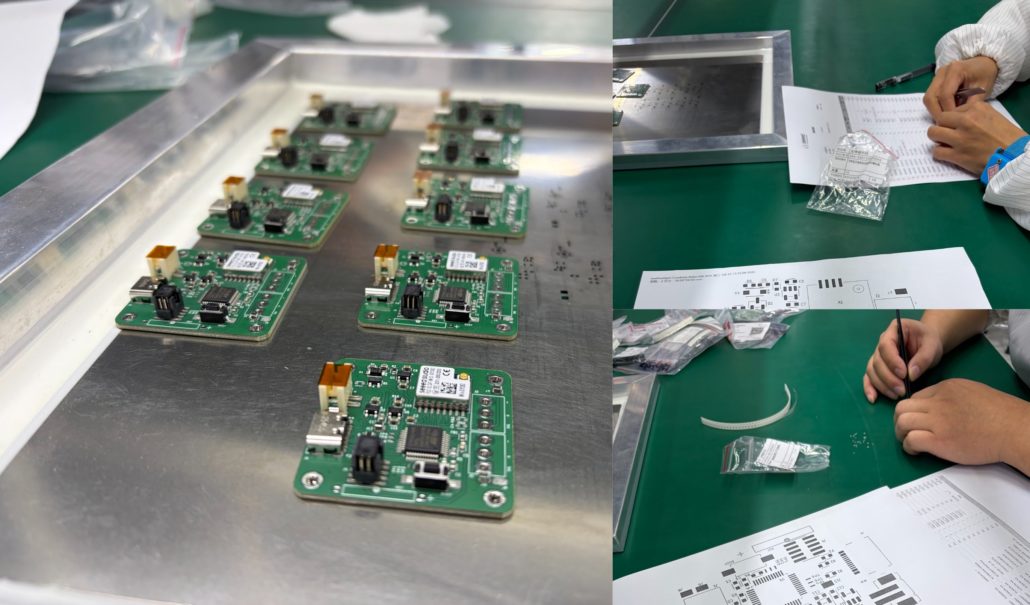
Ben watched as his boards were assembled in real time, with our team hand-populating them in just two hours. When small issues came up—like diode polarity—the engineers jumped in immediately. Instead of weeks of emails, problems were solved on the spot with quick conversations (sometimes through Google Translate).
Explore Ben’s technical documentation and open-source files on GitHub.