LoRa Communication Explained: How LoRaWAN, Meshtastic, Amazon Sidewalk and LR-FHSS Use LoRa Differently
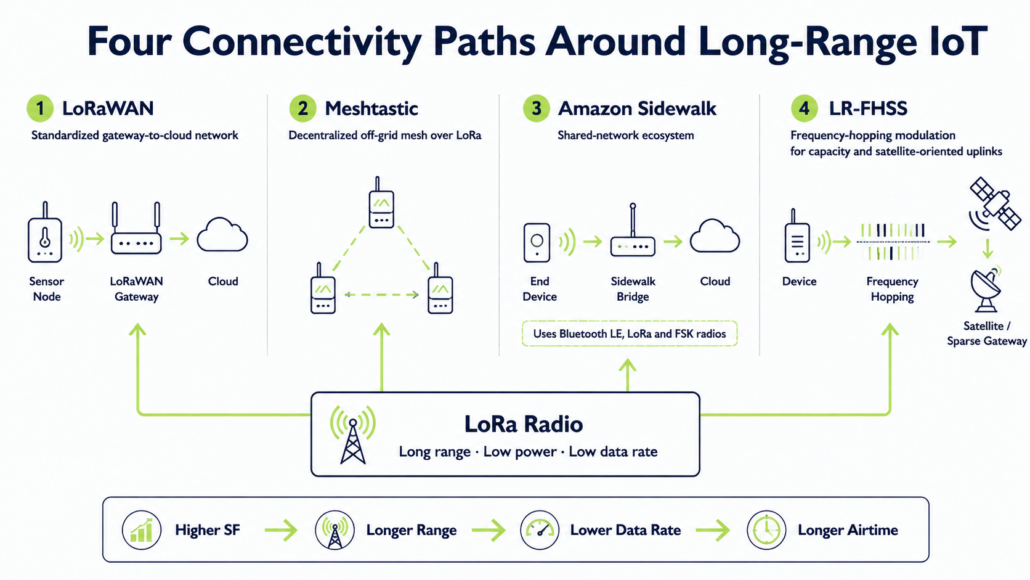
LoRa communication enables IoT devices to transmit small data payloads over long distances with low power consumption. However, LoRa is a radio technology rather than a complete network. It can support LoRaWAN sensors connected through gateways, Meshtastic devices in decentralized meshes, Amazon Sidewalk endpoints on shared networks, and LR-FHSS devices for dense terrestrial or satellite IoT deployments.
These technologies share a radio foundation but serve different purposes. LoRaWAN provides managed network connectivity, Meshtastic enables off-grid mesh routing, Amazon Sidewalk operates through an Amazon-managed network, while LR-FHSS is a physical-layer modulation that improves capacity and interference resistance.
This guide explains key LoRa communication trade-offs, including range, data rate, airtime, and power consumption—then compares these four technology paths and maps each one to the appropriate Wio module.
What Is LoRa Communication?
LoRa is a long-range, low-power radio technology designed for small, infrequent data transmissions. It is well suited to battery-powered sensors, trackers, meters, and remote devices that must operate over kilometres rather than rely on high bandwidth.
LoRa itself is the radio layer, not a complete network. The network architecture, routing method, cloud connection, and available services depend on the technology built around that radio link.
This article compares four distinct connectivity paths:
- LoRaWAN: a standardized gateway-to-cloud LPWAN network.
- Meshtastic: a decentralized, off-grid mesh system that uses LoRa radios.
- Amazon Sidewalk: a separate shared-network ecosystem that can use Bluetooth LE, LoRa, and FSK radio technologies.
- LR-FHSS: a long-range frequency-hopping modulation designed to improve uplink capacity and support satellite-oriented connectivity.
These are not four interchangeable protocols at the same technical layer. The right choice depends on whether a project needs managed infrastructure, independent mesh communication, shared network coverage, or higher-capacity long-range uplinks.
LoRa Range, Data Rate and Power Consumption: An Engineering Trade-Off
LoRa prioritizes link budget and power efficiency over throughput. It is designed for short telemetry messages—not continuous audio, video, or high-volume data transfer.
Its performance is primarily shaped by spreading factor, bandwidth, transmit power, payload size, and regional duty-cycle rules. In general:
Higher spreading factor → longer range and better receiver sensitivity → lower data rate and longer airtime.
Longer airtime can increase energy consumption and reduce network capacity, particularly where many devices share the same channel. Therefore, LoRa design begins with the message: how much data is sent, how often it is sent, and whether the device needs a gateway, a mesh, a shared network, or a satellite-capable uplink.
LoRaWAN: Standardized Communication for Large-Scale IoT Networks
LoRaWAN is a MAC-layer protocol and network architecture built primarily on LoRa modulation. It defines how end devices join a network, how packets are formatted and protected, and how gateways forward radio traffic to a network server.
A complete LoRaWAN network normally includes:
- End devices: Battery-powered sensors, meters, trackers or controllers.
- Gateways: Radio infrastructure capable of receiving multiple channels and spreading factors.
- Network server: The system responsible for device authentication, packet deduplication and network management.
- Application server: The service that decrypts and processes application data.
A LoRaWAN gateway does not behave like a conventional Wi-Fi access point. An end device is not permanently associated with a single gateway. The same uplink can be received by multiple gateways, while the network server performs deduplication and routing.
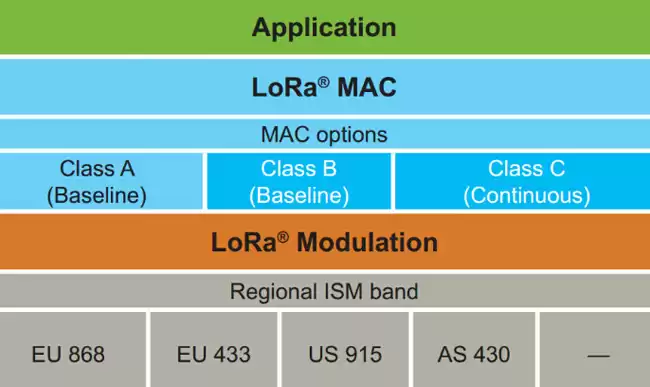
LoRaWAN also defines three end-device classes:
- Class A: Mandatory for all devices. It opens two short receive windows after each uplink and provides the lowest power consumption.
- Class B: Adds scheduled receive windows synchronized through network beacons.
- Class C: Keeps the receiver open almost continuously, trading higher power consumption for lower downlink latency.
LoRaWAN data rate depends on the regional frequency plan, spreading factor and bandwidth. Long-range configurations may operate at only a few hundred bits per second, while faster regional modes can reach tens of kilobits per second. This is sufficient for periodic environmental readings, meter data and alarms, but developers must still control payload size and transmission frequency because time-on-air directly affects battery life and network capacity.
Which Wio Module Is Best for LoRaWAN?
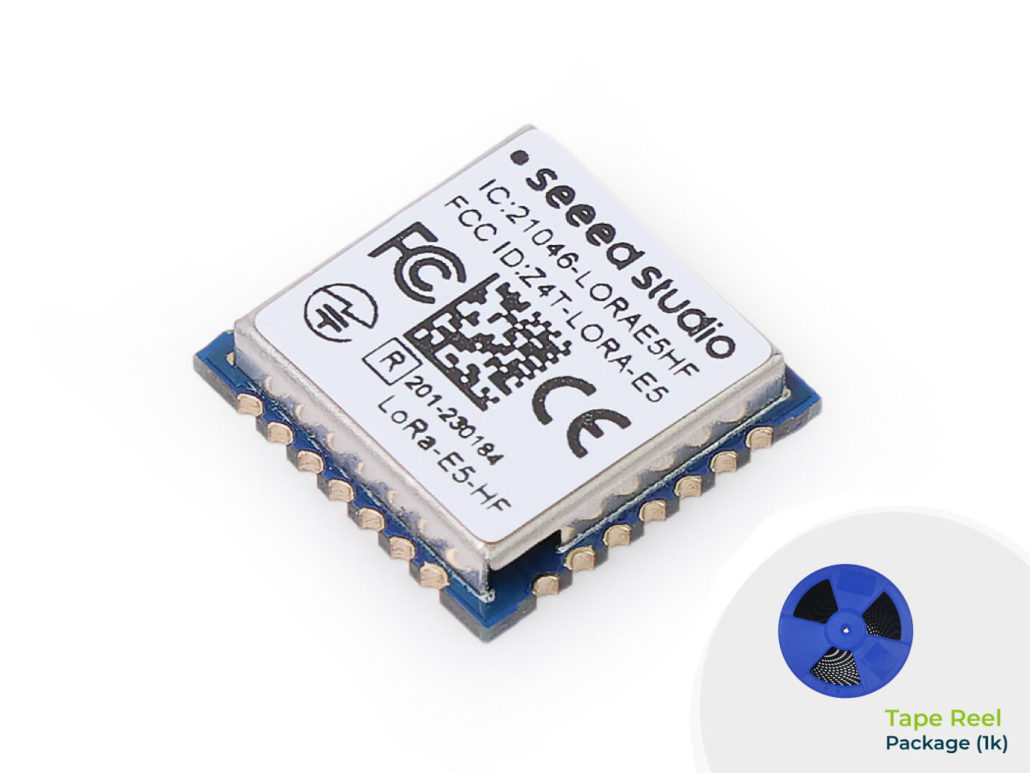
For a standard LoRaWAN endpoint where development speed matters more than maintaining the entire radio and network stack on an external host, Wio-E5 provides a direct path. It integrates an STM32WLE5JC microcontroller and LoRa radio in one module and supports AT-command-based LoRaWAN development. This reduces component count, PCB complexity and firmware workload.
Meshtastic: Decentralized LoRa Mesh Communication Without Internet Access
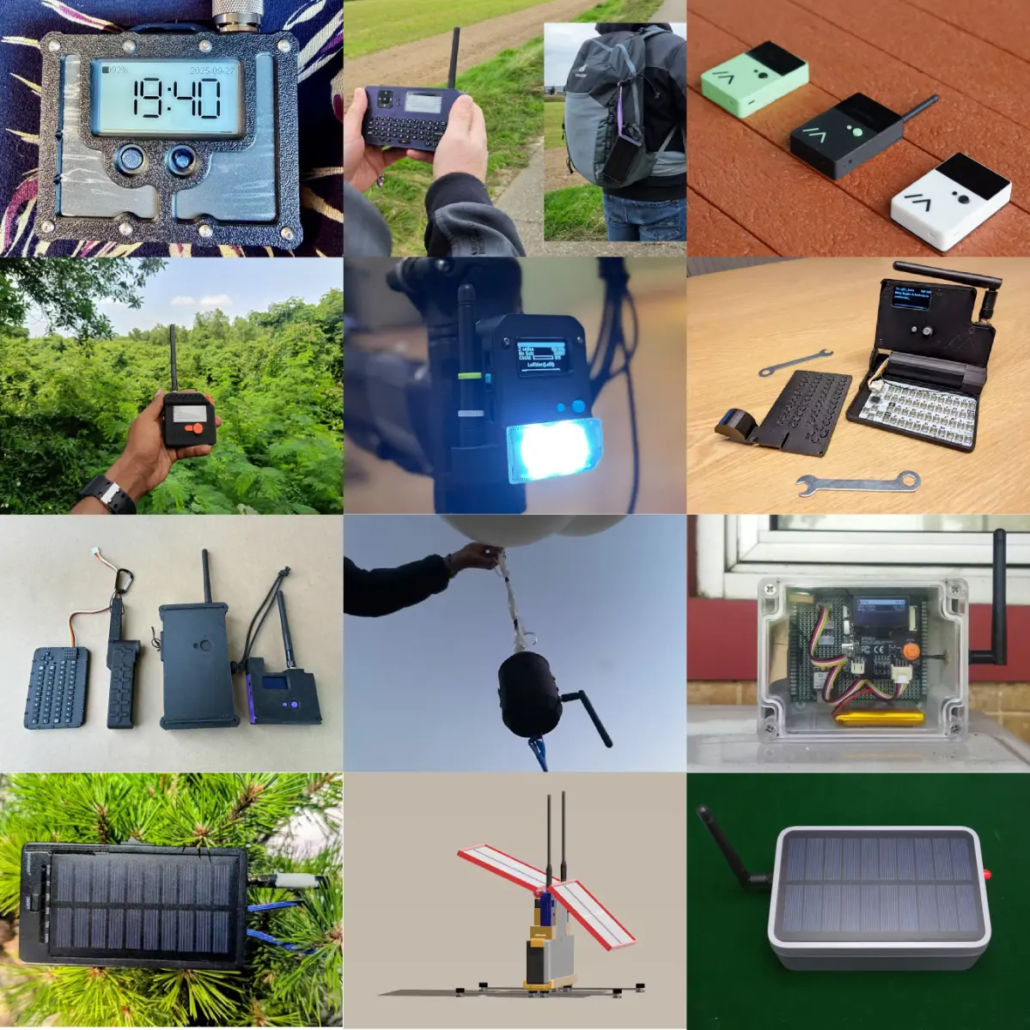
Meshtastic is an open-source project that uses LoRa radios to create decentralized mesh networks for encrypted text messages, location sharing and telemetry. It does not use the LoRaWAN network architecture and does not require a LoRaWAN gateway or network server.
Compatible nodes can send and receive packets, while selected nodes can rebroadcast traffic to extend coverage. A smartphone or computer usually connects to a local Meshtastic device through Bluetooth, Wi-Fi or USB, while LoRa handles long-range communication between mesh nodes.
Meshtastic radio presets make the range-versus-speed trade-off particularly visible. According to the official radio documentation, representative configurations include:
- Short Turbo: 21.88 kbps, SF7, 500 kHz bandwidth and a 4/5 coding rate.
- Medium Fast: 3.52 kbps, SF9, 250 kHz bandwidth and a 4/5 coding rate.
- Long Fast: Approximately 0.67 kbps in the documented simulation profile, using SF11 and 250 kHz bandwidth.
- Very Long Slow: Approximately 0.09 kbps, using SF12 and 62.5 kHz bandwidth.
These values illustrate why Meshtastic is well suited to short messages and position packets but not to high-bandwidth chat or media transfer. A slower preset can improve link budget, yet the longer time-on-air also increases channel congestion and reduces the number of messages the mesh can carry.
Why Is SX1262 So Common in Meshtastic Hardware?
SX1262 provides transmit power of up to +22 dBm, low receive power, modern LoRa capabilities and mature driver support. It is also surrounded by a large ecosystem of validated reference designs, antennas, enclosures and firmware configurations, which is why it is widely used in current Meshtastic hardware.
However, Meshtastic interoperability does not require every node to use exactly the same radio chipset. Devices must use supported firmware, legal regional frequencies, matching modem presets and the same channel configuration. The real advantage of SX1262 is that it reduces software and hardware development risk, not that the Meshtastic protocol is limited to one transceiver.
Which Wio Module Is Best for Meshtastic?
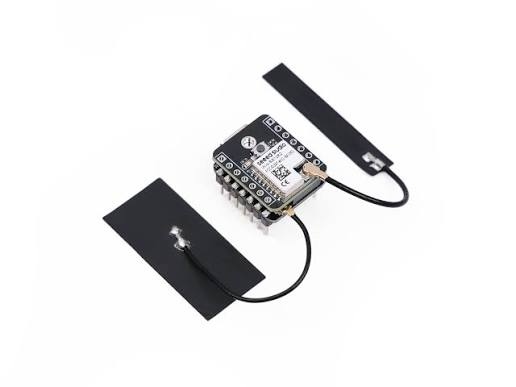
For developers building a custom Meshtastic node around an external MCU, Wio-SX1262 is the most direct option. Meshtastic officially documents Wio-SX1262 kits based on both XIAO ESP32S3 and XIAO nRF52840:
- XIAO ESP32S3 adds Wi-Fi, Bluetooth LE and more memory for feature-rich prototypes.
- XIAO nRF52840 is better suited to devices that prioritize low-power operation and Bluetooth connectivity.
Wio-SX1262 remains a radio module rather than a complete Meshtastic product. The final user experience also depends on the host MCU, firmware, power supply, antenna, enclosure and optional GNSS or display.
Amazon Sidewalk: A Shared Network Using LoRa, FSK and BLE
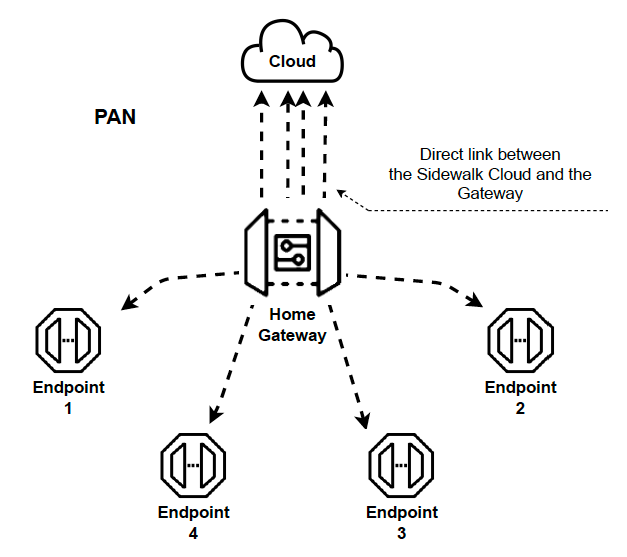
Amazon Sidewalk is a cloud-managed shared network designed to connect low-power devices around and beyond the home. Compatible Amazon and Ring devices can act as Sidewalk Bridges, forwarding endpoint traffic to the Sidewalk Cloud.
Sidewalk differs from LoRaWAN in both ownership and architecture. LoRaWAN is an open standard that can operate through public networks or privately deployed network servers. Sidewalk is operated by Amazon, and endpoints require registration, credentials and integration with the Sidewalk ecosystem.
The Amazon Sidewalk specification defines three wireless links:
- Sub-GHz CSS: Uses LoRa modulation for the longest-range link at approximately 2 kbps.
- Sub-GHz FSK: Provides a medium-range link at approximately 50 kbps.
- Bluetooth Low Energy: Provides short-range connectivity at 1 or 2 Mbps.
This multi-link architecture explains why “supports LoRa” does not automatically mean “ready for Amazon Sidewalk.” A commercial Sidewalk endpoint also requires a compatible protocol stack, security credentials, registration, certification and network availability in the target market.
Why Does LR2021 Matter for Multi-Protocol Products?
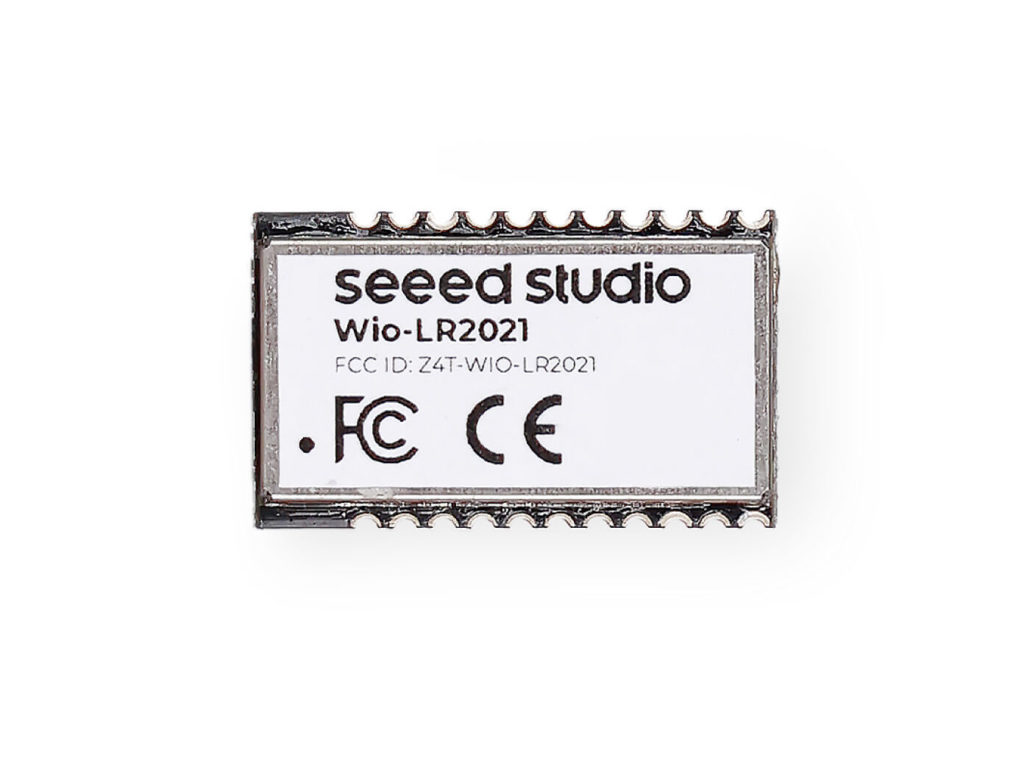
Semtech LR2021 is a LoRa Plus transceiver based on fourth-generation LoRa technology. In addition to LoRa and LR-FHSS, it supports modulation options including FSK, OOK, O-QPSK and FLRC. Semtech specifies LoRa data rates of up to 125 kbps and FLRC rates of up to 2.6 Mbps.
The significance of LR2021 is not that a complete Sidewalk protocol stack is built into the chip. Its value is that, when combined with the appropriate third-party stack, one radio platform can provide the physical-layer capabilities required by several low-power wireless technologies. Product teams can therefore retain greater flexibility when evaluating LoRaWAN, Sidewalk and other protocols without redesigning the RF hardware for every path at the beginning of a project.
Which Wio Module Fits This Technology Path?
Wio-LR2021 is suited to evaluating high-speed, multi-protocol radio designs across Sub-GHz and 2.4 GHz ISM bands. It is particularly relevant to products that need conventional long-range telemetry while also considering faster local transfer, richer payloads or future protocol expansion.
It should be positioned as a flexible radio foundation rather than a plug-and-play Amazon Sidewalk endpoint. A Sidewalk product still requires software integration, provisioning, certification and confirmation of network availability in the target market.
Deployment note: Radio compatibility does not by itself provide Amazon Sidewalk deployment readiness. A production Sidewalk device also requires the appropriate software stack, device onboarding and credentials, regional compliance, and any applicable certification or program requirements. Evaluate these requirements before moving from radio prototyping to deployment.
LR-FHSS: Increasing Capacity for Dense and Satellite IoT Networks
LR-FHSS stands for Long Range–Frequency Hopping Spread Spectrum. Conventional LoRa transmits a packet within a selected channel, whereas LR-FHSS distributes a transmission across many narrow frequency hops.
An LR-FHSS packet contains replicated headers and coded payload fragments transmitted over different frequencies. The receiver does not necessarily need every fragment to recover the message. This frequency diversity improves resistance to narrowband interference and reduces the probability that a single collision will destroy an entire transmission.
LR-FHSS is not designed to replace conventional LoRa with a faster link. Its throughput remains low and depends on the regional data-rate profile. Its primary advantage is network capacity. Large numbers of low-data-volume devices can distribute packet fragments across a wider hopping grid instead of repeatedly competing within the same conventional LoRa channels.
This capability is especially valuable in two scenarios:
- High-density terrestrial networks: Large numbers of meters, trackers or sensors need to transmit small uplinks through the same gateway infrastructure.
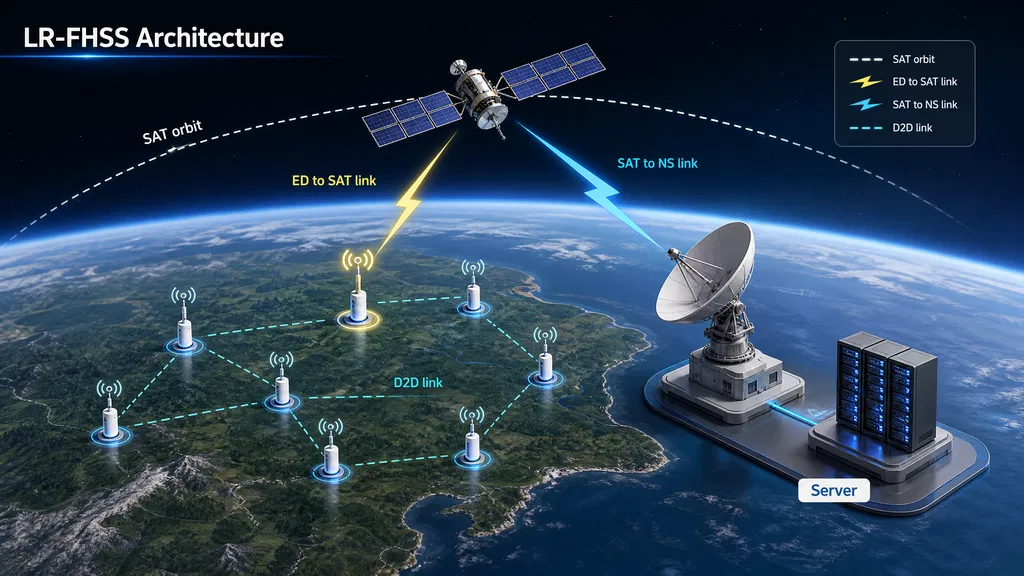
- Direct-to-satellite IoT: A satellite can see a large number of endpoints across its footprint during a limited pass. Frequency hopping and fragmented packets help the system manage collisions, interference and changing link conditions.
The data-rate distinction is important. LR-FHSS is intended for small, delay-tolerant messages rather than audio, images or rapid downlinks. If an application needs higher throughput, the LR2021 FLRC mode can reach up to 2.6 Mbps. However, FLRC and LR-FHSS solve opposite problems: FLRC prioritizes speed, whereas LR-FHSS prioritizes robustness and network capacity.
Which Wio Module Is Best for Satellite IoT?
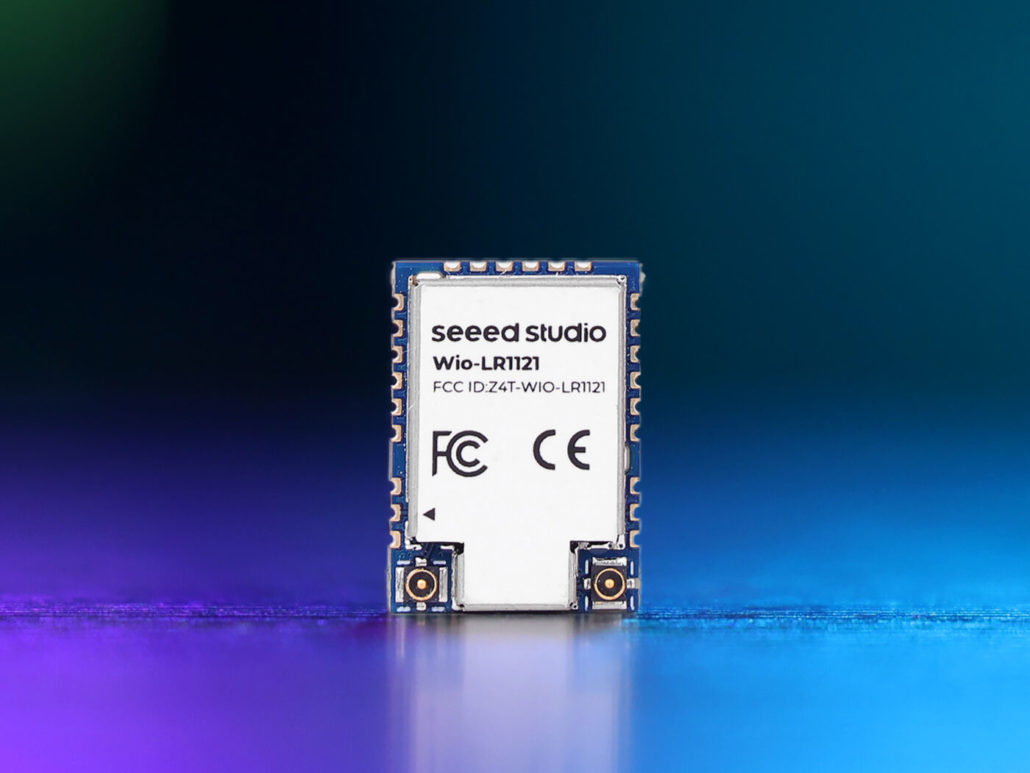
For globally deployed and satellite-connected IoT products, Wio-LR1121 is the more focused option. The LR1121 platform supports multi-band LoRa and LR-FHSS across Sub-GHz, 2.4 GHz and licensed satellite bands, helping one hardware platform serve both terrestrial and satellite communication requirements.
If a development team needs to evaluate newer LoRa Plus capabilities, higher data rates and a broader range of physical-layer options, an LR2021 Evaluation Kit can support early-stage validation. However, the available frequency bands still depend on the selected Wio module or EVK variant, RF front end and antenna design.
How to Choose the Right Wio Module
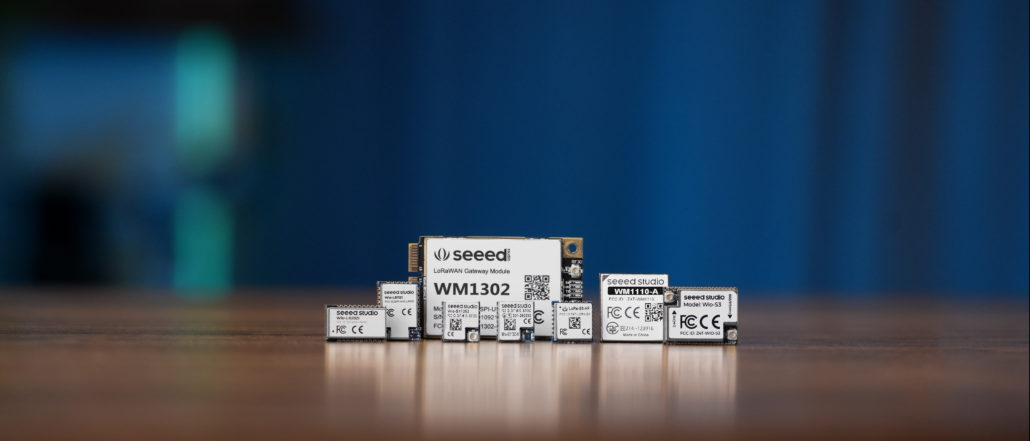
The first step in module selection is to identify the device’s network role and required protocol—not simply to compare the longest advertised communication range.
| Development Requirement | Recommended Wio Module | Why It Fits |
| Rapid development of a standard LoRaWAN endpoint | Wio-E5 | Integrated MCU, LoRa radio and AT-command-based development |
| Custom LoRaWAN, P2P or Meshtastic radio design | Wio-SX1262 | Direct SPI control and flexible host-MCU selection |
| LoRa combined with Wi-Fi, BLE and edge processing | Wio-S3 | Integrates ESP32-S3 and SX1262 in one module |
| Multi-protocol and higher-data-rate evaluation | Wio-LR2021 | LoRa Plus, FLRC, FSK and multi-PHY flexibility |
| Global multi-band and satellite IoT | Wio-LR1121 | Sub-GHz, 2.4 GHz, satellite bands and LR-FHSS |
| Low-power tracking with GNSS and Wi-Fi scanning | Wio-WM1110 | Combines LoRa communication with cloud-assisted positioning |
| Multi-channel LoRaWAN gateway | Wio-WM1302 | Concentrator architecture for concurrent gateway reception |
Frequently Asked Questions
Are LoRa and LoRaWAN the Same Technology?
No. LoRa is the physical-layer radio modulation. LoRaWAN is a MAC protocol and network architecture that commonly operates on top of LoRa.
Can LoRa Devices Communicate Without a Gateway?
Yes. LoRa P2P and Meshtastic devices can communicate directly or through mesh relays without a LoRaWAN gateway. LoRaWAN devices normally use a gateway to reach the network server.
How Far Can LoRa Communication Reach?
Range can vary from a few hundred meters indoors to several kilometers in cities and 10 km or more under favorable rural line-of-sight conditions. Antenna design, installation height, radio parameters, terrain, interference and local regulations all affect the result.
What Is the Data Rate of LoRa?
Traditional LoRa links commonly operate from a few hundred bits per second to tens of kilobits per second, depending on spreading factor, bandwidth and regional parameters. Newer transceivers such as LR2021 can support faster LoRa modes and FLRC rates of up to 2.6 Mbps, but these modes involve different range and link-budget trade-offs.
Can LoRa Transmit Images or Audio?
Traditional LoRa is optimized for small, infrequent packets and is generally unsuitable for continuous audio or image transfer. Higher-rate modes such as FLRC can support richer data, but developers must still evaluate range, power consumption, spectrum regulations and receiver compatibility.
Is LR-FHSS a LoRaWAN Protocol?
No. LR-FHSS is a physical-layer modulation rather than a complete network protocol. It can be used as an uplink data-rate option within compatible LoRaWAN deployments.
Does LR2021 Automatically Make a Device Compatible with Amazon Sidewalk?
No. LR2021 provides relevant radio capabilities, but a Sidewalk product also needs a compatible software stack, security credentials, provisioning, certification and available network coverage.
Conclusion
The future of IoT connectivity will not be defined by a single protocol. As deployments expand from remote sensors to connected products, off-grid communities and satellite-enabled assets, long-range communication must balance power consumption, coverage, capacity, interoperability and deployment independence.
LoRaWAN, Meshtastic, Amazon Sidewalk and LR-FHSS reflect four directions within this evolving landscape: standardized public and private IoT networks, decentralized mesh communication, shared consumer infrastructure, and scalable terrestrial-to-satellite connectivity. They are not interchangeable technologies, but complementary approaches to different deployment realities.
As a long-term partner of Semtech, Seeed Studio offers a complete and mature Wio LoRa ecosystem that covers every need in IoT development — from ultra-low-power terminal nodes and edge-computing modules to GNSS positioning solutions and high-capacity gateways.
Whether you are building Meshtastic networks, smart metering systems, global asset trackers, industrial monitoring, or large-scale LoRaWAN infrastructure, the Wio series provides flexible, reliable, and developer-friendly hardware backed by strong documentation and community support.
Explore the full Wio LoRa Collection and find the perfect module to power your next IoT project.
About Author
