5 Best DIY Smart Speaker Projects for Home Assistant Voice Assistants
Voice control is a crucial and satisfying layer you can add to a smart home. However, relying on Amazon Echo or Google Nest means trusting your conversations to the cloud and getting locked into their ecosystems without having the flexibility to make Home Assistant more powerful.
The community has addressed that through clever DIY smart speaker builds, which pair local AI pipelines with open-source hardware. They give you full control over your own voice data without the need for subscriptions or having cloud dependency.
In this post, we spotlight five outstanding community projects, where each shows a different way to bring voice to your Home Assistant setup.
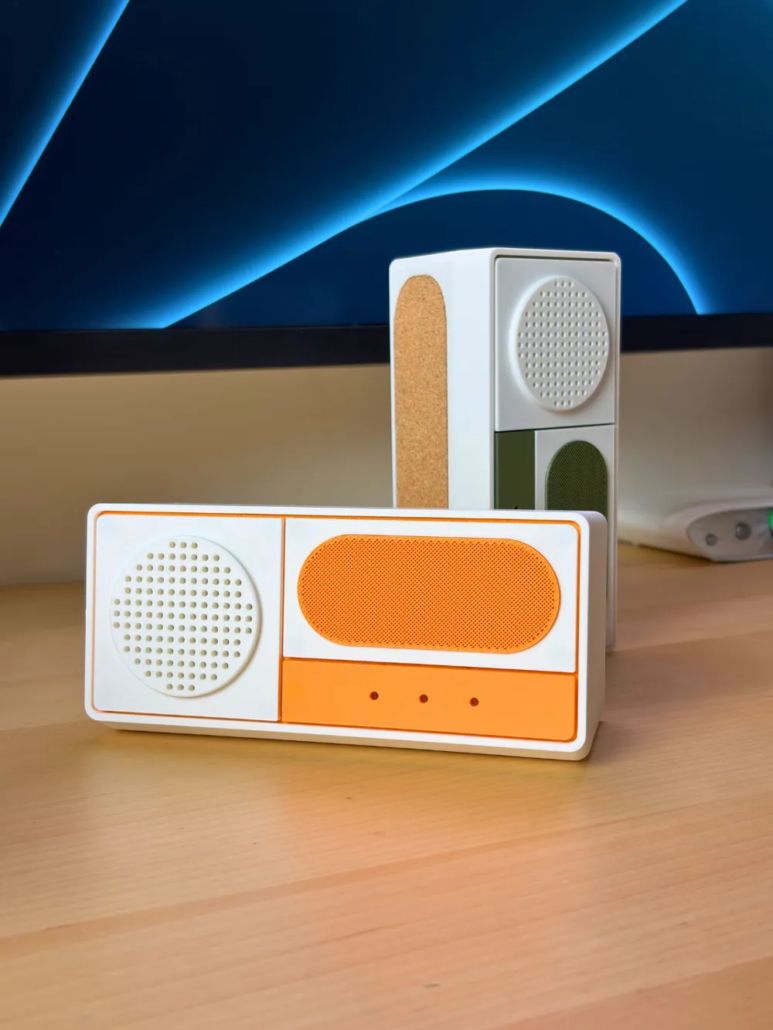
1. ESPHome Voice Assistant Satellite — Best DIY Smart Speaker for Clean Form Factor
Difficulty: ★★★☆☆
Features:
- reSpeaker Lite handles mic processing for wake word detection
- MAX98357A I2S amplifier for clean audio output
- 4 WS2812 LEDs as visual status indicators for assistant states
- 3D-printed enclosure with a rectilinear infill mic grill
- Runs faster-whisper locally for speech-to-text
- Reliable voice capture at 10–12 ft under normal conditions
Components:
- Seeed Studio reSpeaker Lite Voice Assistant Kit (with pre-soldered XIAO ESP32-S3)
- MAX98357A I2S amplifier
- 4× WS2812B LEDs
- 3D-printed enclosure (files on MakerWorld)
- 5W speaker
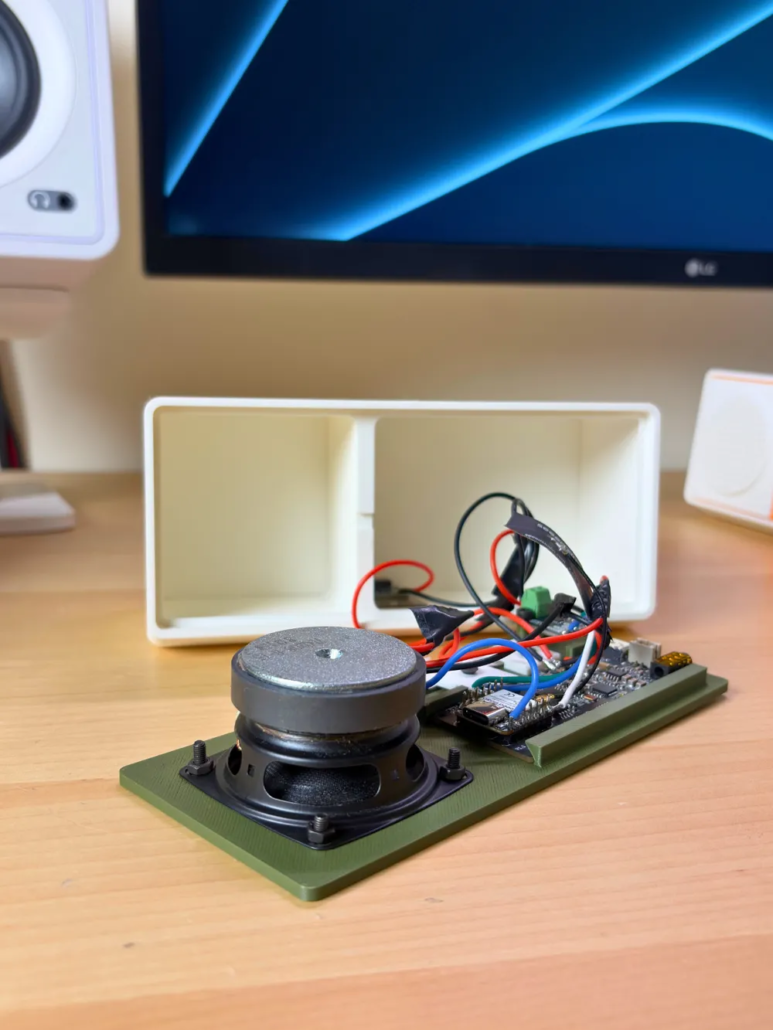
Best for: Makers who want their DIY smart speaker voice satellite to look like a complete product. Ideal if you already have a faster-whisper pipeline set up and want a polished speaker-form device that blends into a living room or kitchen. The reSpeaker Lite board does the heavy lifting on microphone input as a compact DIY USB microphone, while the XIAO ESP32-S3 bridges it to Home Assistant over Wi-Fi via ESPHome.
Maker: _nesmi (MakerWorld)
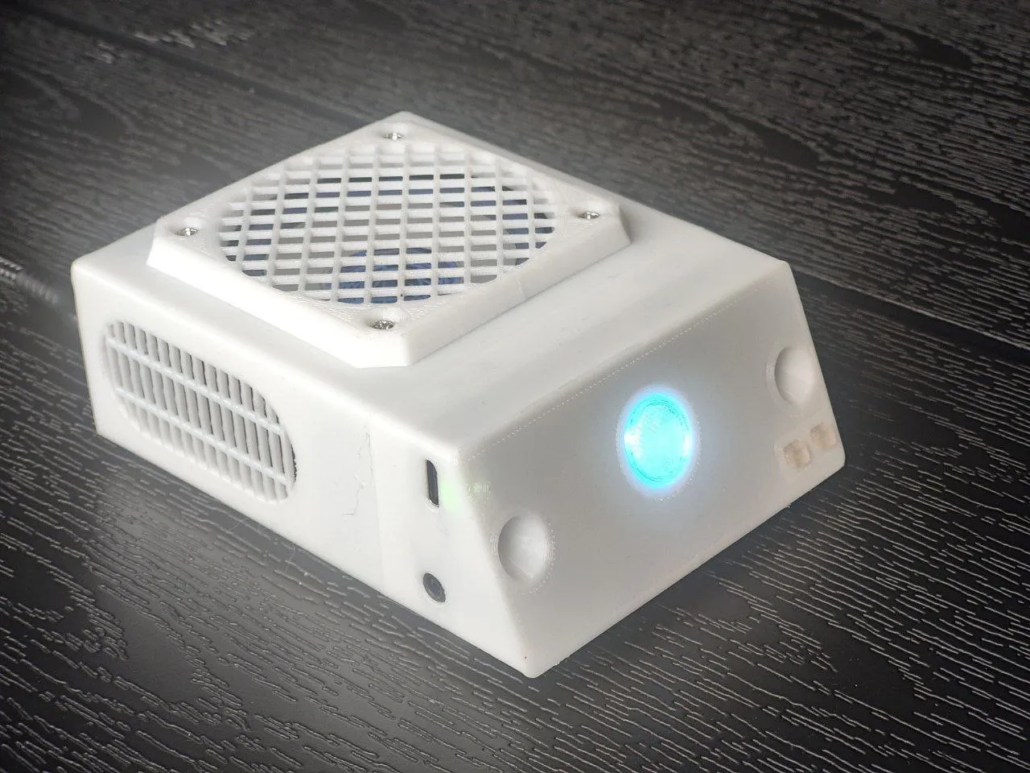
2. Brick Assistant — Best All-in-One DIY Smart Speaker
Difficulty: ★★★★☆
Features:
- 48 kHz, 16-bit audio output, which is above the typical 16 kHz found in most ESPHome voice builds
- Sealed speaker bay with a 5W driver and two passive radiators to have a genuine bass response
- Two multifunctional hardware buttons for volume, mute, media control, and timer stop
- Parabolically shaped microphone openings to improve directional capture
- “Ok Nabu,” “Hey Jarvis,” “Hey Mycroft” act as wake words
- Supports Whisper and Vosk, along with ONNX ASR, for local speech recognition
- LLM integration (Ollama/Gemini/DeepSeek) for open-ended conversation (optional)
- Siren mode for leak/smoke automations, and RGB LED accessible to HA automations
- All ports are externally accessible, including 3.5mm line-out
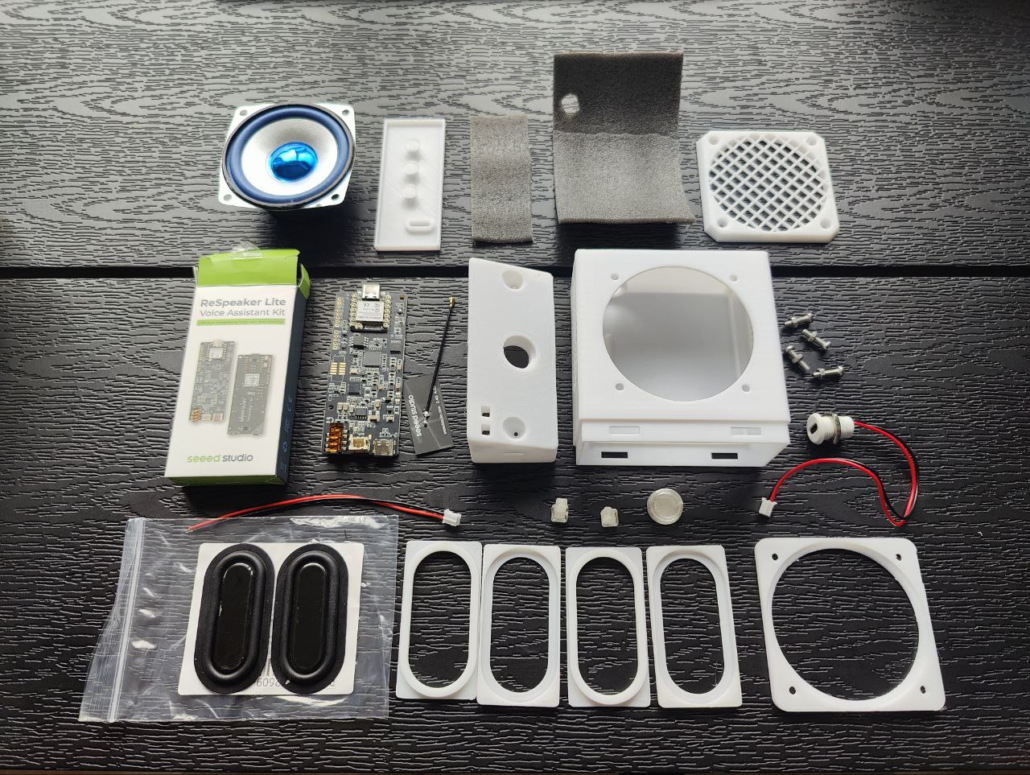
Components:
- Seeed Studio reSpeaker Lite Voice Assistant Kit (with pre-soldered XIAO ESP32-S3)
- 2-inch or 2.5-inch 4Ω 5W speaker (square mount)
- 2× 30×60mm oval passive radiators
- USB-C connector (optional rear power port)
- JST PH 2.0 connectors
- M3 screws and nuts
- 3D-printed PETG enclosure (files on Tinkercad)
Best for: Makers who want a complete DIY smart speaker. It is a polished and daily-driver device with good sound and solid build quality, along with deep Home Assistant integration. Requires some soldering and 3D printing experience.
Maker: Stepyon (diycraic.com)
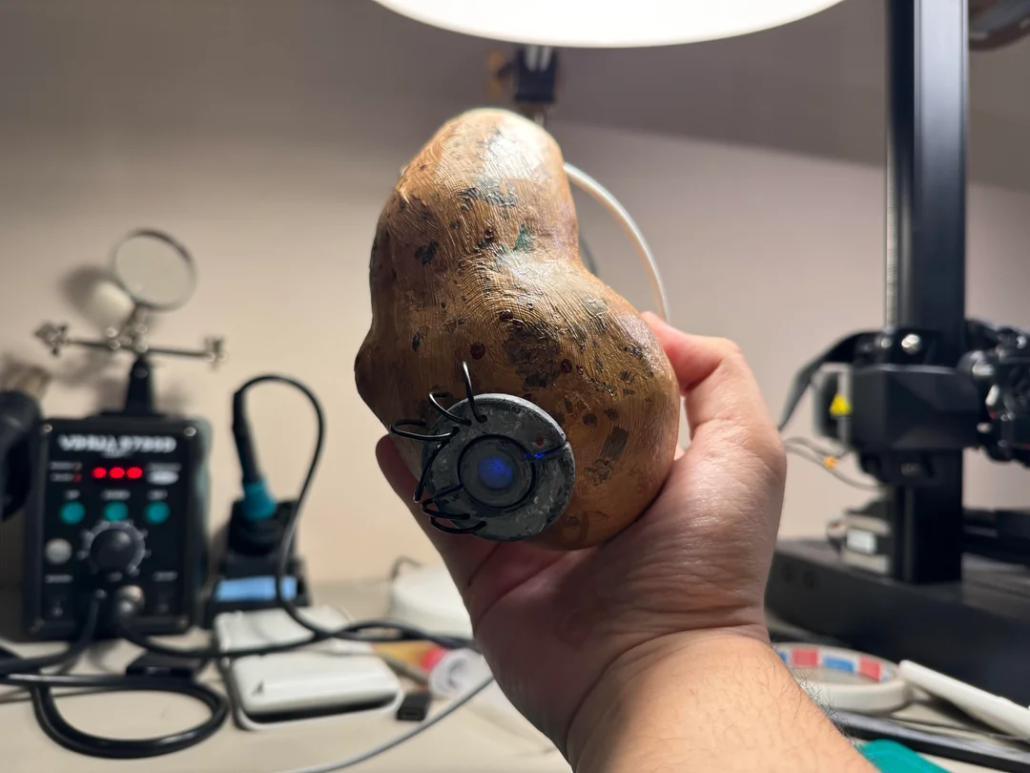
3. Potato GLaDOS — Most Creative DIY Smart Speaker
Difficulty: ★★★☆☆
Features:
- GLaDOS personality with sarcastic responses, powered by dnhkng’s open-source GLaDOS voice
- Custom-trained wake word model (responds to its own name)
- Full Home Assistant integration that can control lights, play music, manage devices, and more
- Complete local processing via ESPHome firmware on the reSpeaker Lite Kit
- Under $50 total build cost
- Complete project on GitHub with firmware, wake word model, and 3D print files
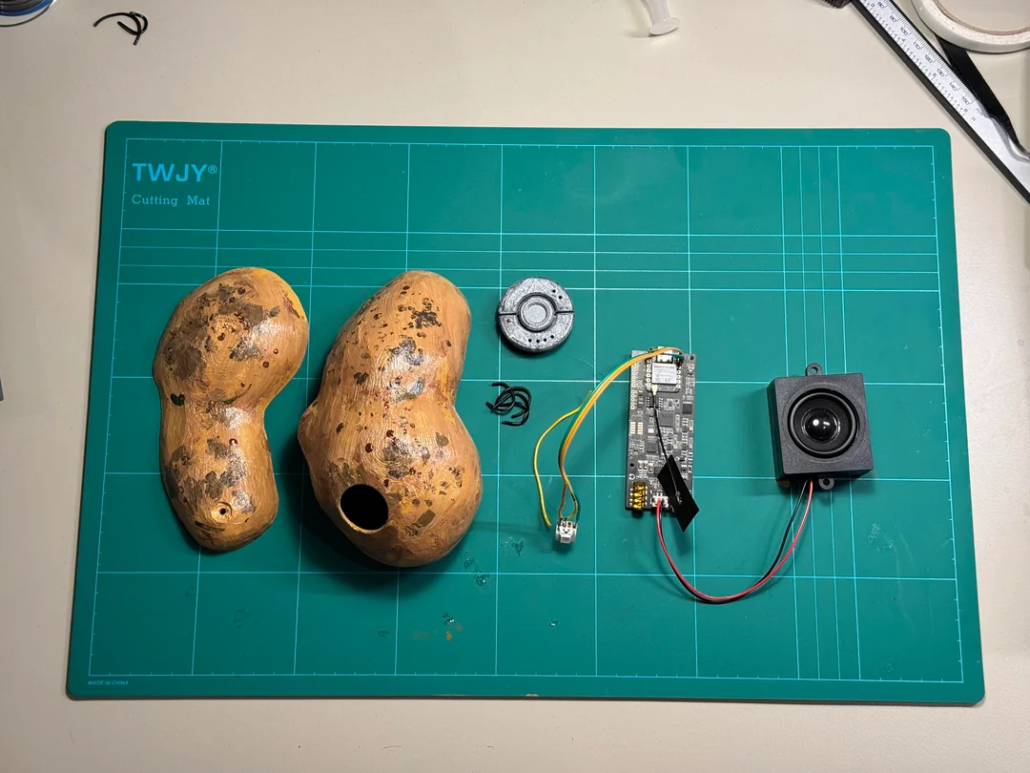
Components:
- Seeed Studio reSpeaker Lite Voice Assistant Kit
- 3D-printed and painted potato enclosure (files on GitHub)
- USB-C power cable
Best for: Makers who want their smart home to have personality. This DIY voice assistant is also a great project for anyone learning custom wake word training. The workflow is well-documented and reusable for any voice you want to build around.
Maker: Pham Binh (GitHub: pham-tuan-binh)
4. reSpeaker XVF3800 Voice Satellite — Best Amazon Echo Alternative
Difficulty: ★★★☆☆
Features:
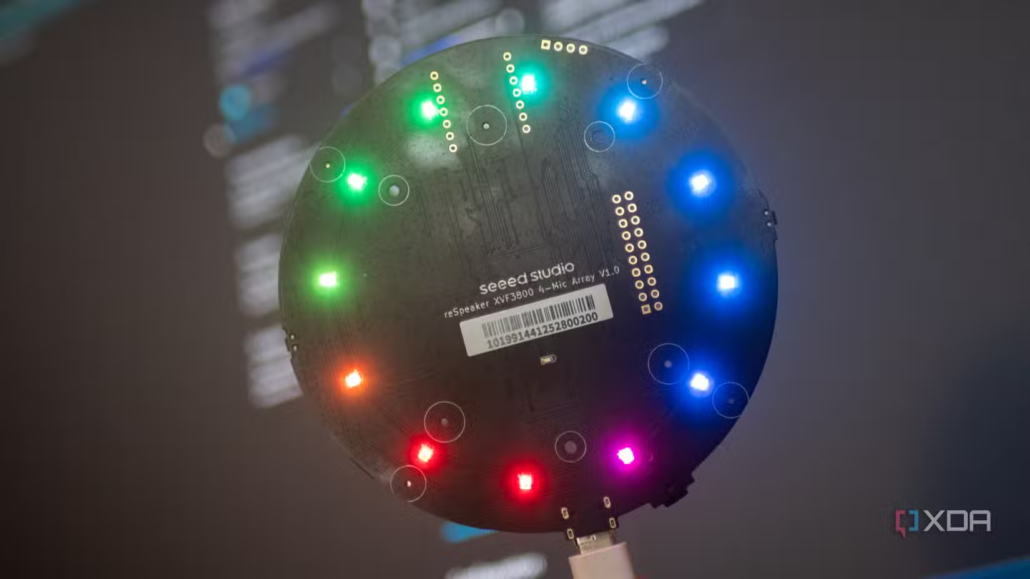
- Seeed Studio reSpeaker XMOS XVF3800 4-mic array with on-board AI acoustic algorithms such as automatic echo cancellation(AEC), noise suppression, beamforming, and automatic gain control
- 4 PDM microphones spaced for 360° pickup, support far-field voice capture up to 5 meters
- 12 programmable LEDs on the back that indicate the direction of incoming audio
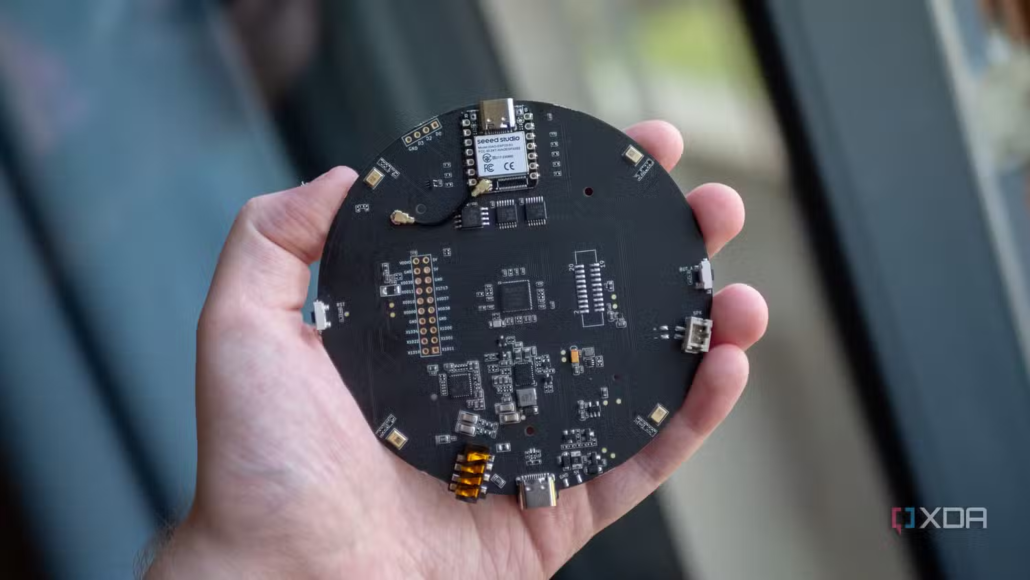
- Pre-soldered XIAO ESP32-S3 for seamless integration with Home Assistant
- 3.5mm jack and JST PH 2.0 speaker output
- Exposed GPIO for adding sensors or displays
- Mute button with safe-mode DFU flashing support (dual mode: I2S/USB)
Components:
- reSpeaker XMOS XVF3800 with XIAO ESP32-S3 (pre-soldered)
- External speaker with 3.5mm jack
- USB-C cable for power
Best for: Makers who want their DIY smart speaker to have the closest possible hardware match to commercial smart speakers without building from scratch. Perfect for anyone curious about how far they have to project their voice for a DIY setup to respond.
Maker: Adam Conway (XDA Developers)
5. Activate Assist with reSpeaker XMOS XVF3800 — Best for Home Assistant Beginners
Difficulty: ★★☆☆☆
Features:
- 4-mic array with 360° voice capture up to 5 meters range for a beginner-friendly DIY microphone array build
- 12 programmable RGB LED ring for real-time visual feedback
- On-board automatic echo cancellation and beamforming via XMOS XVF3800
- 3.5mm jack for external speaker output
- Fully local voice pipeline via ESPHome and Home Assistant Assist
- All processing stays on your home network with no cloud dependency
Components:
- reSpeaker XMOS XVF3800 with XIAO ESP32-S3 (pre-soldered)
- USB-C data cable (not charging-only)
- External speaker with 3.5mm jack
Best for: Makers who are new to ESP32 hardware and want a documented path to running a proper voice satellite. There is no requirement for prior experience with ESPHome to deploy this DIY voice assistant project.
Maker: TitoTB (aguacatec.es)
Conclusion
The above community builds show that local voice control in Home Assistant is possible. There is a local DIY smart speaker here for everyone to use. Beginners can follow TitoTB’s step-by-step guide and have a working satellite in an afternoon. Advanced makers can chase audio quality with the Brick Assistant or get creative with GLaDOS. So, pick the project, gather the components, and start building a voice assistant that works your way.
If these projects have sparked ideas of your own, Seeed Studio has the hardware to make them real. We are an official global distributor of Home Assistant hardware, shipping to 100+ countries. We offer both the official lineup and the self-developed reSpeaker series built with the Home Assistant community in mind. So, pair a reSpeaker kit with our broader XIAO and Grove ecosystems to build a complete and expandable smart home platform that scales with your ambitions.
>> Read More
About Author
