From Bare Board to Working PCBA: 6 Key Steps That Bring Electronics to Life
A PCB by itself is like an empty city map. The routes are there, but nothing is moving yet. To bring it to life, components need to be placed, soldered, inspected, and tested through a controlled PCBA assembly process.
The full production flow may include many steps, from incoming inspection to final packing.
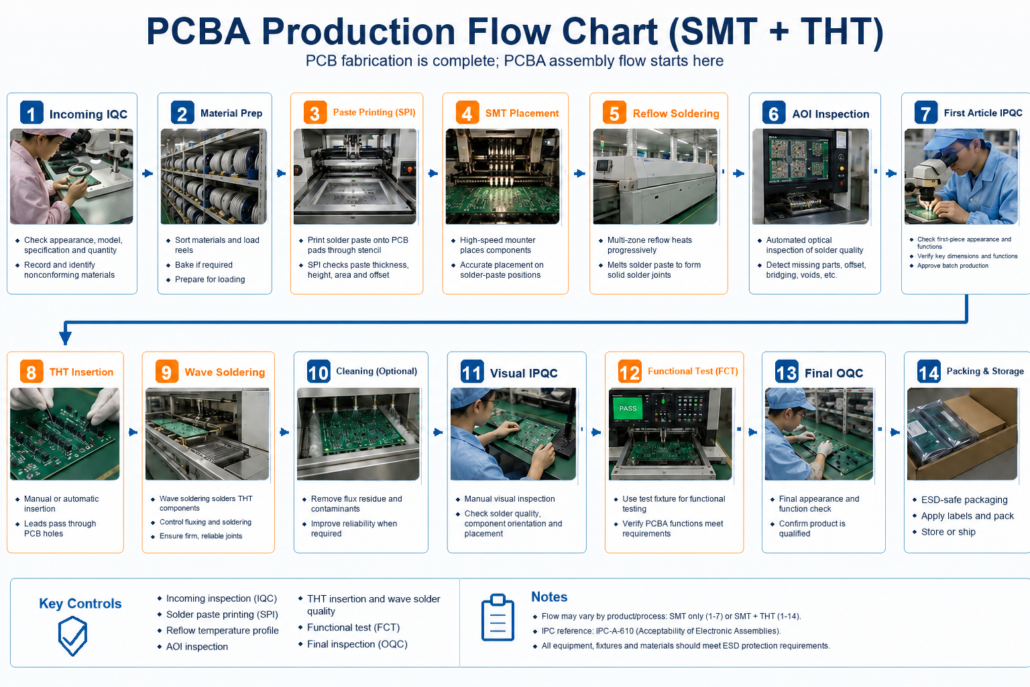
📍In this blog, we zoom in on six key stages that shape assembly quality and product reliability: Solder paste printing, SMT placement, reflow soldering, THT insertion, wave soldering, and functional testing.
🔸Solder Paste Printing: Where the Foundation Is Set
Solder paste is printed onto PCB pads through a stencil before component placement. During reflow, it melts and forms the connections between components and the board. Because paste volume, position, and thickness affect soldering quality, SPI is used to catch printing issues early.
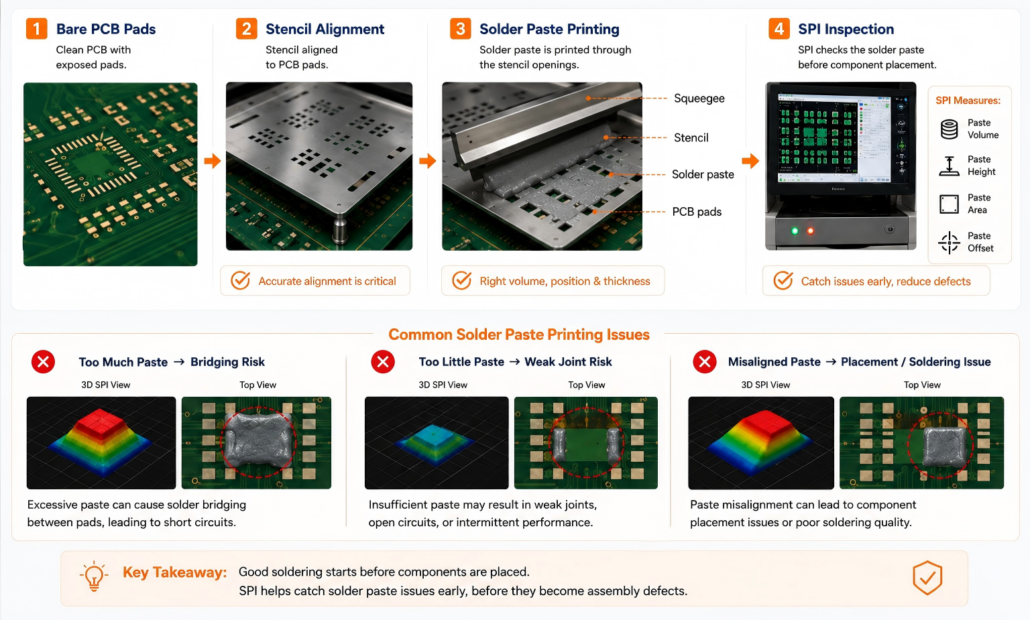
✅A reliable PCBA starts here.
🔸SMT Placement: Components Find Their Seats
After solder paste printing, the pick-and-place machine places surface-mount components onto the PCB with high speed and precision.
Each component must land in the correct position, direction, and footprint. Even a small shift or rotation error can lead to soldering defects or functional issues later.
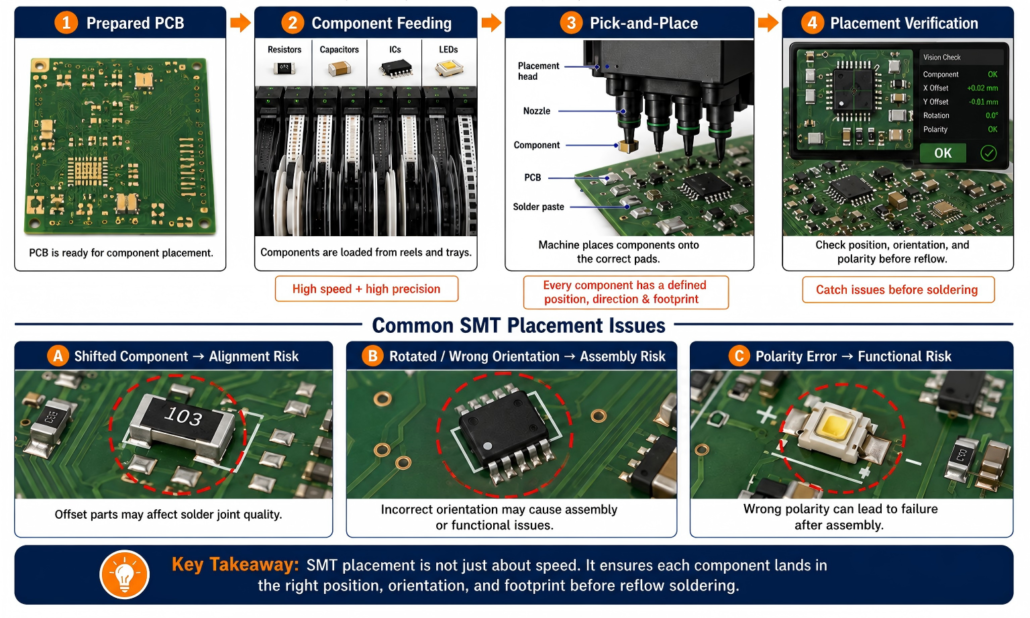
✅SMT placement is where accuracy meets speed.
🔸Reflow Soldering: The Moment Everything Bonds
After SMT placement, the board enters the reflow oven. The solder paste melts, then solidifies to form electrical and mechanical connections between the components and the PCB.
Reflow is not just about heating the board. A controlled temperature profile is critical for creating reliable solder joints and avoiding defects such as tombstoning, cold joints, bridging, or weak connections.
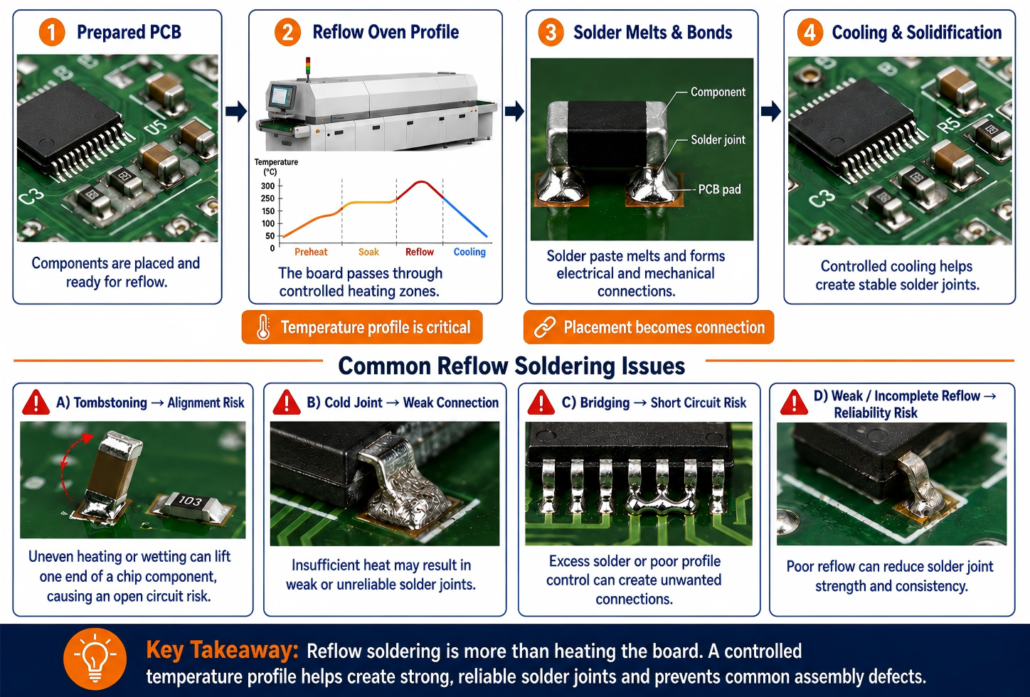
✅This is the step where placement becomes connection.
🔸THT Insertion: When Stronger Parts Join the Board
Some components, such as connectors, large capacitors, transformers, terminals, and switches, need stronger mechanical support than SMT can provide.
THT insertion places component leads through PCB holes before wave soldering, helping ensure stable assembly and reliable connections.
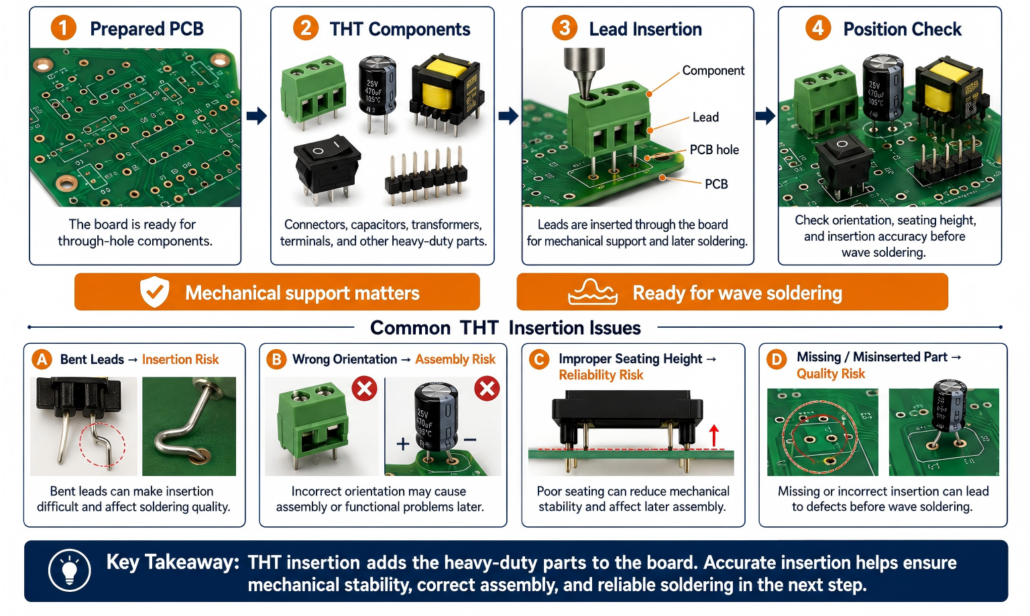
✅This is where the heavy-duty parts join the board.
🔸Wave Soldering: Securing the Through-Hole Connections
Wave soldering secures THT components by passing the bottom side of the PCB over molten solder.
When fluxing, preheating, solder temperature, and conveyor speed are well controlled, this process creates durable and consistent through-hole joints.
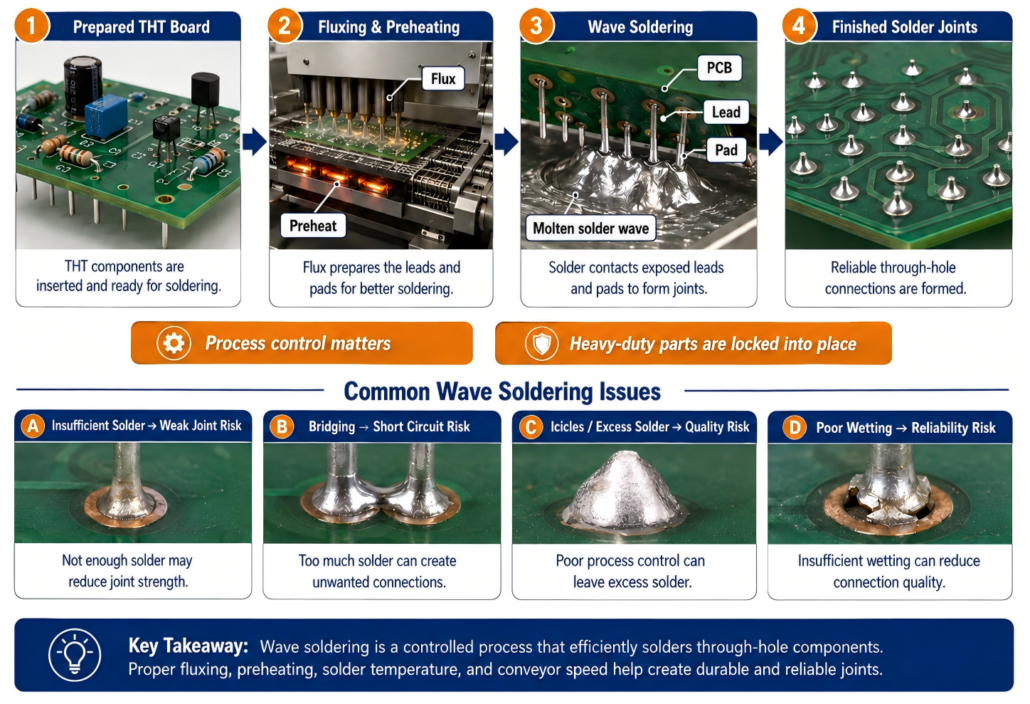
✅This is where heavy-duty components are locked into place.
🔸Functional Test: Does the Board Actually Work?
FCT verifies whether the assembled PCBA works under defined operating conditions, such as power-on, communication, sensor, display, signal, or firmware-related tests.
While earlier steps check assembly quality, functional testing confirms real performance.
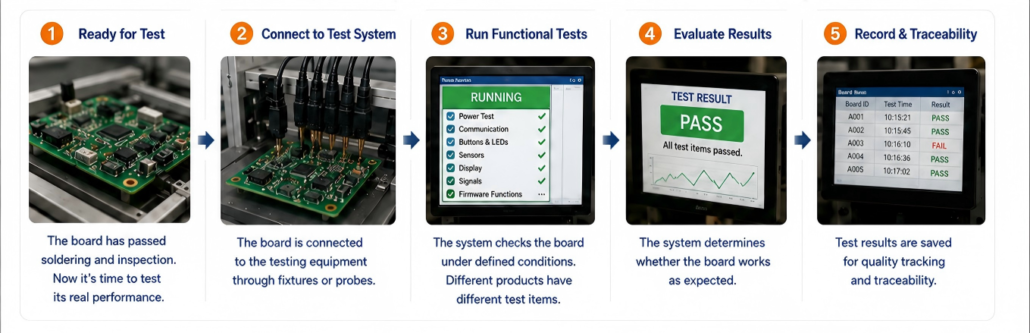
✅This is where the PCBA proves itself.
Why These Steps Matter
PCBA assembly is a chain of connected steps. If one stage is not well controlled, the impact may appear later as a soldering defect, functional issue, or reliability problem.
A reliable PCBA process is not only about speed. It is about controlling the key steps that turn a bare PCB into a consistent, functional, and production-ready board.
🔍Ready to Start Your Next PCBA Build?
Seeed Fusion supports PCB fabrication, sourcing, SMT/THT assembly, inspection, and testing.
👇Check the latest PCBA coupon offers before placing your order.

If you have any other questions, feel free to contact us at [email protected]
About Author
