From Beneath Tomato Vines to Above Hydroponic Channels: How Does the SenseCAP Combo 5-in-1 Sensor Make Growing Conditions Visible?
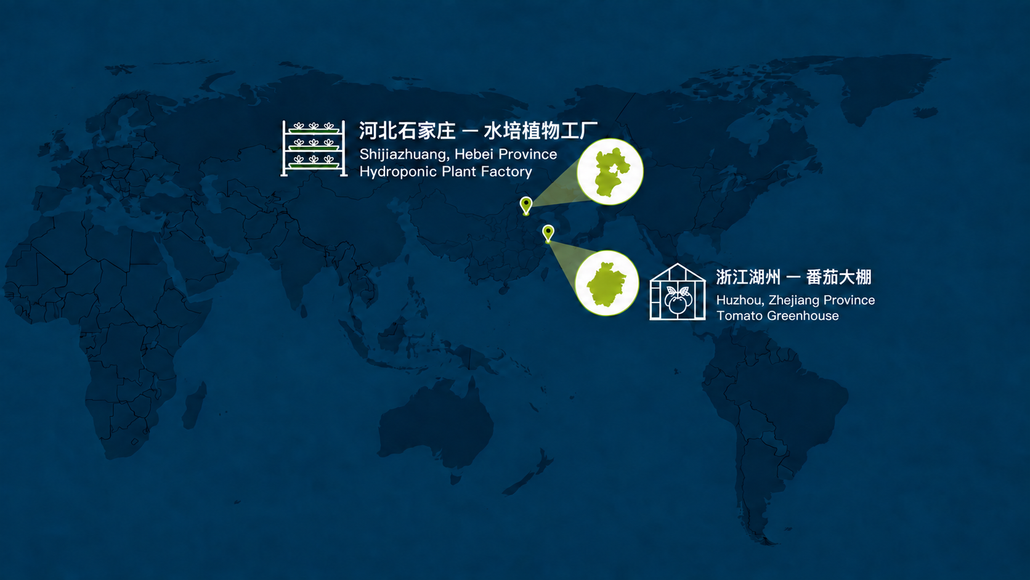
Growing conditions can change throughout the day, even when the crops look much the same. To help growers track those changes, the SenseCAP Combo 5-in-1 Sensor has been deployed at two sites in China: a tomato greenhouse in Huzhou, Zhejiang, and a hydroponic plant factory in Shijiazhuang, Hebei.
The crops and growing methods differ, but both sites can use continuous environmental records to support daily decisions. In the tomato greenhouse, growers can compare temperature, humidity, CO₂, and light readings with actions such as ventilation and shading. At the hydroponic plant factory, the data can be linked to growing zones, production batches, and equipment schedules. The sensor also sends data over 4G, so managers can review trends remotely. These two deployments show how environmental monitoring can become part of everyday growing practices.
Monitoring Within the Growing Rows
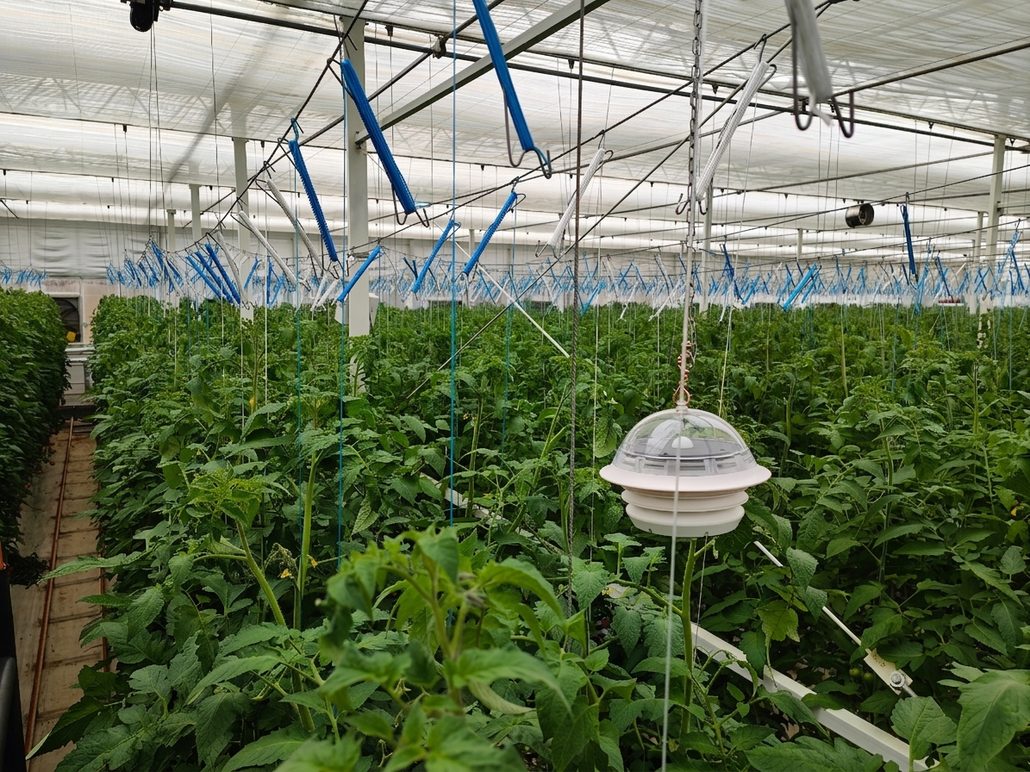
Inside the tomato greenhouse in Huzhou, trellises, support strings, and rows of plants form a compact, orderly growing space. Tomato foliage spreads along each row. The monitoring device sits among the plants, close to the leaves and support structures. As a result, its environmental readings are tied to a specific growing area.
In day-to-day management, a device’s value depends partly on where it is placed. When growers inspect a row, they can compare what they see—leaves, stems, and recent work—with the environmental records from that location. Each inspection then has a record they can return to later.
If plants in one area grow differently or show signs of a problem, growers can review past readings alongside their observations. This gives them a clearer basis for tracing the cause and deciding what to adjust. Environmental monitoring thus becomes part of daily greenhouse management, rather than just a set of numbers on a screen.
SenseCAP Combo 5-in-1 Sensor in Hydroponic Production
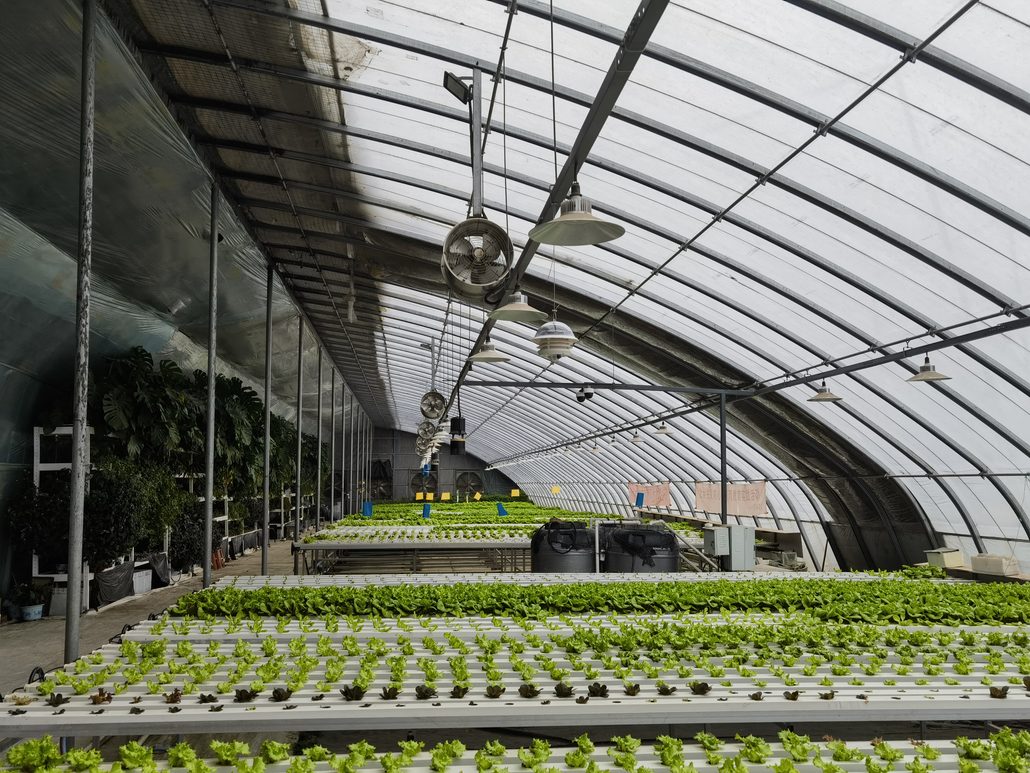
At the hydroponic plant factory in Shijiazhuang, Hebei, rows of leafy greens are cultivated in hydroponic channels. The crops are at different growth stages, while grow lights and circulation fans are installed throughout the facility. Above the growing area, the SenseCAP Combo 5-in-1 Sensor monitors air temperature, relative humidity, CO₂, light intensity, and atmospheric pressure. These measurements help managers understand the conditions around the crops. Meanwhile, the data can be compared with lighting, ventilation, and production schedules. With built-in 4G connectivity, the sensor can also upload data for remote viewing. This gives the plant factory a continuous environmental record for daily management and future production reviews.
One Sensor, Multiple Greenhouse Applications
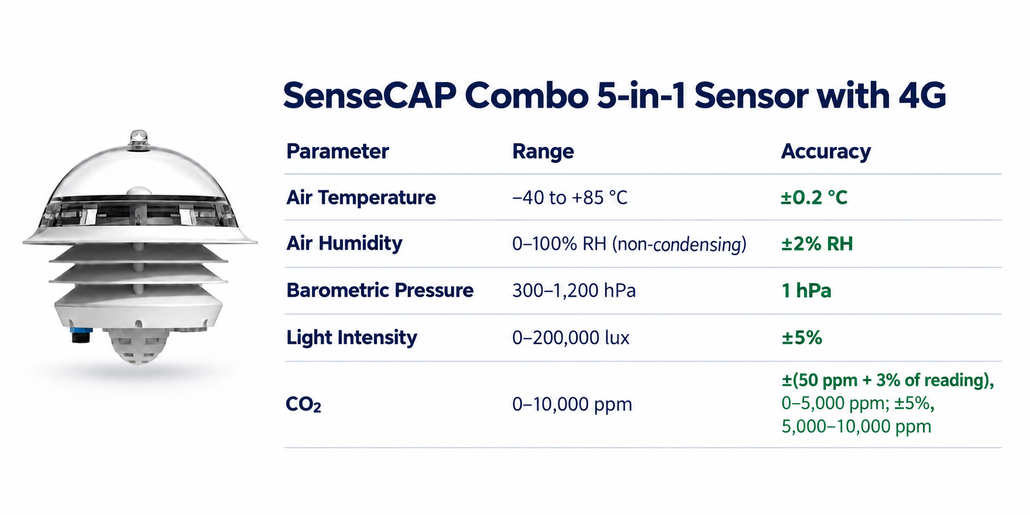
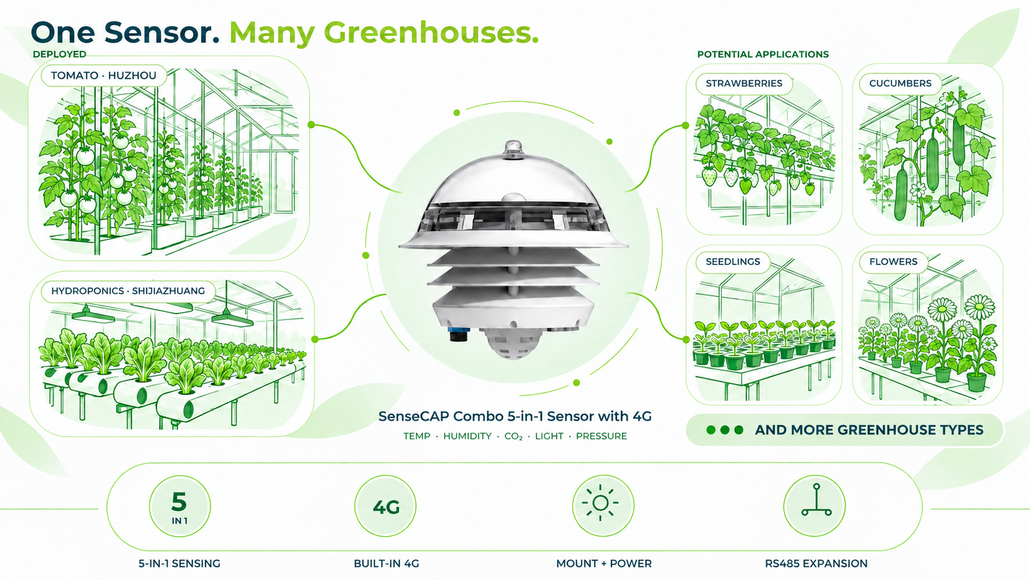
The tomato and hydroponic deployments share one need: understanding the conditions around crops. The SenseCAP Combo 5-in-1 Sensor provides a common monitoring foundation. It measures air temperature, humidity, CO₂, light intensity, and atmospheric pressure.
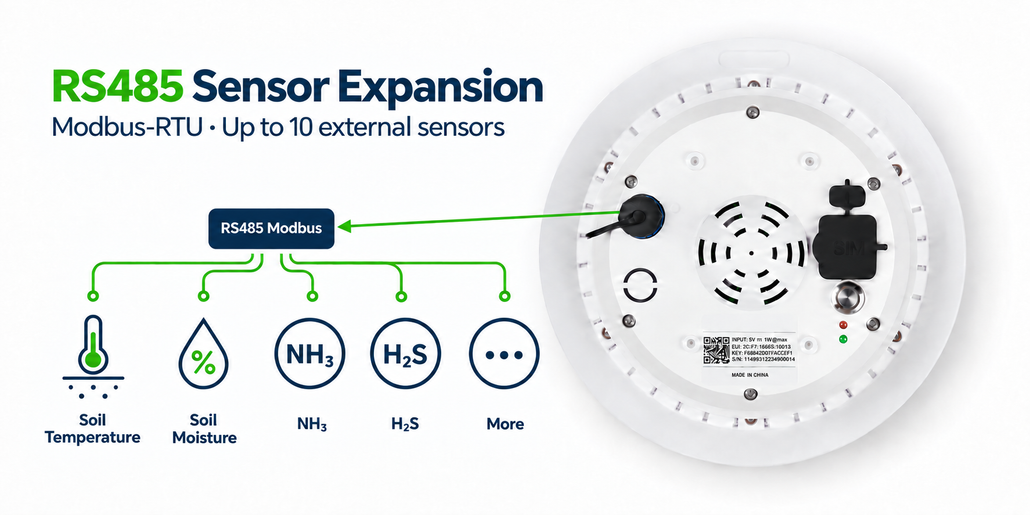
Flexible mounting, built-in 4G, and multiple power options help it fit different greenhouse layouts. Meanwhile, RS485 expansion supports compatible probes for soil, substrate, or nutrient-solution monitoring. Add the Industrial IP68 Modbus RS485 1-to-4 Splitter/Hub to connect multiple sensors through one RS485 interface.
As a result, the same approach could extend to strawberry houses, cucumber greenhouses, nurseries, and flower production. Growers can then choose sensor placement and external probes to suit each crop.
Why Greenhouses Choose the SenseCAP Combo 5-in-1 Sensor
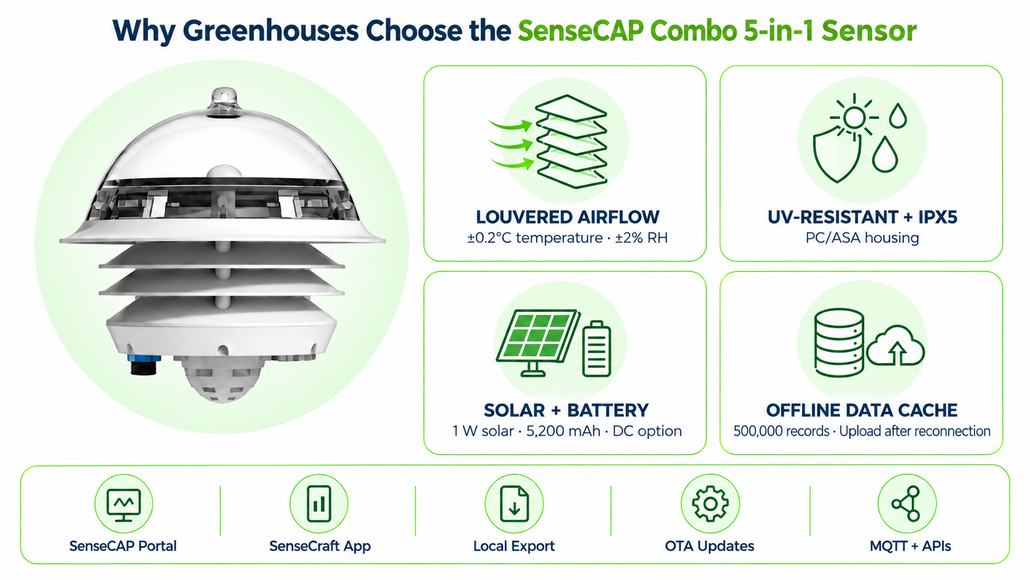
The SenseCAP Combo 5-in-1 Sensor includes design details that make long-term monitoring easier to manage. Its white, louvered radiation shield shades the temperature and humidity sensors while allowing air to circulate. This helps limit heat buildup around the sensing area. The device is specified at ±0.2°C for air temperature and ±2% RH for humidity. In addition, its UV-resistant PC/ASA housing and IPX5 protection help it withstand sunlight and water spray. A built-in 1 W solar panel can recharge the 5,200 mAh battery when light is available. External DC power offers another option. If cellular service is interrupted, the sensor can store up to 500,000 records and upload them after reconnection. Growers can also export historical records locally. Through the SenseCAP Portal or the SenseCraft app, they can review trends remotely. OTA updates, custom MQTT server support, and platform APIs make ongoing maintenance and integration easier.
Turning Readings into Growing Insights
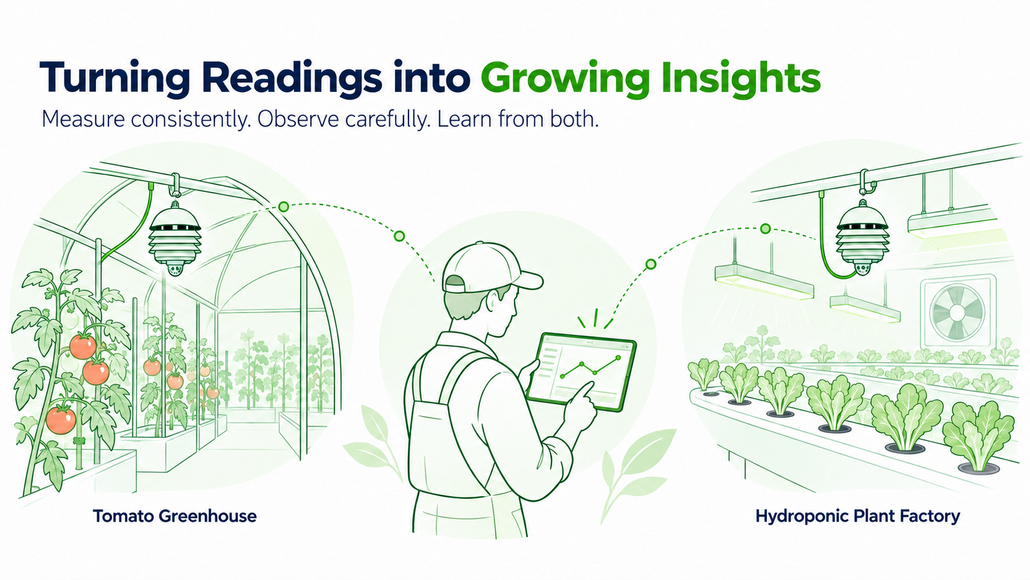
The tomato greenhouse in Huzhou and the hydroponic plant factory in Shijiazhuang show how environmental data gains meaning when it is tied to a specific growing area. Growers can compare trends with crop stages, daily work, and equipment schedules. When conditions change, those records give them a place to start looking for answers.
The SenseCAP Combo 5-in-1 Sensor helps build this record over time. Its value lies in the patterns growers can review, not in any single reading. Across different greenhouse settings, the approach remains the same: place each sensor with a clear purpose, observe what happens around the crops, and use both sources of information to guide the next decision.
About Author
