Offshore Drilling Weather Station: How S700-C Helps With Lift and Deck Work Windows
Work Within Changing Weather Windows
A fixed offshore platform anchors a steel jacket to the seabed and carries working decks above the sea. In the Gulf of Gabès, our customer needed an offshore wellhead platform and a subsea pipeline connecting it to an onshore processing plant. The construction team would set the jacket, lift the main topside from an installation vessel, complete the deck equipment and exposed steelwork, then hand the facility over to the drilling team. The plan included a permanent offshore drilling weather station for the work following main-deck installation.
The vessel superintendent first selects a lift window using the marine forecast and observations from the installation vessel. Once the main deck is secured and safe to access, the site team installs the station to support the remaining lifts and deck work. Each missed window ties up the vessel and lifting crew and disrupts the construction sequence. The drilling team also needs an accurate record of completed work when the facility is handed over.
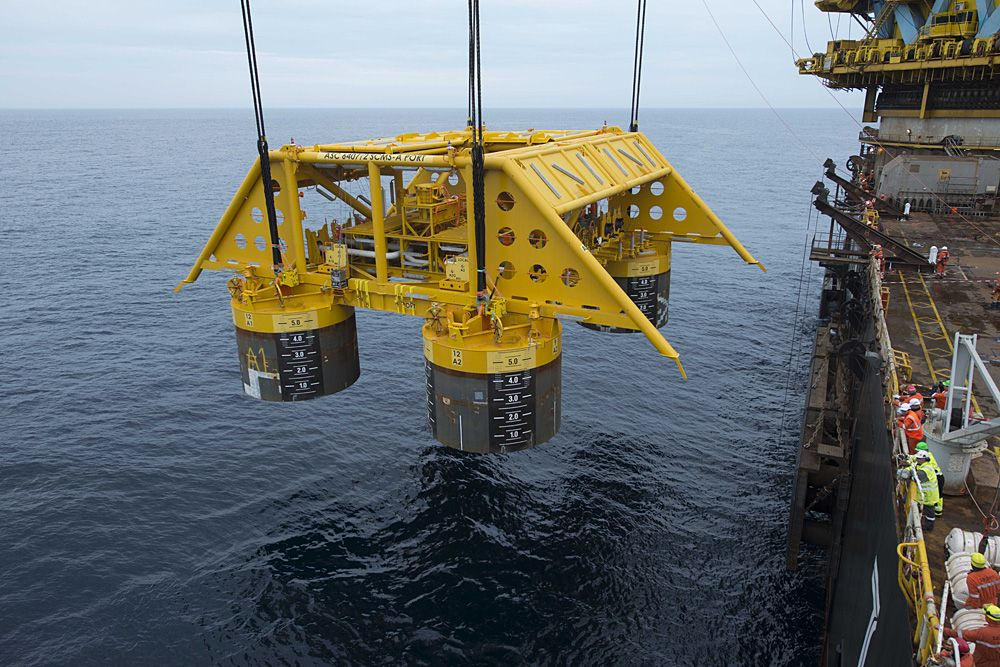
Jacket Installation and Topside Lifting
Construction lead Nadia reviews the morning marine forecast with the installation-vessel master and lift supervisor. Before the jacket lift, they check actual wind and direction at the vessel along with vessel motion and sea state against the lift plan. During the main topside lift, a change in wind direction increases the load’s exposure while the vessel, rigging team and receiving crew are already in position. They complete only the current controlled step, land and secure the load when the lift plan calls for a hold, and re-sequence the next lift. Nadia updates the support-vessel and labour schedule at once instead of allowing a stalled lift to consume the following deck-installation slot.
Record All the Weather Conditions at the Fixed Platform
Follow the Project from Installation Vessel to Fixed Platform
The jacket installation and first topside lift rely on the installation vessel’s established marine weather observations. Once the fixed platform has a deck mounting point, power, and a cable route, Nadia’s team installs a SenseCAP S700-C there. It gives the crew measurements at the structure where the remaining work will take place. Nadia adds those readings to the daily briefing for later module lifts and deck installation, then keeps the same site record available when the drilling team takes over.
That local record matters when work depends on the conditions at a particular time and place. The lift supervisor needs to check wind at the platform against the approved lift plan. The coating lead needs temperature and humidity readings for the application check. As drilling begins, the incoming crew can review the conditions recorded at the platform alongside the marine forecast when planning exposed deck work.
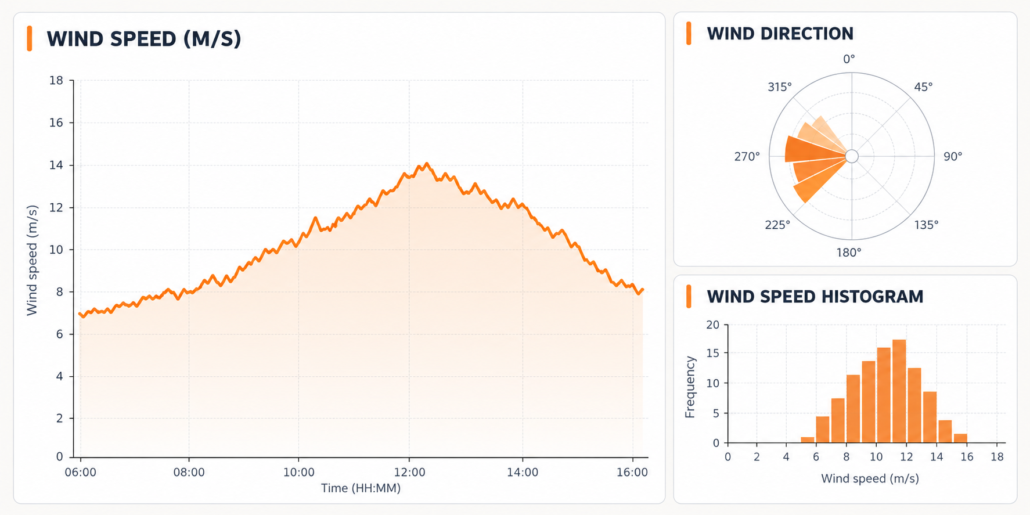
Bring Wind Rainfall Humidity Temperature and Pressure into One Record
Before an auxiliary module lift, Nadia and the lift supervisor review the SenseCAP S700-C weather station wind speed and direction readings against the lift plan and the vessel’s observations. Its ultrasonic wind sensor measures wind without rotating cups or a vane. The specified standard range is 0–60 m/s, with ±0.3 m/s accuracy at speeds up to 10 m/s and ±3° wind-direction accuracy. These are measurements the supervisor can use to check the conditions at the fixed structure before proceeding.
Rainfall needs the same attention during exposed deck work. S700-C’s advance radar sensor sends microwave signals toward falling raindrops and uses the reflected signals to estimate rain intensity. It can register a change in rainfall without waiting for water to collect and tip a bucket. Nadia uses that local rain record with the marine forecast to place exposed electrical installation and coating in a drier window, while the coating lead checks temperature and relative humidity against the job’s application requirements. Barometric pressure gives the team another local observation when reviewing changing conditions ahead of the next shift. The S700-C specifies a rain-intensity range of 0–300 mm/h and a resolution of 0.01 mm/h.
The compact design also affects the work required to keep that observation point in service. Wind, radar rainfall, temperature, humidity, and pressure measurements are housed in one station, so technicians have one mounted unit and its connections to inspect during routine visits. The ultrasonic wind sensor has no rotating cups or vane to check for wear, and the radar rain sensor has no collection funnel or tipping mechanism to clear. On an offshore platform, where each inspection takes crew time and access planning, removing those recurring mechanical checks reduces the effort spent maintaining the weather observation point.
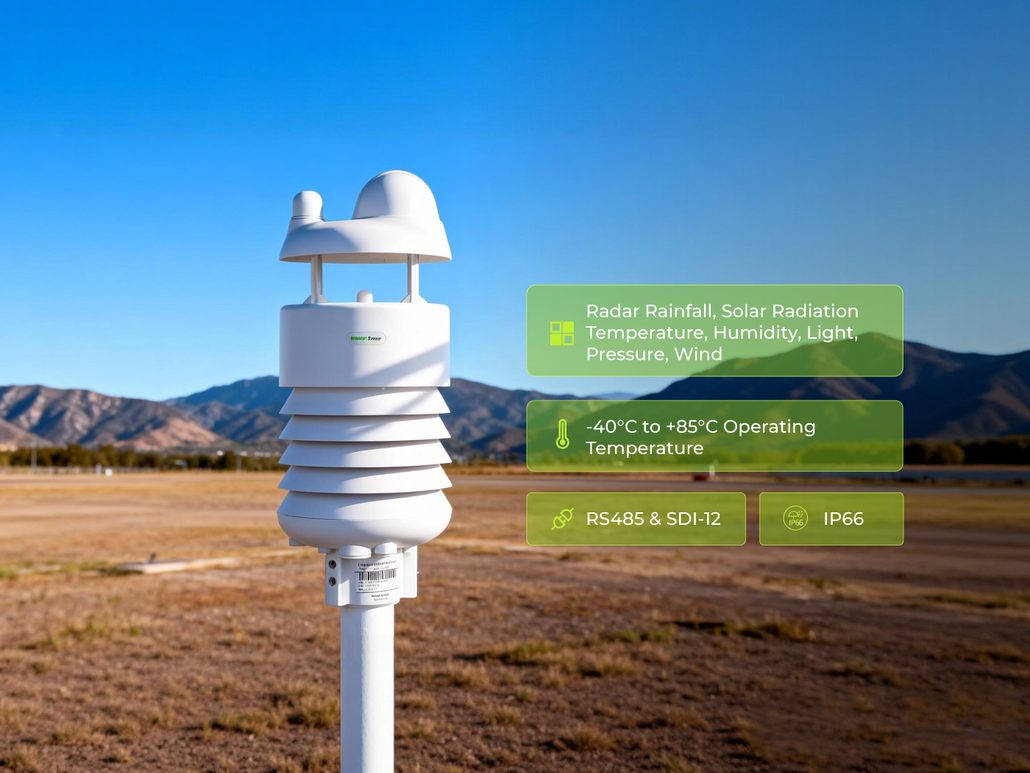
Keep the Offshore Drilling Weather Station Record Available on Deck
At handover, drilling supervisor Sami adds the platform record to the next day’s work package. He pairs local wind and rain with the marine forecast before booking a supply-vessel delivery, an exposed deck inspection and the crew needed to move materials toward the well area. A change in those deck tasks goes onto the shift handover before the vessel and receiving team are mobilised.
S700-C’s UV-resistant housing, IP66 dust and water ingress protection, working from −40°C to +85°C operating range support an exposed deck installation. Nadia specifies marine-grade fixings, sealed cable entries and a mounting position above the wave-splash zone; those choices keep the sensor accessible for inspection in the salt-air environment.
For this project, the team uses the S700-C’s RS485 Modbus-RTU output to bring platform weather readings into the existing control-system view. Where a project has a suitable LoRaWAN gateway, the same sensor can connect through an S2100 LoRaWAN data logger. The integrator maps the chosen path to the operator’s platform network and data retention requirements before handover.
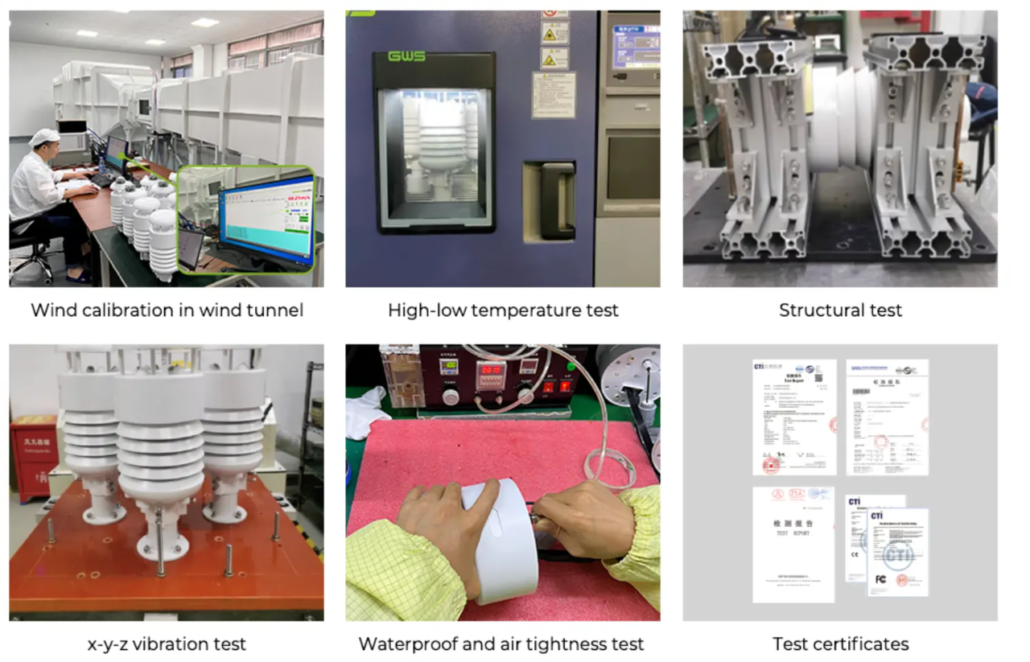
Your Offshore Drilling Weather Station with SenseCAP
A complete offshore worksite plan also needs sea-state and tidal-level observations at the locations where vessels approach and personnel transfer. Contractors and platform operators can specify those marine measurements alongside the S700-C‘s fixed-deck weather record when defining the equipment package.
If you have similar weather monitoring needs, contact us at [email protected]. Tell us about your project, and the Seeed team will put together a detailed solution for you.
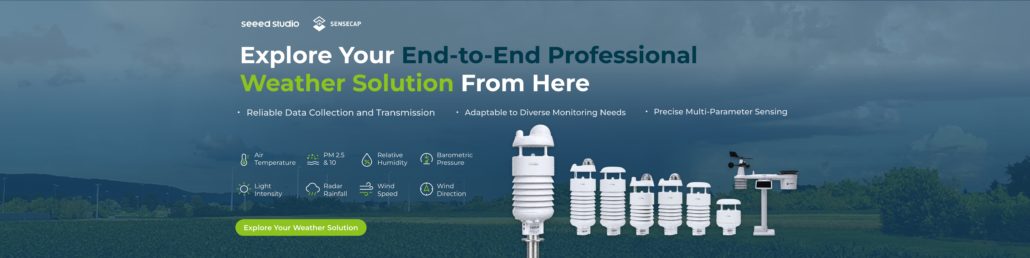
Seeed Studio is helping lead this transition through the SenseCAP weather station portfolio. SenseCAP combines industrial-grade sensing, compact all-in-one hardware, open communication protocols, flexible data paths, and a repeatable deployment architecture.
Seeed Studio works with more than 200 partners and over 1,000 customers across 120+ countries, with SenseCAP deployments spanning greenhouse and vineyard monitoring, smart-city observation, renewable-energy sites, environmental research, and industrial facilities. This is the direction professional weather monitoring is taking, and SenseCAP is building the products and integration ecosystem needed to move it forward.
Notes: This article is based on a real customer project. Names and identifying location details have been changed to protect the customer’s identity. Images sourced online are used for visual reference.
About Author
