Uniting for Climate Action: Seeed Studio Joins HMEI to Drive Accessible, Intelligent Environmental Monitoring
Seeed Studio Joins the Global Hydrometeorological Community
We are thrilled to share a major milestone in our journey toward a smarter, more sustainable planet! Seeed Studio has officially joined HMEI (HydroMeteorological and Environmental Industry Association). This partnership marks a significant step forward in our mission to drive global weather observation, hydrological monitoring, and climate resilience through cutting-edge technology.
As an official member of HMEI, we look forward to collaborating with global industry leaders, national hydrometeorological services, and international institutions to co-create open, reliable, and intelligent monitoring infrastructure, building a greener, more environmental-friendly, and more sustainable future for all.
What Is HMEI, and Why Does It Matter?
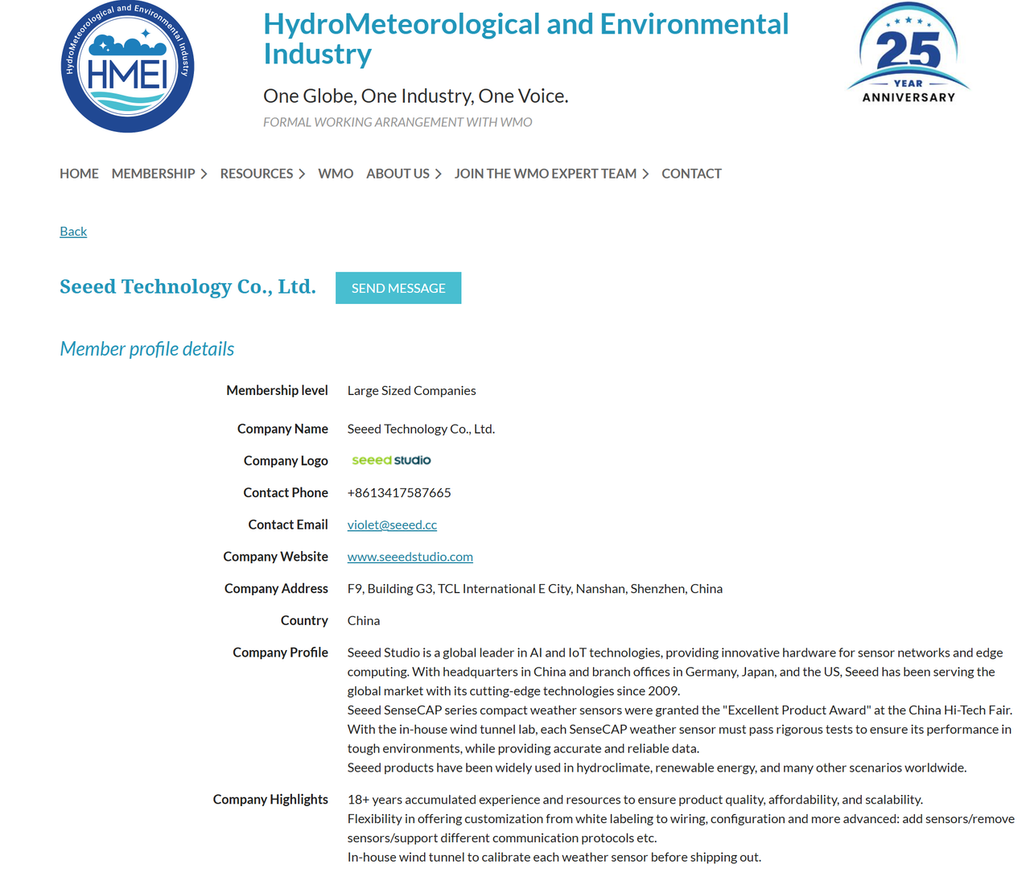
HMEI is a not-for-profit industry association representing developers, manufacturers and service providers across the hydrometeorological sector. Its scope includes equipment, software, systems and services, reflecting the full chain through which environmental observations become useful information.
The association has a formal working arrangement with the World Meteorological Organization (WMO), the United Nations specialized agency for weather, climate and water. HMEI represents industry perspectives in international discussions and contributes to dialogue on standards, observation technologies and the practical needs of monitoring systems.
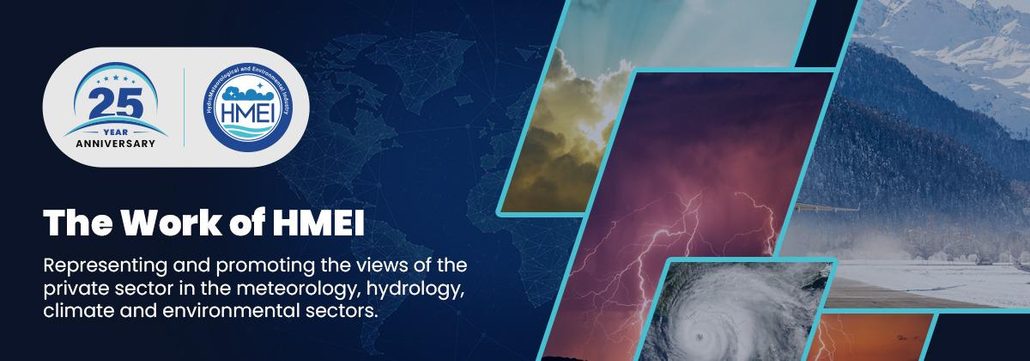
This role matters because the quality of environmental information depends on cooperation across instrument suppliers, system integrators, researchers and public agencies. The jointly developed WMO-HMEI Code of Ethics emphasizes quality, transparency, knowledge exchange and sustainable infrastructure. It provides a shared foundation for collaboration across the weather, climate and water services community.
Shaping the Future of Hydrometeorology: Seeed Studio’s Role & Technical Contribution
In an era of accelerating climate shifts, modernizing weather and water monitoring requires more than traditional sensors—it demands seamless IoT connectivity, localized AI computing, and flexible hardware architectures.
As an industry leader in Edge AI, IoT sensing, and open hardware, we are uniquely positioned to connect field instrumentation directly with real-time operational intelligence.
For Seeed, HMEI membership provides a channel for closer engagement with the professional priorities shaping hydrometeorological observation. Discussions on measurement practices, interoperability and long-term operation can help inform how we develop sensing hardware, document its performance and support integration into larger systems.
For the HMEI community, Seeed brings a portfolio spanning field sensors, wireless data acquisition, programmable industrial computers and edge AI platforms. This combination offers a practical basis for collaboration on the connection between observation equipment and the digital infrastructure that processes its data.
The value of this relationship lies in the exchange: operational experience can guide technology development, while connected sensing and local computing can help address integration and deployment challenges. Seeed’s participation strengthens our commitment to professional practice and creates opportunities to contribute engineering experience to shared industry priorities.
From Weather Sensing to Edge Computing in Hydrometeorological Monitoring
Seeed’s contribution extends across the monitoring workflow, from measuring local conditions to connecting instruments and processing observations close to their source. This approach supports systems that must bring together weather data, hydrological measurements and site information in a usable operational context.
Key Pillars of Our Contribution to the Hydrometeorological Community
- Democratizing Precision Sensing: We bring multi-parameter, low-maintenance sensors, featuring ultrasonic wind and radar rainfall technology, to dense microclimate and hydrological networks worldwide.
- Embedding Edge Intelligence: By integrating local computing nodes (powered by NVIDIA Jetson, RockChip, and Raspberry Pi, we enable automated data checks, computer vision, and local threshold alerts right at the point of measurement, bypassing bandwidth limitations.
- Driving Interoperability & Scalability: We adopt industrial protocols including wireless and wired connectivities via LoRaWAN, 4G for wireless, MOBUS-RS485, SDI-12, GPIO and modular configurations, ensuring seamless integration with existing environmental infrastructure and multi-vendor networks.
- Supporting the UNSDGs: We actively align our hardware ecosystem with UN Sustainable Development Goals to support early warning systems, climate adaptation, and watershed conservation.
A Foundation in Professional Weather Observation
The SenseCAP portfolio addresses different observation requirements.
| Model | Key Measurement Accuracy | Typical Applications |
| SenseCAP S200 | Wind speed: ±0.3 m/s*; wind direction: ±3°. | Catchment and flood monitoring: Rainfall observations, combined with river-level and flow measurements, help teams assess how precipitation relates to changing water conditions and support flood-risk analysis. Reservoir and snowmelt assessment: Temperature, rainfall and solar radiation measurements provide inputs for reviewing snowmelt and inflow conditions, supporting water-storage and generation planning. Lake and watershed management: Local weather observations complement water temperature and quality measurements, helping operators interpret environmental changes and plan monitoring or maintenance activities. |
| SenseCAP S500 | Temperature: ±0.1°C; humidity: ±1.5% RH; pressure: ±50 Pa; wind speed: ±0.3 m/s*; direction: ±3°. | |
| SenseCAP S600-A | Numerical measurement accuracy is not specified in the current public datasheet. | |
| SenseCAP S700 | Temperature: ±0.1°C; wind speed: ±0.3 m/s*; direction: ±3°; rainfall intensity: ±10%; light intensity: ±5% of reading. | |
| SenseCAP S700-A | Temperature: ±0.1°C; wind speed: ±0.3 m/s*; direction: ±3°; rainfall intensity: ±10%; light intensity: ±5% of reading. | |
| SenseCAP S700-B | Temperature: ±0.1°C; wind speed: ±0.3 m/s*; direction: ±3°; rainfall intensity: ±10%; solar radiation: ±3%. | |
| SenseCAP S700-C | Temperature: ±0.1°C; wind speed: ±0.3 m/s*; direction: ±3°; rainfall intensity: ±10%; solar radiation: ±3%. | |
| SenseCAP S800 | Temperature: ±0.1°C; wind speed: ±0.3 m/s*; direction: ±3°; noise: ±1.5 dB. | |
| SenseCAP S1000 | Temperature: ±0.1°C; wind speed: ±0.3 m/s*; direction: ±3°; rainfall intensity: ±10%; CO₂: ±(30 ppm + 3% of reading), within 400–5,000 ppm. | |
| SenseCAP S2120 | Temperature: ±0.5°C at 0–80°C; wind speed: ±0.5 m/s below 5 m/s; direction: ±8°; rainfall intensity: ±7%; light intensity: ±5%; UV index: ±10%. |
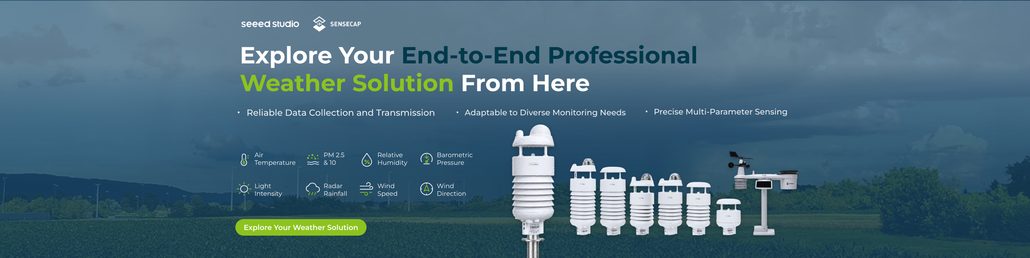
Seeed’s industrial SenseCAP weather stations bring reliable local weather data to demanding outdoor environments. The compact, all-in-one design combines IP66-rated protection with durable construction, making installation and long-term operation easier. Ultrasonic wind sensing and radar rainfall options reduce mechanical wear and maintenance needs, helping teams collect consistent observations across multiple sites. From monitoring rainfall across a catchment to assessing conditions around a reservoir, SenseCAP weather stations provide useful inputs for understanding flood risks, planning operations and managing water resources.
Connected Sensing and Edge Intelligence for Hydrological Analysis
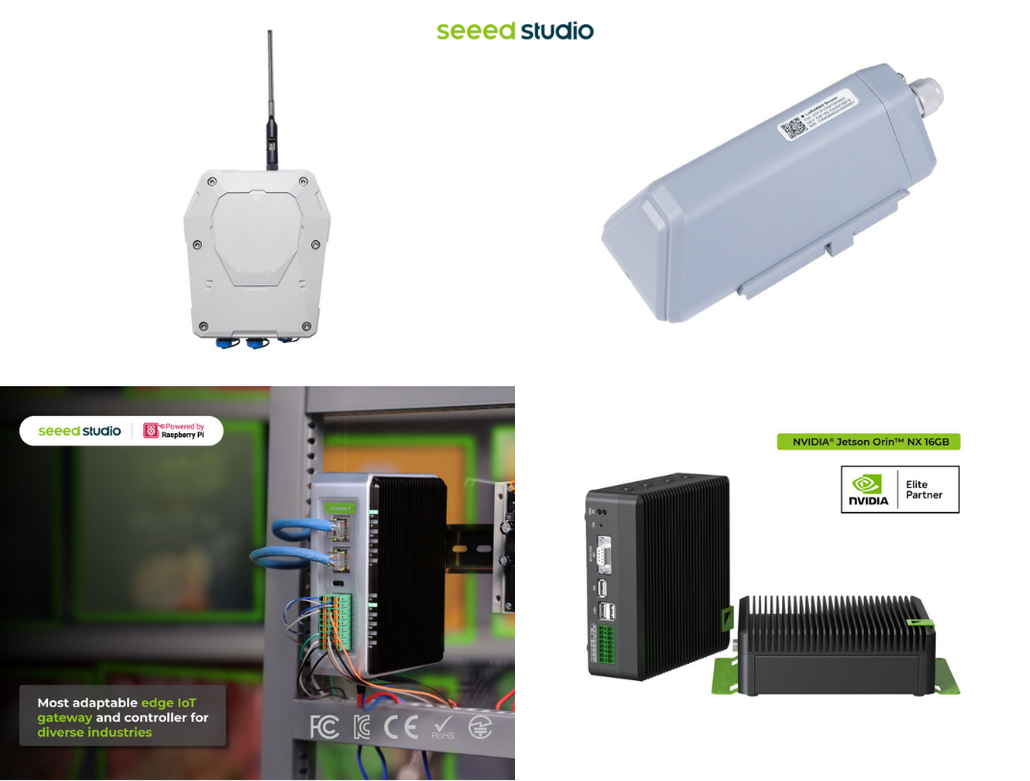
SenseCAP S2100 LoRaWAN Data Logger and Sensor Hub 4G Data Logger connect compatible field instruments through wireless monitoring networks. This enables weather stations and water sensors to contribute to a shared data workflow, simplifying remote observation across dispersed sites.
At the processing layer, the Raspberry Pi-powered reComputer R1100 supports configurable applications for collecting readings, checking data quality, storing observations and evaluating site-specific thresholds. The NVIDIA Jetson-powered reComputer Industrial J4012 provides computing capacity for camera-based analysis. With suitable models and site calibration, integrators can develop applications to identify visible inundation or interpret water-level references. Local processing can reduce transmission demands and make relevant observations available sooner for operational review.
SenseCAP in Action: Real-World Applications Across Verticals
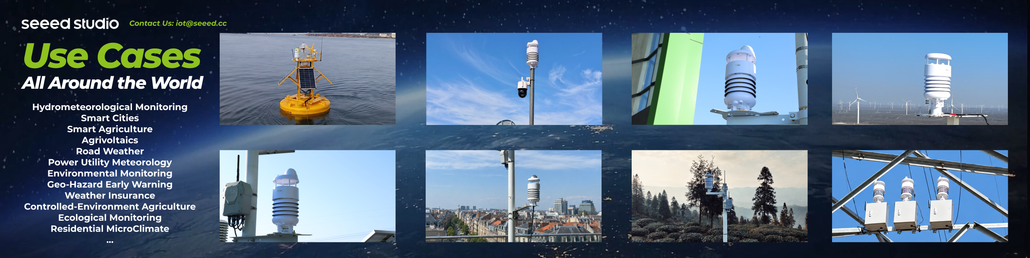
Our SenseCAP meteorological and environmental monitoring solutions are deployed globally, turning complex environmental raw data into actionable, real-time insights. Our solutions have reached diverse environments across China, Italy, Germany, the United Kingdom and South Africa, with applications ranging from rainfall monitoring across river catchments and snowmelt assessment in mountain watersheds to reservoir operations, hydropower planning and urban stormwater management. At irrigation sites, wetlands and coastal monitoring locations, SenseCAP weather stations provide weather data that complements water-level, flow and water-quality measurements, helping teams understand changing conditions and assess emerging risks. With a clearer view of changing conditions, our customers can plan operations more effectively, assess environmental risks and make better-informed decisions about water resources, infrastructure and community protection.
By combining dependable sensing with connected monitoring and edge computing, Seeed aim to help shape the next generation of professional hydrometeorological observation, making local data more accessible, strengthening operational insight and supporting more resilient water infrastructure and ecosystems.
Contributing Technical Knowledge and Deployment Experience to HMEI
As an HMEI member, Seeed aims to contribute practical know-how across observation-system design, sensor integration, field deployment and local data processing. We look forward to sharing experience on instrument selection, ultrasonic wind and radar rainfall sensing, connectivity architecture and maintainable monitoring workflows.
Through exchange with fellow members, researchers and monitoring professionals, we hope to turn our experience into useful implementation guidance and a deeper shared understanding of modern weather station technologies. Our contribution will connect instrument knowledge with complete system experience, supporting dependable, interoperable hydrometeorological monitoring.
Looking Ahead with HMEI
Guided by our mission of making technology accessible and our commitment to the UN Sustainable Development Goals, we seek to turn innovation into lasting environmental and social value. We aim to protect ecosystems, strengthen community resilience and advance responsible, inclusive collaboration. Together with HMEI and its members, we look forward to serving a wider range of meteorological and hydrological applications, from watershed conservation and water resource management to climate adaptation and disaster preparedness. By sharing technical knowledge, deployment experience and expertise in sensing and edge computing, we hope to help more communities and institutions understand environmental change and respond effectively.
To explore our sensing, connectivity and edge computing portfolio, download our 2026 Product Catalog and SenseCAP Weather Station Catalog. We welcome conversations with fellow HMEI members, researchers and monitoring professionals about joint projects, technical exchange and new applications. Contact us at [email protected] to discuss how we can work together.
Frequently Asked Questions
What is HMEI’s role in the hydrometeorological industry?
HMEI represents private-sector developers, manufacturers and service providers working in weather, water and environmental monitoring. It facilitates technical exchange, contributes industry perspectives to international discussions and supports collaboration on standards and observation systems.
How is HMEI connected to the WMO?
HMEI has a formal working arrangement with the WMO. Their cooperation supports engagement between public and private organizations, with contributions from academia, to improve the quality, sustainability and efficiency of weather, climate and water information and services.
What does Seeed Studio bring to HMEI?
Seeed brings expertise across compact weather sensing, connected data acquisition and edge computing. Its portfolio provides tools for measuring local conditions, integrating compatible instruments and developing applications that process environmental data close to the observation site.
How can edge computing support hydrometeorological monitoring?
Edge computing allows configured applications to process sensor readings and camera imagery locally. Tasks can include data checks, short-term aggregation, local storage and event detection. This can shorten the path from observation to operational insight and reduce the volume of data sent to a central platform.
About Author
