How Can SenseCAP Weather Stations Help Monitor Ski Resort Weather Conditions?
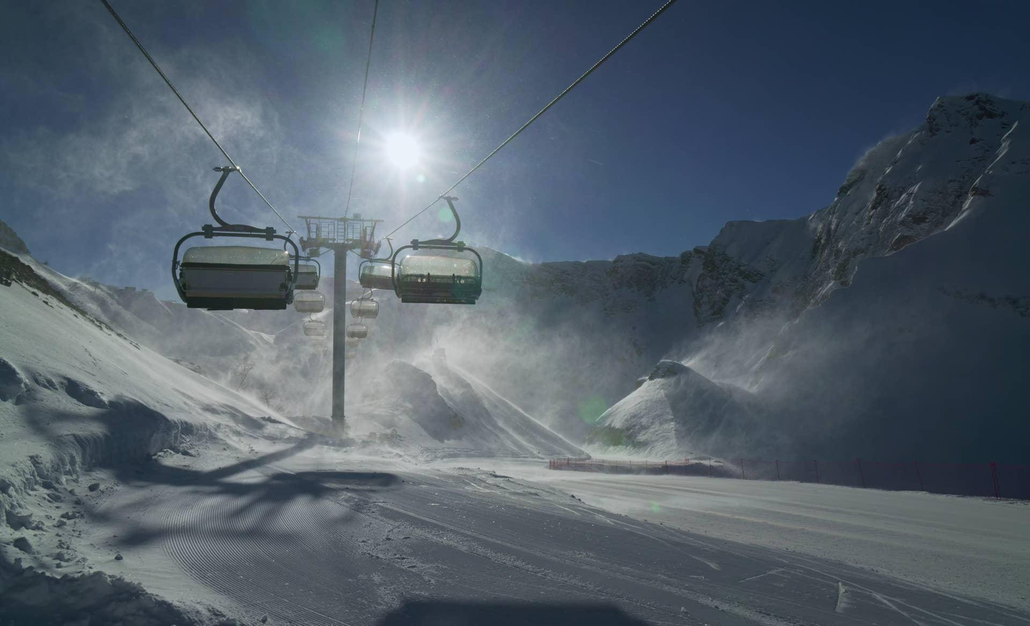
Ski resort operations depend on weather conditions throughout the winter season. From artificial snowmaking and slope maintenance to monitoring snowfall and changing mountain weather, reliable weather data helps operators plan daily activities and respond to changing environmental conditions.
However, weather conditions can vary considerably across a ski resort. Differences in elevation, slope orientation, and terrain can lead to variations in temperature, wind exposure, and solar radiation. Regional weather forecasts may not fully reflect the conditions at individual slopes or snowmaking areas, making on-site monitoring an important part of ski resort management.
Because weather conditions can vary significantly across a ski resort, monitoring key parameters at different locations helps operators better understand local conditions and their impact on resort operations. SenseCAP offers a comprehensive weather monitoring solution for ski resorts, with flexible sensor configurations to meet the needs of different monitoring locations and operational scenarios.
Why Weather Monitoring Matters for Ski Resorts
Weather monitoring supports several key aspects of ski resort operations, from managing snow production to maintaining slope conditions and tracking changing mountain weather.
- Supporting Snowmaking Operations
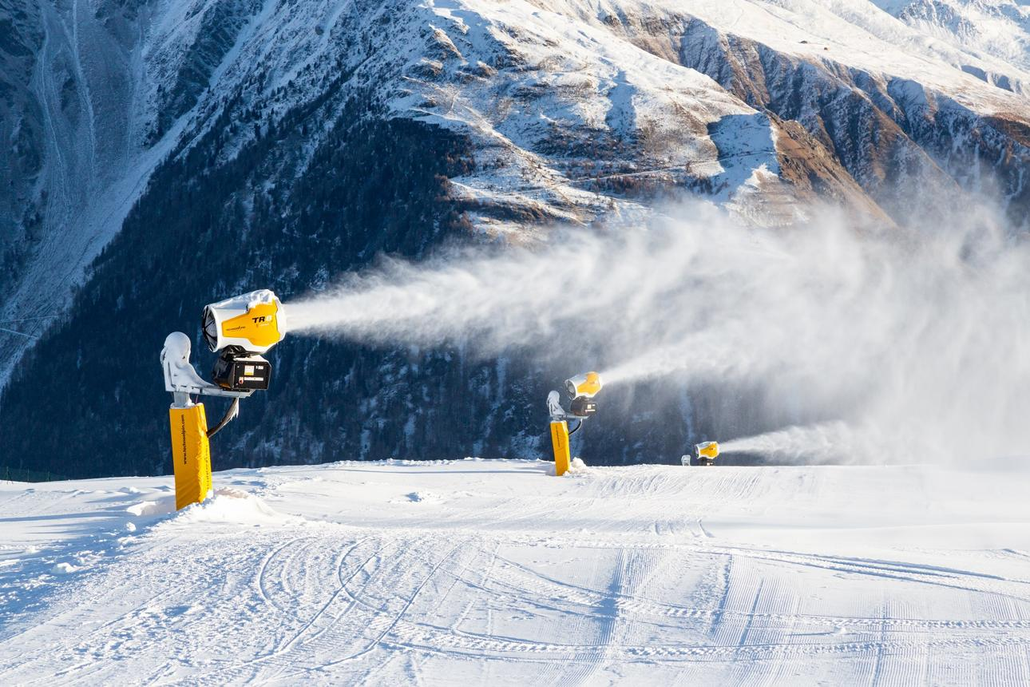
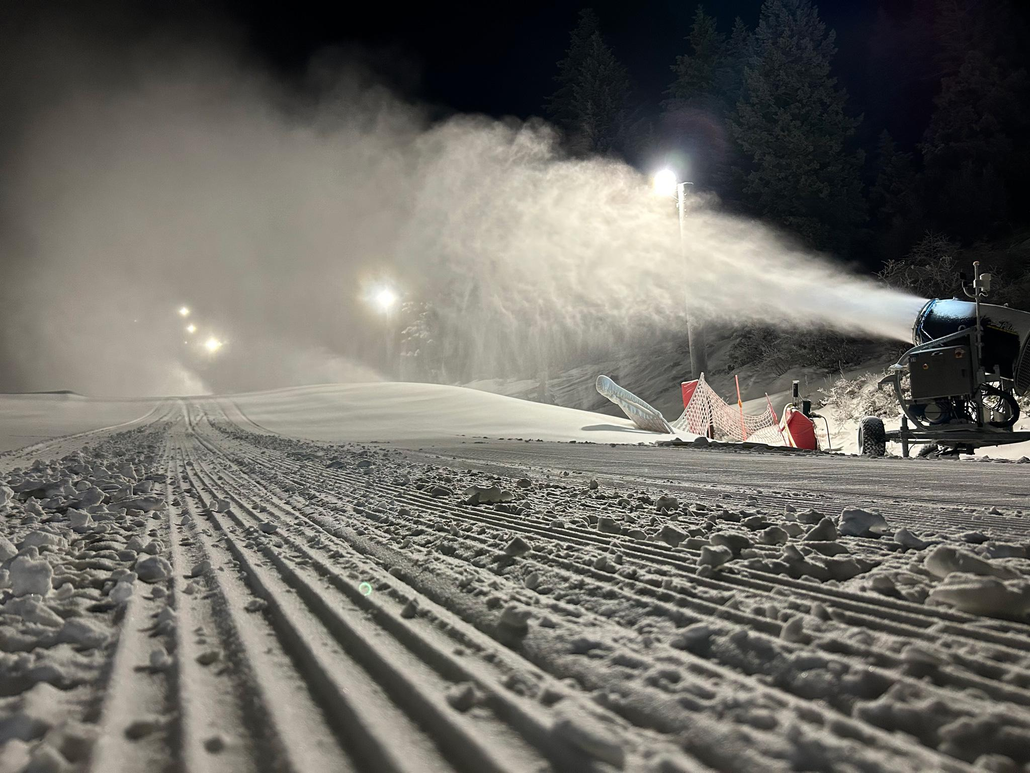
Artificial snowmaking depends on suitable temperature and humidity conditions, while wind speed and direction can also affect snow distribution. Monitoring local weather conditions helps operators identify potential snowmaking windows and plan operations according to changing environmental conditions.
- Understanding Snowmelt and Slope Conditions
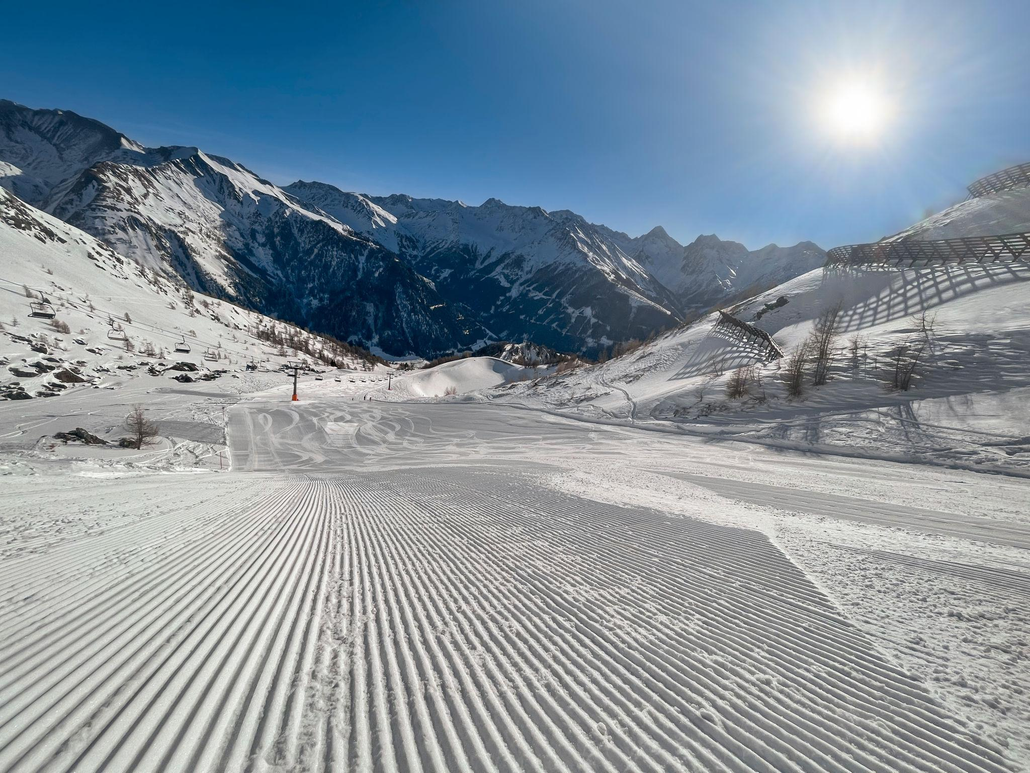
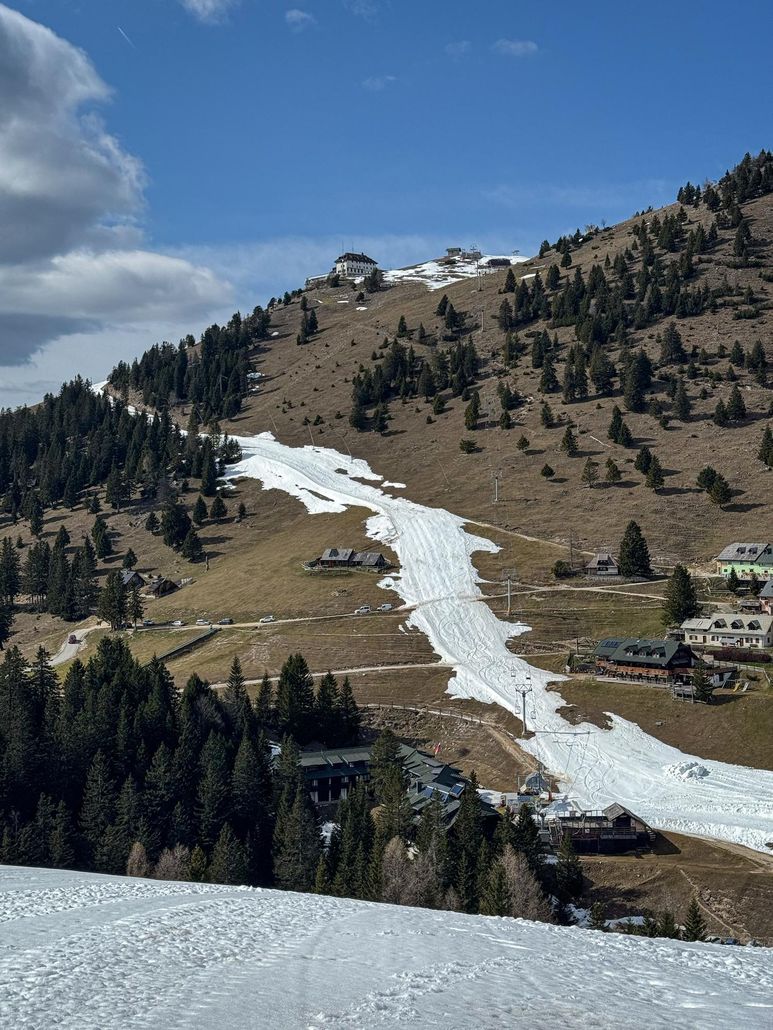
Sunlight, ambient temperature, and wind can influence how snow conditions change across different slopes. Solar radiation measurements, combined with temperature and other meteorological data, help operators analyze environmental variations and better understand potential snowmelt patterns. These insights can support slope inspection and maintenance planning.
- Monitoring Localized Mountain Weather
Weather conditions at mountain summits, exposed ridges, and lower elevations may differ significantly. Monitoring wind speed, wind direction, temperature, and precipitation at representative locations provides more detailed information about local conditions. This can help resort teams track weather changes and support operational decisions.
- Tracking Snowfall and Snow Accumulation
Monitoring snowfall amounts over time helps ski resorts assess how much new snow has accumulated across different slopes. This data can support snow grooming schedules, identify areas that may need additional snow coverage, and help maintenance teams prioritize their work after snowfall events.
- Supporting Data-Driven Operations
Continuous weather monitoring builds a historical record of environmental conditions throughout the ski season. By comparing these records with snowmaking activities, maintenance schedules, and on-site observations, operators can identify recurring patterns and use data to support future planning.
Key Weather Parameters for Ski Resorts
Monitoring key weather parameters helps ski resorts understand changing environmental conditions and make informed decisions about snowmaking, slope maintenance, and daily operations.
| Weather Parameters | Why It Matters | Applications in Ski Resorts |
| Air Temperature and Relative Humidity | These parameters influence artificial snowmaking conditions, while temperature also affects snowmelt. | Identify suitable snowmaking time and monitor temperature changes that may affect snow cover. |
| Wind Speed and Direction | Wind can reduce snowmaking efficiency, affect snow distribution, and create challenging conditions in exposed areas. | Adjust snowmaking operations and monitor conditions at mountain summits and ridgelines. |
| Solar Radiation | Solar exposure affects the energy reaching the snow surface and contributes to variations in snowmelt. | Compare conditions across slopes and identify areas that may need closer monitoring or maintenance. |
| Snowfall | New snowfall changes snow coverage and influences slope grooming requirements. | Track snowfall events and accumulation to plan grooming schedules and identify areas that may need additional snowmaking. |
| Rainfall and Other Precipitation | Rain and other precipitation can affect snow cover and surface conditions, particularly during warmer periods. | Track precipitation events and support slope maintenance planning. Measurement methods should match the required measurement, such as rainfall, snowfall, or snow depth. |
A Complete Weather Monitoring Solution for Ski Resorts
Monitoring weather across a ski resort requires more than individual weather stations. Resorts need suitable sensing equipment at different locations, reliable data transmission from remote areas, and a platform to collect and analyze the measurements. SenseCAP brings these components together in a flexible weather monitoring solution that can be adapted to different site conditions and operational requirements.
- Multi-Parameter Weather Stations for On-Site Monitoring
SenseCAP offers a range of compact and professional weather stations that measure multiple meteorological parameters in a single device. Depending on the model, measurements can include air temperature, relative humidity, wind speed and direction, solar radiation, and precipitation.
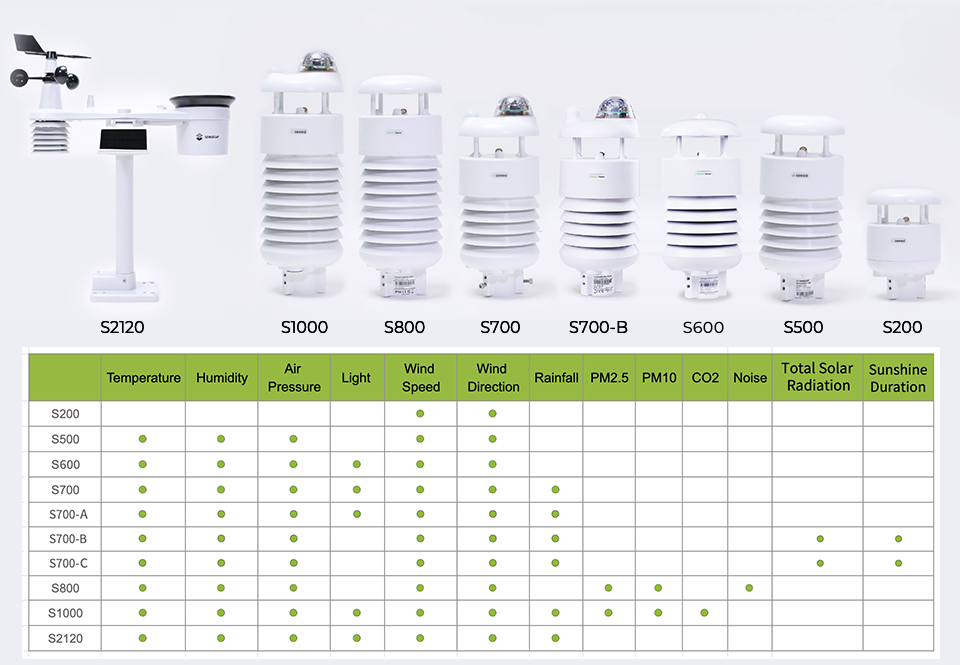
For ski resorts, these stations can be installed at base facilities, snowmaking zones, mid-mountain slopes, and exposed summit areas. Different models can be selected according to the parameters required at each location, allowing operators to collect localized weather data without deploying the same configuration everywhere.
For example, a station measuring temperature and humidity can support snowmaking decisions, while a configuration that includes wind and solar radiation measurements can provide additional insights into exposed areas and changing snowmelt conditions.
- Radar-Based Weather Monitoring
SenseCAP offers radar-based rainfall sensing as part of its weather monitoring solutions. Unlike conventional rain gauges that collect water through a funnel, radar sensors use non-contact measurement, with no moving parts and reduced maintenance requirements for outdoor deployments.
Beyond rainfall measurement, radar-based sensing also creates opportunities to expand monitoring capabilities to other forms of precipitation, such as snowfall and hail. With further development and firmware enhancements, this technology could support more comprehensive winter weather monitoring for ski resorts.
- Flexible Data Collection and Connectivity
Weather monitoring points in ski resorts may be spread across large areas, from easily accessible base stations to remote mountain locations. The appropriate data collection and communication method depends on the available power supply, network coverage, and existing infrastructure.
SenseCAP supports different deployment options:
- LoRaWAN connectivity: The SenseCAP S2100 LoRaWAN Data Logger can collect data from compatible RS485 sensors and transmit it through a LoRaWAN gateway. This approach is suitable for distributed monitoring sites where LoRaWAN coverage can be established.
- Cellular connectivity: The SenseCAP Sensor Hub 4G can collect data from compatible industrial sensors and send it directly over a cellular network, reducing the need for a local LoRaWAN gateway.
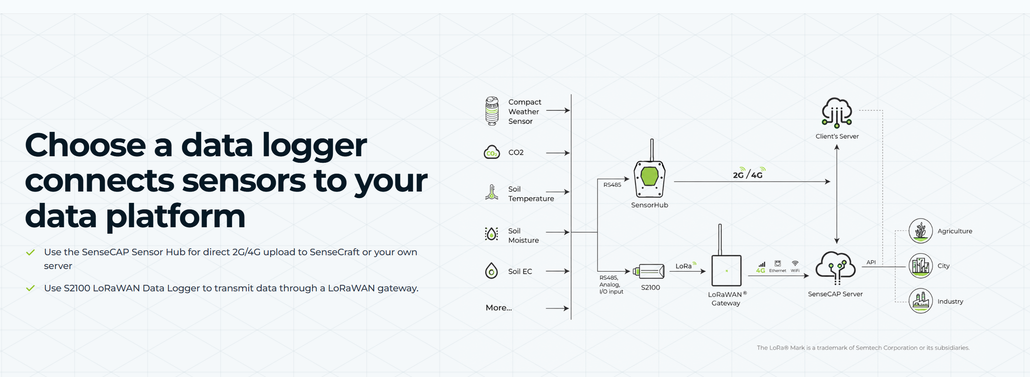
- Integration with existing systems: Compatible sensors and data loggers can connect to existing data acquisition equipment and monitoring platforms through supported interfaces and protocols, helping resorts extend their monitoring capabilities without rebuilding their entire system.
By selecting the appropriate combination of sensors, data loggers, and communication methods, ski resorts can build a monitoring network suited to their terrain and infrastructure.
- Centralized Weather Data Management and Integration
Collecting weather data is only part of the solution. Resort teams also need a practical way to view current measurements, review historical trends, and incorporate weather information into their existing workflows.
SenseCAP supports data management through SenseCraft, where users can view device measurements, monitor data by site, review historical charts, filter records, and export data for further analysis. For resorts with their own software or control systems, API and messaging interfaces such as HTTP API and MQTT provide options for integrating weather data into existing platforms.
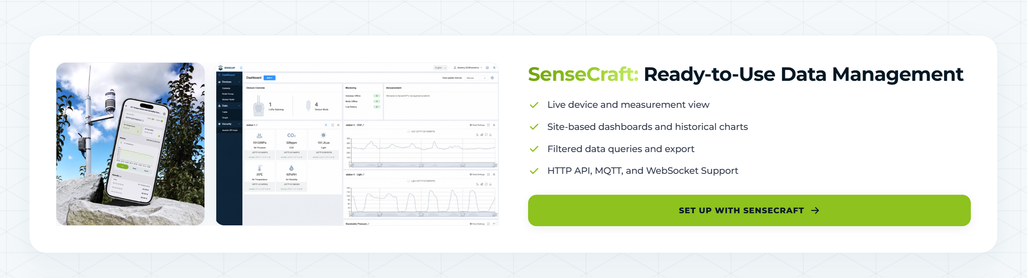
With data from multiple monitoring locations brought together, resort operators can compare local weather conditions, review changes over time, and use the resulting information to support snowmaking schedules, slope maintenance, and daily operational planning.
Together, SenseCAP weather stations, specialized sensors, data loggers, connectivity options, and data management tools provide a flexible foundation for building a weather monitoring system tailored to ski resort operations.
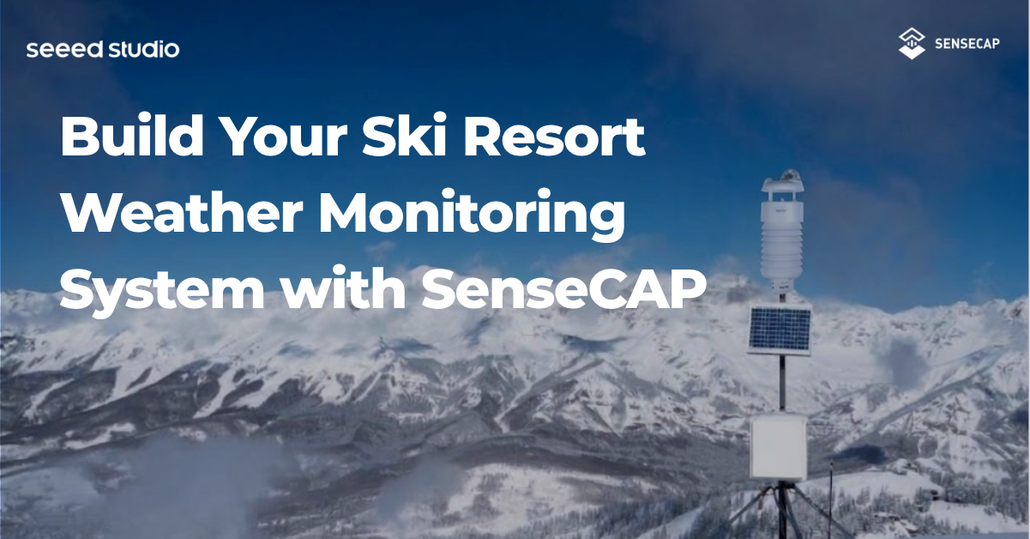
Build Your Ski Resort Weather Monitoring System with SenseCAP
Weather conditions influence many aspects of ski resort operations, from artificial snowmaking and snowmelt monitoring to snowfall tracking and daily slope maintenance. A reliable monitoring system provides localized weather data that helps operators understand changing conditions and make more informed decisions.
SenseCAP offers a flexible range of weather stations, radar sensors, data loggers, connectivity options, and data management tools. These components can be combined according to the monitoring parameters, terrain, and infrastructure of each ski resort, from individual monitoring points to a distributed weather monitoring network.
When planning a deployment, consider which parameters need to be measured, where monitoring points should be located, how data will be transmitted, and whether integration with an existing platform is required. Selecting equipment based on these requirements helps build a solution suited to the resort’s operational needs.
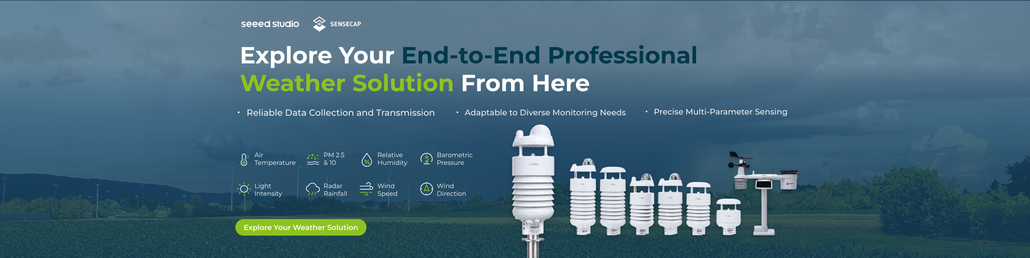
Explore the SenseCAP Professional Weather Station portfolio to discover weather monitoring products and build a solution tailored to your ski resort.
If you have similar weather monitoring needs, contact us at [email protected]. Tell us about your project, and the Seeed team will put together a detailed solution for you.
Seeed Studio is helping lead this transition through the SenseCAP weather station portfolio. SenseCAP combines industrial-grade sensing, compact all-in-one hardware, open communication protocols, flexible data paths, and a repeatable deployment architecture.
Seeed Studio works with more than 200 partners and over 1,000 customers across 120+ countries, with SenseCAP deployments spanning greenhouse and vineyard monitoring, smart-city observation, renewable-energy sites, environmental research, and industrial facilities. This is the direction professional weather monitoring is taking, and SenseCAP is building the products and integration ecosystem needed to move it forward.
About Author
