ESP32 LoRa: Hardware Guide, Setup, and Real-World Range
Off-grid communication used to mean expensive radios or satellite subscriptions. ESP32 LoRa changes that equation.
LoRa (Long Range) is a low-power radio modulation technology that transmits small data packets over kilometers using unlicensed spectrum. Pair an ESP32S3 with a LoRa transceiver like the SX1262 and you get a device that sends messages miles without cellular coverage, runs on battery, and connects to the internet the moment WiFi is available — all for about $10. That combination is why ESP32 LoRa now powers everything from backcountry hiking networks to smart agriculture sensors and city-wide Meshtastic meshes.
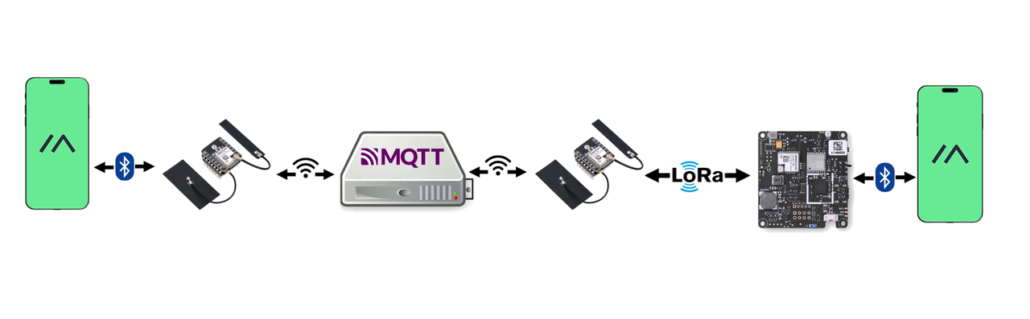
Where ESP32 stands out from other LoRa platforms is processing power. The dual-core 240 MHz architecture handles Meshtastic mesh routing, sensor data processing, and WiFi MQTT bridging simultaneously — capabilities that single-core or Bluetooth-only alternatives can’t match at this price point.
This guide covers why ESP32 LoRa works so well for these applications, how to select the right hardware, step-by-step setup, and real projects from the community.
Why ESP32 LoRa Is Popular for Long-Range IoT and Decentralized Communication
The ESP32 started as a dual-core WiFi and Bluetooth SoC. Paired with a LoRa transceiver like the SX1262, it becomes a long-range communication powerhouse.
You get a device that can:
- Communicate over miles on battery power
- Run complex routing and sensor logic without a separate MCU
- Bridge mesh networks to the internet via built-in WiFi
ESP32 with Different Communication Solutions
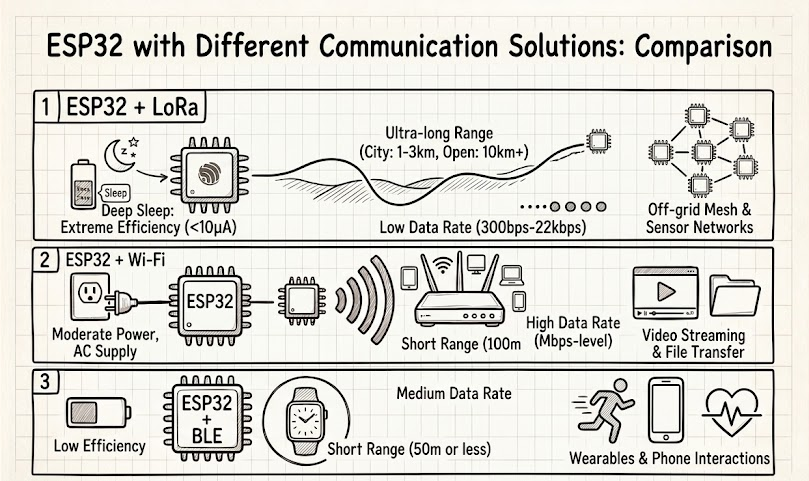
| Solution | Power | Range | Data Rate | Use Case |
| ESP32 + LoRa | Extreme (sub-10µA sleep) | Ultra-long (1-3km city, 10km+ open) | Low (300bps-22kbps) | Off-grid mesh, sensors, comms |
| ESP32 + Wi-Fi | Moderate | Short (100m) | High (Mbps) | Smart home, streaming |
| ESP32 + BLE | Low | Short (50m) | Medium | Wearables, trackers |
How to Choose the Best ESP32 LoRa Setups
Right ESP32 LoRa selection hinges on regional frequency, chipset, transceiver, power efficiency, and form factor.
1.Regional Frequency
Match your region: 915 MHz US, 868 MHz EU, 433 MHz Asia. Wio-SX1262 supports dual sub-GHz bands (410-1050 MHz) for cross-regional flexibility.
2.Chipset: ESP32S3 vs ESP32C3
ESP32S3 recommended for new projects—better performance, power efficiency, and mesh networking capability. ESP32C3 is viable for cost-sensitive single-function nodes, but shows instability when WiFi and Bluetooth run concurrently. If your node needs to bridge the mesh to MQTT over WiFi while maintaining Bluetooth app connectivity, ESP32S3 is the more reliable choice.
3.LoRa Transceiver: SX1262 vs SX127x
SX1262 (newer): 4.2 mA RX current, -140 dBm sensitivity, extended frequency range.
SX127x (older): 10.8 mA RX, less efficient. Choose SX1262 unless cost prohibits.
4.Display vs Compact Size
Integrated Display: Some ESP32 LoRa boards include built-in OLED screens for real-time status monitoring without a serial connection. Useful for stationary nodes where visual feedback matters during setup or troubleshooting. Tradeoff: higher continuous power draw makes them less suitable for battery deployments.
Ultra-Compact Form Factor: Boards like the XIAO ESP32S3 prioritize size (21mm) and sleep efficiency (14µA) over display output. Best for wearables, weatherproof field sensors, and any deployment where months of battery life matter more than on-device readability.
5.Power & Battery Life
For Meshtastic relay nodes transmitting hourly, ESP32S3 deep sleep (sub-10µA) provides adequate battery life on a 2000 mAh cell. WiFi-enabled MQTT bridging draws more continuously — plan for AC power or a larger solar setup when running WiFi active.
Best ESP32 LoRa Hardware in 2026
While many manufacturers also choose ESP32 as their LoRa module’s MCU, they differ in transceiver selection—some use older SX1276/1278 chips for cost savings, or target different deployment scenarios. The XIAO ESP32S3 & Wio-SX1262 combination stands out by pairing the latest SX1262 transceiver with an ultra-compact form factor optimized for battery-powered, field-deployed nodes requiring months of operation on minimal power.
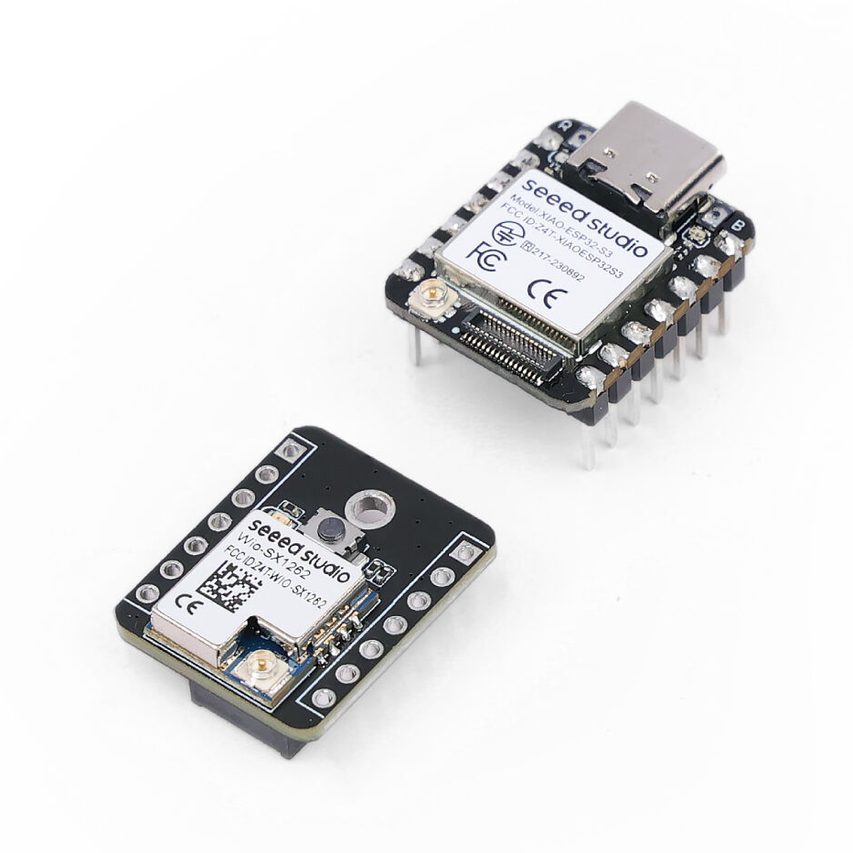
XIAO ESP32S3 & Wio-SX1262 Kit for Meshtastic & LoRa
This pre-integrated kit eliminates the biggest friction point: getting hardware communication working correctly.
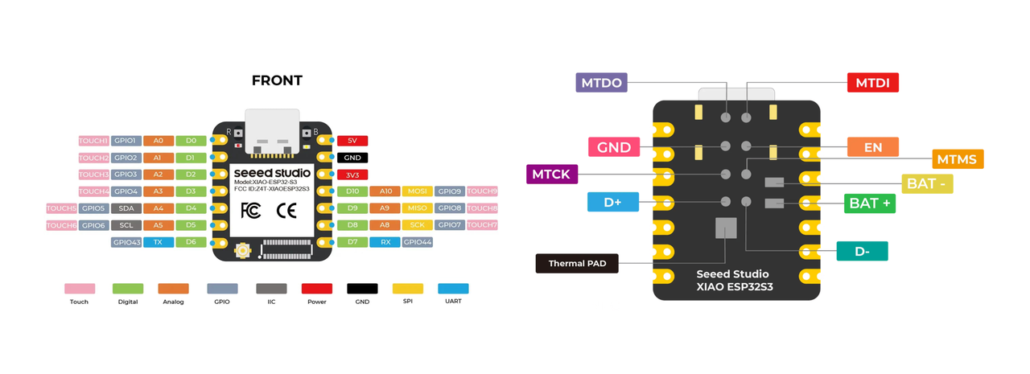
- Dual-core Xtensa 32-bit processor, 240 MHz
- 8 MB flash and 8 MB PSRAM
- WiFi (802.11 b/g/n) and Bluetooth 5.0/BLE
- 14 GPIO pins for sensors
- USB-C programming and power
- Deep sleep: sub-10µA
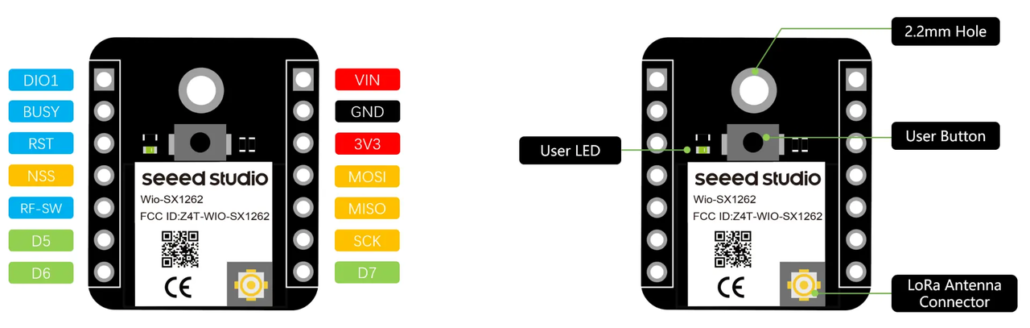
Wio-SX1262 module:
- SX1262 LoRa transceiver (latest generation)
- LoRaWAN and peer-to-peer modes
- Dual-band (410-525 MHz and 820-1050 MHz)
- -140 dBm receiver sensitivity
- +22 dBm transmit power
- SPI interface to ESP32
Why pre-integration matters: Connecting ESP32 to LoRa requires correct SPI pin mapping, voltage levels, interrupt handling, and antenna impedance matching. Errors waste days debugging. The kit ships pre-tested and firmware-ready. Connect power, flash Meshtastic, transmit within minutes.
Real performance: 3-5 km suburban range with standard dipoles, extending to 15-20 km line-of-sight from elevation. Average current: 50-60 mA with GPS active, 10 mA without, sub-1 mA in deep sleep.
Set Up Your First ESP32 LoRa Node
Getting your first node operational takes about 30 minutes.
Firmware Installation: Meshtastic
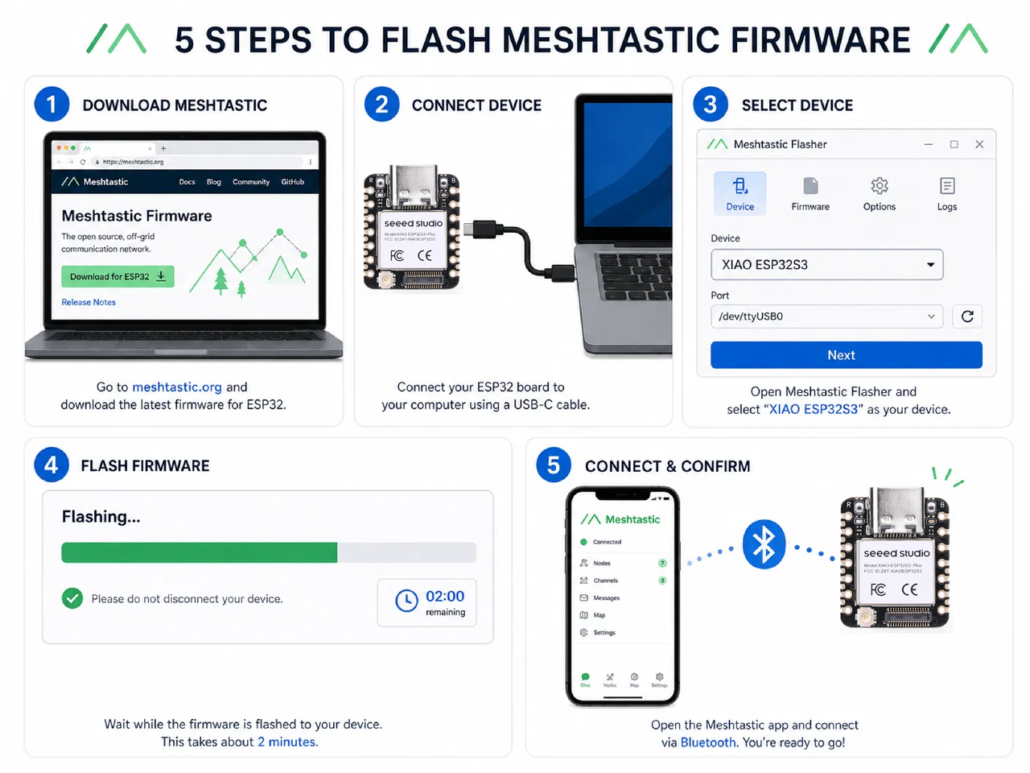
Step 1: Download Meshtastic Flasher from meshtastic.org/downloads.
Step 2: Connect ESP32 via USB. The flasher auto-detects it. Windows users may need CP210x USB drivers from Silicon Labs.
Step 3: Select “XIAO ESP32S3” as board type.
Step 4: Click “Flash” and wait 2-3 minutes. Don’t disconnect during flashing.
Step 5: Install the Meshtastic app (iOS or Android). Open it and pair via Bluetooth. Configure node name, region (sets correct frequency band), and basic settings.
Ways of Building the ESP32 Lora Node
Configuring XIAO ESP32S3 & Wio-SX1262 Kit as Single Chanel LoRaWAN Gateway
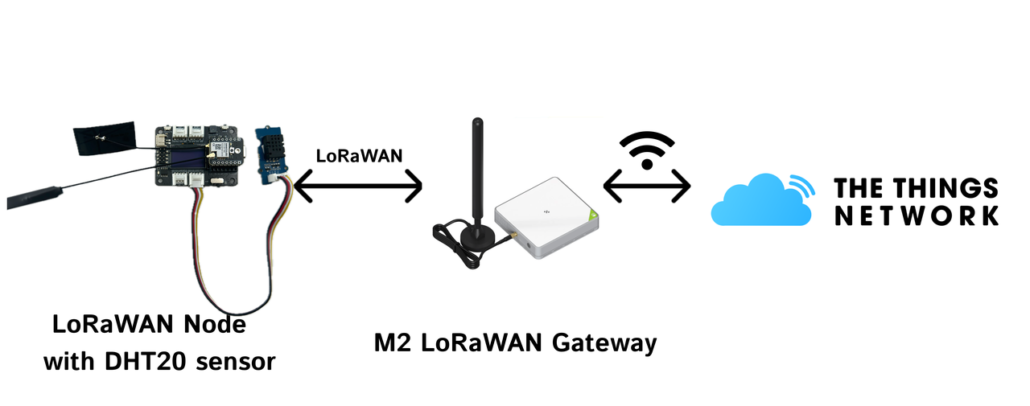
Flash pre-compiled firmware using esptool, configure WiFi and LoRa parameters through SenseCraft App or ESP BLE Prov, then register the gateway on The Things Network (TTN) or ChirpStack with the gateway EUI to receive LoRa packets from sensor nodes and forward them to a network server.
Flash firmware via Meshtastic Flasher, connect via Bluetooth to the Meshtastic app, configure LoRa region and network settings, then start sending messages and relaying packets across the mesh network while supporting Grove sensors like temperature, humidity, and GPS modules.
Key Difference
Meshtastic is a decentralized off-grid peer-to-peer mesh network, while the single-channel gateway is a centralized data bridge that collects sensor packets and uploads them to cloud-based LoRaWAN network servers.
Real-World ESP32 LoRa Projects from the Community
First ESP32S3 LoRa Node: Indoor Relay Deployment
A community member set up the XIAO ESP32S3 + Wio-SX1262 as a permanent indoor Meshtastic relay, always-on and plugged in to extend urban mesh coverage.
Application type: Indoor/stationary mesh relay — demonstrates the ESP32S3 LoRa kit as an always-on home node that extends Meshtastic network coverage within urban environments.
Budget Meshtastic Node Build
A Reddit user built the XIAO ESP32S3 + Wio-SX1262 into the most affordable Meshtastic node available, with full walkthrough from unboxing to first transmission.
Application type: Off-grid mesh communication node — ideal for hikers, emergency preparedness, and decentralized text messaging without cellular infrastructure.
3D-Printed Enclosure for Field Deployment
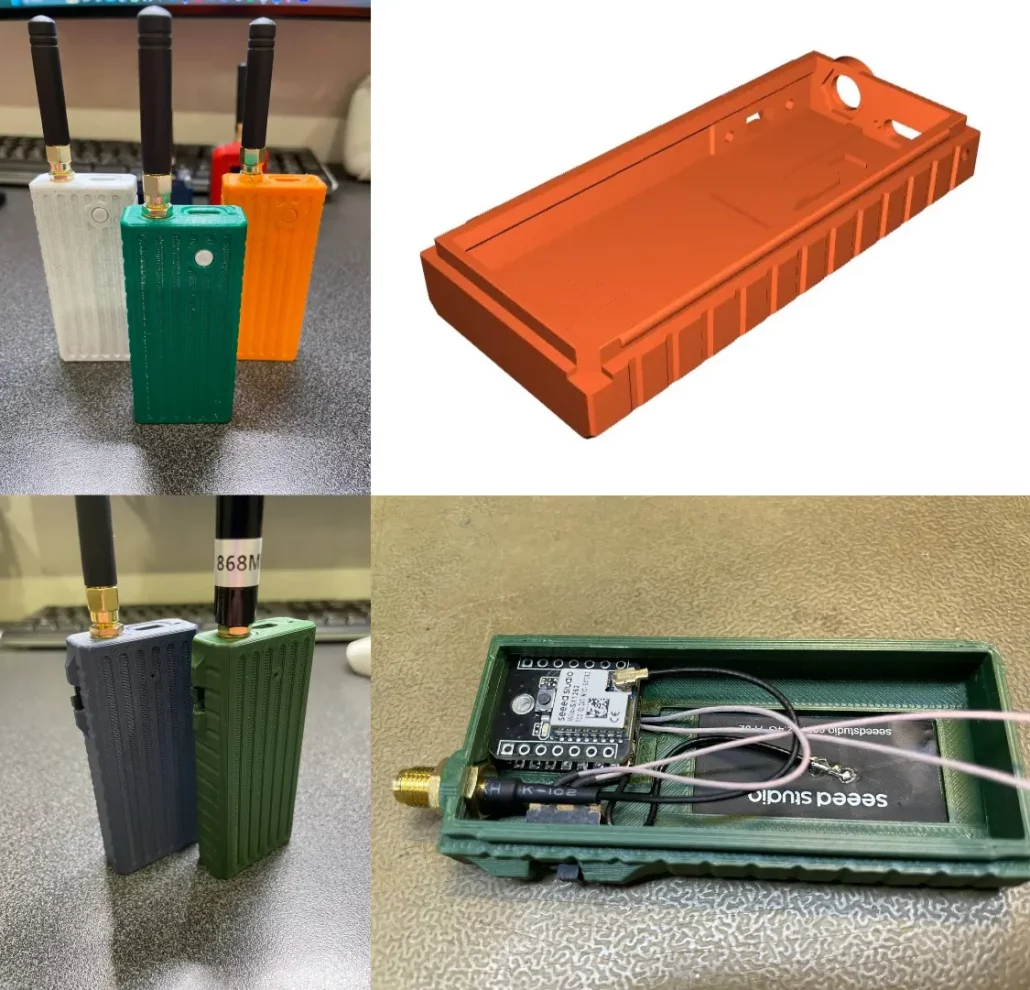
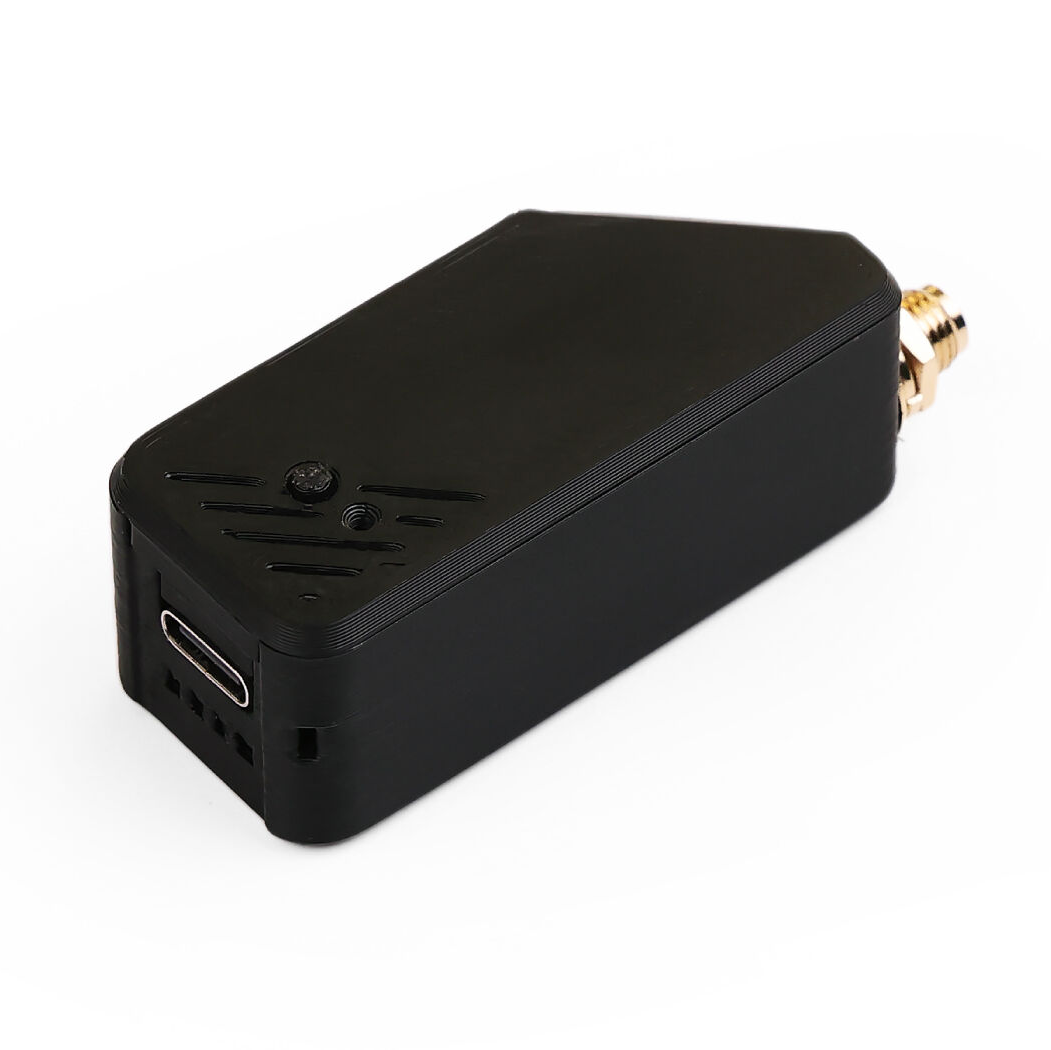
Multiple makers on Printables have published free 3D-printable enclosures designed specifically for the XIAO ESP32S3 and Wio-SX1262 kit.
Application type: Hardware packaging for ESP32 LoRa field deployment — community-designed enclosures enabling IP-rated outdoor protection for both wall-mounted relay nodes and portable Meshtastic setups.
3D-Printed Enclosure for Field Deployment
Multiple makers on Printables have published free 3D-printable enclosures designed specifically for the XIAO ESP32S3 and Wio-SX1262 kit.
Application type: Hardware packaging for ESP32 LoRa field deployment — community-designed enclosures enabling IP-rated outdoor protection for both wall-mounted relay nodes and portable Meshtastic setups.
ESP32S3 LoRa Zonal Forwarding: Extending Mesh Range Across Dead Zones
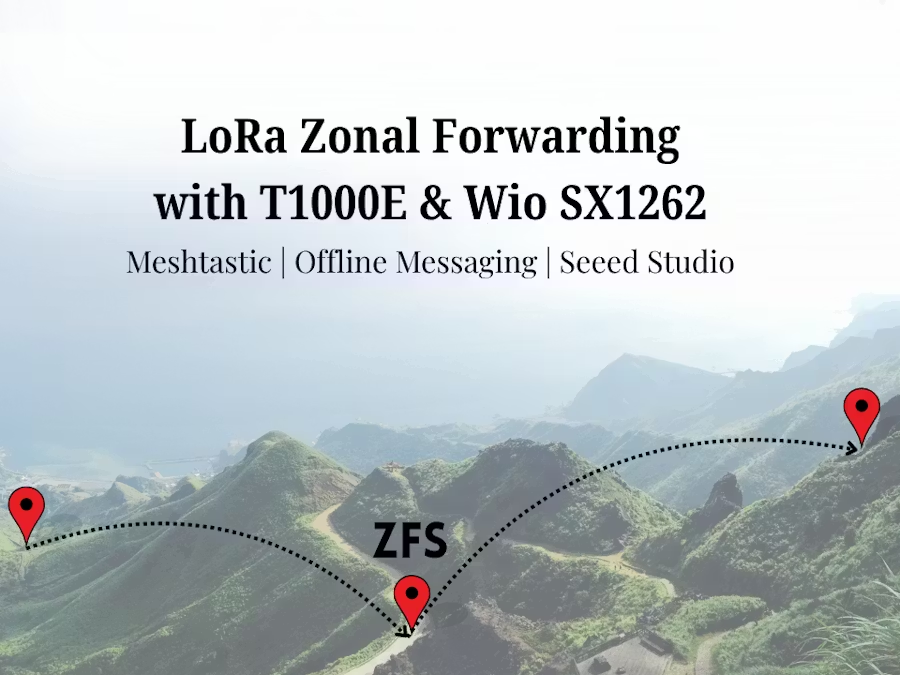
A community builder used the XIAO ESP32S3 and Wio-SX1262 as a passive Zonal Forwarding Station (ZFS), relaying Meshtastic packets between nodes that fall outside direct communication range — no Wi-Fi or cellular required.
Application type: Multi-hop ESP32 LoRa mesh relay for infrastructure-free long-range communication — suited for forest trails, disaster recovery zones, large agricultural deployments, and off-grid expeditions where direct node-to-node range is insufficient.
FAQs
Can ESP32 Use LoRa?
Yes. The ESP32 communicates with LoRa transceiver chips (like the SX1262) via SPI/I2C, with the ESP32 handling networking logic while the LoRa chip manages transmission. The XIAO ESP32S3 includes all necessary GPIO pins for seamless integration. Major projects like Meshtastic designed their firmware stack around this pairing, making ESP32 the de facto standard for accessible LoRa development.
What Are the Disadvantages of Using LoRa?
LoRa operates at low bandwidth (1-5 kbps typical), limiting messages to ~200 characters. Network reliability depends on active node participation and terrain affects range dramatically (1-5 km urban, 10-30 km open). ISM bands vary globally (915 MHz US, 868 MHz EU), requiring regional compliance. Despite these constraints, LoRa remains compelling for off-grid scenarios where cellular infrastructure doesn’t exist.
Is ESP32 Faster Than Raspberry Pi?
The ESP32’s 240 MHz dual-core processor compares with Raspberry Pi Zero but loses to Raspberry Pi 4. For LoRa applications, ESP32 wins decisively due to integrated WiFi/Bluetooth, instant boot, and exceptional sleep efficiency. ESP32 LoRa nodes run for months on batteries while Raspberry Pi drains them in days.
What Is the Price of LoRa ESP32?
A minimal development setup costs ~$10 (XIAO ESP32S3 $7.49 + Wio-SX1262 $4.29). This affordable pricing explains why LoRa networks now exist in hundreds of cities globally.
>> Read More
About Author
