If you build battery-powered wearables, sensors, or smart home endpoints, “how many years will this run on a coin cell?” is usually the first real design question — not “how fast is the CPU?” Nordic Semiconductor’s newest SoC, the nRF54LM20A, was built with exactly that question in mind.
In this article, we‘ll look at nRF54LM20A low power performance from two angles: how it compares on paper to its closest siblings, the nRF54L15 and the older nRF52840, and — more importantly — what our own PPK2-based battery testing showed when we ran a nRF54LM20A-based MCU on a real lithium cell for over a week.
What Makes nRF54LM20A Different?
The nRF54LM20A is the largest-memory member of Nordic’s nRF54L Series, built on a 22 nm low-leakage process specifically to push down sleep current while adding more compute headroom than the older nRF52 Series. It pairs a 128 MHz Arm Cortex-M33 with a RISC-V coprocessor that can handle simple peripheral tasks without waking the main core at all — a big part of how it keeps average current so low in real applications.
nRF54LM20A vs nRF54L15 vs nRF52840: the spec comparison
A few things stand out here. First, raw System OFF current on paper actually looks similar across the whole nRF54L family and even close to the old nRF52840 in its most stripped-down mode — but that nRF52840 number requires giving up RAM retention entirely, which most real applications can’t afford. With RAM retained, nRF52840 climbs to roughly 1.9 µA, while the nRF54LM20A holds a full 512 KB of RAM and still sleeps at sub-µA to low-single-digit-µA current.
Second, the nRF54LM20A is the “biggest” chip in the nRF54L family: more flash, more RAM, more GPIO, and the only member with high-speed USB — useful if your low-power product still needs fast firmware updates or audio/IMU streaming during development. If your design needs the extra memory or pin count of the LM20A but not the higher price or complexity, the nRF54L15 remains the leaner option in the same low-power family, and the nRF52840 is still relevant for teams with existing Bluetooth 5 code they don’t want to re-port yet.
The Real Question: What Does It Actually Draw In A Finished Product?
Datasheet numbers describe the silicon in isolation. What developers actually need to know is the system-level current once a PMIC, external flash, sensors, and a real firmware wake/sleep cycle are involved. So we put a XIAO nRF54LM20A Sense through exactly that test.
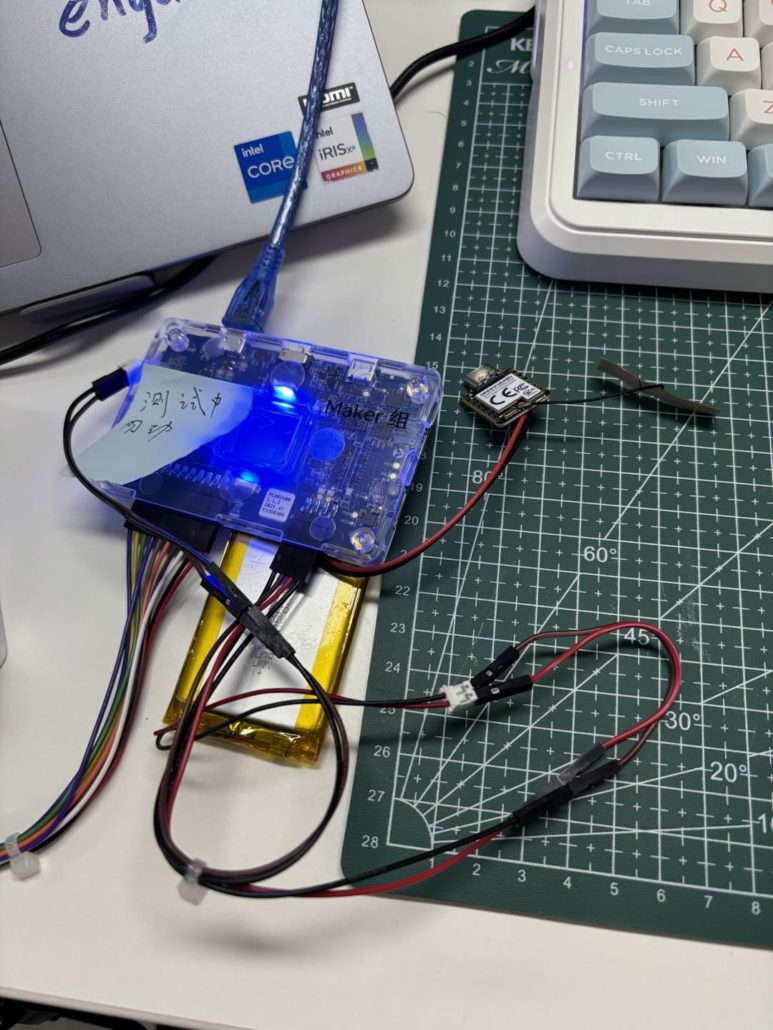
Our first approach was to power a XIAO nRF54LM20A from a real lithium cell and log continuously for days at a time, waking it on demand via a GPIO interrupt from the Boot button. But readings came in higher than expected, and it wasn’t obvious at first whether that was the SoC, the board, or the measurement setup itself.
Diagnosing the gap
Digging into it with the SE and EE teams, two variables turned out to be the keys:
Sample rate. At 1 sample/second, the PPK2 was too coarse to resolve the actual current floor — it visibly smoothed over the real behavior and masked the true low-power state.
Voltage source. A battery and a PPK2-simulated “Source meter” supply at the same nominal voltage don’t read identically, because the simulated source holds a perfectly regulated rail while a battery has internal resistance and minor sag.
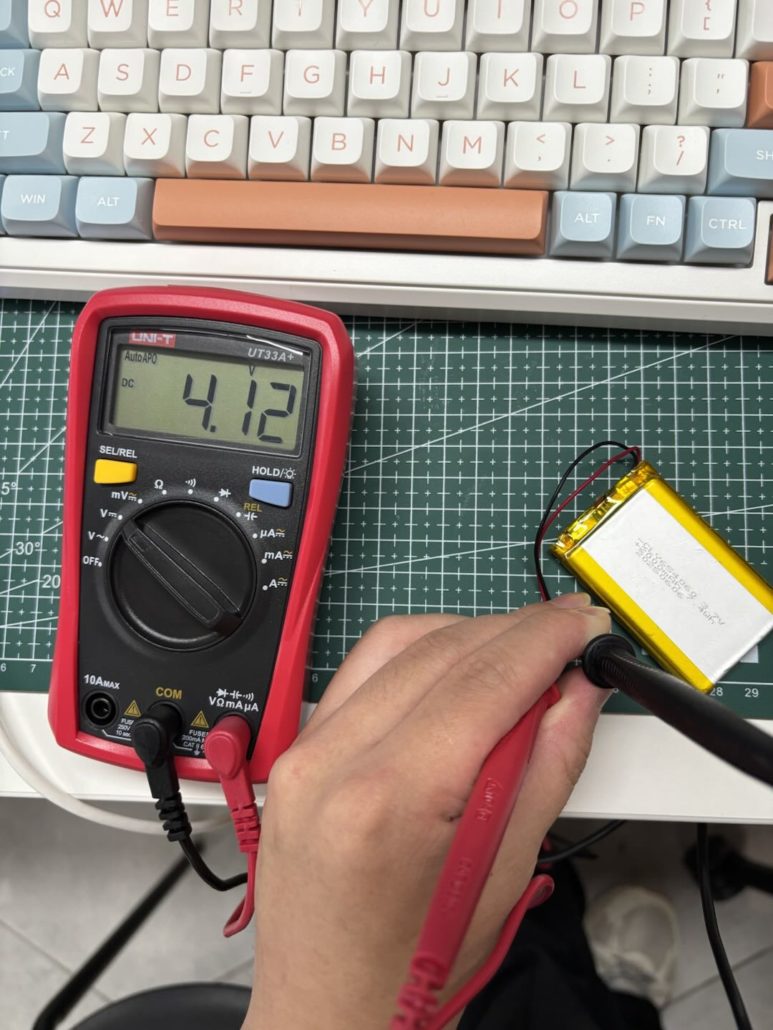
To isolate the two variables, we ran the same firmware across four configurations (same board, same build) and compared the results directly:
Power source
Sample rate
Measured current
Li-ion battery, 4.12 V
10 Hz
5.47 µA
Li-ion battery, 4.12 V
100,000 Hz
5.27 µA
PPK2 simulated source, 4.12 V
100,000 Hz
5.22 µA
PPK2 simulated source, 4.12 V
100,000 Hz
4.93 µA
The result
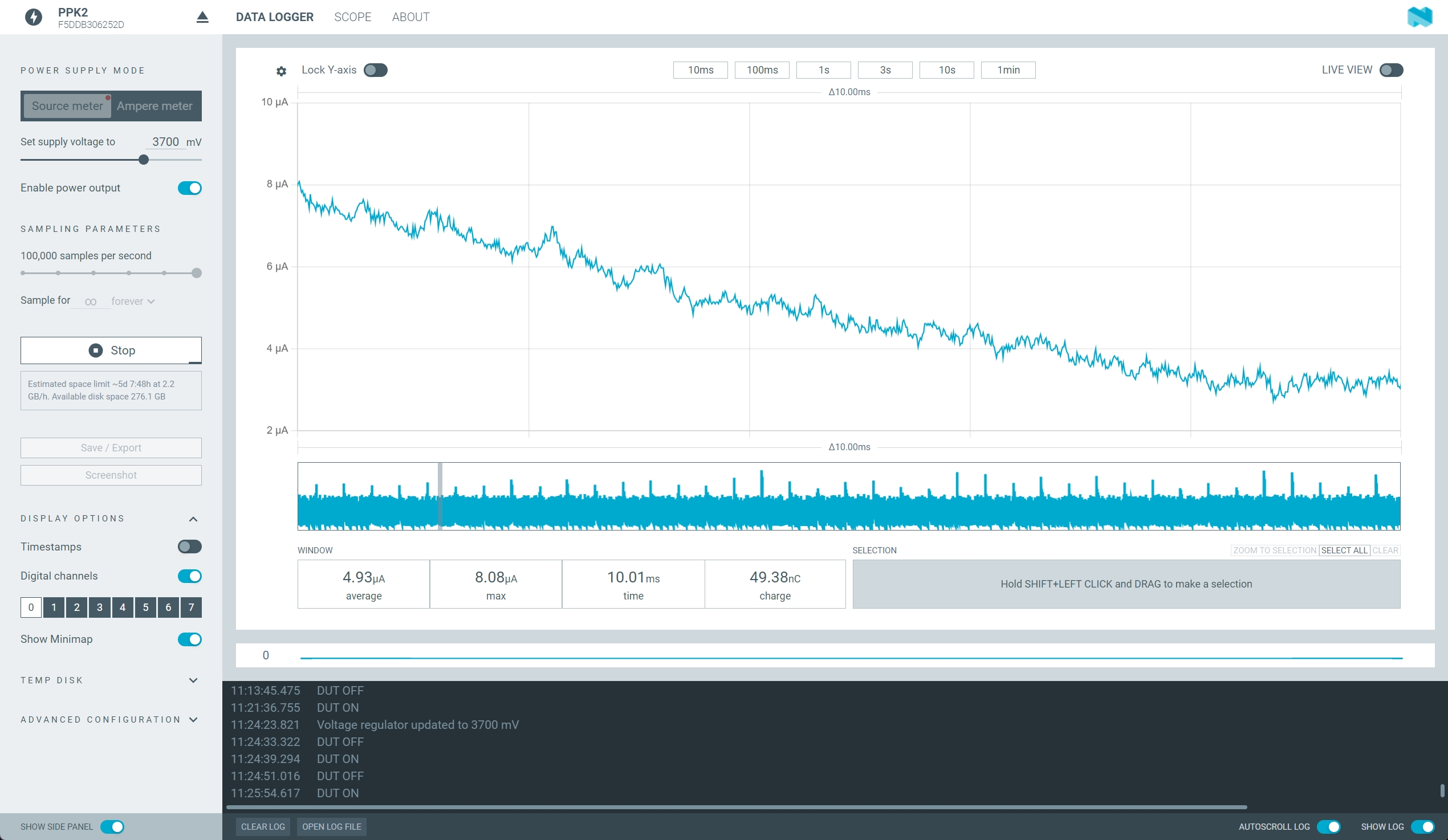
The board achieved a System OFF current as low as 4.93 μA when powered by a 3.7 V Li-ion battery.
XIAO nRF54LM20A System OFF current measurement, 4.93 microamps at 3.7V
Independent Community Confirmation
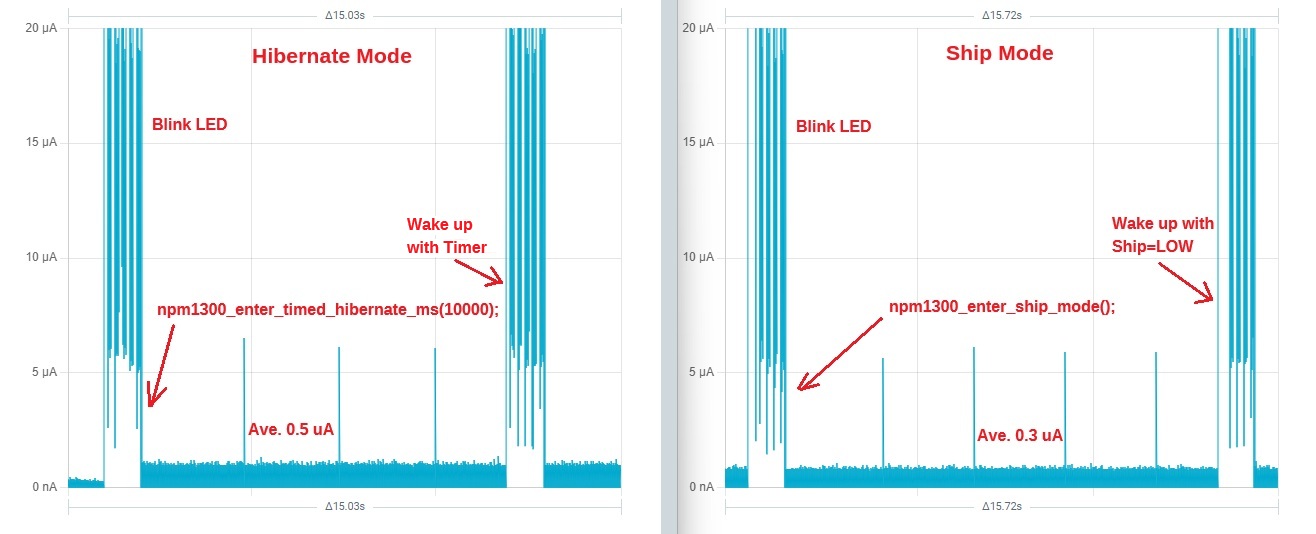
We’re not the only ones who’ve put a meter on this board. Developer “msfujino” on the Seeed Studio forum ran their own measurements of the nPM1300’s low-power states on the XIAO nRF54LM20A and reported 0.5 µA in Hibernate Mode and 0.3 µA in Ship Mode (the community nrf54-arduino-core BSP rather than the nRF Connect SDK).
If you want to build your own battery-reporting node rather than just measure sleep current, the xiao-nrf54-battery-thread-coap project is a useful reference: it’s a Zephyr example that reads battery voltage/ current from the nPM1300 fuel-gauge-style sensor API on the XIAO nRF54LM20A (and via ADC on the XIAO nRF54L15) and reports it over Thread/CoAP to an nRF54L15 DK border router.
What This Means for Battery Life
At a 4.93 µA System OFF current, a 1080 mAh cell has, in theory, well over a decade of runway before self-discharge and cell aging — not raw current draw — become the limiting factor. For a device that mostly sleeps and wakes briefly on user interaction (a smart lock keypad, an asset tag, a wearable button), the nRF54LM20A’s sleep current is no longer the bottleneck in the system; battery chemistry and shelf life become the constraint instead. That’s a meaningful shift for anyone doing battery-life math for a new product.
Resource
If you want to reproduce this kind of test or start building on the SoC, these are good next stops: