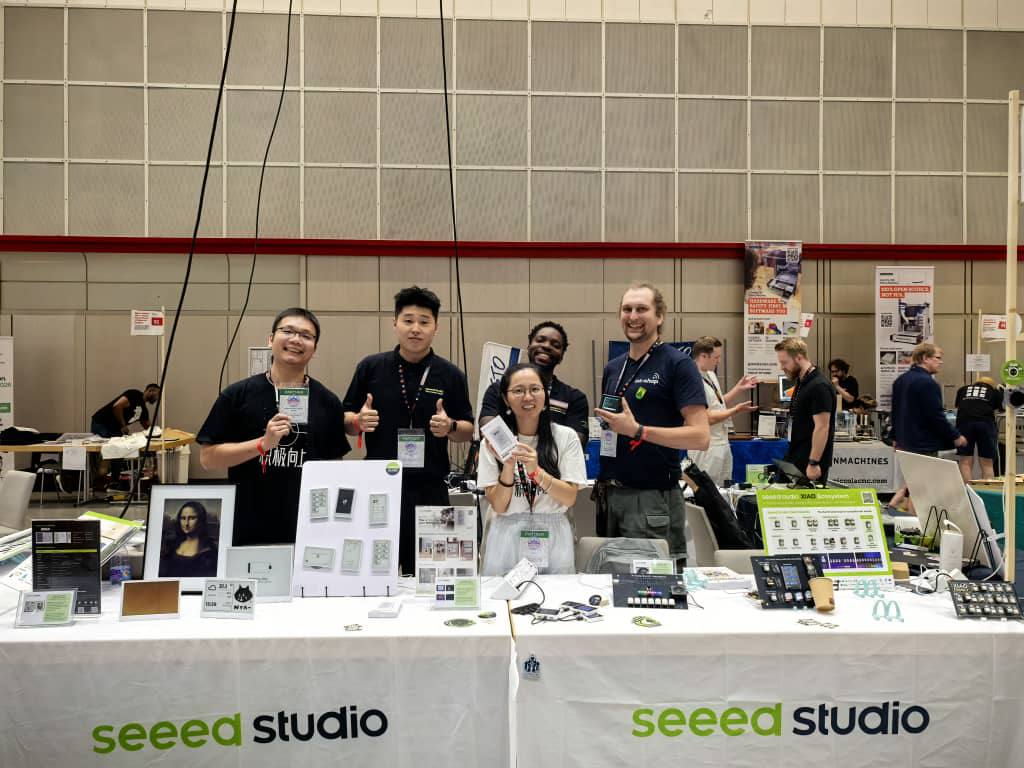
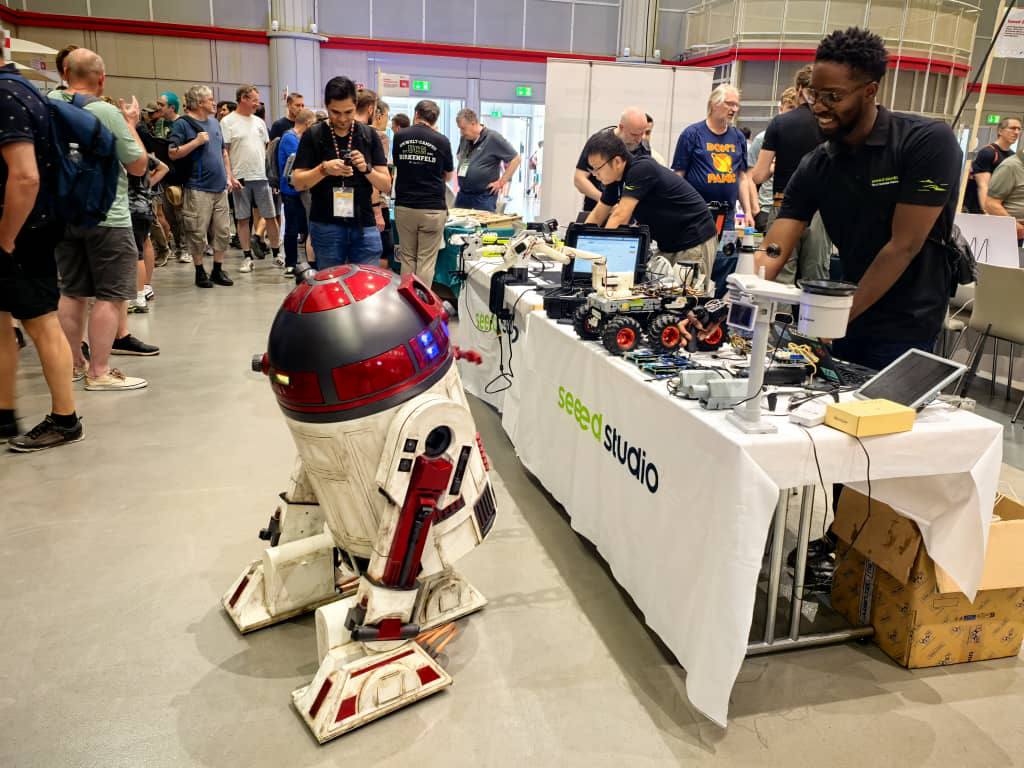
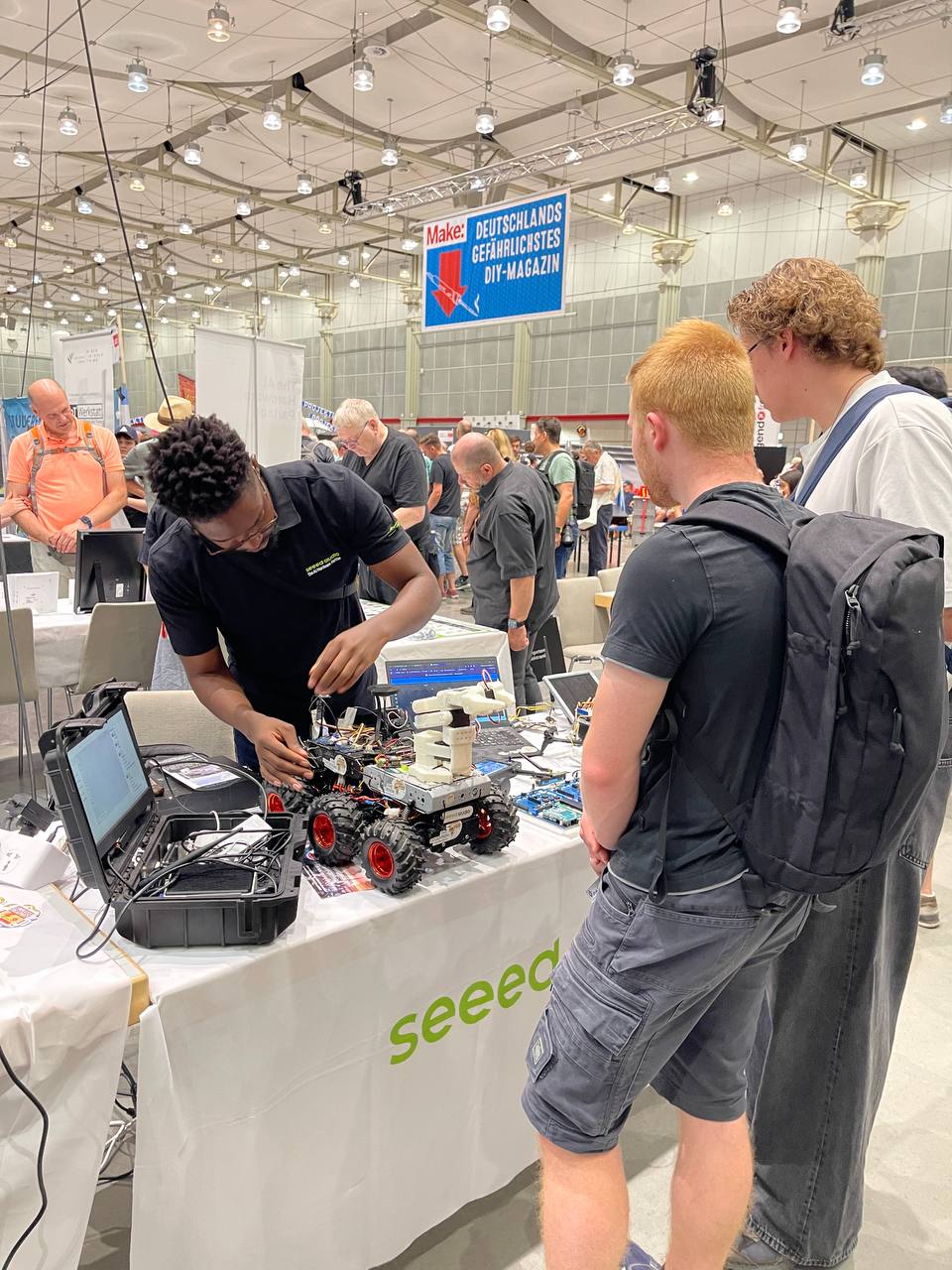
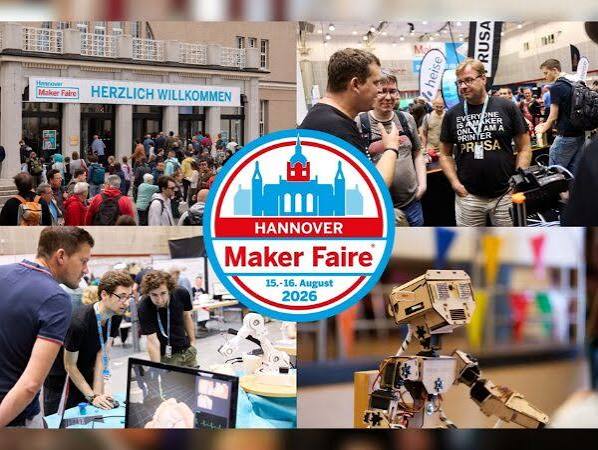
From 15–16 August 2026, the Seeed Studio team and Seeed Studio Ranger Dessap Loïc joined makers, researchers, engineers, educators, and technology enthusiasts at Maker Faire Hannover 2026, held at the Hannover Congress Centrum in Germany.
With more than 200 exhibitors, the event brought together projects covering robotics, AI, electronics, open-source hardware, science, art, IoT, and hands-on technology experiences.
For Seeed Studio, the event was an opportunity to showcase how edge AI, robotics, IoT, and wireless technologies can move from prototypes into practical applications.
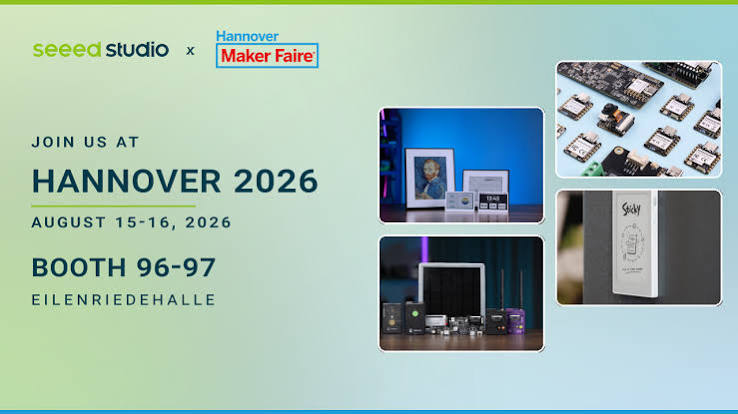
Seeed Studio: Technology You Can Experience
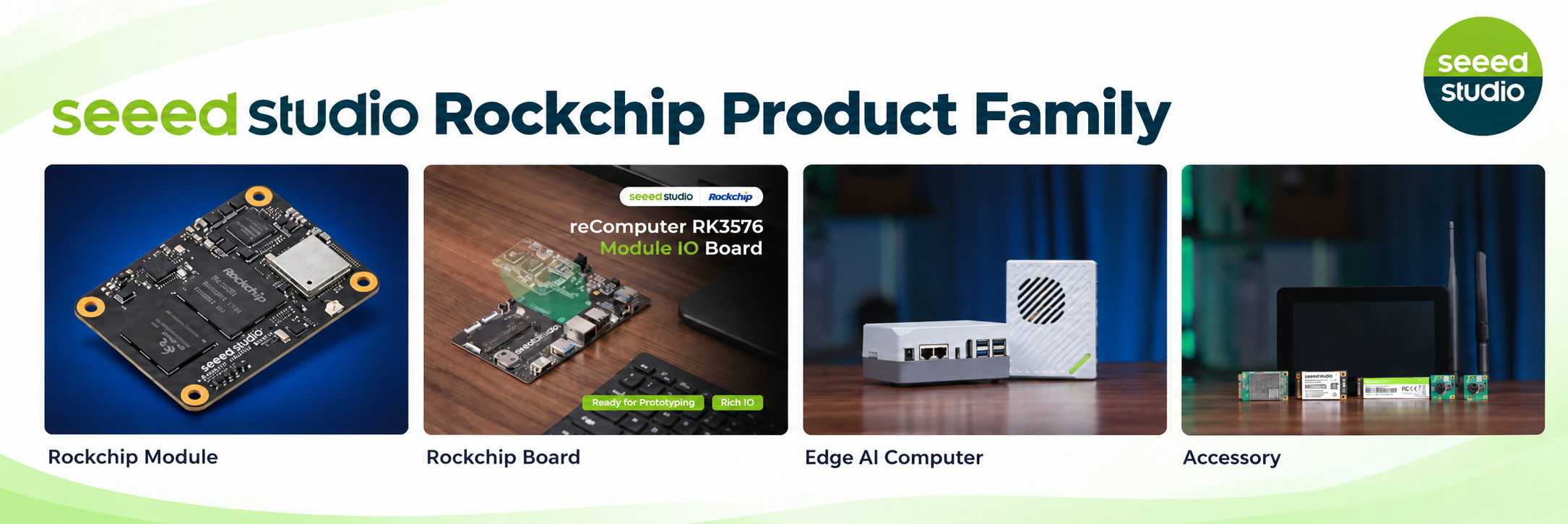
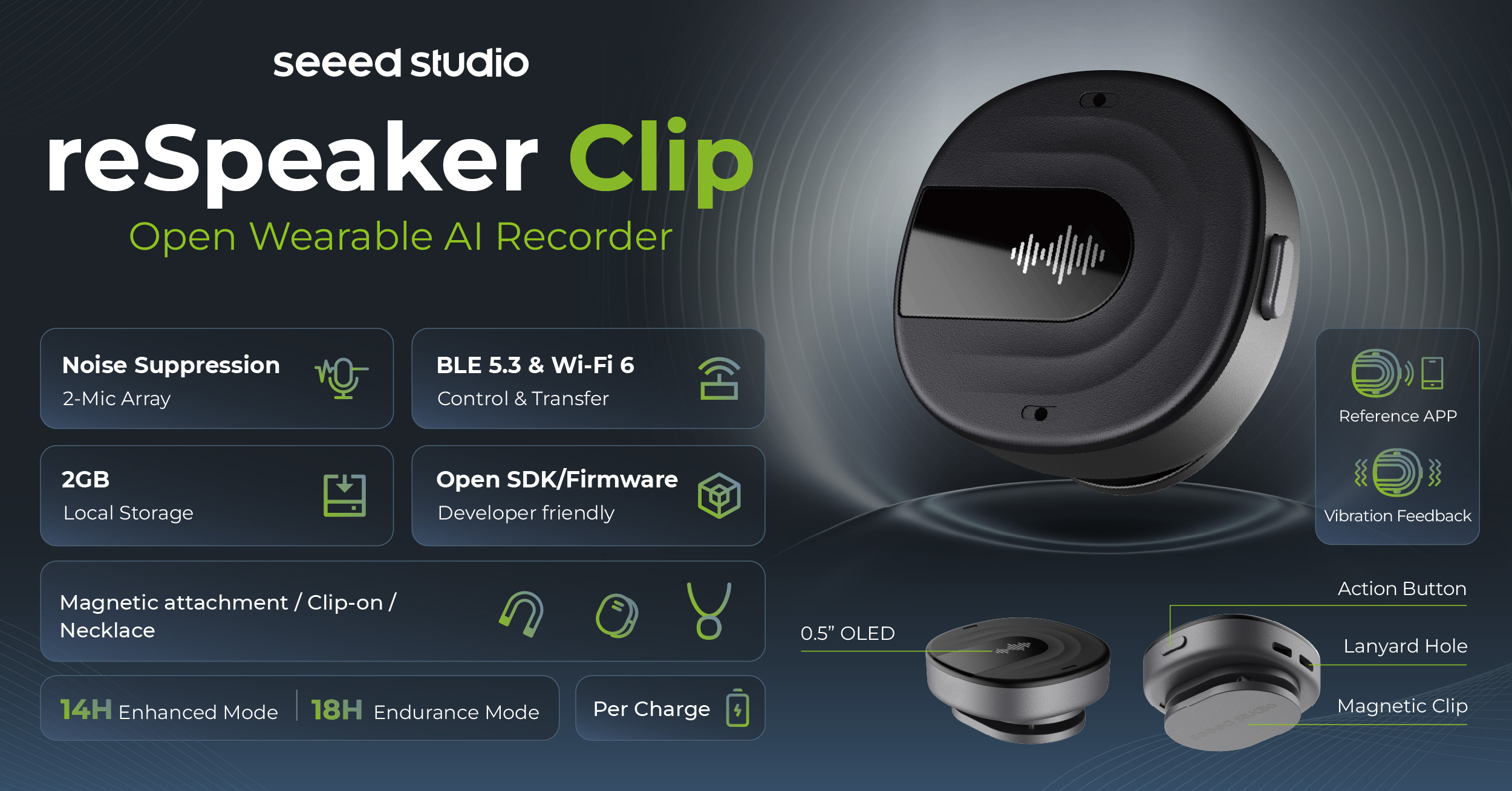
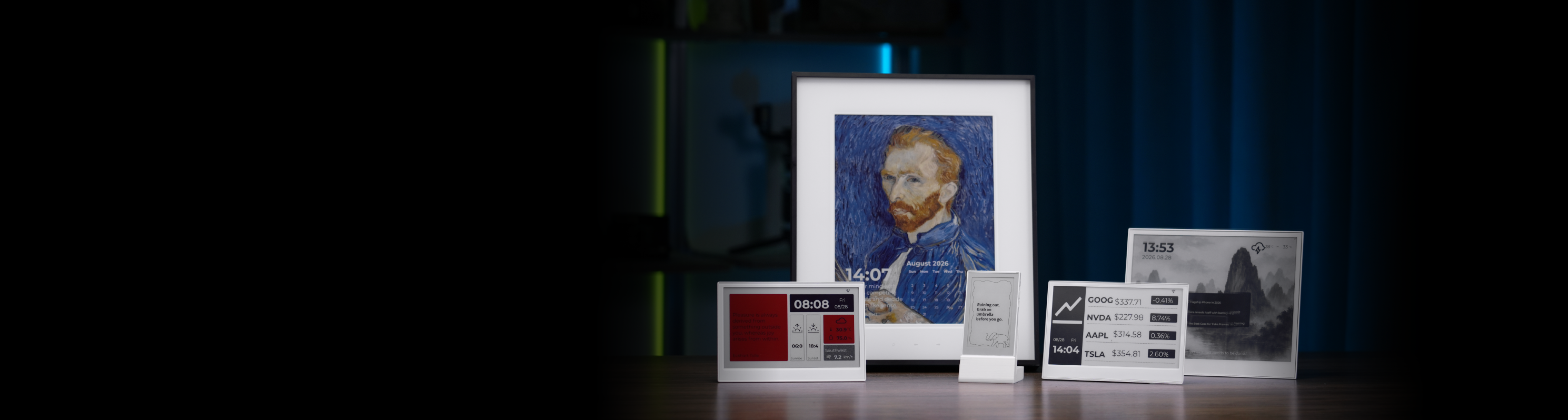
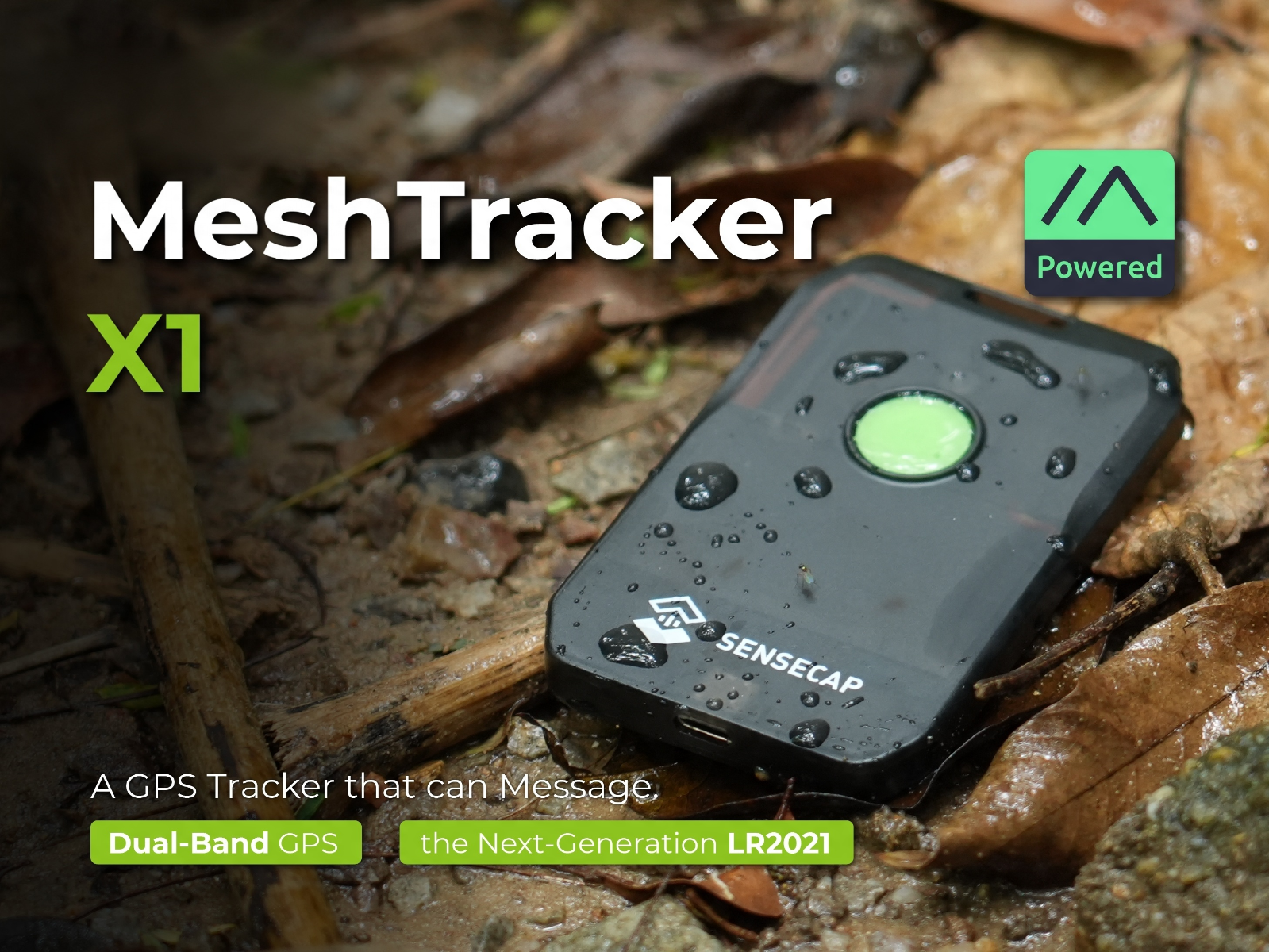
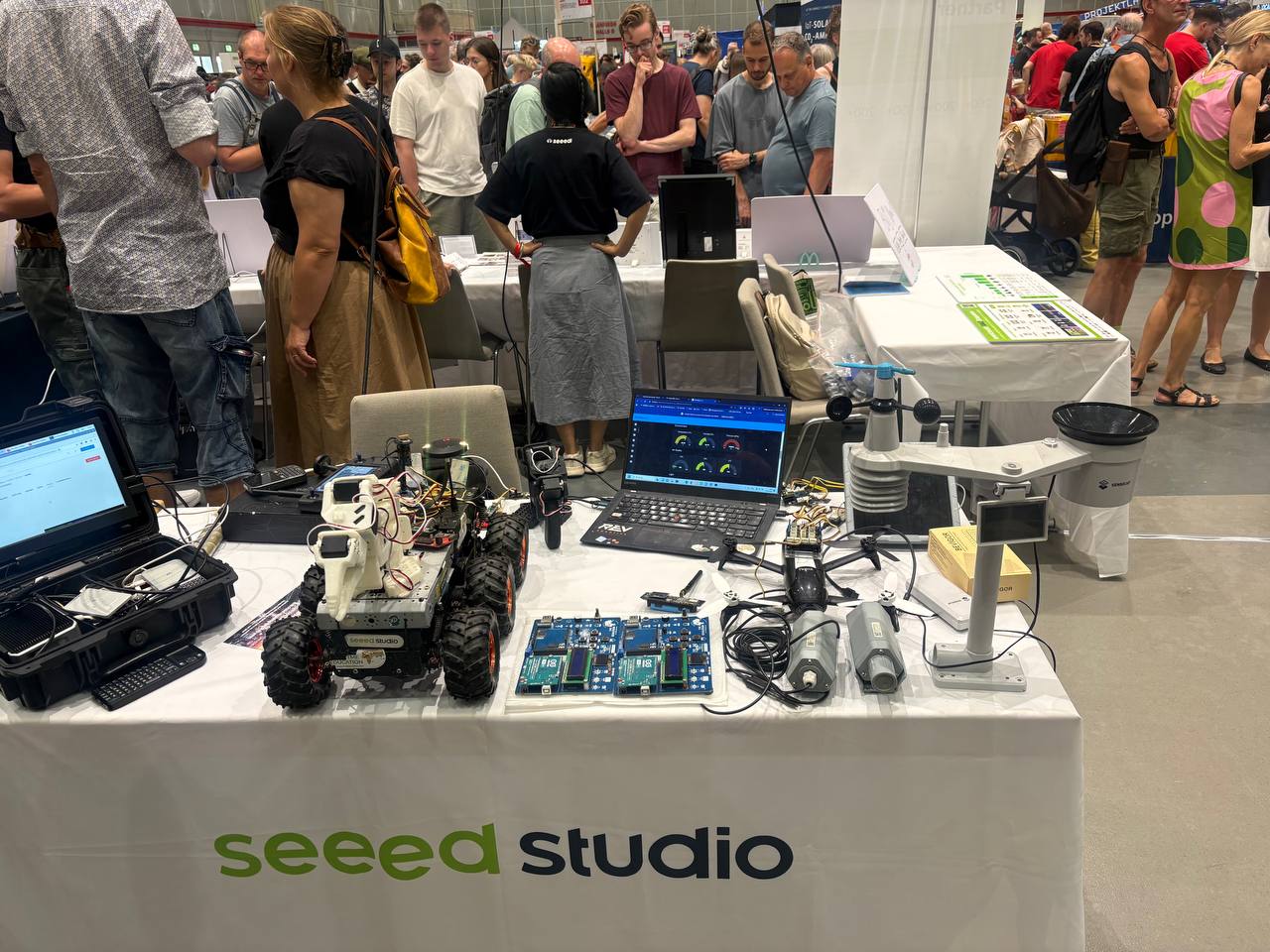
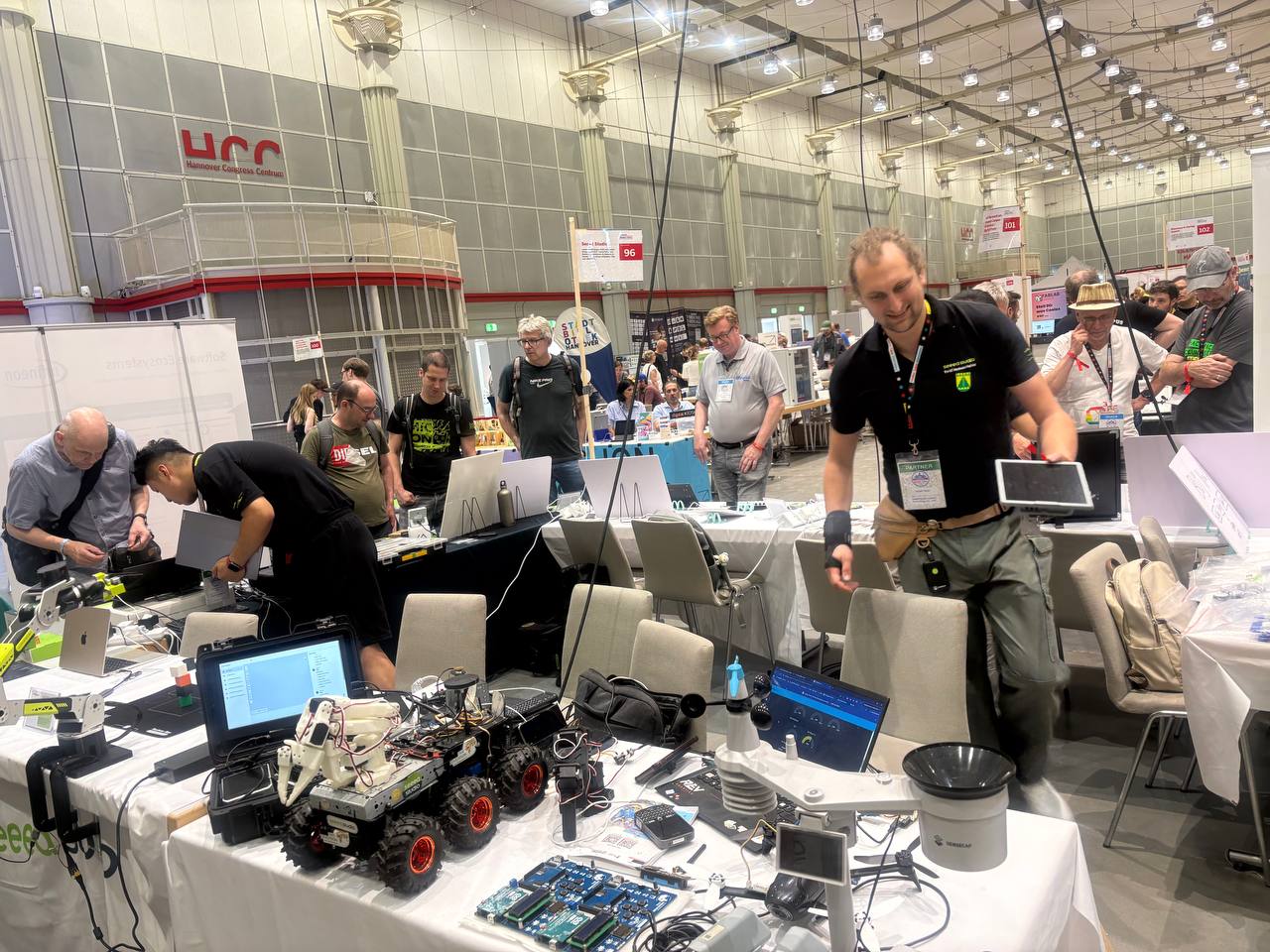
The Seeed Studio booth featured a broad range of technologies, including the XIAO series, reTerminal and ePaper displays, MeshTracker X1 and MeshCore devices, reCamera, reSpeaker, reBot Arm DM, reTerminal Sticky, and STM32-based solutions.
The XIAO family demonstrated how compact microcontrollers can be used to build everything from IoT sensor nodes and robotics projects to AI-enabled devices.
The reTerminal and ePaper displays showed how IoT data can be presented through low-power interfaces, making them useful for applications such as smart retail, environmental monitoring, and industrial dashboards.
Meanwhile, Meshtastic and MeshCore demonstrated the possibilities of LoRa-based mesh communication, enabling devices to exchange information without requiring every node to have direct Internet or cellular connectivity.
Smart Retail, AI & Robotics
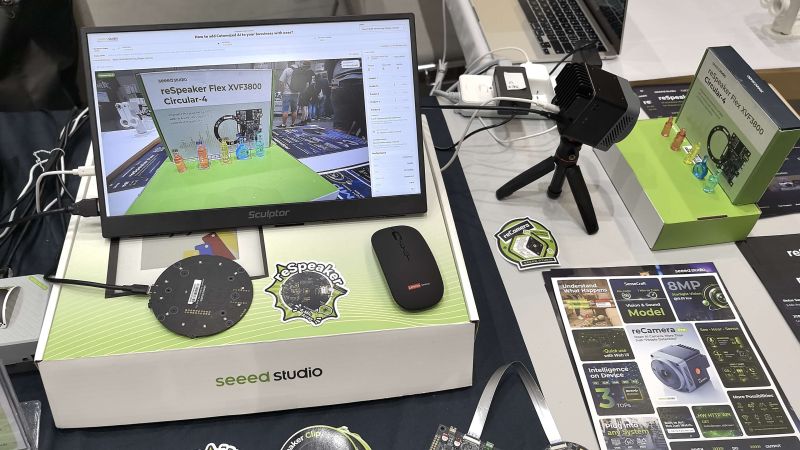
A key highlight was Seeed Studio’s Smart Retail demo, where the reCamera Pro used Edge AI for real-time shelf stock detection, demonstrating applications in inventory monitoring, out-of-stock alerts, and retail analytics.
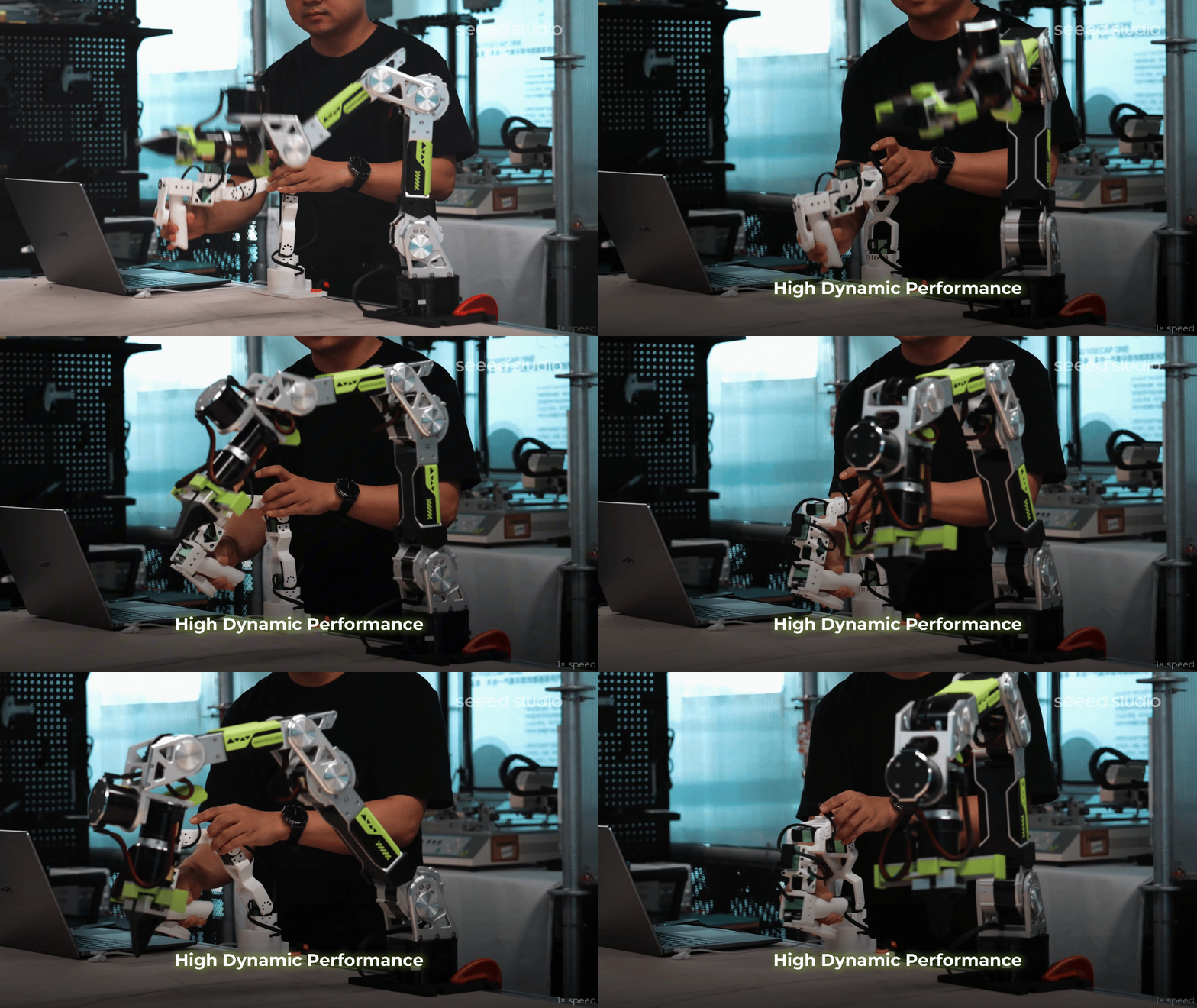
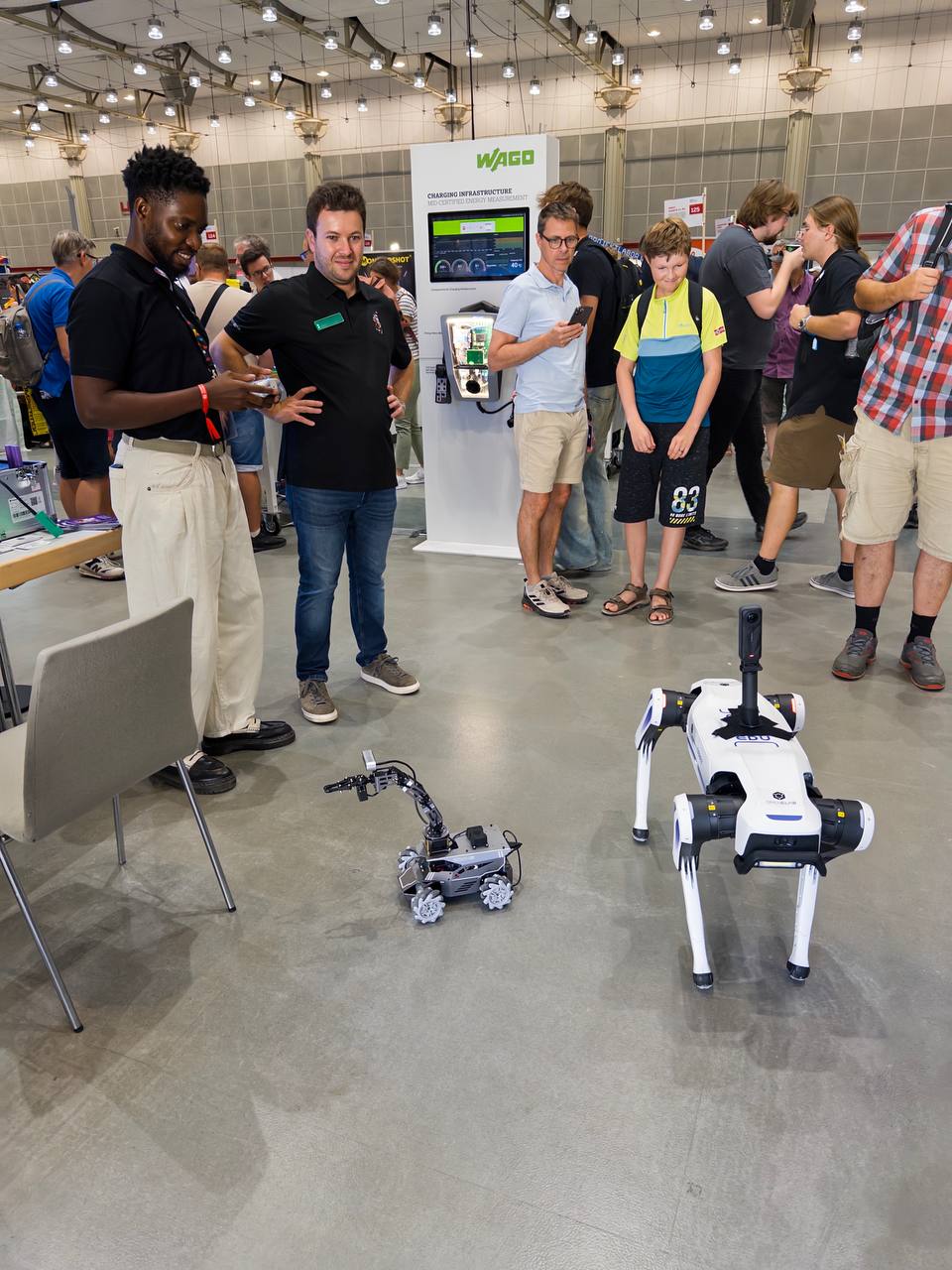
Visitors also explored reSpeaker for real-time voice and transcription, reCamera for Vision AI, and the reBot Arm DM for interactive robotic control. Other activities included retro gaming with the Wio Terminal, hands-on XIAO projects, and CodeCraft, showcasing how AI can accelerate the journey from an idea to a working prototype.
LoRa Mesh Farm: Connecting Agriculture Beyond the Internet
Alongside the Seeed Studio demonstrations, I had the opportunity to showcase my LoRa Mesh Farm project.
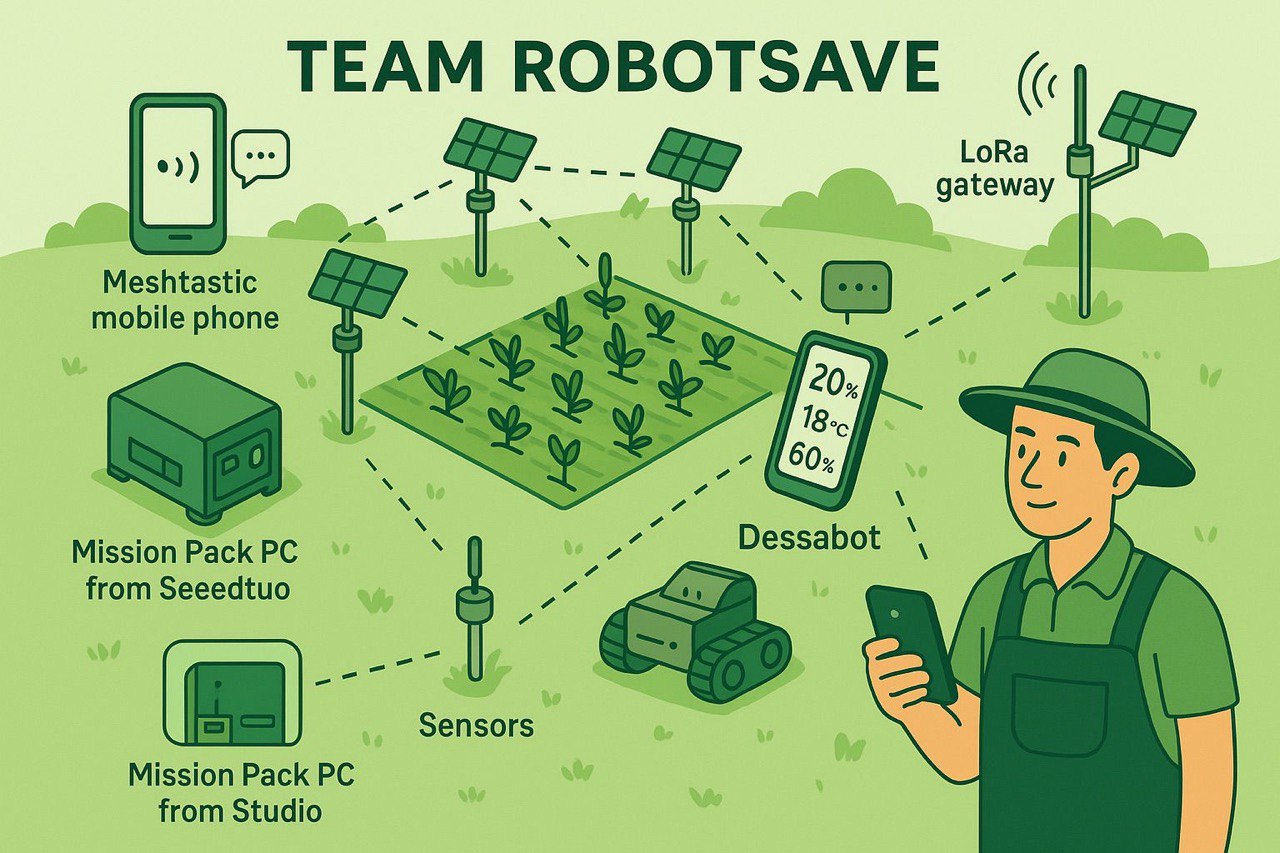
The project explores how LoRaWAN, LoRa mesh networking, environmental sensors, and intelligent interfaces can be combined to support agricultural monitoring in areas where Internet or cellular connectivity may be limited.
The system integrates devices such as SenseCAP weather and environmental sensors, temperature and humidity sensors, and other agricultural monitoring devices.
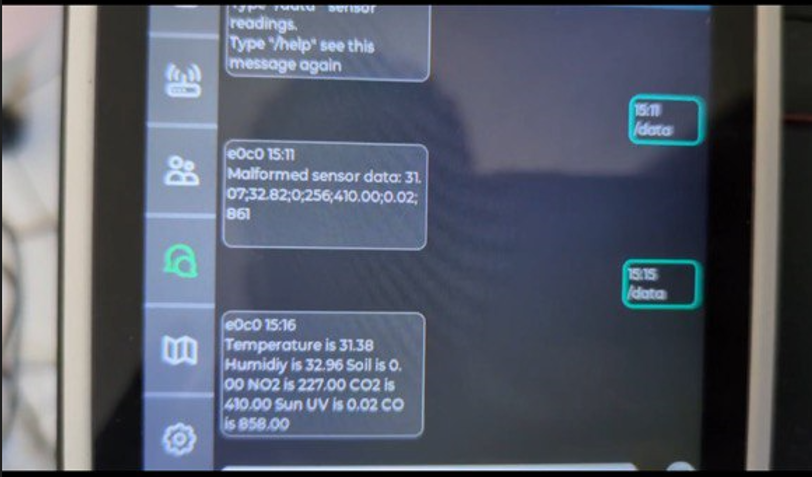
Sensor information can then be communicated through a network of Meshtastic-compatible devices, including the SenseCAP Indicator, solar-powered mesh nodes, and LilyGO devices.
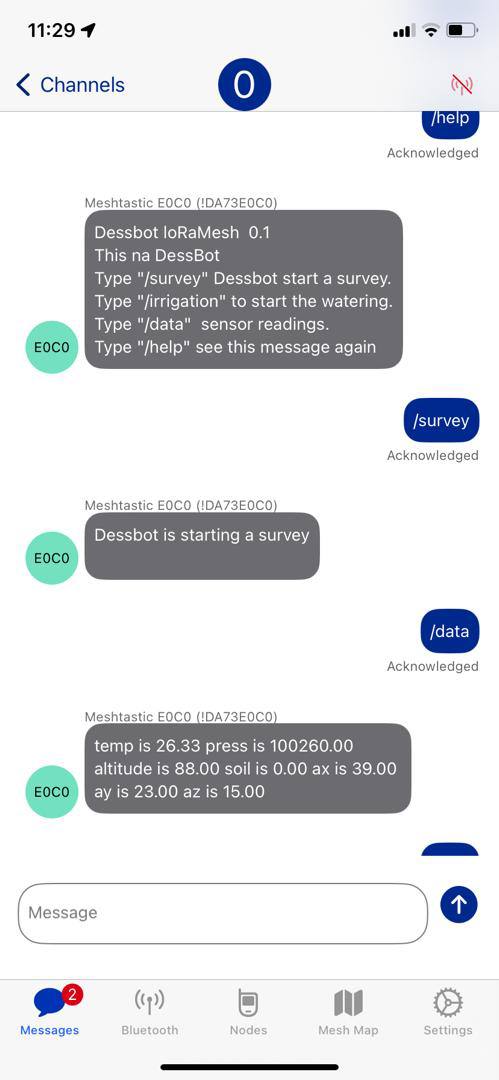
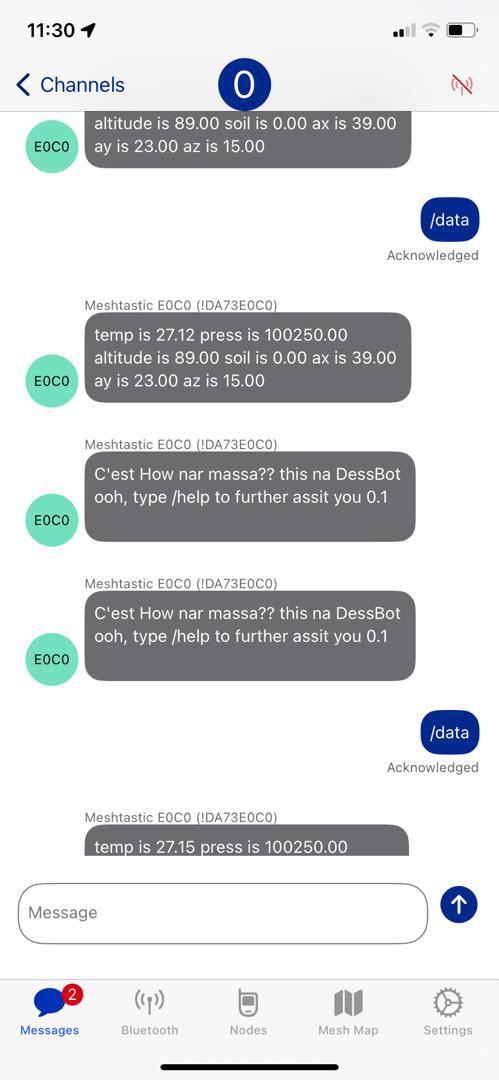
A key part of the project is the use of a MeshBot, allowing users to request sensor information through the mesh network.
Instead of relying on a traditional Internet dashboard, a farmer could request information such as temperature, humidity, soil conditions, or sensor status through a connected device.
The concept can be summarized as:
Sensors → LoRa/Mesh Nodes → Mesh Network → MeshBot → User
This approach could be particularly useful for remote farms, rural environments, environmental monitoring, and areas with limited connectivity.
From Technology Demonstration to Real-World Applications
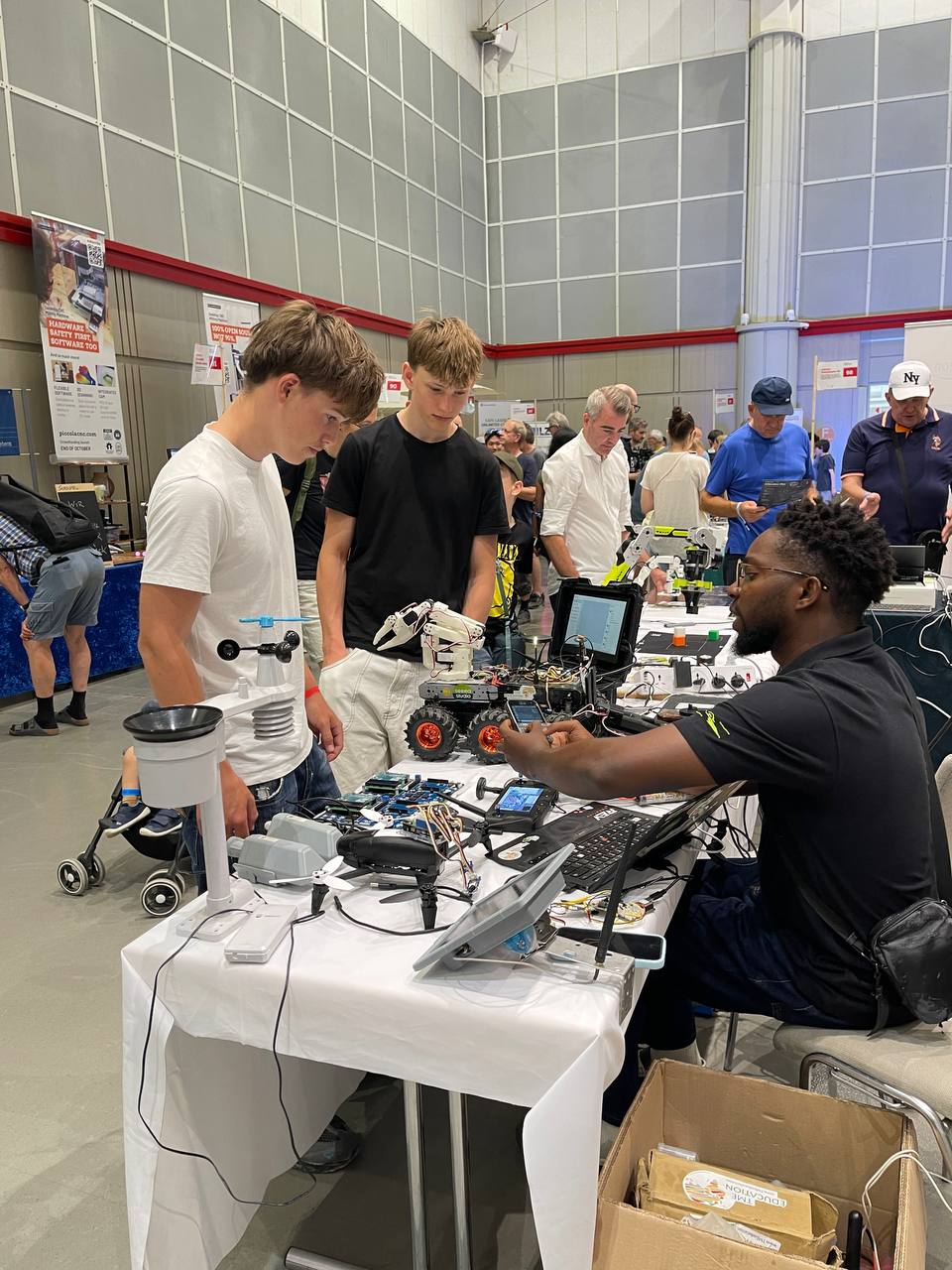
Maker Faire Hannover was more than an exhibition. It was an opportunity to exchange ideas with visitors, makers, researchers, engineers, and other exhibitors.
The feedback received around the LoRa Mesh Farm project provided new perspectives on potential applications and opportunities for future testing and collaboration.
The experience also demonstrated an important principle behind the maker community: advanced technologies become more meaningful when people can see them, interact with them, understand them, and imagine how they can solve problems in their own environments.
Looking Ahead
From Smart Retail and Edge AI to open-source robotics and off-grid agricultural communication, Maker Faire Hannover 2026 showcased how different technologies are converging to create new possibilities.
For me, presenting LoRa Mesh Farm alongside the Seeed Studio ecosystem was an important opportunity to demonstrate how technologies such as LoRa, mesh networking, sensors, edge computing, and AI can be applied to practical challenges beyond traditional connected environments.
A huge thank you to Maker Faire Hannover, Seeed Studio,OpenLab, Meilily Li, Alison Yang, the Seeed Studio team, fellow Rangers, exhibitors, and everyone who visited our booth and shared ideas, feedback, and enthusiasm.
The conversations and connections made during the event will continue to inspire the next steps of our work in IoT, Edge AI, robotics, and smart agriculture.