Build Your Rockchip-Based Product with Seeed Studio: From Customization to Production
Building an edge AI device, industrial controller, robot, or commercial product with Rockchip? Seeed Studio can help you choose a hardware platform, customize it for your application, and prepare for production and global delivery.
Use this guide to explore:
- What off-the-shelf products and hardware form factors does Seeed offer?
- When to choose light customization or hardware customization, and how lead times and non-recurring engineering (NRE) costs differ
- How Seeed helps make customization faster, more reliable, and easier to manage
- What it takes to move from a prototype through engineering validation testing (EVT), design validation testing (DVT), and production validation testing (PVT) to volume production and global delivery
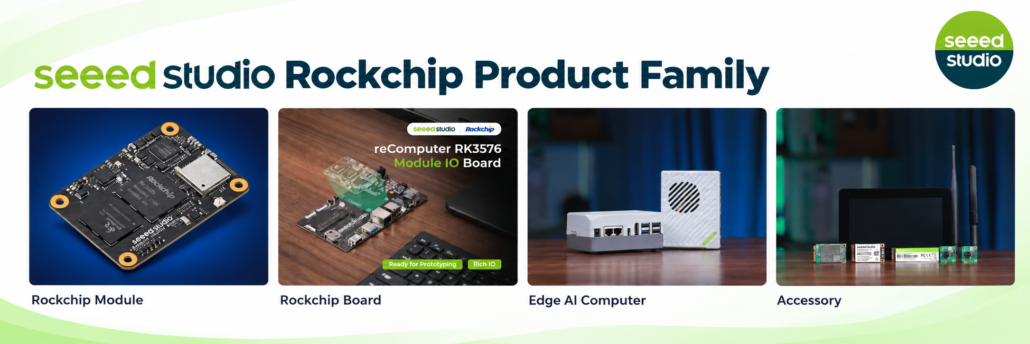
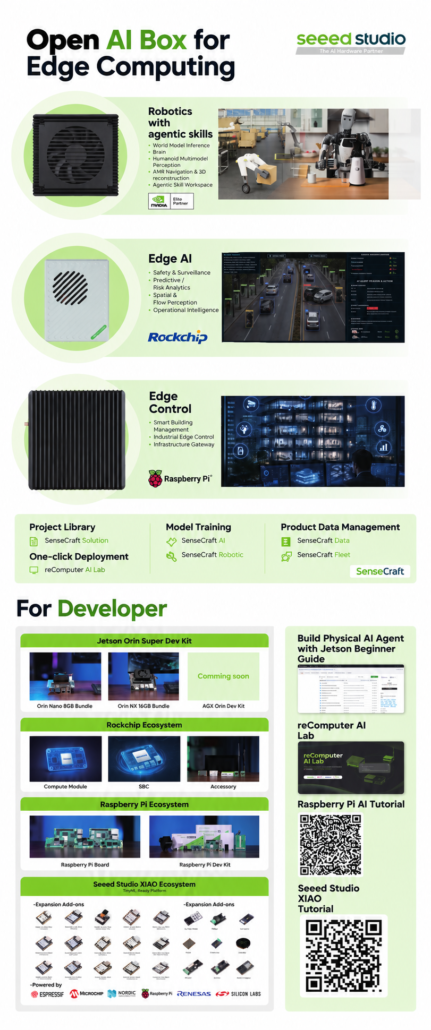
Seeed’s Rockchip Product Family: From SOM board to Commercial AI Box
The reComputer RK product line is a family of hardware products built on the Rockchip RK3588 and RK3576. Choose a starting point based on what you need to build:
- Rockchip systems-on-module (SOMs): For developing your own Rockchip-based devices
- Rockchip development kits and single-board computers (SBCs): For device and application development and proof-of-concept (PoC) validation
- Edge AI computers: Ready for commercial deployment
- Accessory ecosystem: A broad selection of peripherals and add-on modules
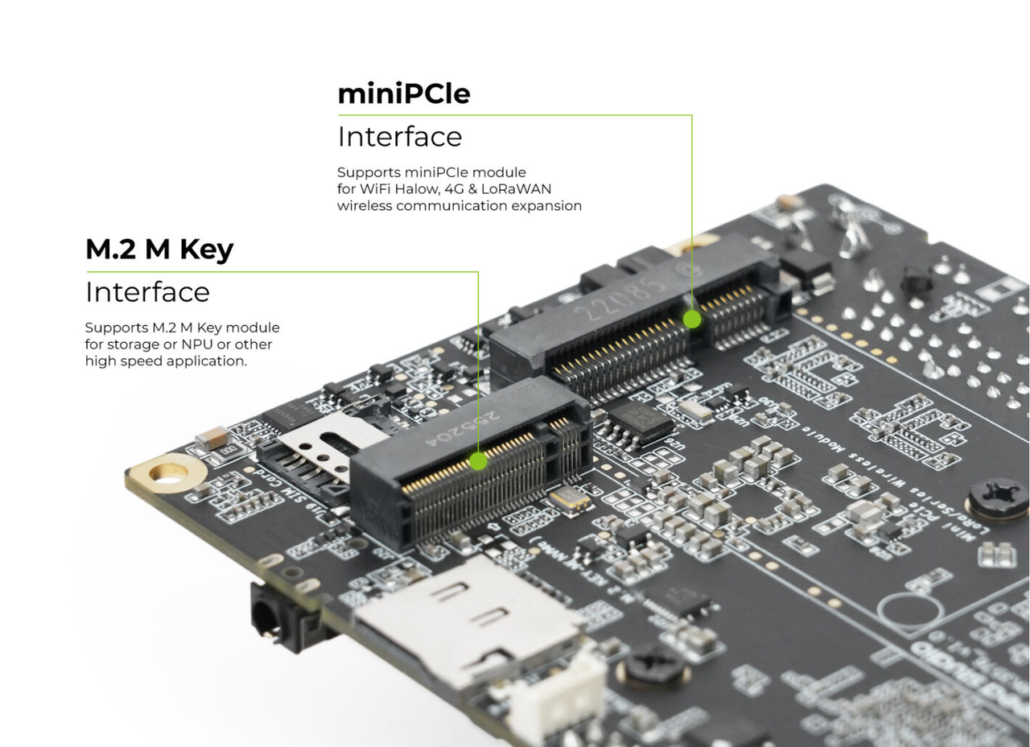
The design emphasizes modularity, allowing you to add functionality as needed. For example, the RK3576-based edge AI computer includes Mini PCIe and M.2 interfaces. With a broad accessory ecosystem, many functions can be added using compatible expansion modules.
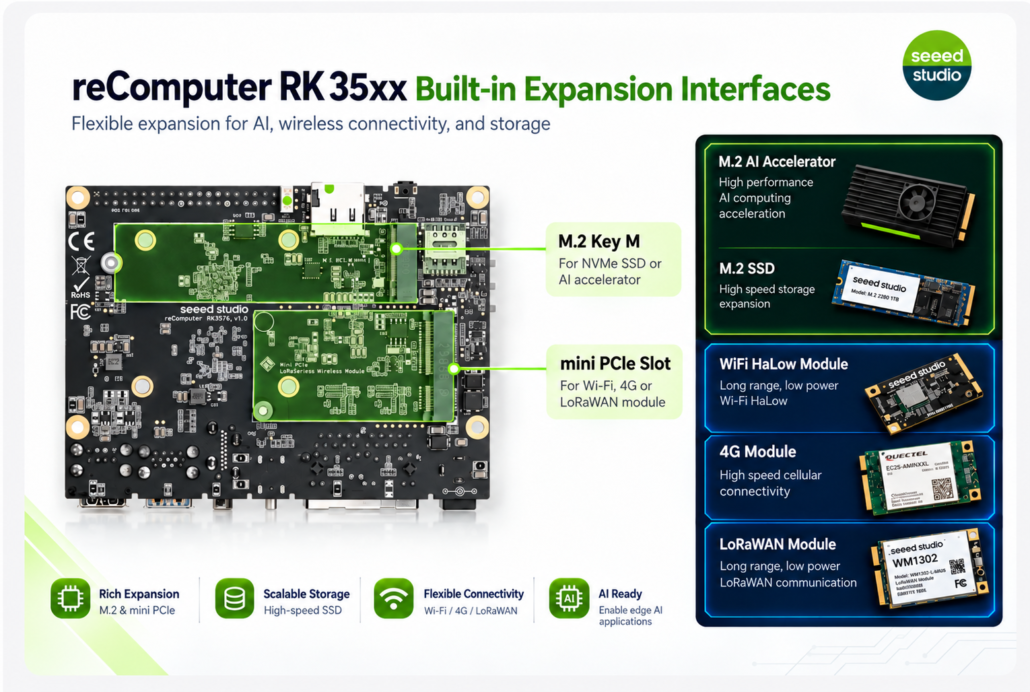
For more information about the reComputer RK35xx series, check it here: Introducing reComputer RK3576/RK3588: Open Source Rockchip AI Boxes for Real-World AI Development.
Choose the Right Level of Customization
When off-the-shelf products do not meet your requirements, Seeed also offers customization services. Lead times and costs vary with the scope of customization, which broadly falls into two categories:
Light Customization: Adapt an Existing Product Without Redesigning the Hardware
Light customization is a practical starting point when the existing hardware already meets your needs. You can add your branding, update the packaging, select validated accessories, or have your own firmware flashed onto the devices.
Typical options include:
- Enclosure branding: Update logos and other markings on an existing product enclosure using methods such as screen printing or laser engraving.
- Packaging customization: Update the information printed on existing packaging without changing its dimensions.
- Changes to packaging dimensions or structural design may incur additional NRE charges.
- Accessory selection: Choose accessories already validated by Seeed to ship together with your off-the-shelf product. accessories already validated by Seeed.
- Accessories that have not been validated, or additional accessories that Seeed needs to source, may incur additional NRE charges.
- Firmware flashing: Flash off-the-shelf products with official firmware or system images already validated by Seeed.
- Additional NRE charges may apply if your own firmware requires testing and validation, or if Seeed needs to develop or modify firmware.
Typical lead time: 1–3 weeks
NRE costs: As low as US$200 for some projects. NRE is a one-time engineering fee, separate from the product cost. The final fee and lead time depend on the agreed customization scope.
To learn more about light customization, see Seeed Fusion Light Customization: 3 Common Questions Before You Start.
Extensive Customization: Hardware Design Changes
Extensive customization is suitable for customers with specific requirements that call for hardware modifications or certification work. Options may include:
- Power input modifications: For example, changing from a 12 V DC input to a wide-range 9–36 V DC input, or adding support for powering the device via PoE++.
- System-on-chip (SoC) changes: For example, redesigning around the RK3588 instead of the RK3576, or using another Rockchip SoC.
- Memory and storage configuration: Adjust RAM or onboard storage capacity.For example, changing a standard 32 GB configuration to a custom 128 GB LPDDR5 configuration.
- I/O interface redesign: For example, adding Power over Ethernet (PoE) outputs with power sourcing equipment (PSE) functionality, or adding RS-232, RS-485, or CAN bus interfaces.
- Higher ingress protection ratings: For example, upgrading from IP54 to IP66.
- Special certification requirements: Country- or region-specific certifications, or industry-specific certifications such as ATEX certification for equipment intended for use in potentially explosive atmospheres.
- Specific mounting options: For example, DIN rail mounting.
- Extended operating temperature ranges: For example, moving from a commercial temperature range of 0–70 °C to an industrial temperature range of −40–85 °C.
- Peripheral integration: Cameras, microphones, near-field communication (NFC), speakers, and more.
- Software customization: Secure boot, driver modifications, and related work.
Typical project lead time: 1–9 months
NRE costs: Based on engineering hours and project complexity
Why Choose Seeed for Customization?
Start with Designs BUILT for CUSTOMIZATION
Three parts of our hardware portfolio can help shorten your development cycle:
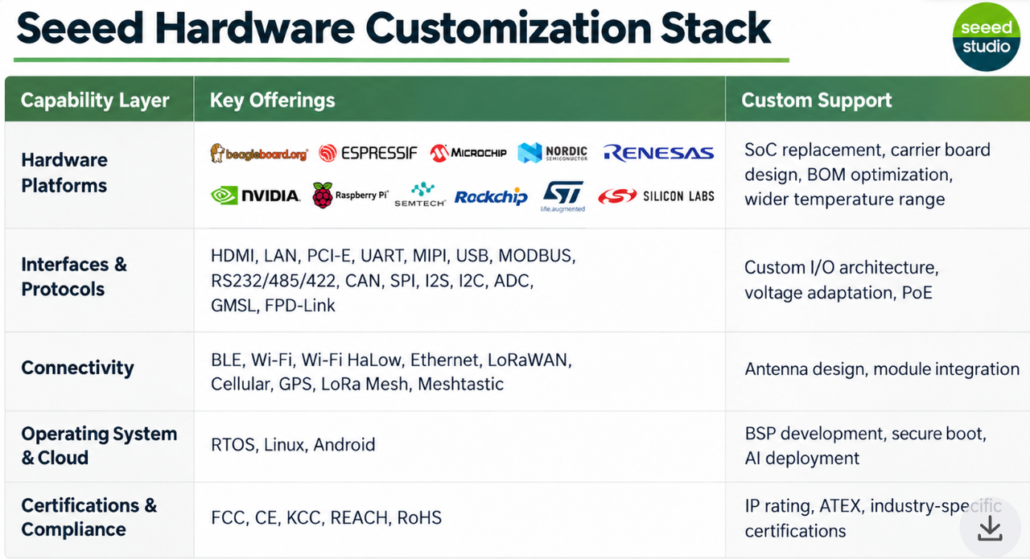
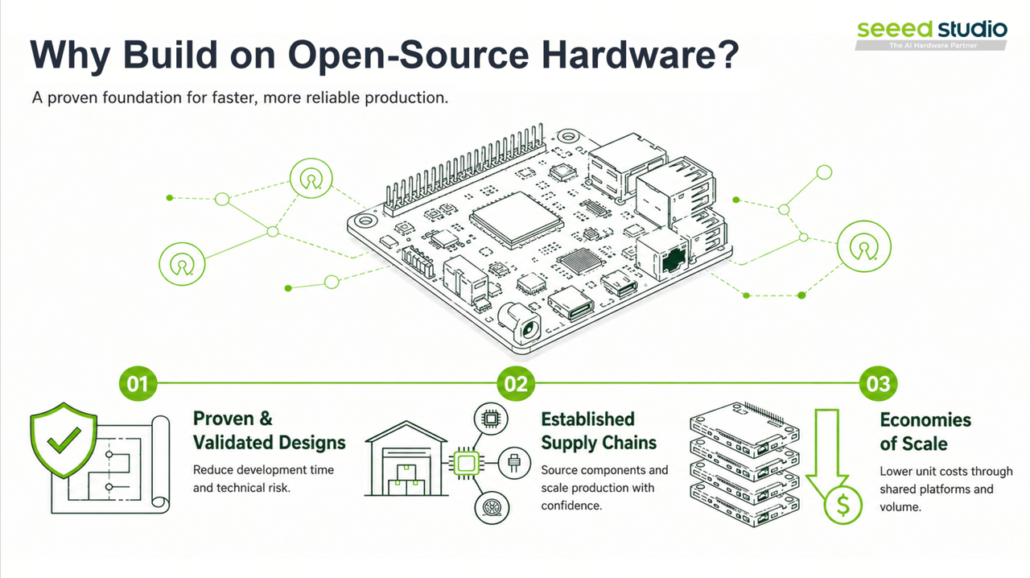
A Library of Validated, Modular Technologies Reduces Foundational Development Work
We have developed more than 8,000 products and built up a library of established technologies. For customization projects, many functions can be selected and combined from this library instead of being designed from scratch. As with LEGO bricks, assembling proven modules helps accelerate development.
Designed to Scale: Seeed’s SOMs and Development Kits Help You Move from Prototype to Production
Seeed’s systems-on-module (SOMs) and development kits are designed from the start with volume production and commercial deployment in mind. This helps you reduce redesign work and repeated trial and error as you move from a working prototype to a product ready for manufacturing.
Hardware developers often face a difficult reality: building a prototype with a development board is relatively easy, but bringing it to market at scale is much harder. Many hardware projects fail because their prototypes cannot be manufactured at scale, even when they function as intended. Seeed’s development boards emphasize modularity. You can combine functional modules as needed, much like LEGO bricks, to build prototypes quickly. More importantly, these boards are proven and validated hardware designs.
For example, we select components with long product lifecycles to support continued availability. Many are already used across our other products and commercial projects, giving us practical experience with their reliability. We also evaluate supplier qualifications, so your design builds on components and supply sources we know and have assessed.
They are built around supply chains that Seeed knows well and established manufacturing processes, helping reduce the familiar risk of a design that works in the lab but cannot be manufactured reliably. During the critical transition from prototype to volume production, Seeed helps resolve these obstacles and supports a smoother production ramp-up.
Thousands of Devices Ready for Commercial Deployment Provide Reference Designs
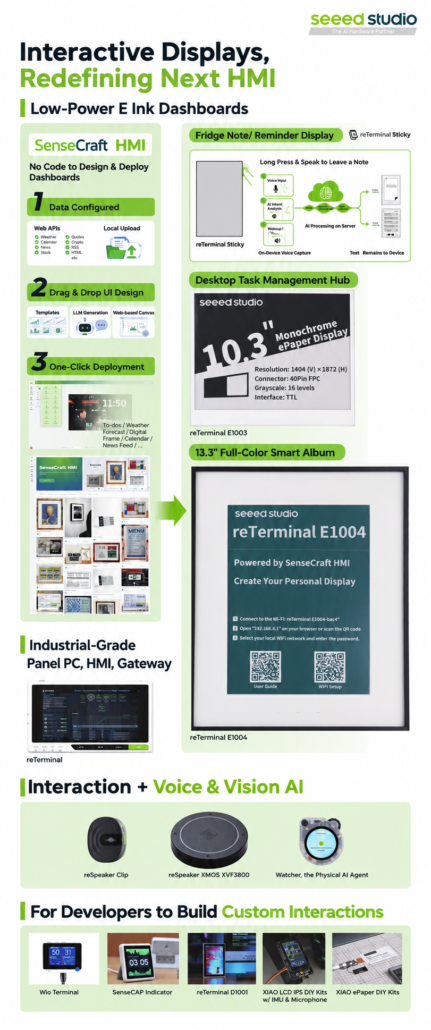
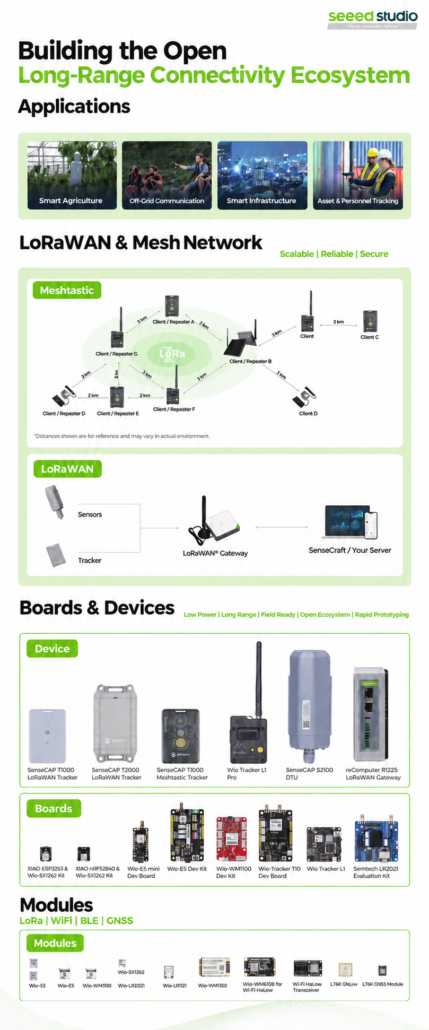
Seeed offers thousands of devices ready for commercial deployment across four categories: smart sensors, connectivity, computing, and interaction. These products can also provide reference designs for customization.
Examples include industrial displays, mini PCs with active or passive cooling, interactive robots, robotic arms, and GPS trackers. If an existing design closely matches your requirements, adapting it can reduce development time and NRE costs. Some projects with limited changes may have NRE costs from zero to a few hundred US dollars; the amount depends on the work required.
Extensive DFM Experience and an Understanding of Why Hardware Projects Fail
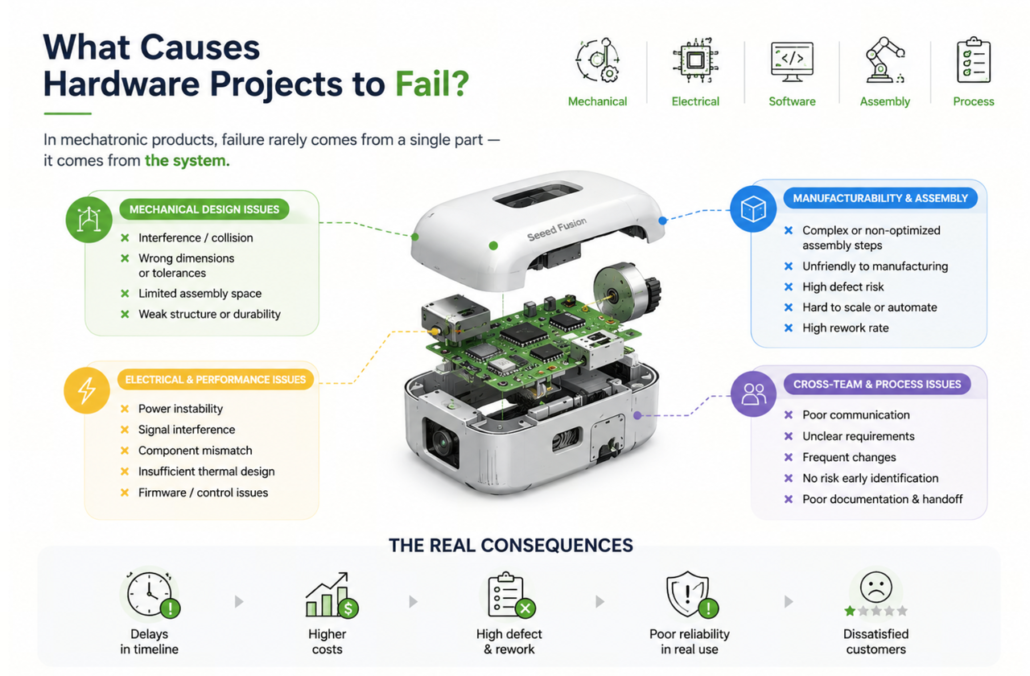
Hardware project failures often arise from system-level issues rather than a single component.
Common problems include:
- Mechanical design: Physical interference or collisions, incorrect dimensions or tolerances, space constraints, weak structures, or insufficient durability
- Electrical design and performance: Unstable power delivery, signal integrity issues, incompatible components, inadequate cooling, or firmware and control issues
- Manufacturing and assembly: Overly complex or poorly optimized assembly, designs that are difficult to manufacture, high production risk, difficulty scaling or automating production, and high rework rates
- Cross-team processes: Poor communication, unclear requirements, frequent changes, failure to identify risks, and inadequate documentation or handovers
These problems commonly lead to project delays, higher costs, defects and rework, poor reliability in the field, and dissatisfied customers.
Design for manufacturing (DFM) turns these concerns into design decisions: can the product be built consistently, at the required volume and cost? Reviewing manufacturability helps manage production lead times, defect rates, and rework. The review also needs to reflect your production volume—a process suitable for 1,000 units may need further optimization for 100,000 units.
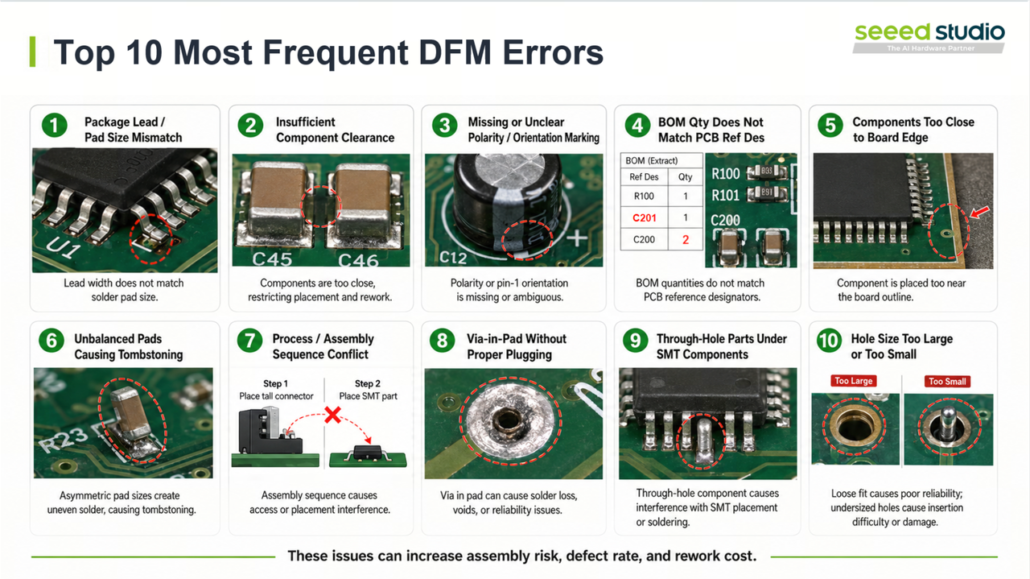
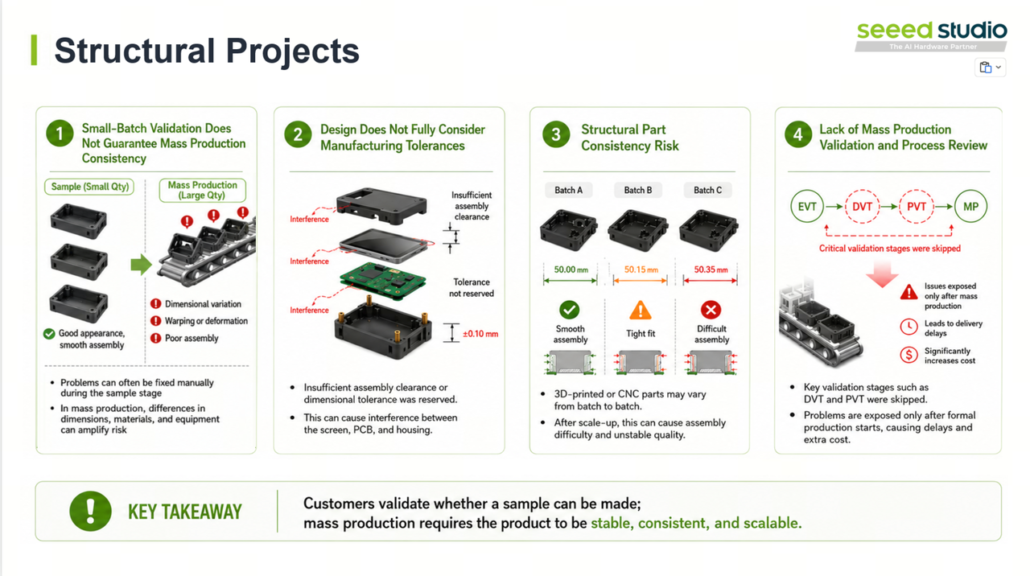
These issues can increase assembly risks, defect rates, and rework costs.
We have also published practical articles on these topics.
For example, for PCB design considerations, see PCB Manufacturing FAQ: Hole Size, Via Placement, Solder Mask, and Board Edge Design.
Proven Thermal Design Approaches for AI Hardware
AI hardware can generate substantial heat. Thermal design for commercial products requires a system-level approach, from component placement and internal cooling hardware to the enclosure, to maintain stable operation at the specified ambient temperature. Factors such as chip placement, fan-based versus passive cooling, intake versus exhaust airflow, and the distribution of cooling across the system all require careful consideration.
We use thermal simulation to evaluate each design and assess its cooling approach before production.
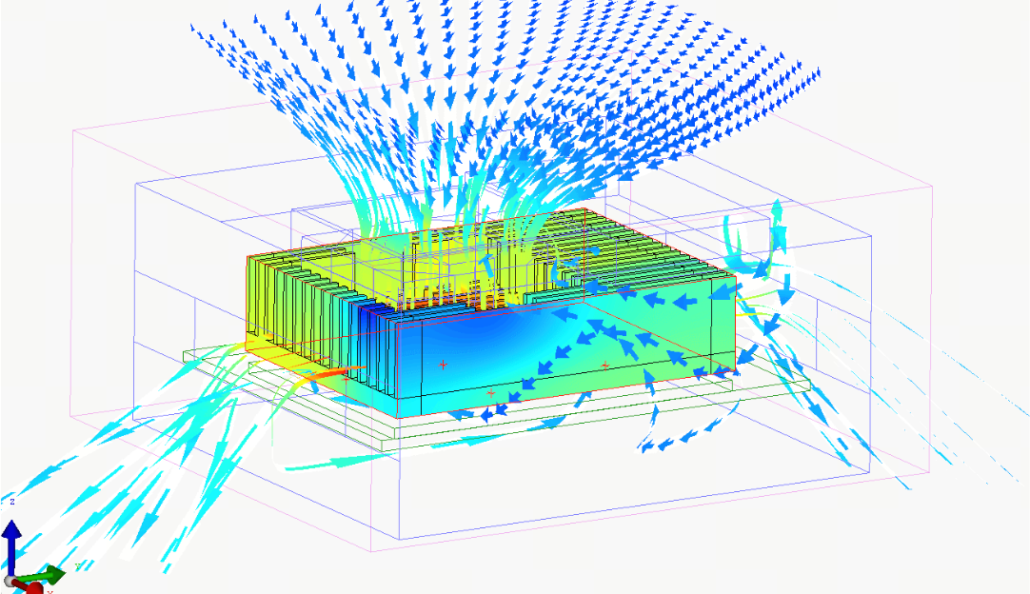
End-to-End Services Simplify Project Management
We start by reviewing your application, performance targets, interfaces, certification needs, and production goals. These become a product requirements document (PRD), giving both teams a clear specification to work from.
Once the requirements are agreed, we provide a quotation and project plan. Development then moves through agreed milestones, including functional prototypes and samples designed for manufacturability.
After your approval, we finalize the golden sample—the approved reference unit for production—and the engineering documentation needed for manufacturing. A project manager coordinates engineering, sourcing, manufacturing, and delivery throughout the project. You do not have to manage multiple teams and suppliers yourself.
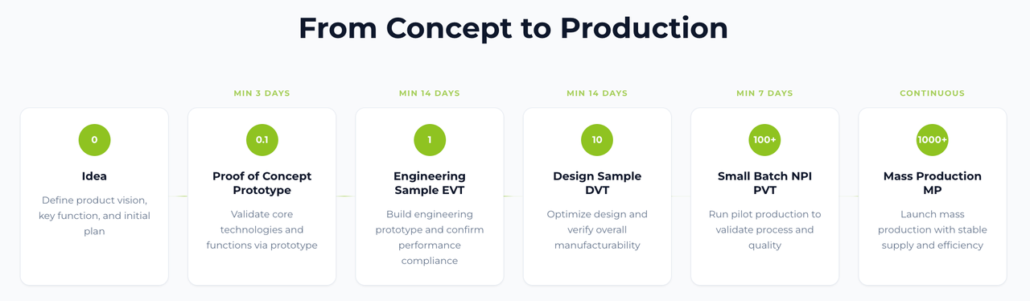
Seeed provides end-to-end support covering manufacturing, warehousing, and global shipping.
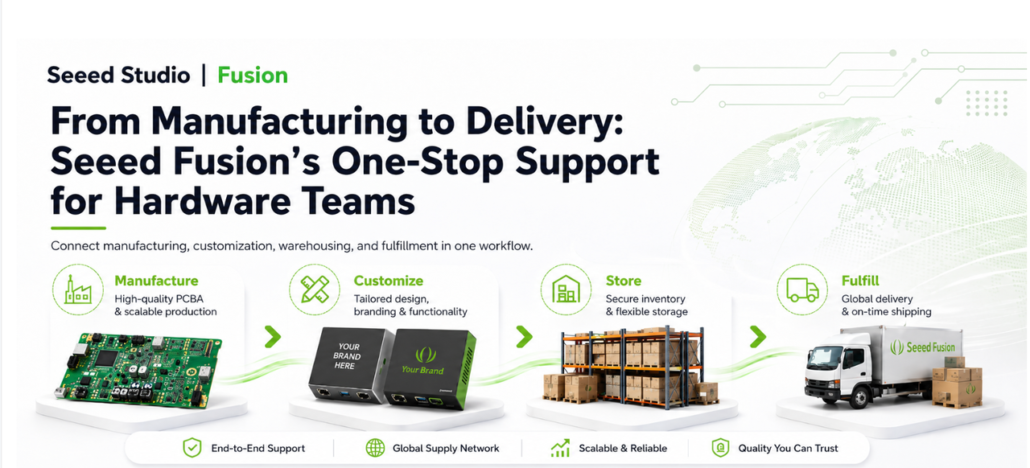
Further reading: From Manufacturing to Delivery: Seeed Fusion’s End-to-End Support for Hardware Teams
Access an Established Supplier Network
A hardware project brings together component vendors, tooling manufacturers, assembly partners, and logistics providers. Coordinating their requirements and schedules takes time.
Seeed helps coordinate these resources through an established supplier network.
Working closely with more than 300 suppliers, Seeed supports:
- Printed circuit board (PCB) fabrication and PCB assembly (PCBA)
- Component Sourcing
- Product Integration
- Warehousing
- Global Delivery
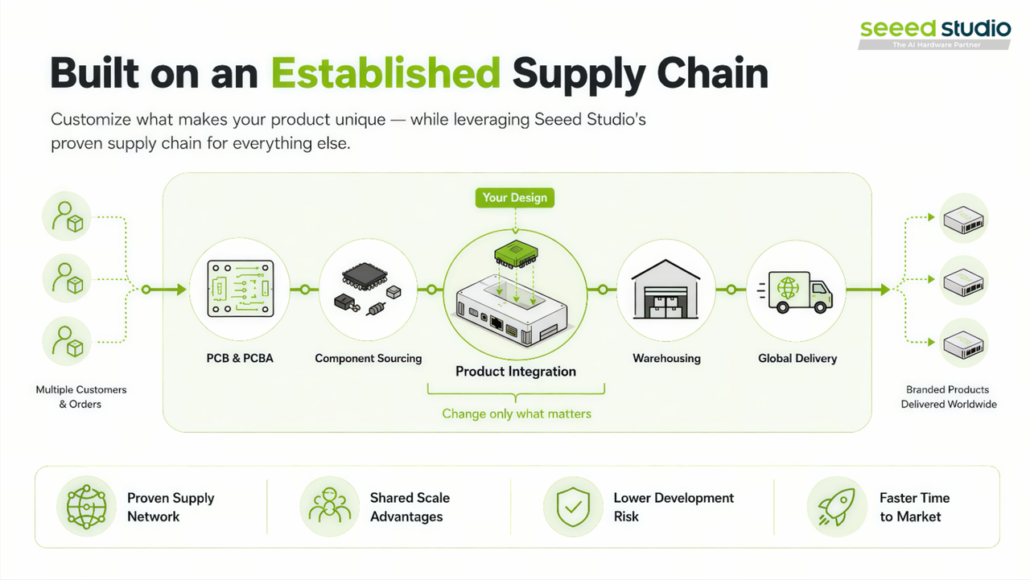
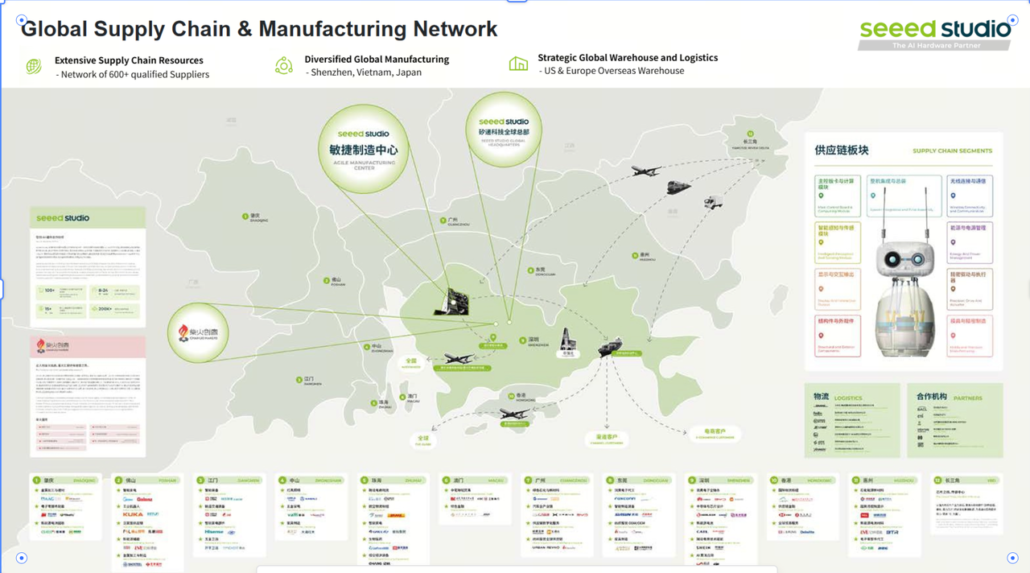
Seeed’s manufacturing network supports different production needs across three locations:
- Shenzhen, China: Headquarters and main manufacturing facility, with more than 20 surface-mount technology (SMT) lines.
- Bac Giang, Vietnam: A manufacturing site with 13 SMT lines, providing an additional production location.
- Tokyo, Japan: High-precision manufacturing for critical applications with stringent quality requirements.
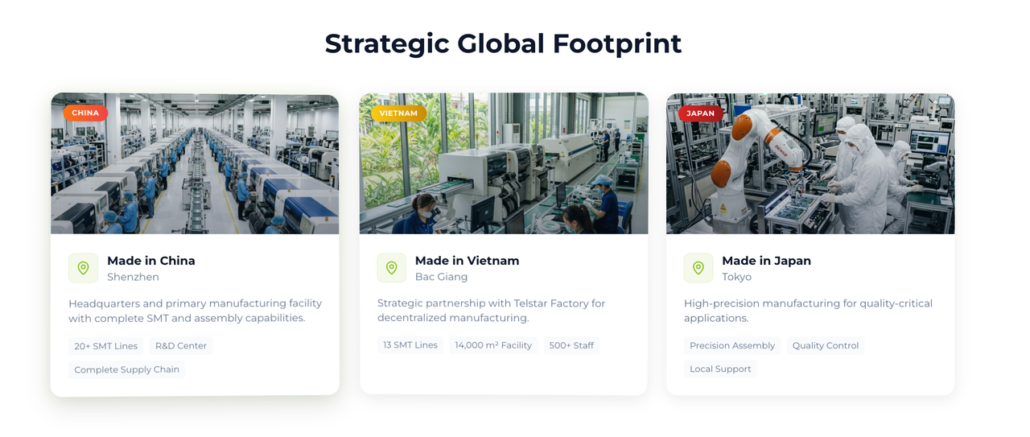
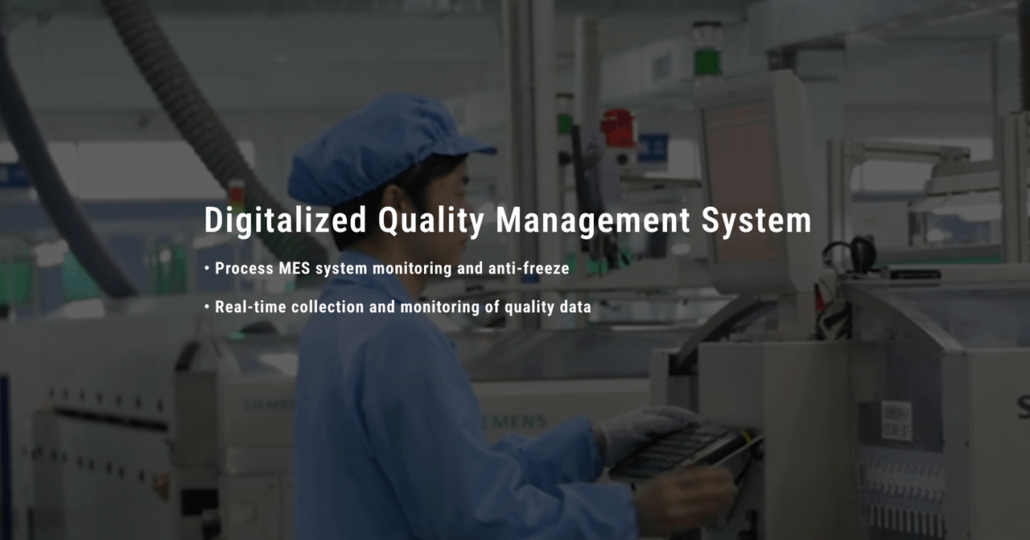
Manufacturing operates under an ISO 9001-certified quality management system, with digital management systems monitoring production quality data in real time.
For more information about overseas manufacturing sites, see Seeed’s Global Manufacturing Network.
For a closer look at manufacturing, watch our Wio Terminal production walkthroughs from the Shenzhen facility. They cover electronics, mechanical components, and testing:
For common PCBA inspection and testing methods, see 7 Most Popular PCB Testing Methods During Manufacturing and Assembly.
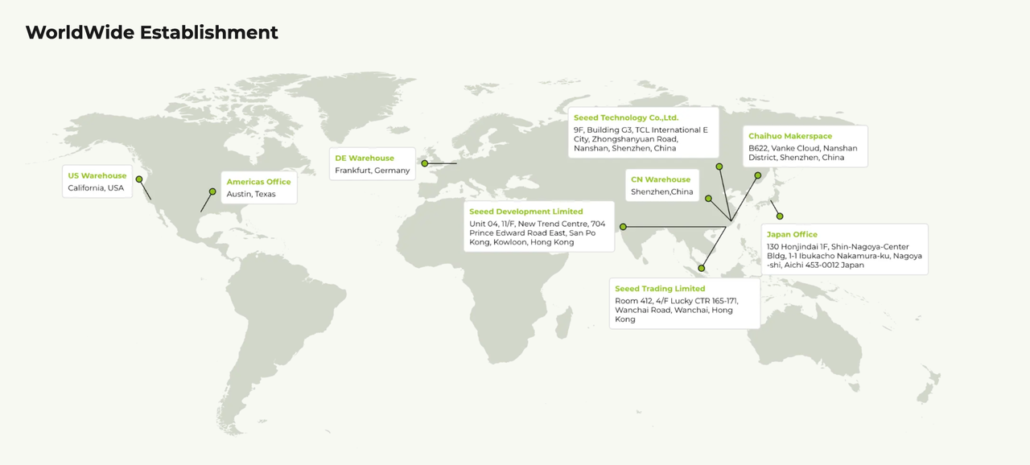
Global Offices and Overseas Warehouses
Seeed maintains offices and warehouses around the world to provide additional on-site support and help address logistics challenges.
Build Rockchip-Based AI Hardware Faster with Seeed
For projects based on the Rockchip RK3588 and RK3576, Seeed offers:
- SOMs and SBCs for development
- reComputer AI boxes for commercial deployment
- A broad ecosystem of accessories and add-on modules
- Light customization: typically 1–3 weeks, with NRE costs as low as a few hundred US dollars
- Hardware customization: typically 1–9 months, with costs based on project complexity
- End-to-end support for DFM, thermal simulation, supply chain management, global manufacturing, and delivery
Further Information
- Overview of Seeed’s customization services: SBC Customization Services
- A closer look at manufacturing validation stages: EVT, DVT, and PVT Manufacturing Stages Explained
Tell us what you are building, the interfaces and performance you need, your expected production volume, and your target timeline. Contact [email protected] to discuss a customization plan for your project.
About Author
