LoRa Plus at Scale: Semtech LR2012 Opens a New Chapter for Low-Power IoT
On August 19, 2026, Semtech announced that LR2012 and LR2022 had entered production, expanding its LoRa Plus portfolio to three production-ready transceivers. Alongside LR2021, the new devices bring fourth-generation LoRa IP to applications ranging from cost-sensitive Sub-GHz sensors to global connectivity and devices that exchange richer data.
For device manufacturers, this broader lineup creates more targeted choices. A utility meter, a global tracker and an image-transmitting security device can draw on the same generation of radio technology while selecting the frequency coverage and communication capabilities their products need. LR2012 gives traditional LPWAN devices a dedicated place in that roadmap.
As an official Semtech partner, Seeed Studio has worked with Semtech to introduce the Semtech LR2012 LoRa Plus Evaluation Kit. The platform combines LR2012 radio hardware with XIAO nRF54L15 host modules, giving engineering teams a practical starting point for evaluating their next wireless meter, building sensor or industrial monitoring node.
Where LR2012 Fits: Third- and Fourth-Generation LoRa
Semtech’s third-generation portfolio expanded LoRa in several directions. LR1121 supports Sub-GHz, 2.4 GHz and satellite S-band connectivity. LoRa Edge devices such as LR1110 and LR1120 integrate GNSS and Wi-Fi scanning for location-aware products.
The fourth-generation LoRa Plus family adds improved radio reception, more efficient channel sensing and a choice of communication capabilities across three devices. LR2012 concentrates these improvements on Sub-GHz operation; LR2022 extends the platform to multiple bands; LR2021 adds further PHY options, including FLRC.
| Transceiver | Generation and positioning | Frequency coverage | Principal modulation options | Maximum data-rate highlights | Application fit |
| LR1121 | Gen 3, multi-band connectivity | Sub-GHz, 2.4 GHz, satellite S-band | LoRa, (G)FSK, LR-FHSS | Sub-GHz LoRa: 62.5 kbps; FSK: 300 kbps | Multi-band sensors, connected assets and satellite-connected devices |
| LR2012 | Gen 4, focused Sub-GHz LPWAN | Sub-GHz, 150–960 MHz | LoRa, (G)FSK, OOK, LR-FHSS | LoRa: 125 kbps; FSK: 2 Mbps | Utility meters, meter interfaces, building sensors and industrial nodes |
| LR2022 | Gen 4, multi-band connectivity | Sub-GHz, 2.4 GHz, satellite L/S bands | LoRa, (G)FSK, OOK, LR-FHSS | LoRa: 125 kbps; FSK: 2 Mbps | Global connected assets and devices using terrestrial and satellite networks |
| LR2021 | Gen 4, broader PHY support | Sub-GHz, 2.4 GHz, satellite L/S bands | LoRa, (G)FSK, OOK, LR-FHSS, FLRC, O-QPSK | LoRa: 125 kbps; FLRC: 2.6 Mbps | Image and audio transfer, edge devices and multi-protocol products |
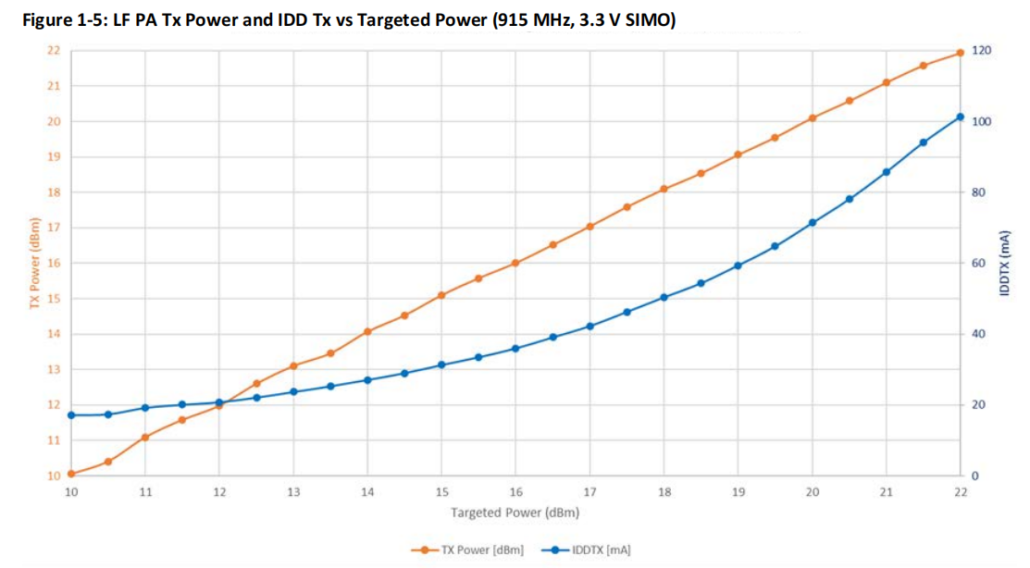
The rate figures identify their corresponding radio modes. The fourth-generation devices share Sub-GHz transmit capability up to +22 dBm, as does LR1121.
This makes LR2012 a clear option for manufacturers whose next product will spend its working life sending readings, receiving commands and reporting events over Sub-GHz links.
The Differences That Matter in LR2012 Product Design
More reception margin for difficult installation points. LR2012 reaches −141.5 dBm sensitivity at SF12 and 125 kHz bandwidth. For meters installed inside buildings and sensors distributed across large sites, this gives designers more room to accommodate signal attenuation and fading in their link budgets.
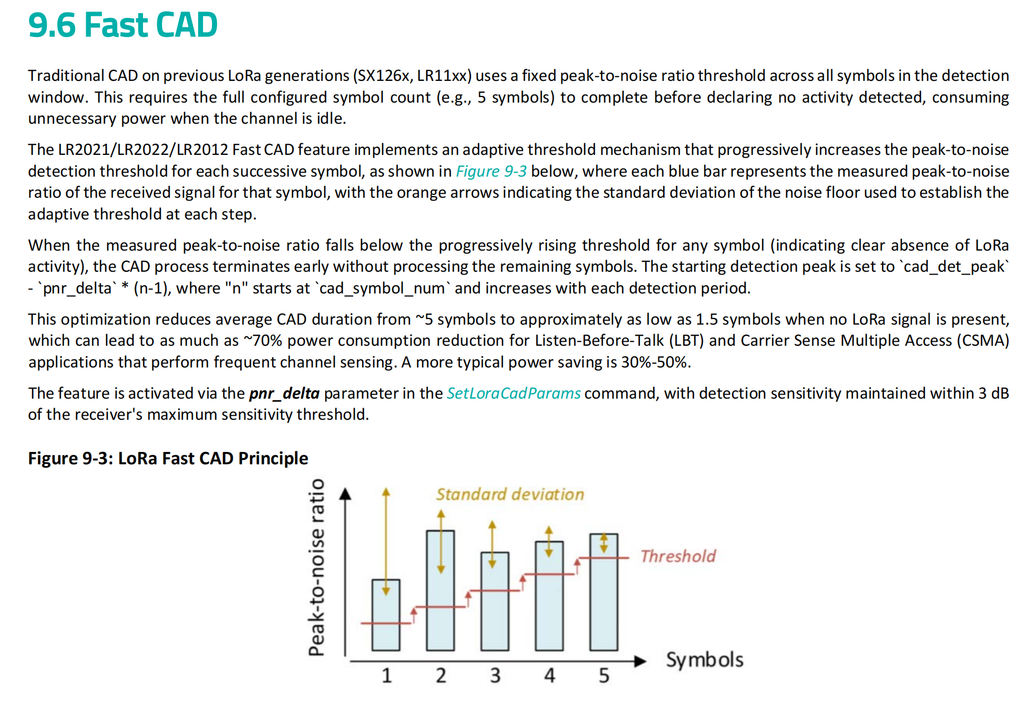
More efficient listening. Fast CAD can end a channel check early when it detects no LoRa activity, reducing the energy spent on idle channel sensing. Multi-SF detection allows a receiver to identify different spreading factors on the same channel and bandwidth, then receive the detected packet. These features help developers refine listening behavior and communication settings for battery-powered devices.
A platform for mixed communication requirements. LR2012 supports LoRa, FSK, OOK and LR-FHSS, with physical-layer support for applications such as Wireless M-Bus and Wi-SUN FSK. Integrating the relevant protocol stacks gives manufacturers a route to supporting different metering networks and established installations on a common radio platform.
Simpler RF and clock design options. Semtech highlights a switch-less, multi-region front-end architecture and increased frequency-offset tolerance. These features give teams opportunities to reduce external RF components and simplify clock circuitry, particularly valuable when a design moves into volume production.
Together, these advances give device manufacturers greater flexibility in balancing coverage, battery capacity, protocol requirements and hardware cost. The LR2012 Evaluation Kit brings these considerations into an accessible development workflow. With paired nodes and Semtech’s evaluation software, engineers can characterize link reliability, compare radio configurations and measure communication energy consumption using external instrumentation.
Metering Manufacturers Are Already Building with LR2012
Semtech’s production announcement names two companies selecting LR2012 for metering products.
Zenner USA selected the transceiver for its Stealth Reader Meter Interface Unit, designed for automatic meter reading and advanced metering infrastructure. The company cited LoRaWAN performance, compatibility with legacy OOK and LR-FHSS support as reasons for its choice.
Engelmann Sensor GmbH selected LR2012 for its next-generation metering solutions, highlighting access to current LoRa innovations and a price point suited to its product roadmap.
If your project has similar requirements, whether you are developing a wireless water meter or a liquid-level sensor, the LR2012 Evaluation Kit provides a practical way to validate your communication concept, explore suitable radio settings and accelerate prototype development.
Three Regional Kits, One Development Approach
The Seeed Studio LR2012 evaluation platform is available in three regional versions:
| Evaluation kit | Regional frequency range | Development focus |
| Semtech LR2012 Evaluation Kit-EU868 | 863–870 MHz | EU868 meter and sensor applications |
| Semtech LR2012 Evaluation Kit-US915 | 902–928 MHz | US915 meter and sensor applications |
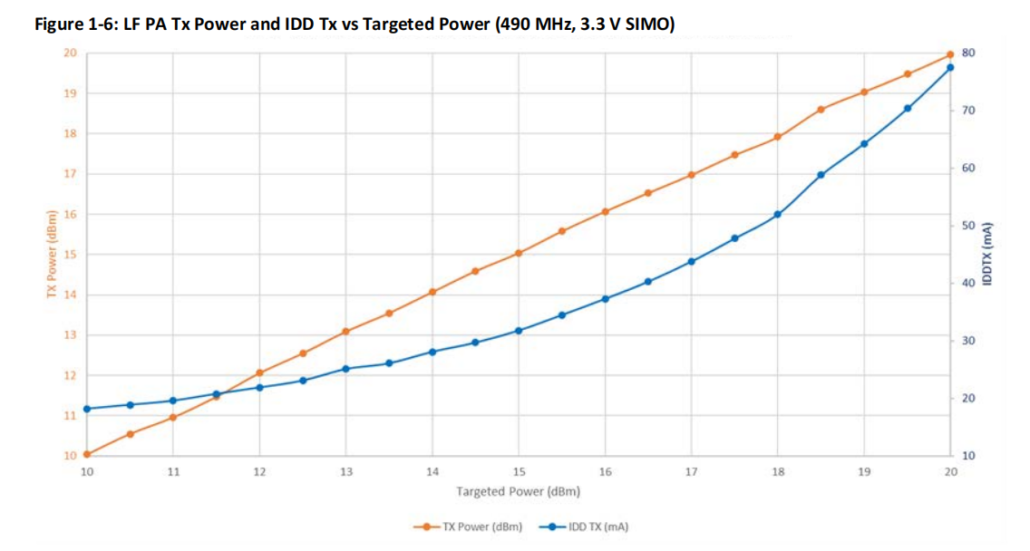
| Semtech LR2012 Evaluation Kit-CN490 | 470–510 MHz | CN490 Sub-GHz device development |
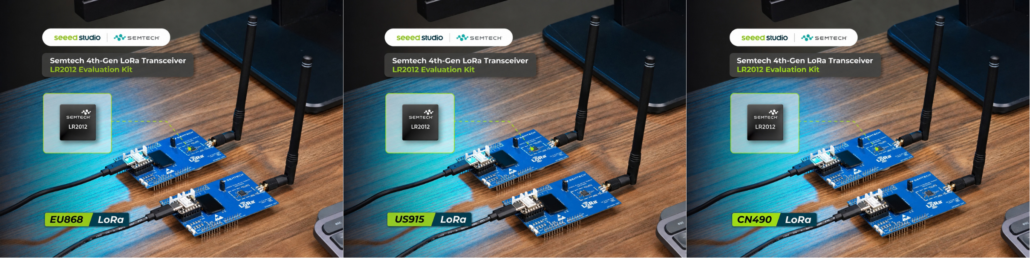
Each LR2012 Evaluation Kit includes two RF boards, two XIAO nRF54L15 modules, antennas and USB cables, giving engineers a complete pair of nodes for bidirectional communication tests. Teams can start with a working radio link, then move one node into a representative installation location, such as a meter cabinet, basement or tank monitoring area, to investigate how distance and obstructions affect packet delivery. The EU868, US915 and CN490 variants follow the same development approach, helping teams reuse their evaluation process across regional product designs.
Semtech’s LoRa Studio turns this hardware into an accessible radio evaluation platform. Ping-Pong tests establish two-way communication, while packet error rate testing helps engineers compare link reliability across radio configurations and installation positions.
The kit also supports focused RF and energy measurements. Continuous-wave transmission provides a steady signal for measuring output power and examining the RF path with bench instruments. LoRa Studio’s radio-state controls let engineers hold the transceiver in transmit, receive or sleep states while external equipment measures current consumption. Combined with the application’s packet length, reporting interval and receive-window timing, these measurements provide practical inputs for communication energy budgets and battery sizing.
For application development, Semtech’s Unified Software Platform (USP) and its Zephyr integration provide radio drivers, examples and board support, including validated support for the LR2012 expansion board with XIAO nRF54L15. The same hardware therefore supports the progression from initial radio evaluation to a working connected-device prototype, helping teams resolve firmware integration and communication requirements before designing their own PCB.
Bring your next IoT design to life for just $99, with the LR2012 Evaluation Kit for wireless link testing, power evaluation and rapid prototyping.
From Radio Specifications to Engineering Decisions
The kit is particularly useful for wireless meter interfaces, building sensors, agricultural nodes and industrial monitoring devices. Its evaluation capabilities connect directly to the decisions these products require.
| Engineering question | Relevant capability | Practical value |
| Will the link serve the intended installation points? | −141.5 dBm sensitivity at SF12/125 kHz, adjustable output up to +22 dBm, paired PER testing | Compare reception across meter locations, building interiors and site boundaries; choose suitable communication parameters |
| How much energy does a reporting cycle use? | Radio receive current of 5.7 mA and sleep current of 470 nA, plus power-measurement test modes | Measure active and sleep periods with a current analyzer, then plan reporting intervals and battery capacity |
| Can accumulated data transfer more quickly? | LoRa up to 125 kbps and FSK up to 2 Mbps; LoRa and FSK PER examples | Compare transmission time and reliability for reading batches, logs and diagnostic data |
| Can a prototype join the target LoRaWAN network? | LoRa Basics Modem and periodic-uplink examples | Verify network joining and application data exchange with a regional gateway and network server |
| What does MCU integration require? | XIAO nRF54L15 support, USP/Zephyr integration and porting tests | Establish working firmware, then assess SPI, interrupt, timing and sleep integration for the target MCU |
A Broader LoRa Roadmap, with a Practical Path to Development
Semtech’s three-device LoRa Plus lineup points toward a broader design strategy: fourth-generation radio improvements can serve established metering and sensing markets alongside multi-band connectivity and higher-throughput applications. LR2012 brings that strategy to the large population of devices built around Sub-GHz readings, commands and events.
Seeed Studio’s long-standing collaboration with Semtech connects this radio roadmap to accessible development hardware. The Semtech LR2021 LoRa Plus Evaluation Kit already supports evaluation of multi-band connectivity and FLRC communication. The LR2012 evaluation kits extend that offering to focused Sub-GHz meter and sensor development, with paired nodes and a shared software foundation.
For teams planning their next wireless terminal, choose the LR2012 kit for EU868, US915 or CN490, and begin with the link, energy and integration questions that shape the final product.
For bulk pricing on the LR2012 Evaluation Kit, please contact [email protected].
About Author
