In this issue, we look at September’s news and events, recently published technical guides from the Seeed Wiki and Blog, hardware and manufacturing updates, and the people putting open technology to work.
Let’s dive in!
I. NEWS & EVENT HIGHLIGHTS
01. Seeed in the US: A New Local Hub
In September, Seeed introduced its Santa Clara base as a place to showcase technology, collaborate with makers and universities, connect startups with engineering support, and make hardware more accessible in the US. The vision brings together showcase, community learning, sales and fulfillment, and support. Explore the story.
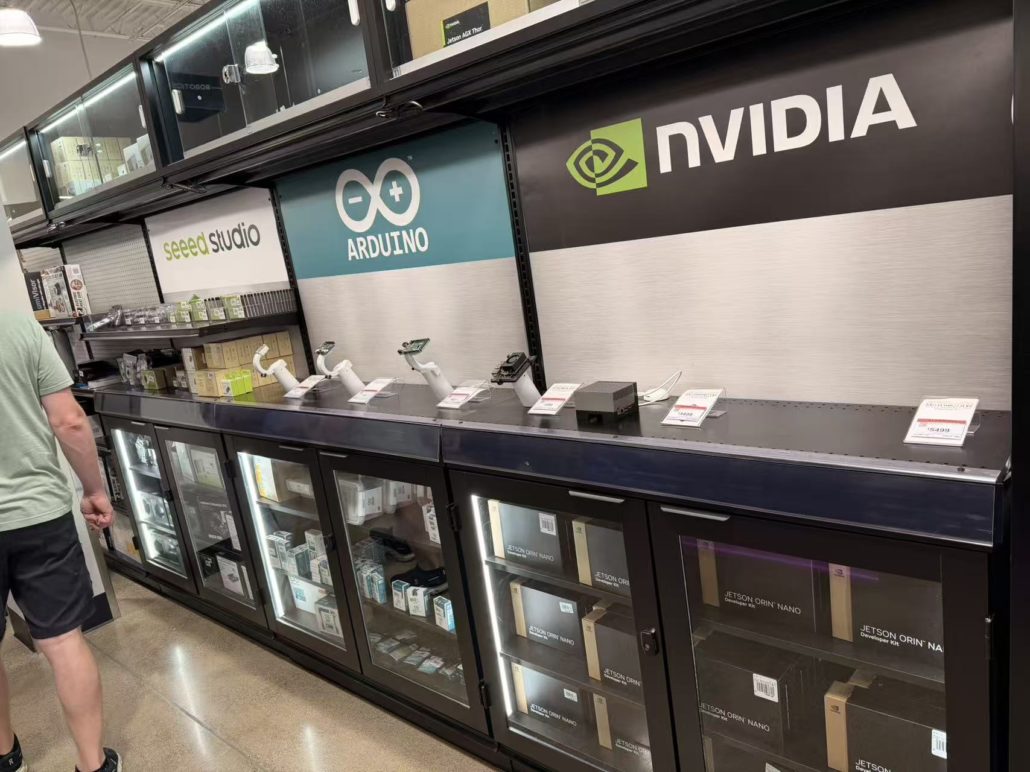
02. US Developers Can Now Shop Seeed at Micro Center
Seeed Studio products reached Micro Center’s US retail network, including development boards, displays, voice interfaces, edge AI systems and Meshtastic devices. Makers can explore Seeed’s branded shelves in person and check stock at individual locations. See where to find us.
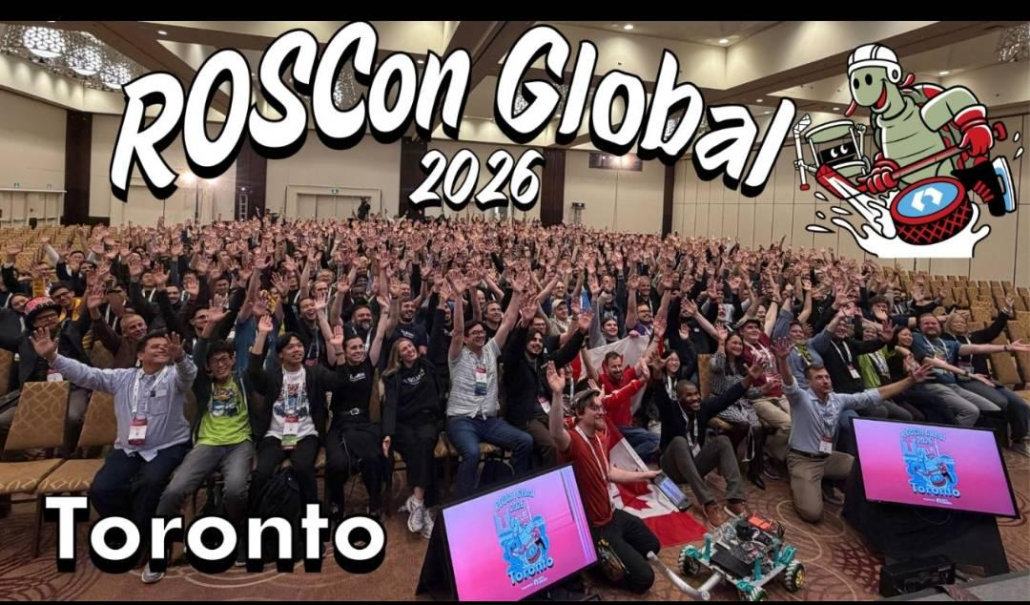
03. ROSCon Global 2026: Seeed Meets the Open Robotics Community
Seeed joined ROSCon Global in Toronto from September 22–24 as a Silver Sponsor. The gathering brought together people working on ROS, robot learning and the software-hardware ecosystem supporting Physical AI. Explore the story.
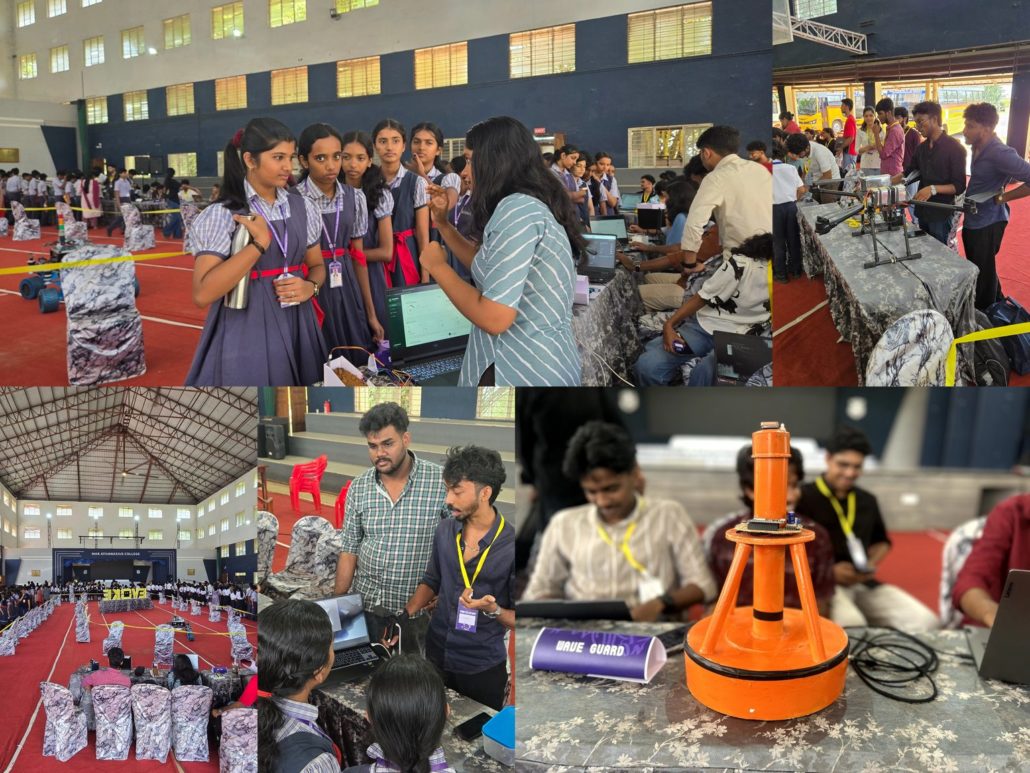
04. EVOKE 2026 at MACE: Hardware That Actually Works
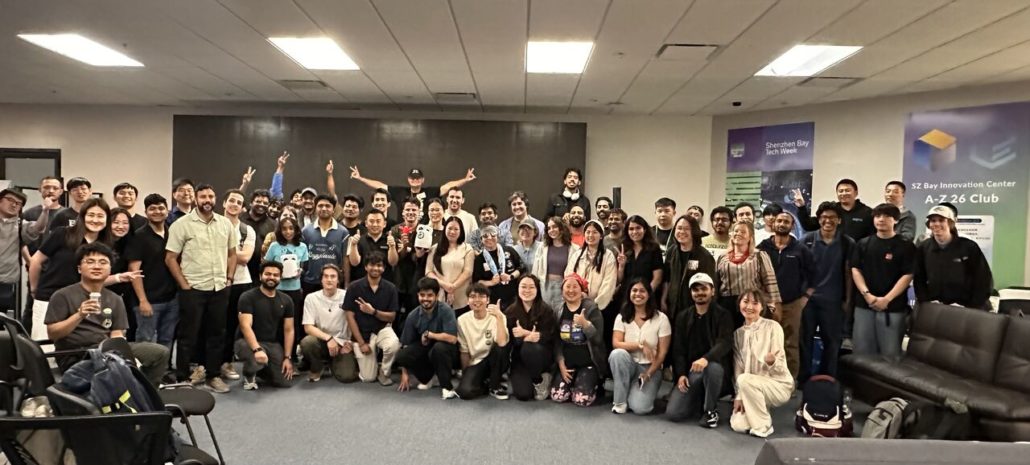
On September 11, EVOKE 2026 welcomed 40 shortlisted student teams, selected from more than 1,000 registrations. With working prototypes rather than concept slides, participants tackled challenges ranging from food security and climate resilience to assistive technology and industrial safety. Recap the event here!
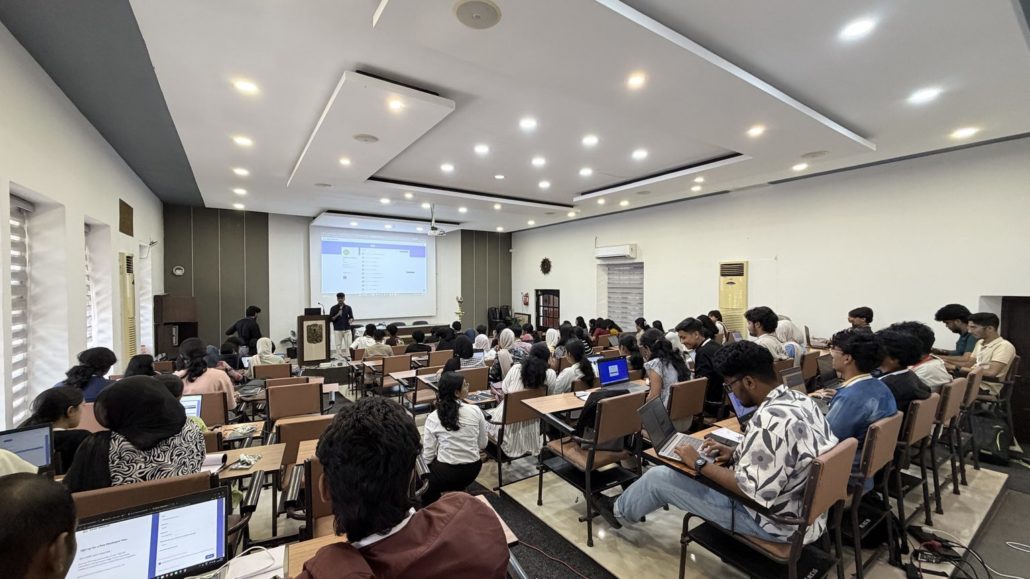
05. TinyML Goes Hands-On in India
Seeed Ranger Abhinav supported hands-on learning at the ATHER TinyML Workshop at MACE and another TinyML program at CET. Participants trained models, used compact XIAO and Grove AI hardware, and explored how to run machine learning at the edge.
06. Interactive Signage Contest: Makers Vote for Makers
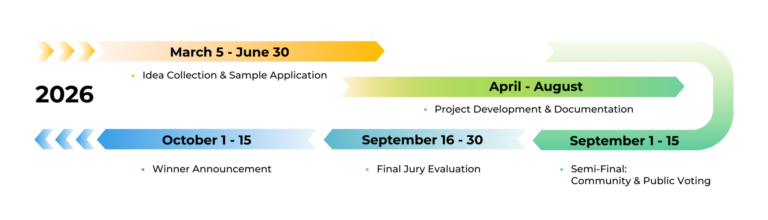
September’s community voting invited makers to discover and support inventive interactive signage projects, from clever displays to sensor-driven interactions that transform everyday spaces.
II. IN-DEPTH FEATURES & TECHNOLOGY EXPLORATION
01. Toward More Resilient Early Warning with Open Technology
This feature asks how environmental sensing, local processing, reliable communication, and community alerts can work together when infrastructure is vulnerable. It frames early warning as a system from sensing and understanding to communicating and warning.
02. Mobile Robot Full-Stack Development
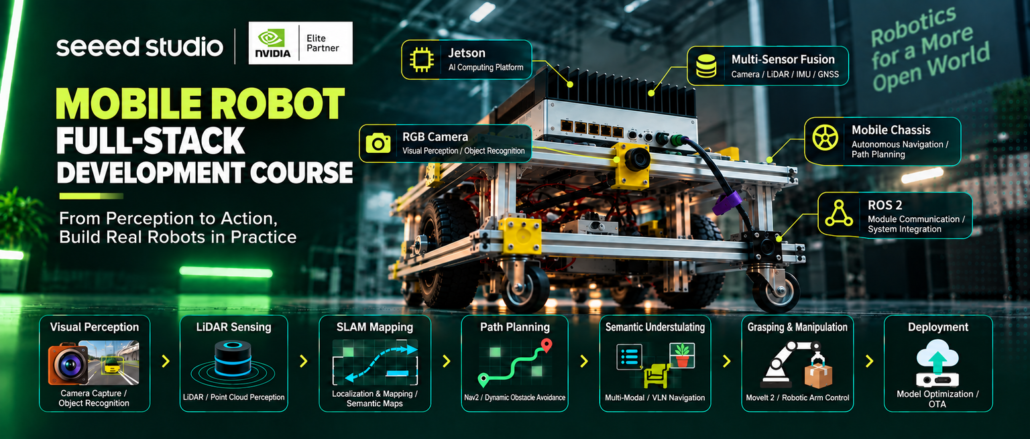
A structured open-source course introduces perception, robotics software, navigation and control on reComputer and NVIDIA Jetson platforms. It connects separate tutorials into one pathway for learners building autonomous systems.
03. Learning Physical AI with reBot
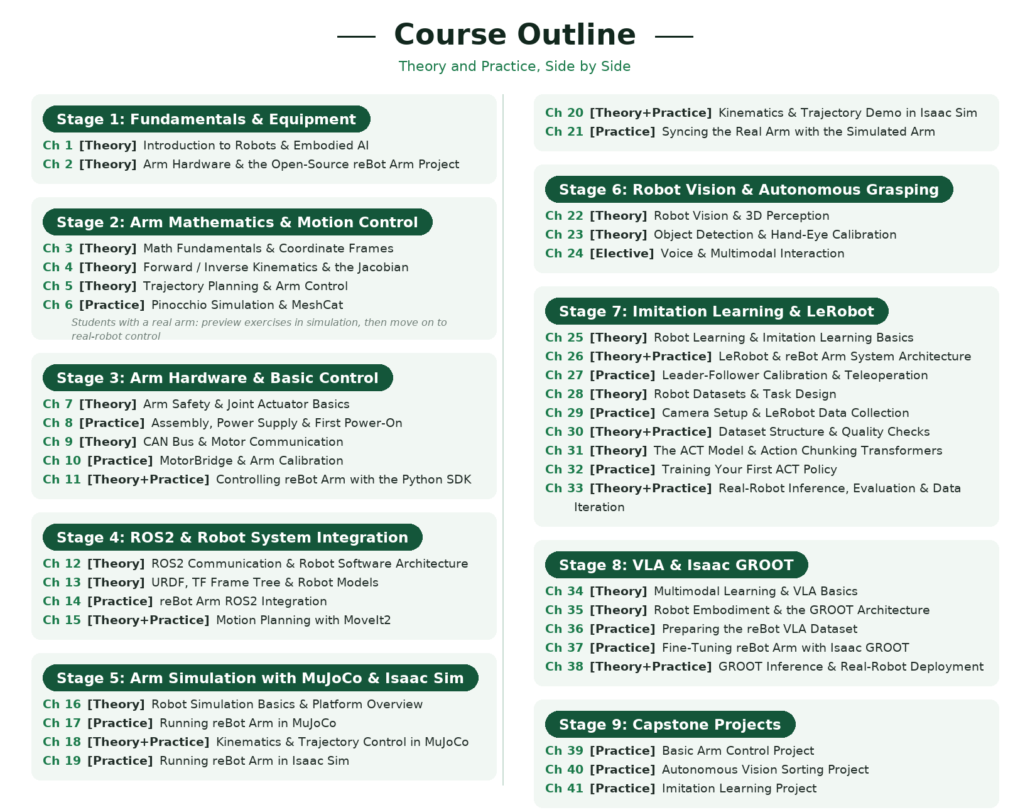
The Physical AI beginner’s course takes learners through robot setup, control, dataset collection and foundational robot learning concepts using open tools and the reBot platform.
04. XIAO MG24 Gains Matter and Zigbee Support
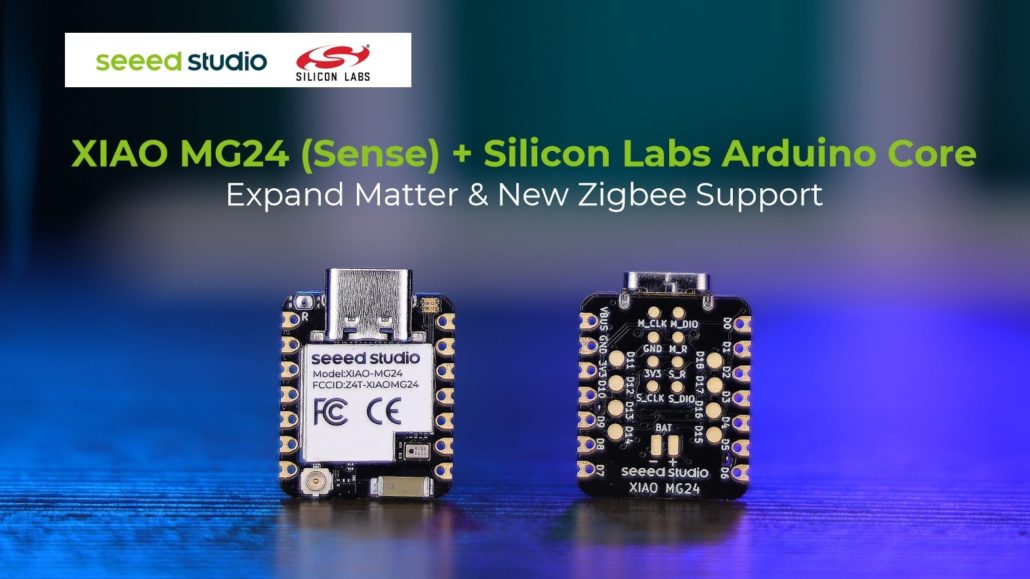
Silicon Labs Arduino Core 5.0 expands the ways developers can experiment with Matter and Zigbee on the XIAO MG24 family, supporting connected sensing and smart home projects.
05. Wio Tracker L2 and Meshtastic
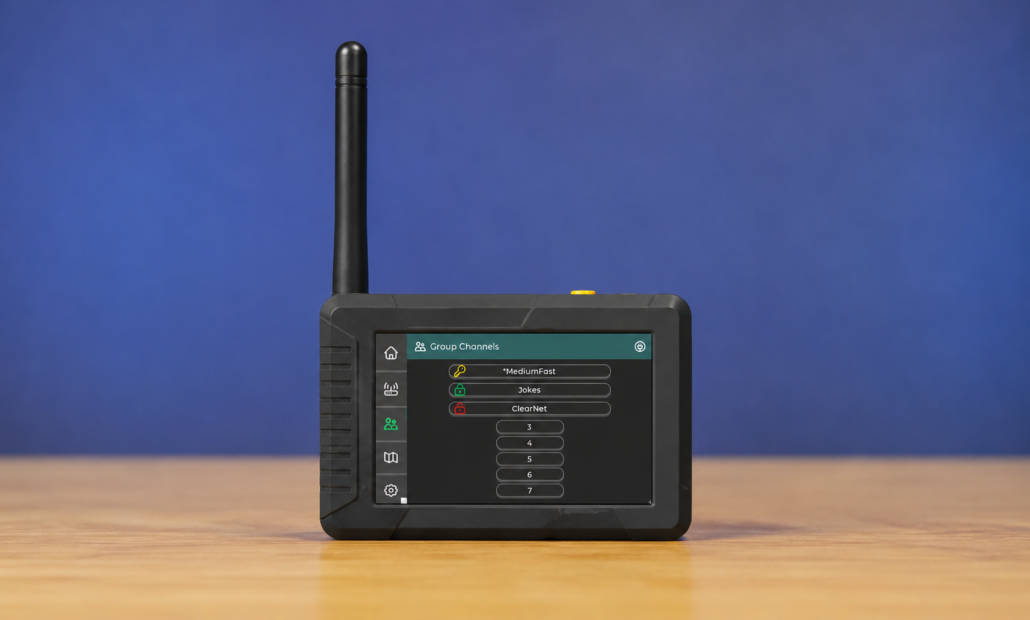
The Wio Tracker L2 Series is a highly extensible Meshtastic device designed for off-grid communication and location tracking. Powered by the ESP32-S3 with LoRa connectivity and an L76K GPS module, it supports QSPI touchscreens, E-Ink displays, TF cards, and solar or battery power, making it a flexible platform for outdoor exploration, remote monitoring, and IoT applications.
06. TinyGo Starter Kit with XIAO
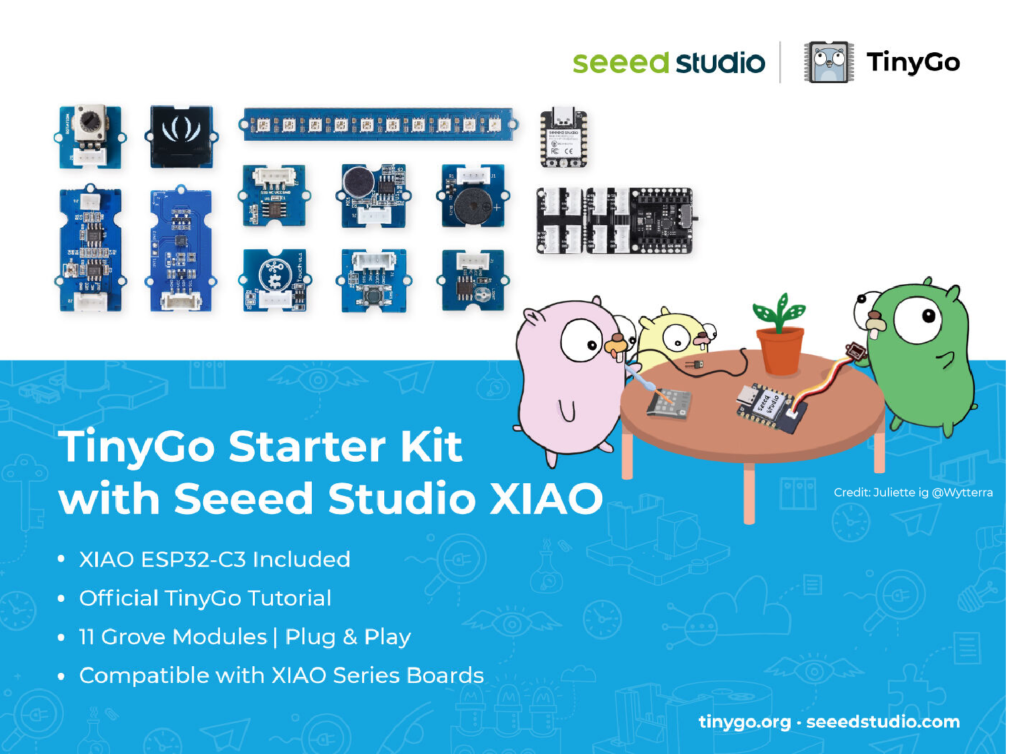
The TinyGo starter kit helps Go programmers enter embedded development with XIAO ESP32-C3, Grove components and hands-on exercises, giving software developers a familiar language for physical computing.
07. Agricultural Weather Stations: What to Measure
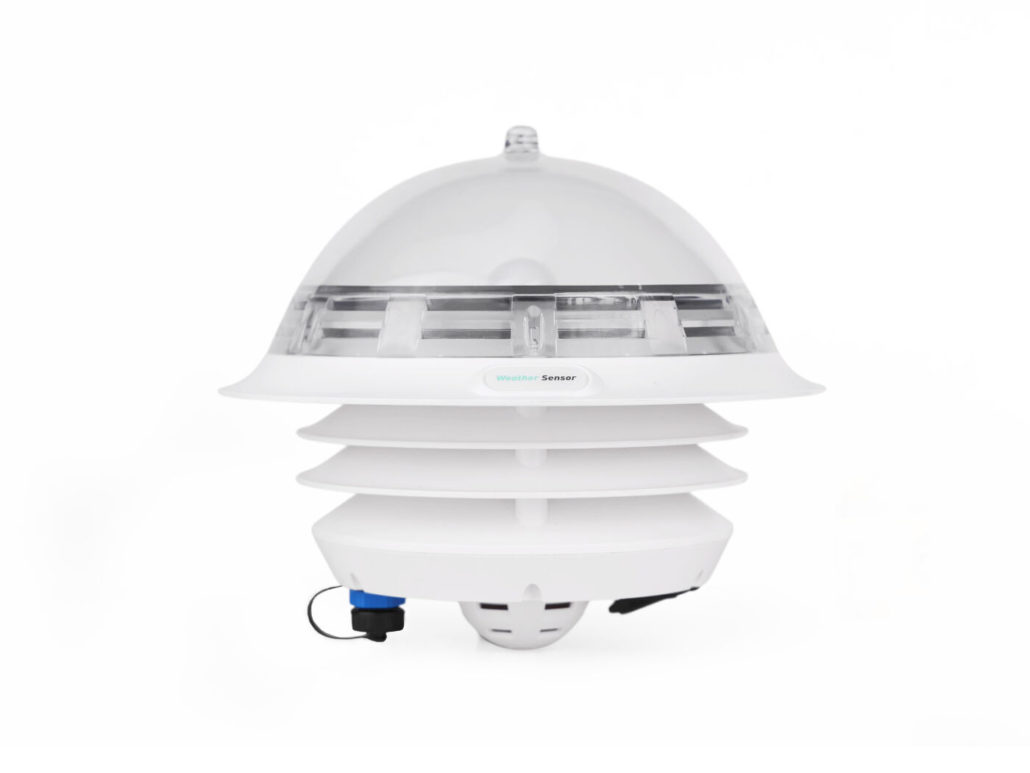
This guide discusses selecting environmental sensing parameters—temperature, humidity, rainfall, wind and soil conditions—for agricultural monitoring and field deployment.
08. reCamera Pro with Debian 13
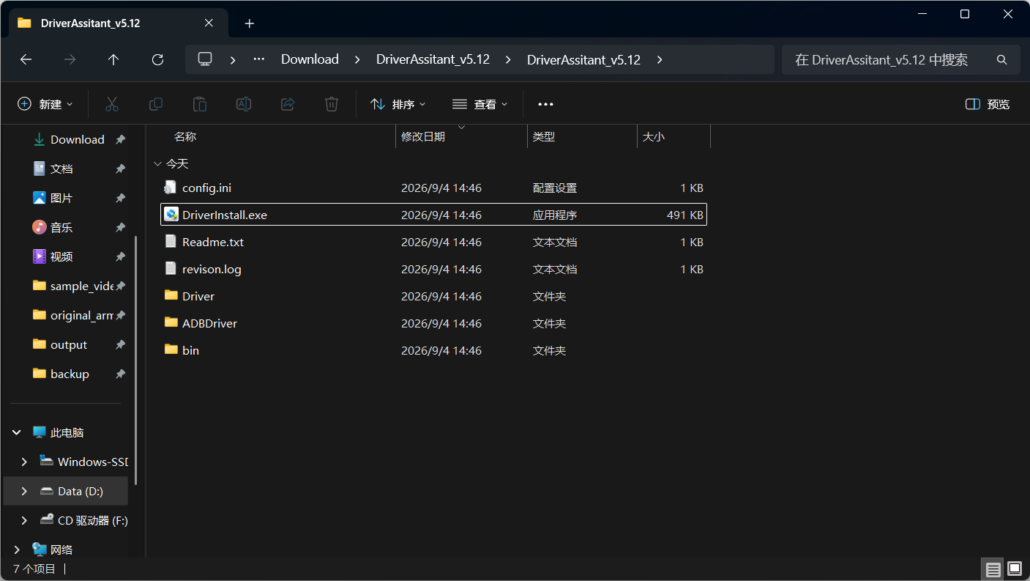
reCamera Pro can run an experimental Debian 13 image as an alternative to its default Buildroot firmware, giving developers more flexibility for custom edge-AI applications. On the RV1126B-based device, Debian enables familiar tools such as apt, CMake, and Docker while retaining camera, microphone, speaker, and Wi-Fi functionality. The image remains experimental and is not maintained as the standard firmware.
09. Voice-Controlled reBot with reSpeaker Clip
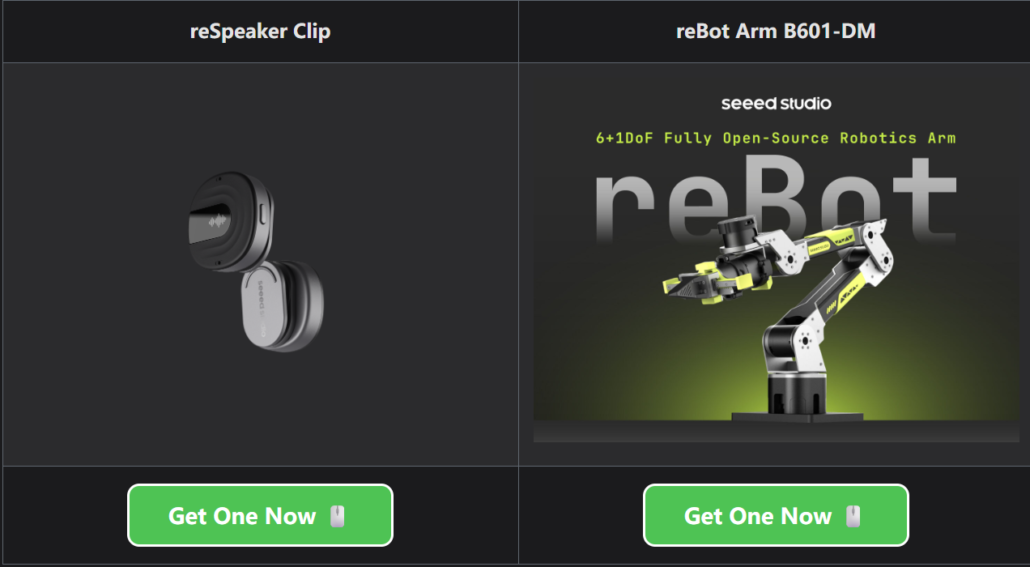
A reBot Arm B601-DM can respond to natural spoken commands through reSpeaker Clip. Audio streams over Bluetooth, then voice activity detection, speech-to-text, and an LLM-based intent parser convert phrases into predefined motions such as greeting, turning, returning home, or opening the gripper. The project demonstrates an approachable way to connect wearable voice input with physical robotics.
10. ONVIF for reCamera
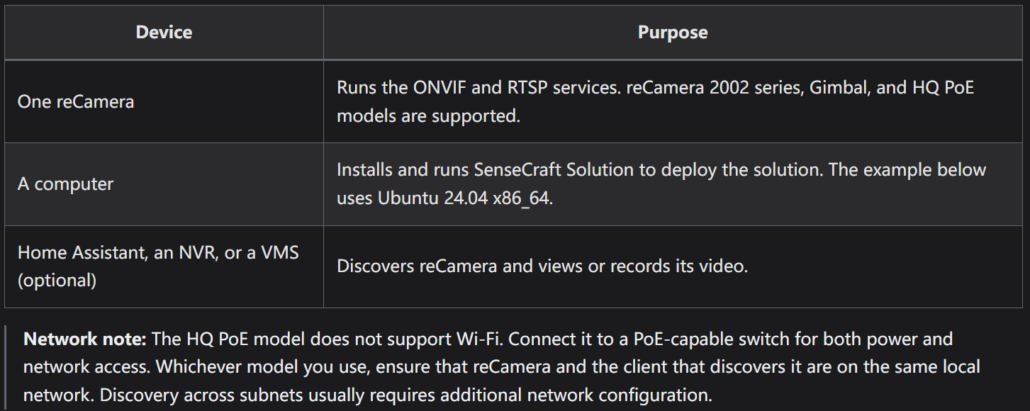
reCamera can be integrated into existing local video systems by combining ONVIF device discovery with RTSP streaming. Once the ONVIF service is deployed, compatible clients such as Home Assistant, Frigate, network video recorders, and video management platforms can find reCamera on the local network and access its stream without requiring a separate cloud video service.
11. AI Images over MeshCore
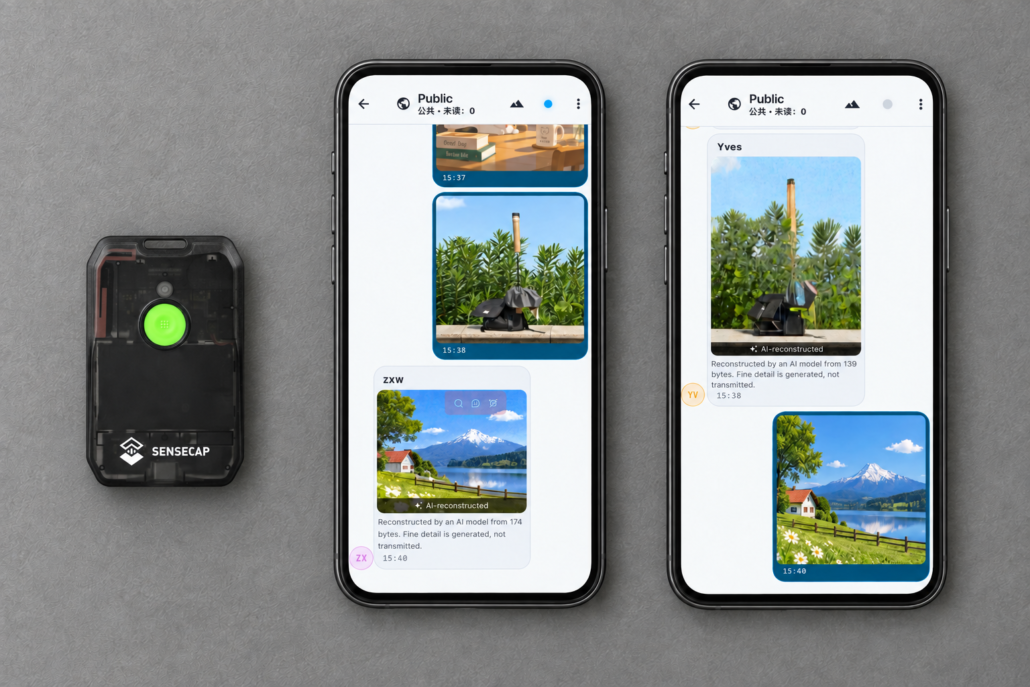
MeshTracker X1 and MeshCore Open can transmit visual information across low-bandwidth LoRa mesh networks using AI-assisted ultra-low-bitrate image compression. Images are encoded as compact data for transmission and reconstructed on the receiving device, exploring a new way to share visual context in remote environments where cellular or Wi-Fi connections may be unavailable.
III. PRODUCT & SERVICE SHOWCASES
01. SenseCAP Combo 5-in-1 Sensor with 4G
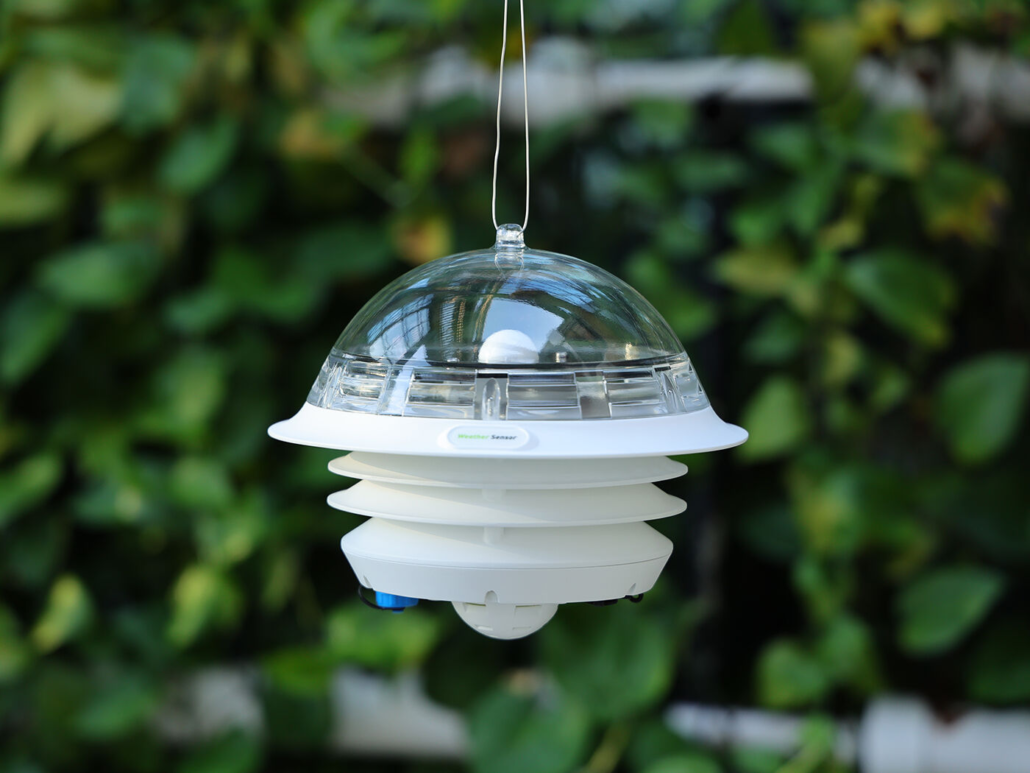
The SenseCAP Combo 5-in-1 Sensor brings temperature, humidity, CO₂, light, and atmospheric pressure measurements into one compact monitoring device. Designed especially for greenhouse environments, it combines 4G Cat.1 connectivity, solar charging, battery backup, and RS485 expansion for up to 10 external sensors. Local data caching helps preserve records during temporary network outages, making it practical for long-term environmental monitoring.
02. Wi-Fi Comes to the XIAO IPS Display Series
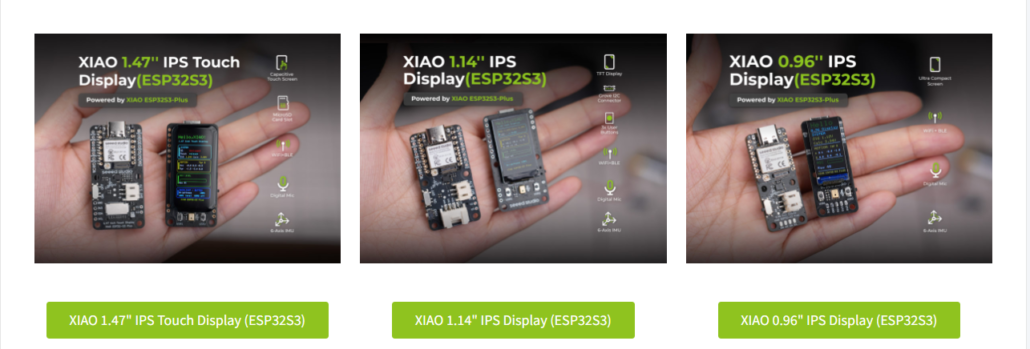
The XIAO IPS Display (ESP32S3) Series combines compact color screens with an ESP32-S3 processor, Wi-Fi, Bluetooth LE, onboard motion sensing, and a microphone. Available in 0.96-inch, 1.14-inch, and 1.47-inch sizes, the boards make it easy to build connected dashboards, wearable interfaces, status monitors, and interactive IoT devices without wiring a separate display to a development board.
03. Fusion PCBA Testing Solutions
Seeed Fusion now offers PCBA production testing to help hardware teams validate assembled boards before shipping or scaling up. Functional, electrical performance, and reliability tests can uncover problems that visual inspection alone may miss, while custom test fixtures support repeatable checks across larger batches. Teams can order testing alongside PCBA production or request testing for existing boards.
04. SenseCraft Robotics Training
SenseCraft Robotics brings robot arm setup, calibration, data collection, dataset preparation, cloud model training, and inference validation into one connected workflow. Developers and educators can train and evaluate models without maintaining a powerful local GPU machine. New users can claim 1,000 credits on their first login to try eligible cloud training and validation tasks.
IV. COMMUNITY SPOTLIGHT
01. Seeed Joins the GIG Fund as Community Hardware Sponsor
Seeed Studio has joined the Global Innovation Gathering (GIG) Fund as its Community Hardware Sponsor!
Seeed is contributing $20,000 in hardware and manufacturing resources to support 25 funded community projects. Through access to Seeed devices and Seeed Fusion services, grantees can prototype and test ideas spanning environmental sensing, edge AI, and community-led technology solutions, with a focus on practical impact in their own communities.
02.Listening for Patagonia’s Giant Bumblebee with BuzzCam
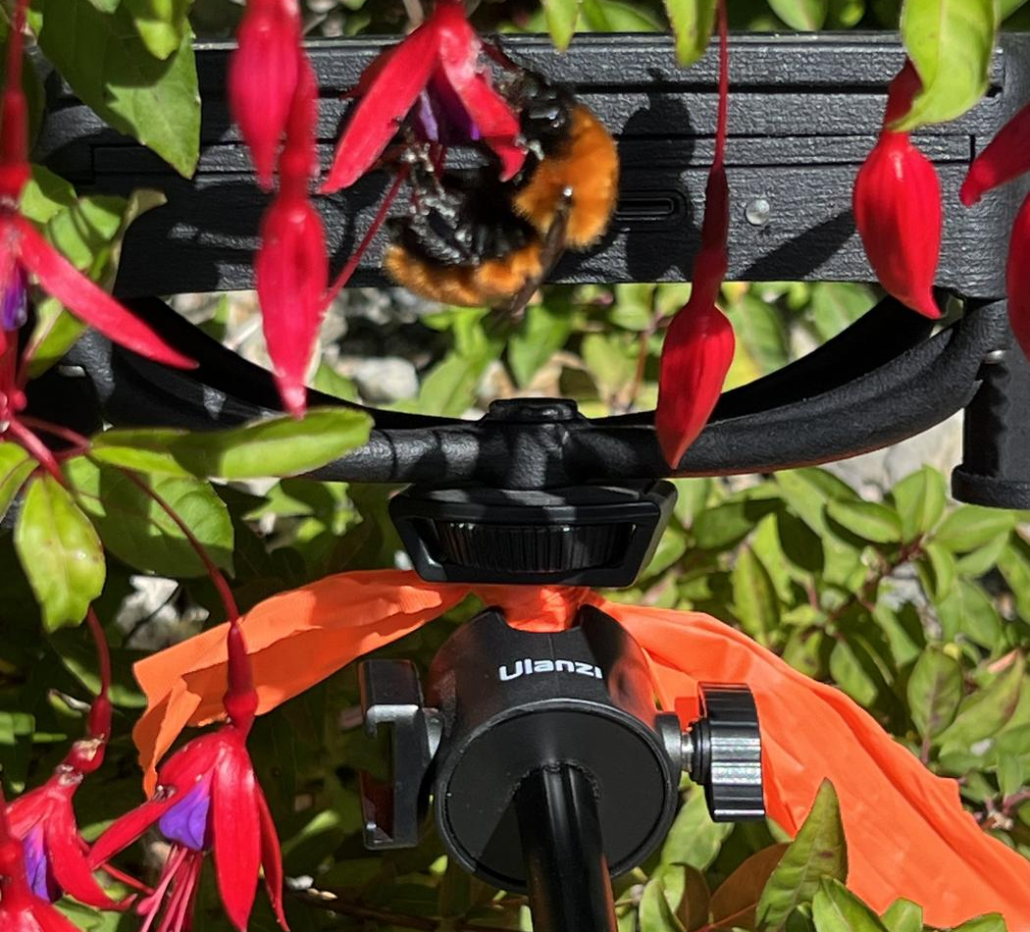
Developed at the MIT Media Lab, BuzzCam combines stereo sound recording with environmental measurements to study Patagonia’s endangered giant bumblebee, Bombus dahlbomii. Researchers collect acoustic recordings alongside field observations to better understand the species’ activity. Seeed’s SenseCAP equipment helped validate temperature and humidity readings during controlled enclosure testing, contributing to more reliable ecological data.
03. When AI Meets Aquaculture
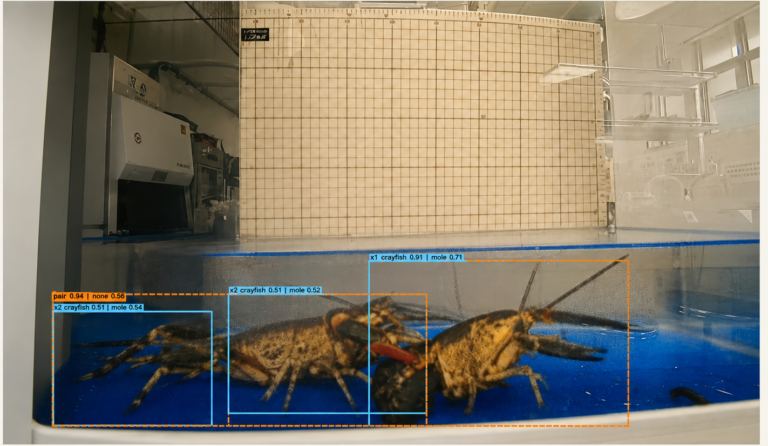
At Tianjin Agricultural University, Seeed’s Mobile Community Vehicle team and aquaculture researchers used a reCamera 2002 HQ PoE to record redclaw crayfish interactions in a controlled tank. They collected more than 2,000 images showing resting, exploration, threat displays, and aggression to support early behavior-recognition model training. The long-term goal is to better understand animal behavior in aquaculture, beyond conventional water-quality monitoring.
04. PMSG: Modular Smart Glasses with XIAO
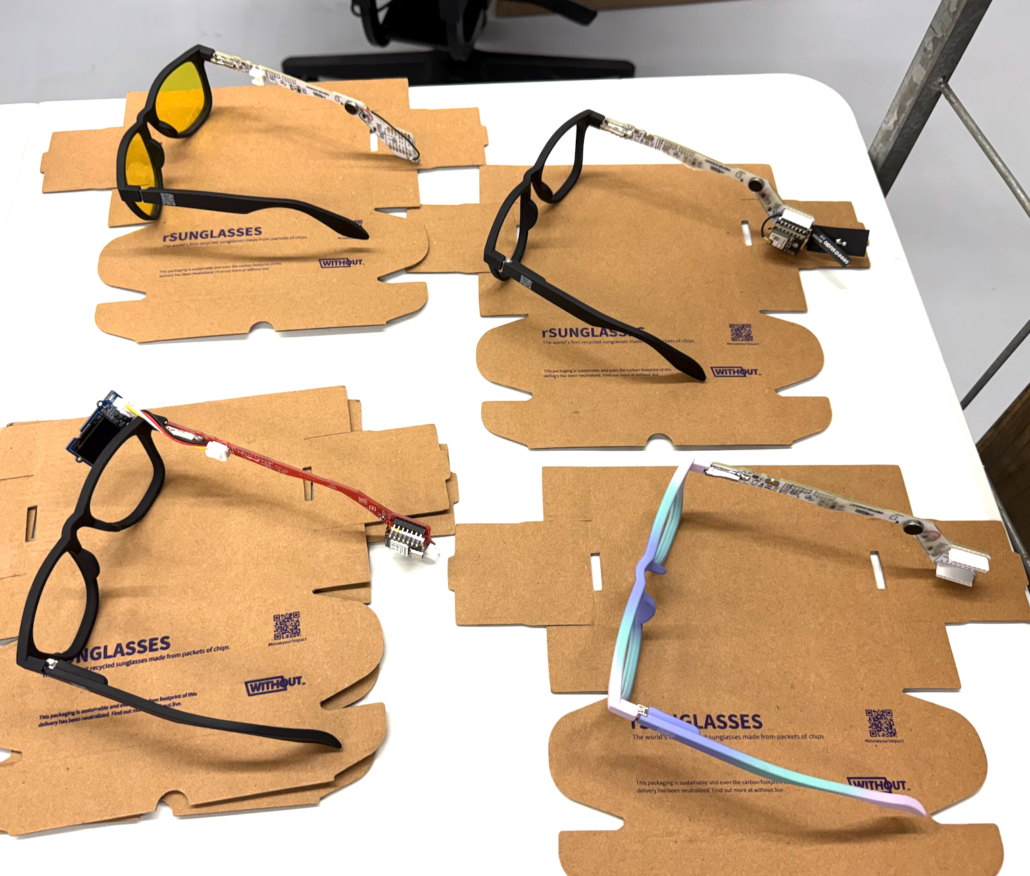
Amsterdam-based maker Paul Stefaan Mooij created PMSG, an open-design smart glasses platform built around swappable Seeed Studio XIAO boards. Its modular circuit board fits eyewear frames made from recycled chip bags and supports Grove-connected sensors, LEDs, haptic feedback, and battery power. The camera-free base design keeps the focus on privacy, repairability, and experimentation rather than a fixed consumer gadget.
05. The Hypnotize Dress
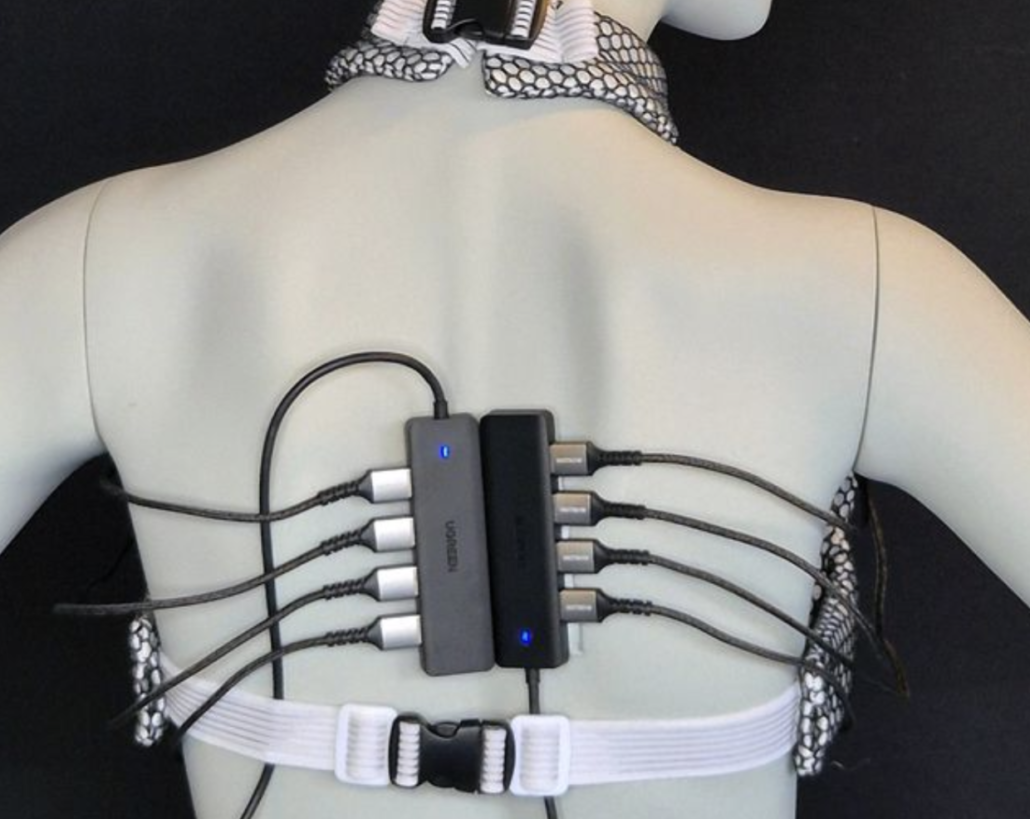
Anouk Wipprecht’s Hypnotize Dress turns concentration into a visual experience. Developed with neurotechnology company g.tec, the wearable uses a brain-computer interface to interpret the wearer’s focus and animate circular displays mounted across the chest. Eight XIAO ESP32-S3 boards control individual screens, while another XIAO handles LED integration, bringing neural signals, electronics, and fashion together.
That’s all for September!
Huge thanks to everyone making, documenting, teaching, researching and sharing. Whether you’re learning your first sensor, training a robot, monitoring wildlife or creating electronic art, open hardware grows stronger when knowledge moves between people.
Building with Seeed hardware? Share your projects on Hackster or tag @seeedstudio, and connect with us on LinkedIn and Discord.
See you next month!