This October, Seeed Studio supported researchers, educators, artists, and community innovators using open hardware to address challenges they know firsthand. Their work ranges from making scientific tools more accessible to repairing electronic artworks, expanding STEAM learning, and developing tools for ecological research.
This report shares updates from nine partnerships and initiatives, including completed workshops, ongoing research, and preparations for upcoming events. Across them, our contribution is practical: hardware, manufacturing resources, technical support, and opportunities to learn and build together.
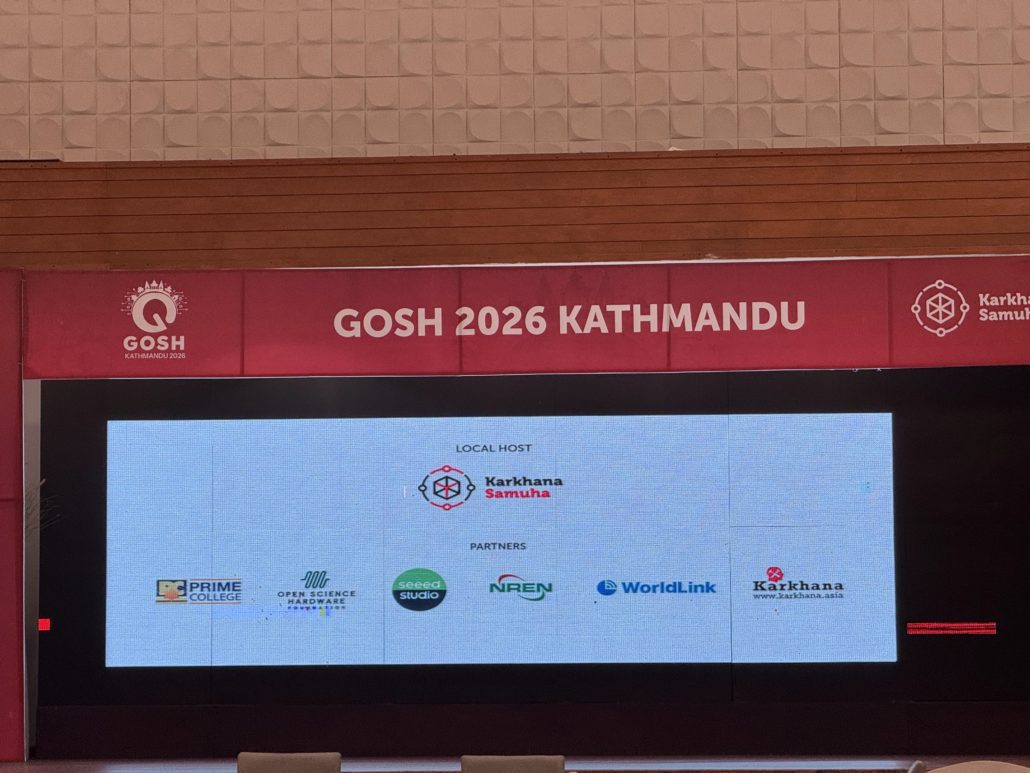
GOSH 2026 Making Open Science More Accessible
The Gathering for Open Science Hardware (GOSH) brought researchers, engineers, educators, and makers to Lalitpur, Nepal, on October 4-6. Hosted by Karkhana Samuha at Heritage Garden, the gathering combined workshops, presentations, and unconference sessions focused on sharing knowledge and developing open scientific tools.
Seeed supported the event with $2,000 in financial sponsorship and $500 in product contributions. The Seeed team also led hands-on sessions, including AI-assisted coding with Wio Terminal and a creative workshop exploring how prototypes become reproducible products. These activities gave participants space to experiment, exchange methods, and adapt tools to their own research and community needs.
GIG x Seeed Fund Hardware and Manufacturing Support for Community Innovators
Seeed is now the community hardware sponsor of the GIG Fund, supporting grassroots innovators through $20,000 in hardware and manufacturing resources. The program offers 20 Seed Grants of $500 and five Scale Grants of $2,000, helping teams move from early prototypes toward testing, deployment, or small-batch production.
Grants are provided as coupons for Seeed products and Fusion services. Eligible applicants include 2026 GIG Fund grantees, shortlisted applicants, and projects recommended by GIG core members, with particular interest in work from Global Majority countries addressing community and environmental needs.

HackTurin x Seeed: Hardware and Mentorship for Young Makers
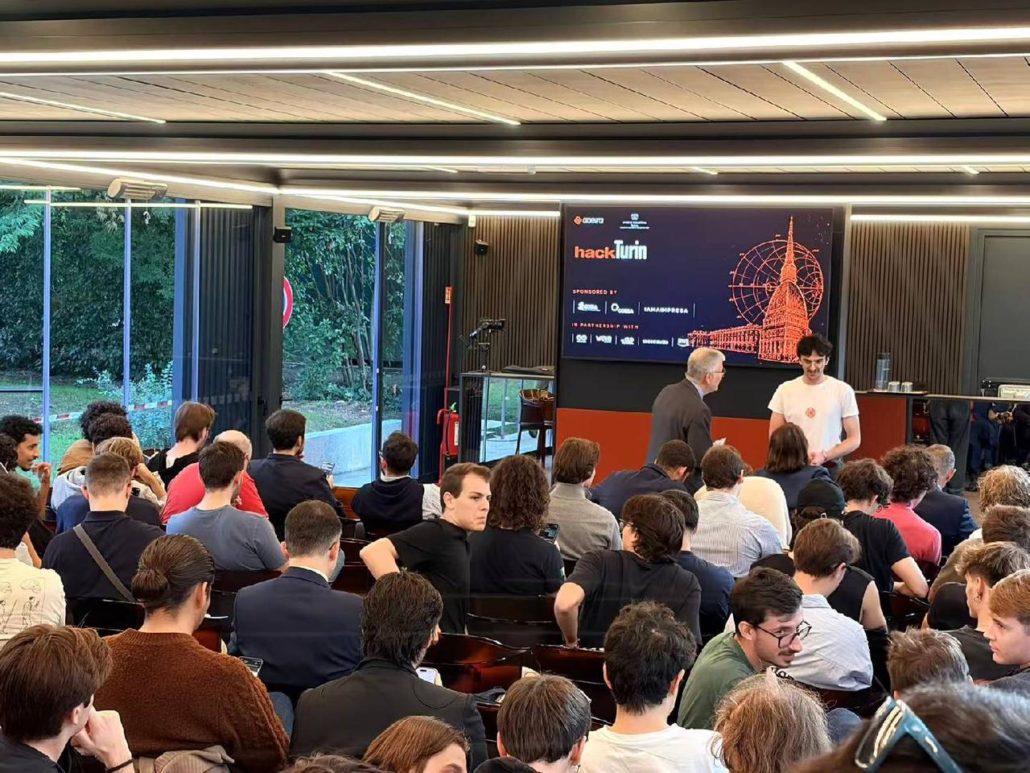
On October 10-11, hackTurin brought students, engineers, researchers, and makers together in Turin to build working hardware and software prototypes. Organized by Apeira with the Young Entrepreneurs Group of Unione Industriali Torino, the event challenged teams to explore safer urban mobility, solar-energy maintenance, and technology for nonprofits.
Seeed contributed $800 in hardware coupons, while Seeed Ranger Davide Gomba provided on-site mentorship and helped judge the renewable-energy challenge. Teams worked with Grove modules and other components to test their ideas, including solar-panel monitoring and traffic-safety systems. Supporting local events like hackTurin helps makers gain practical experience and continue developing their prototypes beyond the event.
Interspecies Open Datalogger Continuing Development and Field Testing
Seeed’s Interspecies Open Datalogger is an ongoing effort to develop open hardware for animal and ecological research. Work spans platform design, prototyping, firmware, enclosures, and preparation for production, with field feedback helping identify what the tools need to withstand outside the lab.
This month’s update focuses on collaboration with Dina Lab in Panama, where Andrew and Kit Quitmeyer are supporting field validation. Seeed provided two reCamera units, including Pro and PoE versions, for early testing. The next step is to use observations from that testing to refine the platform’s reliability and suitability for research in the rainforest. The wider initiative connects this development work with applications such as insect monitoring and wildlife observation.
👉Learn more about our Interspecies initiative
reTUTU:Giving Electronic Art a Second Life
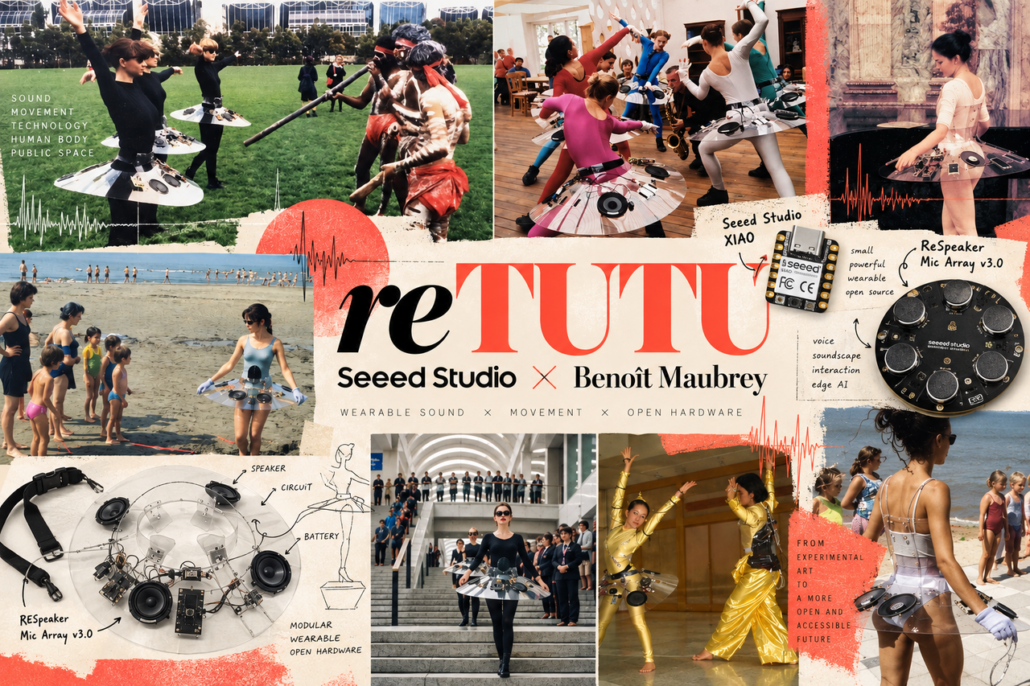
On October 31, Seeed will join sound artist Benoît Maubrey at the Repair & Share Festival in Wuppertal, Germany, for a workshop revisiting his Audio Ballerina series. First created in 1989, these wearable sound sculptures use speakers, sensors, and other electronics to turn movement and environmental signals into sound.
Participants will inspect and repair the original circuitry, then explore new interactions using Seeed’s reSpeaker and XIAO hardware. The collaboration focuses on extending the life of existing artworks while preserving their character. Seeed’s EU Application Engineer will also lead sessions on AI-assisted coding with Wio Terminal and off-grid communication with Meshtastic, offering further ways to explore reuse and community technology.
Exploring Community Resilience in the Ocean: Floating Data Centre
Floating-Solar-Hydrogen-Data-Centre is an open-source research project by a team from the University of Tokyo and CNAM Paris, with supervision from our community member Cesar Harada and fellow researchers.
The version labelled Tokyo Kame explores a floating, solar-powered AI system designed to work offline. Through informal conversations, the project aims to build a shared knowledge base of local risks, resources, skills, and stories, alongside research into hydrogen energy storage and underwater oxygenation.
Seeed supported the prototype with one reSpeaker Lite Voice Assistant Kit and one reComputer Super J4012 with Jetson Orin NX 16GB for voice interaction and local AI development. The contribution supports an exploration of how community knowledge, local computing, and environmental systems could work together to strengthen neighbourhood resilience.
We’ll continue to follow the project’s development and share updates as more details become available. Stay tuned!
Supporting Human and Tiger Coexistence in Bhutan
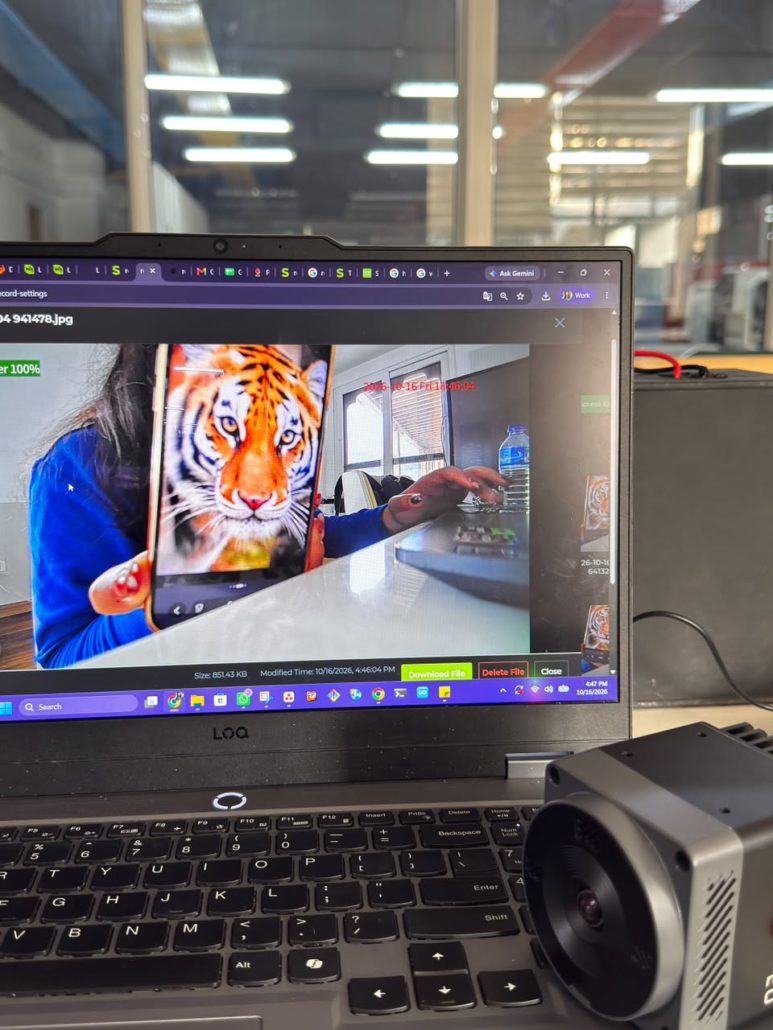
Seeed is supporting Druk Holding and Investments (DHI) in Bhutan through its InnoTech Department and Jigme Namgyel Wangchuck Super Fab Lab on RiKhaNET, a project using AI, sensors, and habitat data to help local communities and rangers anticipate human–tiger conflict.
Seeed’s support focuses on reCamera hardware and low-power communications for testing wildlife-monitoring systems. The collaboration targets a 25-unit camera system, with sample hardware shipped in August to support testing and deployment preparation. The work is intended to help local teams assess how edge AI and off-grid communications can support monitoring in Bhutan’s landscapes.
🙋Follow our partners: Jigme Namgyel Wangchuck Super Fab Lab · Druk Holding & Investments
Supporting STEAM Workshops for Underserved Communities
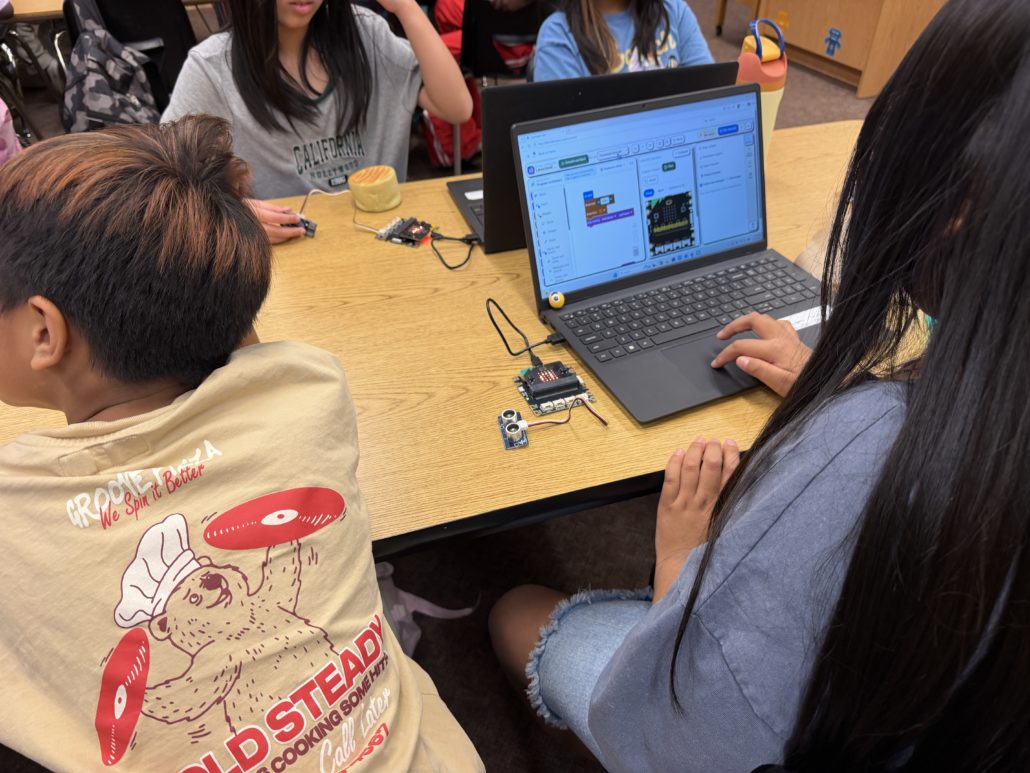
In October, around 70 students joined three Kids Engine workshops in Seattle, exploring how coding and electronics can help address everyday needs. The nonprofit works with community partners, including the Seattle Housing Authority and Refugee Women’s Alliance, to reach children with limited access to technology and engineering opportunities.
Seeed donated Grove Shields for micro:bit v2.0, connecting the workshops’ micro:bit boards with Grove sensors. Children began by identifying a person’s needs, then brainstormed ideas, built prototypes, and tested and improved their designs. The hardware helped make that process accessible, giving students a practical way to explore their ideas through sensors and code.
TinyML Research for Malaria Test Interpretation
A research project led by graduate student Lucky Solomon is exploring whether TinyML and compact neural networks can help classify images of malaria rapid diagnostic test strips on a microcontroller. The aim is to investigate local image processing that could operate without a cloud connection with Seeed XIAO kit. The work remains at the research stage, with plans to share code and models.
Open Hardware for Sustainability
Turning ideas into practical projects takes tools, local knowledge, and people willing to build together. Whether you’re a researcher, educator, maker, or community organization, we invite you to explore how open hardware could support the challenges you’re working on.
We’ll regularly share new projects and progress updates on our sustainability page. Visit to find ideas you can adapt, explore opportunities to collaborate, and discover ways to develop and share your own solutions.
👉Explore projects and 🙋get involved: [email protected]
