Building Resilient Communication in Germany: How Am Mellensee Used Seeed’s Solar Nodes and Meshtastic to Prepare for an Emergency
When the Power Goes Out, What Remains?
In late September 2025, the small municipality of Am Mellensee in Brandenburg, Germany, conducted a comprehensive emergency drill — simulating a complete blackout caused by extreme heat and natural disasters.
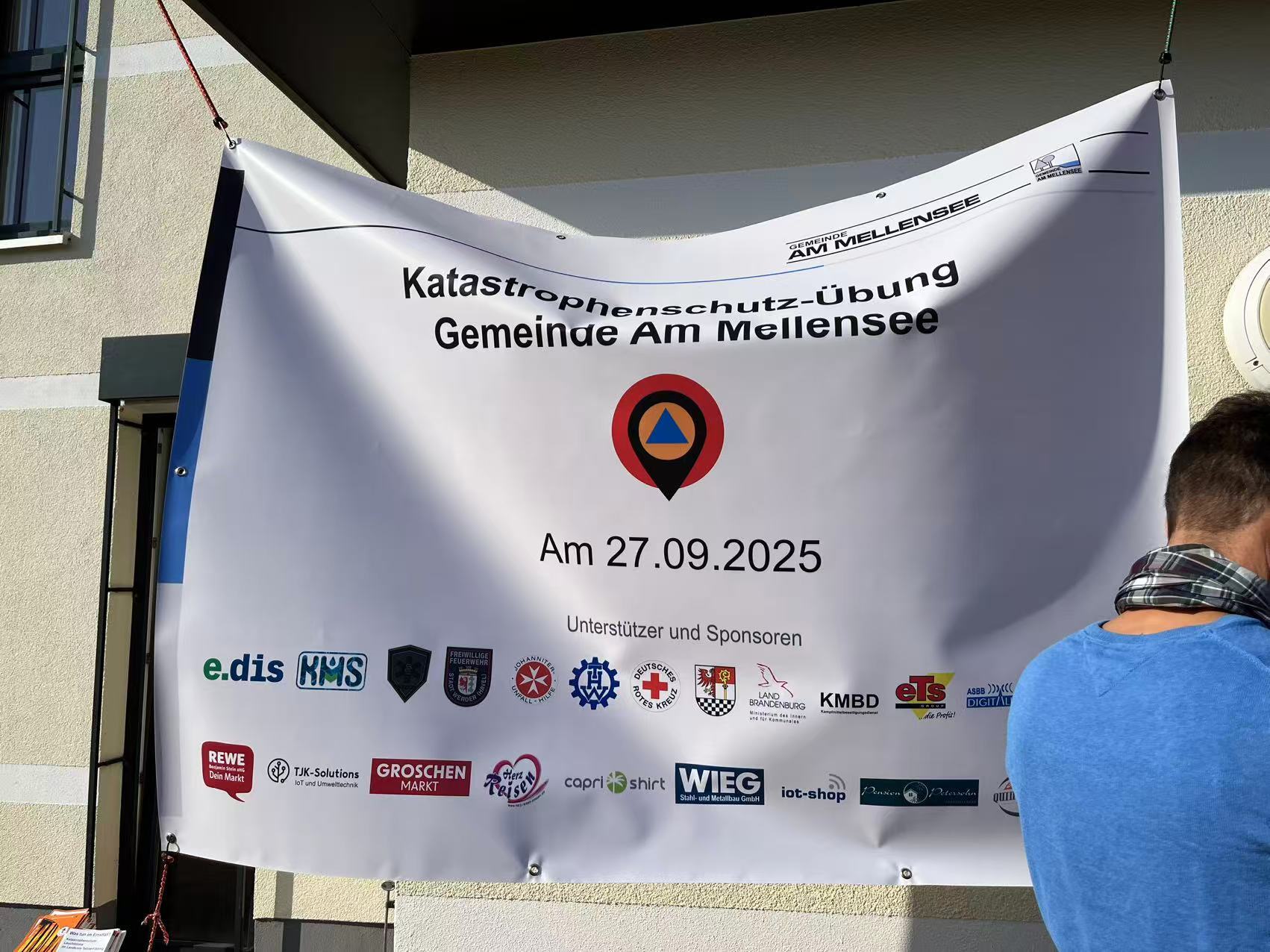
When power, internet, and mobile networks all fail, how can local authorities, firefighters, and residents stay connected?
To answer this question, a group of volunteers — together with Seeed Studio’s SenseCAP Solar Nodes and the open-source Meshtastic ecosystem — built a fully autonomous, solar-powered mesh communication network across the region.
- Solution: Decentralized Emergency Communication Network Using Seeed’s SenseCAP Solar Node P1
- Seeed Products Used: SenseCAP Solar Node P1
- Industry: Disaster Preparedness / Smart Municipality / Off-grid Communication
- Solution Deployed in: Am Mellensee, Brandenburg, Germany
Background: A Real-World Blackout Scenario
At 10:35 AM, the simulated emergency began. Sirens blared, landlines failed, and the municipality declared a state of emergency. Within minutes, every layer of modern communication collapsed:
- Landlines went down
- Mobile service stopped
- Internet connection was cut off
- Electricity had to be rationed
Despite the chaos, one system remained operational — a community-built mesh communication network, powered by solar energy and resilient by design. So people can use their own Meshtastic nodes to stay connected, and I have my Wio Tracker L1 Pro.
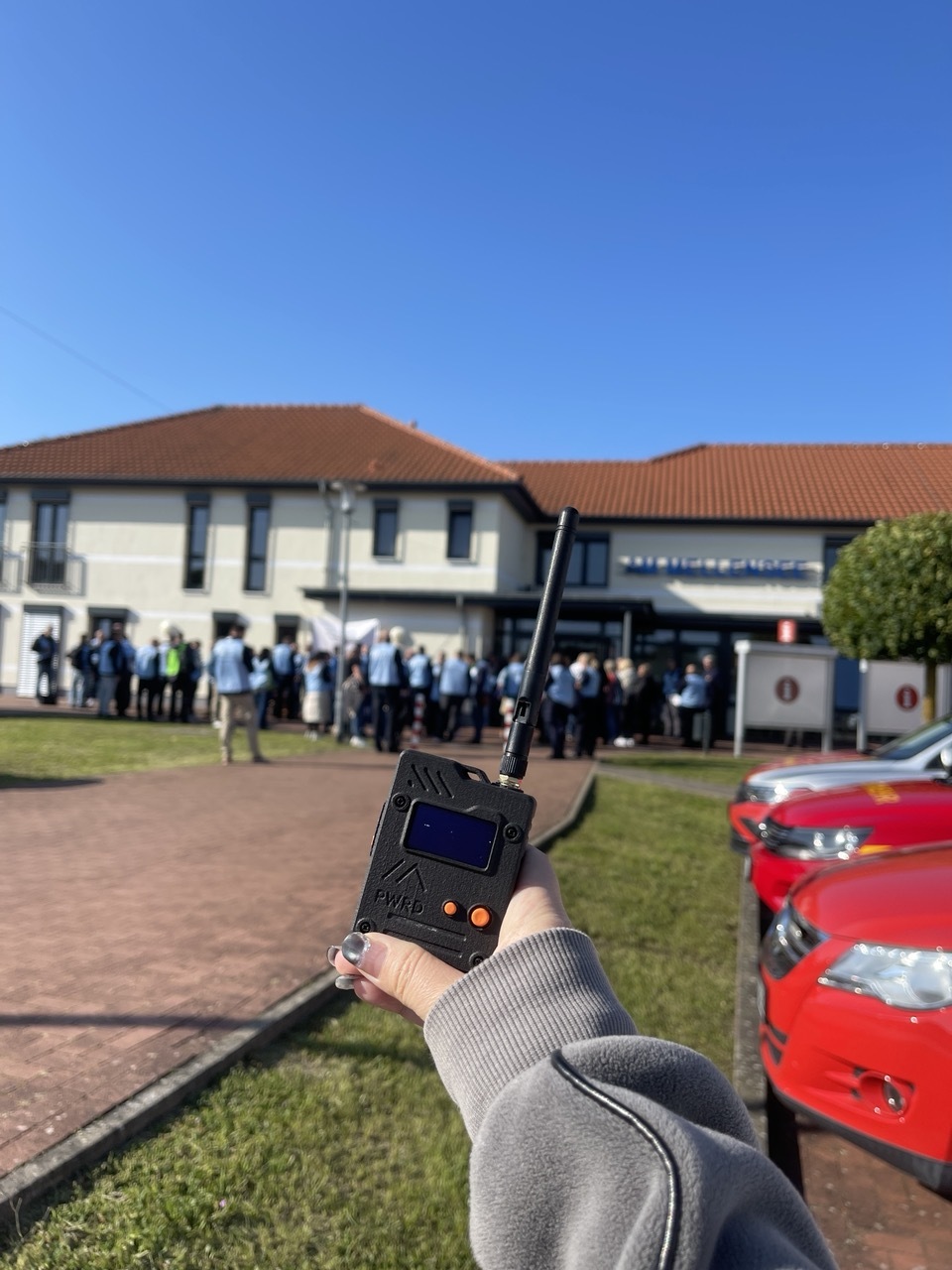
“Redundant communication, coordination, and collaboration with rescue services are the foundation — and they worked impressively here.” Translated from this post.
— Robert Bogs, participant in the drill
The Vision: Community-Driven Resilience
Months before the exercise, Tom from TJK-Solutions and his team of local volunteers set out with a bold goal: to connect all nine villages of Am Mellensee through a self-sufficient communication network that would remain operational even in total blackout conditions.
They deployed Seeed Studio’s SenseCAP P1 Solar Nodes — rugged, solar-powered Meshtastic device designed to operate completely off-grid. These nodes formed a redundant communication backbone, allowing emergency teams to exchange critical messages between the town hall, fire stations, schools, and coordination centers — even when all conventional networks failed.
Implementation: A Network Built by the Community
By September 5, 2025, the team achieved a remarkable milestone — all nine districts of Am Mellensee were connected through the new municipal emergency mesh network.
“All nine districts of the municipality are now equipped with a SenseCAP Solar Node P1 as the repeater. We’ve created a complete municipal disaster protection network based on Meshtastic — reliable, independent, and future-oriented.” Translated from this post.
—Tom Krüger, Project Organizer
Building this network was a true community effort:
- Installation required cranes, mast mounting, and careful coordination, as the team aimed to position the solar nodes at the highest possible points to maximize coverage and ensure stable transmission.
- Seven sites were deployed in just five hours — despite challenging weather conditions.
- Every piece of equipment, from routers to antennas, was self-funded and installed by volunteers.
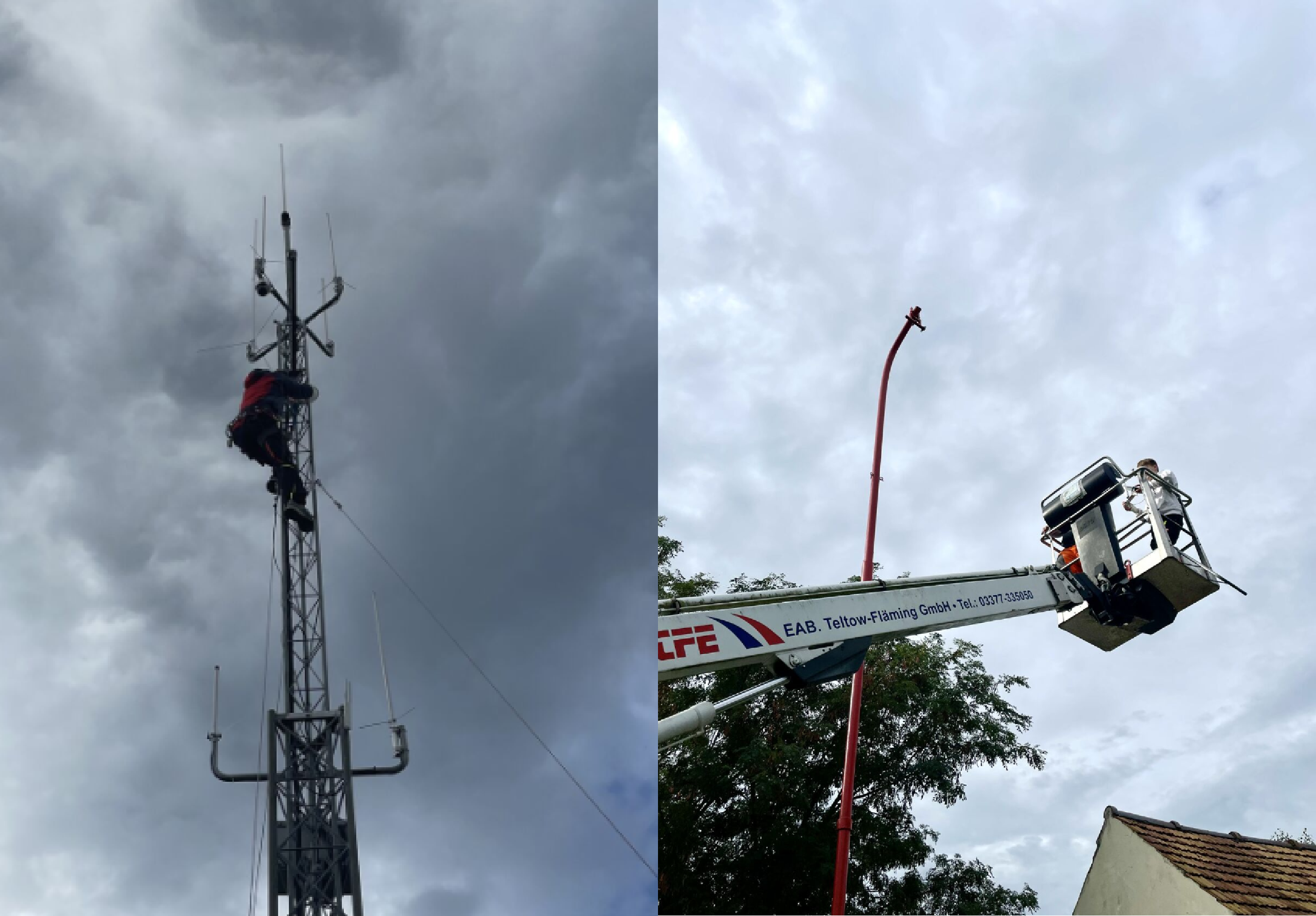
The system passed all initial traceroute and connectivity tests, confirming stable long-range communication across the entire municipality.
“It was incredibly stressful but totally worth it. We’ve learned how communication can still work when everything else fails — and that’s priceless.” Translated from this post.
— Tom Krüger, Project Organizer
Technology Behind the Network
At the core of this project are Seeedstudio’s SenseCAP Solar Nodes.
Each node acts as a repeater in a decentralized LoRa mesh, relaying data and messages across the community. This creates a self-healing, energy-autonomous communication infrastructure that can operate indefinitely without grid power or cellular connectivity.
Key Technical Highlights:
- Solar-powered autonomy – Integrated solar panel and battery ensure continuous operation.
- Long-range LoRa communication – Reliable coverage even across rural or forested terrain.
- Meshtastic integration – Real-time text messaging, GPS sharing, and live network diagnostics.
- Quick deployment – Each node can be set up in under 2 minutes once mounting sites are ready.
This combination makes the SenseCAP Solar Node P1 ideal for emergency communication, disaster preparedness, or remote IoT networks in isolated areas.
The Emergency Drill: Tested Under Real Pressure
On September 27, 2025, the Am Mellensee emergency exercise put everything to the test.
Local authorities, firefighters, and volunteers simulated extreme crisis scenarios — from power outages and water shortages to rescue coordination and press management.Tom’s team worked from the fire command center, handling:
- The situation map
- Incident coordination
- Mesh network monitoring
Meanwhile, Robert with the press coordination team, documenting the day with multiple video crews.

Despite the chaos — including 300 children in daycares, a found grenade, a boat accident, and simulated medical emergencies — the mesh network held stable throughout.
Seeed Studio On Site
Seeed Studio team members Jenkin Lu, Zeke Cai and I were honored to be invited and to witness the entire emergency exercise on-site in Am Mellensee.
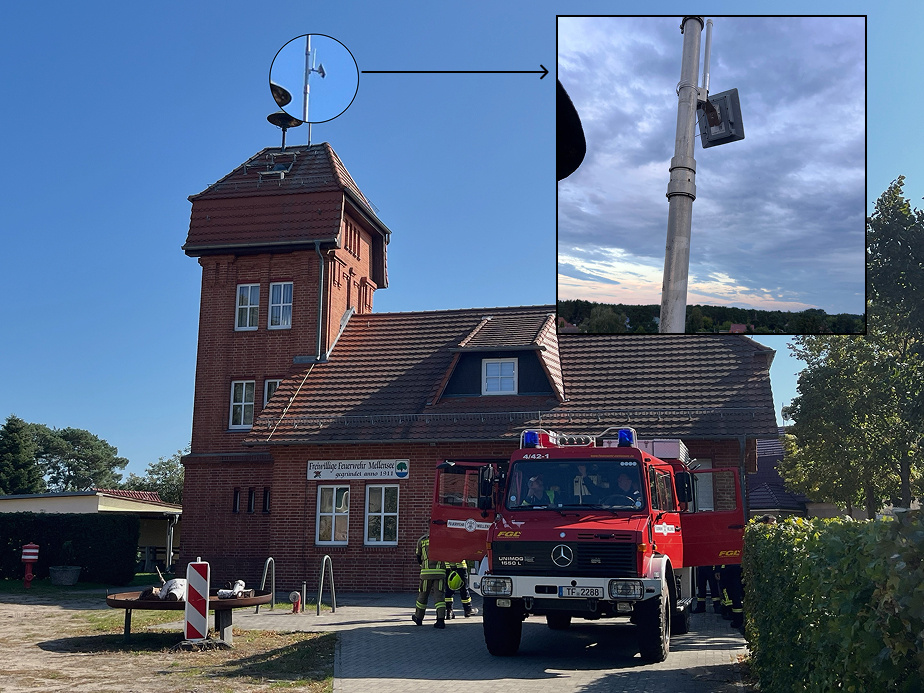
We saw first-hand how SenseCAP Solar Nodes were installed on fire station rooftops, connecting the municipality into a real, functioning communication mesh.
For us, it was deeply moving to see their open hardware being used not just by hobbyists or personal users, but by real communities — to protect lives and build resilience.

Many use our Meshtastic-compatible products for exploration or personal projects.
But seeing them applied in real-world disaster scenarios — helping communities stay connected — that’s the greatest reward for us, and a key driver in how we design our future hardware.
Lessons Learned and What Comes Next
This project proved that community-led resilience is not just possible — it’s already happening.
Am Mellensee’s mesh network became one of the first municipal-scale Meshtastic emergency networks in Europe, serving as a model for how open-source collaboration and open hardware can empower local communities.
Tom’s team continues to optimize the network, improving node placement and hop configuration, and sharing documentation so that other municipalities can replicate the success.
Seeed Studio’s Role: Enabling Open, Local Resilience
At Seeed Studio, we are proud to support innovators like Tom and his team — people who use technology not for convenience, but for community safety, autonomy, and hope.
By combining Seeed’s open hardware with Meshtastic’s open-source communication platform, projects like this demonstrate how IoT can become a true tool for humanity — even when the lights go out.
Learn More
Interested in building your own off-grid communication network?
Explore Seeed’s Meshtastic-compatible devices and Solar Nodes below:
👉 SenseCAP Solar Node P1 series
👉 Seeedstudio’s Meshtastic-compatible Products
Together, we can make technology work for communities — when it matters most.
About Author
