Over the past few years, Rusthas evolved from an interesting systems programming language into one of the most widely discussed technologies in software development (source: Stack Overflow). The reason is simple: Rust gives you the speed and control of C/C++, but its ownership model blocks unpredictable bugs such as data races and use-after-free at compile-time.
For embedded developers, that’s particularly compelling. Embedded Rust brings modern tooling, strong safety guarantees, and portability to resource-constrained microcontrollers without sacrificing efficiency. Thanks to a growing library of shared tools (like embedded-hal), developers can now write code once and run it on almost any chip, making hardware development faster, safer, and far less error-prone.
Yet for newcomers, one challenge remains: where do you start?
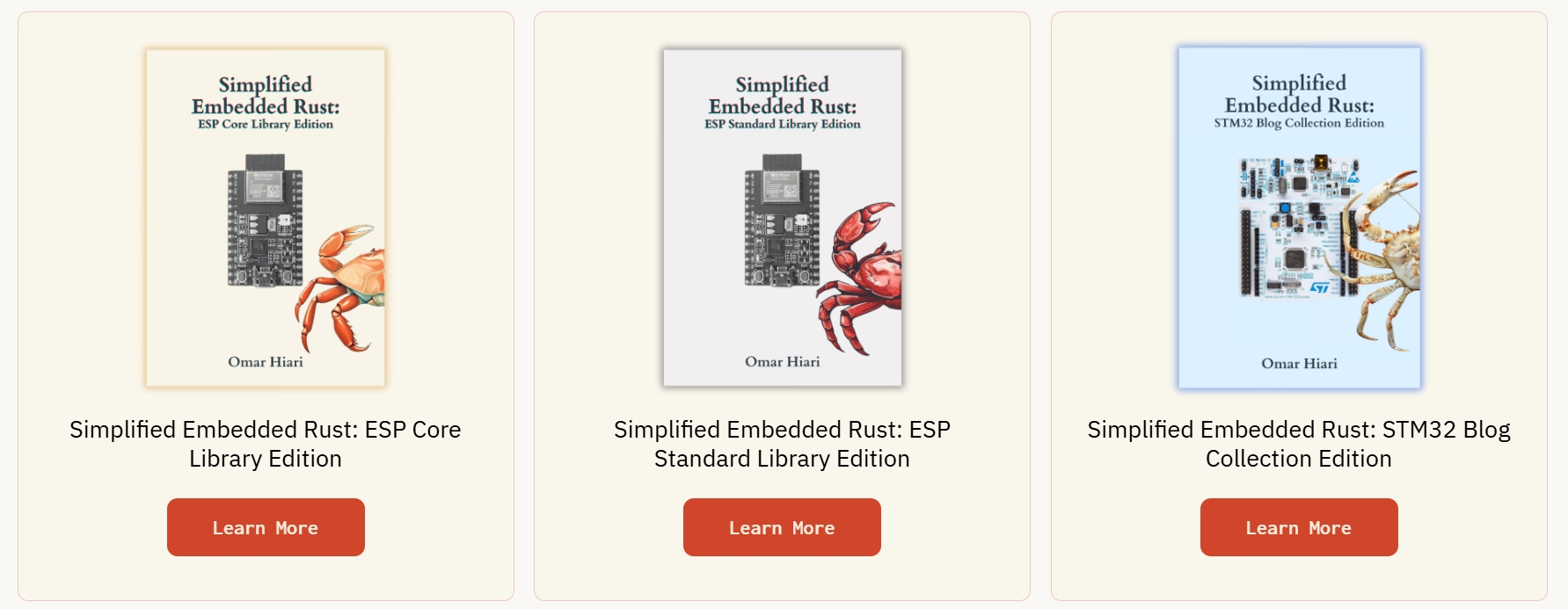
The Embedded Rust Book is widely regarded as the standard introduction, but building practical experience often requires additional guidance and suitable hardware. That’s where The Embedded Rustacean comes in—a community-driven initiative combining educational content, hands-on examples, and an open-source learner board.
Embedded Rust continues to grow rapidly as more developers, educators, and hardware vendors embrace the language. The Embedded Rustacean has become one of the community’s most valuable resources for keeping up with that momentum.
µFerris: A Versatile Learner Board for Rust Embedded Beginners
Every example needed to actually run on something, and no single off-the-shelf board covered everything the series wanted to teach. So Omar did what a lot of educators eventually do when the right teaching tool doesn’t exist yet: he built one, based around the Seeed Studio XIAO series.
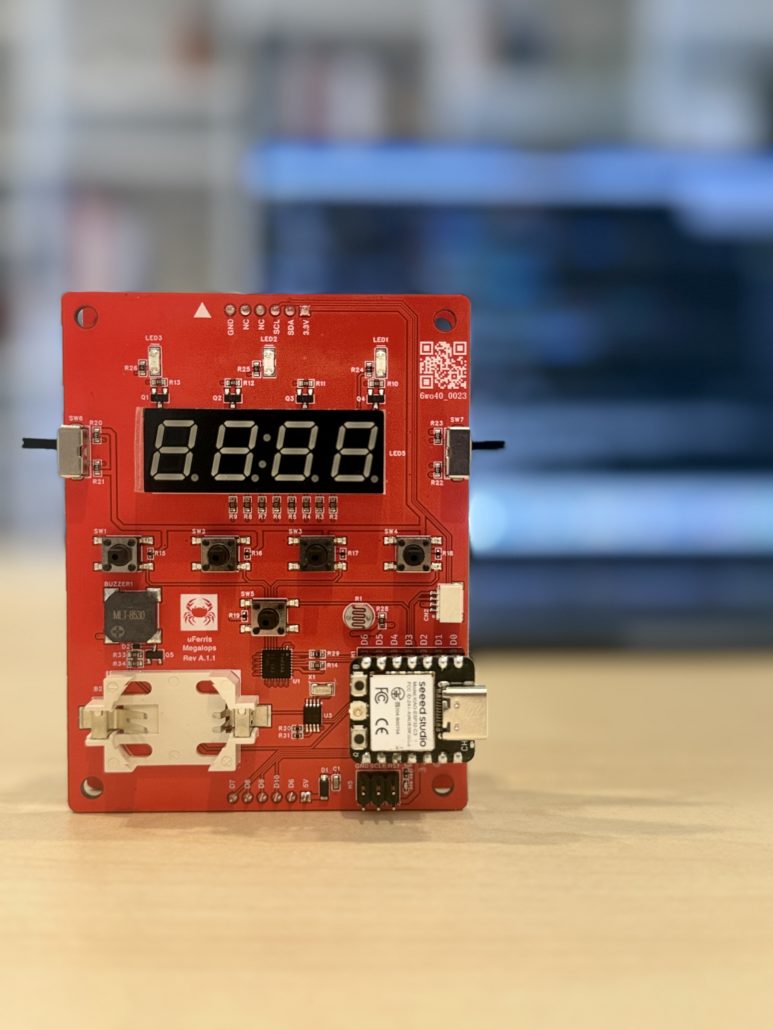
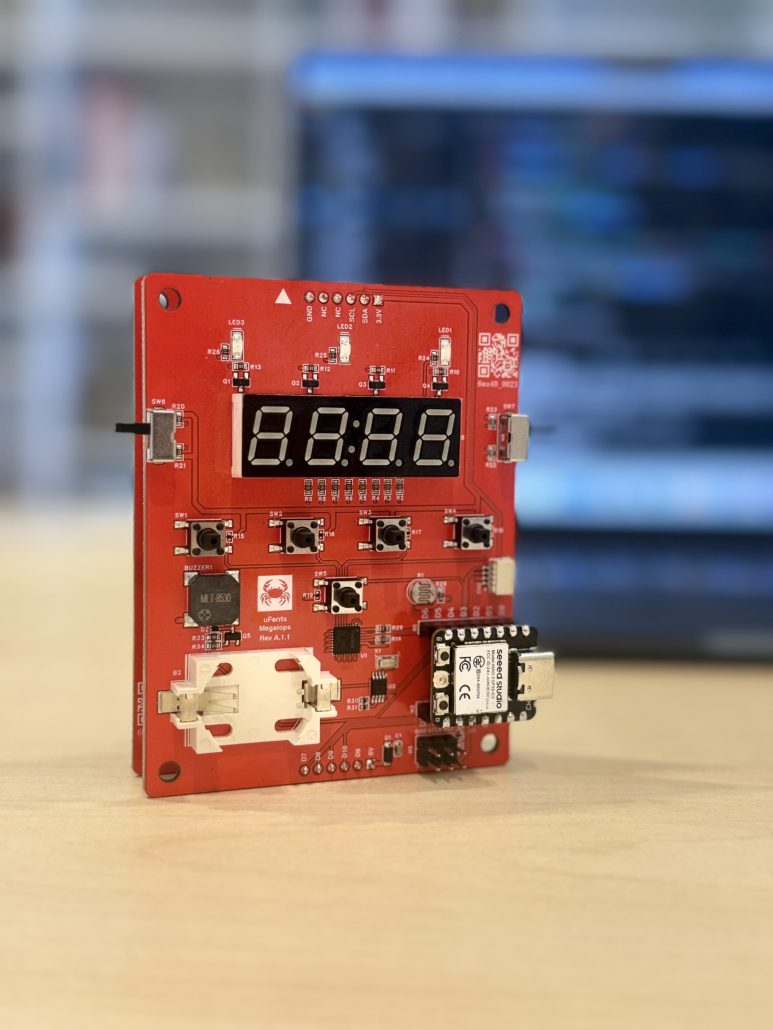
That board isµFerris, an open-source learner board designed for embedded Rust education. Rather than locking the design to a single chip, µFerris works as a reference platform across many different MCUs: swap the XIAO on top, keep the peripherals underneath the same.
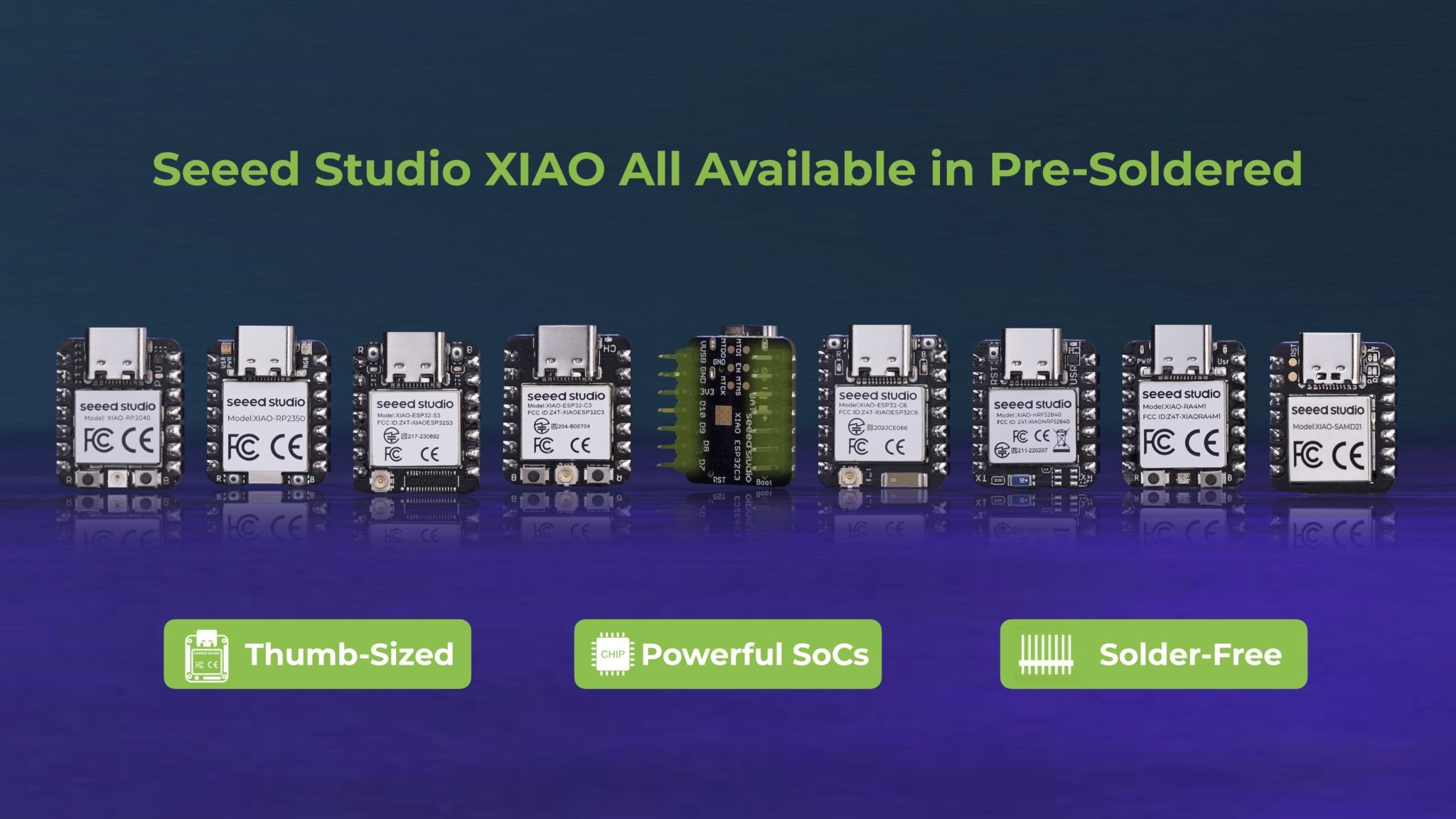
That’s possible because of the universal Seeed XIAO header shared across the entire XIAO lineup, so swapping in a different MCU is as simple as unplugging one module and plugging in another. Supported modules include:
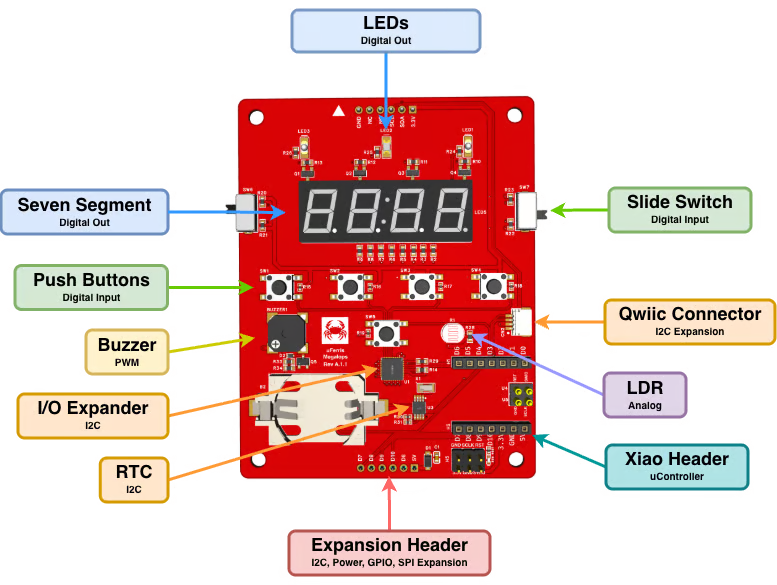
The µFerris Megalops Baseboard packs in most of the standard peripherals in embedded development (GPIO, Timers/Counters, Analog inputs, PWM, and Serial Communications), and an optional Power Extension Board adds a battery holder, a current-measurement circuit (handy for seeing what your firmware actually draws), and a microSD slot for SPI and data-logging exercises.
And it’s fully open: thehardware repo (schematics, board files, BOM, gerbers) and the BSP repo (board support crate, source, examples) are both public, with the crate itself published oncrates.io. Issues and pull requests are welcome if you want to extend support to another XIAO module or contribute an example.
Why build µFerris around Seeed Studio XIAO?
The Seeed Studio XIAO ecosystem offers a unique combination of flexibility and consistency that makes it especially well-suited for education and experimentation. Every XIAO module shares the same compact form factor and standardized pinout, allowing developers to switch between different microcontroller families without redesigning hardware or rewriting learning materials.
From Arm Cortex-M and RISC-V to Xtensa-based wireless MCUs, the XIAO family provides a broad selection of architectures while maintaining a familiar development experience. This consistency enables projects like µFerris to support multiple targets on a single platform, helping learners focus on programming concepts rather than hardware differences.
Beyond the hardware itself, XIAO benefits from a large and active community, extensive documentation, and a growing collection of tutorials, projects, and open-source resources. Whether you’re building your first embedded Rust project or exploring a new architecture, the XIAO ecosystem offers an accessible path from learning to deployment.
Exploring Embedded Rust with XIAO & µFerris
If you’re already using XIAO modules, µFerris is a good way to try embedded Rust. If you’re coming from the embedded Rust side and haven’t worked with XIAO before, µFerris (and The Embedded Rustacean’s guides) is a reasonable on-ramp into both the hardware and the language at the same time.
If you build something with embedded Rust on a XIAO module, or write up your own embedded Rust learning notes, we’d genuinely like to see it! Submit your XIAO x Embedded Rust project to be featured on our XIAO Project Hub!
We’re curating a bi-weekly newsletter centering around the beloved Seeed Studio XIAO. If you want to stay up-to-date with cool projects from the community, product and Wiki updates, news, etc., please click here to subscribe now!