Axiometa Genesis XIAO Shield: Build Real Devices Without the Wiring
By Kezang Loday Last Updated on: September 10, 2026Meet the Axiometa Genesis XIAO Shield, a board that turns compatible Seeed Studio XIAO boards into a modular development platform. Plug your XIAO in, plug a module into one of two universal ports, and you have working hardware — no breadboard, no jumper wires, no manual pin mapping.
Axiometa is a modular hardware platform for building real electronic devices without traditional wiring or, if you choose, without embedded firmware development at all. It works in two layers. The first is the hardware: a microcontroller board (a Genesis board) plus plug-in hardware modules (AX22 modules). The catalog currently runs to around 60 modules — sensors, displays, buttons, motor drivers, audio components, microphones, LoRa radios, GPS, and more — and every module works in every port. You take a module, plug it in, and the Genesis board supplies the power and communication signals it needs. That single step replaces the jumper wires, breadboards, soldering, and pin mapping normally needed to connect components to a dev board.
Behind Axiometa is Povilas Dumcius, an embedded hardware engineer, product builder, and maker who founded the company and designed its Genesis boards, AX22 modules, firmware, browser software, and manufacturing system. Before Axiometa, he worked on aircraft tool-tracking systems, medical-grade single-cell printers, and wearable electronics — and he started Axiometa during his PhD at Cardiff University.
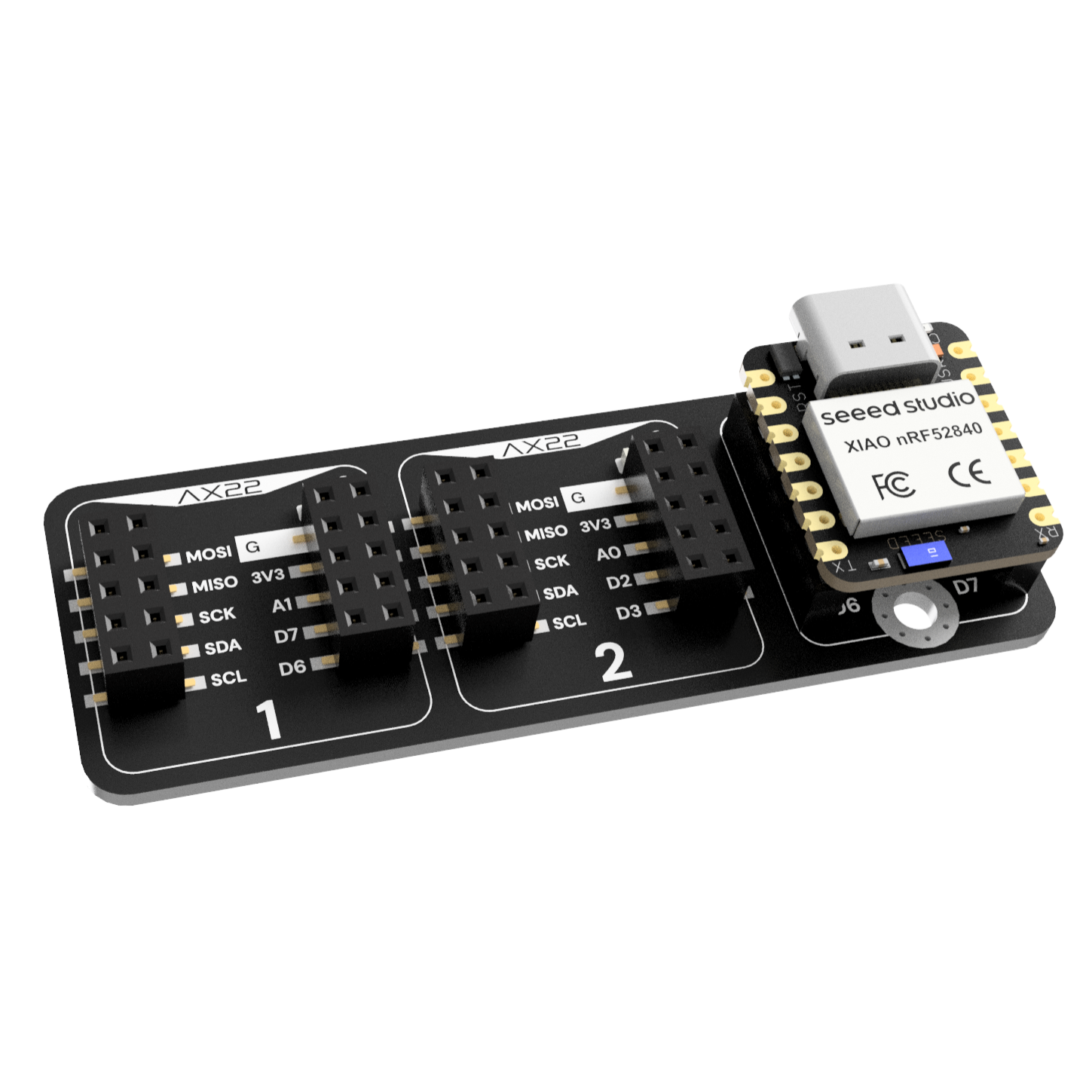
Hardware Used
The Genesis XIAO Shield is the third board in Axiometa’s Genesis lineup. Where Genesis Mini (four module ports) and Genesis One (eight ports) have built-in ESP32-S3 microcontrollers, the shield takes a different approach: you bring your own supported Seeed Studio XIAO board.
- A compatible Seeed Studio XIAO board — plugs directly into the shield and becomes the main microcontroller, providing the processing, connectivity, and onboard features
- Two universal AX22 ports — compatible with the full catalog of roughly 60 AX22 modules
- A mounting hole and a cutout for routing a LiPo battery cable underneath the board
Modules that plug straight in include the Accelerometer (LSM6DS3TR), IPS LCD Display (0.96″), Power Monitor (INA219), Motor Driver (L9110S), Color Sensor (VEML6040), RTC (PCF8523), Audio Amplifier (MAX98357A), and an AX22 to Grove Adapter for bridging into existing Grove hardware. You can browse the full module catalog here.
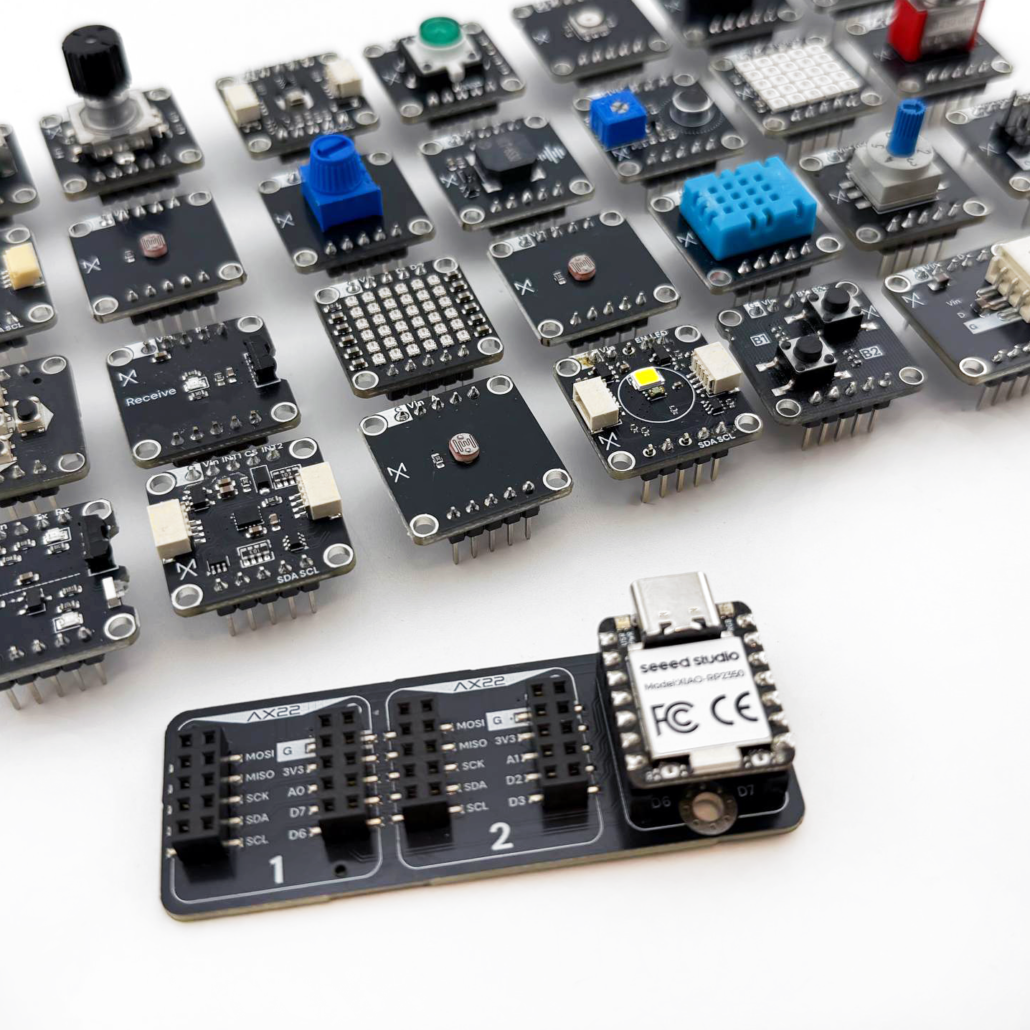
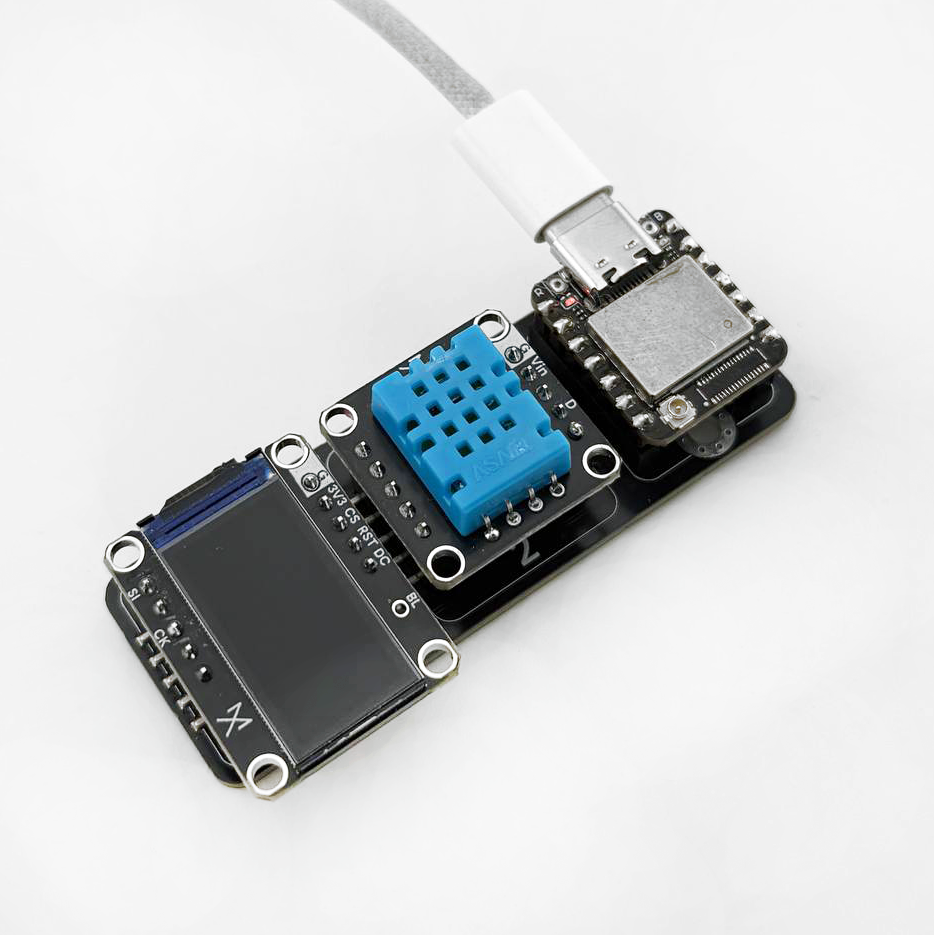
How the XIAO Shield Works
A supported XIAO board plugs into the shield and becomes the system’s main microcontroller. The shield then maps the XIAO’s power, GPIO, ADC, PWM, UART, I²C, and SPI interfaces onto two standardized AX22 ports.
Because every AX22 module uses the same physical connector and a known pin layout, any module — sensor, display, input, radio, or motor driver — can be inserted into either port without manually routing power or communication signals. The shield does the job the breadboard, jumper wires, and pin mapping used to do, while your firmware talks to the modules through standard microcontroller interfaces.
From there, you have three ways to program it:
- Program it directly. Write Arduino C++ in the Arduino IDE, PlatformIO, VS Code, or any other compatible toolchain — exactly as you would with any XIAO project.
- Use AI-assisted development. Axiometa provides an MCP integration that gives coding agents inside environments like VS Code access to its board definitions, module capabilities, pin mappings, and supporting technical context. The result is firmware generated against the actual connected hardware rather than a generic microcontroller.
- Let Studio handle it. In the fully managed workflow, you describe a device, Studio resolves the required modules, generates Arduino C++, compiles it on the backend, and flashes the firmware to your XIAO from Chrome using Web Serial.
On the build side, the shield itself was designed in KiCad. Studio runs on a React frontend and Python backend, with structured hardware metadata, cloud compilation, and browser-based USB flashing.
Why XIAO
Axiometa chose the Seeed Studio XIAO family because it offers multiple capable microcontrollers in the same compact, standardized form factor. That meant one shield could be designed to work across different processors and wireless configurations, rather than being tied to a single chip.
Boards like the XIAO ESP32S3 Sense show how much that format can carry: in a very small package, it packs Wi-Fi, an ESP32-S3, a camera, a microphone, SD card support, and LiPo battery charging. Add the shield, and it gains two universal ports for sensors, displays, controls, radios, motors, and the rest of the AX22 catalog. The result is a compact but highly capable platform for building complete devices — and users can pick whichever XIAO best fits the application while keeping the same modules and workflows.
The feature that mattered most was the shared XIAO form factor. It’s what allowed the shield to become the third Genesis board in the lineup while letting users bring their own processor. The XIAO supplies the computing, connectivity, and onboard features; AX22 adds the modular hardware layer around it.
“XIAO gives you a powerful computer in a tiny form factor. Our shield adds two universal AX22 ports, so you can connect real hardware without wiring, then either program it however you like or let Axiometa Studio handle the setup and firmware for you.” — Povilas Dumcius, Founder of Axiometa
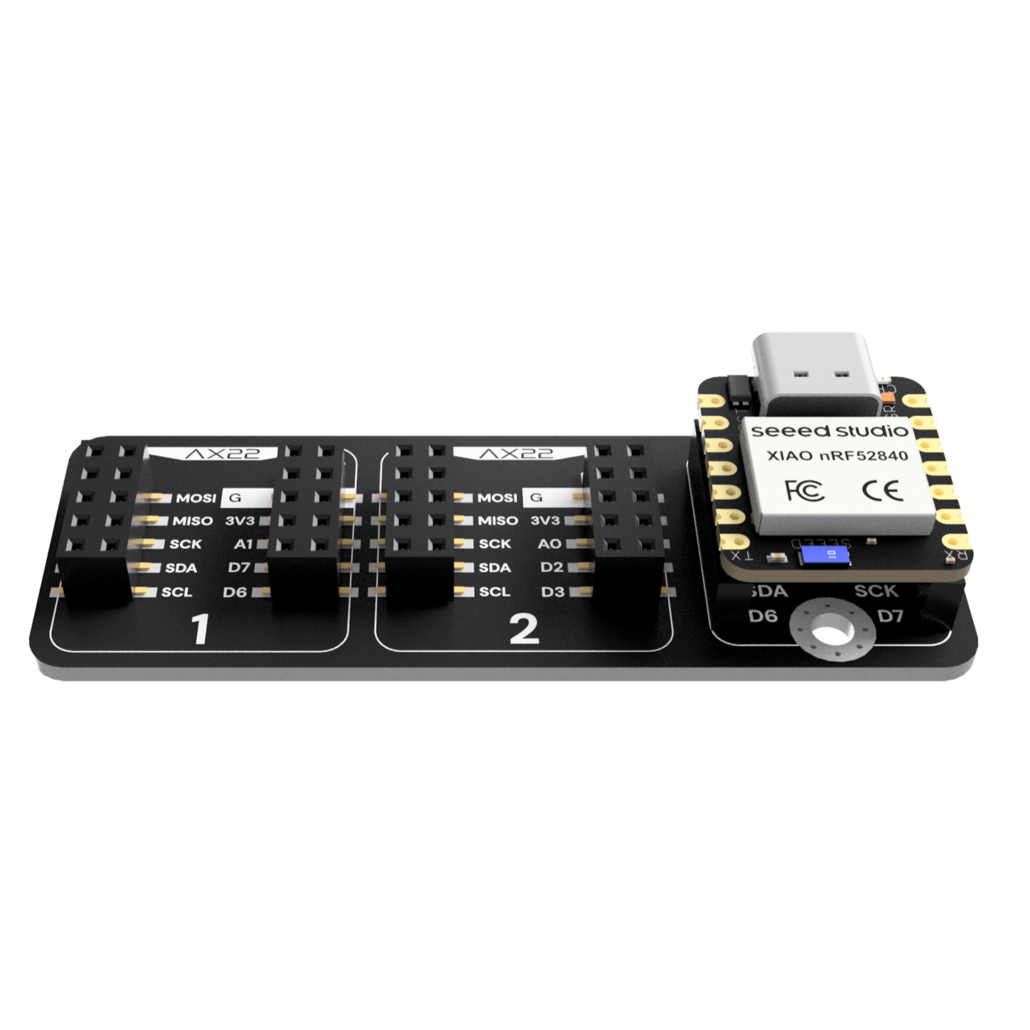
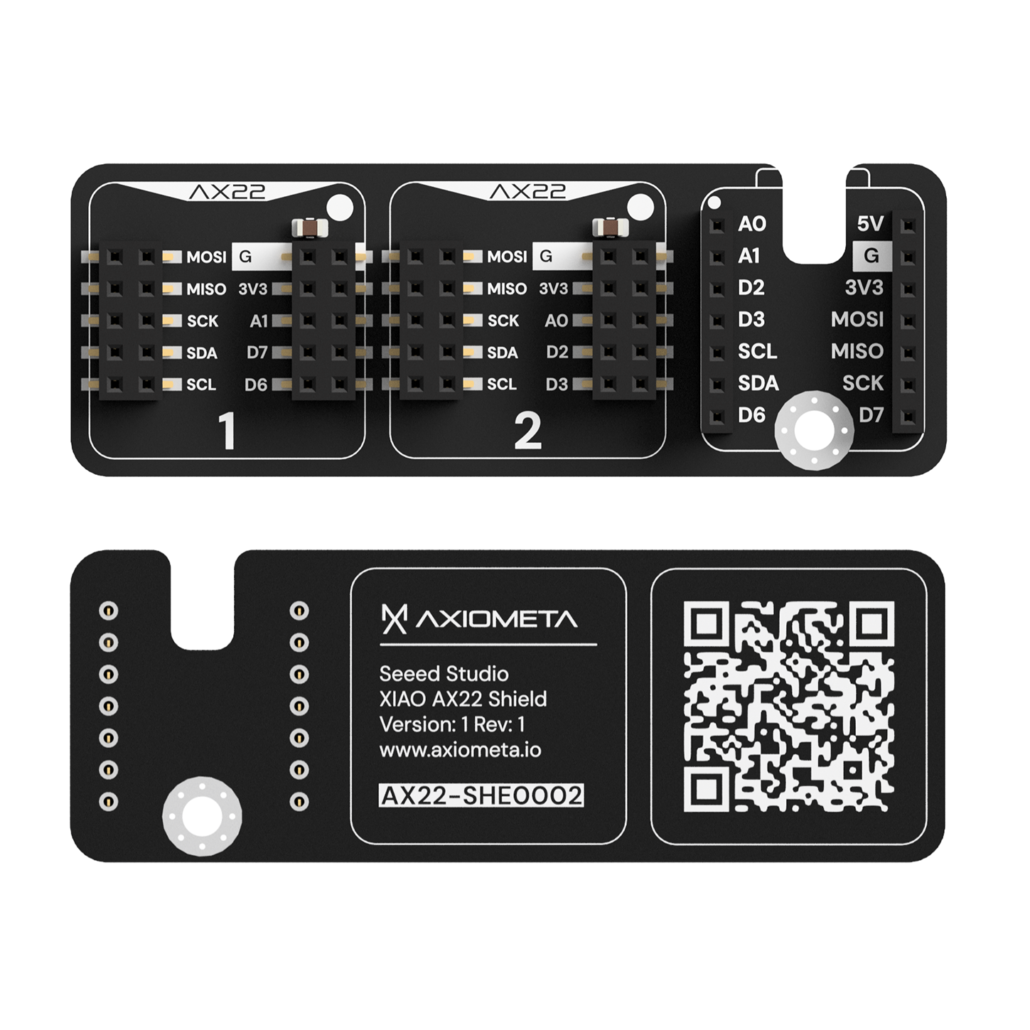
XIAO Shield: From Idea to Device, Faster
What makes this project stand out isn’t just that it removes wiring — it’s that it removes wiring without removing your options. Every module still works on a breadboard. Every Genesis board still works like a standard ESP32 dev board. Studio is there if you want it and invisible if you don’t. It’s a lower floor for beginners and a faster path for experienced builders, built around a form factor the maker community already knows.
If you’ve got a XIAO sitting on your desk and an idea you’ve been putting off because of the wiring, this is a good excuse to pick it back up.
End Note
Hey community, we’re curating a monthly newsletter centering around the beloved Seeed Studio XIAO. If you want to stay up-to-date with:
🤖️ Cool Projects from the Community to get inspiration and tutorials
📰 Product Updates: firmware update, new product spoiler
📖 Wiki Updates: new wikis + wiki contribution
📣 News: events, contests, and other community stuff
Please click the image below👇 to subscribe now!

