How Can Farm Irrigation Be Adjusted to Changing Weather?
Crops on outdoor farms need suitable light, air temperature, humidity, and moisture conditions to grow well. Light provides energy for photosynthesis. Meanwhile, temperature and humidity affect crop development and water use, while rainfall replenishes soil moisture. However, these conditions change every day. Consecutive sunny days may increase irrigation needs. After rainfall, growers also need to check whether the water has reached the root zone. Therefore, irrigation planning should consider weather, soil moisture, and crop growth stage together. These observations help growers decide when to irrigate and how much water to apply.
Does More Sunlight Always Mean Better Crop Growth?
Light provides energy for photosynthesis. However, light needs vary by crop and growth stage. In a two-year field trial, two maize varieties received 50% shading from silking to maturity. Their average grain yields fell by 57.6% and 61.8%, respectively, compared with unshaded plants. In contrast, a coffee trial found that moderate shading under full irrigation increased the two-year average yield by 15.0%. Heavier shading reduced yield by 17.8%, compared with the unshaded treatment. Therefore, light management should consider both crop needs and water availability.
Sunlight also affects field water demand. Solar radiation drives soil evaporation and crop transpiration. As a result, hot, sunny weather generally creates higher evapotranspiration demand. Tracking solar radiation alongside root-zone soil moisture helps growers assess water demand and availability. Together, these observations can guide irrigation timing and water application.
How Does Hot, Dry Weather Affect Crop Growth and Water Use?
Temperature and air humidity jointly affect crop growth and water use. Hot, dry conditions increase the vapour pressure deficit (VPD), raising atmospheric demand for water. When root water uptake cannot match leaf water loss, plant water status and photosynthesis may decline.
A carrot field trial found that warm-season VPD reached up to twice the cool-season level. The trial used freely draining sandy soil, with frequent irrigation keeping soil moisture near or above field capacity. Despite this water availability, leaf water potential and photosynthetic rates declined as VPD increased. On one day, maximum VPD approached 4.8 kPa. That afternoon, leaf photosynthetic rates in the two carrot varieties fell to 1.0 and 4.7 μmol CO₂/m²/s, respectively.
These findings show that moist soil does not always prevent plant water stress. Monitoring temperature and humidity alongside root-zone soil moisture, sunlight, and wind speed helps growers assess field conditions and plan irrigation timing and water application.
After It Rains, Do Fields Still Need Irrigation?
Temperature and air humidity jointly affect crop growth and water use. Hot, dry conditions increase the vapour pressure deficit (VPD), raising atmospheric demand for water. When root water uptake cannot match leaf water loss, plant water status and photosynthesis may decline.
A carrot field trial found that warm-season VPD reached up to twice the cool-season level. The trial used freely draining sandy soil, with frequent irrigation keeping soil moisture near or above field capacity. Despite this water availability, leaf water potential and photosynthetic rates declined as VPD increased. On one day, maximum VPD approached 4.8 kPa. That afternoon, leaf photosynthetic rates in the two carrot varieties fell to 1.0 and 4.7 μmol CO₂/m²/s, respectively.
These findings show that moist soil does not always prevent plant water stress. Monitoring temperature and humidity alongside root-zone soil moisture, sunlight, and wind speed helps growers assess field conditions and plan irrigation timing and water application.
Monitoring Farm Conditions with SenseCAP Weather Stations
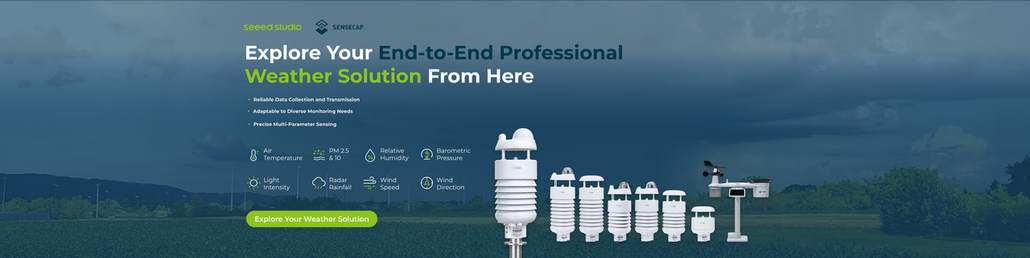
These examples show why irrigation management needs continuous observations of farm conditions. Sunlight supplies energy for soil evaporation and crop transpiration. Meanwhile, temperature and air humidity jointly affect water-loss pressure, while rainfall replenishes soil moisture. Monitoring these factors together helps growers understand how weather changes relate to crop water needs. The SenseCAP weather station series helps farms collect these measurements to support daily management.
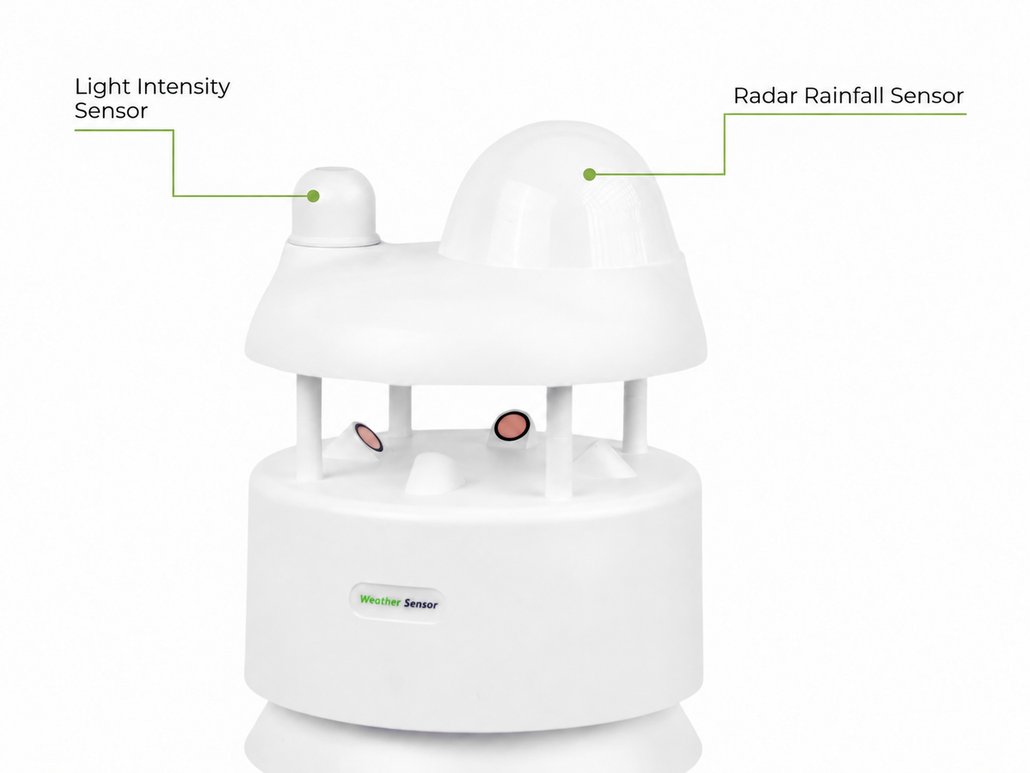
For example, the SenseCAP S700-A Weather Station combines radar-based rainfall intensity and light intensity monitoring in one device. This helps farms track rainfall and changes in field brightness. Its radar sensor measures rainfall intensity from 0 to 300 mm/h, with a specified accuracy of ±10%. Meanwhile, its light sensor records illuminance in lux. It covers 0–200,000 lux, with an accuracy of ±5% of the reading. These records help growers observe brightness changes under sunny, cloudy, and shaded conditions. View the official specifications. The S700-A also measures air temperature, relative humidity, and barometric pressure. In addition, it uses ultrasonic sensors to measure wind speed and direction. Growers can combine these weather records with root-zone soil moisture, crop type, and growth stage. Together, this information provides a clearer view of field conditions and supports light management, irrigation, and post-rainfall drainage.
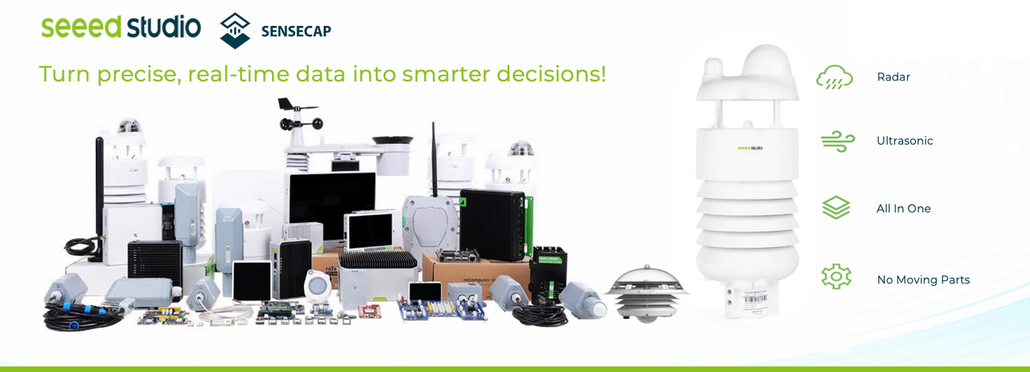
Farms have different monitoring priorities. Therefore, growers can choose professional weather station equipment that matches their needs. For farms tracking rainfall and changes in field brightness, the S700 V2 measures air temperature, relative humidity, barometric pressure, wind speed, and wind direction. It also measures optical rainfall intensity and light intensity. If solar-energy data is needed for evapotranspiration assessment, the S700-B is another option. It combines optical rainfall intensity, solar radiation, and sunshine duration with core weather measurements. Temperature and humidity records help growers understand hot, dry or hot, humid conditions in the field. Meanwhile, rainfall and wind records help assess changes in water supply and loss. Growers can combine these observations with separate root-zone soil moisture measurements, crop type, and growth stage. Together, this information provides a clearer view of crop growing conditions. It can also guide irrigation timing, water application, and post-rainfall drainage.
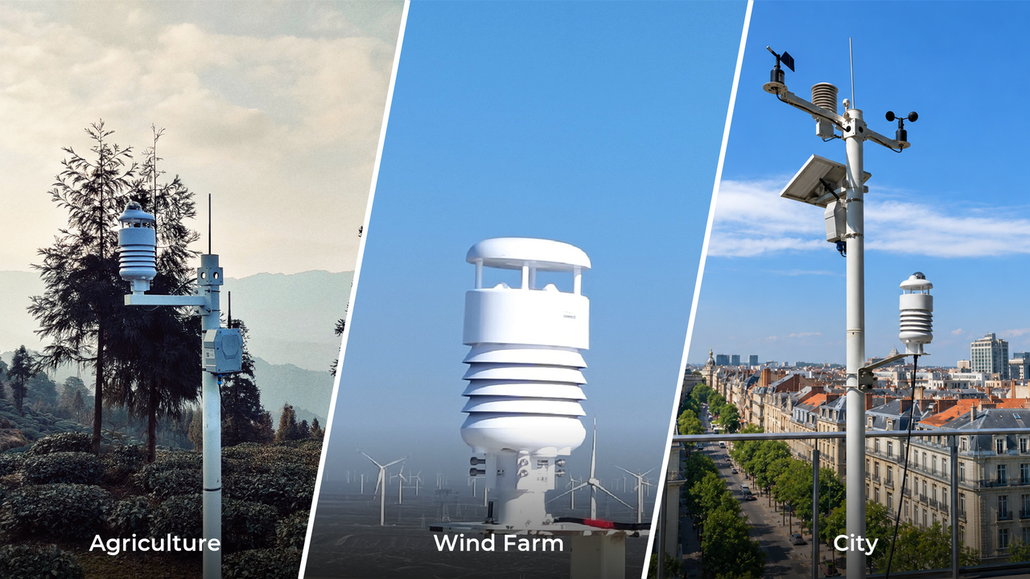
SenseCAP products have been deployed in more than 120 countries and regions. Meanwhile, Seeed Studio works with over 200 partners to bring weather and environmental monitoring projects to life. Explore our global deployments. Applications span agriculture, industrial facilities, smart cities, renewable energy, and environmental research. They also extend to weather monitoring on offshore platforms. Across farms, cities, and offshore sites, continuous local observations help teams understand environmental changes and plan daily operations. For growers, these measurements provide a clearer view of crop growing conditions. Combined with soil and crop information, they can support better irrigation and field management decisions.
About Author
